

German dialogue with translation · A2 · 14 lines
Ich weiß nicht, ob ich mitmachen darf I don't know if I'm allowed to join in
Comic · 14 panels
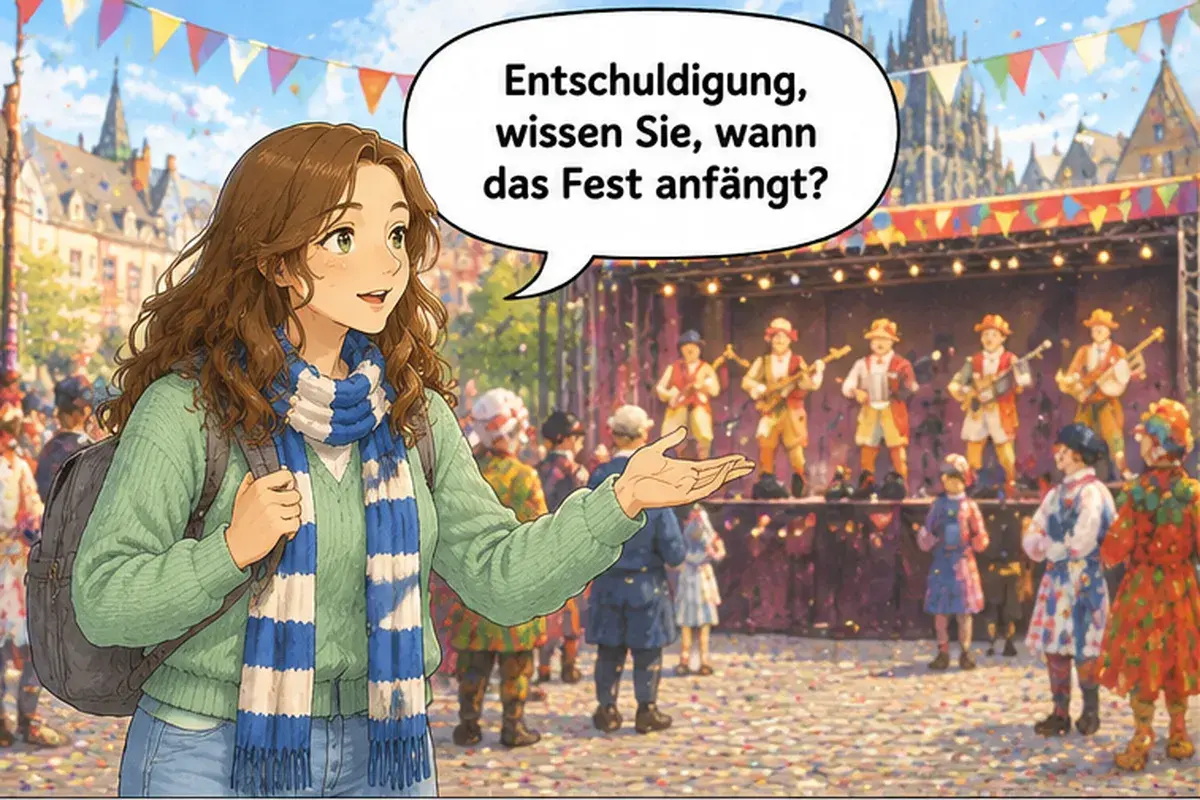
- Katja
Entschuldigung, wissen Sie, wann das Fest anfängt?
Excuse me, do you know when the festival starts? (formal)
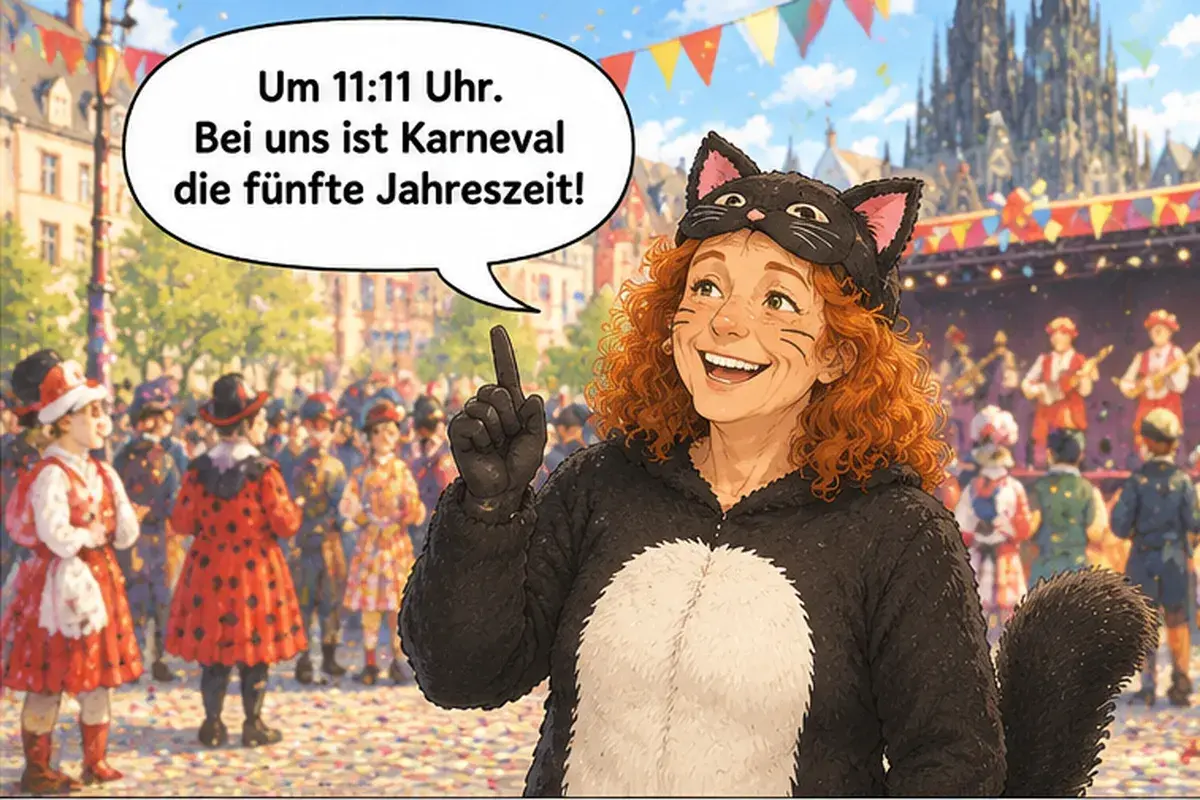
- Frau
Um 11:11 Uhr. Bei uns ist Karneval die fünfte Jahreszeit!
At 11:11. Around here, Carnival is the fifth season!
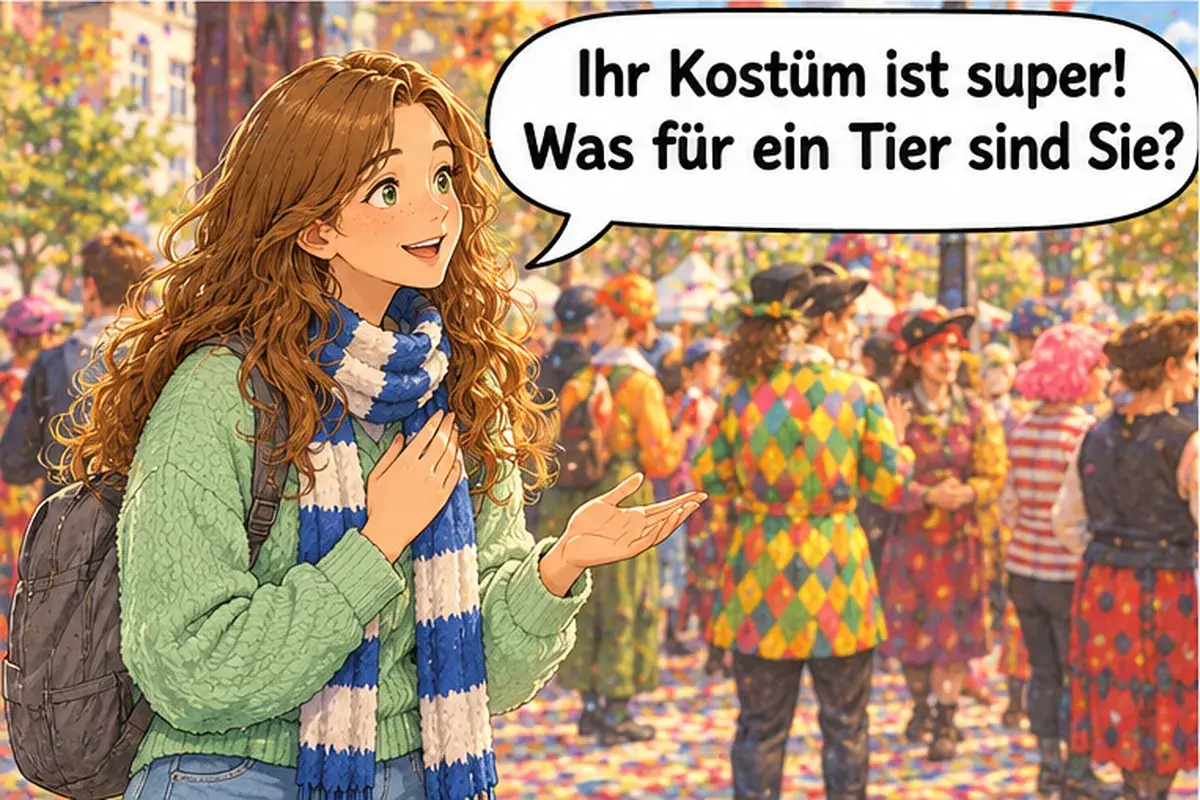
- Katja
Ihr Kostüm ist super! Was für ein Tier sind Sie?
Your costume is great! What animal are you? (formal)
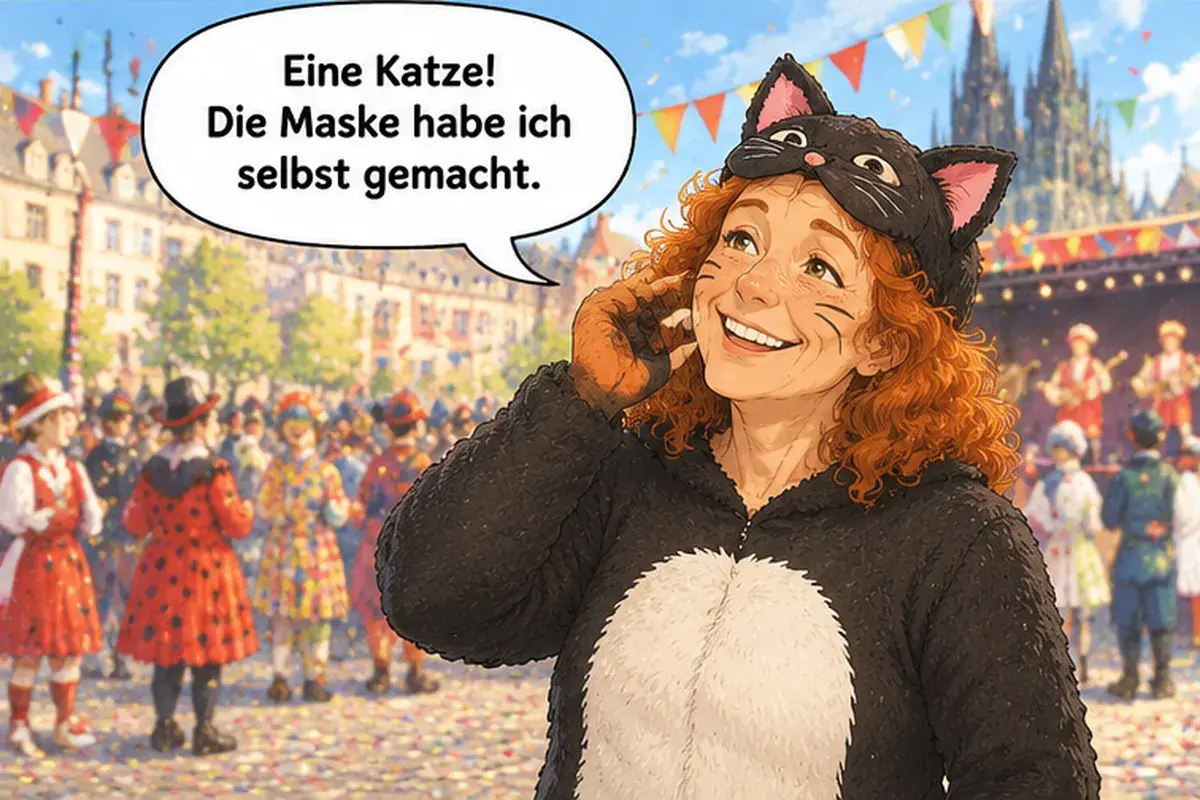
- Frau
Eine Katze! Die Maske habe ich selbst gemacht.
A cat! I made the mask myself.
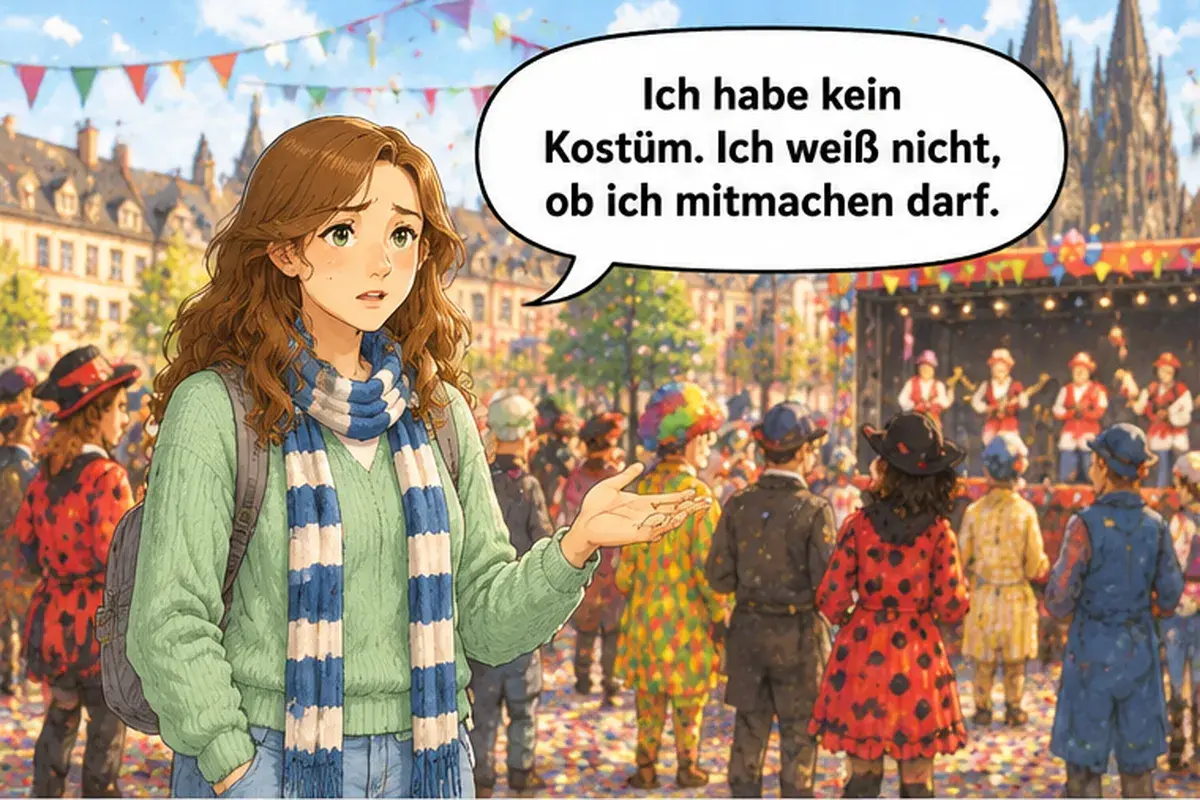
- Katja
Ich habe kein Kostüm. Ich weiß nicht, ob ich mitmachen darf.
I don't have a costume. I don't know if I'm allowed to join in.
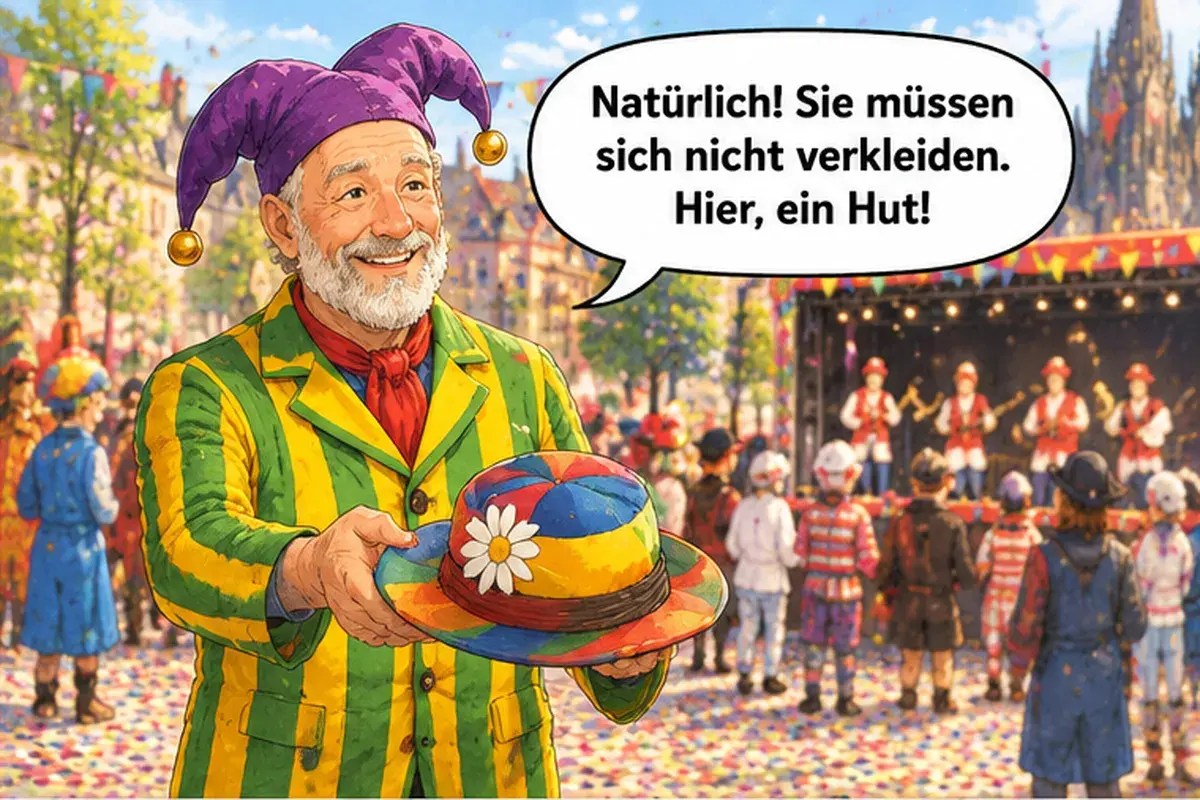
- Mann
Natürlich! Sie müssen sich nicht verkleiden. Hier, ein Hut!
Of course! You don't have to dress up. Here, a hat! (formal)
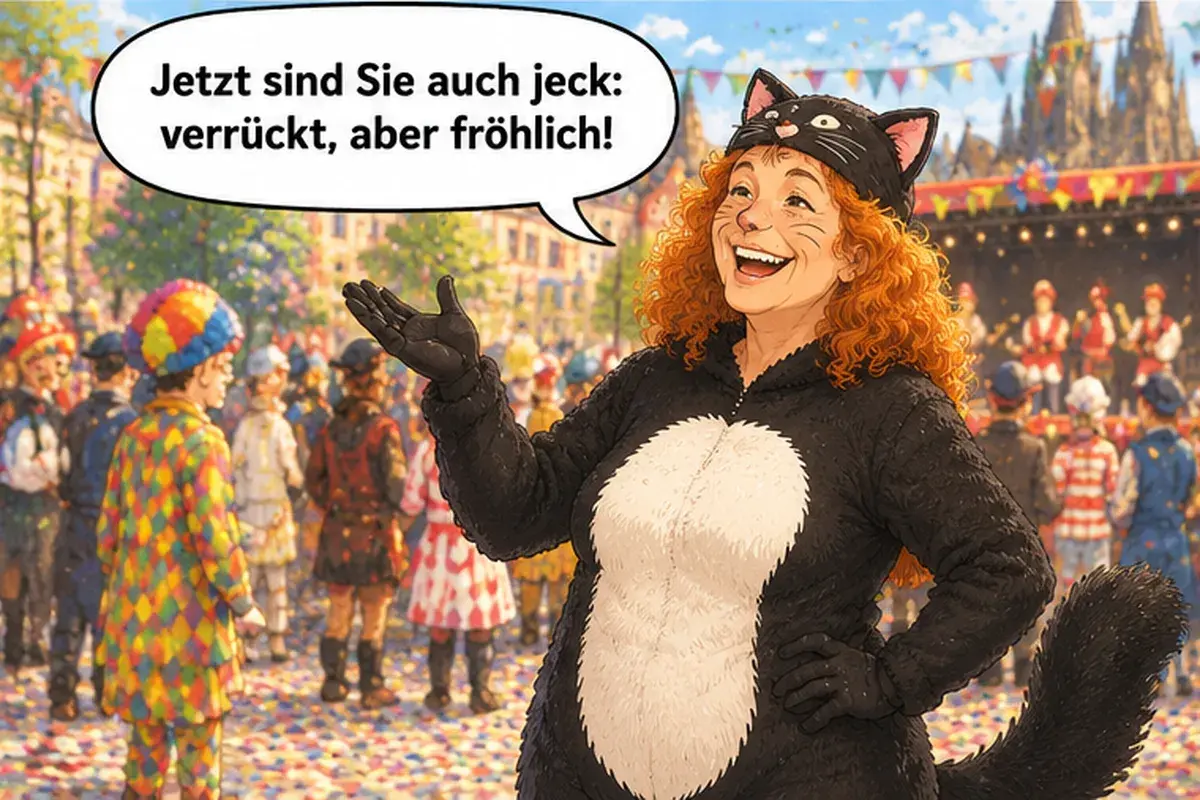
- Frau
Jetzt sind Sie auch jeck: verrückt, aber fröhlich!
Now you're "jeck" too: crazy, but cheerful! (formal)
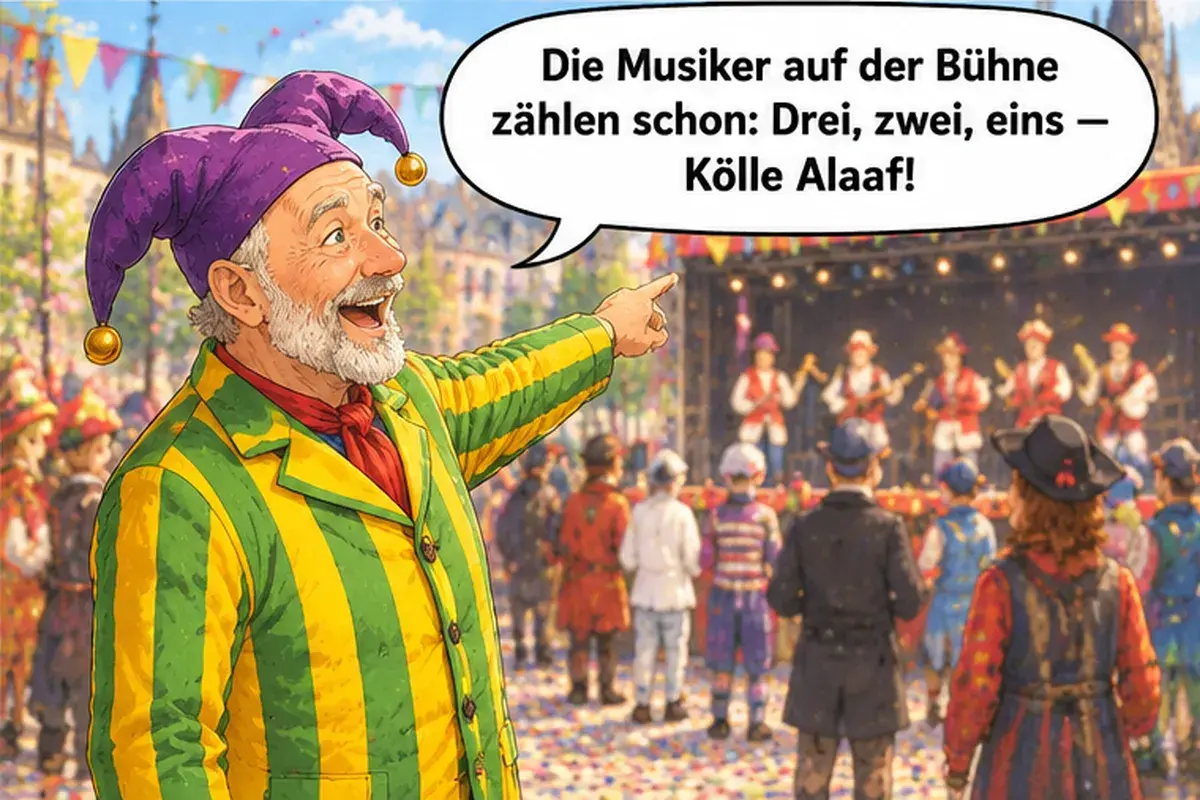
- Mann
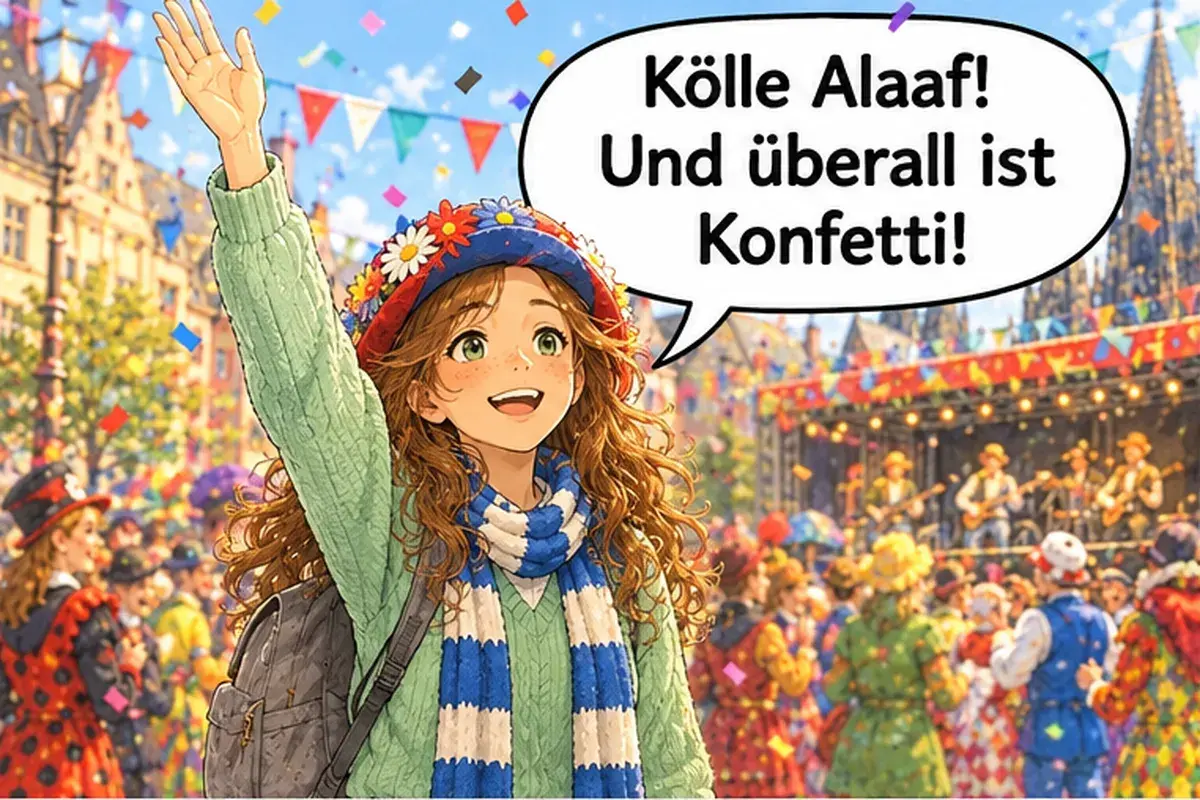
Die Musiker auf der Bühne zählen schon: Drei, zwei, eins — Kölle Alaaf!
The musicians on stage are already counting: three, two, one — Kölle Alaaf!
- Katja
Kölle Alaaf! Und überall ist Konfetti!
Kölle Alaaf! And there's confetti everywhere!
- Frau
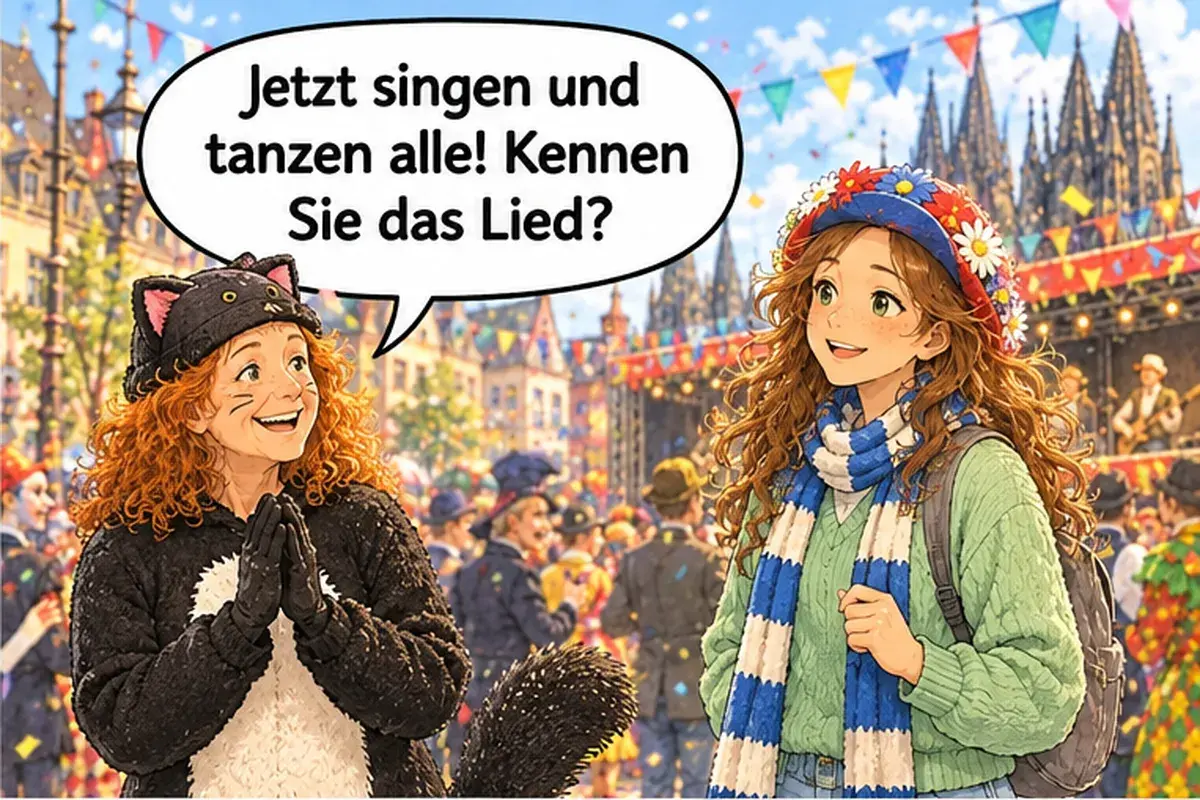
Jetzt singen und tanzen alle! Kennen Sie das Lied?
Now everyone's singing and dancing! Do you know the song? (formal)
- Katja
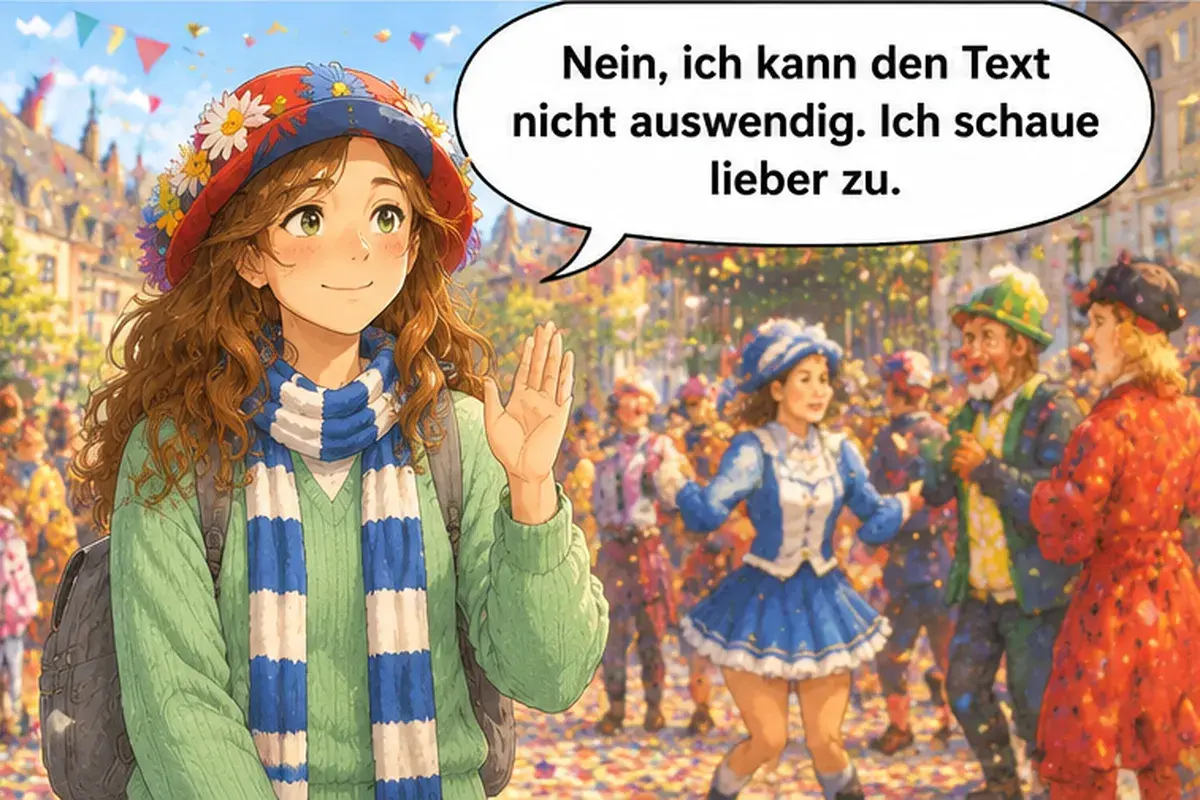
Nein, ich kann den Text nicht auswendig. Ich schaue lieber zu.
No, I don't know the lyrics by heart. I'd rather watch.
- Mann
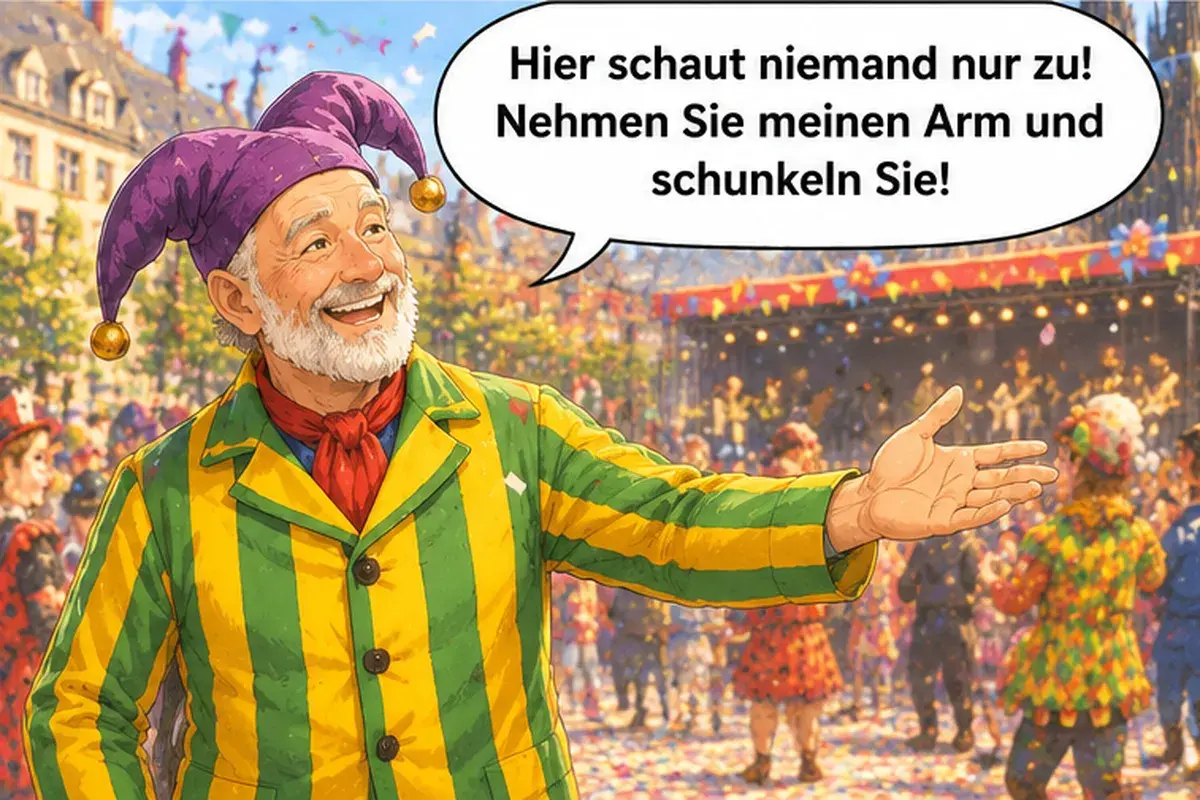
Hier schaut niemand nur zu! Nehmen Sie meinen Arm und schunkeln Sie!
No one here just watches! Take my arm and sway along! (formal)
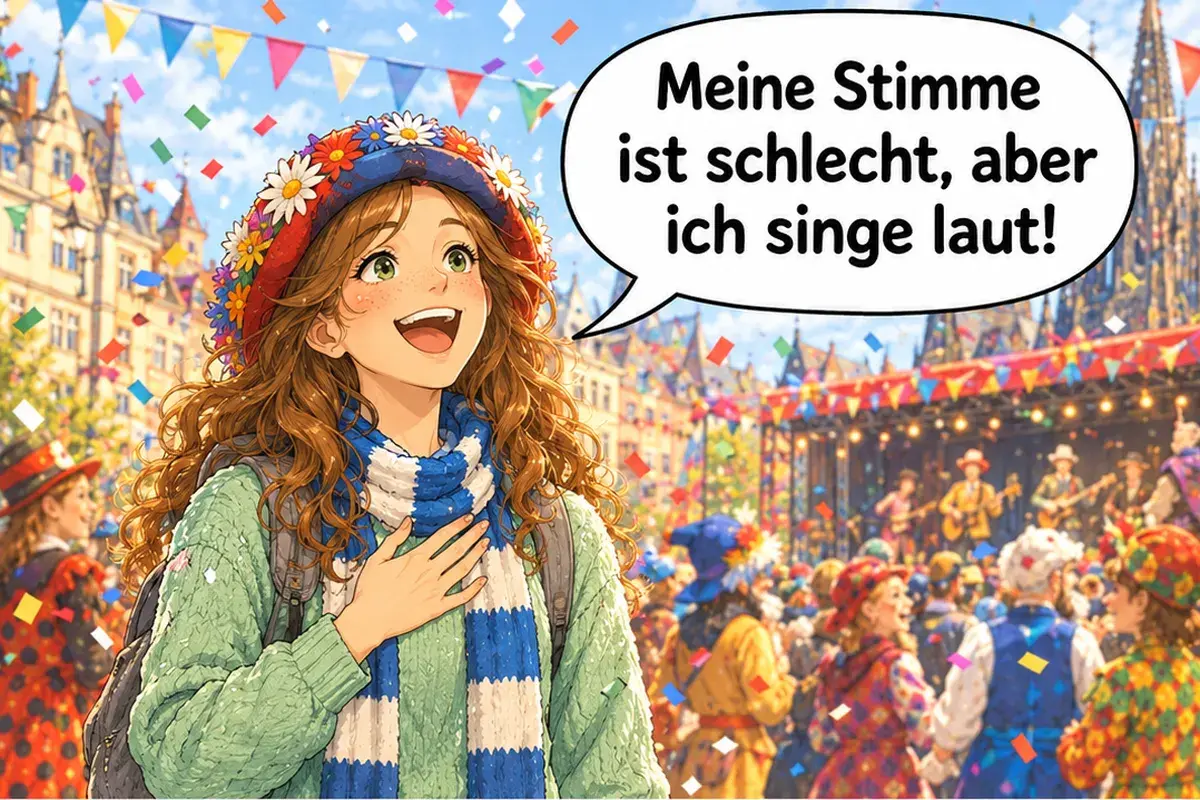
- Katja
Meine Stimme ist schlecht, aber ich singe laut!
My voice is bad, but I sing loudly!
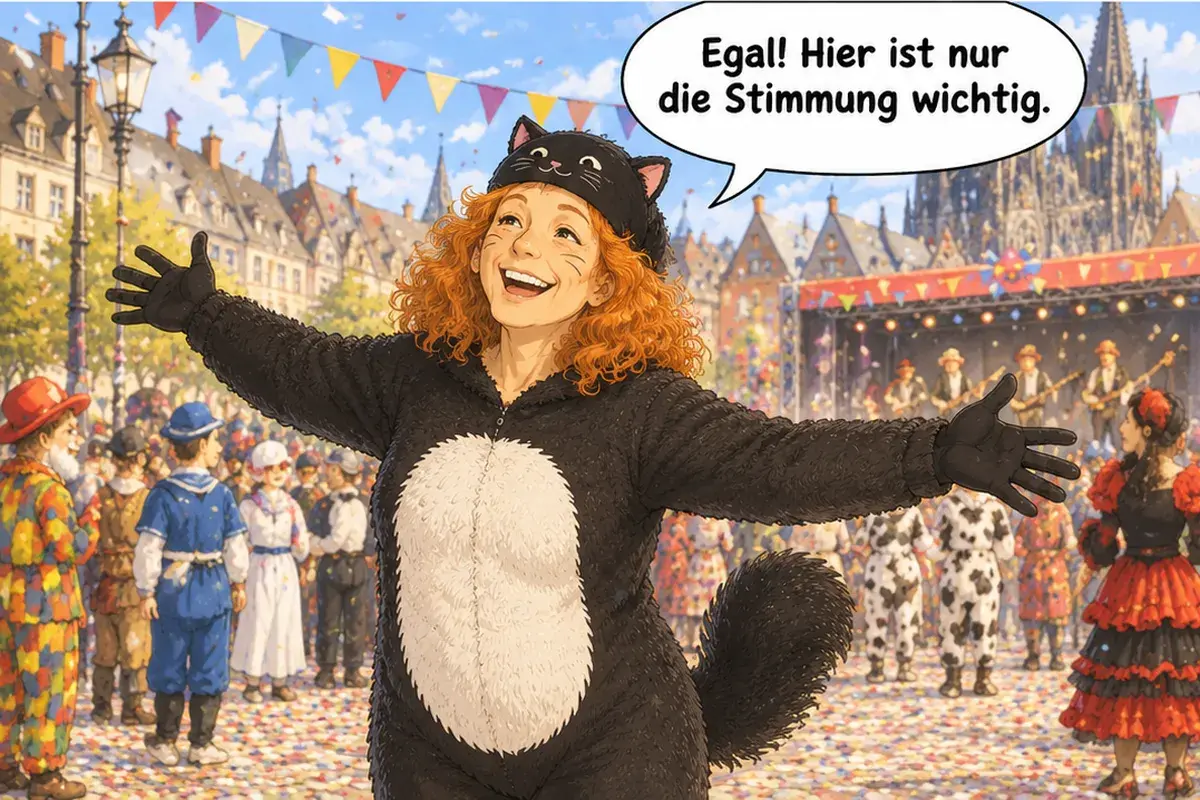
- Frau
Egal! Hier ist nur die Stimmung wichtig.
Doesn't matter! Here only the atmosphere is important.
Grammar for this text
- Ich weiß nicht, ob ich mitmachen darf. —
obmeans "whether, if" and starts a subordinate clause:darfgoes to the end, andmitmachencomes right before it, in one piece.weißis fromwissen,darfis fromdürfen: theirichanderforms have no ending. - Wissen Sie, wann das Fest anfängt? — after
wannthe verb also goes to the end. In the clauseanfangendoesn't split:anfängt. In a simple sentence the prefix goes to the end:Das Fest fängt um 11 Uhr an. Infängttheaturns intoä(theerform). - Die Maske habe ich selbst gemacht. — the
Perfekt(unit 1):habe … gemacht, frommachen. The objectdie Maskecomes first, sohabecomes right after it, andichafter that.selbstmeans "myself" here. - Sie müssen sich nicht verkleiden. —
sich verkleidenis a reflexive verb (unit 6):sichcomes afterSie müssen, andverkleidengoes to the end.nicht müssenmeans "don't have to", not "must not". - Kölle Alaaf! — the Cologne Carnival cheer:
Kölleis the Cologne form ofKöln, andAlaafmeans something like "above all". People shout it together at 11:11. - Ich kann den Text nicht auswendig. —
auswendigmeans "by heart". There's no verb for "know":kannstands without an infinitive, and the meaning is still clear: "I can't (sing it) by heart". - Hier schaut niemand nur zu! —
zuschauensplits:schaut … zu.niemandmeans "no one" (unit 12), so you don't addnicht.
Words and grammar of the unit: Celebrate with the locals.
Learn the words from the texts with flashcards
In the app, you can tap any word in a text to see its translation, forms and examples, and new words stick with flashcards. 15 minutes a day.
Start for freeEverything is open for free. No card needed to sign up.