

German dialogue with translation · A2 · 14 lines
Ich habe doch nichts bestellt! But I didn't order anything!
Comic · 14 panels
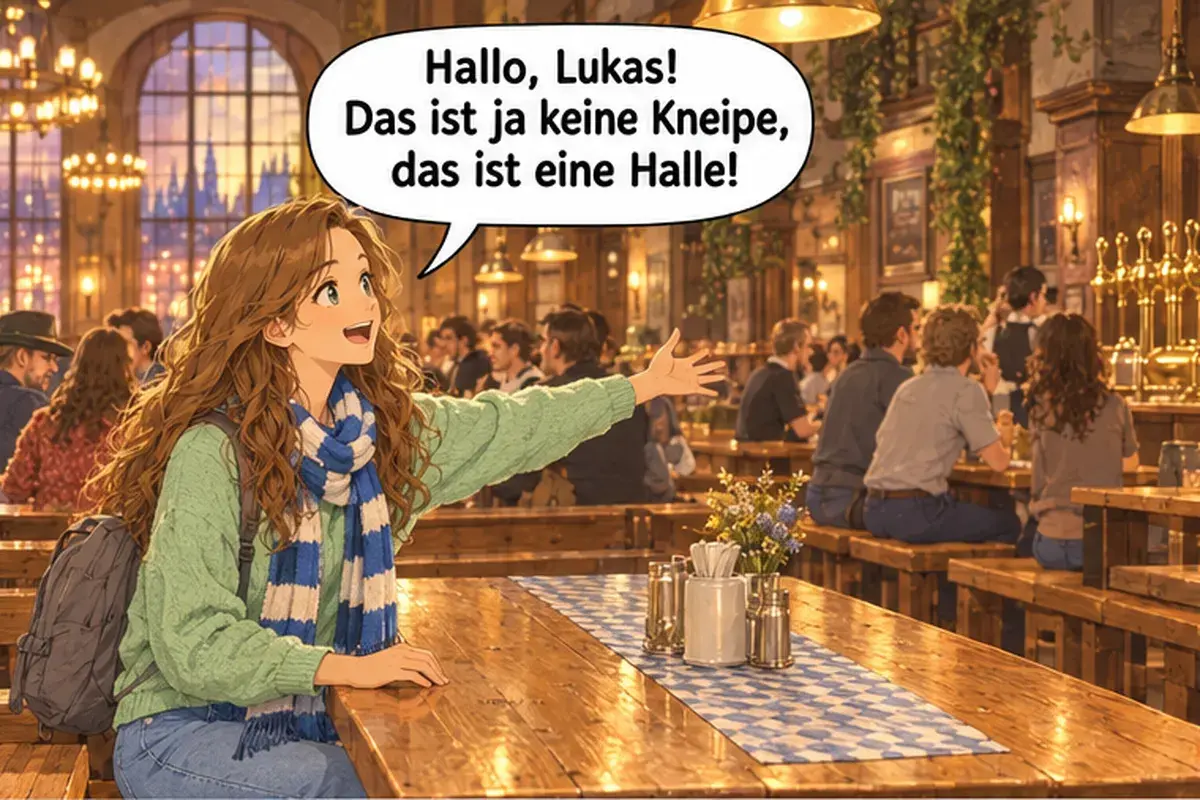
- Katja
Hallo, Lukas! Das ist ja keine Kneipe, das ist eine Halle!
Hi, Lukas! This isn't a pub, it's a whole hall!
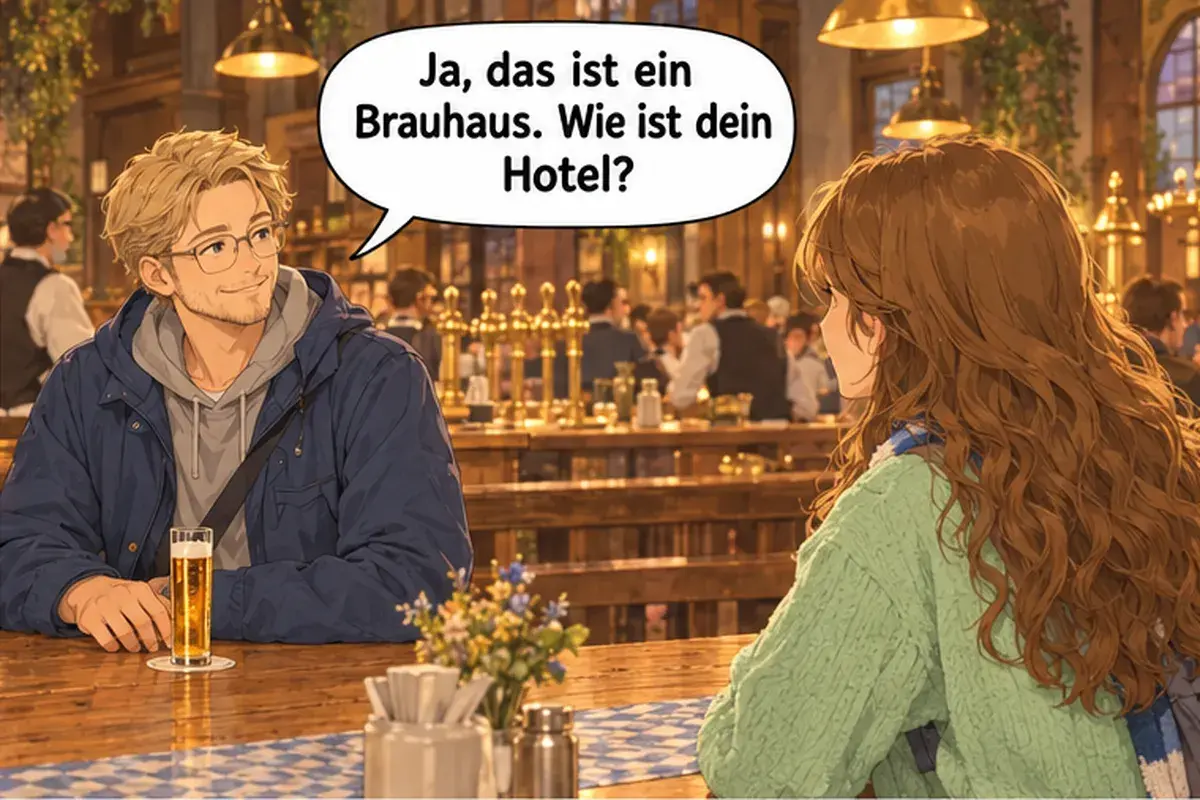
- Lukas
Ja, das ist ein Brauhaus. Wie ist dein Hotel?
Yes, it's a brewpub. How's your hotel?
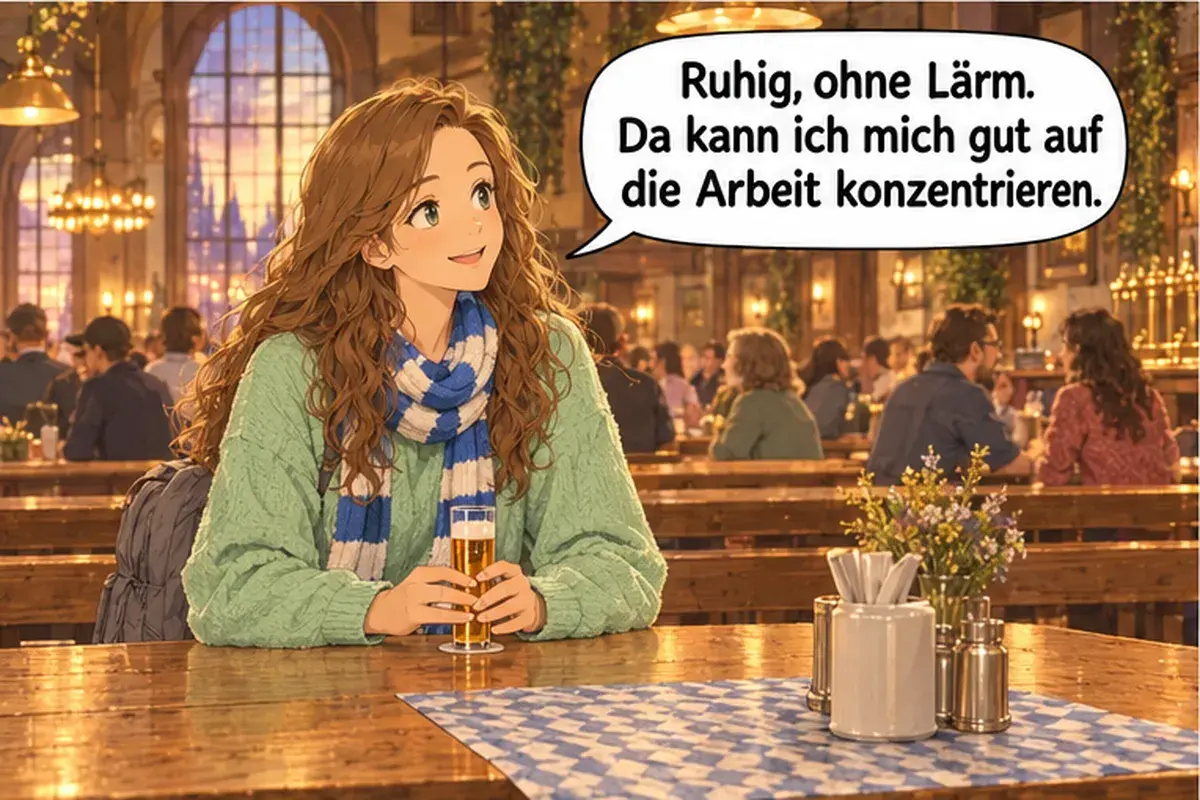
- Katja
Ruhig, ohne Lärm. Da kann ich mich gut auf die Arbeit konzentrieren.
Quiet, no noise. I can concentrate on my work well there.
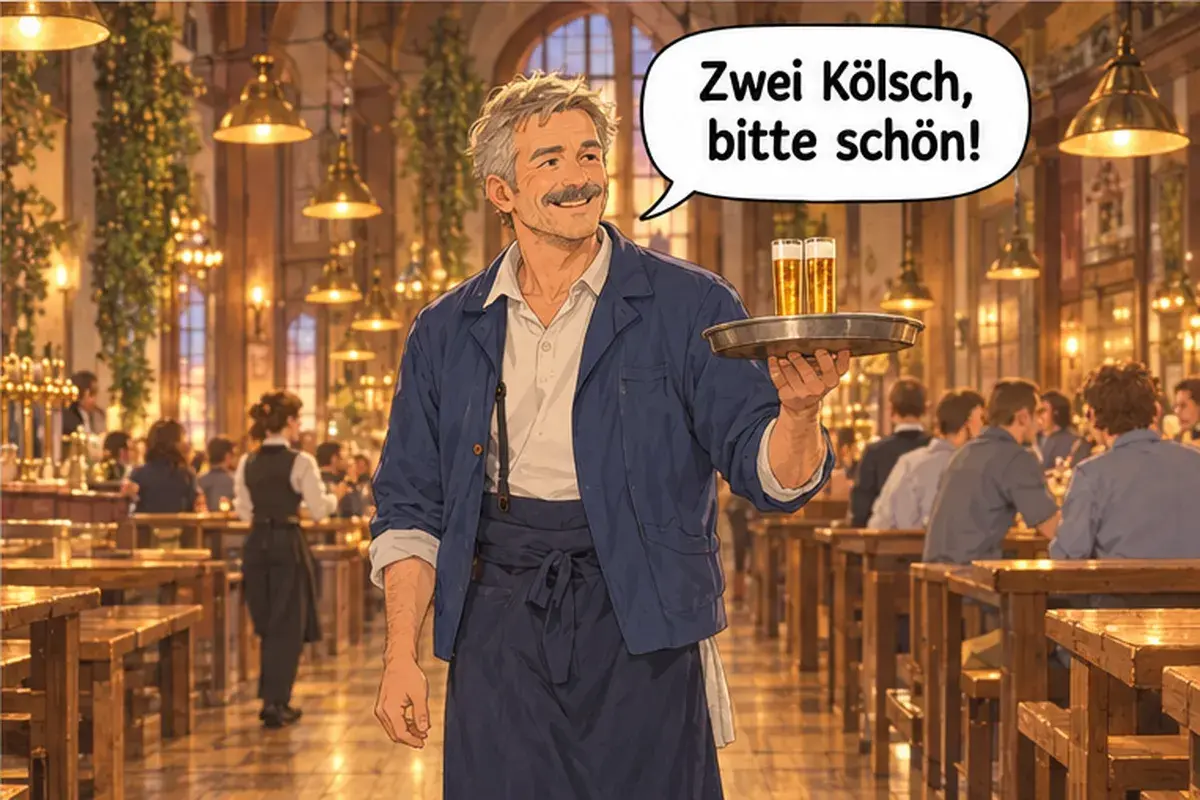
- Köbes
Zwei Kölsch, bitte schön!
Two Kölsch, here you go!
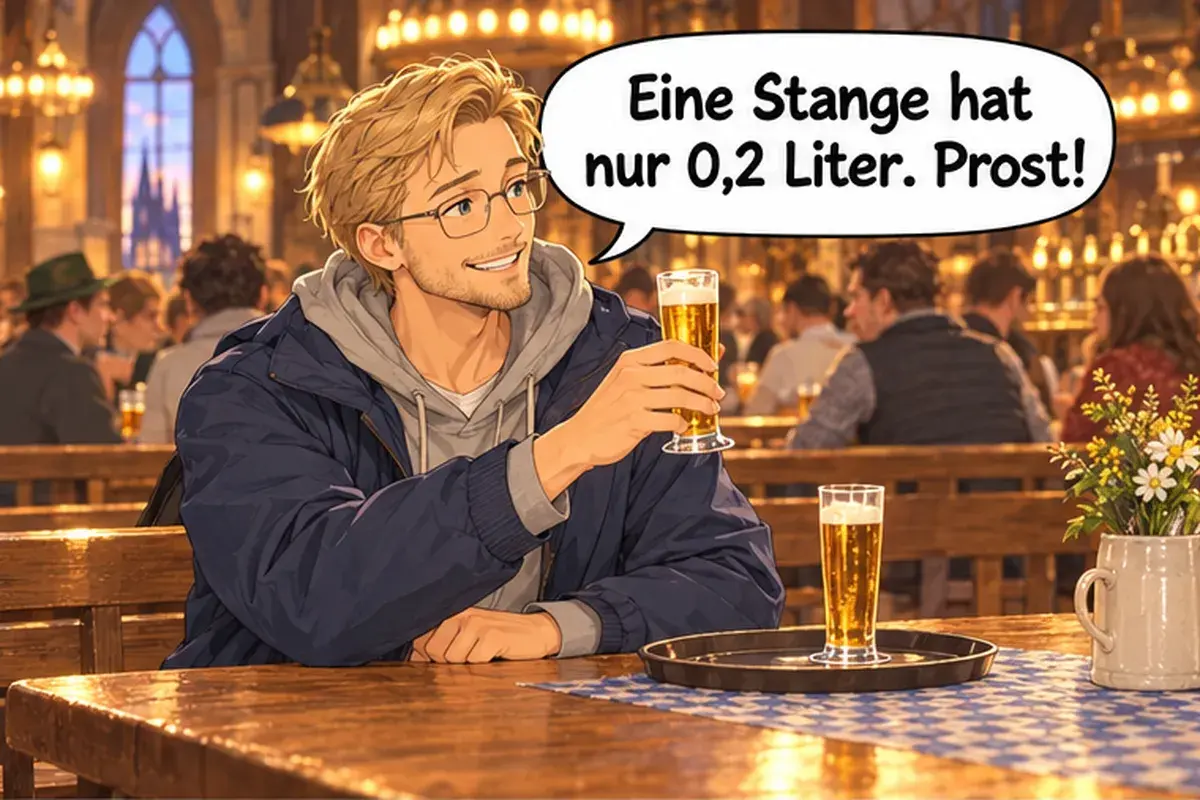
- Lukas
Eine Stange hat nur 0,2 Liter. Prost!
A Stange only holds 0.2 liters. Cheers!
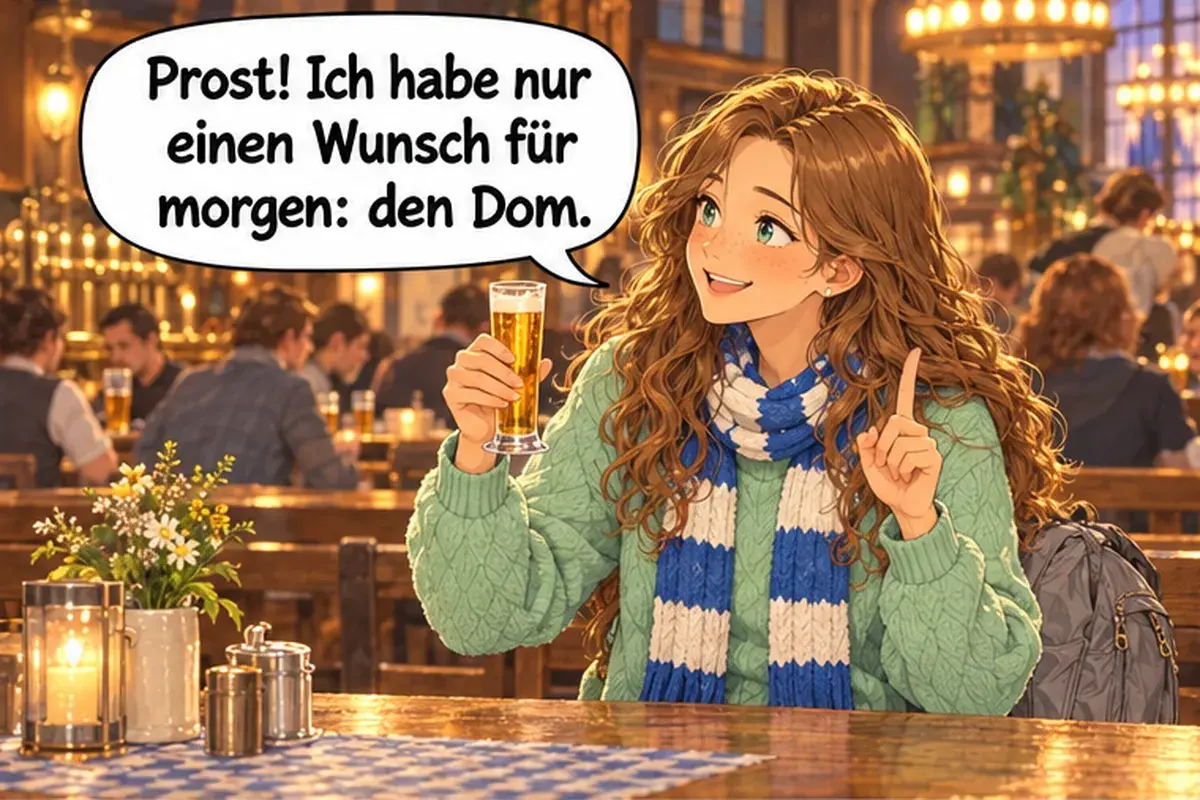
- Katja
Prost! Ich habe nur einen Wunsch für morgen: den Dom.
Cheers! I only have one wish for tomorrow: the cathedral.
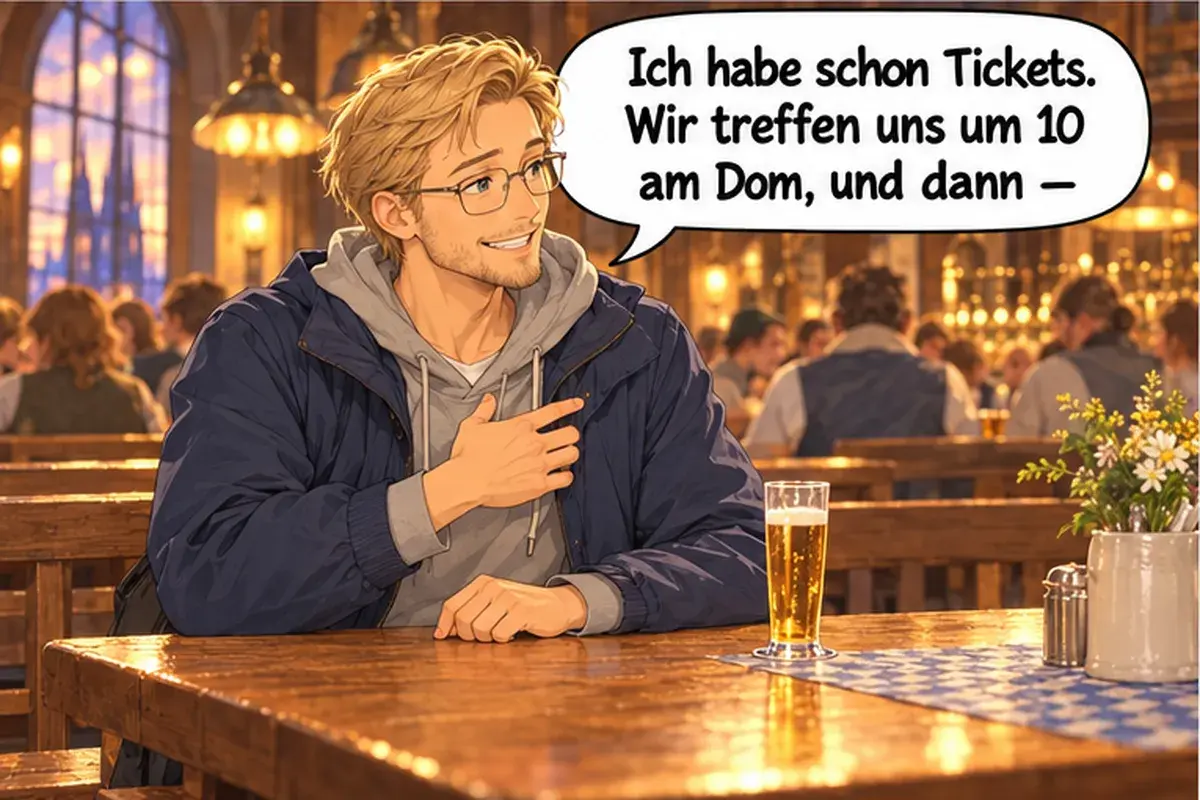
- Lukas
Ich habe schon Tickets. Wir treffen uns um 10 am Dom, und dann —
I already have tickets. We'll meet at the cathedral at 10, and then —
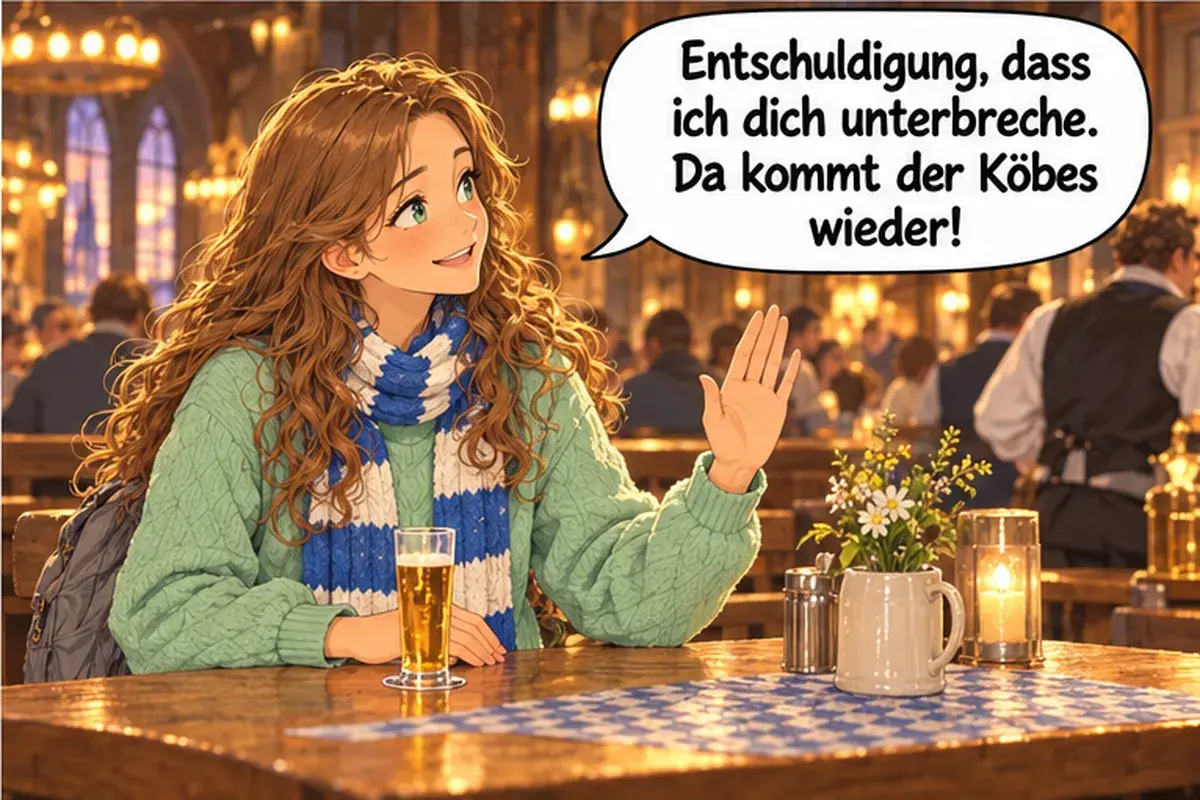
- Katja
Entschuldigung, dass ich dich unterbreche. Da kommt der Köbes wieder!
Sorry to interrupt you. Here comes the Köbes again!
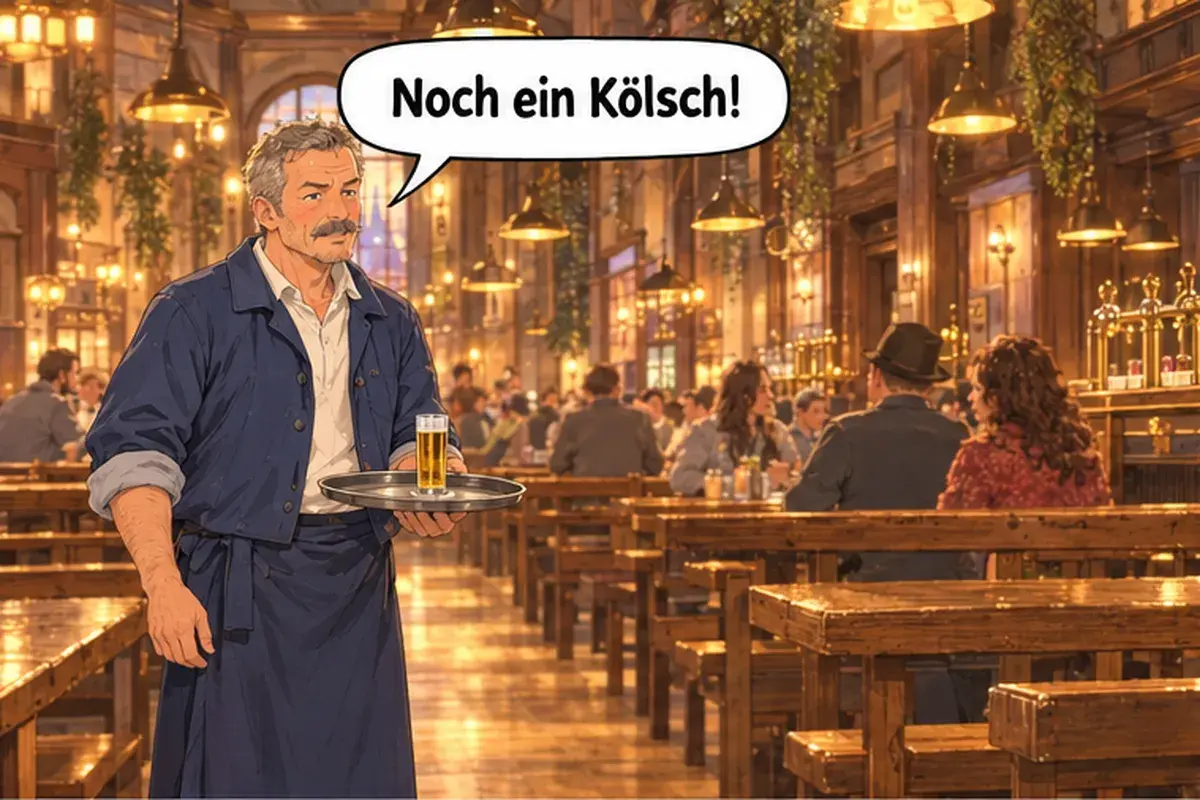
- Köbes
Noch ein Kölsch!
Another Kölsch!
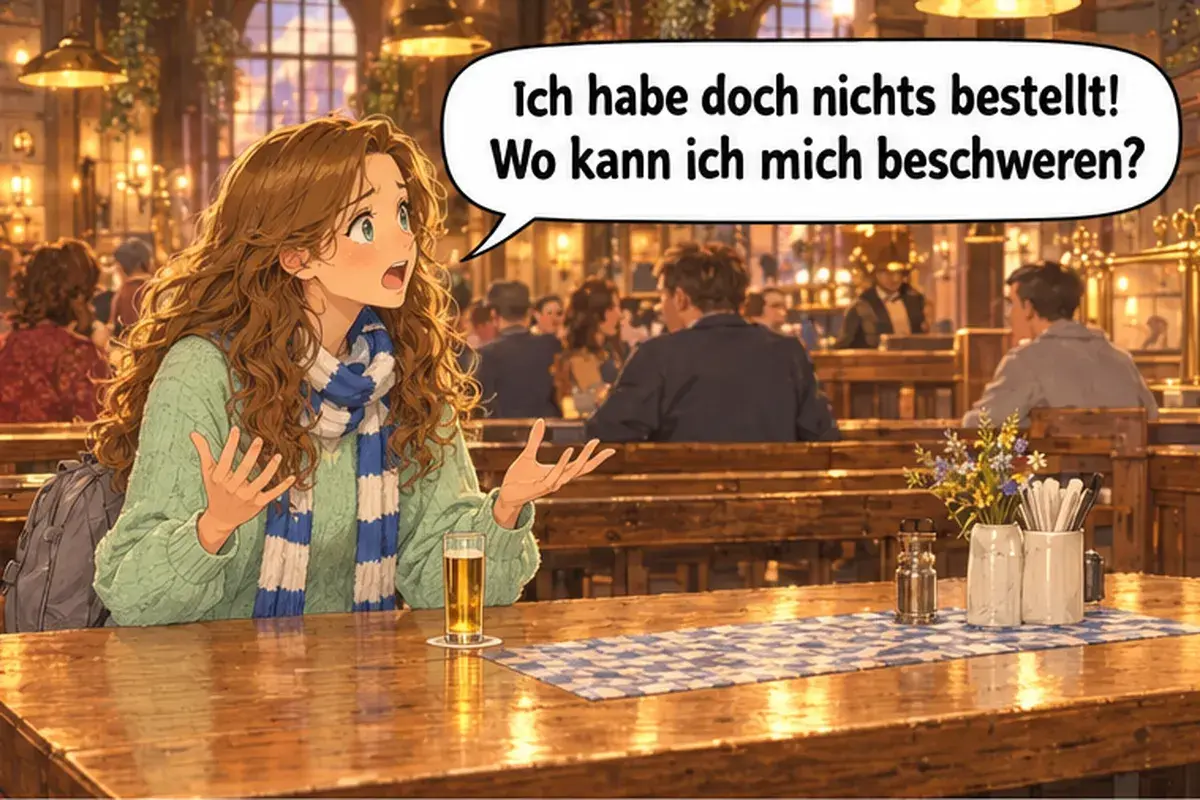
- Katja
Ich habe doch nichts bestellt! Wo kann ich mich beschweren?
But I didn't order anything! Where can I complain?
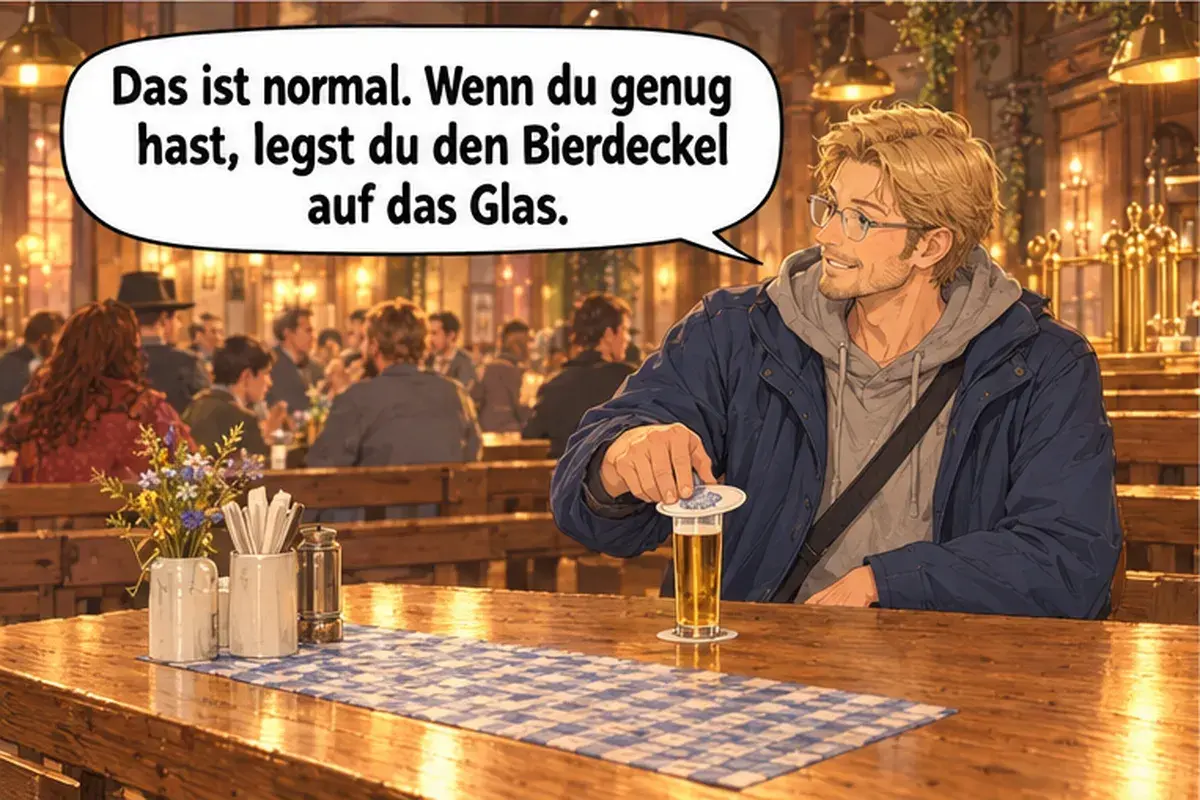
- Lukas
Das ist normal. Wenn du genug hast, legst du den Bierdeckel auf das Glas.
That's normal. When you've had enough, you put the coaster on the glass.
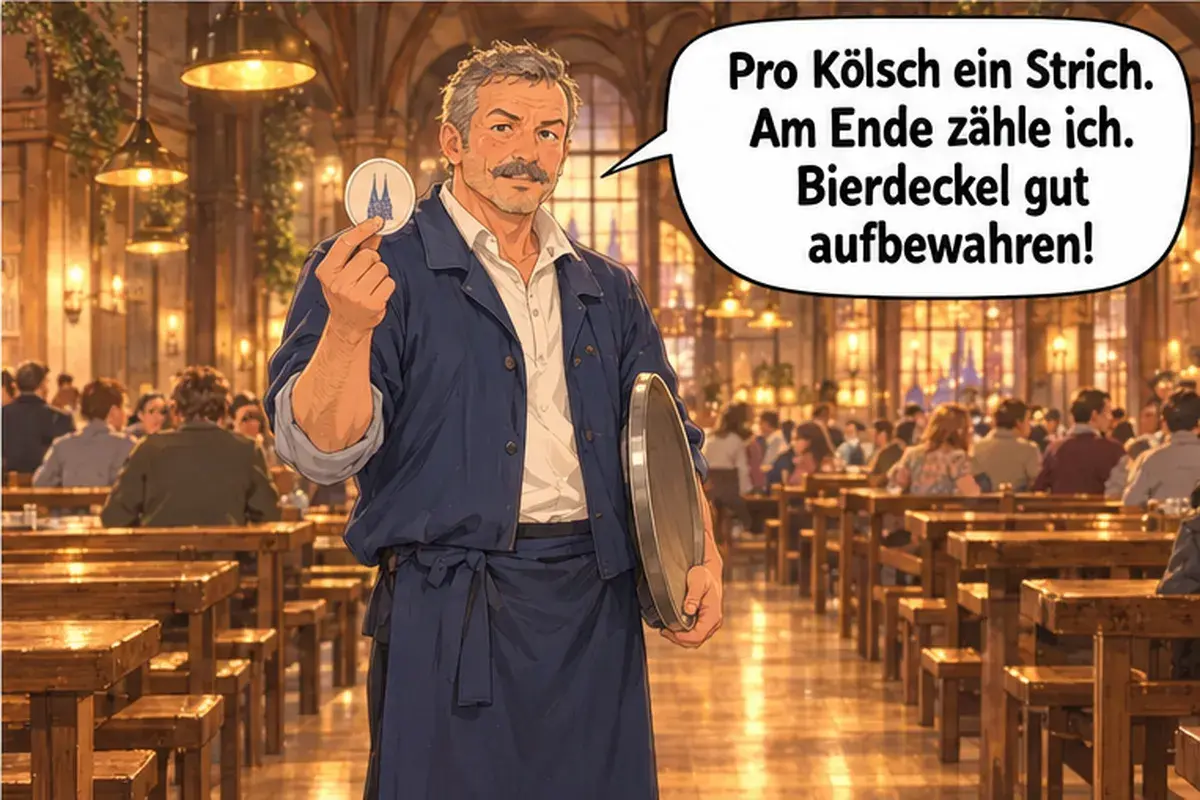
- Köbes
Pro Kölsch ein Strich. Am Ende zähle ich. Bierdeckel gut aufbewahren!
One mark per Kölsch. At the end, I count. Keep the coaster safe!
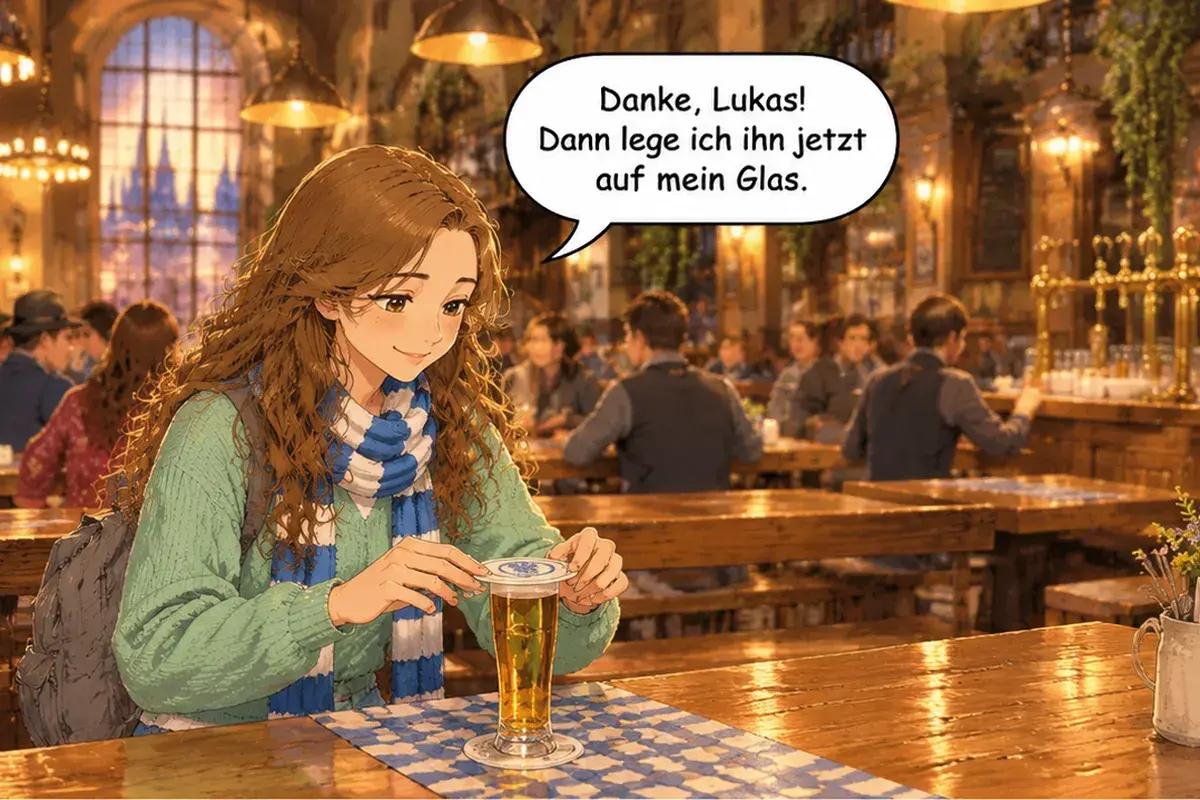
- Katja
Danke, Lukas! Dann lege ich ihn jetzt auf mein Glas.
Thanks, Lukas! Then I'll put it on my glass now.
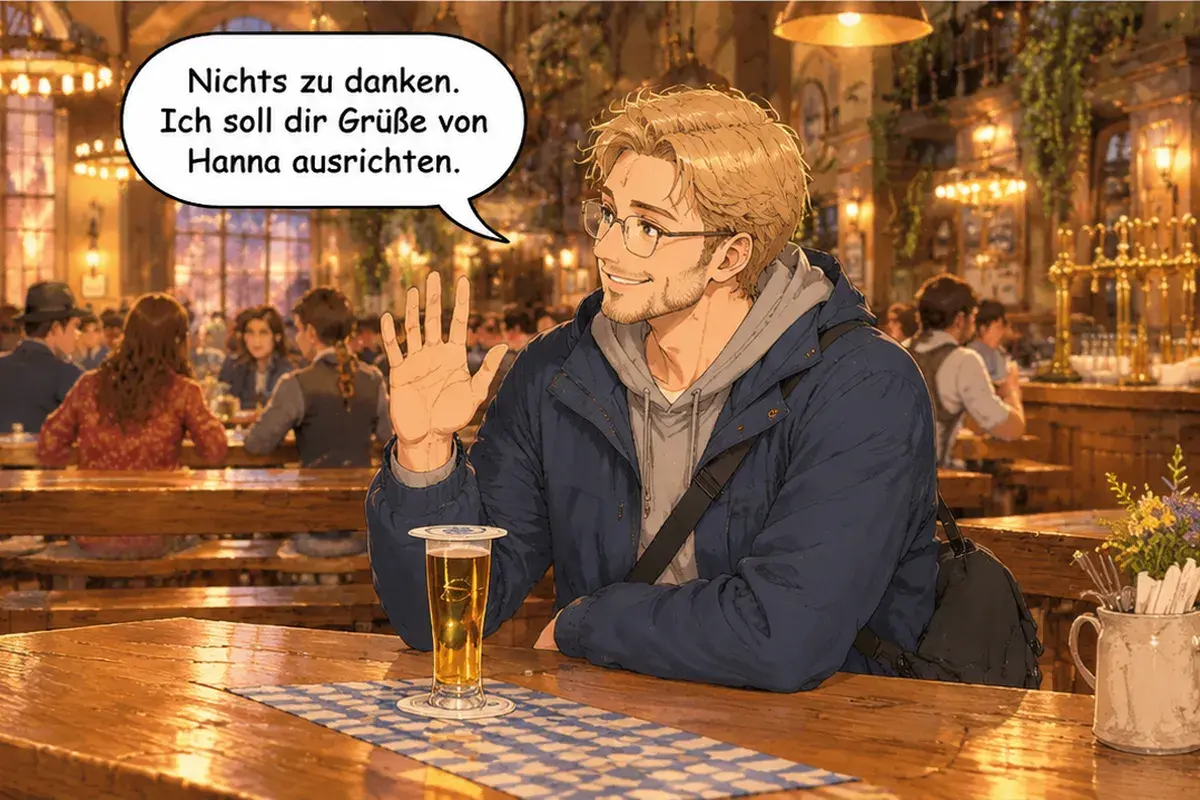
- Lukas
Nichts zu danken. Ich soll dir Grüße von Hanna ausrichten.
Don't mention it. I'm supposed to pass on greetings to you from Hanna.
Grammar for this text
- Das ist ja keine Kneipe, das ist eine Halle! —
jahere doesn't mean "yes": it's a particle of surprise, like "wow" or "really". AKneipeis a small bar and aBrauhausis a big brewpub, so Katja is surprised. - Eine Stange hat nur 0,2 Liter. — a
Stangeis a tall, narrow glass forKölsch.0,2is readnull Komma zwei(zero point two): German writes a comma where English writes a period. After a number,Literdoesn't change. - Entschuldigung, dass ich dich unterbreche. — Lukas hasn't finished ("…und dann —"), and Katja interrupts him.
unterbrechen— to interrupt;unterbrecheis the ich form, with the ending-e. Afterdassthe verb goes to the end;dich— you, the person being interrupted. - Ich habe doch nichts bestellt! —
dochhere is like "but" or "after all": the speaker is sure she's right.bestelltis the Perfekt (spoken past) ofbestellen(to order). - Wo kann ich mich beschweren? —
sich beschweren(to complain) is a reflexive verb:michmeans "myself", but English doesn't say it.michstands right afterkann ich, and the infinitive goes to the end. - Wenn du genug hast, legst du den Bierdeckel auf das Glas. —
wenn— when, whenever, if (unit 10): in this clausehastgoes to the end, and the main clause after the comma starts with the verblegst(the du form oflegen, to put).auf das Glasanswers "where to?", so it'sdas, accusative (unit 8). - Pro Kölsch ein Strich. —
pro— per, for each. The Köbes keeps it short, without a verb. Bierdeckel gut aufbewahren! — an infinitive instead of a command, as on signs and in instructions. The polite way would beBewahren Sie ihn gut auf.
Words and grammar of the unit: Asking politely.
Learn the words from the texts with flashcards
In the app, you can tap any word in a text to see its translation, forms and examples, and new words stick with flashcards. 15 minutes a day.
Start for freeEverything is open for free. No card needed to sign up.