

German dialogue with translation · A2 · 14 lines
Das ist hier üblich That's common here
Comic · 14 panels
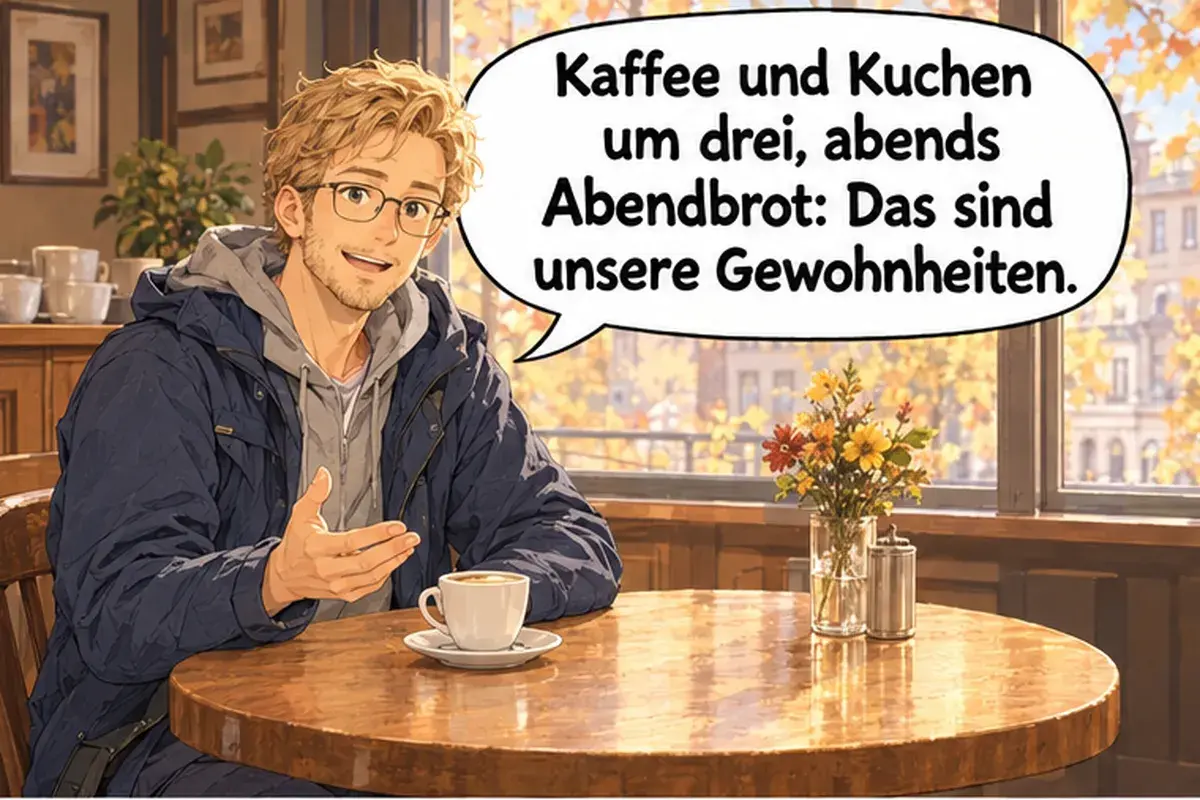
- Lukas
Kaffee und Kuchen um drei, abends Abendbrot: Das sind unsere Gewohnheiten.
Coffee and cake at three, a cold supper in the evening: those are our habits.
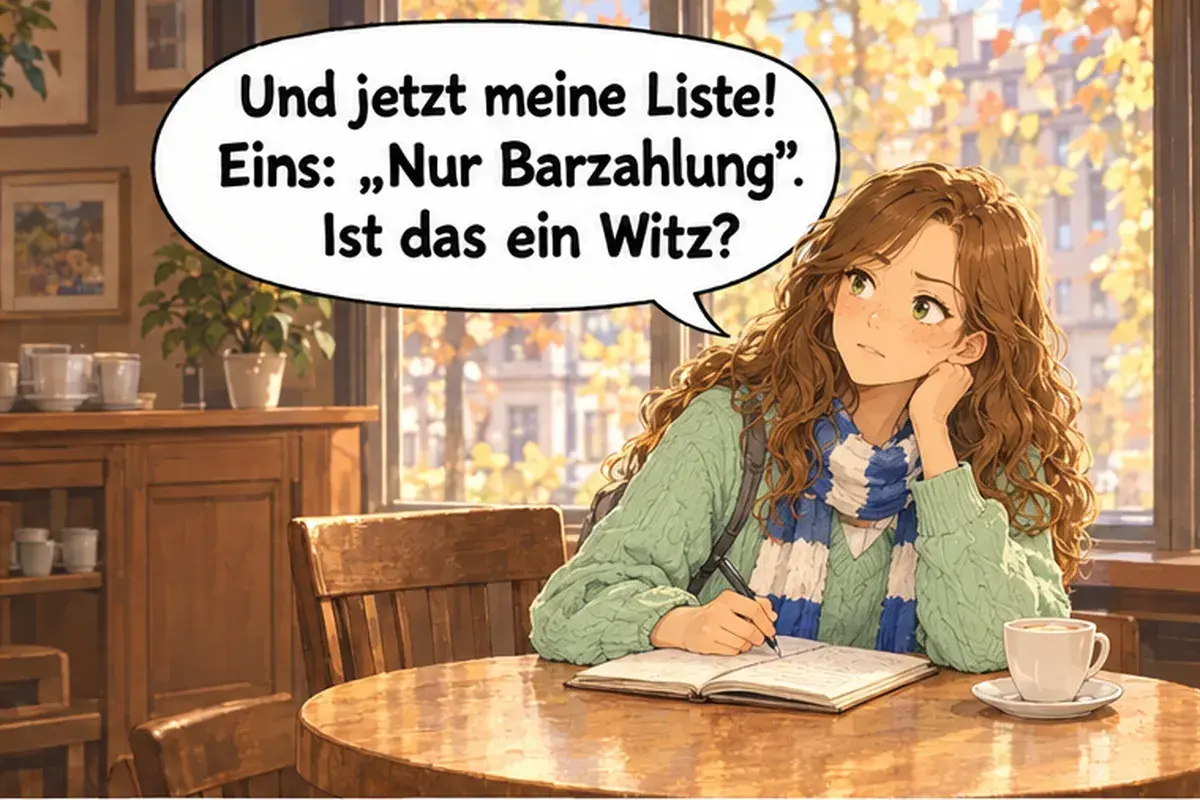
- Katja
Und jetzt meine Liste! Eins: „Nur Barzahlung“. Ist das ein Witz?
And now my list! One: "Cash only." Is that a joke?
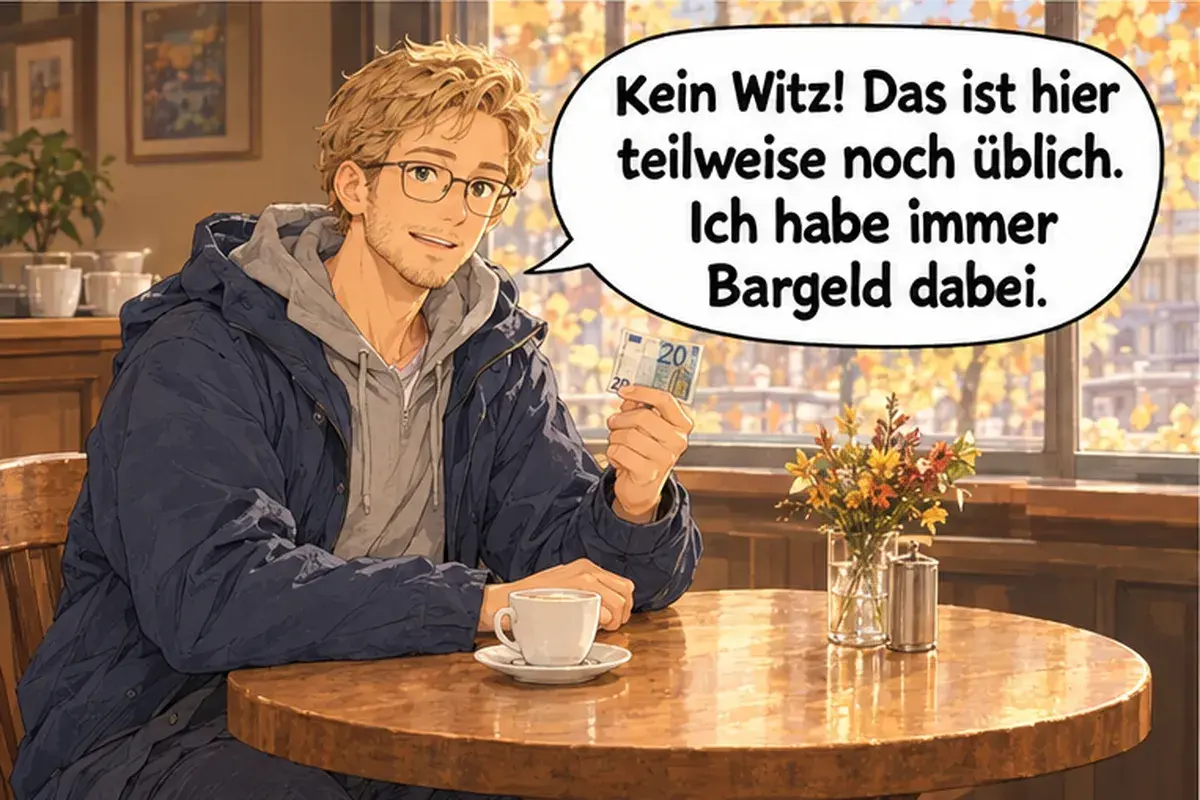
- Lukas
Kein Witz! Das ist hier teilweise noch üblich. Ich habe immer Bargeld dabei.
No joke! That's still partly common here. I always have cash on me.
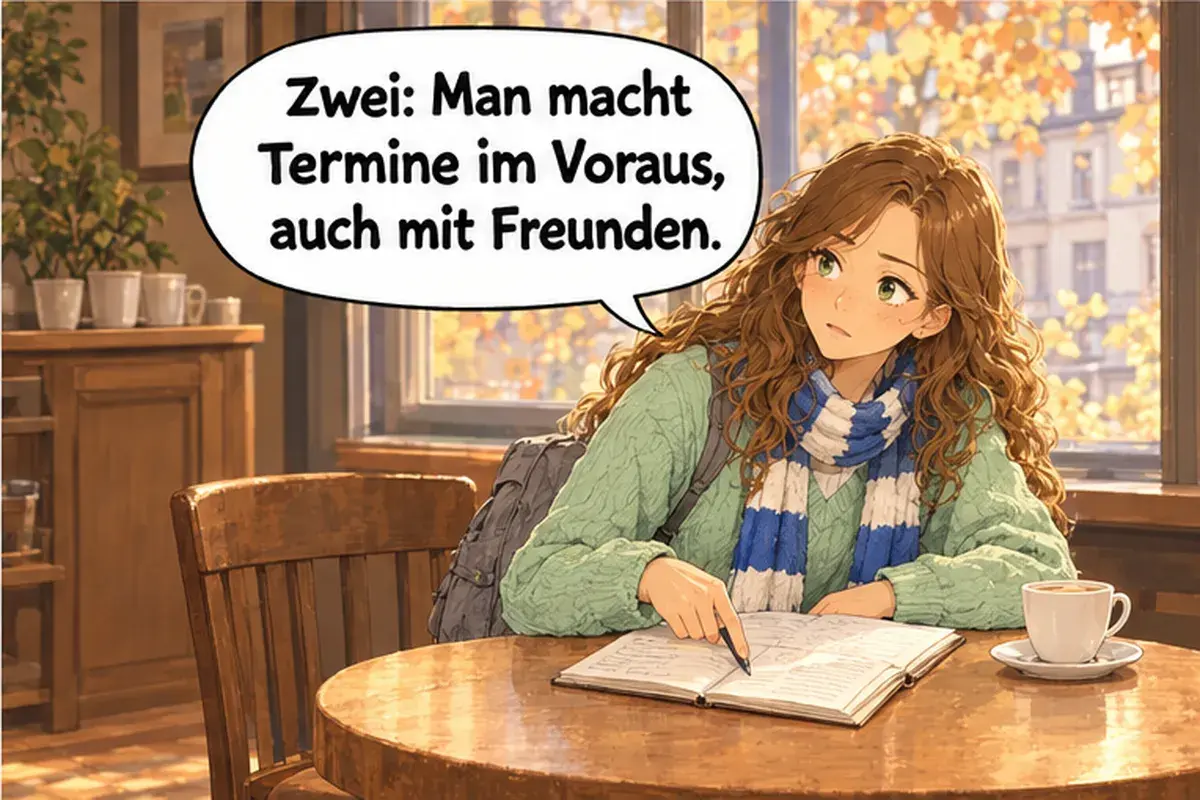
- Katja
Zwei: Man macht Termine im Voraus, auch mit Freunden.
Two: you make appointments in advance, even with friends.
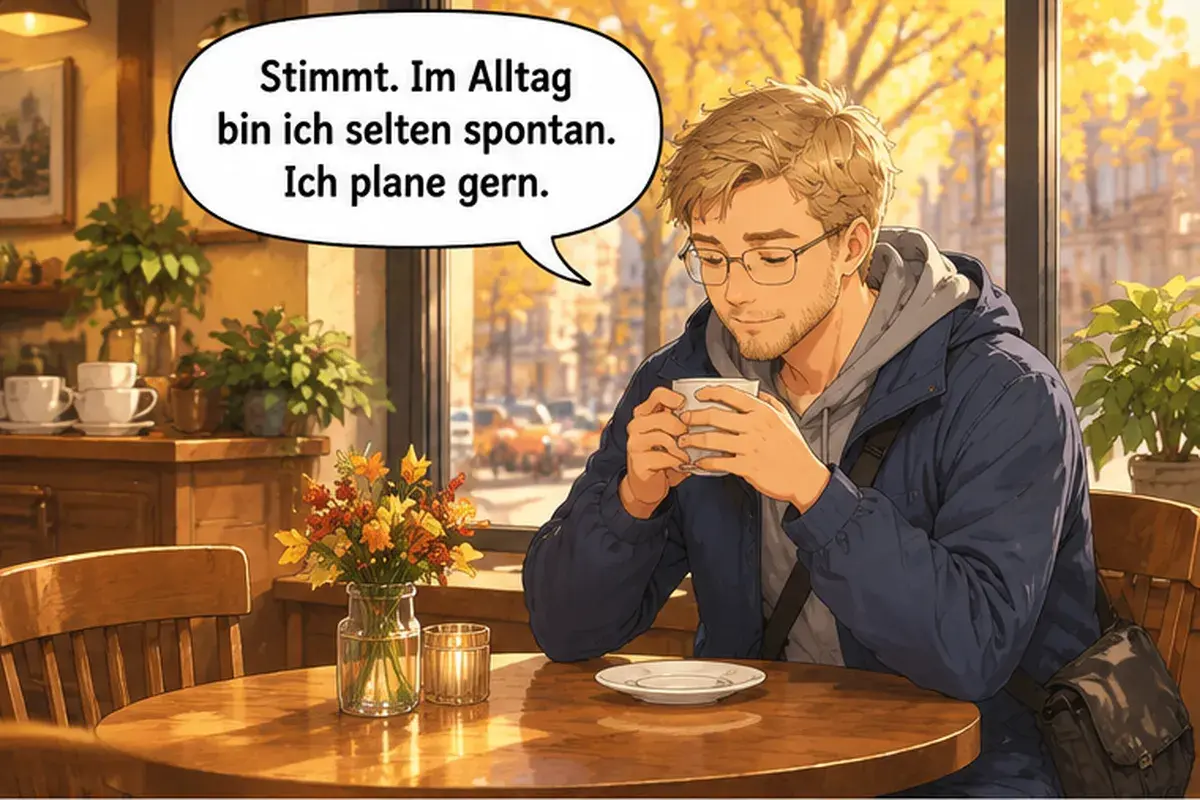
- Lukas
Stimmt. Im Alltag bin ich selten spontan. Ich plane gern.
That's true. In everyday life I'm rarely spontaneous. I like to plan.
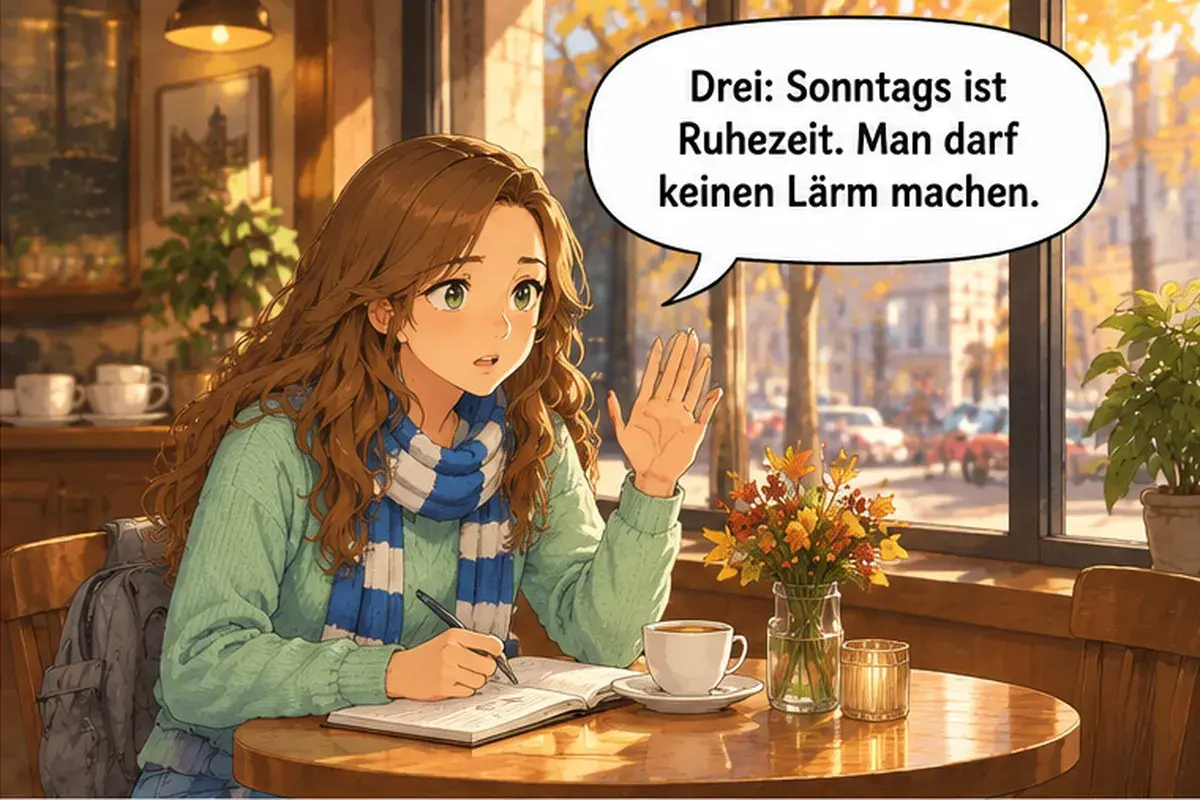
- Katja
Drei: Sonntags ist Ruhezeit. Man darf keinen Lärm machen.
Three: Sundays are quiet hours. You're not allowed to make noise.
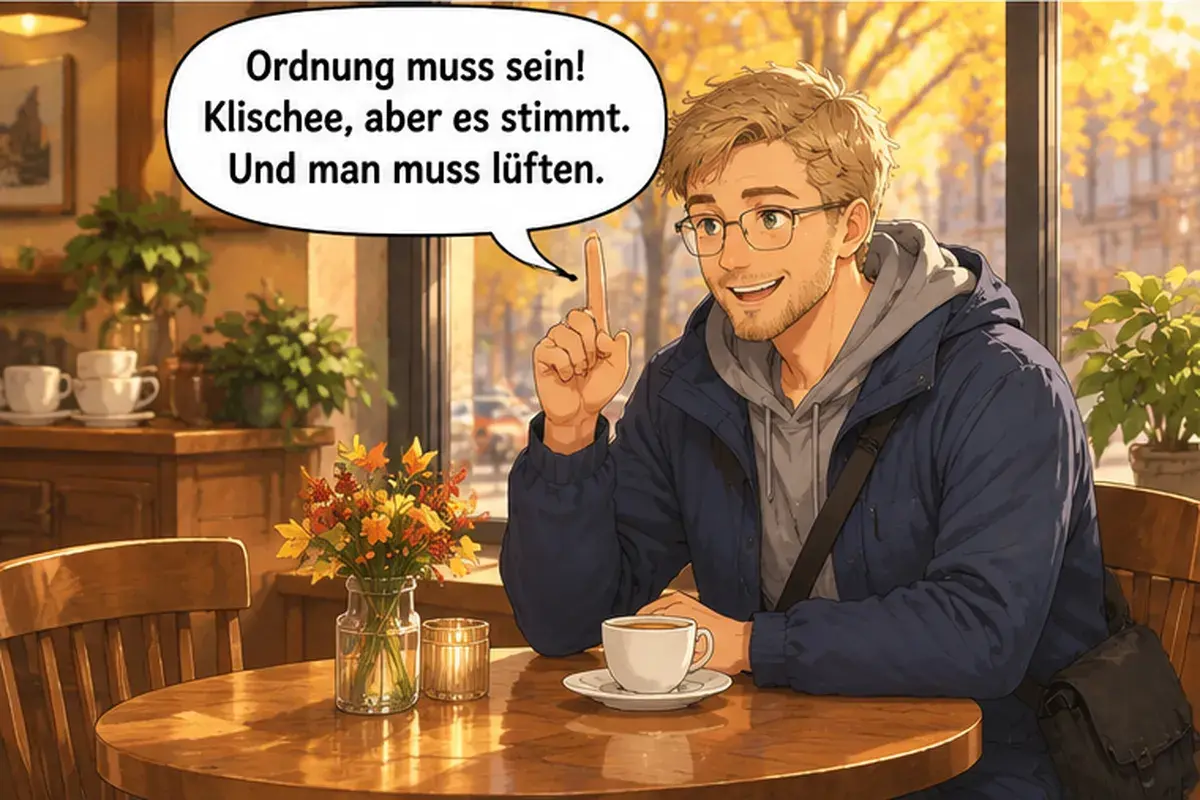
- Lukas
Ordnung muss sein! Klischee, aber es stimmt. Und man muss lüften.
There must be order! A cliché, but it's true. And you have to air out the rooms.
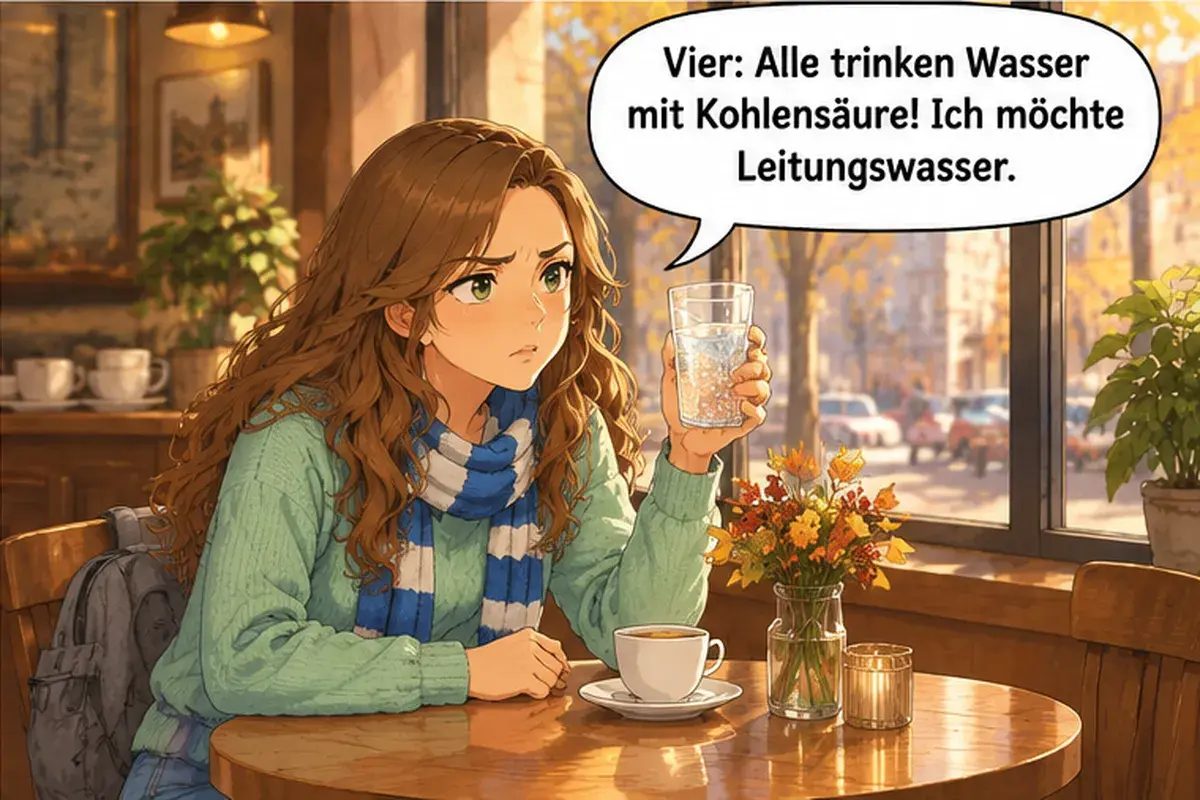
- Katja
Vier: Alle trinken Wasser mit Kohlensäure! Ich möchte Leitungswasser.
Four: everyone drinks carbonated water! I'd like tap water.
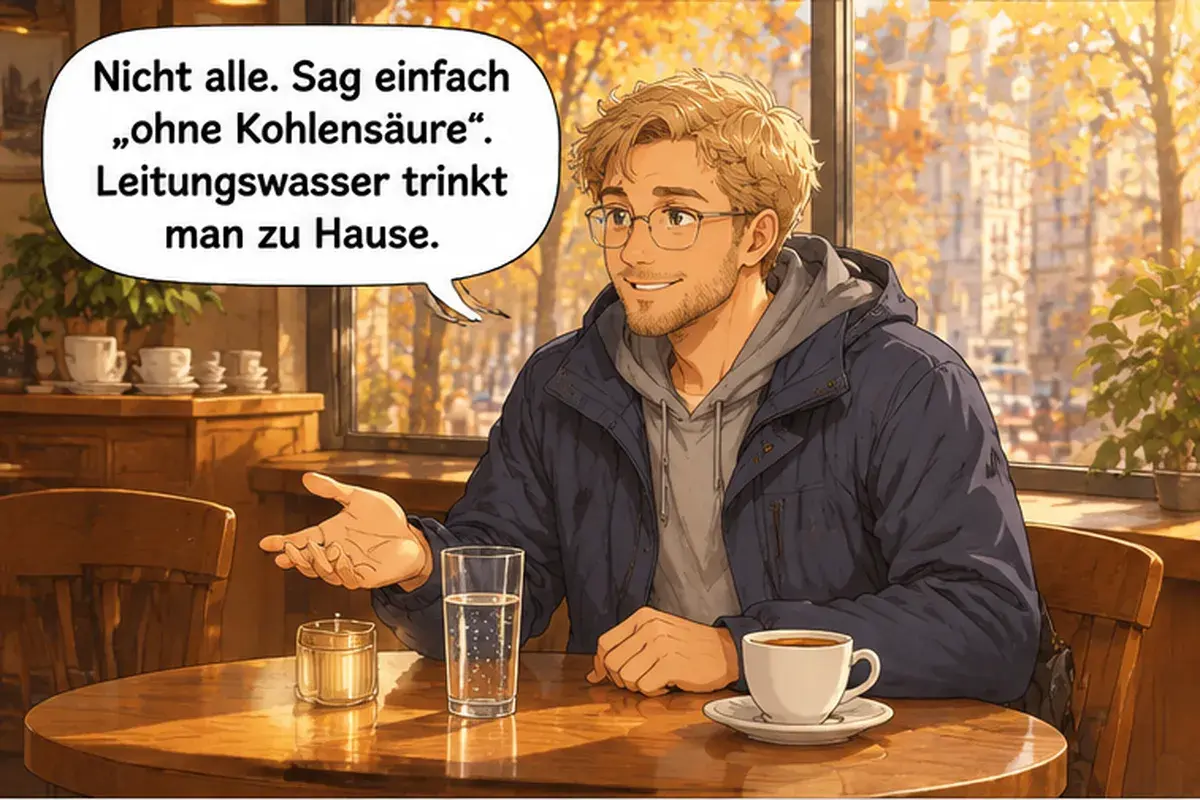
- Lukas
Nicht alle. Sag einfach „ohne Kohlensäure“. Leitungswasser trinkt man zu Hause.
Not everyone. Just say "without carbonation." People drink tap water at home.
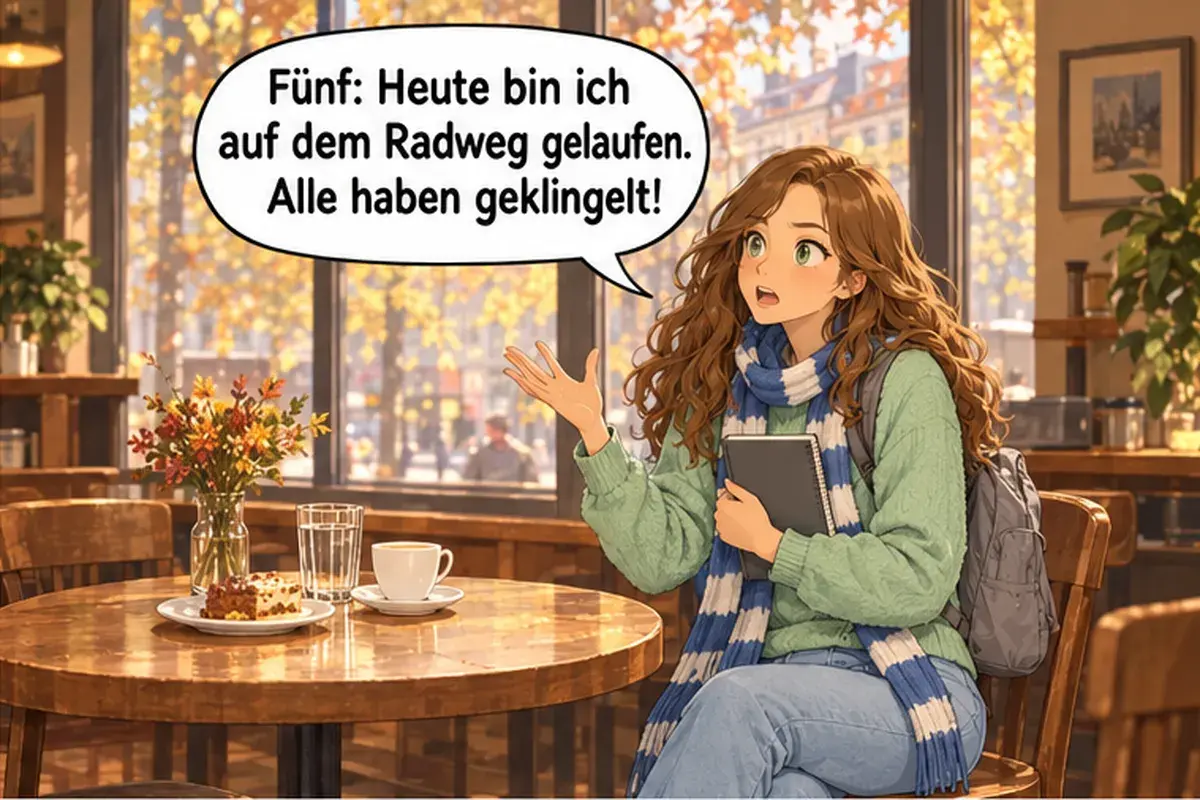
- Katja
Fünf: Heute bin ich auf dem Radweg gelaufen. Alle haben geklingelt!
Five: today I walked on the bike path. Everyone rang their bells!
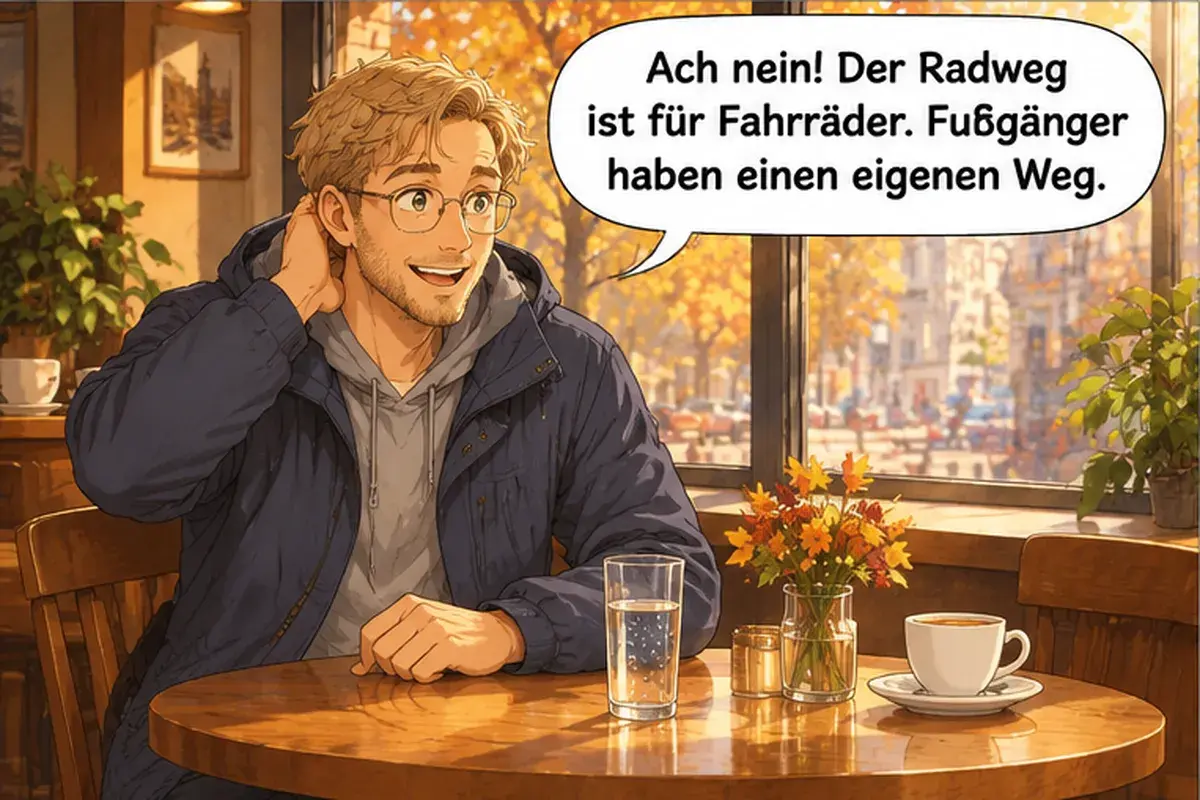
- Lukas
Ach nein! Der Radweg ist für Fahrräder. Fußgänger haben einen eigenen Weg.
Oh no! The bike path is for bikes. Pedestrians have their own path.
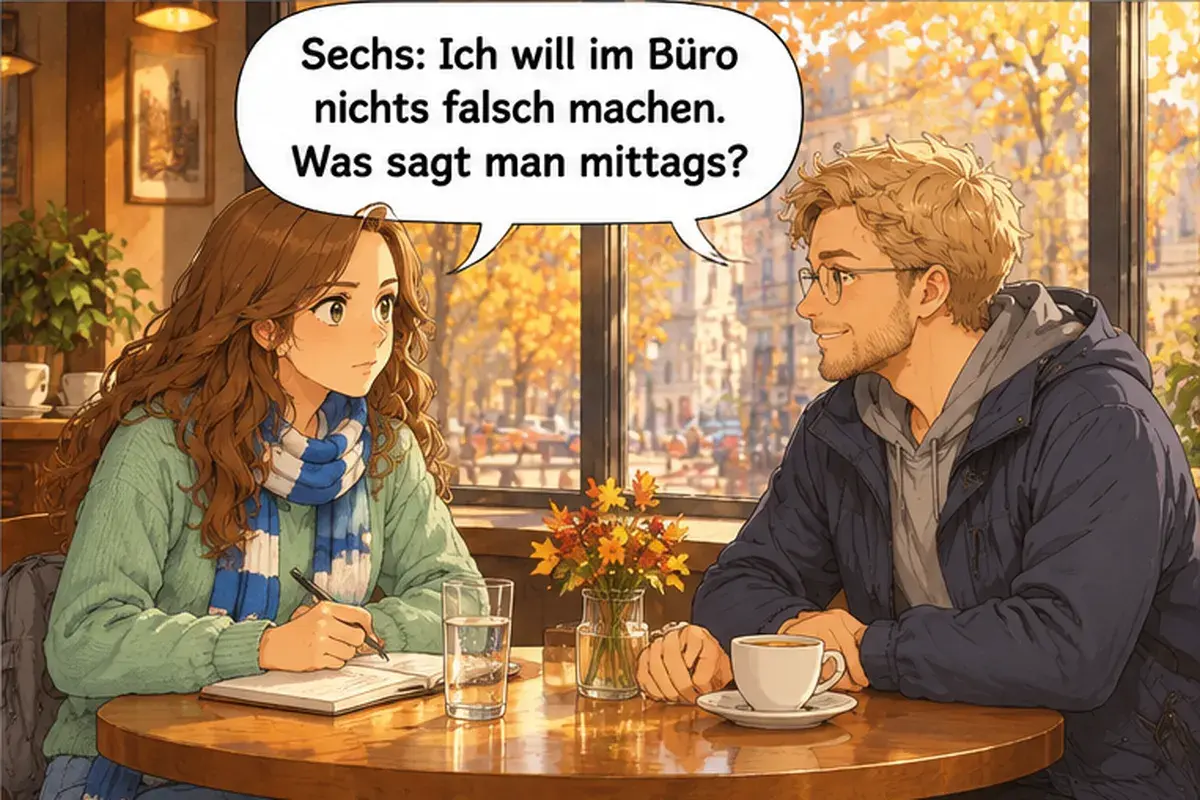
- Katja
Sechs: Ich will im Büro nichts falsch machen. Was sagt man mittags?
Six: I don't want to do anything wrong at the office. What do people say at lunchtime?
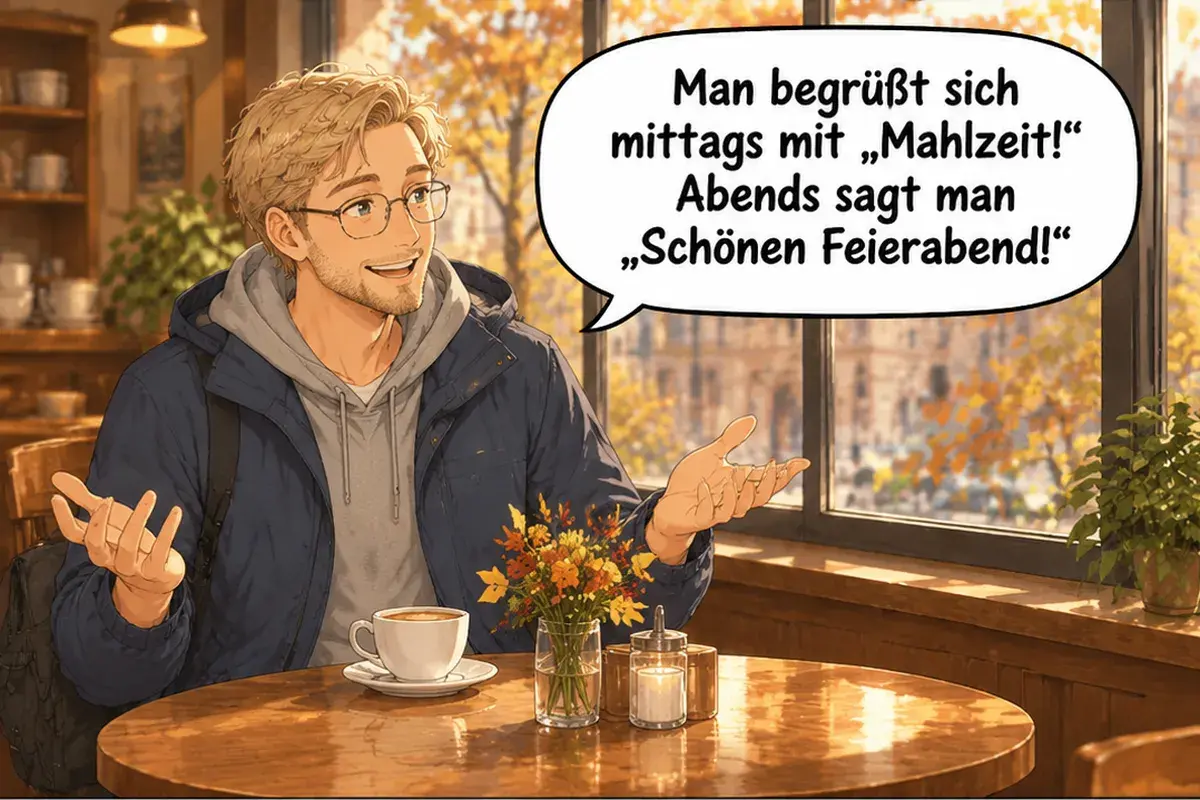
- Lukas
Man begrüßt sich mittags mit „Mahlzeit!“ Abends sagt man „Schönen Feierabend!“
At lunchtime people greet each other with "Mahlzeit!" In the evening they say, "Have a nice evening!"
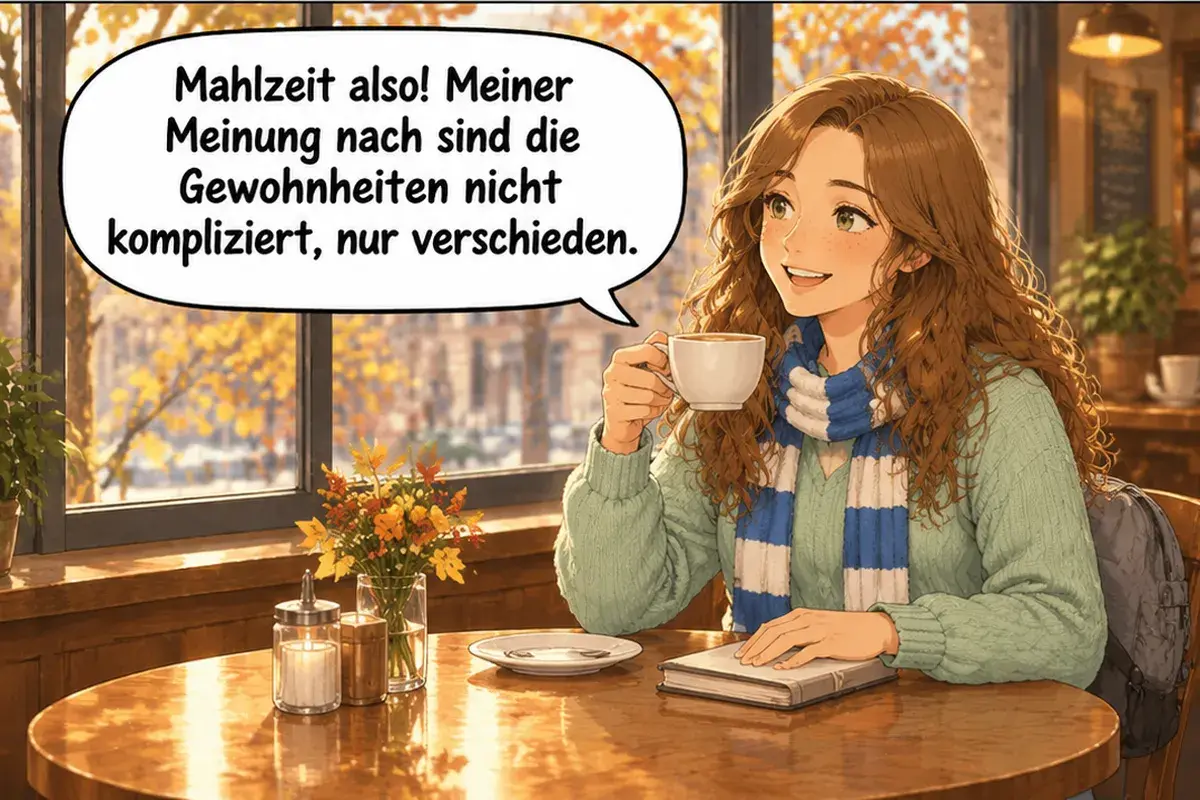
- Katja
Mahlzeit also! Meiner Meinung nach sind die Gewohnheiten nicht kompliziert, nur verschieden.
Mahlzeit, then! In my opinion, the habits aren't complicated, just different.
Grammar for this text
- Nur Barzahlung —
Barzahlung=bar(in cash) +Zahlung(payment). You see it on signs: "cash only". - Ich habe immer Bargeld dabei —
dabei habenmeans "to have on you";dabeigoes to the end, like a separable prefix. - Man darf keinen Lärm machen —
darfis a form ofdürfen(may, to be allowed to), A1. The ich form and the er / man form are the same:darf(no-t, andübecomesa).manmeans "people in general" and takes the er form of the verb.keinen Lärmis accusative. - Ordnung muss sein —
mussis a form ofmüssen(must, to have to):man muss, no-t, andübecomesu.seingoes to the end: "there must be order". - Heute bin ich auf dem Radweg gelaufen — the Perfekt (spoken past), unit 1:
bin … gelaufen.laufenmeans "to walk" here; it's movement, so the helper verb issein.auf dem Radweg(on the bike path) is dative (unit 8). Alle haben geklingelt —allemeans "everyone", and the verb is plural;geklingeltis the past participle of the regular verbklingeln(to ring a bell), withhaben. - Man begrüßt sich mittags mit „Mahlzeit!“ —
begrüßtis the man form ofbegrüßen(to greet);sichmeans "each other" here (unit 6).Mahlzeitis how coworkers greet each other at lunchtime. Schönen Feierabend — a set phrase with no verb, likeSchönen Tag noch: "Have a nice evening (after work)". - Meiner Meinung nach sind die Gewohnheiten nicht kompliziert, nur verschieden —
meiner Meinung nachis a set phrase, "in my opinion":nachcomes after the other words, andmeineris dative feminine (unit 3). The verb comes right after the phrase.verschiedenmeans "different, not the same".
Words and grammar of the unit: Talking about German habits.
Learn the words from the texts with flashcards
In the app, you can tap any word in a text to see its translation, forms and examples, and new words stick with flashcards. 15 minutes a day.
Start for freeEverything is open for free. No card needed to sign up.