
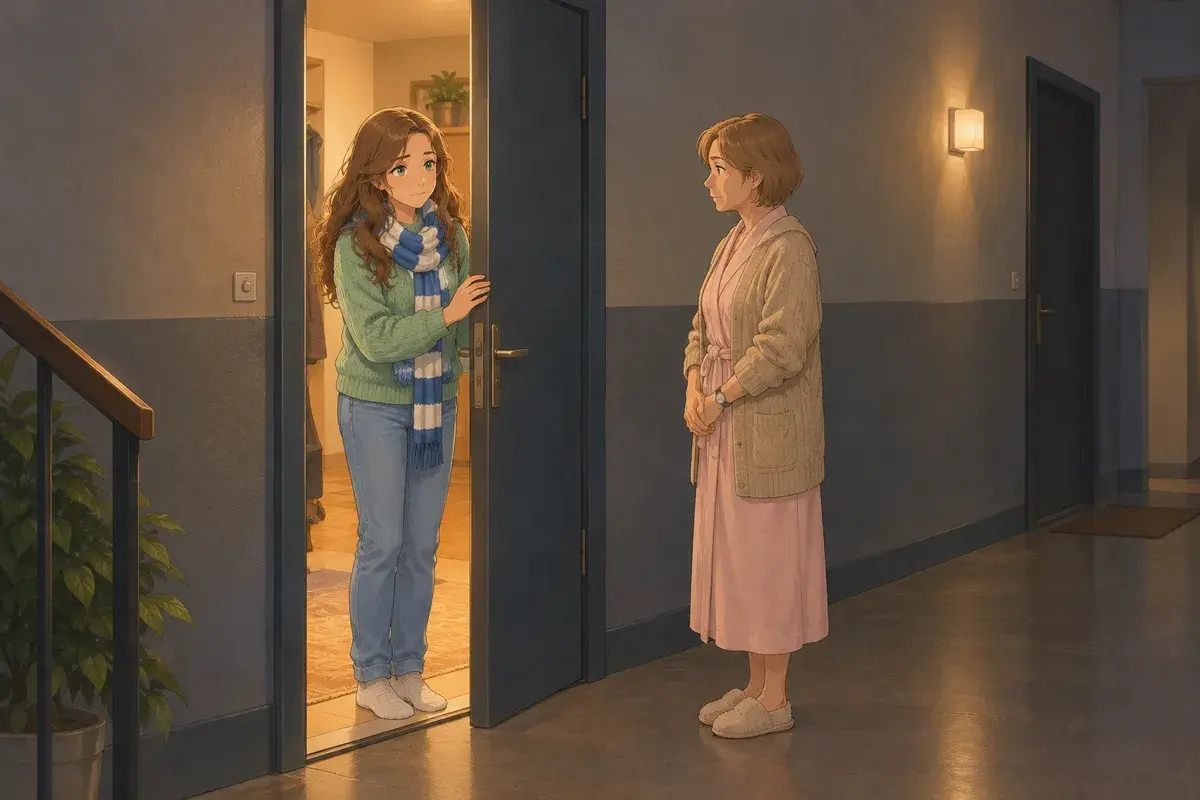
German dialogue with translation · A2 · 10 lines
Es ist schon nach zehn It's already past ten
Comic · 10 panels
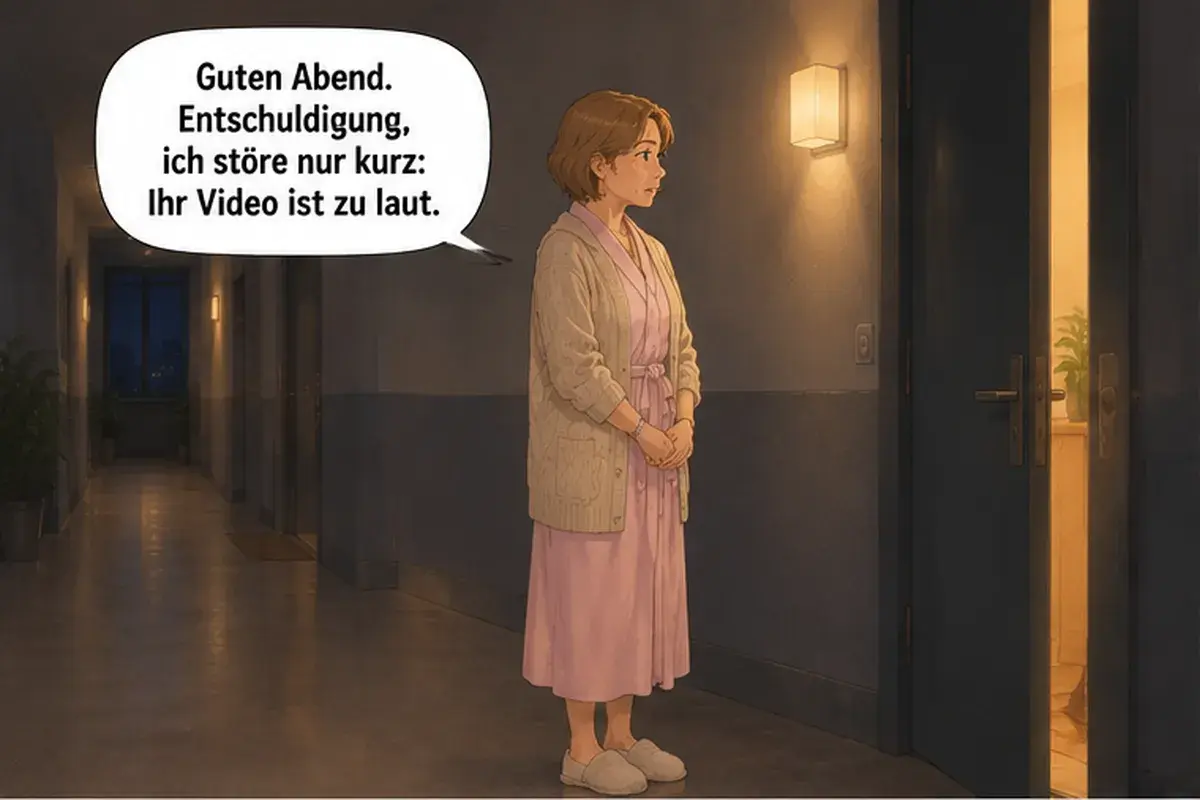
- Nachbarin
Guten Abend. Entschuldigung, ich störe nur kurz: Ihr Video ist zu laut.
Good evening. Excuse me, I'll only bother you for a moment: your video is too loud (formal).
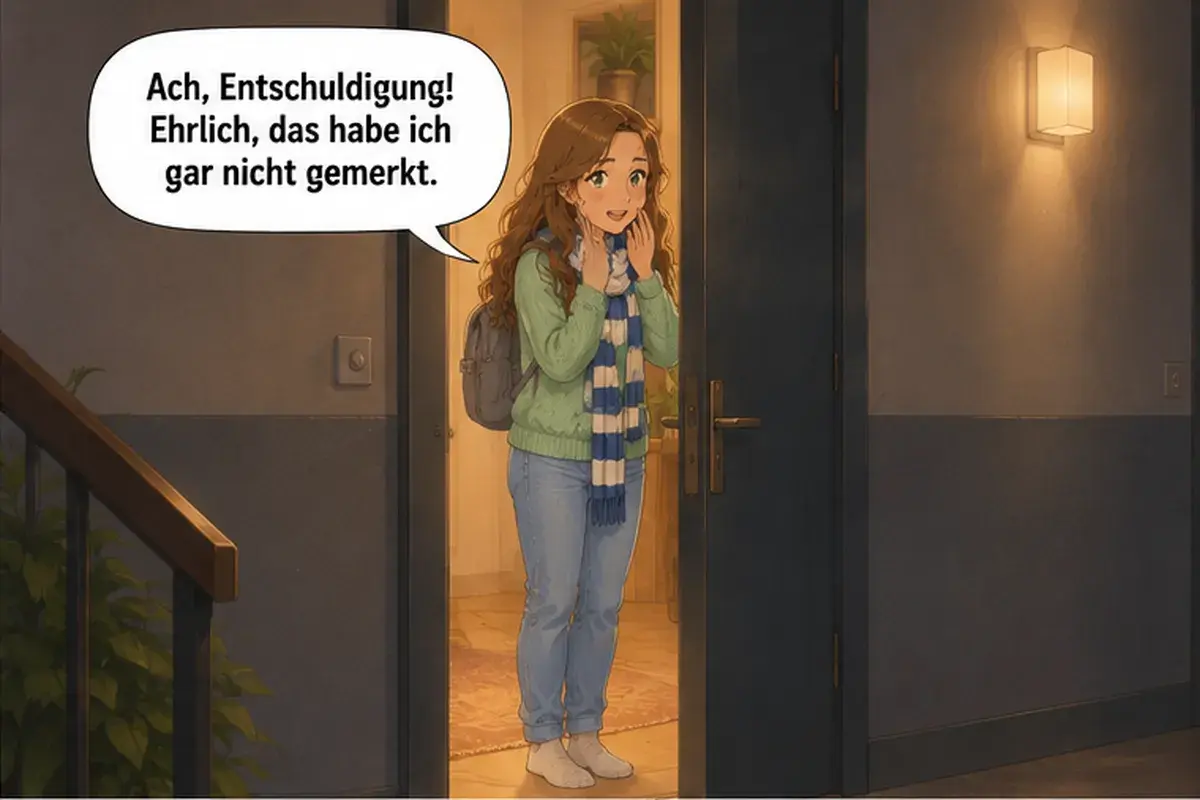
- Katja
Ach, Entschuldigung! Ehrlich, das habe ich gar nicht gemerkt.
Oh, I'm sorry! Honestly, I didn't notice that at all.
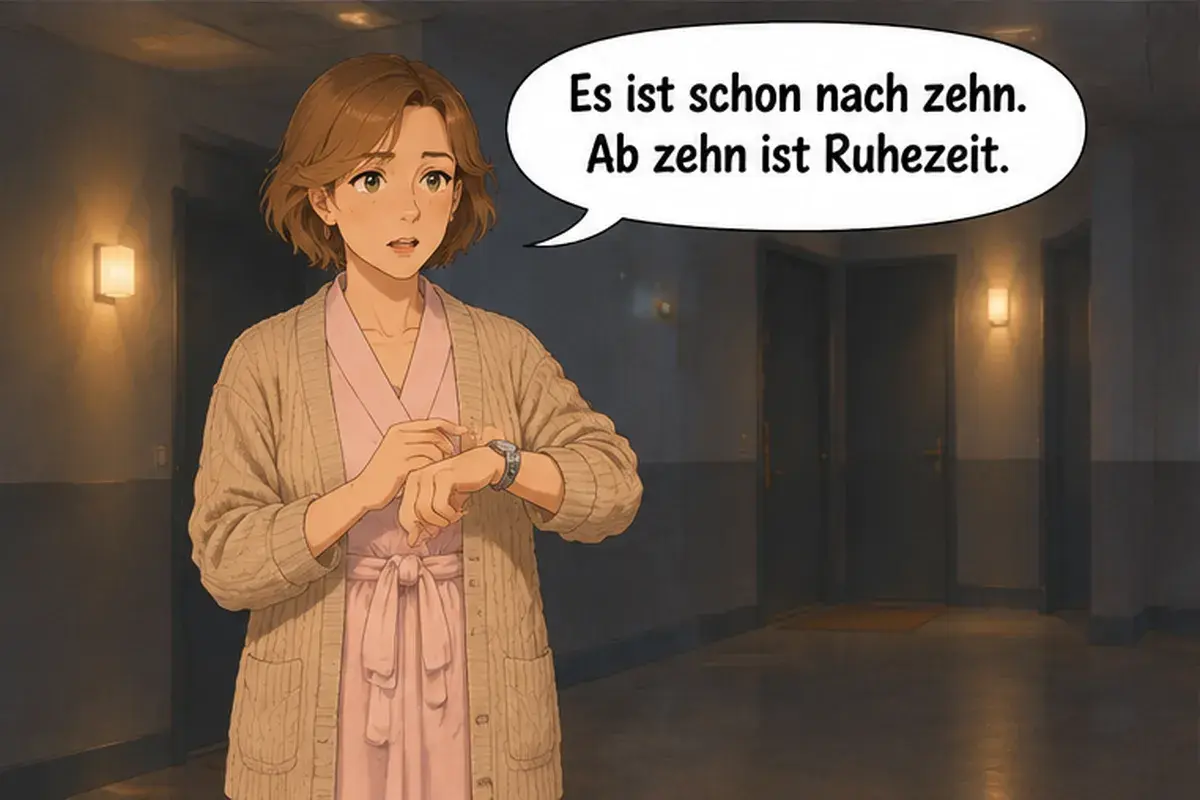
- Nachbarin
Es ist schon nach zehn. Ab zehn ist Ruhezeit.
It's already past ten. From ten on, it's quiet hours.
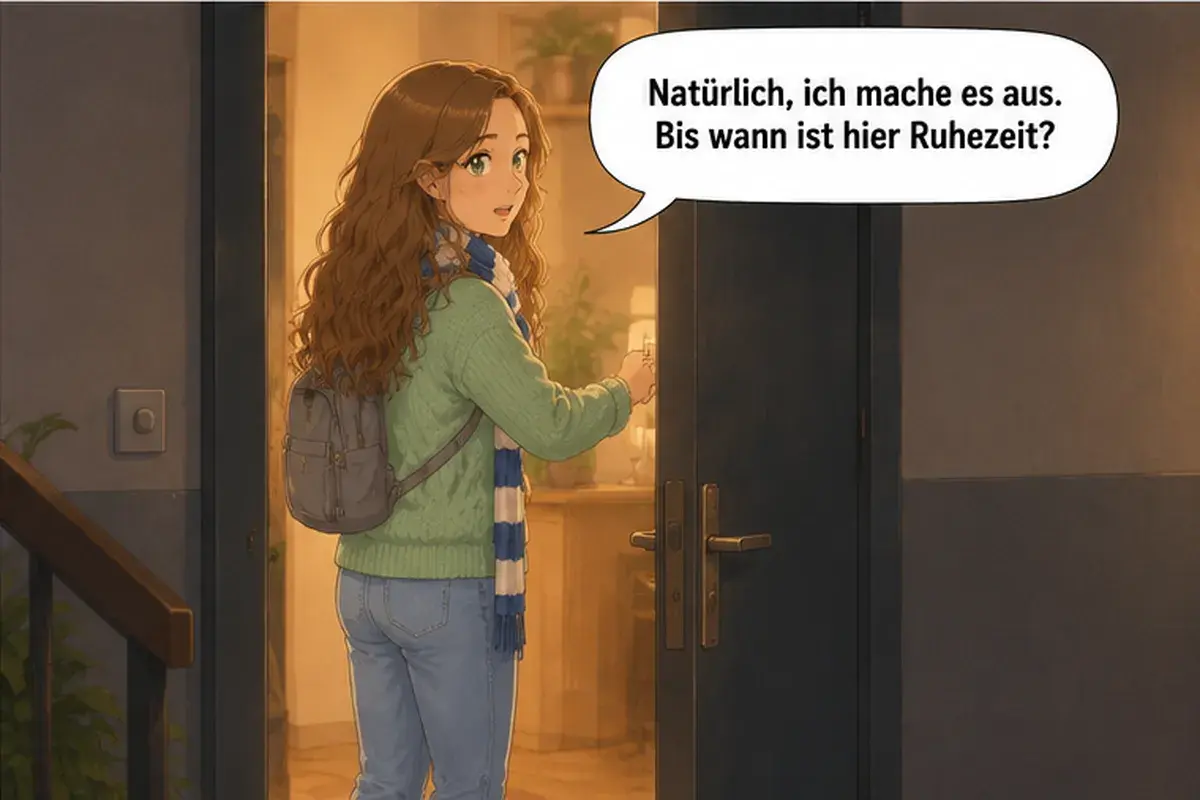
- Katja
Natürlich, ich mache es aus. Bis wann ist hier Ruhezeit?
Of course, I'll turn it off. Until what time are quiet hours here?
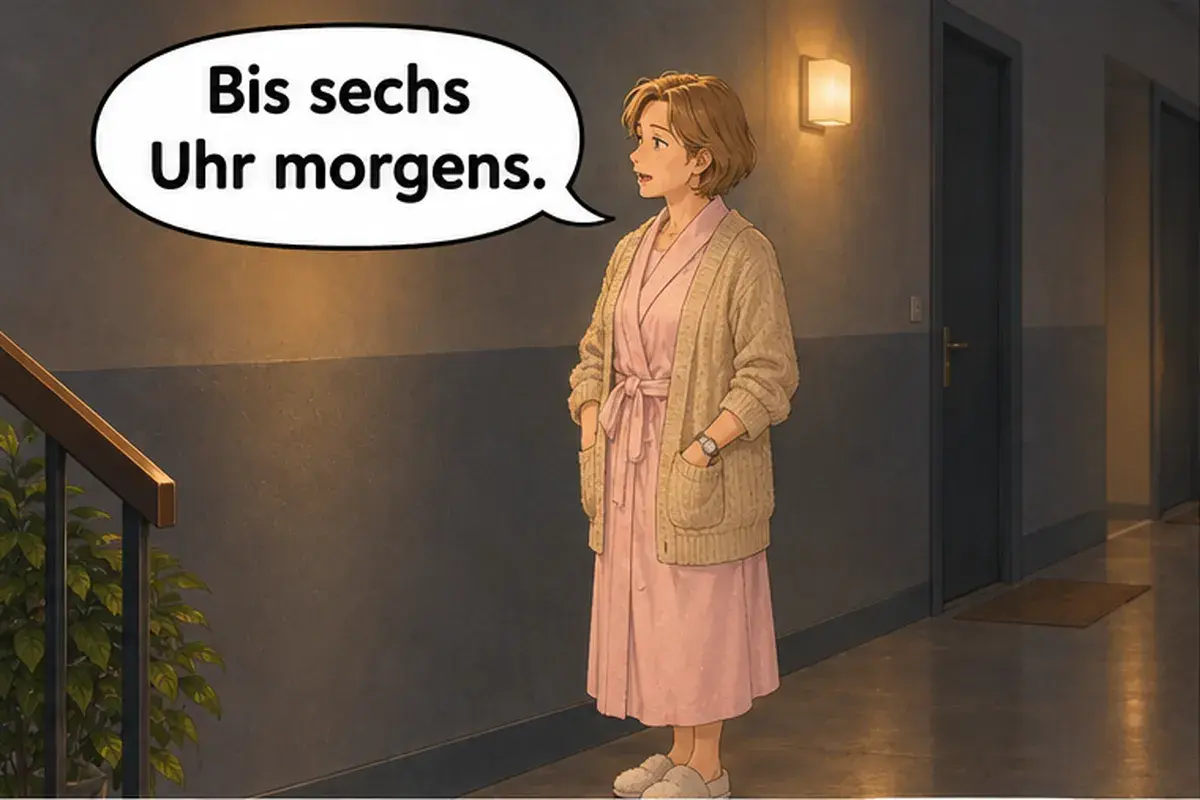
- Nachbarin
Bis sechs Uhr morgens.
Until six in the morning.
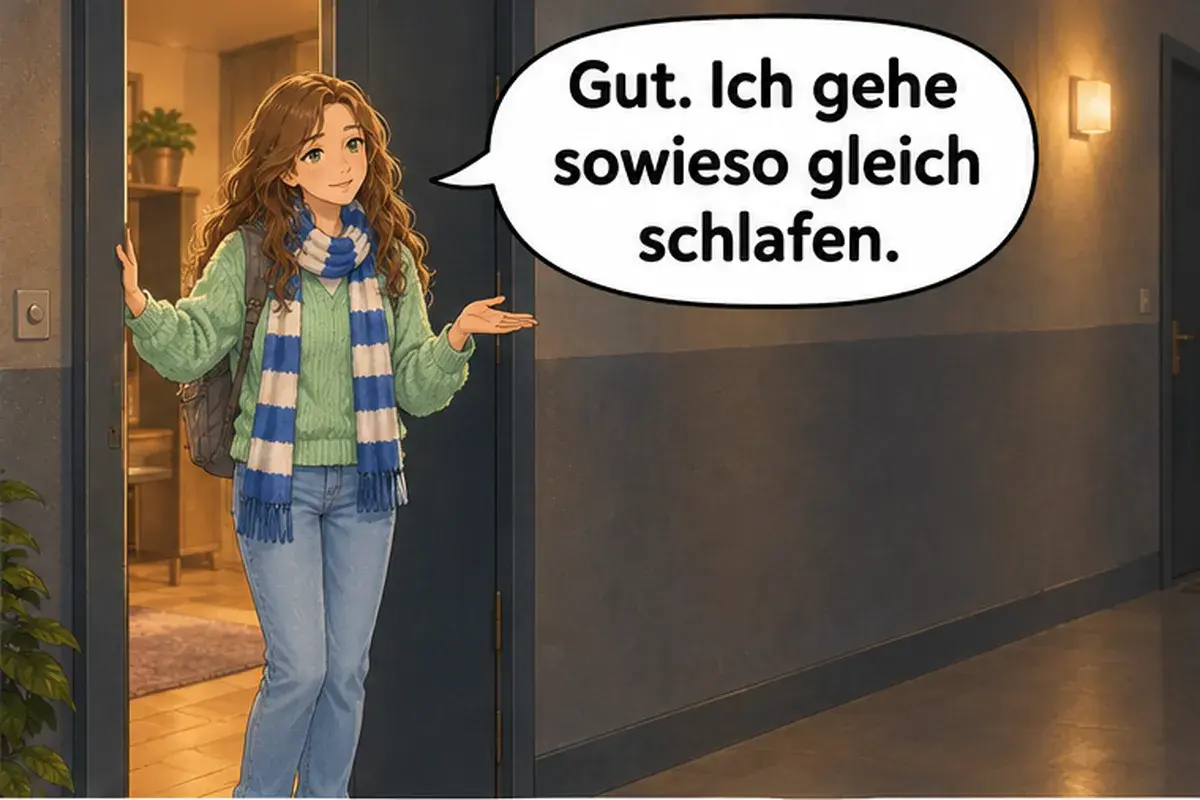
- Katja
Gut. Ich gehe sowieso gleich schlafen.
Good. I'm going to bed in a minute anyway.
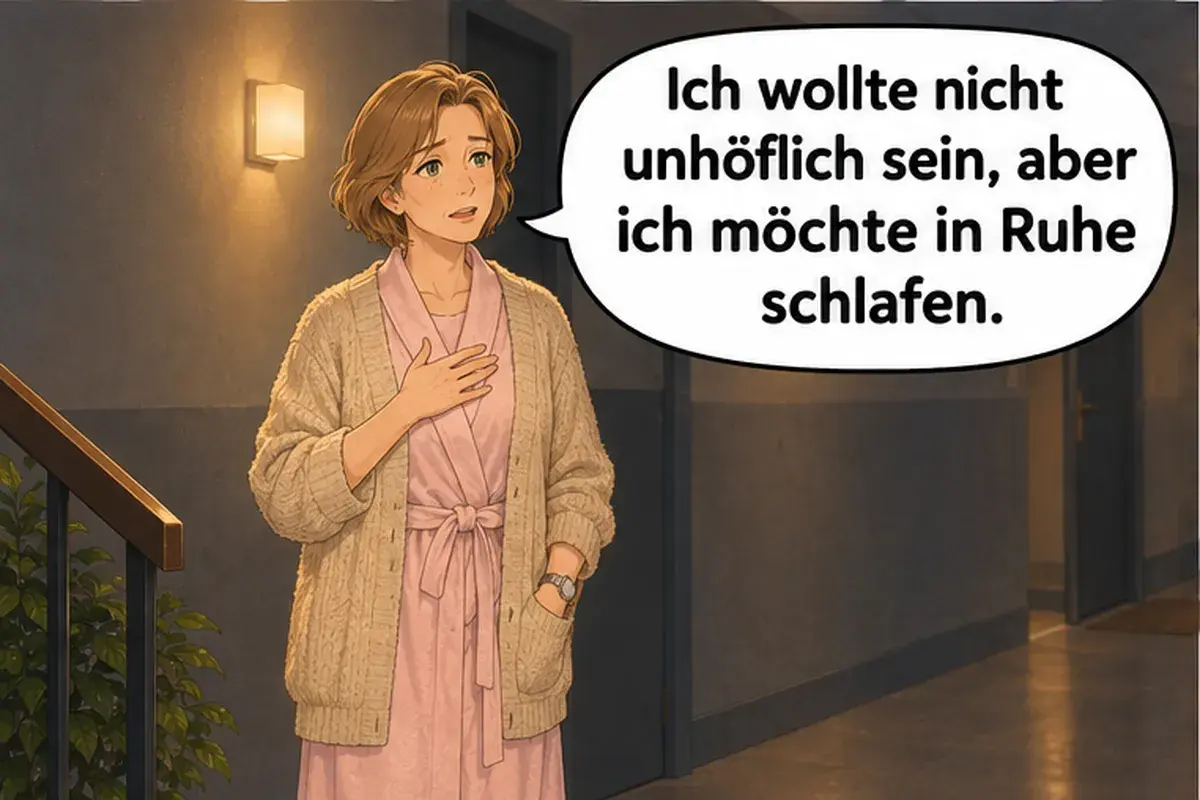
- Nachbarin
Ich wollte nicht unhöflich sein, aber ich möchte in Ruhe schlafen.
I didn't want to be rude, but I'd like to sleep in peace.
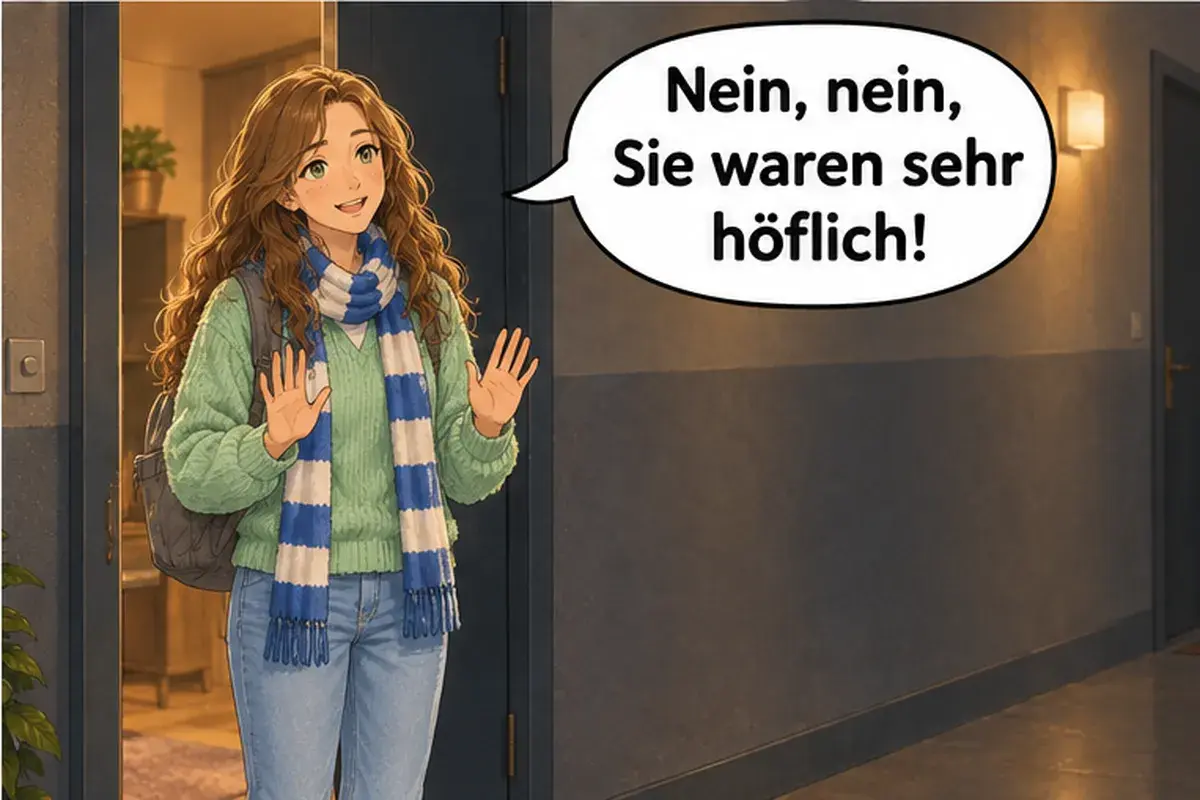
- Katja
Nein, nein, Sie waren sehr höflich!
No, no, you were very polite (formal)!
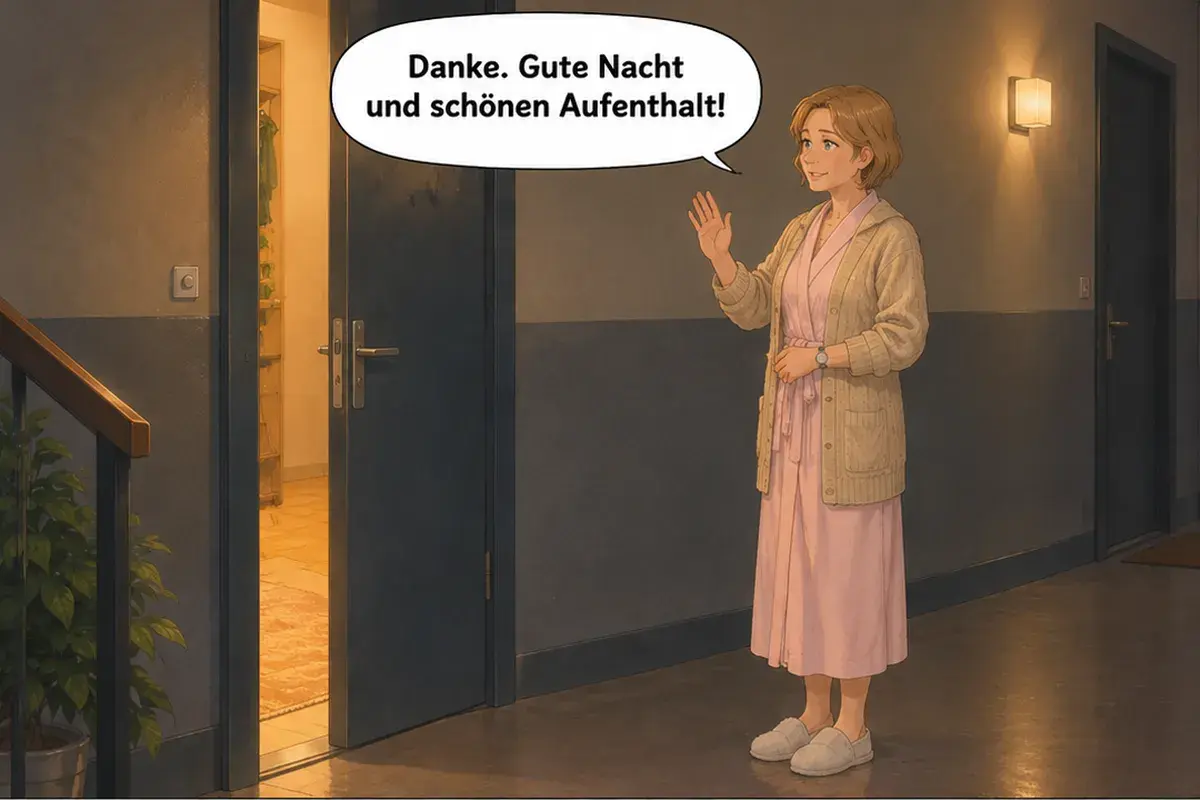
- Nachbarin
Danke. Gute Nacht und schönen Aufenthalt!
Thank you. Good night, and enjoy your stay!
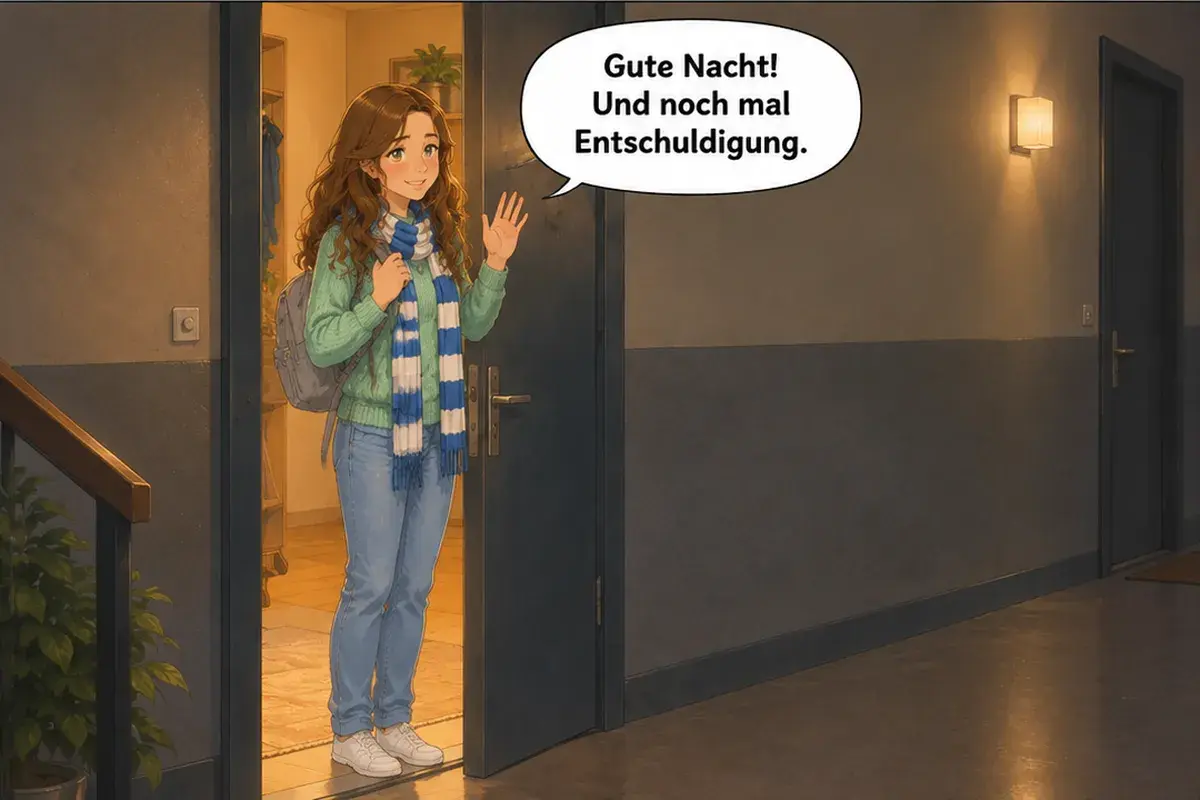
- Katja
Gute Nacht! Und noch mal Entschuldigung.
Good night! And sorry again.
Grammar for this text
- Ihr Video ist zu laut —
Ihrwith a capital letter means "your" (formal, to one person you callSie). It's notihr(you, to several people you calldu). In the middle of a sentence, the capital letter tells you which one it is. - Es ist schon nach zehn — with clock times,
Uhris often left out:nach zehnmeans "after ten", andschonmeans "already". Ab zehn ist Ruhezeit —abmeans "from … on": "from ten on". Bis sechs Uhr morgens —bismeans "until". - Ich mache es aus —
ausmachen(to turn off) is a separable verb:ausgoes to the end. Bis wann ist hier Ruhezeit? —bis wannmeans "until what time". - Ich gehe sowieso gleich schlafen —
schlafen gehenmeans "to go to bed";sowiesomeans "anyway";gleichmeans "in a minute, soon". - Ich wollte nicht unhöflich sein —
wollteis the Präteritum (narrative past) ofwollen, unit 11: "I wanted". The ich form and the er / sie / es form are the same. The sentence means "I didn't want to be rude." Sie waren sehr höflich —warenis the Präteritum ofsein, the Sie form (A1). - Gute Nacht und schönen Aufenthalt! — set wishes with no verb. Und noch mal Entschuldigung —
noch malmeans "once more, again".
Words and grammar of the unit: Talking about German habits.
Learn the words from the texts with flashcards
In the app, you can tap any word in a text to see its translation, forms and examples, and new words stick with flashcards. 15 minutes a day.
Start for freeEverything is open for free. No card needed to sign up.