

German story with translation · A1 · 9 lines
Die Liste heißt komisch The list is called "strange"
Comic · 6 panels
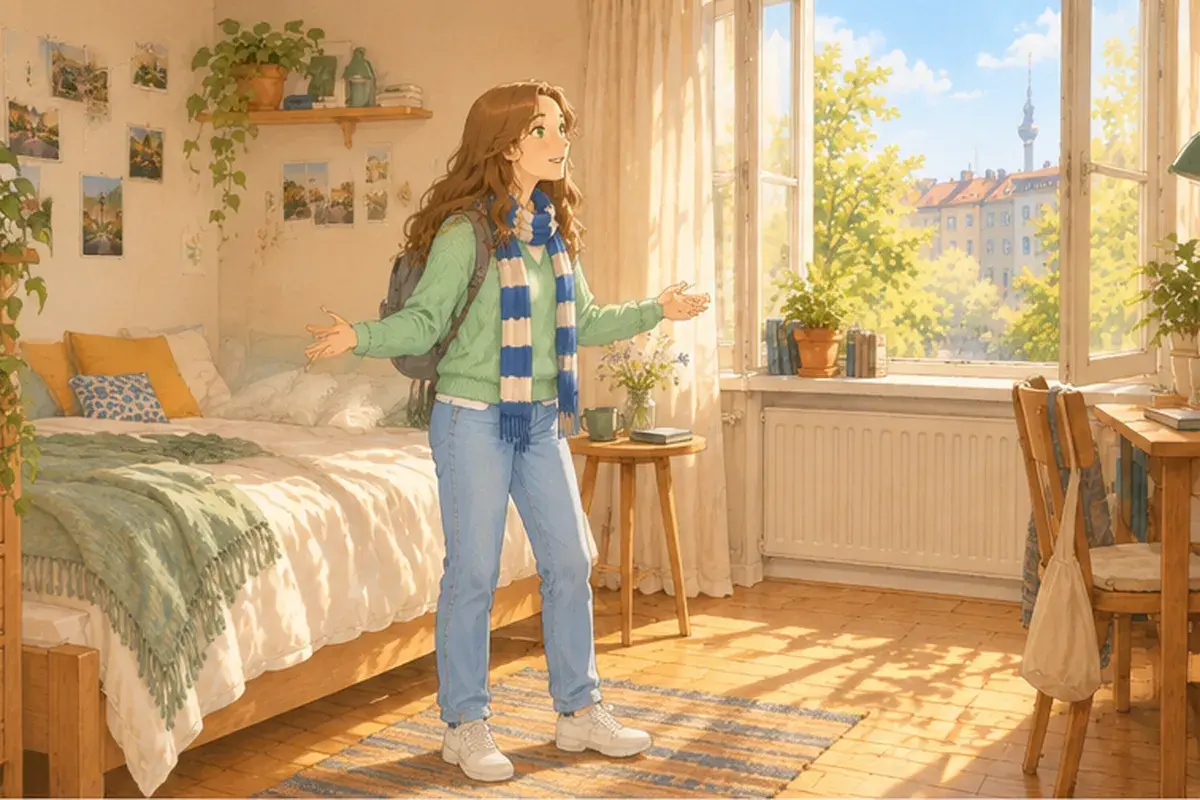
Jetzt bin ich in Berlin, und die Wohnung ist groß.
Now I'm in Berlin, and the apartment is big.
Es gibt ein Bett, einen Tisch und ein Fenster.
There's a bed, a table and a window.
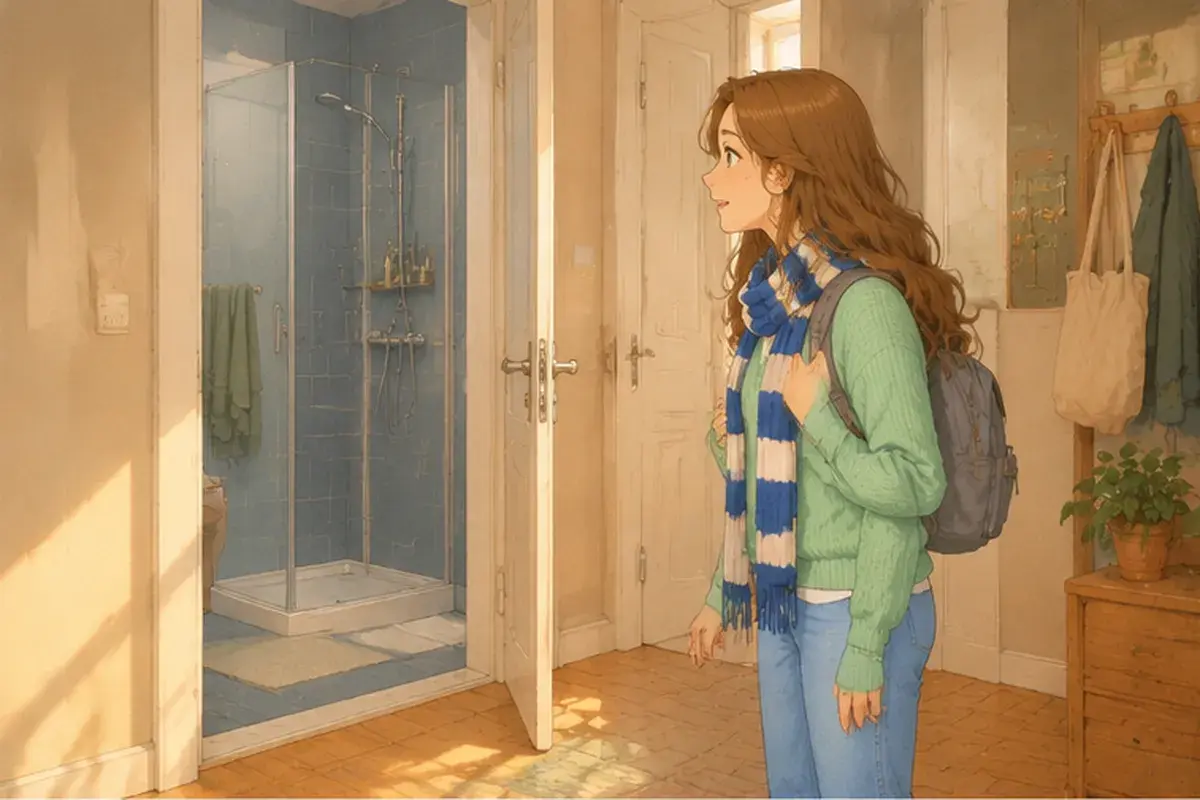
Das Licht ist schön, und die Dusche ist neu.
The light is nice, and the shower is new.

Unten ist die Straße, oben ist Frau Brandt, die Vermieterin.
Down below is the street, upstairs is Frau Brandt, the landlady.

Im Handy habe ich eine neue Liste.
On my phone, I have a new list.
Die Liste heißt „komisch“.
The list is called "strange".

Eins: Meine Wohnung ist im 4. Stock — in Deutschland ist das der 3. Stock!
One: my apartment is on the fourth floor — in Germany, that's the third floor!
Zwei: Der Aufzug ist alt und klein, aber er geht.
Two: the elevator is old and small, but it works.

Die Liste ist klein, aber Berlin ist groß.
The list is small, but Berlin is big.
Grammar for this text
- Es gibt ein Bett, einen Tisch und ein Fenster. —
es gibtis the fixed phrase "there is".ein Bettandein Fensterare das-words, buteinen Tischis a der-word, so it gets-en. Unit 5 explains why; for now, learn it as a chunk. - Unten ist die Straße, oben ist Frau Brandt, die Vermieterin. — the verb is second again: after
Untencomesist.die Vermieterin— the landlady; a man isder Vermieter, and the ending-inmakes the word feminine. - Im Handy habe ich eine neue Liste. —
Im Handy(on my phone) is in first place, the verbhabeis second, andichcomes after it.habeis the ich form ofhaben(to have).das Handyis the German word for a cell phone.neueisneuwith the ending-ebecause it stands beforedie Liste; more on this later. - Die Liste heißt „komisch“. —
heißtis the er form ofheißen(to be called);ßsounds like ss. Katja named her list "komisch", that is, "strange".komischusually means strange, not comic. - Eins: Meine Wohnung ist im 4. Stock — in Deutschland ist das der 3. Stock! —
meine— my (Wohnungis a die-word, so it gets-e).im 4. Stockis readim vierten Stock, on the fourth floor;imisin dem, learn it as a chunk. In Germany the floor at street level,das Erdgeschoss(the ground floor), doesn't count as aStock: the count starts one level up. So the German third floor is the fourth floor in Katja's count — and in American English, where the street level is the first floor.dashere means "that" (the same floor). - Der Aufzug ist alt und klein, aber er geht. —
erstands forder Aufzug(a der-word), where English says "it". About machines,gehtmeans "works".
Words and grammar of the unit: Move into an apartment.
Learn the words from the texts with flashcards
In the app, you can tap any word in a text to see its translation, forms and examples, and new words stick with flashcards. 15 minutes a day.
Start for freeEverything is open for free. No card needed to sign up.