

German dialogue with translation · A1 · 14 lines
Gibt es hier WLAN? Is there Wi-Fi here?
Comic · 14 panels
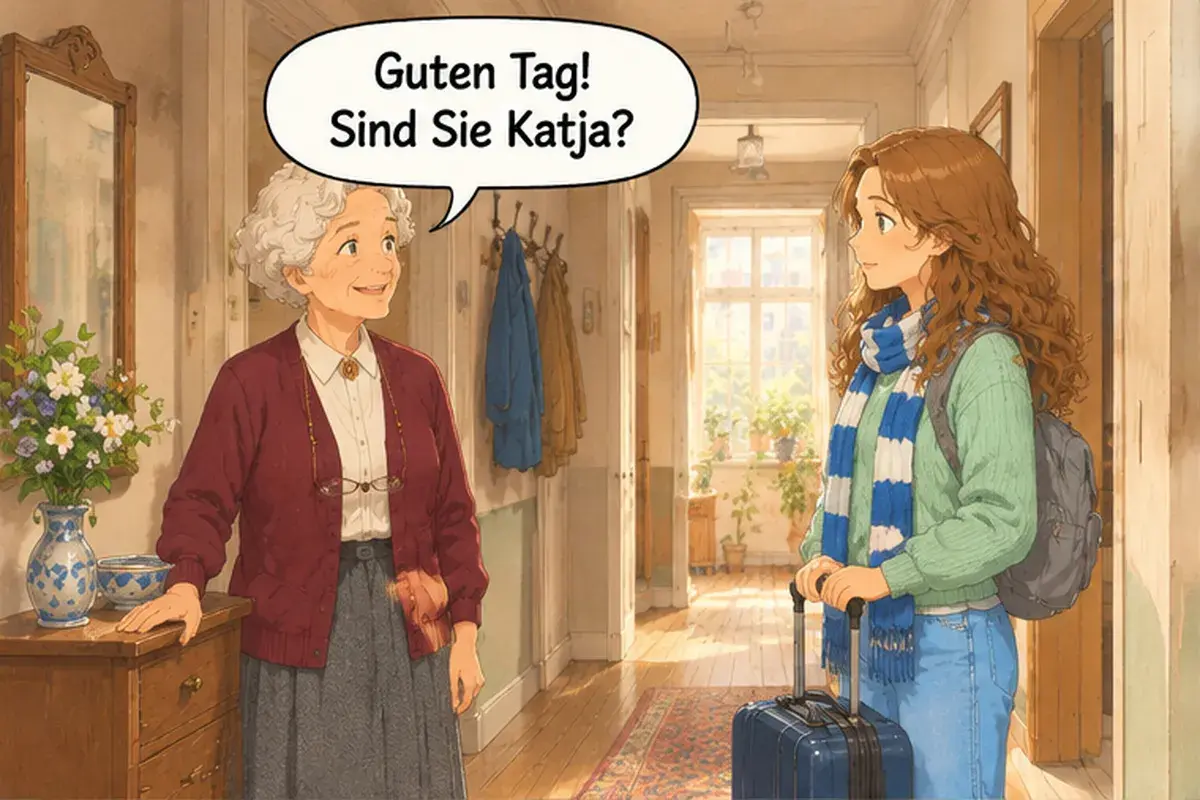
- Frau Brandt
Guten Tag! Sind Sie Katja?
Hello! Are you Katja? (formal)
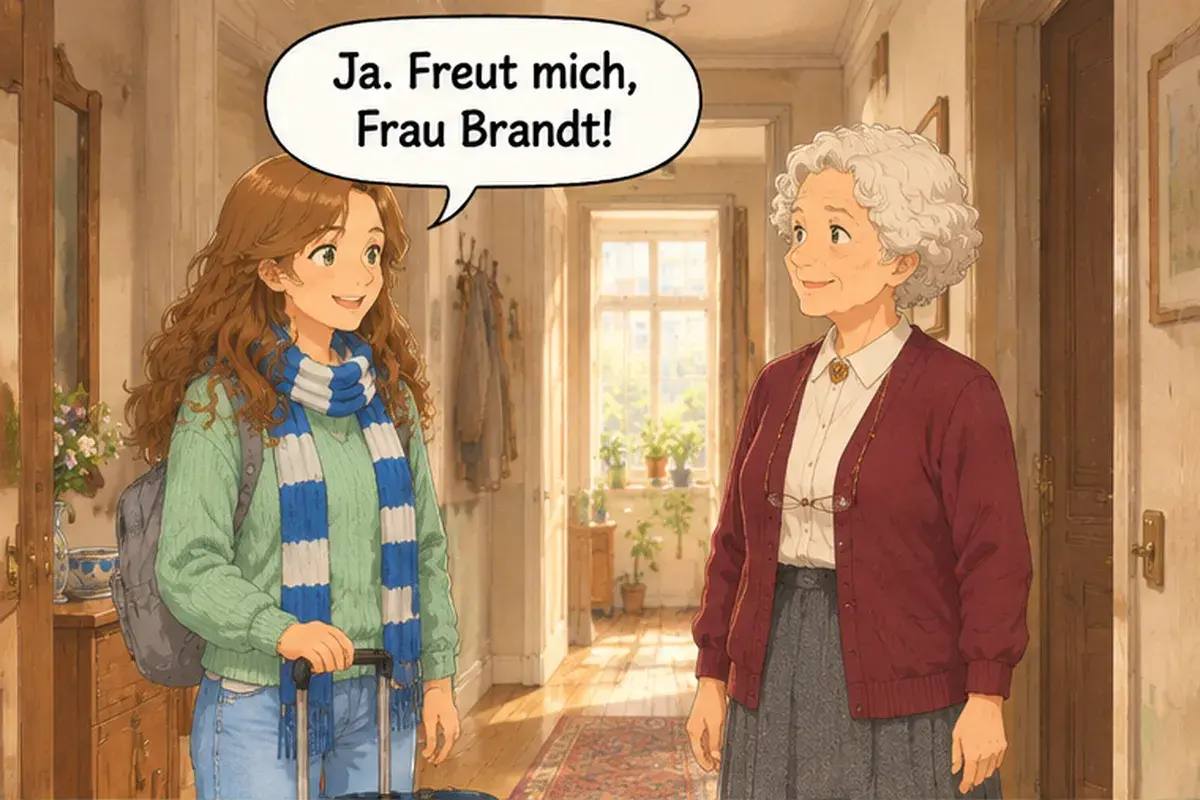
- Katja
Ja. Freut mich, Frau Brandt!
Yes. Nice to meet you, Frau Brandt!
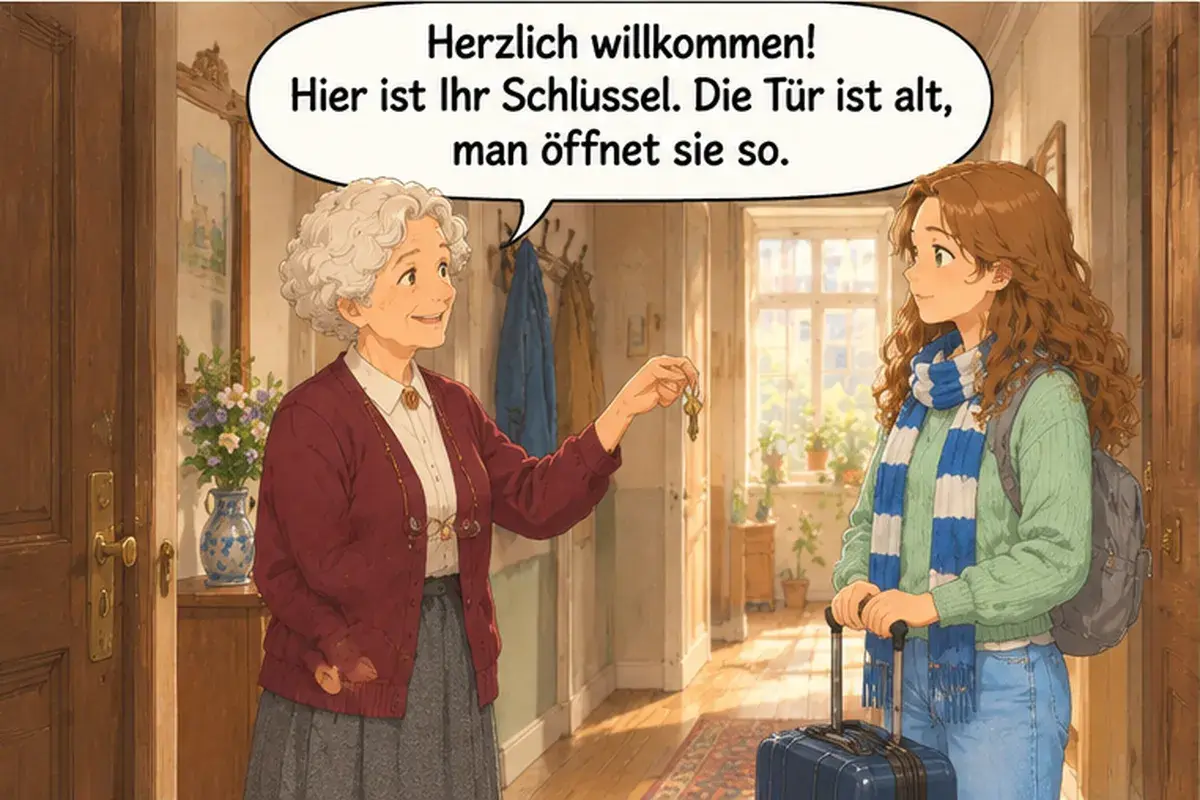
- Frau Brandt
Herzlich willkommen! Hier ist Ihr Schlüssel. Die Tür ist alt, man öffnet sie so.
Welcome! Here's your key. The door is old; you open it like this. (formal)
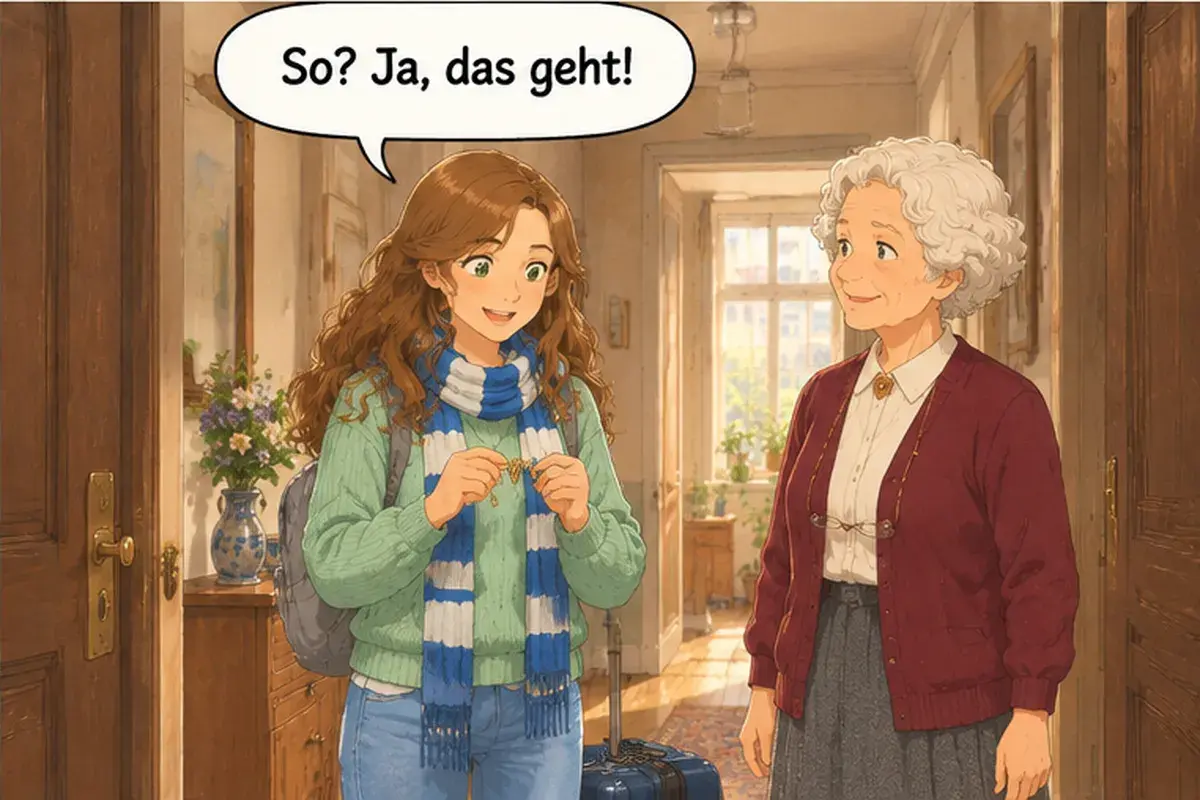
- Katja
So? Ja, das geht!
Like this? Yes, it works!
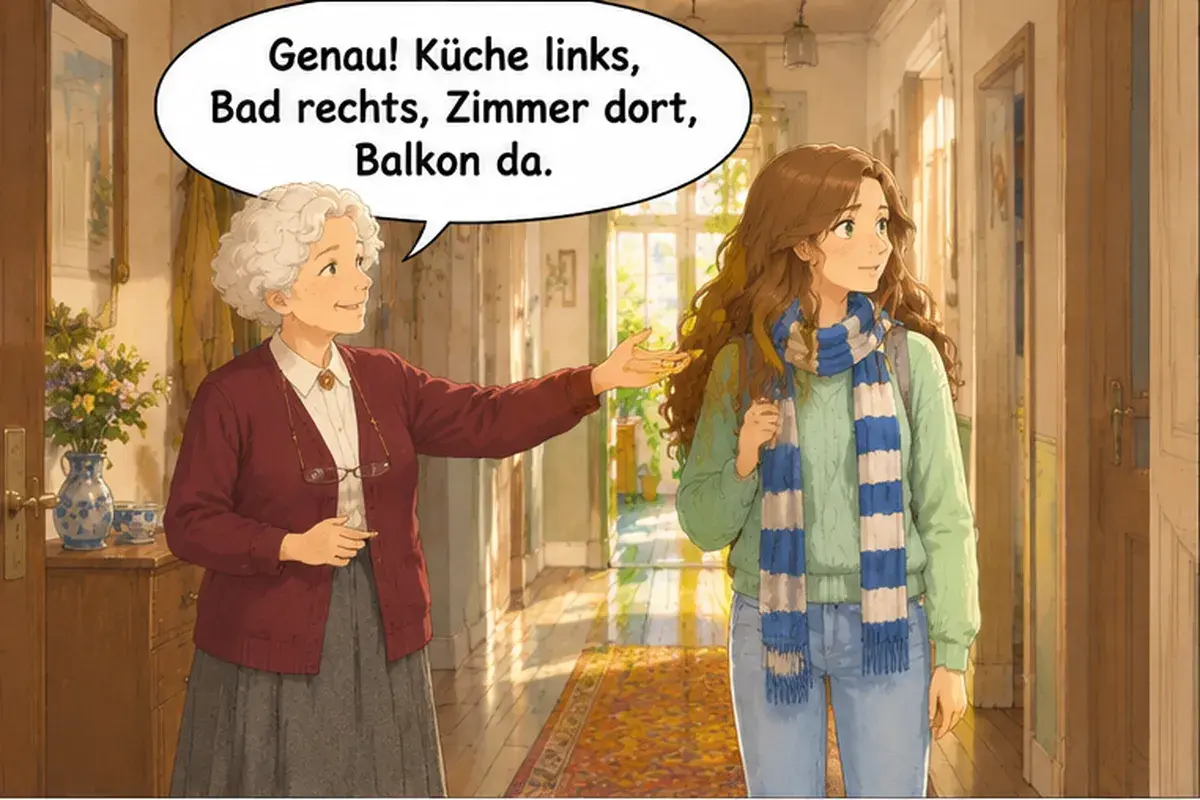
- Frau Brandt
Genau! Küche links, Bad rechts, Zimmer dort, Balkon da.
Exactly! Kitchen on the left, bathroom on the right, room over there, balcony there.
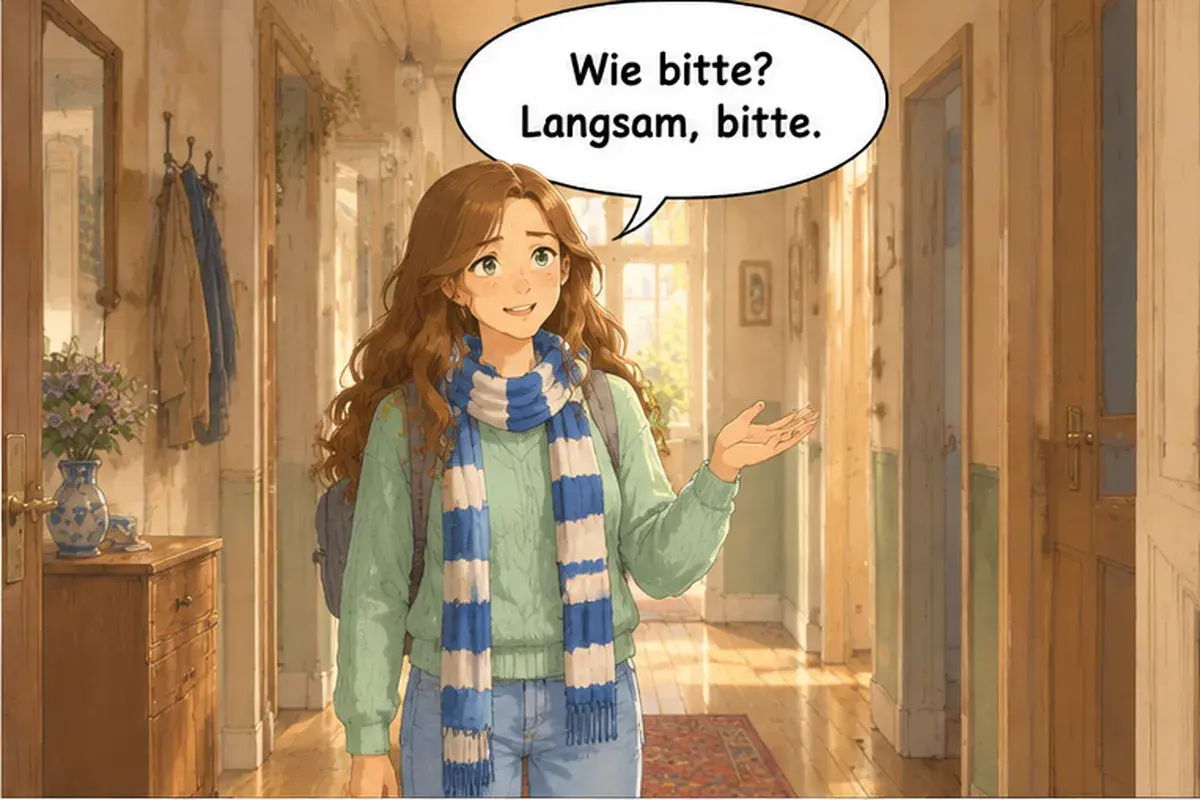
- Katja
Wie bitte? Langsam, bitte.
Sorry? Slowly, please.
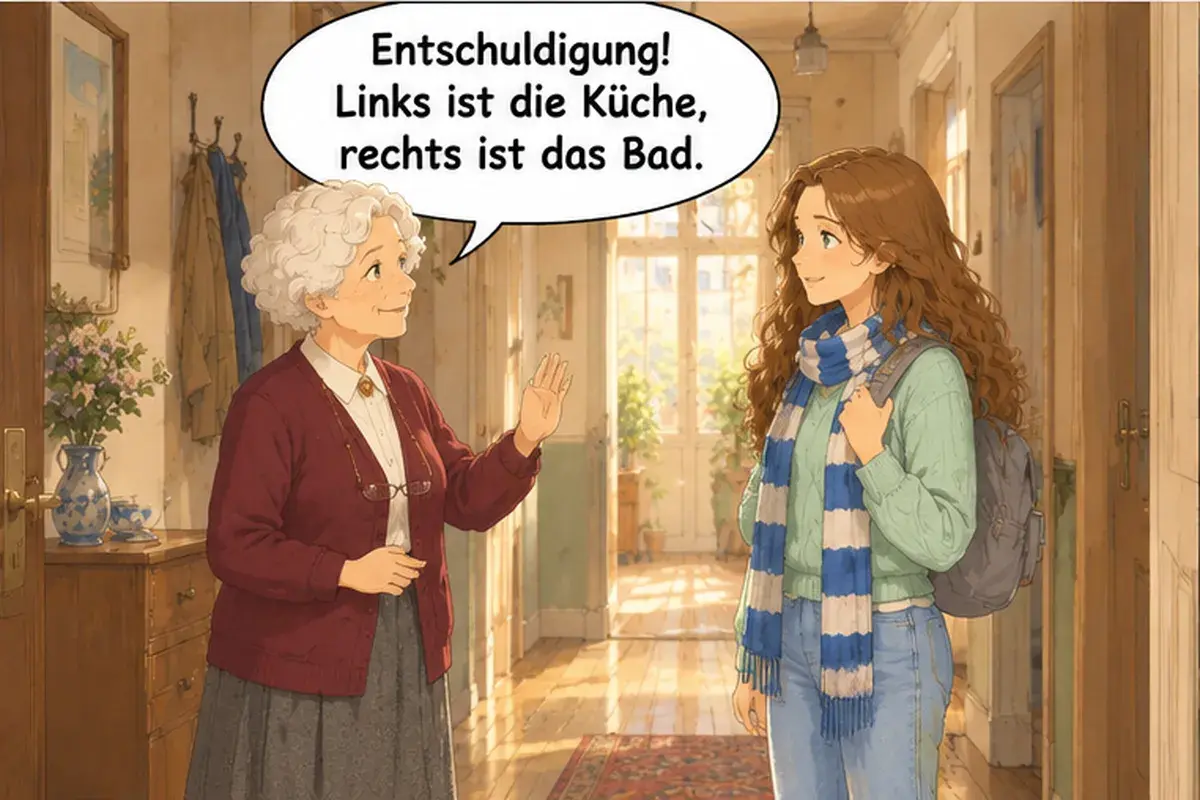
- Frau Brandt
Entschuldigung! Links ist die Küche, rechts ist das Bad.
Sorry! On the left is the kitchen, on the right is the bathroom.
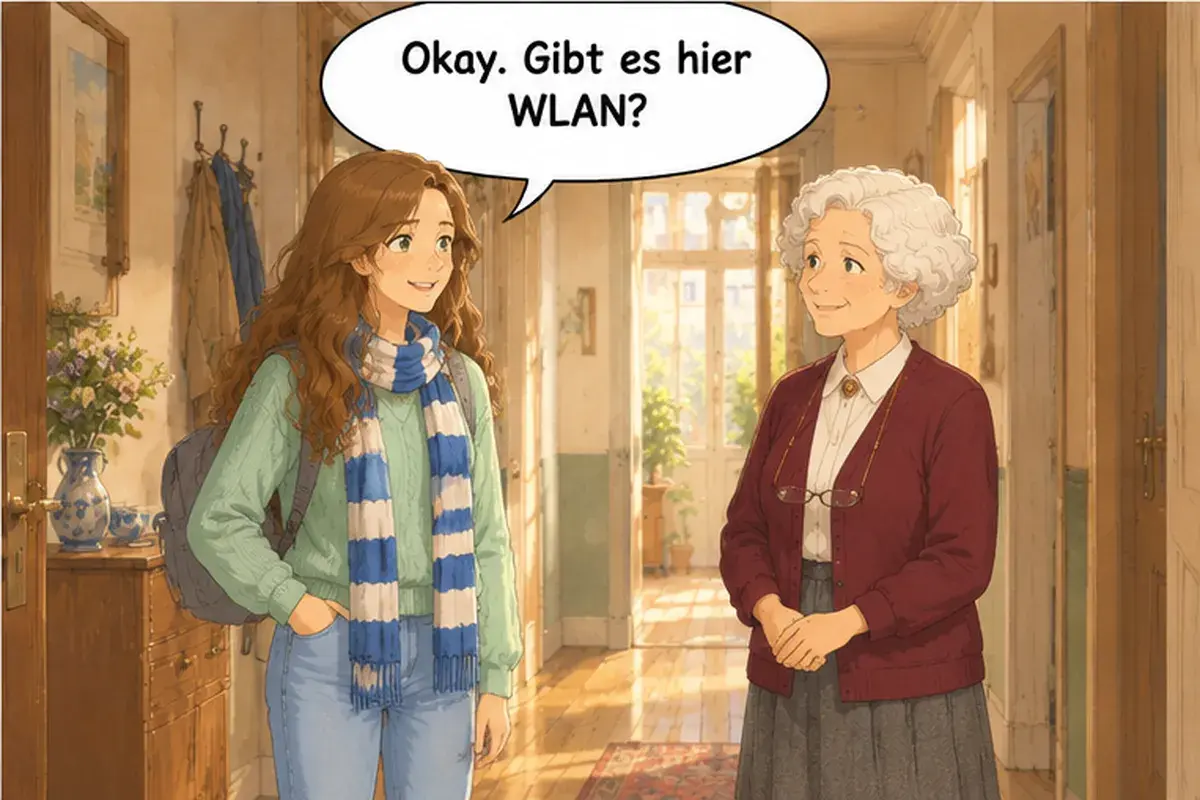
- Katja
Okay. Gibt es hier WLAN?
OK. Is there Wi-Fi here?
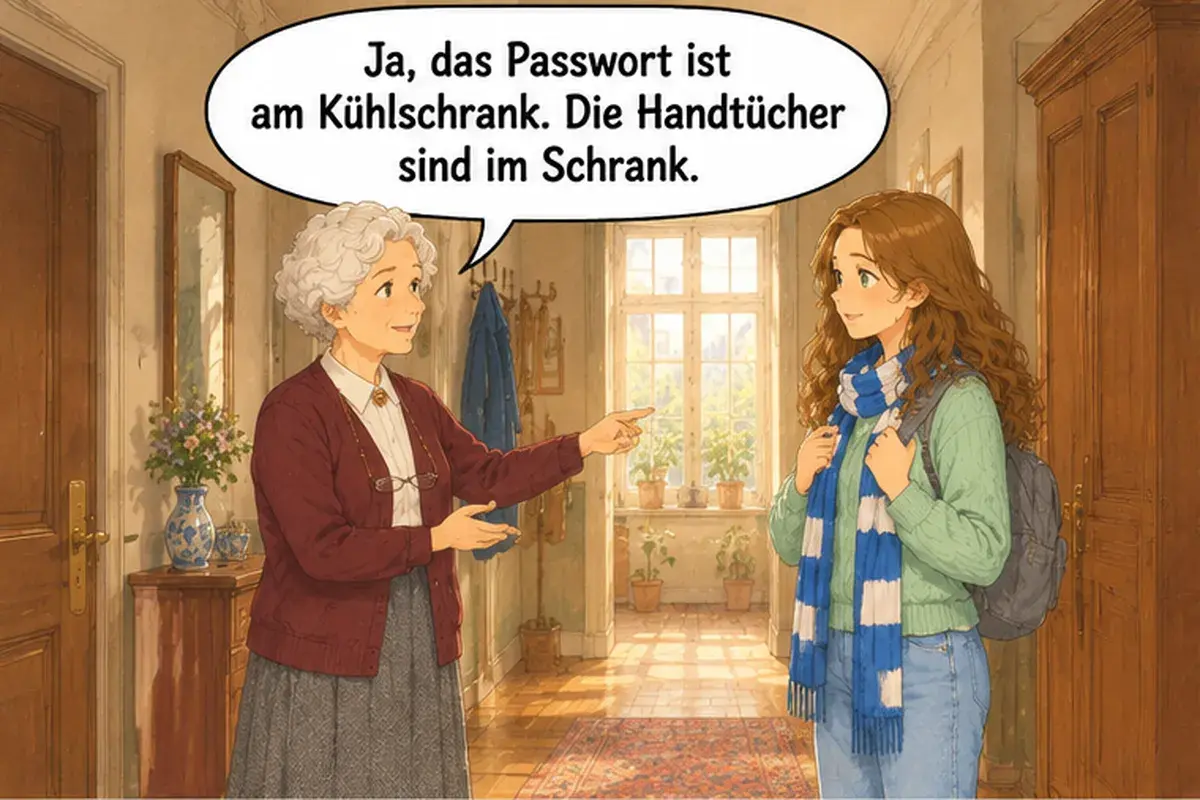
- Frau Brandt
Ja, das Passwort ist am Kühlschrank. Die Handtücher sind im Schrank.
Yes, the password is on the fridge. The towels are in the closet.
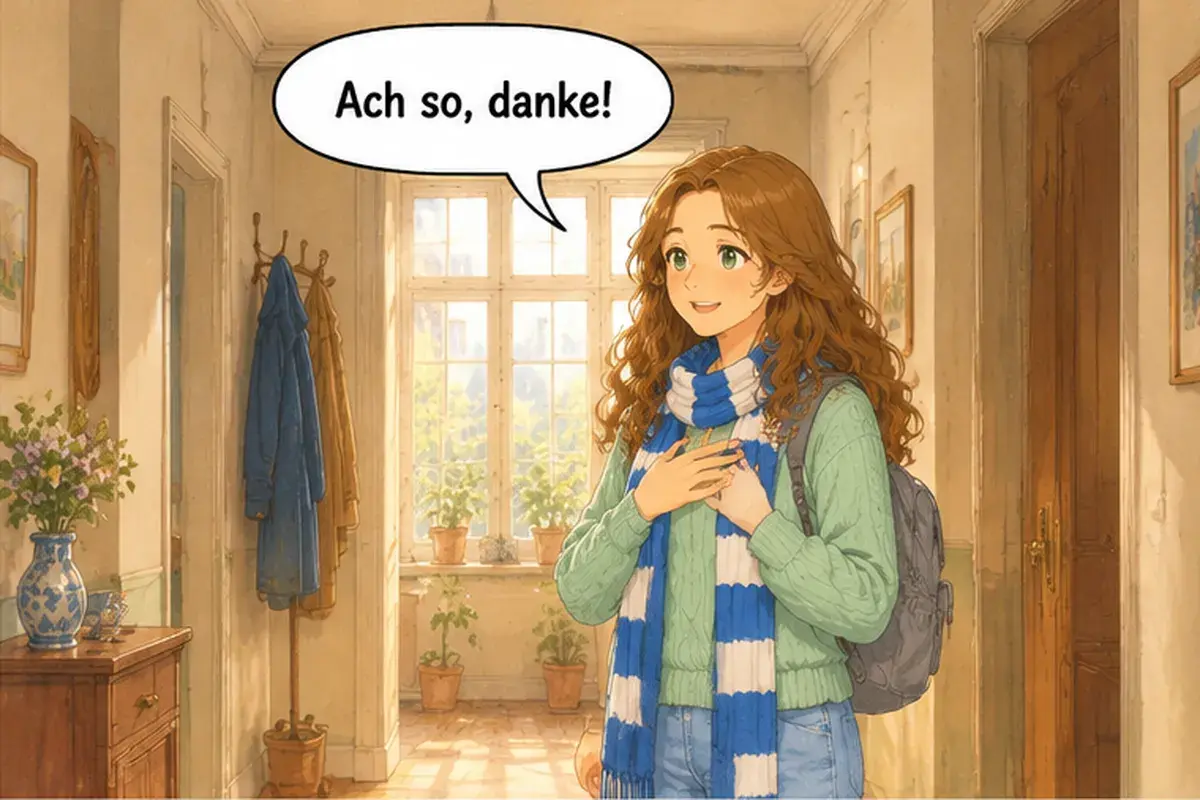
- Katja
Ach so, danke!
Oh, I see, thanks!
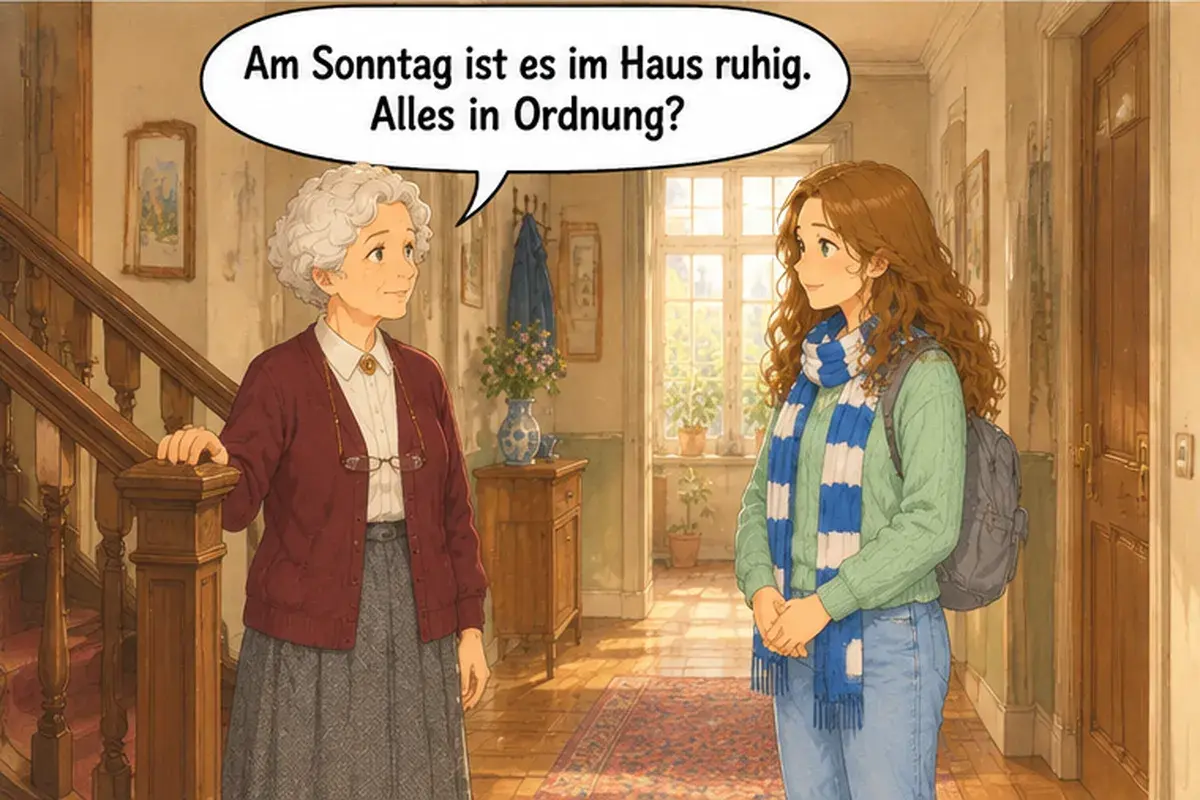
- Frau Brandt
Am Sonntag ist es im Haus ruhig. Alles in Ordnung?
On Sunday, it's quiet in the building. Is everything all right?
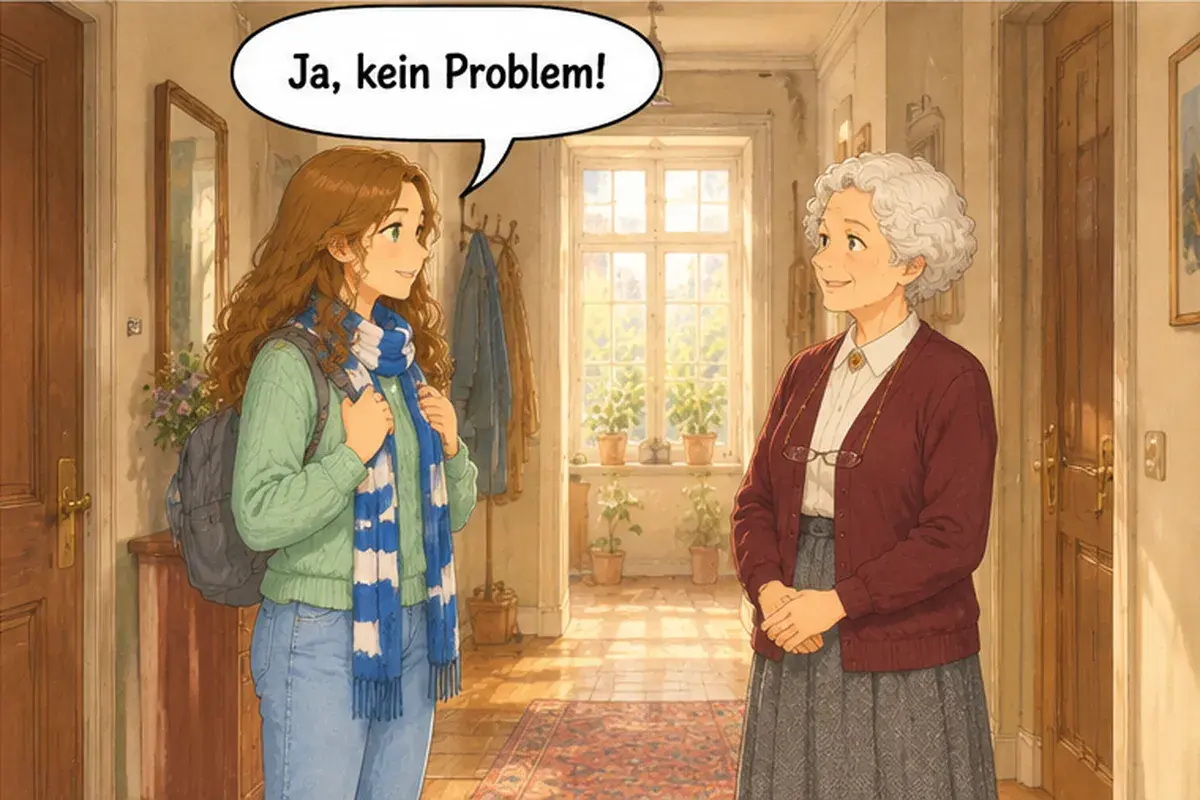
- Katja
Ja, kein Problem!
Yes, no problem!
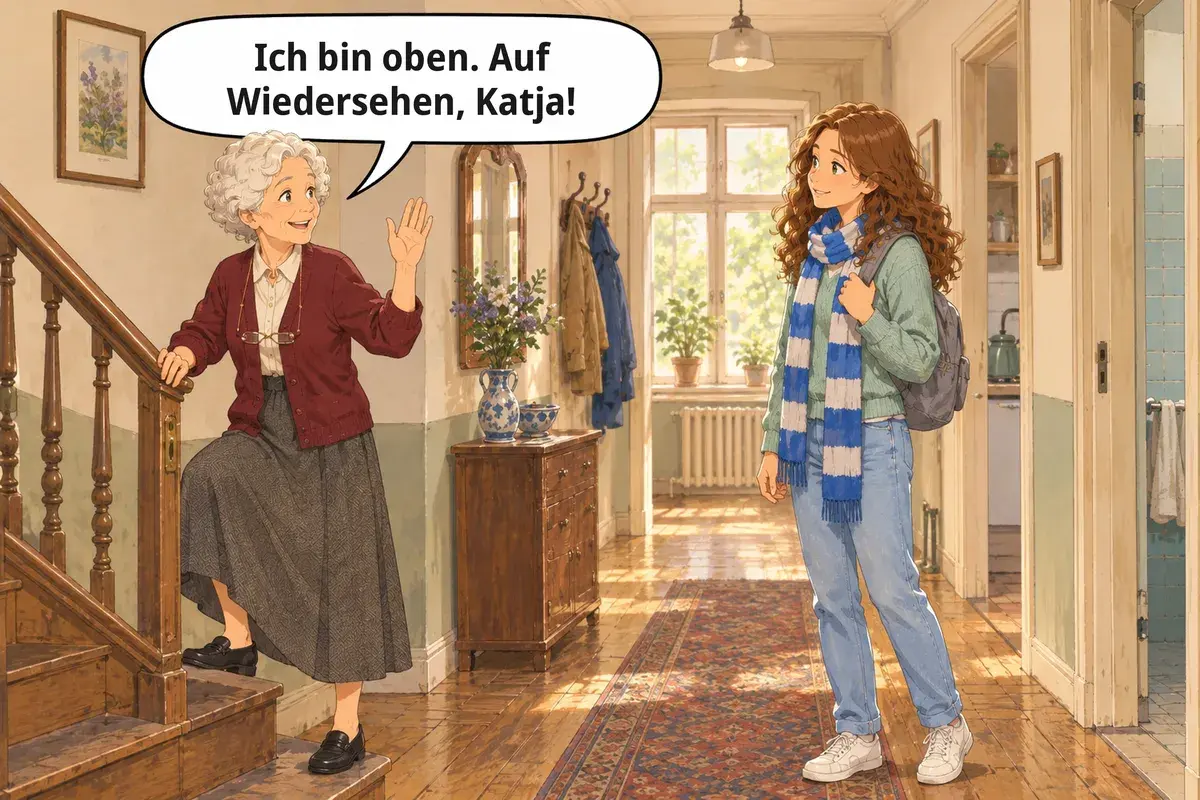
- Frau Brandt
Ich bin oben. Auf Wiedersehen, Katja!
I'm upstairs. Goodbye, Katja!
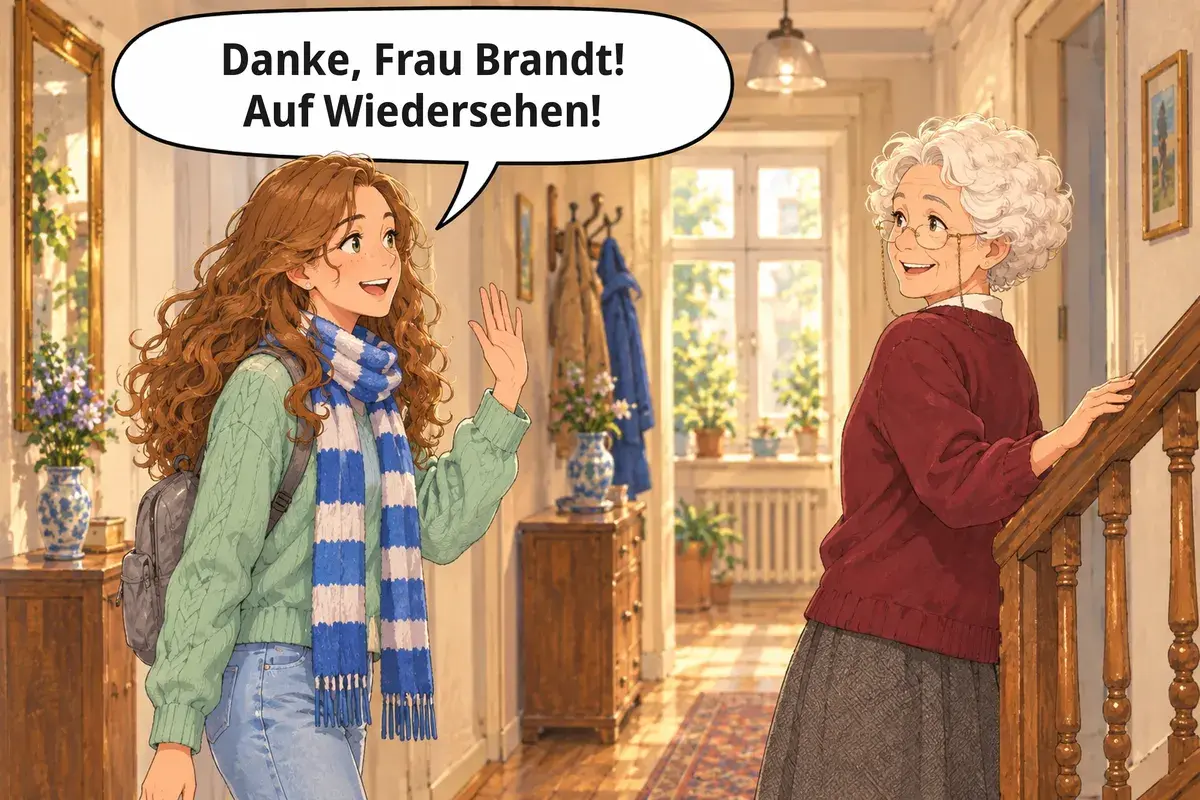
- Katja
Danke, Frau Brandt! Auf Wiedersehen!
Thank you, Frau Brandt! Goodbye!
Grammar for this text
- Hier ist Ihr Schlüssel. —
Ihrwith a capital I means "your" when you talk to someone you callSie(formal). - Die Tür ist alt, man öffnet sie so. —
öffnetis the er form oföffnen(to open);mantakes the same form. The stemöffn-gets-et, not just-t, so that the word is easy to say.manmeans people in general; English says "you": you open it like this. The smallsiehere means "it" (the door,die Tür), not "you": formal you isSiewith a capital S. - So? Ja, das geht! —
gehtis the er form ofgehen(to go). When something works or is possible, German says it "goes":Das geht— That works. - Küche links, Bad rechts, Zimmer dort, Balkon da. — the landlady points as she walks and talks almost without verbs, like a list. That's why Katja asks her to repeat.
dortanddaboth mean "there";dacan also mean "here it is". - Gibt es hier WLAN? —
gibtis the er form ofgeben(to give); theechanges toi.Es gibtis a fixed phrase: "there is, there are"; in a question it'sGibt es …?No article beforeWLAN, just like "Is there Wi-Fi?". - Die Handtücher sind im Schrank. —
Handtücheris the plural ofdas Handtuch, so the verb issind.imis short forin dem: in the closet. In the same way,am Kühlschrank— on the fridge,am Sonntag— on Sunday. For now, learn them as chunks. - Am Sonntag ist es im Haus ruhig. —
esdoesn't stand for anything here:es ist ruhig— it's quiet, just like "it" in English "it's raining".
Words and grammar of the unit: Move into an apartment.
Learn the words from the texts with flashcards
In the app, you can tap any word in a text to see its translation, forms and examples, and new words stick with flashcards. 15 minutes a day.
Start for freeEverything is open for free. No card needed to sign up.