

German dialogue with translation · A1 · 14 lines
Für hier oder zum Mitnehmen? For here or to go?
Comic · 14 panels
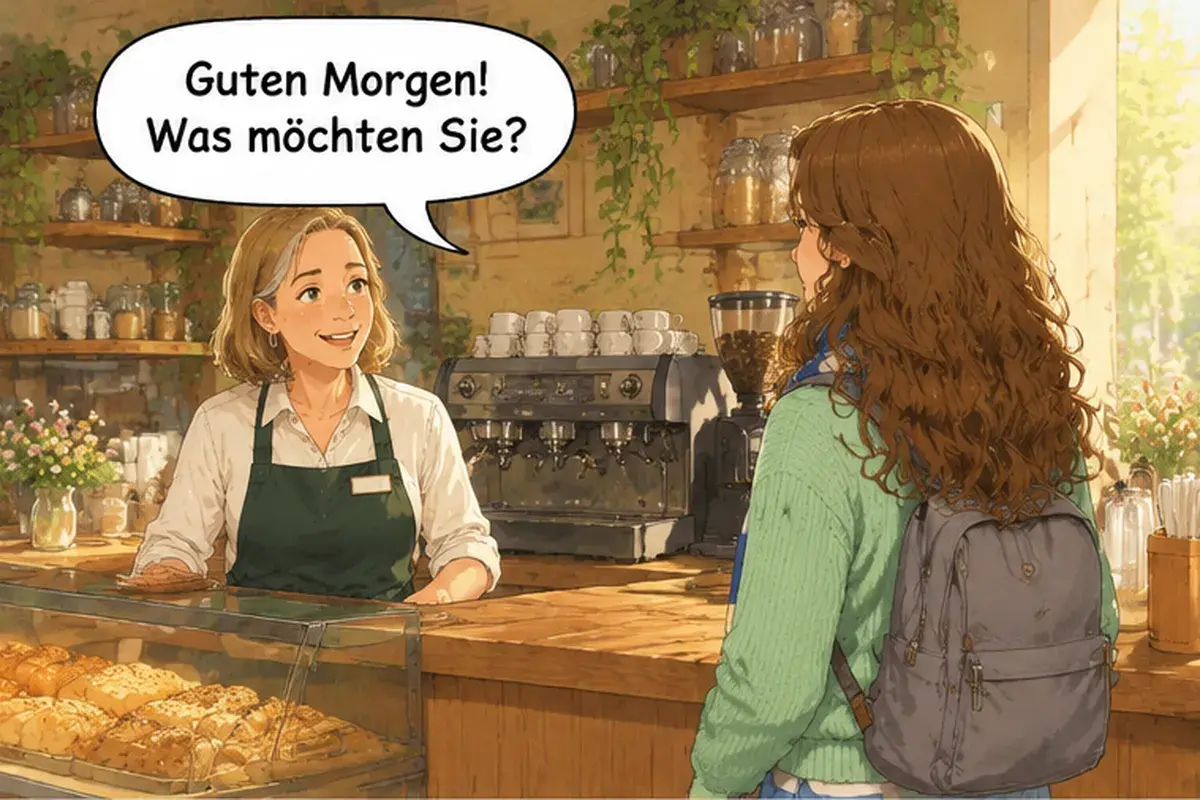
- Verkäuferin
Guten Morgen! Was möchten Sie?
Good morning! What would you like? (formal)

- Katja
Guten Morgen! Ich hätte gern einen Kaffee, bitte.
Good morning! I'd like a coffee, please.
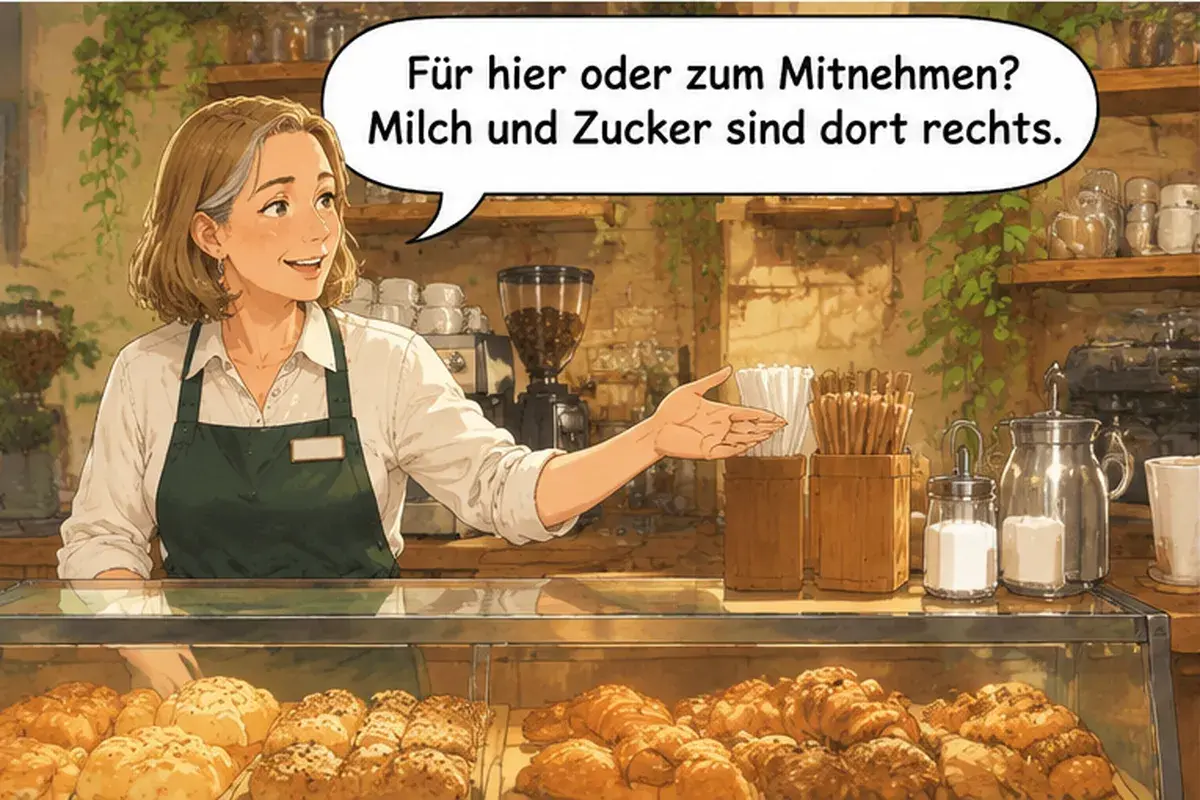
- Verkäuferin
Für hier oder zum Mitnehmen? Milch und Zucker sind dort rechts.
For here or to go? Milk and sugar are over there on the right.
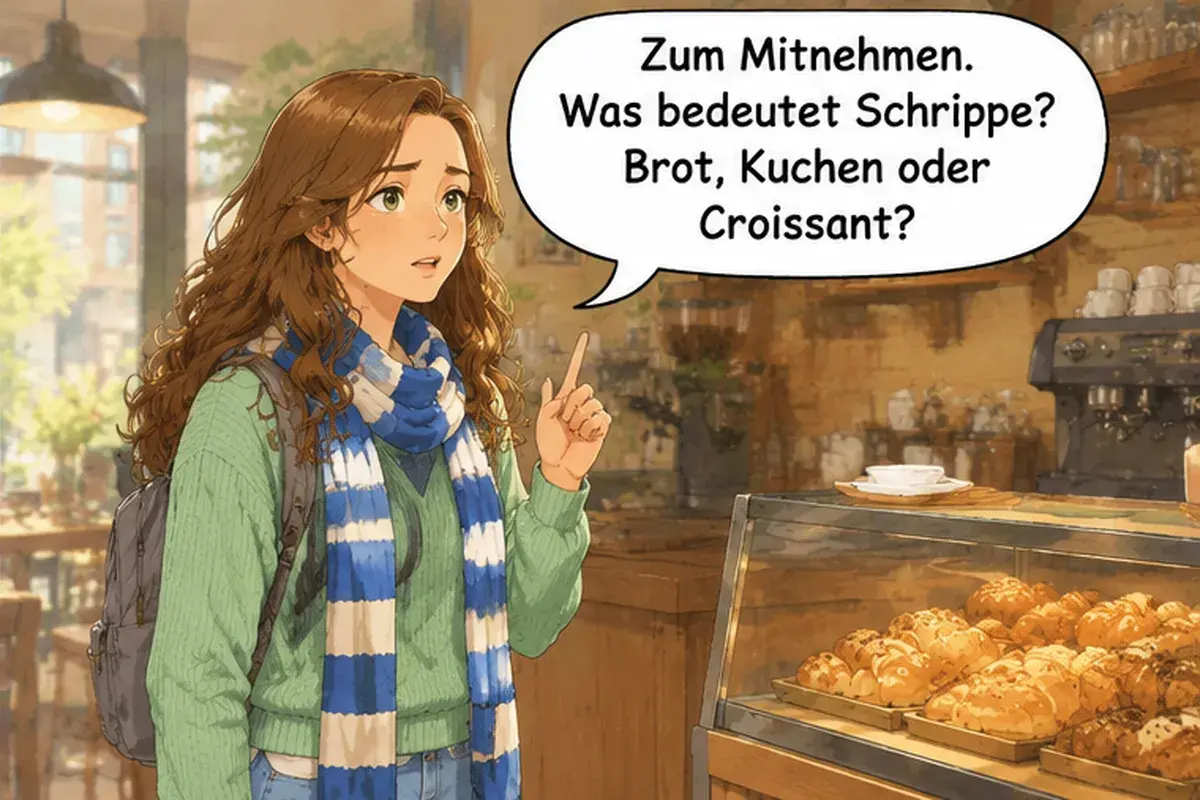
- Katja
Zum Mitnehmen. Was bedeutet Schrippe? Brot, Kuchen oder Croissant?
To go. What does Schrippe mean? Bread, cake, or croissant?
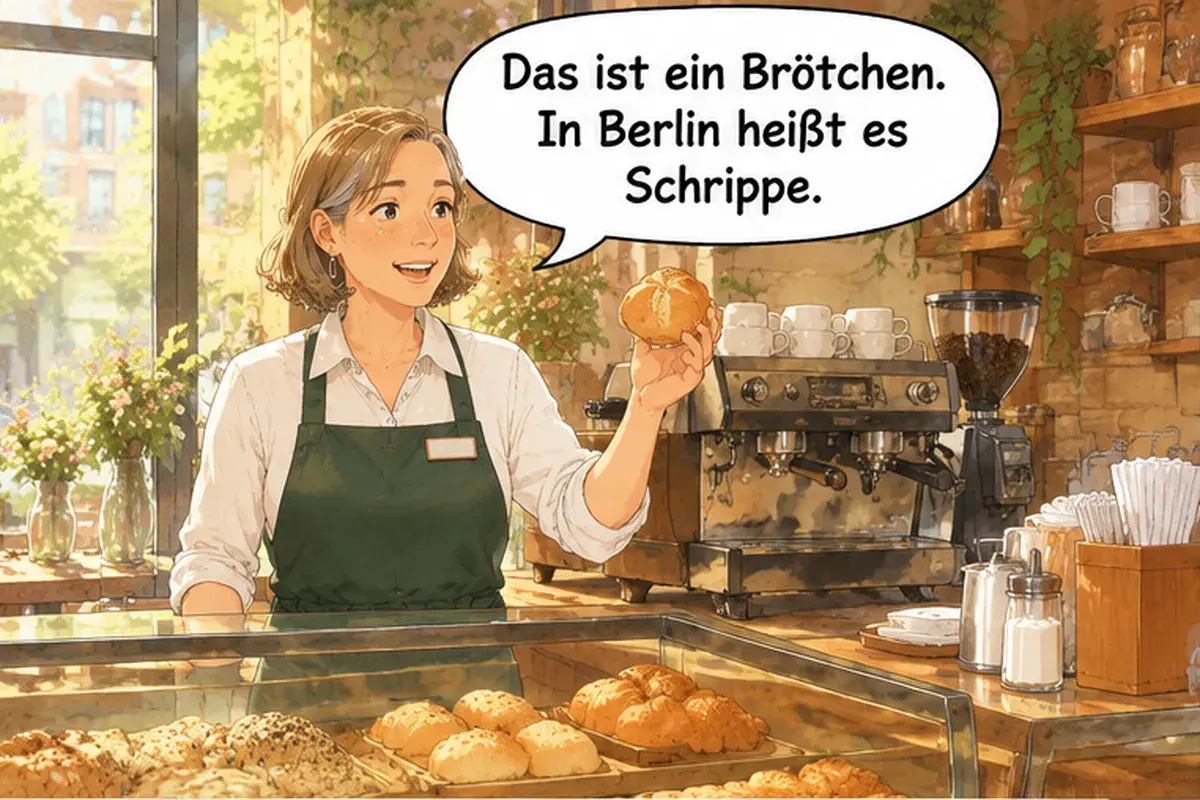
- Verkäuferin
Das ist ein Brötchen. In Berlin heißt es Schrippe.
That's a roll. In Berlin, it's called Schrippe.
- Katja
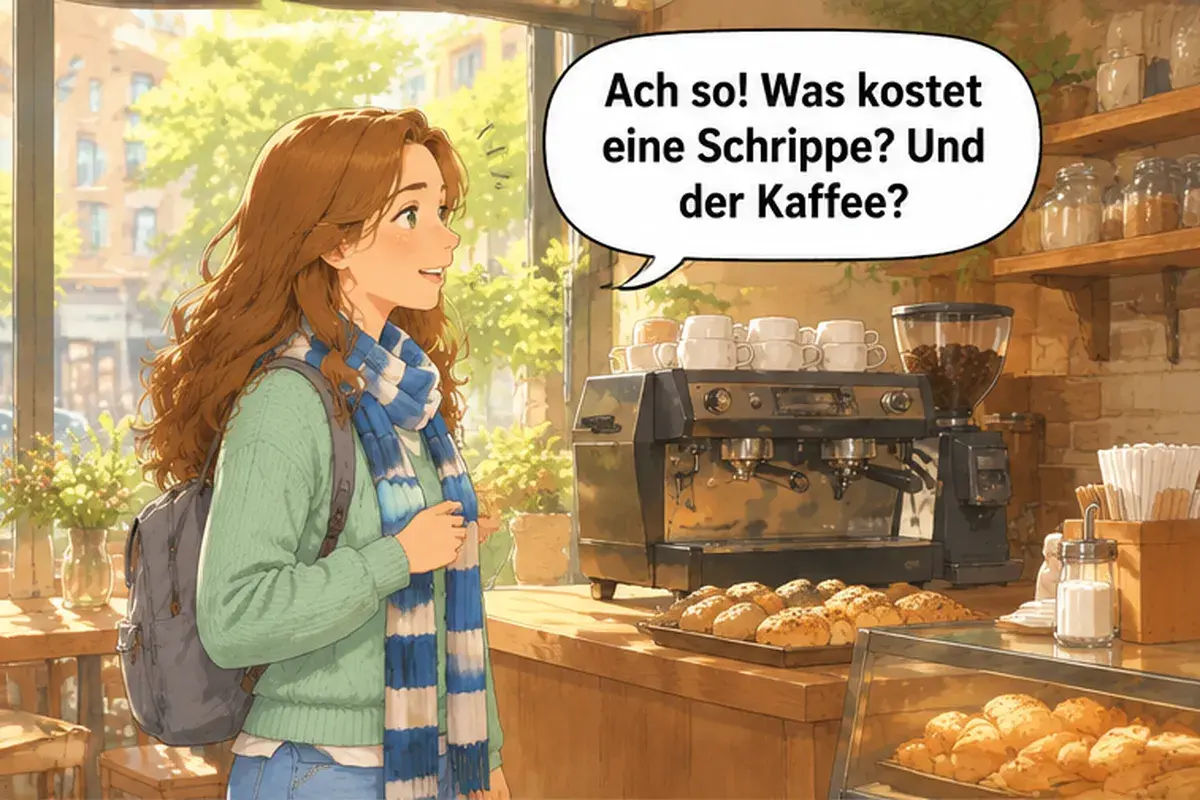
Ach so! Was kostet eine Schrippe? Und der Kaffee?
Oh, I see! How much is a Schrippe? And the coffee?
- Verkäuferin
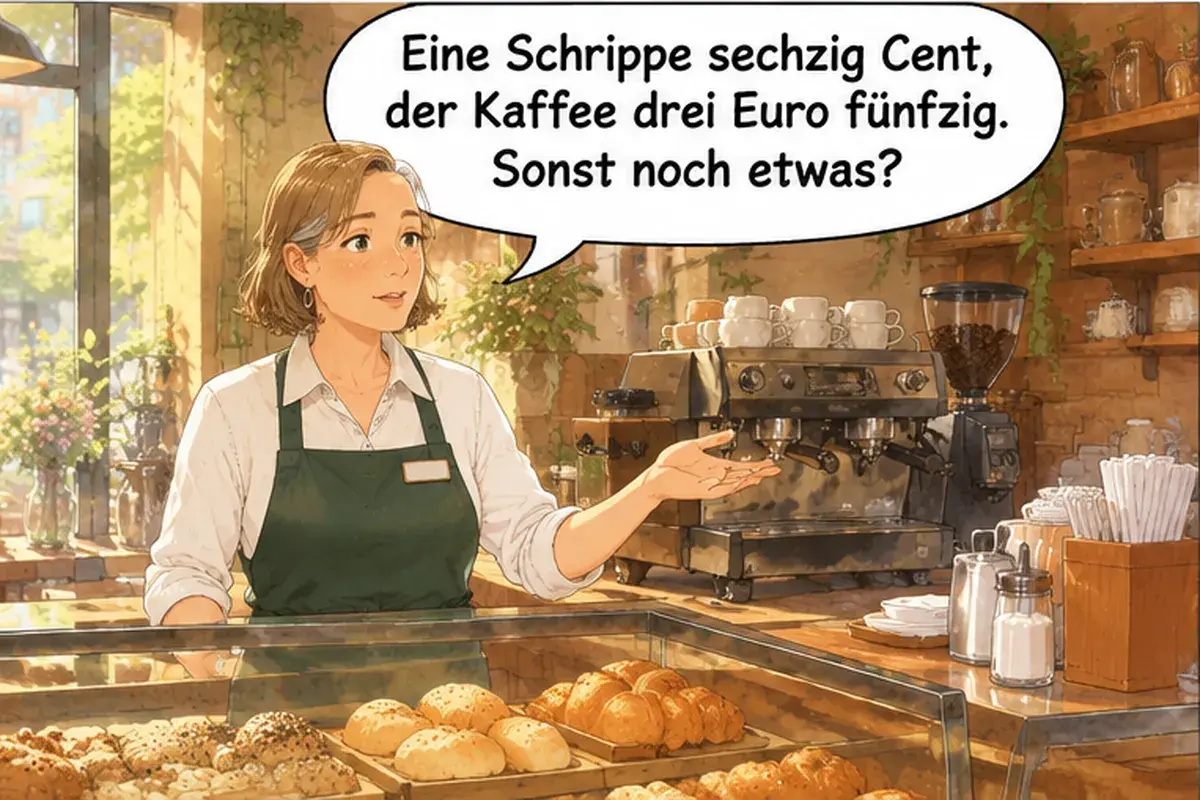
Eine Schrippe sechzig Cent, der Kaffee drei Euro fünfzig. Sonst noch etwas?
A Schrippe is sixty cents, the coffee three euros fifty. Anything else?

- Katja
Dann nehme ich noch zwei Schrippen.
Then I'll take two more Schrippen.
- Verkäuferin
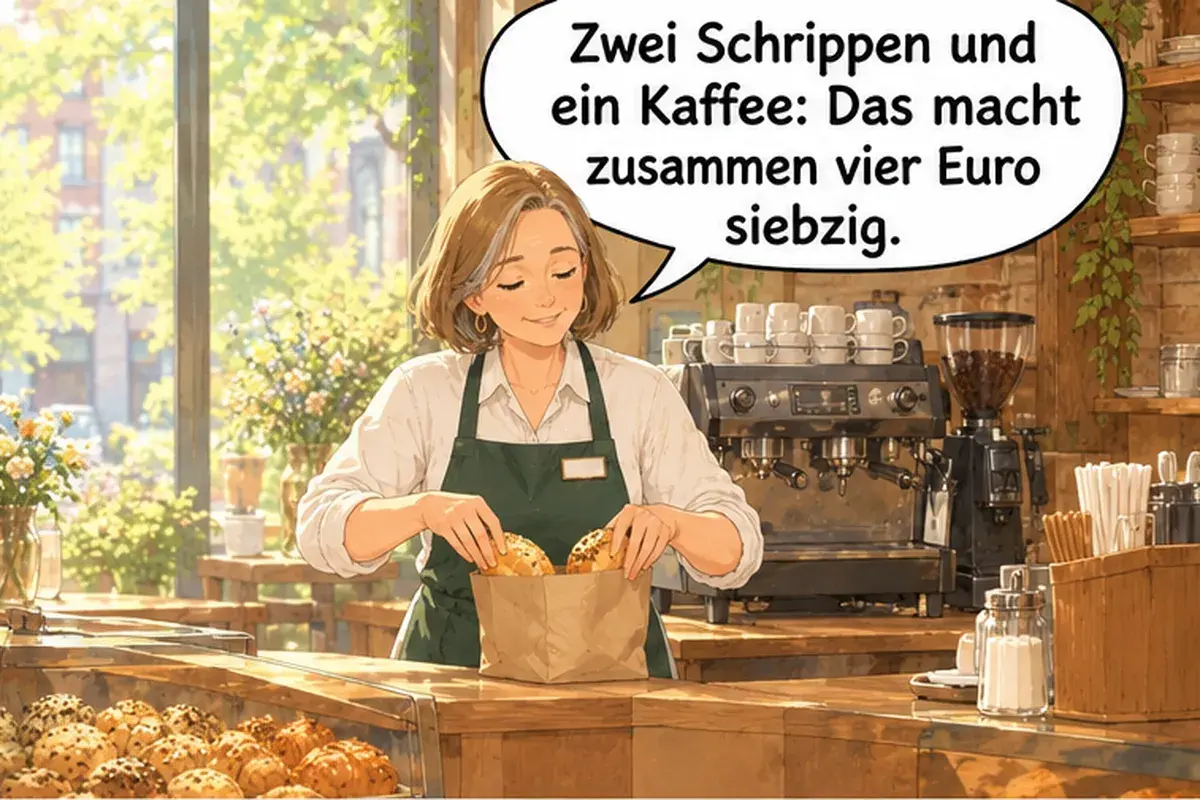
Zwei Schrippen und ein Kaffee: Das macht zusammen vier Euro siebzig.
Two Schrippen and a coffee: that'll be four euros seventy altogether.
- Katja
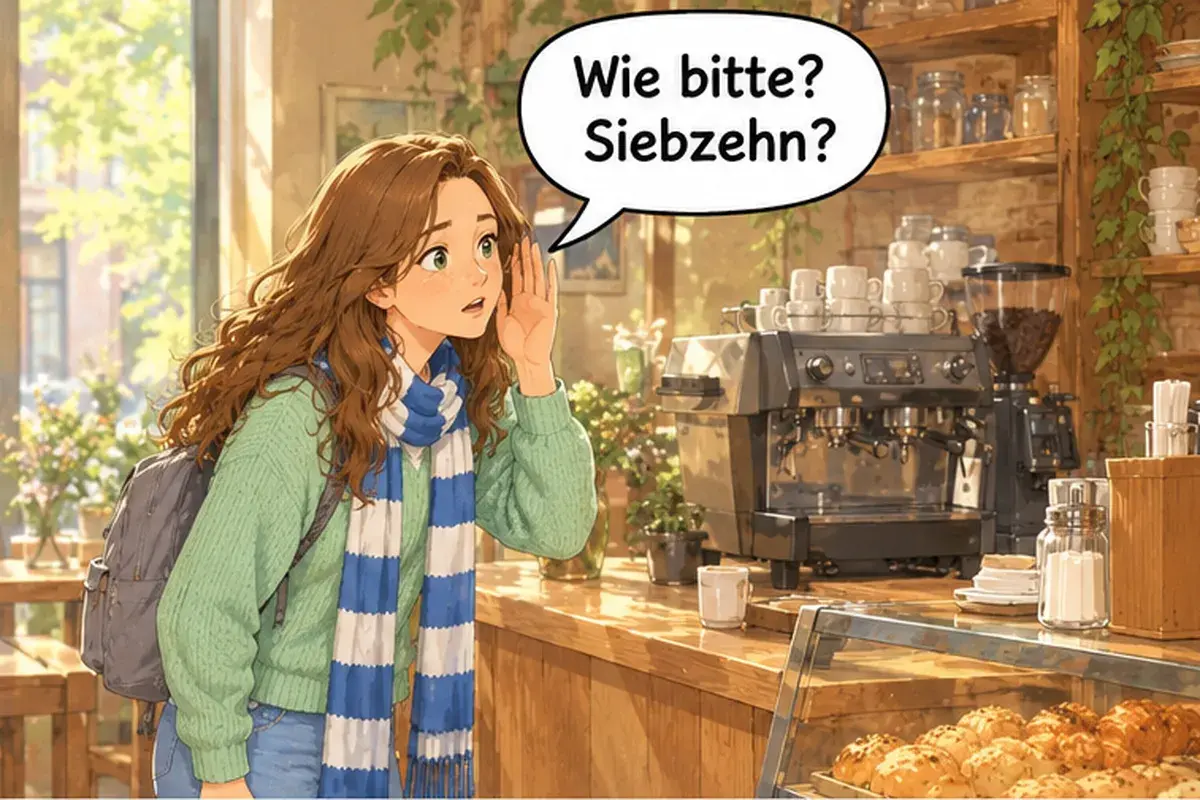
Wie bitte? Siebzehn?
Sorry? Seventeen?

- Verkäuferin
Nein, siebzig! Vier Euro siebzig.
No, seventy! Four euros seventy.
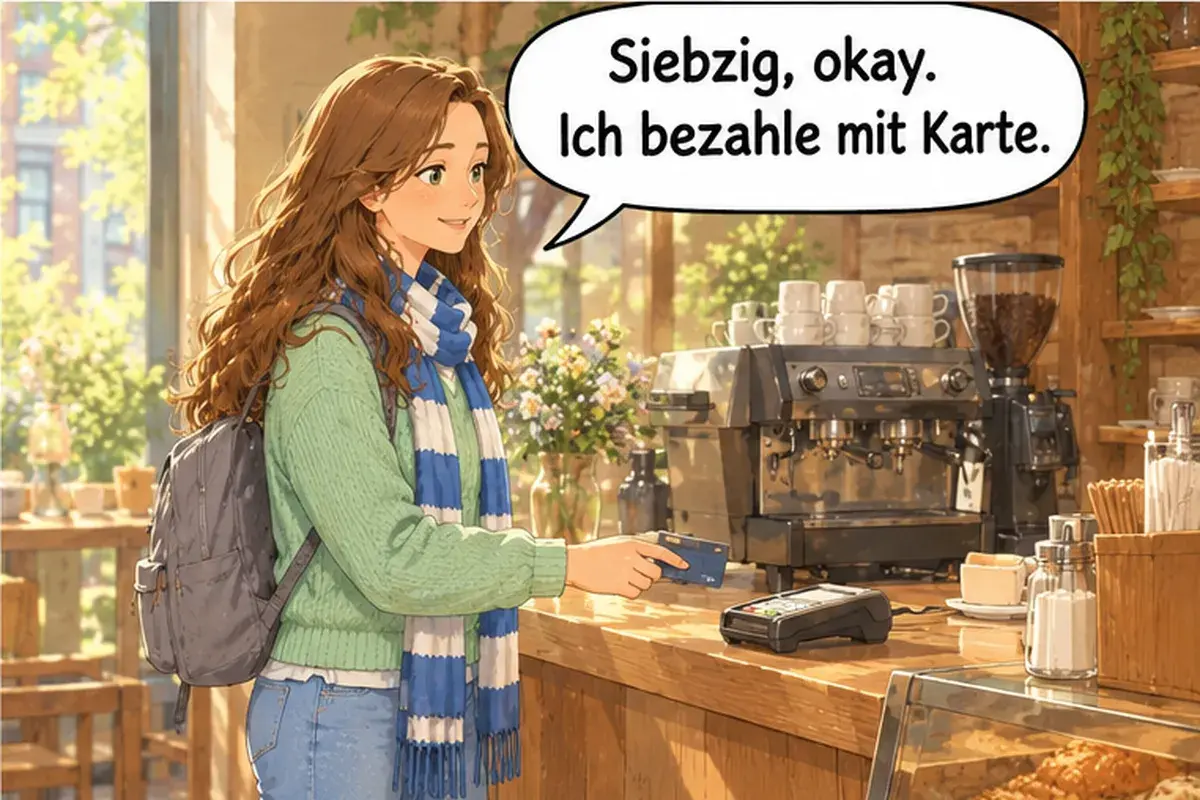
- Katja
Siebzig, okay. Ich bezahle mit Karte.
Seventy, okay. I'll pay by card.
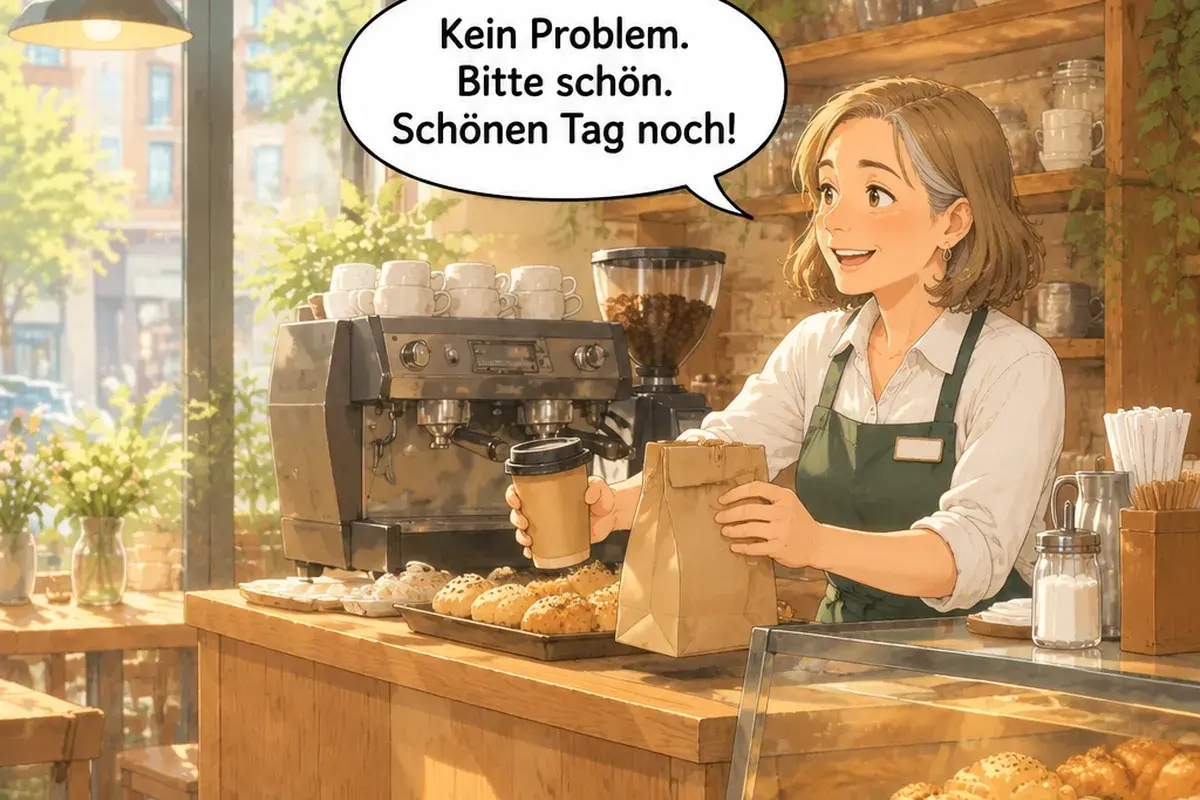
- Verkäuferin
Kein Problem. Bitte schön. Schönen Tag noch!
No problem. Here you go. Have a nice day!

- Katja
Danke, Ihnen auch!
Thanks, you too! (formal)
Grammar for this text
- Ich hätte gern einen Kaffee — a set phrase for "I'd like …," a polite way to order. hätte is a special form of haben that you'll learn at A2; for now, learn the whole phrase. It's einen because Kaffee is masculine and it's the thing being ordered (the accusative, unit 5).
- Was möchten Sie? — möchten means "would like," a polite word. With the formal Sie, the verb takes the same form as with sie (they): möchten.
- Für hier oder zum Mitnehmen? — "For here or to go?" Two set phrases: für hier and zum Mitnehmen (word for word, "for taking along"). Where zum comes from, you'll learn at A2.
- Dann nehme ich noch zwei Schrippen — Dann comes first, so the verb comes right after it and ich goes after the verb: the verb is always second. You can also say Ich nehme dann noch zwei Schrippen. nehmen changes its vowel only in the du and er forms (see the unit grammar).
- Das macht zusammen vier Euro siebzig — "that'll be four euros seventy altogether"; in a price like this, nobody says Cent. siebzehn (17, a long -zehn) and siebzig (70, a short -zig) are easy to mix up when you hear them.
- Ich bezahle mit Karte — "I'll pay by card." bezahlen is a regular verb. Karte has no article here, and neither does bar (in cash).
- Schönen Tag noch — "Have a nice day." The answer Danke, Ihnen auch means "Thanks, you too" (formal); Ihnen (to you, formal) comes at A2.
Words and grammar of the unit: Order at a bakery and a snack bar.
Learn the words from the texts with flashcards
In the app, you can tap any word in a text to see its translation, forms and examples, and new words stick with flashcards. 15 minutes a day.
Start for freeEverything is open for free. No card needed to sign up.