

German dialogue with translation · A1 · 14 lines
Ohne Zwiebeln, bitte Without onions, please
Comic · 11 panels
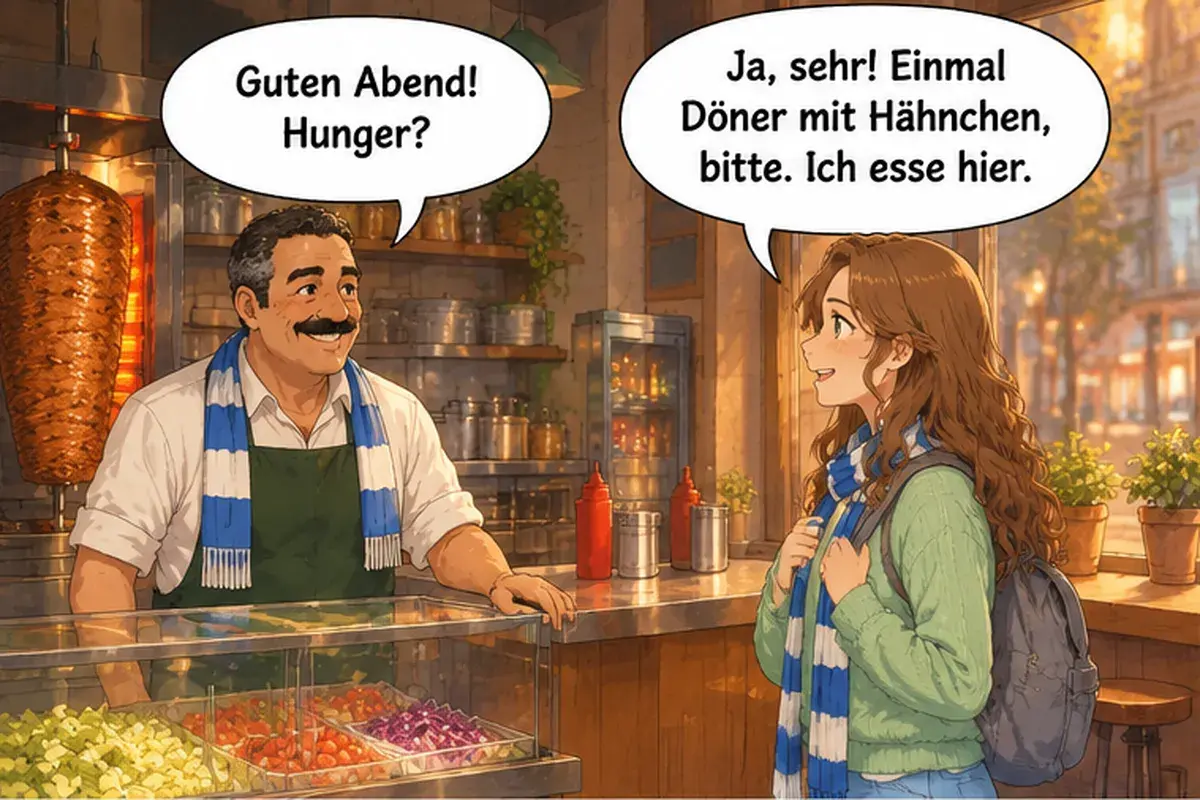
- Mehmet
Guten Abend! Hunger?
Good evening! Hungry?
- Katja
Ja, sehr! Einmal Döner mit Hähnchen, bitte. Ich esse hier.
Yes, very! One döner with chicken, please. I'm eating here.
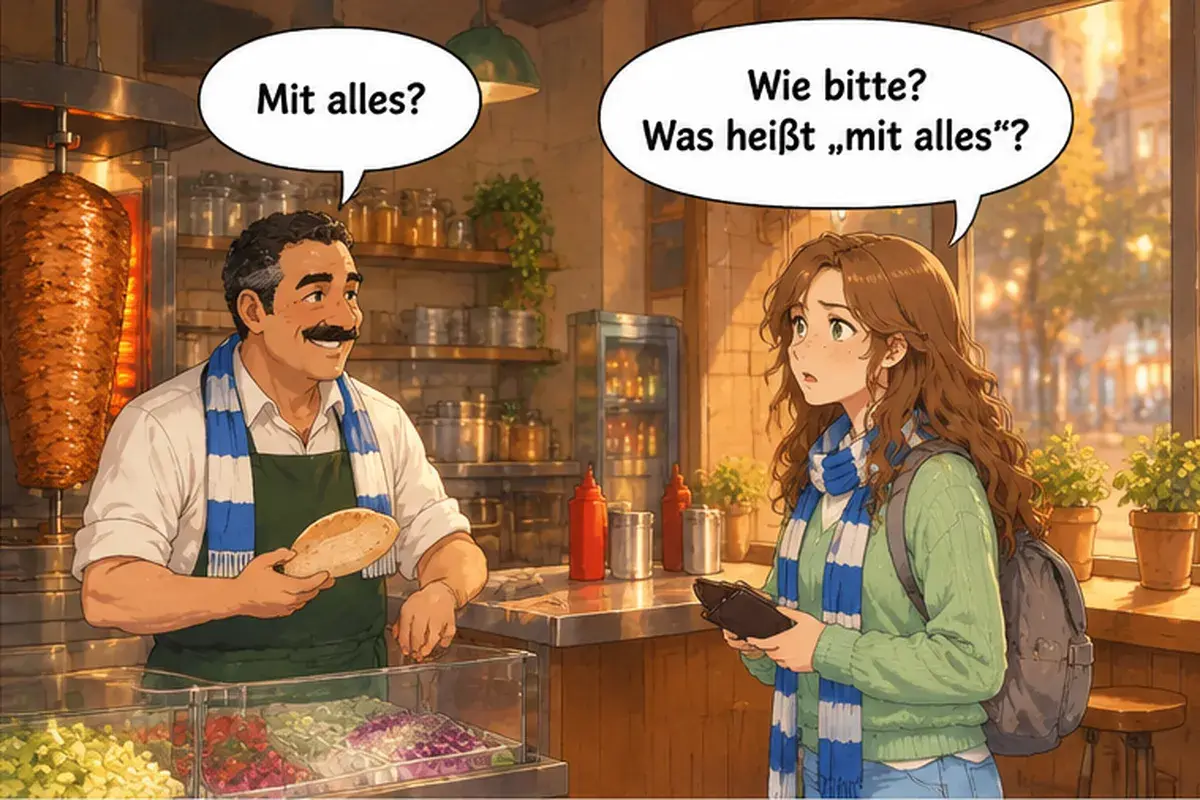
- Mehmet
Mit alles?
With everything?
- Katja
Wie bitte? Was heißt „mit alles“?
Sorry? What does "mit alles" mean?
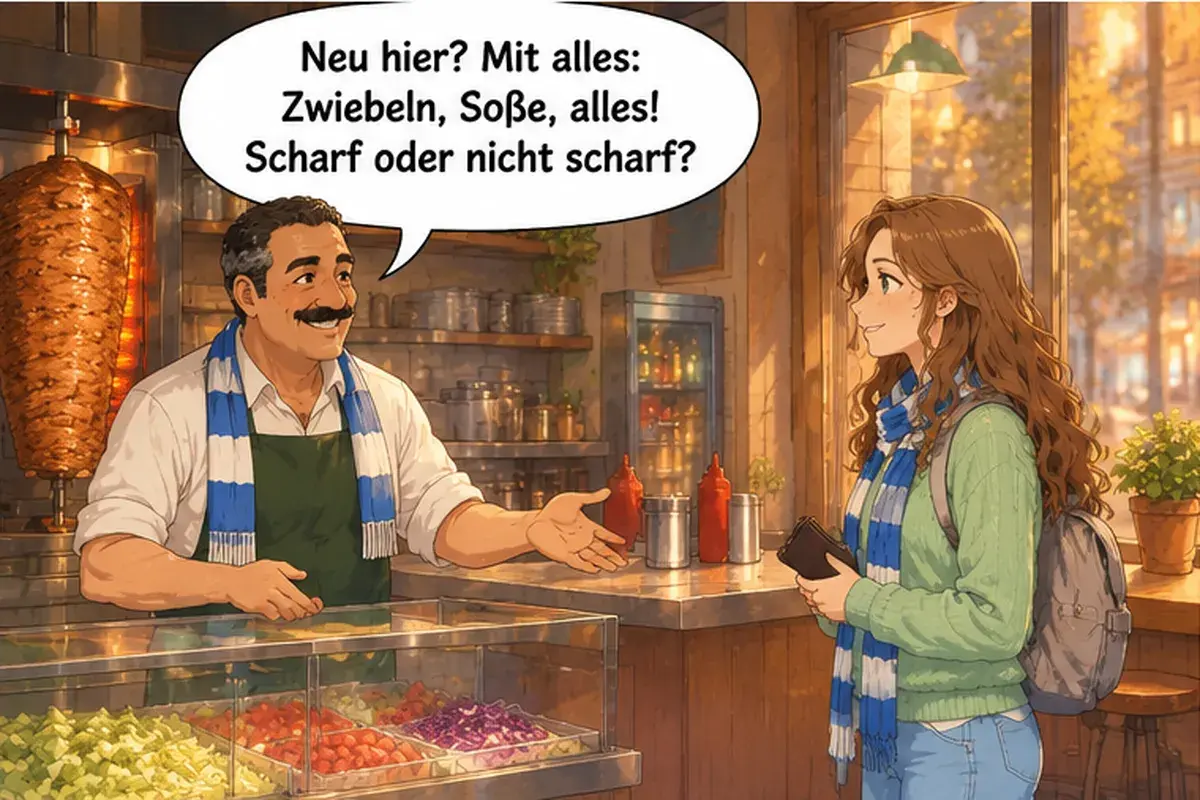
- Mehmet
Neu hier? Mit alles: Zwiebeln, Soße, alles! Scharf oder nicht scharf?
New here? Mit alles: onions, sauce, everything! Spicy or not spicy?
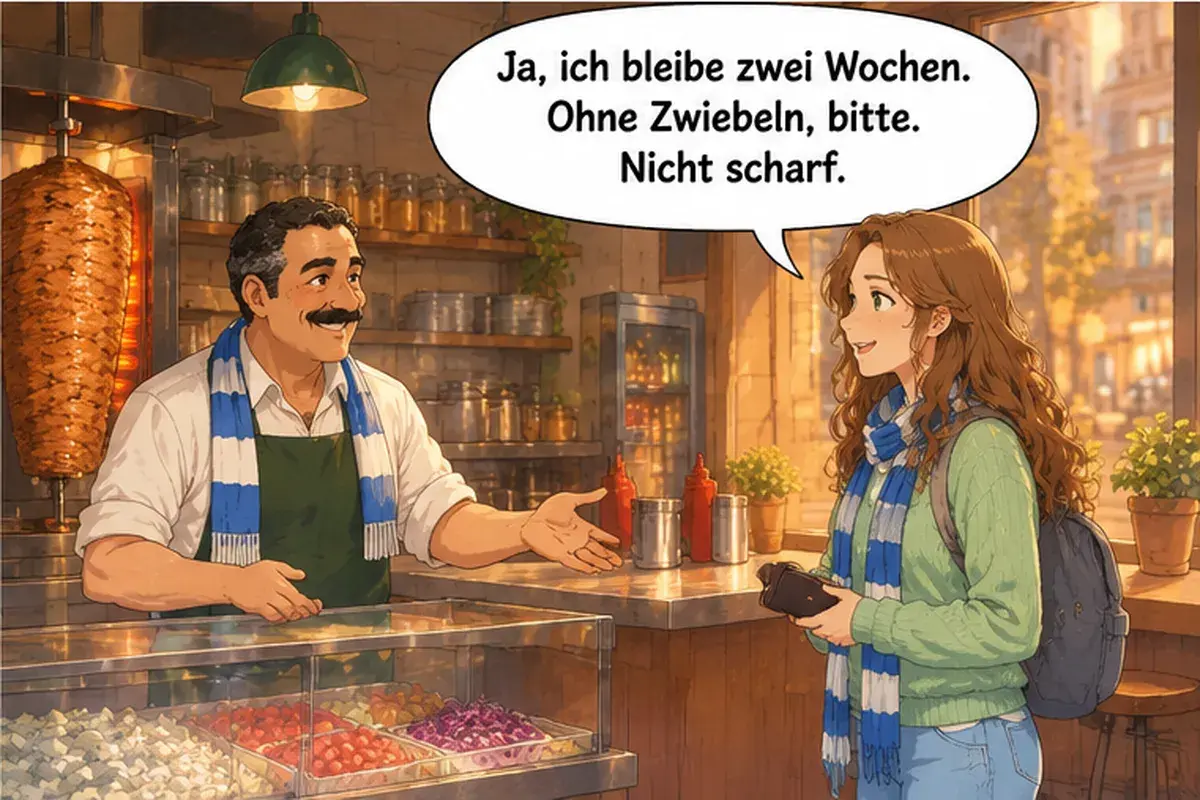
- Katja
Ja, ich bleibe zwei Wochen. Ohne Zwiebeln, bitte. Nicht scharf.
Yes, I'm staying for two weeks. Without onions, please. Not spicy.
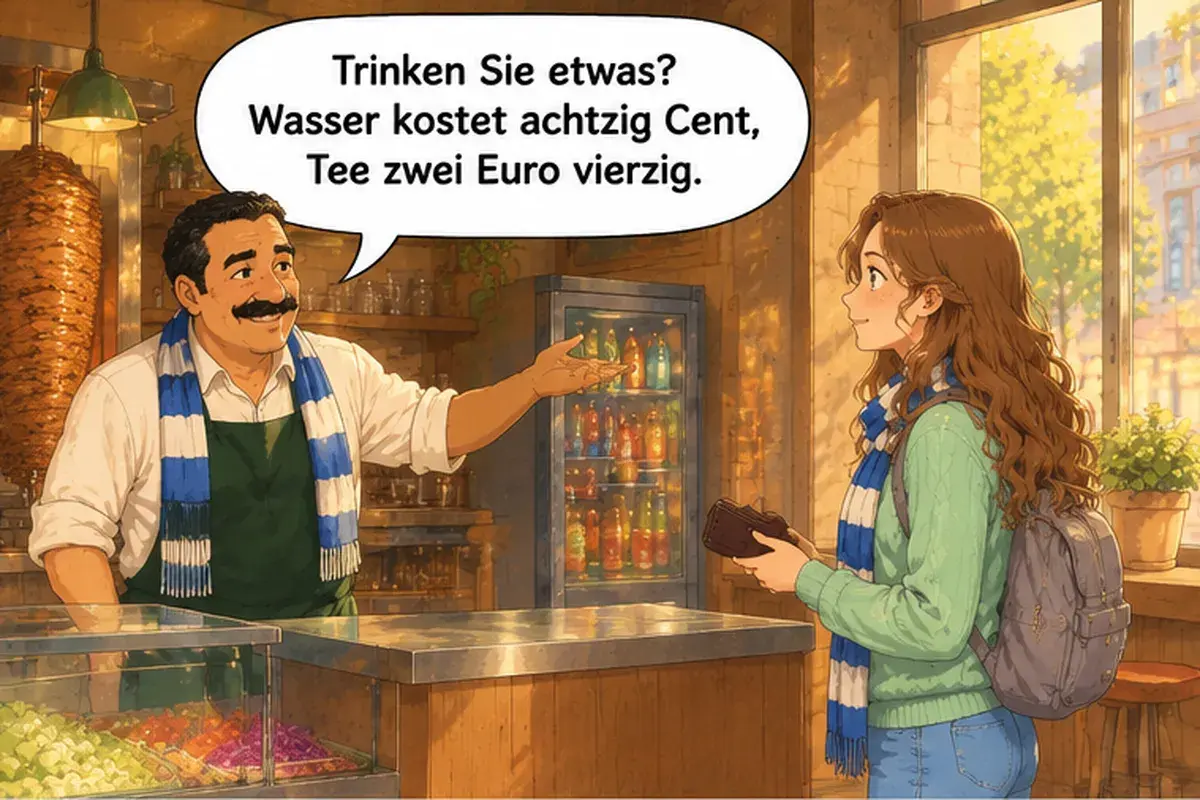
- Mehmet
Trinken Sie etwas? Wasser kostet achtzig Cent, Tee zwei Euro vierzig.
Are you having anything to drink? Water is eighty cents, tea two euros forty. (formal)
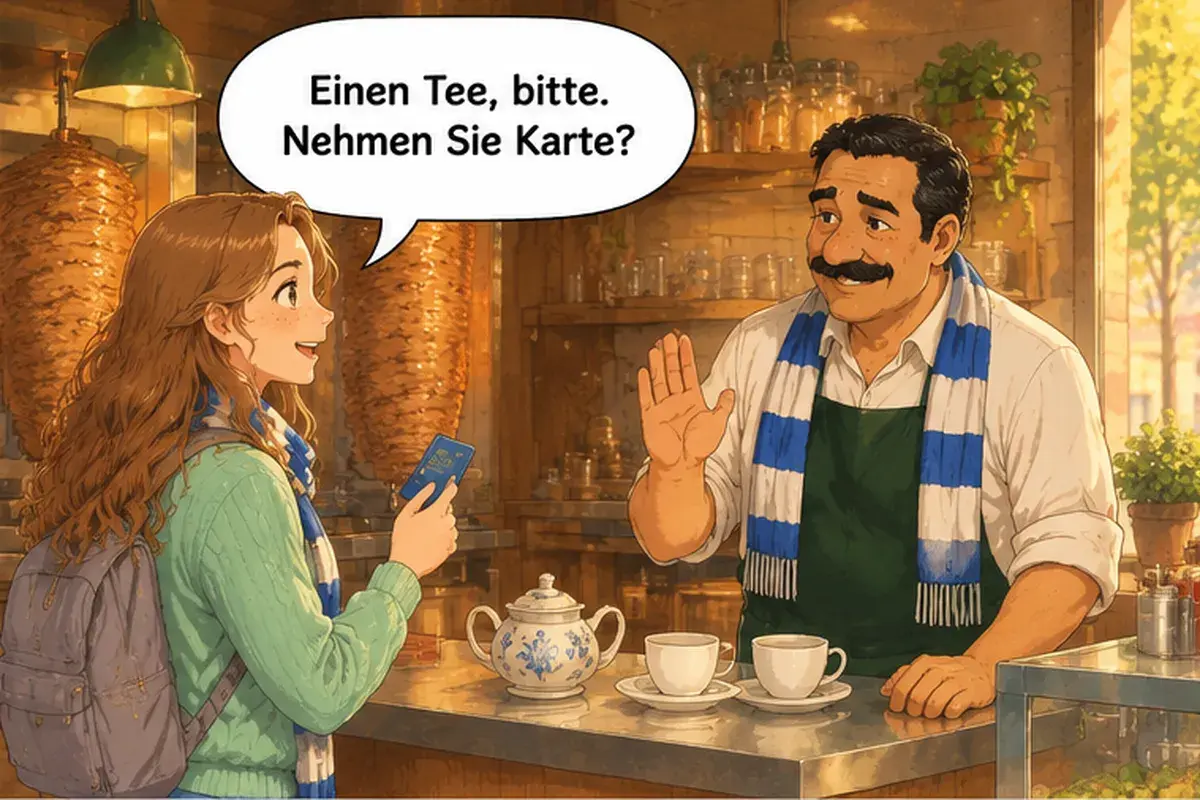
- Katja
Einen Tee, bitte. Nehmen Sie Karte?
A tea, please. Do you take cards? (formal)
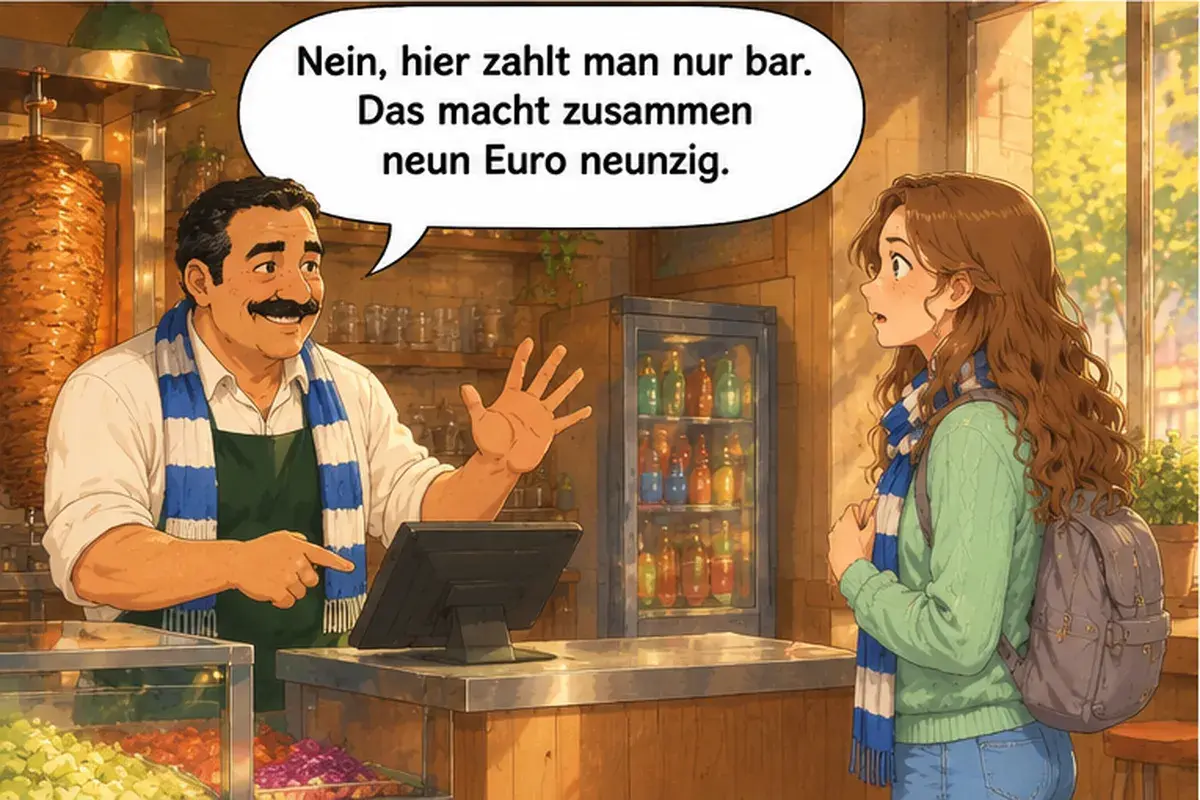
- Mehmet
Nein, hier zahlt man nur bar. Das macht zusammen neun Euro neunzig.
No, here you only pay in cash. That'll be nine euros ninety altogether.
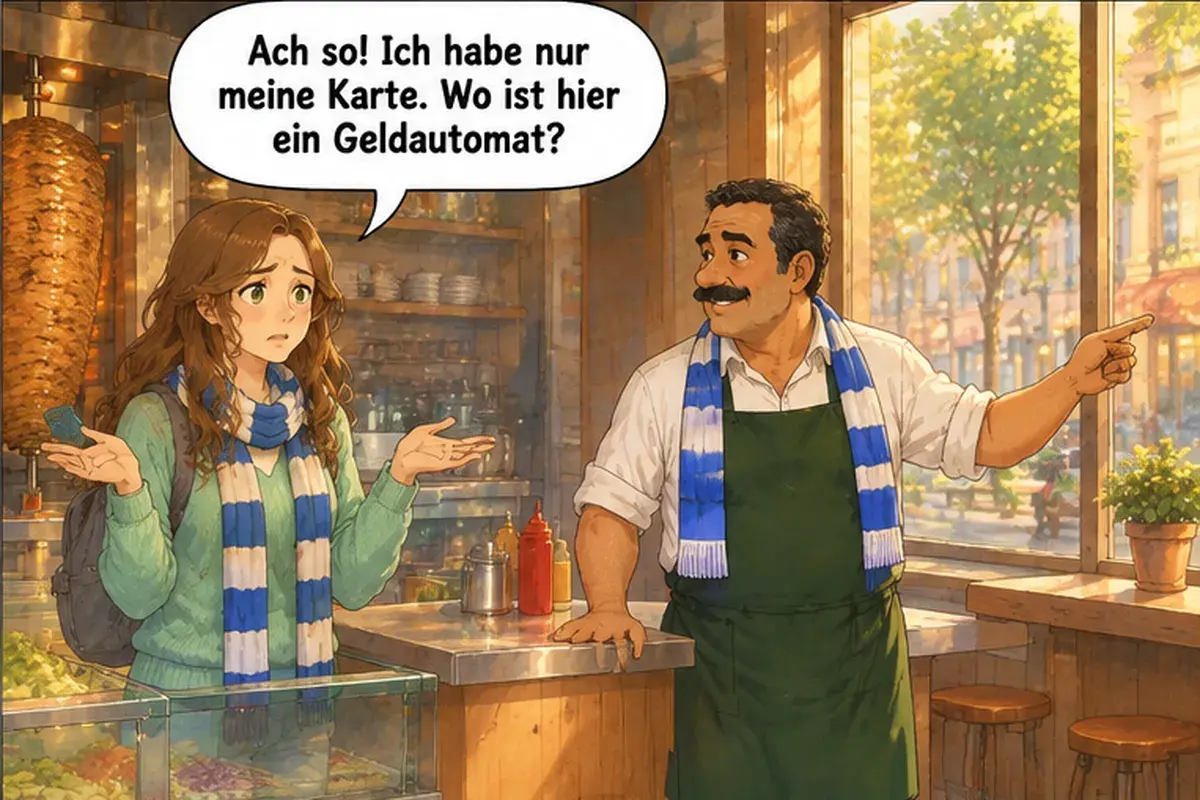
- Katja
Ach so! Ich habe nur meine Karte. Wo ist hier ein Geldautomat?
Oh, I see! I only have my card. Where's an ATM around here?
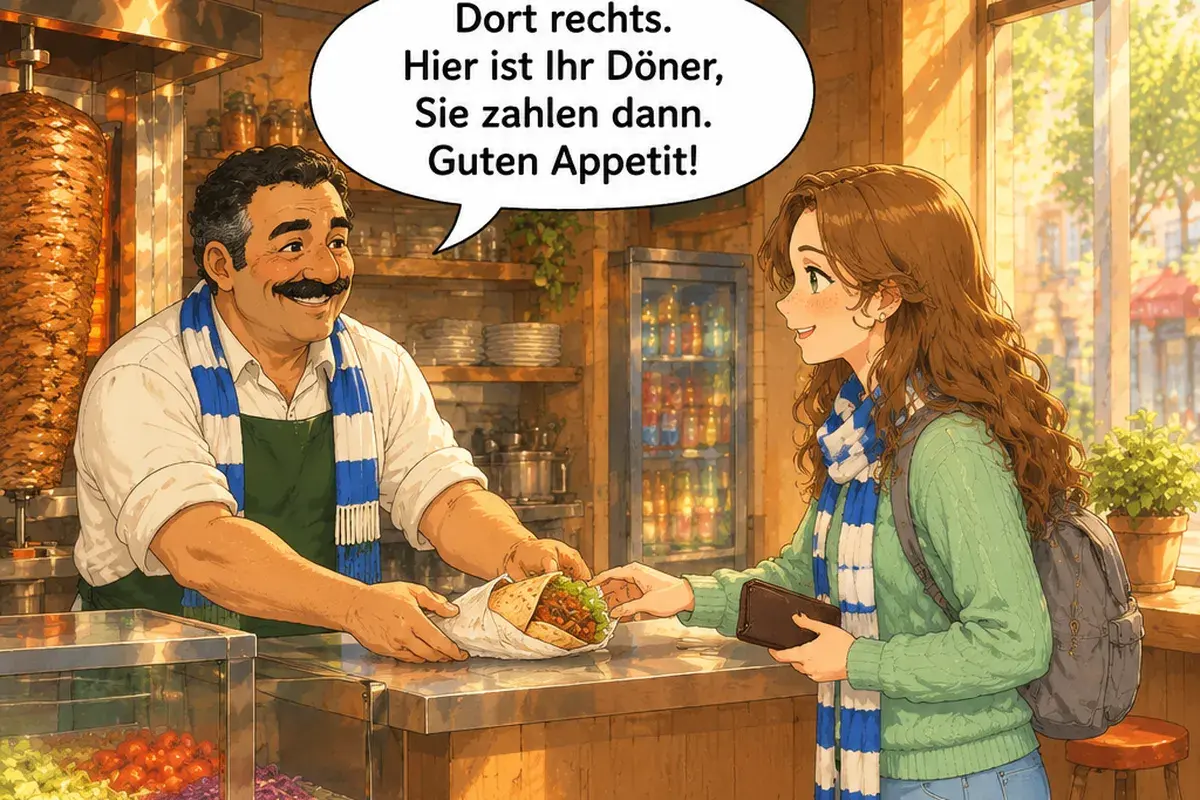
- Mehmet
Dort rechts. Hier ist Ihr Döner, Sie zahlen dann. Guten Appetit!
Over there on the right. Here's your döner, you'll pay afterwards. Enjoy your meal! (formal)
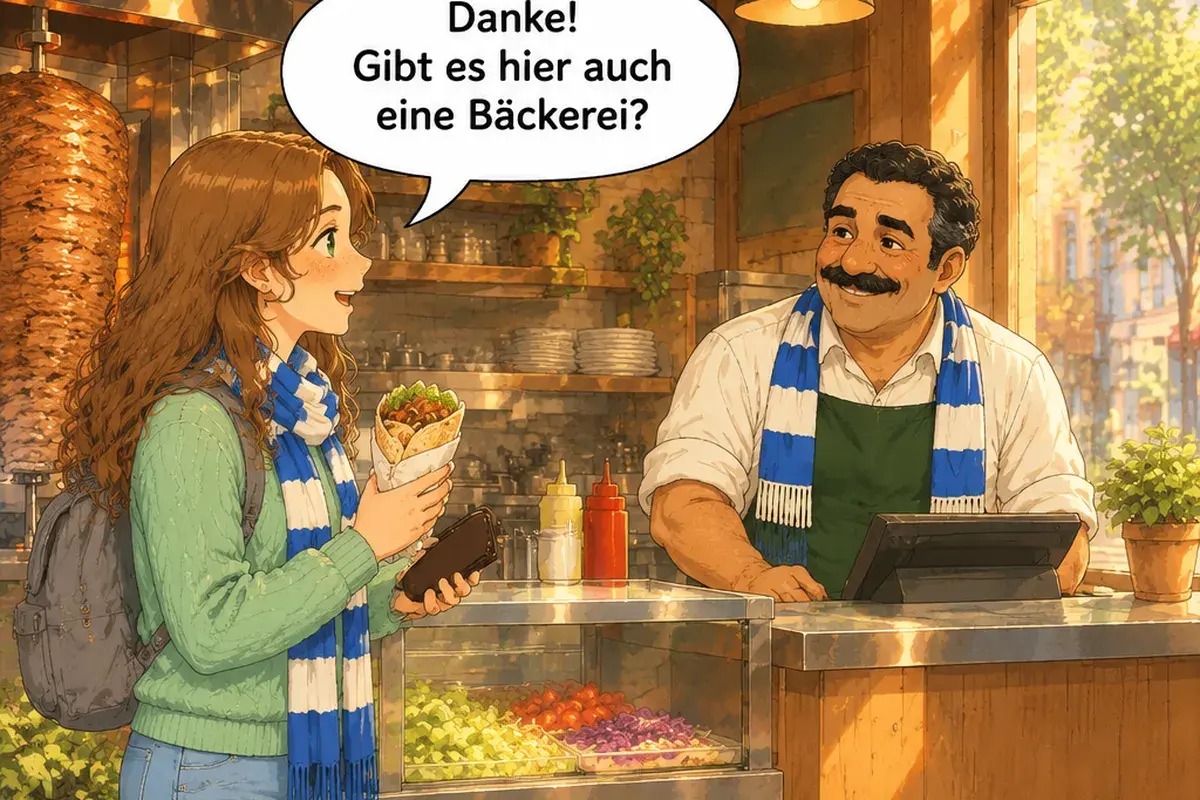
- Katja
Danke! Gibt es hier auch eine Bäckerei?
Thanks! Is there a bakery around here too?
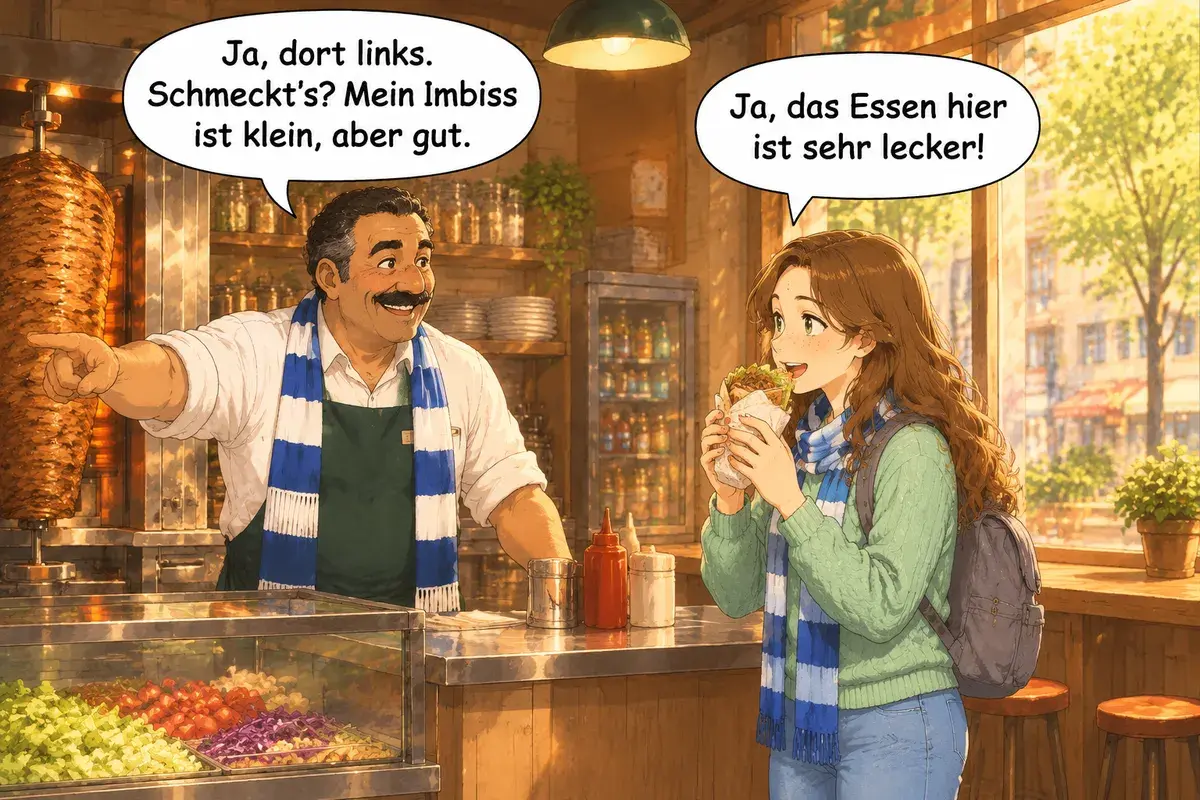
- Mehmet
Ja, dort links. Schmeckt's? Mein Imbiss ist klein, aber gut.
Yes, over there on the left. Does it taste good? My snack bar is small but good.
- Katja
Ja, das Essen hier ist sehr lecker!
Yes, the food here is very tasty!
Grammar for this text
- Einmal Döner mit Hähnchen, bitte — einmal ("once") is the usual way to order one portion, with no article: "one döner with chicken." Ich esse hier — "I'm eating here," that is, not to go.
- Mit alles? — Berlin slang for a döner with all the toppings. Correct German would be mit allem, but people say it the short way. Katja answers part by part: Ohne Zwiebeln — "without onions" (ohne means "without").
- Was heißt „mit alles“? — heißt is the er / es form of heißen; here it means "what does it mean."
- Trinken Sie etwas? — a question without a question word: the verb comes first. German needs no "do" for this. Sie is the formal "you," so the verb is trinken, the same as for sie (they). etwas means "something." Mehmet gives the prices the short way: Wasser kostet achtzig Cent, Tee zwei Euro vierzig. Don't mix up achtzig (80) with achtzehn (18), or vierzig (40) with vierzehn (14).
- Nehmen Sie Karte? — "Do you take cards?" (word for word, "do you take card"). With Sie it's nehmen, not nimmt. Nein, hier zahlt man nur bar — man means people in general, like the general "you" in English: "here you only pay in cash." zahlt is the er / man form of zahlen. Das macht zusammen neun Euro neunzig — "that'll be nine euros ninety altogether" (for the tea and the döner).
- Hier ist Ihr Döner, Sie zahlen dann — Ihr with a capital I means "your" (formal); Sie zahlen — "you pay," the same form as for sie (they). dann means "later, afterwards" here: Mehmet lets Katja eat first and go to the ATM for the money.
- Schmeckt's? — short for Schmeckt es? ("Does it taste good?"). With schmecken, the food is the subject, so the verb is schmeckt, the er / es form.
Words and grammar of the unit: Order at a bakery and a snack bar.
Learn the words from the texts with flashcards
In the app, you can tap any word in a text to see its translation, forms and examples, and new words stick with flashcards. 15 minutes a day.
Start for freeEverything is open for free. No card needed to sign up.