

German dialogue with translation · A1 · 14 lines
Wo finde ich die Butter? Where do I find the butter?
Comic · 14 panels
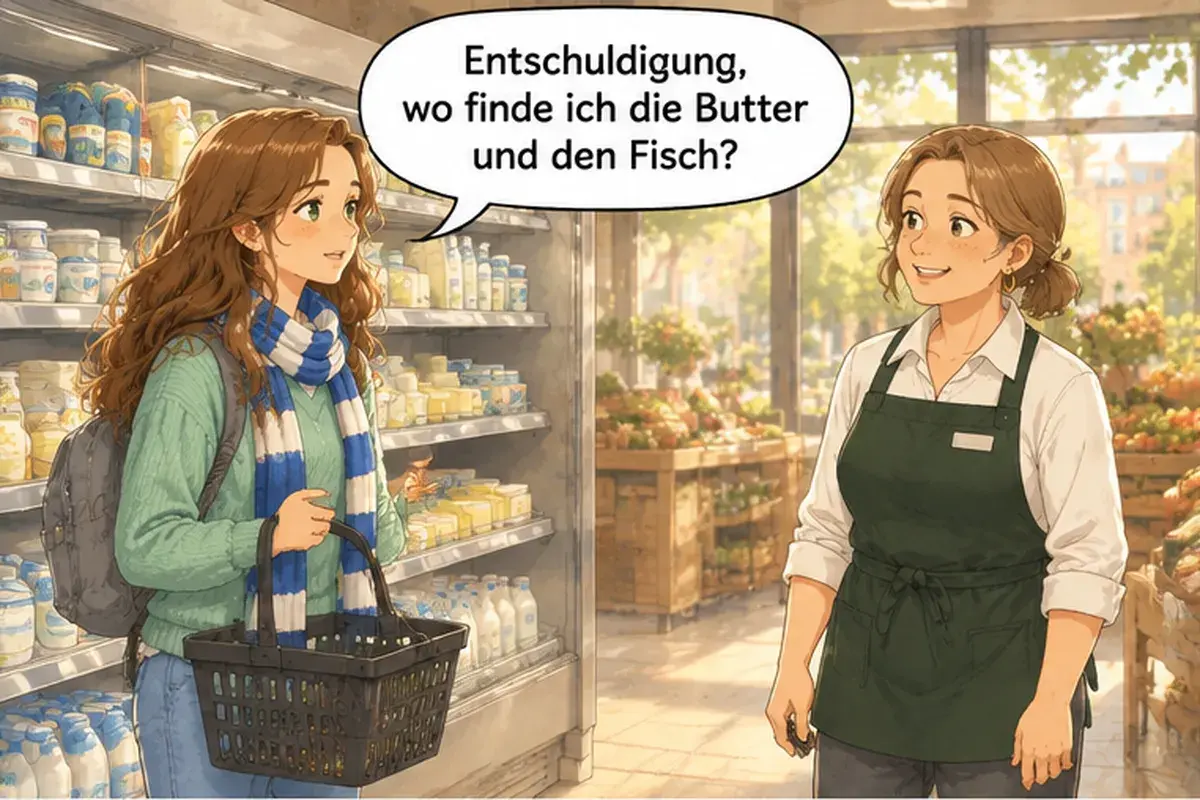
- Katja
Entschuldigung, wo finde ich die Butter und den Fisch?
Excuse me, where do I find the butter and the fish?
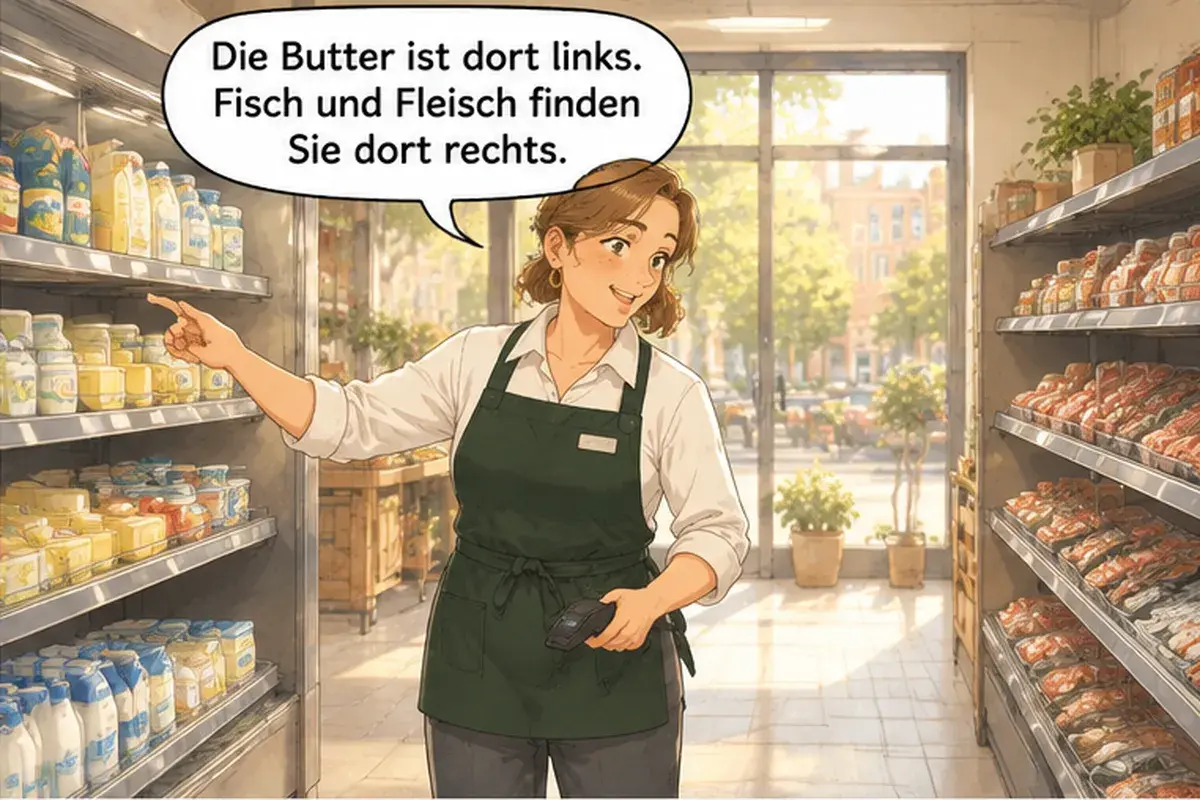
- Verkäuferin
Die Butter ist dort links. Fisch und Fleisch finden Sie dort rechts.
The butter is over there on the left. You'll find fish and meat over there on the right. (formal)

- Katja
Danke! Haben Sie keine Äpfel? Ich finde nur Bananen.
Thanks! Don't you have any apples? I can only find bananas. (formal)
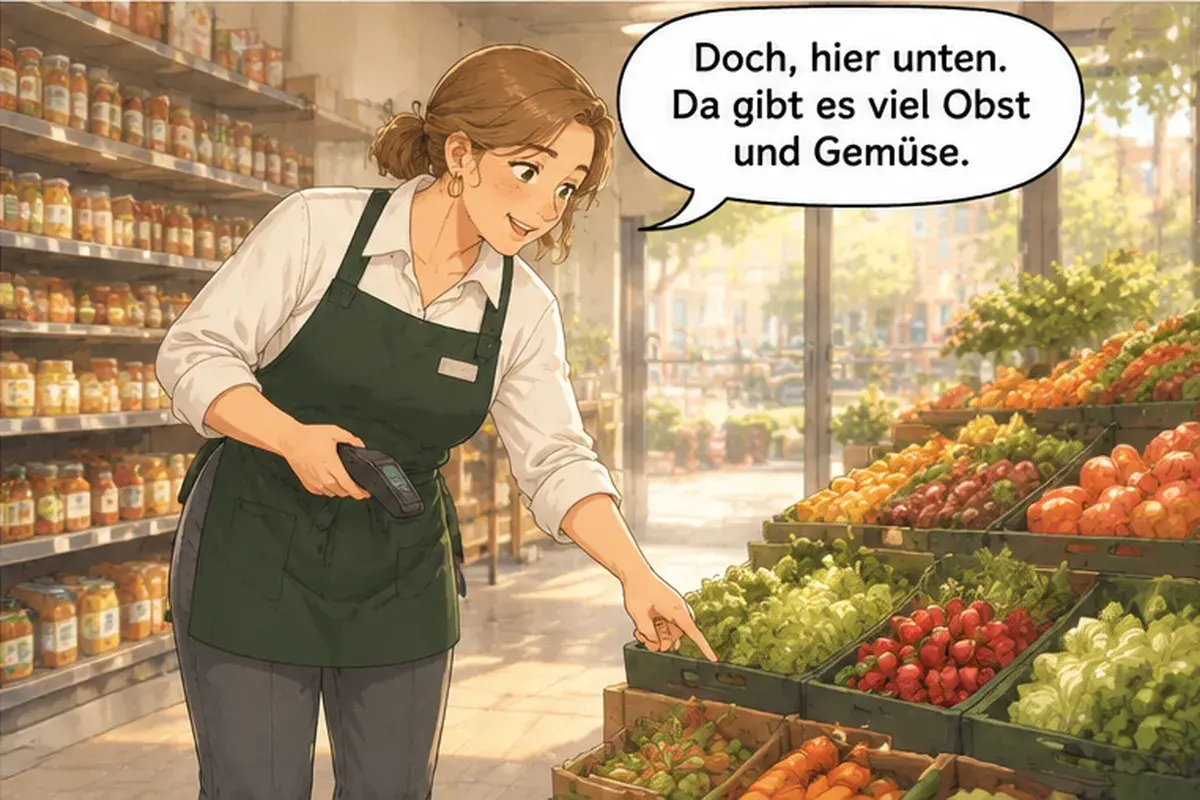
- Verkäuferin
Doch, hier unten. Da gibt es viel Obst und Gemüse.
Yes, we do, down here. There's a lot of fruit and vegetables there.
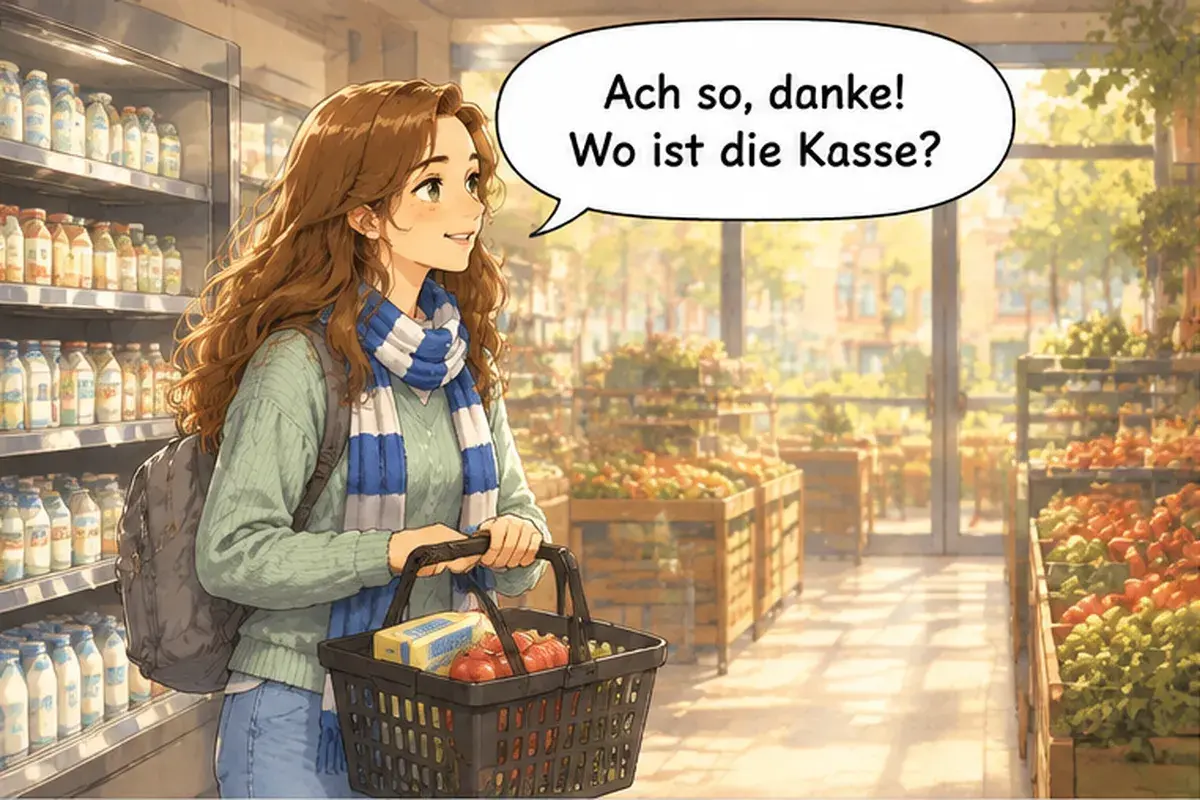
- Katja
Ach so, danke! Wo ist die Kasse?
Oh, I see, thanks! Where's the checkout?

- Verkäuferin
Kasse 1 ist offen, hier links.
Checkout 1 is open, here on the left.
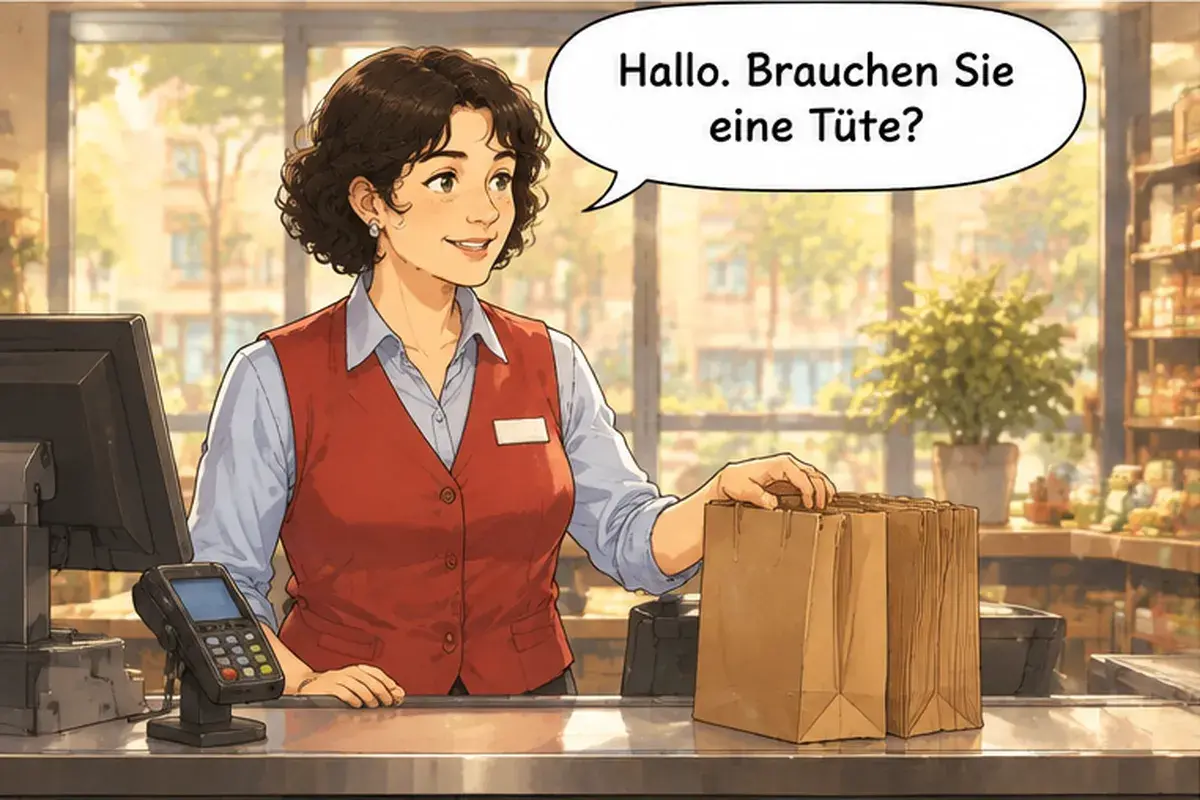
- Kassiererin
Hallo. Brauchen Sie eine Tüte?
Hi. Do you need a bag? (formal)
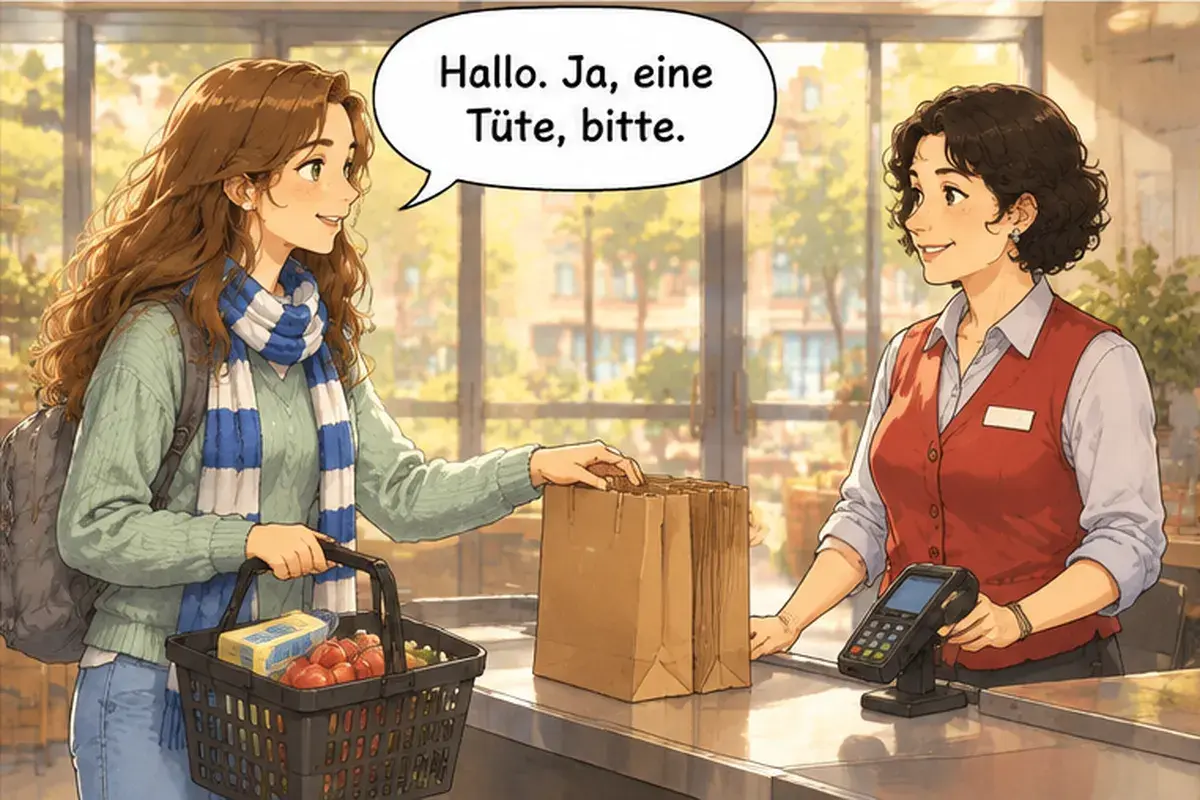
- Katja
Hallo. Ja, eine Tüte, bitte.
Hi. Yes, a bag, please.
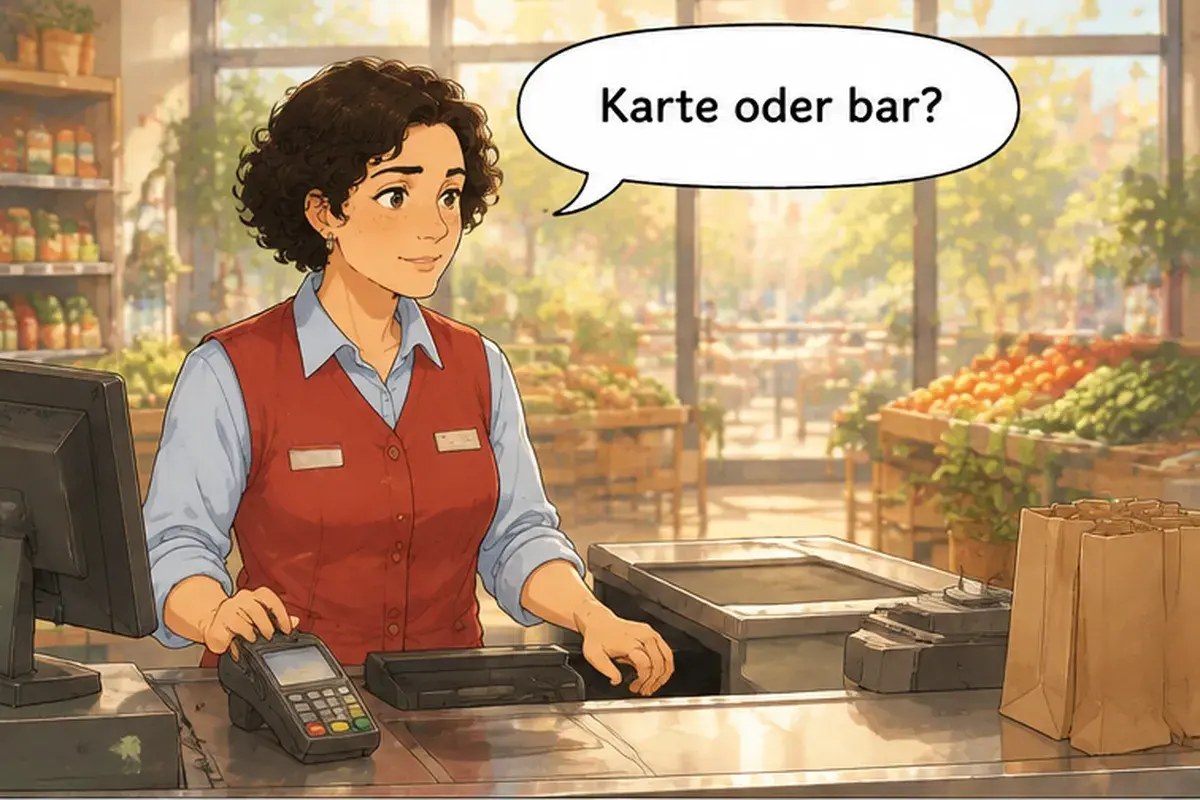
- Kassiererin
Karte oder bar?
Card or cash?

- Katja
Mit Karte, bitte.
By card, please.
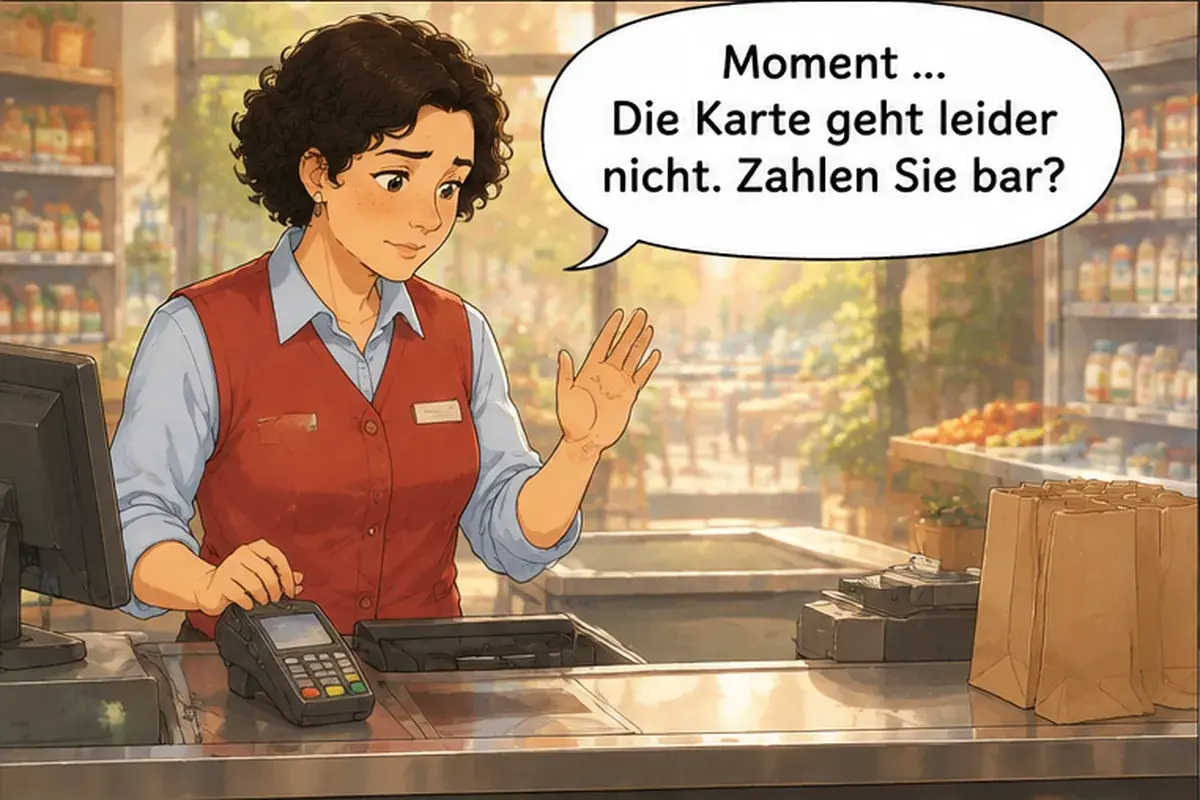
- Kassiererin
Moment ... Die Karte geht leider nicht. Zahlen Sie bar?
One moment ... Unfortunately, the card isn't working. Are you paying cash? (formal)

- Katja
Kein Problem. Ich zahle bar.
No problem. I'll pay cash.
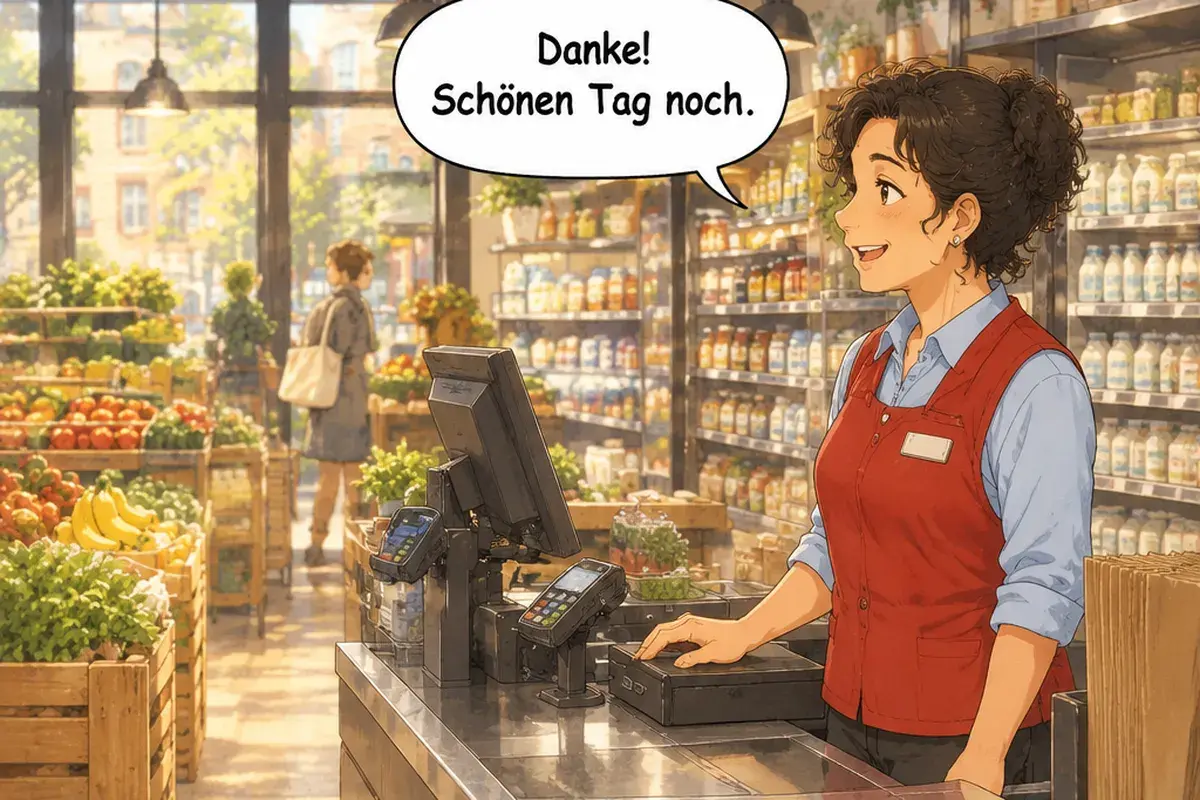
- Kassiererin
Danke! Schönen Tag noch.
Thanks! Have a nice day.

- Katja
Danke, Ihnen auch! Tschüss.
Thanks, you too! Bye. (formal)
Grammar for this text
- Wo finde ich die Butter und den Fisch? — finde is the ich form of finden (to find), like suche from suchen. This is the accusative (see the unit grammar): die Butter doesn't change, but der Fisch becomes den Fisch.
- Fisch und Fleisch finden Sie dort rechts. — the verb always comes second. What she's looking for (fish and meat) comes first, so Sie (you, formal) moves after the verb. You can also say
Sie finden Fisch und Fleisch dort rechts. - Haben Sie keine Äpfel? — keine Äpfel means "no apples at all". Doch, hier unten. — "Yes, we do, down here." Doch is "yes" in answer to a negative question; Ja would only confuse things here.
- Da gibt es viel Obst und Gemüse. — gibt is the er form of geben (to give): e changes to i, like nimmt from nehmen (unit 4). es gibt means "there is, there are", a set phrase from unit 3.
- Die Karte geht leider nicht. — geht is the sie (she) form of gehen (to go). About a card, a machine or a ticket, gehen means "to work". nicht negates the verb. leider — unfortunately.
- Zahlen Sie bar? — a question with no question word: the verb comes first, then Sie. German needs no "do" or "are" here. bar — in cash.
- Danke, Ihnen auch! — "You too!" Ihnen is "(to) you" for the formal Sie; learn it as a set phrase, the rule comes at A2.
Words and grammar of the unit: Shop for groceries.
Learn the words from the texts with flashcards
In the app, you can tap any word in a text to see its translation, forms and examples, and new words stick with flashcards. 15 minutes a day.
Start for freeEverything is open for free. No card needed to sign up.