

German dialogue with translation · A1 · 13 lines
Nehmen Sie einen Regenschirm mit! Take an umbrella with you! (formal)
Comic · 13 panels

- Katja
Guten Morgen, Frau Brandt! Schönes Wetter heute!
Good morning, Frau Brandt! Nice weather today!
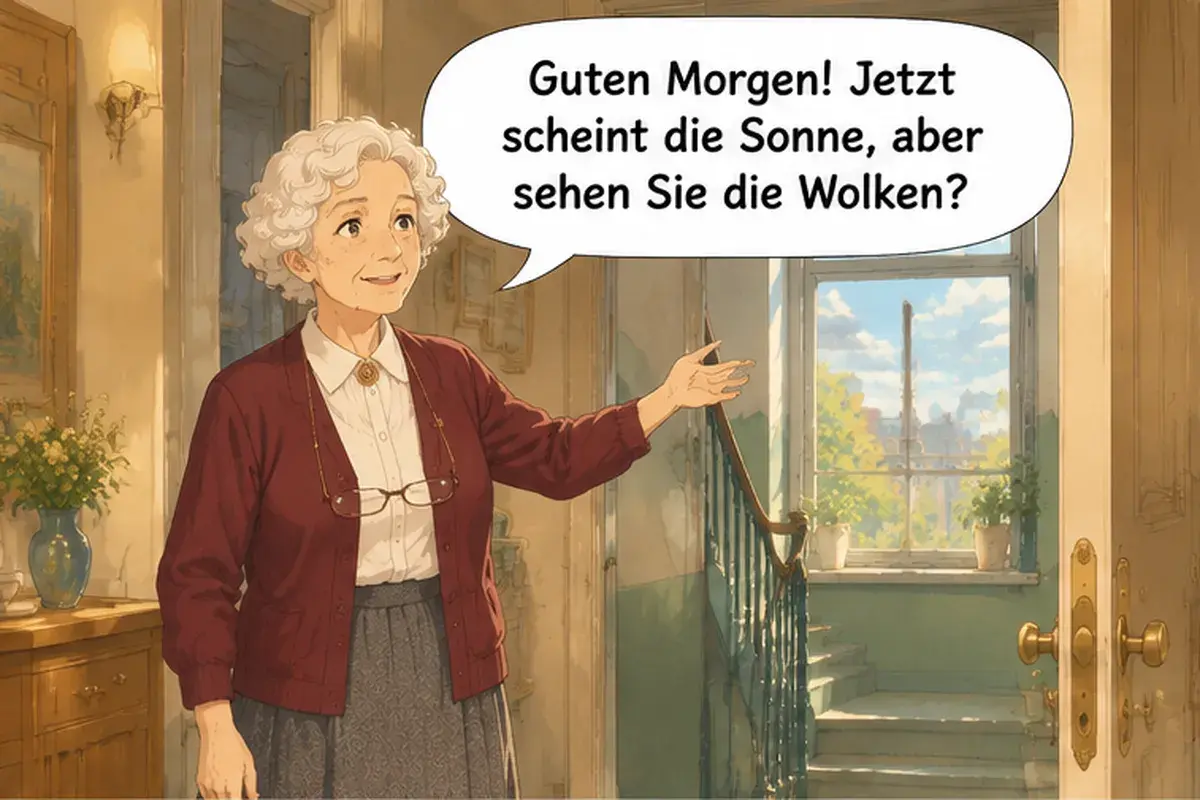
- Frau Brandt
Guten Morgen! Jetzt scheint die Sonne, aber sehen Sie die Wolken?
Good morning! The sun is shining now, but do you see the clouds? (formal)

- Katja
Meine App sagt: Es ist warm, zwanzig Grad.
My app says: it's warm, twenty degrees.
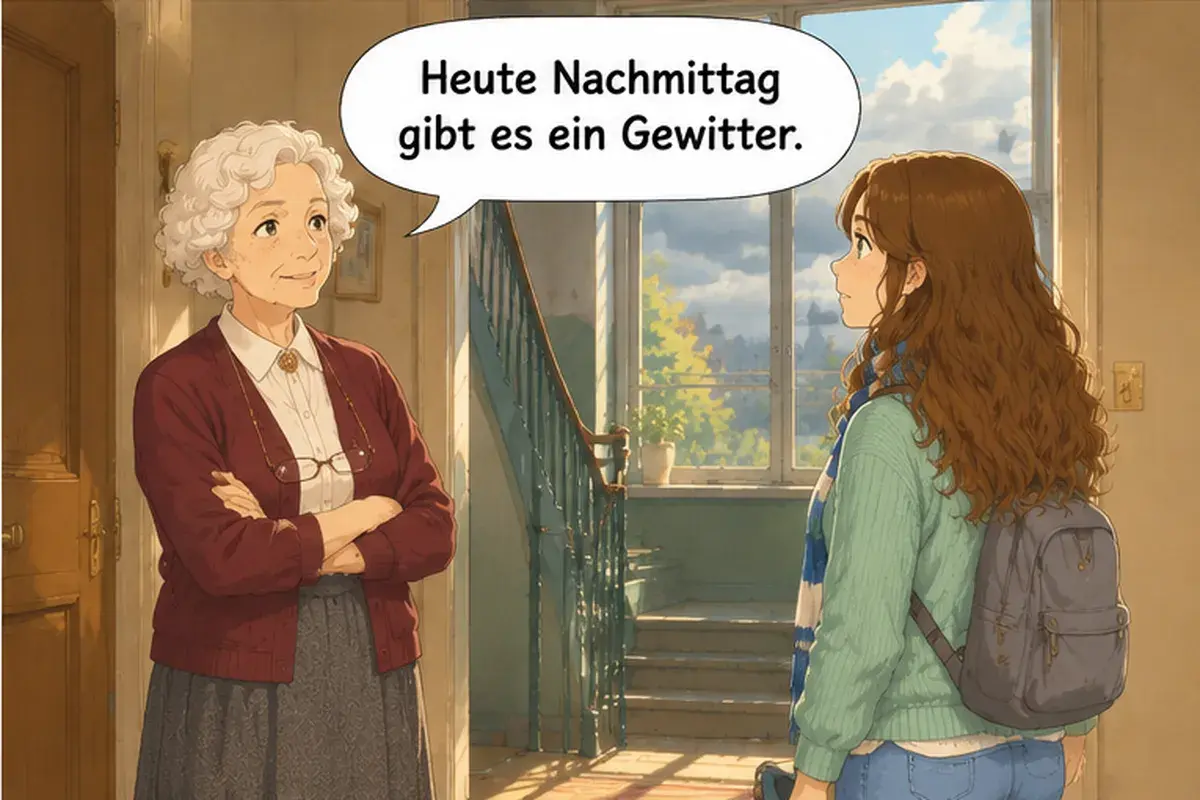
- Frau Brandt
Heute Nachmittag gibt es ein Gewitter.
There's going to be a thunderstorm this afternoon.
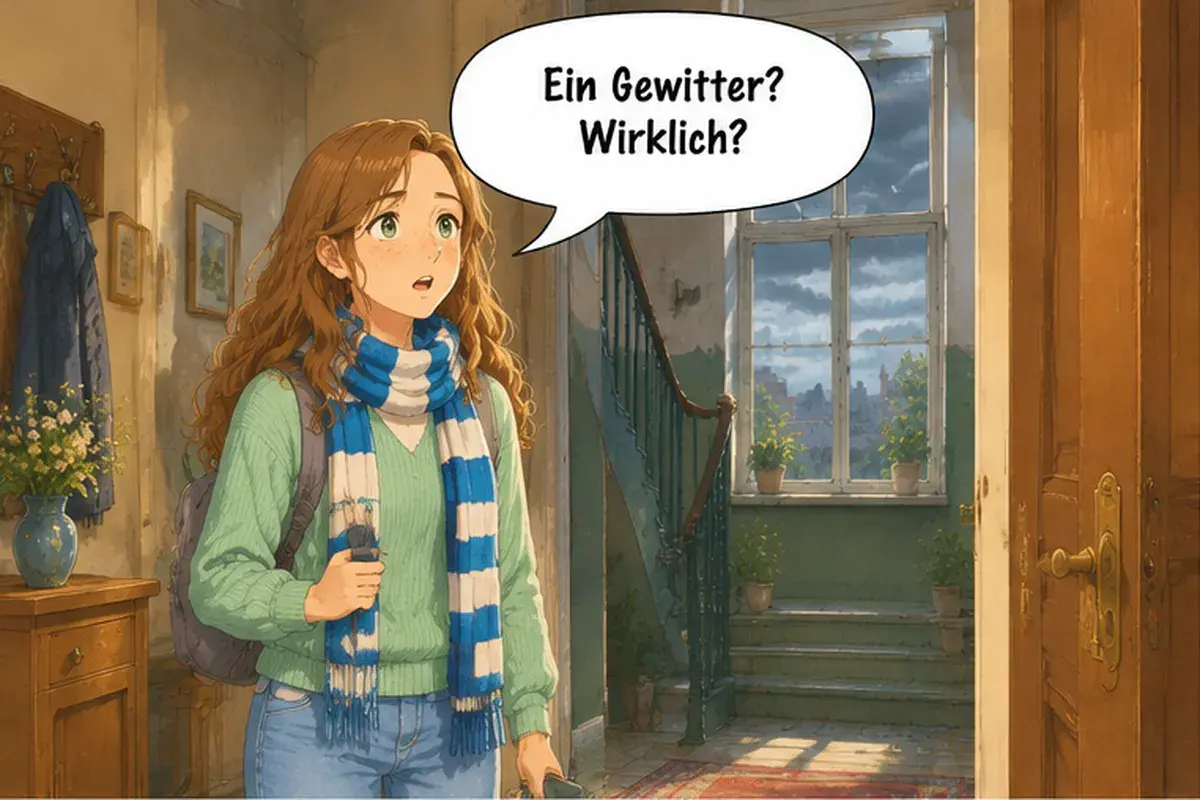
- Katja
Ein Gewitter? Wirklich?
A thunderstorm? Really?
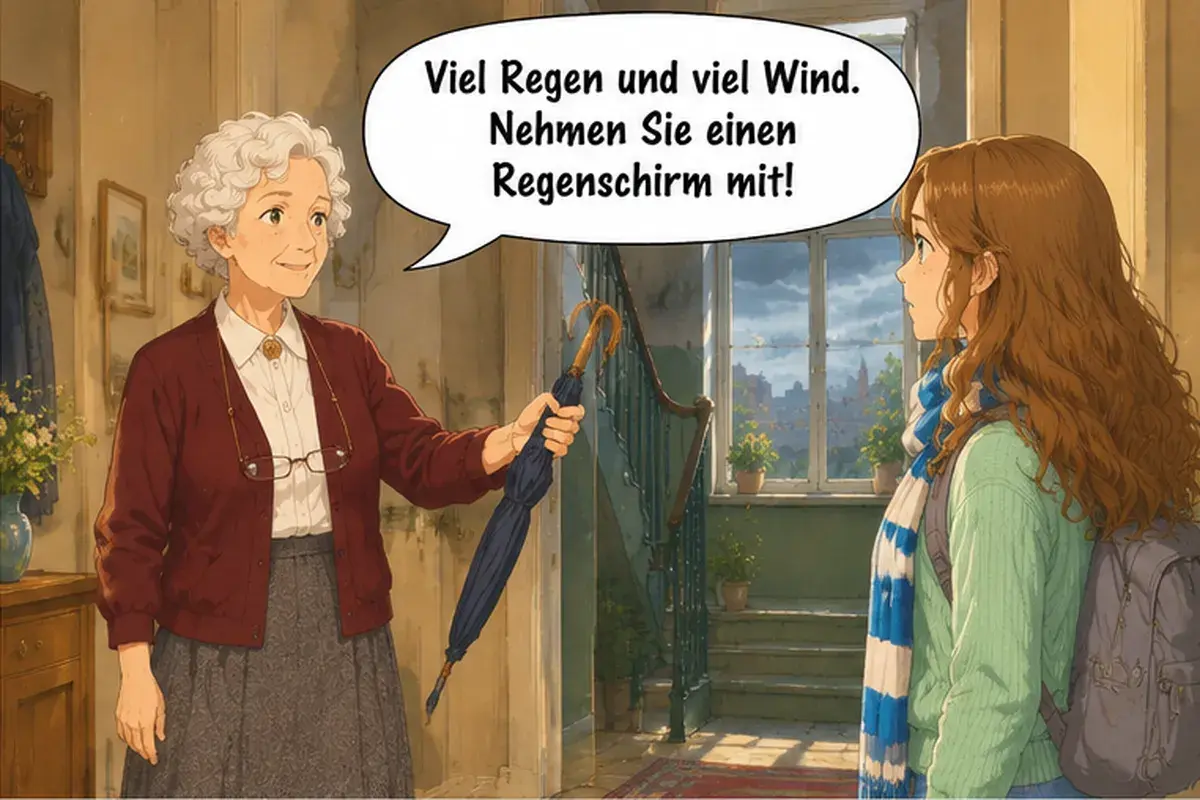
- Frau Brandt
Viel Regen und viel Wind. Nehmen Sie einen Regenschirm mit!
Lots of rain and lots of wind. Take an umbrella with you! (formal)
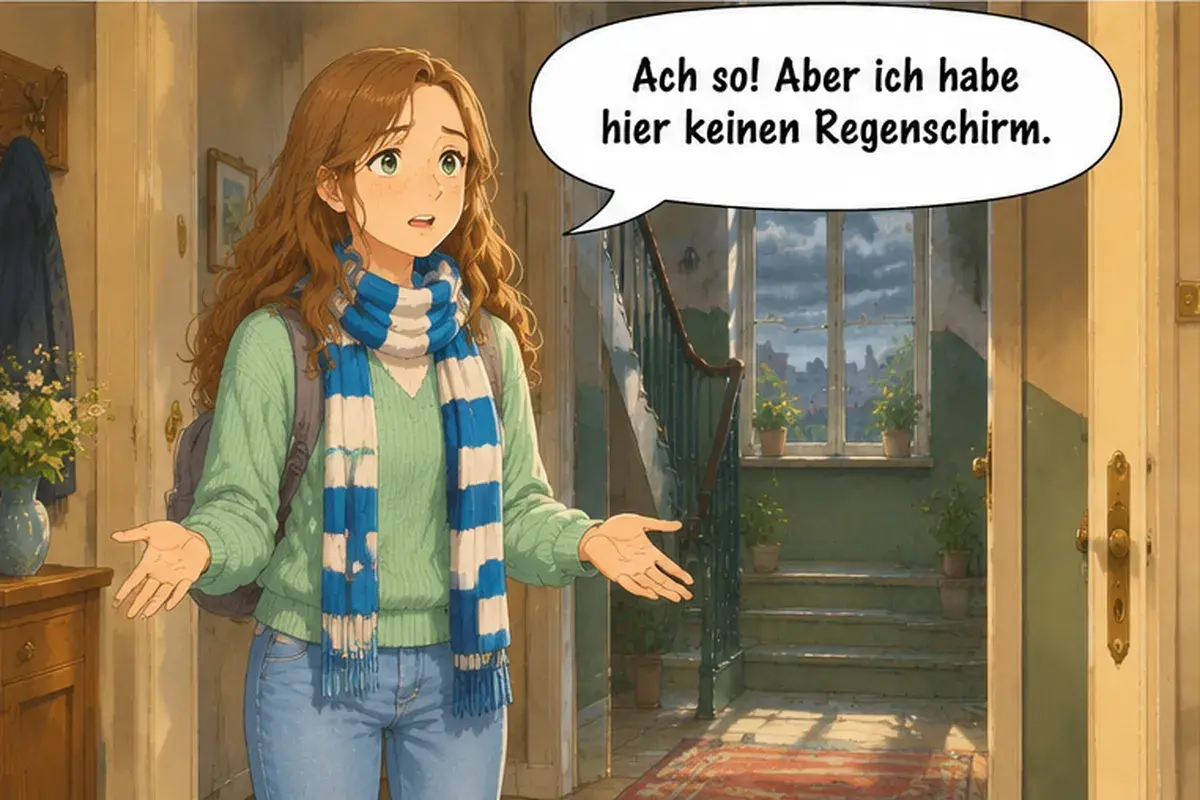
- Katja
Ach so! Aber ich habe hier keinen Regenschirm.
Oh, I see! But I don't have an umbrella here.
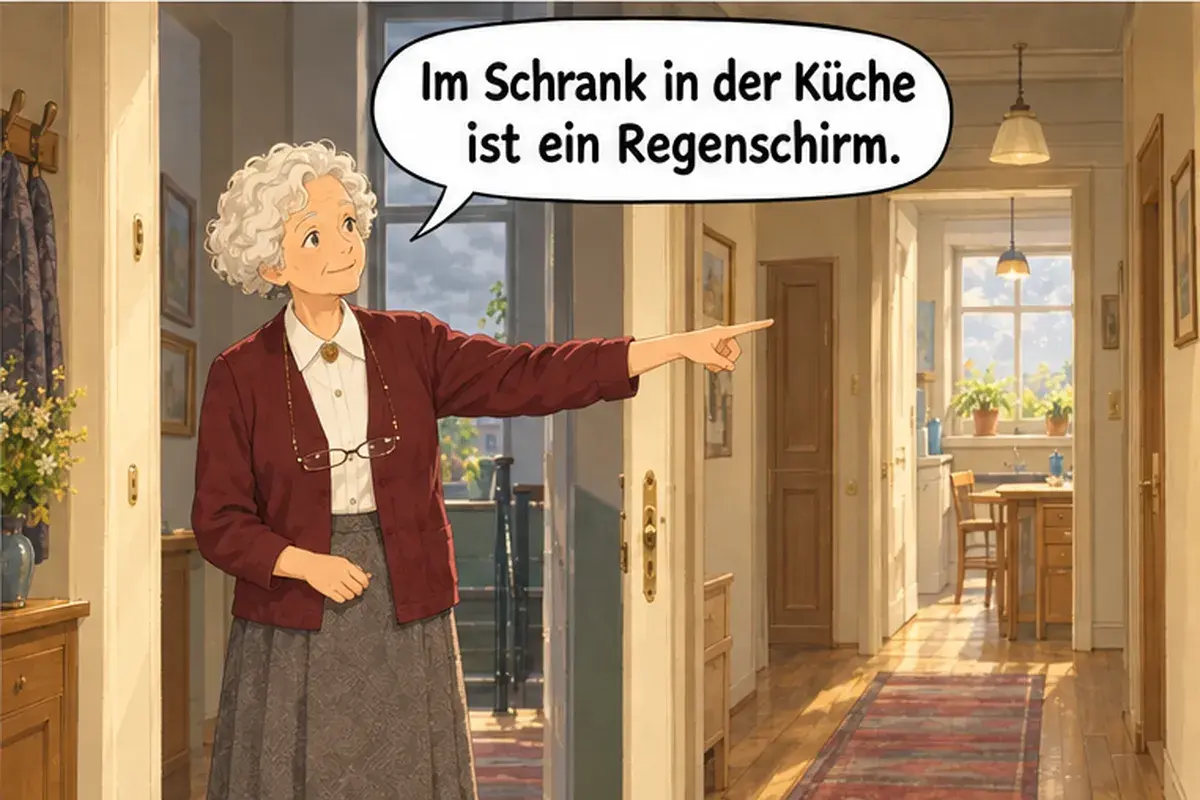
- Frau Brandt
Im Schrank in der Küche ist ein Regenschirm.
There's an umbrella in the cupboard in the kitchen.
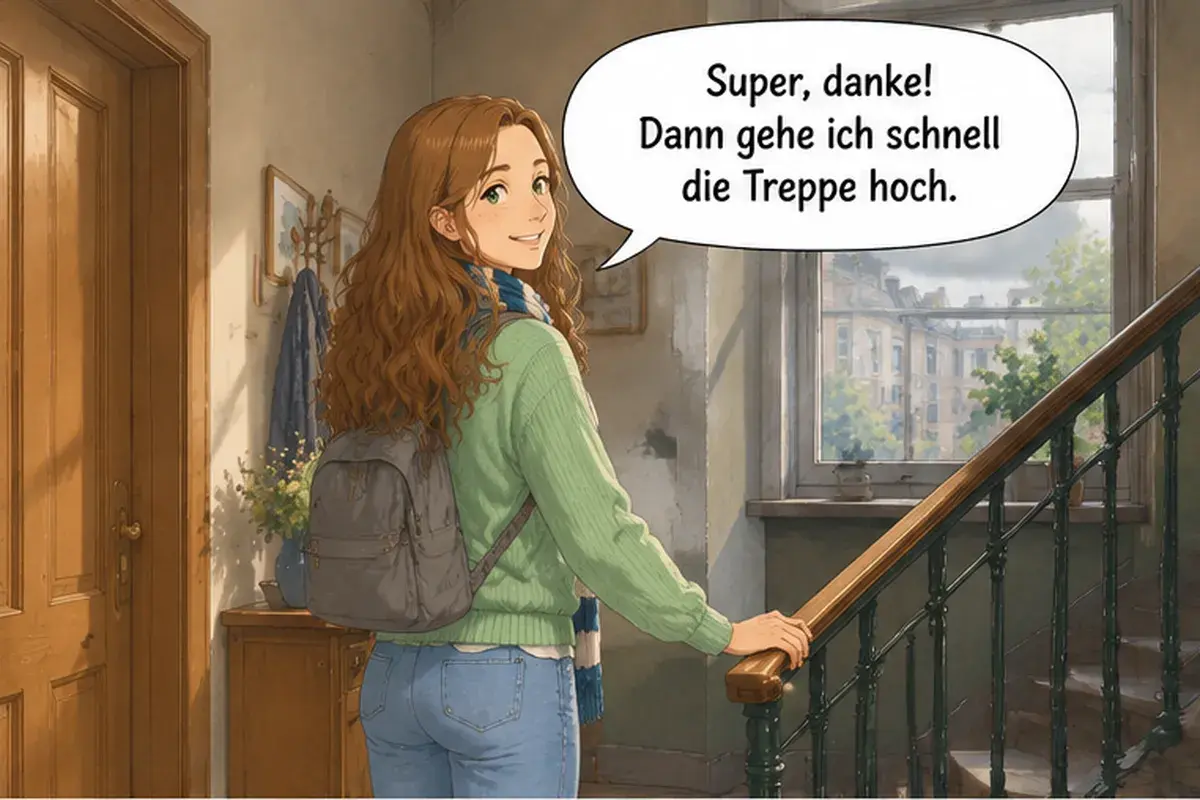
- Katja
Super, danke! Dann gehe ich schnell die Treppe hoch.
Great, thanks! Then I'll quickly go up the stairs.
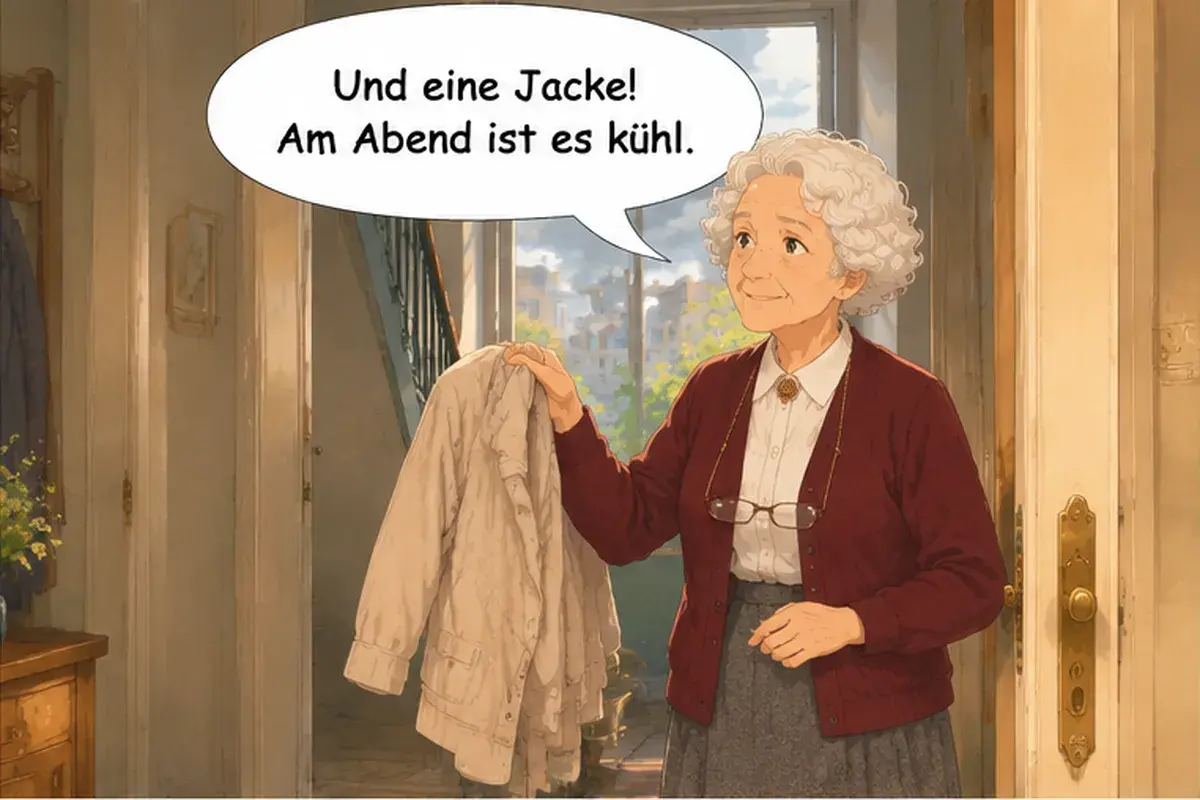
- Frau Brandt
Und eine Jacke! Am Abend ist es kühl.
And a jacket! It's cool in the evening.

- Katja
Eine Jacke habe ich schon. Hoffentlich regnet es am Abend nicht mehr.
I already have a jacket. Hopefully it won't rain anymore in the evening.
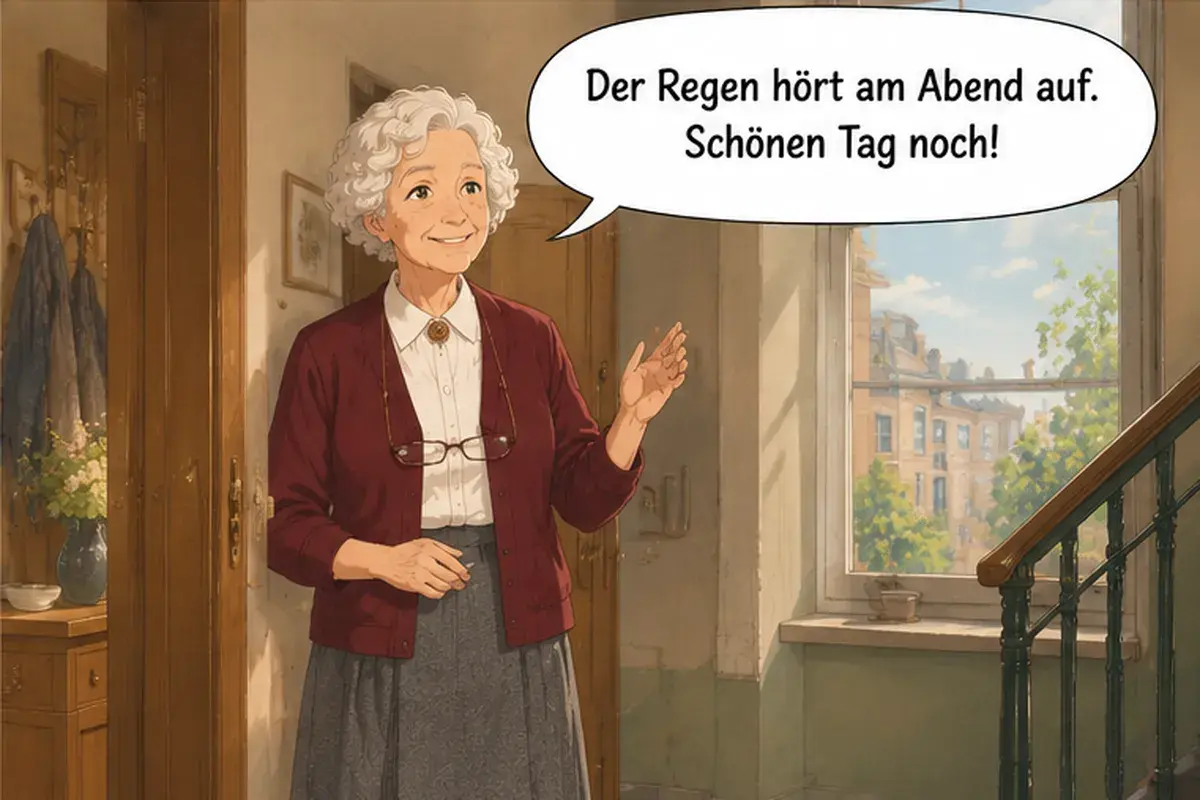
- Frau Brandt
Der Regen hört am Abend auf. Schönen Tag noch!
The rain will stop in the evening. Have a nice day!
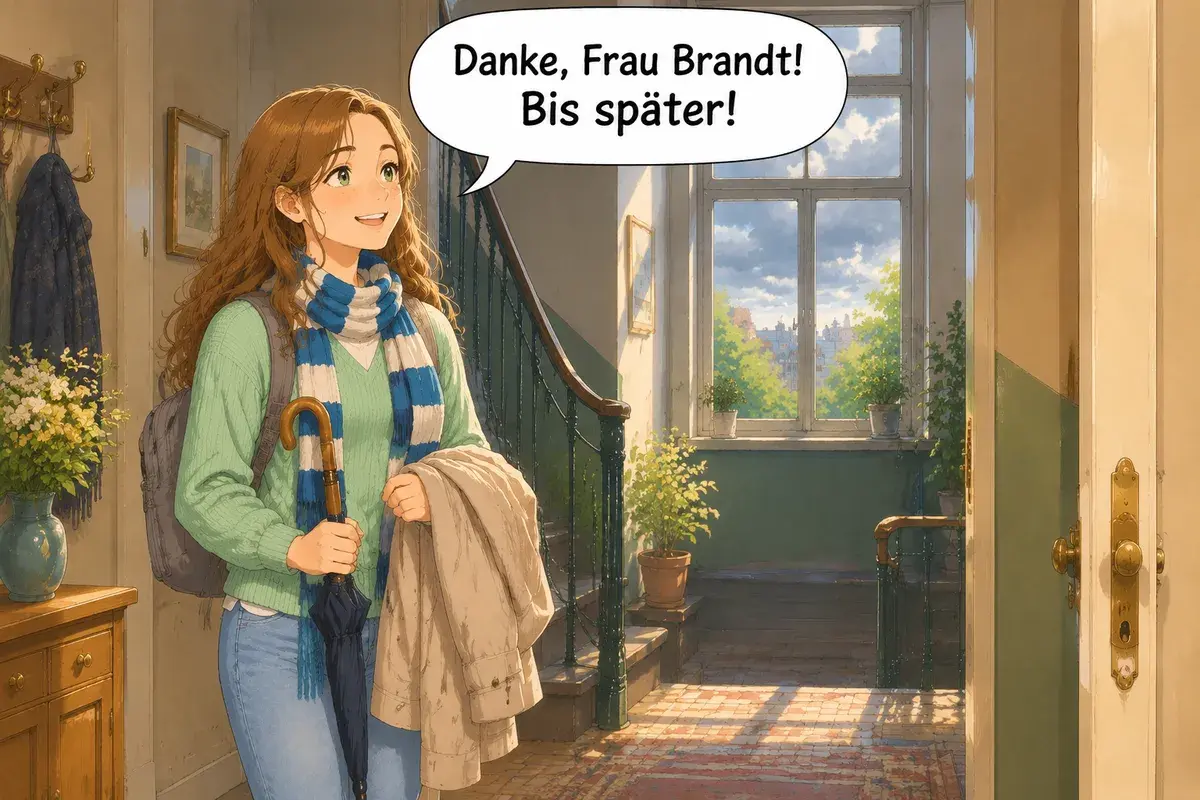
- Katja
Danke, Frau Brandt! Bis später!
Thank you, Frau Brandt! See you later!
Grammar for this text
- Es ist warm, zwanzig Grad — here German works like English:
esis the empty "it" of "it's warm". There's no real subject, but the sentence needs one. The same goes forEs regnet— it's raining. - Heute Nachmittag gibt es ein Gewitter — you know
es gibtfrom unit 3 (there is, there are). There's no special future form here: German takes the present tense and a time word (heute Nachmittag— this afternoon). So it means "there's going to be a thunderstorm this afternoon". - Nehmen Sie einen Regenschirm mit! — a polite command (unit 8): the verb first, then
Sie.mitnehmenis a separable verb:nehmencomes first, andmitgoes to the very end.einenis the accusative (unit 5), because it'sder Regenschirm(masculine). - Ich habe hier keinen Regenschirm —
keineniskeinin the accusative: "I don't have an umbrella". - Im Schrank in der Küche ist ein Regenschirm — "in the cupboard in the kitchen". After
in, this is the dative (it comes in A2), so you getim Schrankandin der Küche. For now, learn them as ready-made chunks. - Dann gehe ich schnell die Treppe hoch — after
dannthe verb is second andichmoves after it (unit 9).die Treppe hoch— up the stairs. - Der Regen hört am Abend auf —
aufhören(to stop) is separable too:hörtis in second place,aufis at the end.
Words and grammar of the unit: Talk about the weather and weekend plans.
Learn the words from the texts with flashcards
In the app, you can tap any word in a text to see its translation, forms and examples, and new words stick with flashcards. 15 minutes a day.
Start for freeEverything is open for free. No card needed to sign up.