

German dialogue with translation · A1 · 14 lines
Die Rechnung, bitte! The check, please!
Comic · 14 panels
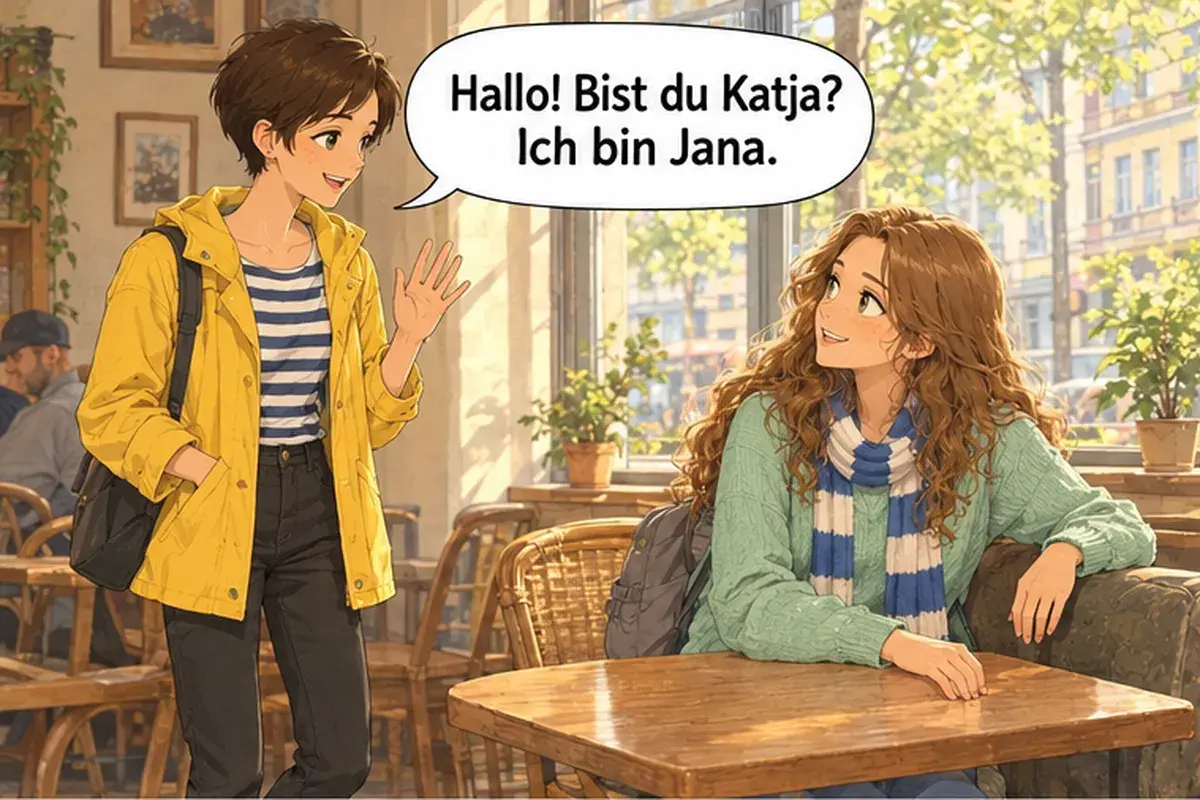
- Jana
Hallo! Bist du Katja? Ich bin Jana.
Hi! Are you Katja? I'm Jana.
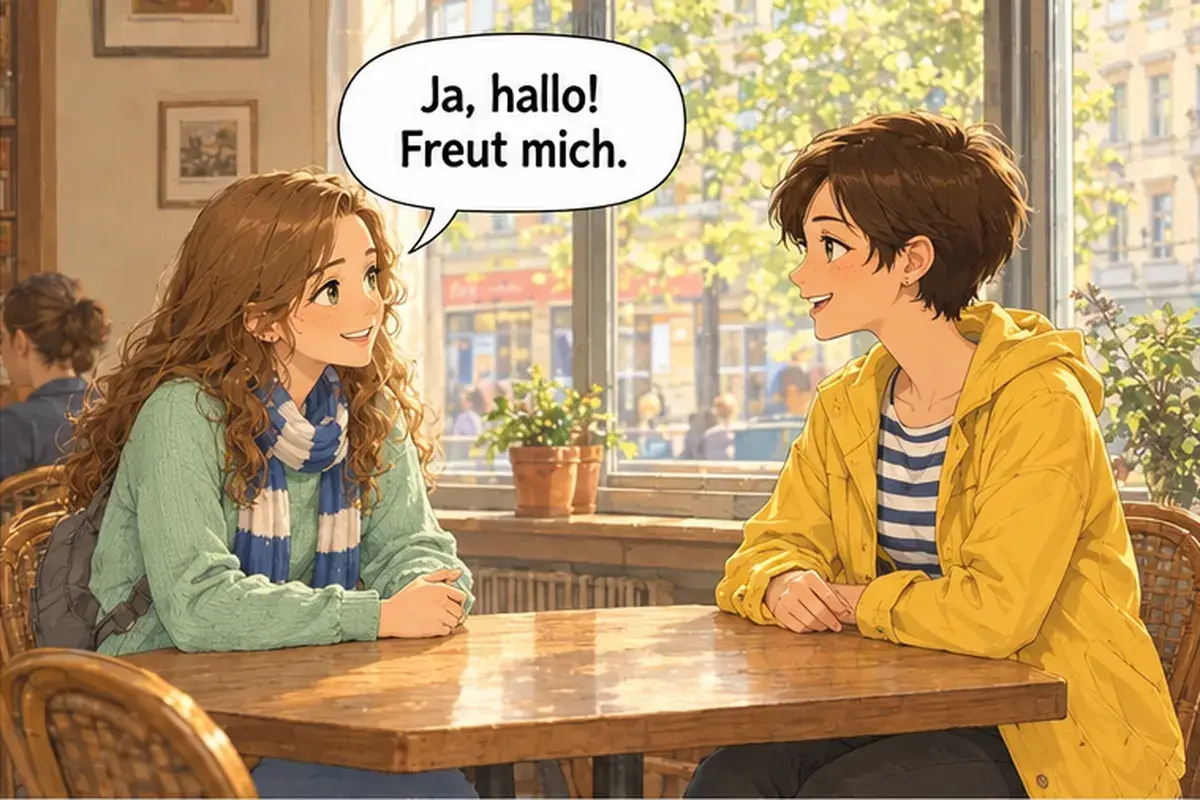
- Katja
Ja, hallo! Freut mich.
Yes, hi! Nice to meet you.
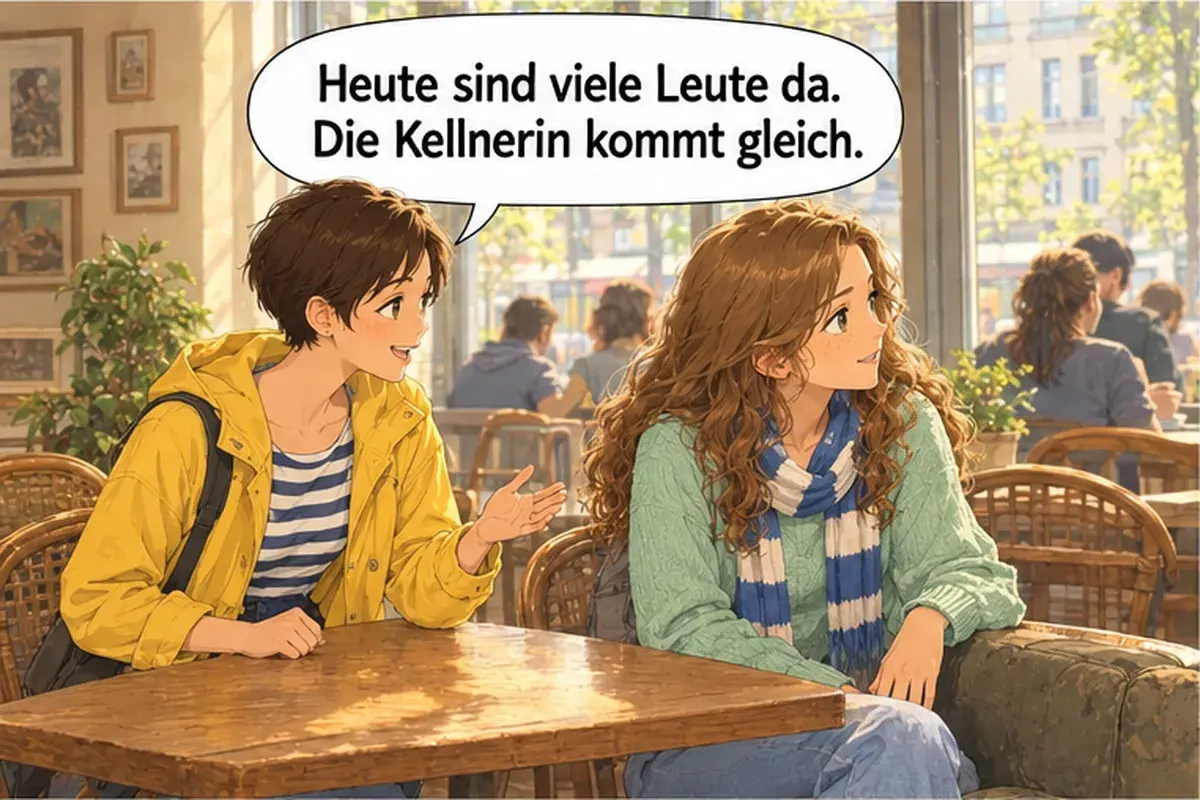
- Jana
Heute sind viele Leute da. Die Kellnerin kommt gleich.
There are lots of people here today. The waitress will be right over.
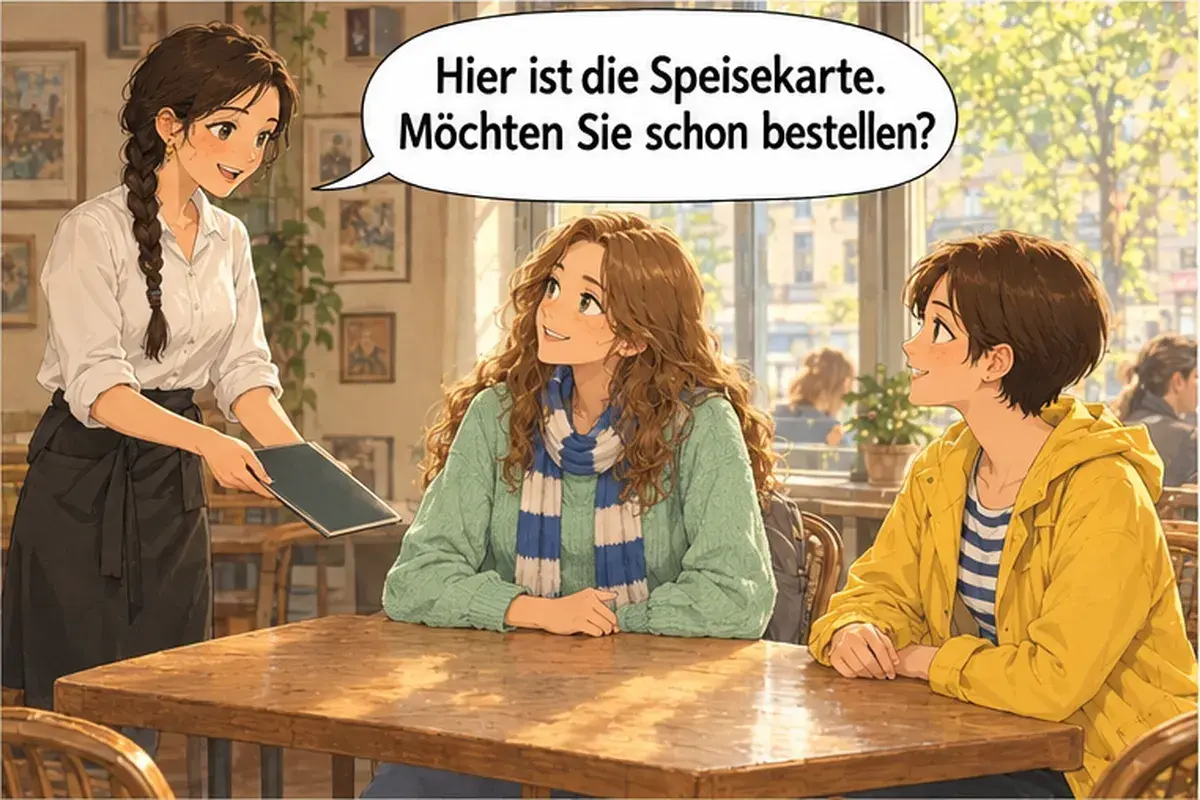
- Kellnerin
Hier ist die Speisekarte. Möchten Sie schon bestellen?
Here's the menu. Would you like to order now? (formal)
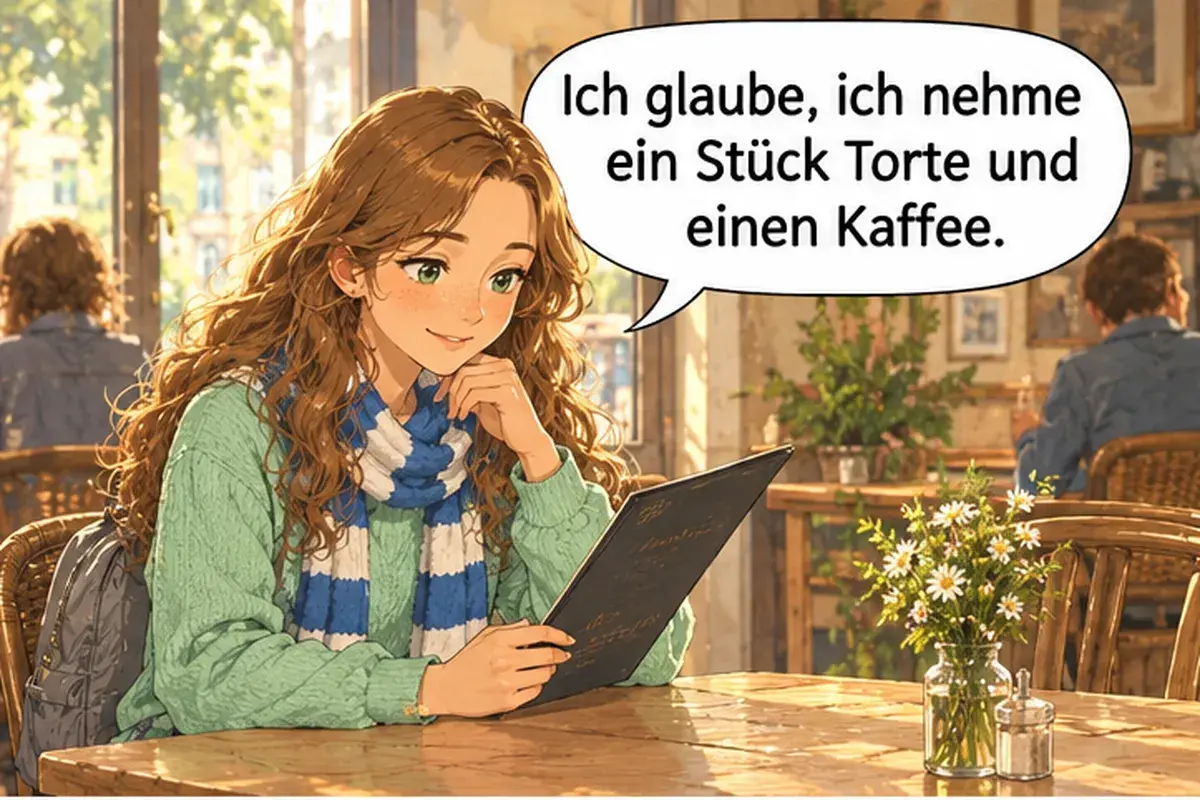
- Katja
Ich glaube, ich nehme ein Stück Torte und einen Kaffee.
I think I'll have a piece of cake and a coffee.
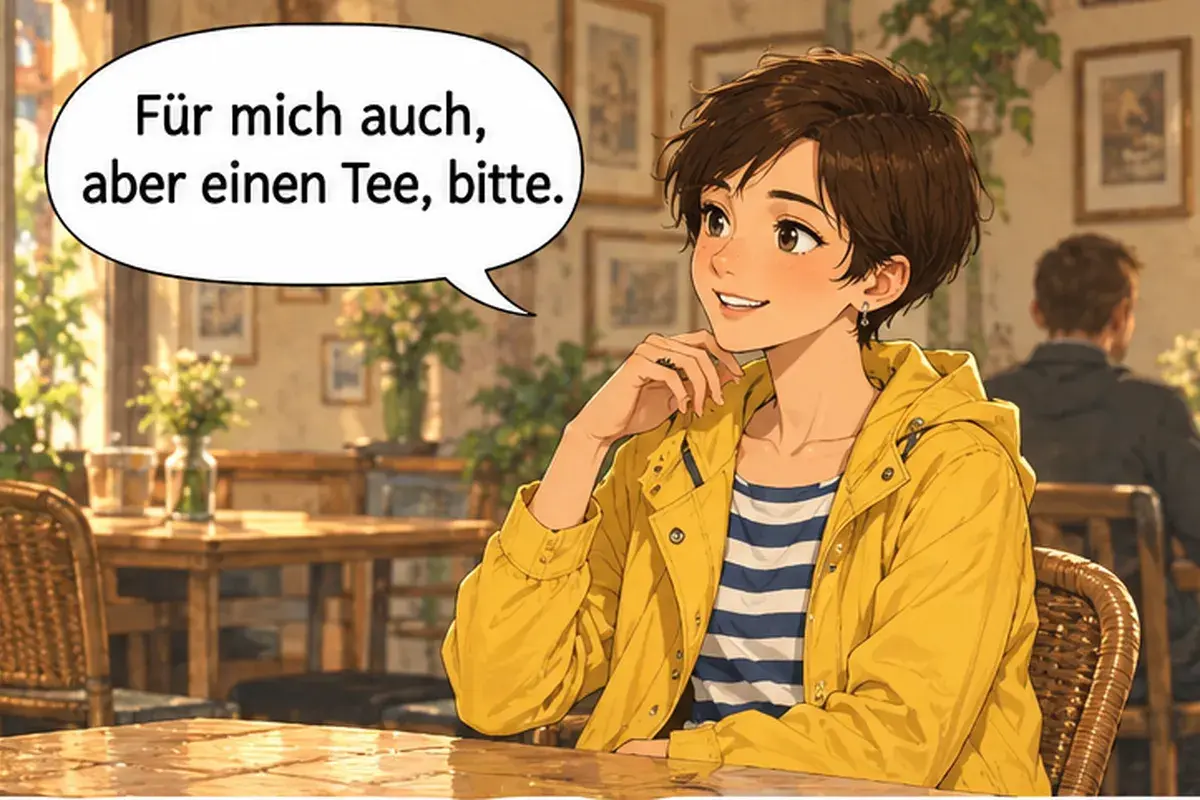
- Jana
Für mich auch, aber einen Tee, bitte.
Same for me, but a tea, please.
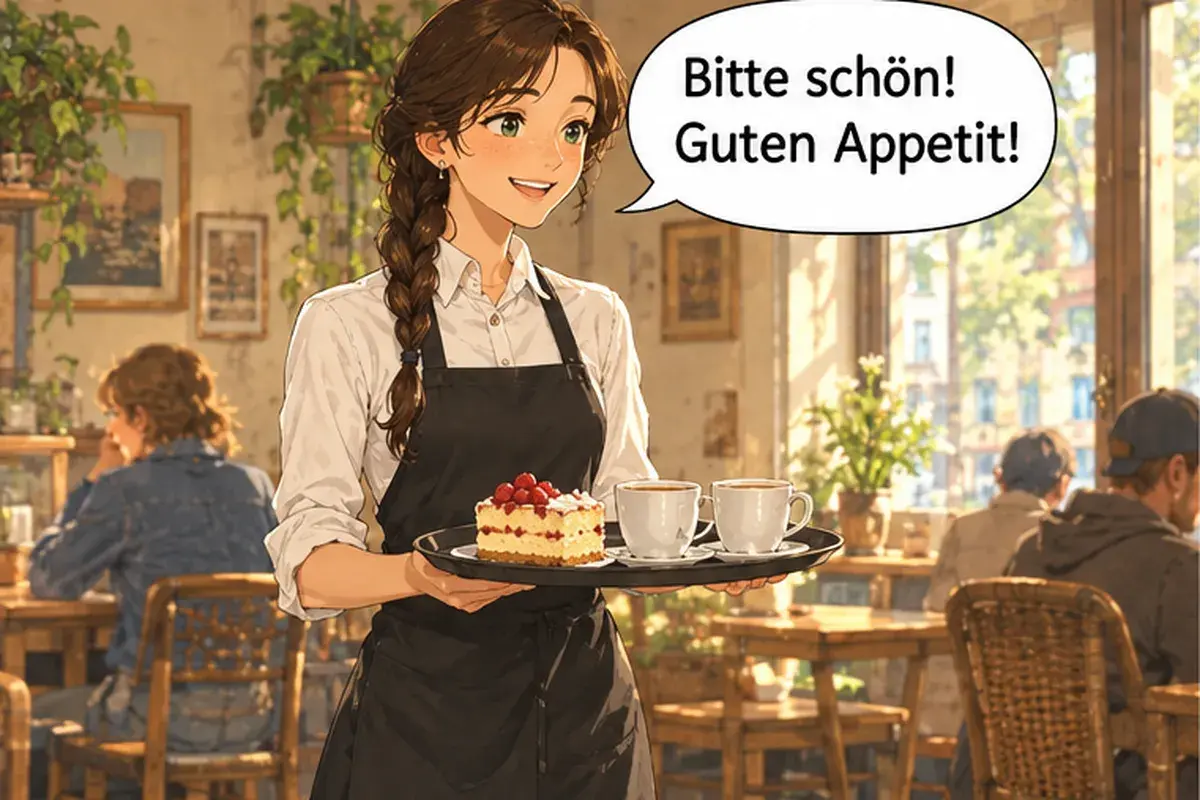
- Kellnerin
Bitte schön! Guten Appetit!
Here you go! Enjoy your meal!
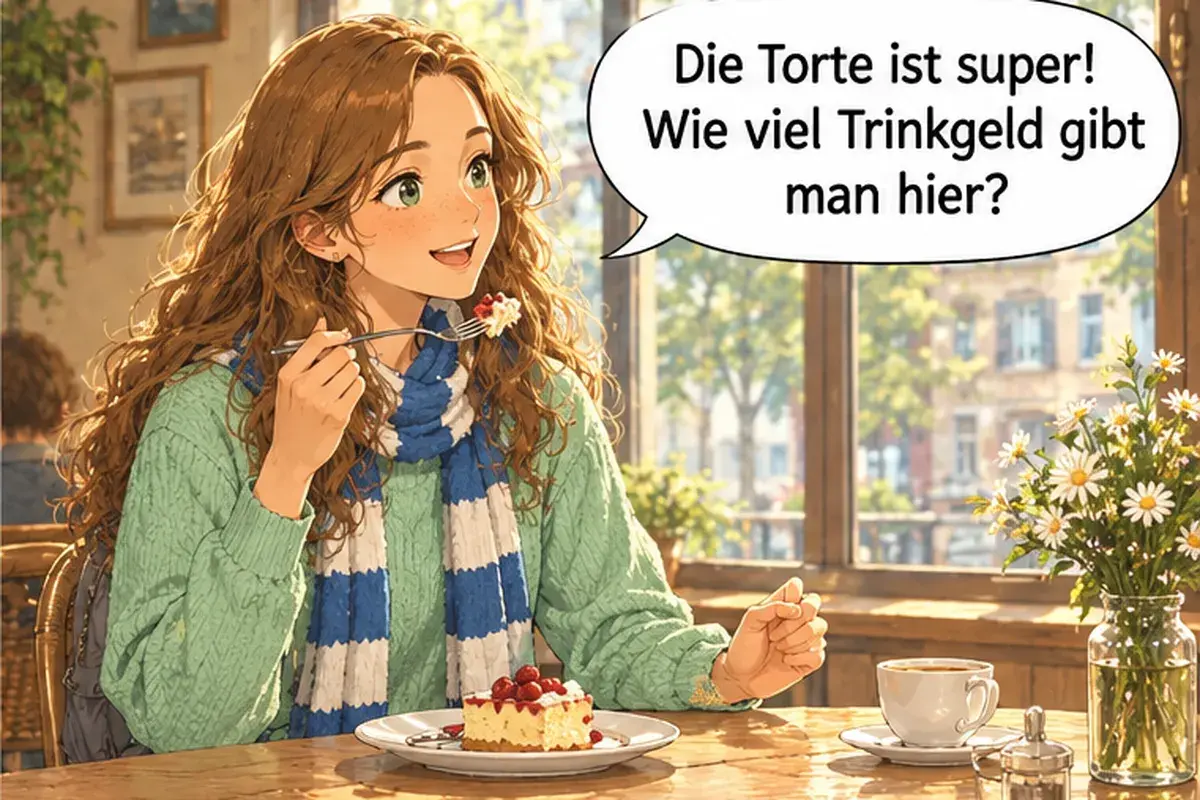
- Katja
Die Torte ist super! Wie viel Trinkgeld gibt man hier?
The cake is great! How much do people tip here?
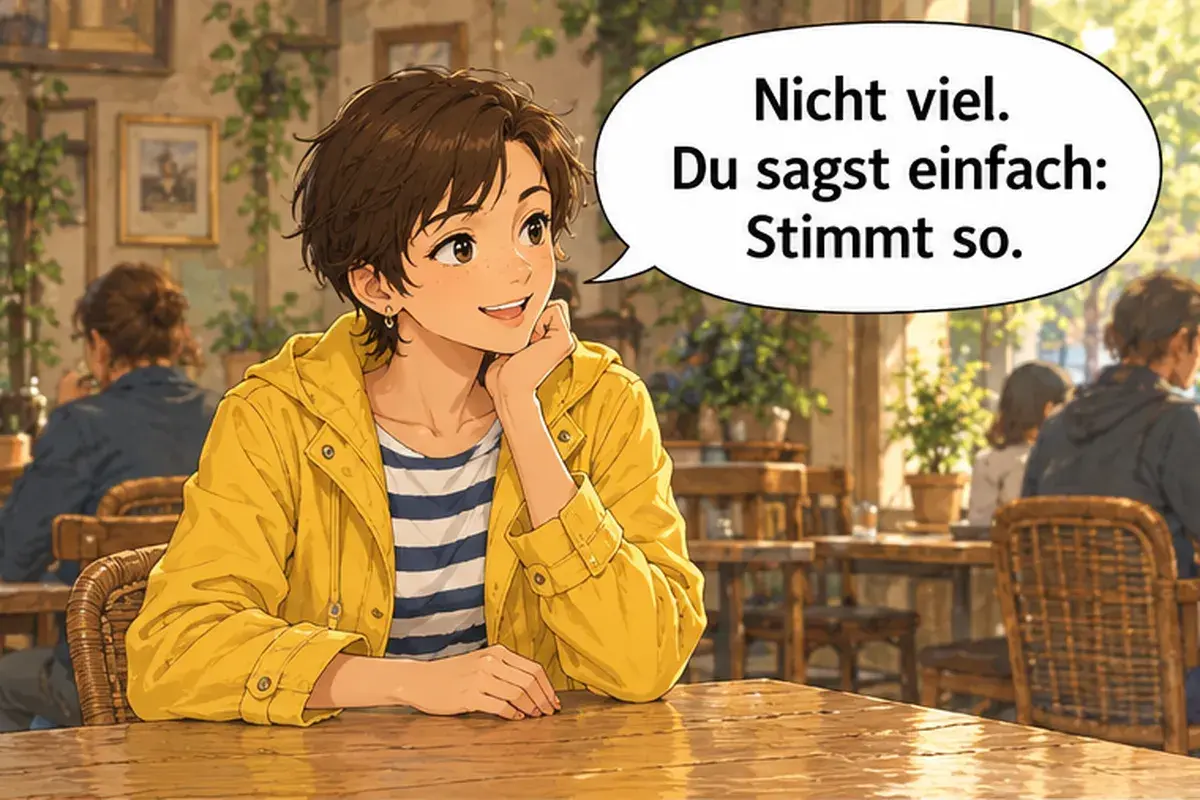
- Jana
Nicht viel. Du sagst einfach: Stimmt so.
Not much. You just say, "Keep the change."
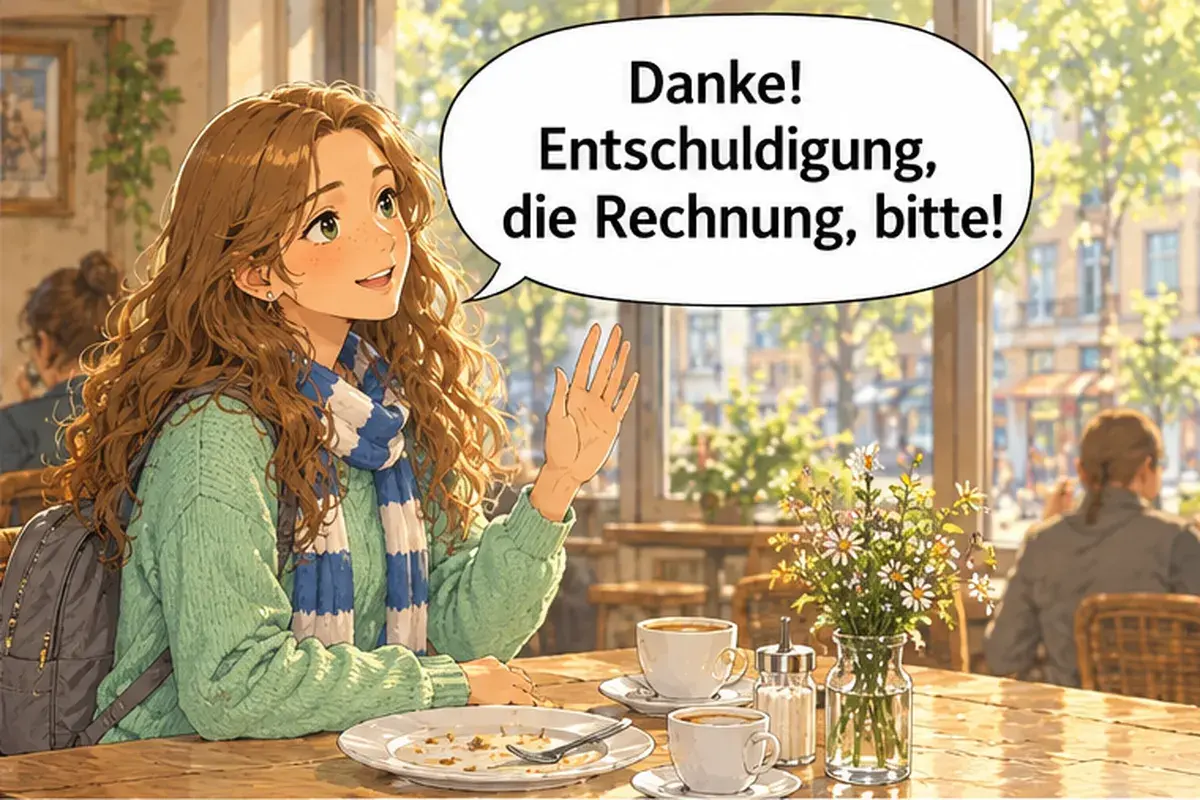
- Katja
Danke! Entschuldigung, die Rechnung, bitte!
Thanks! Excuse me, the check, please!
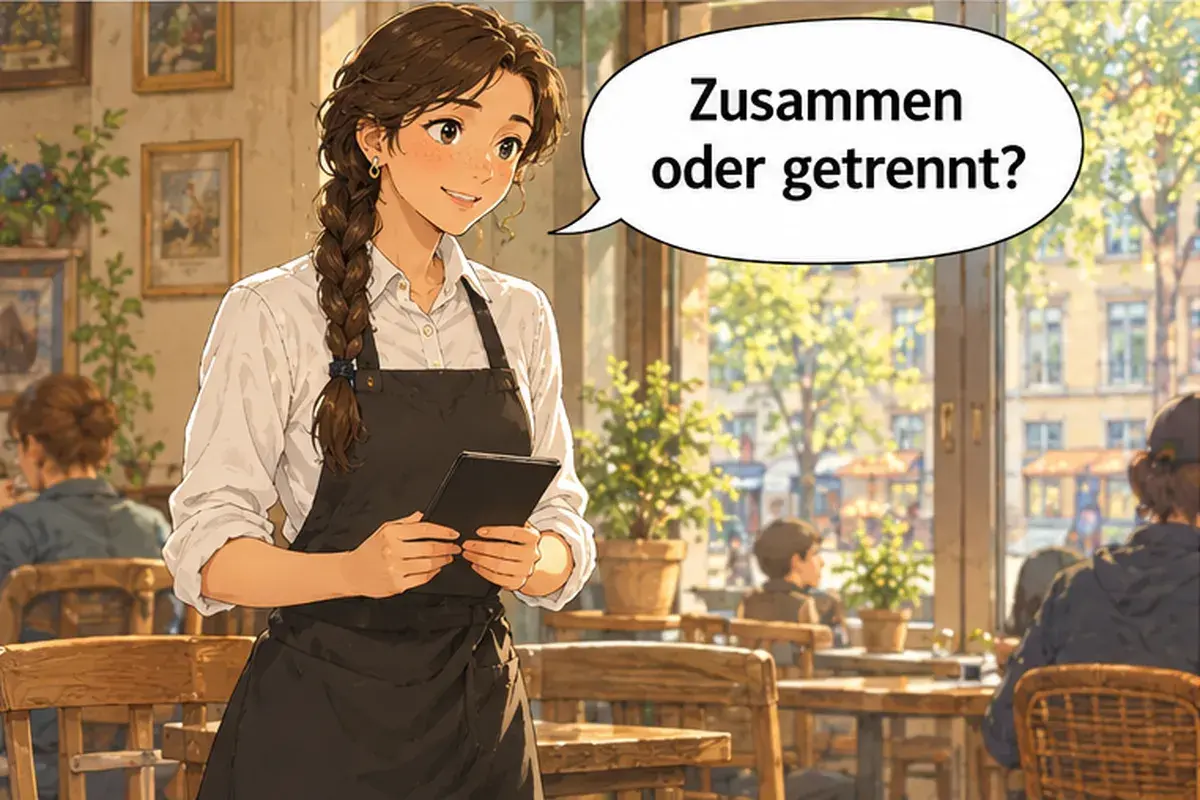
- Kellnerin
Zusammen oder getrennt?
Together or separate?
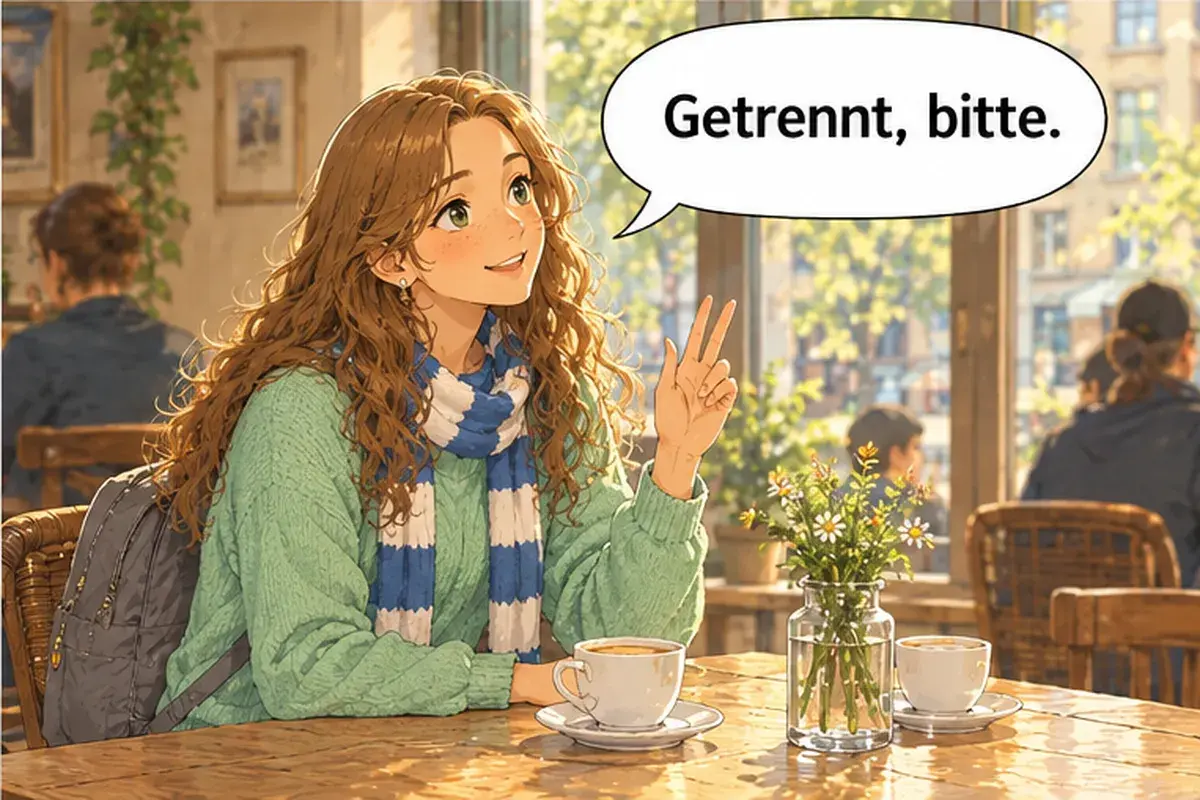
- Katja
Getrennt, bitte.
Separate, please.
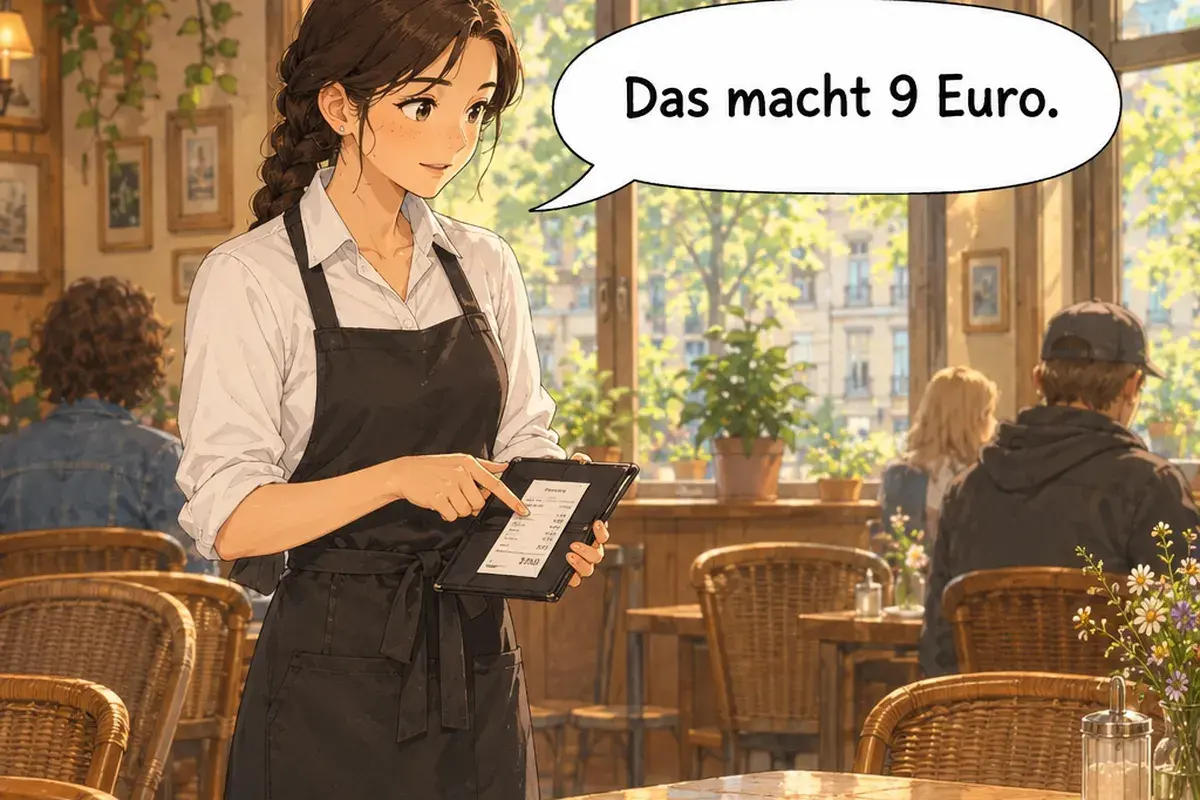
- Kellnerin
Das macht 9 Euro.
That's €9.
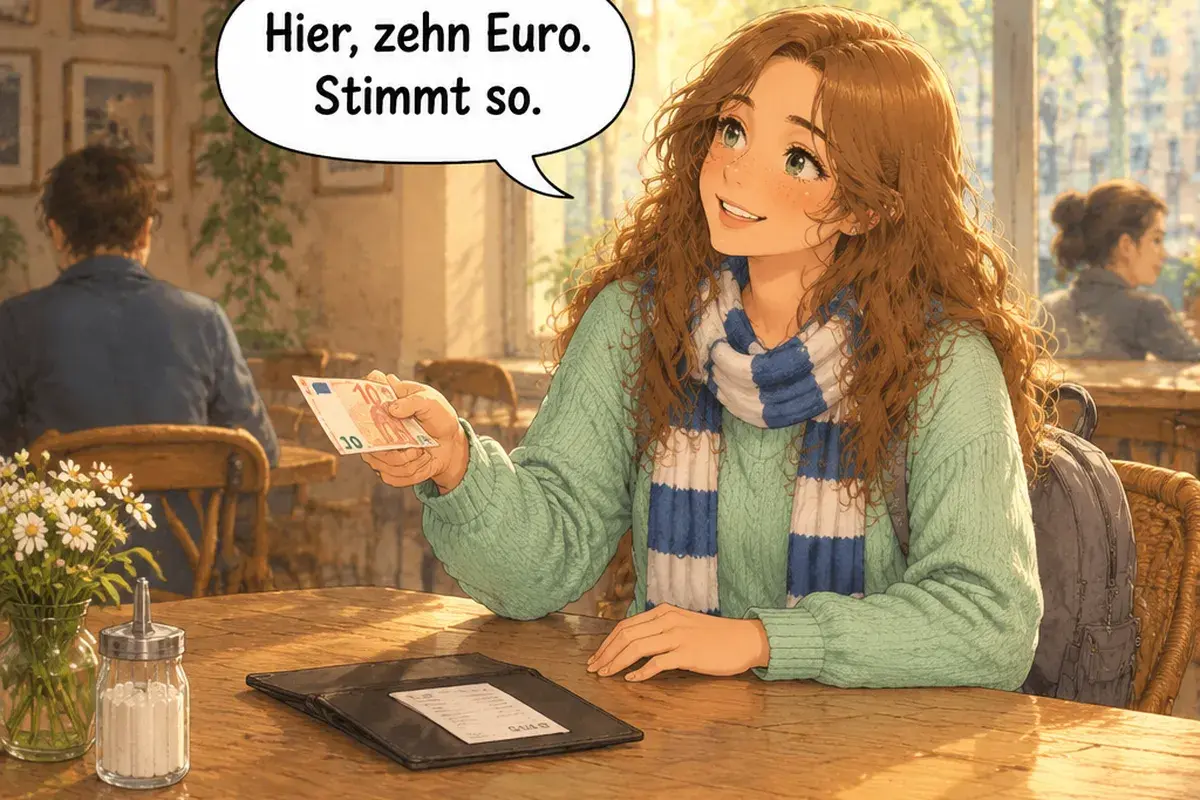
- Katja
Hier, zehn Euro. Stimmt so.
Here's ten euros. Keep the change.
Grammar for this text
- Möchten Sie schon bestellen? —
möchten(unit 4) and the formalSie(unit 1): the waitress speaks formally to both women.Siecomes after the verb and always has a capital S.schon— already. - Ich glaube, ich nehme ein Stück Torte und einen Kaffee. — after the comma a new sentence starts, so the verb is in second place again:
ich nehme(nehmen, unit 4).ein Stück Torte— a piece of cake, with no word for "of".einen Kaffeeis the accusative (unit 5). - Für mich auch, aber einen Tee, bitte. — an answer with no verb, like English "Same for me".
michis the form ofichafterfür.einen Teeis accusative, likeeinen Kaffee: Jana gets cake too, but tea instead of coffee. - Wie viel Trinkgeld gibt man hier? —
gibtis the er / sie / es / man form ofgeben:gebe,gibst,gibt(e→i, likenimmt).manmeans people in general (unit 3): "how much do people usually give here?" - Stimmt so. — "keep the change" (word for word, "it's right like that"). You say it as you hand over the money: Hier, zehn Euro. Stimmt so. — Katja gives ten euros for a nine-euro check and leaves the change for the waitress.
- Zusammen oder getrennt? — asked before you pay: together, or does each person pay for their own? The answer: Getrennt, bitte.
Words and grammar of the unit: Make plans to meet.
Learn the words from the texts with flashcards
In the app, you can tap any word in a text to see its translation, forms and examples, and new words stick with flashcards. 15 minutes a day.
Start for freeEverything is open for free. No card needed to sign up.