

German dialogue with translation · A1 · 14 lines
Wie wäre es mit Café Rosi? How about Café Rosi?
Comic · 13 panels

- Lukas
Hallo Katja! Hast du heute Lust auf Kaffee und Kuchen?
Hi Katja! Do you feel like coffee and cake today?
- Katja
Ja, klar! Kommst du mit?
Yes, sure! Are you coming along?

- Lukas
Tut mir leid, ich muss zu meinen Eltern. Aber Jana hat frei.
Sorry, I have to go to my parents'. But Jana has the day off.
- Katja
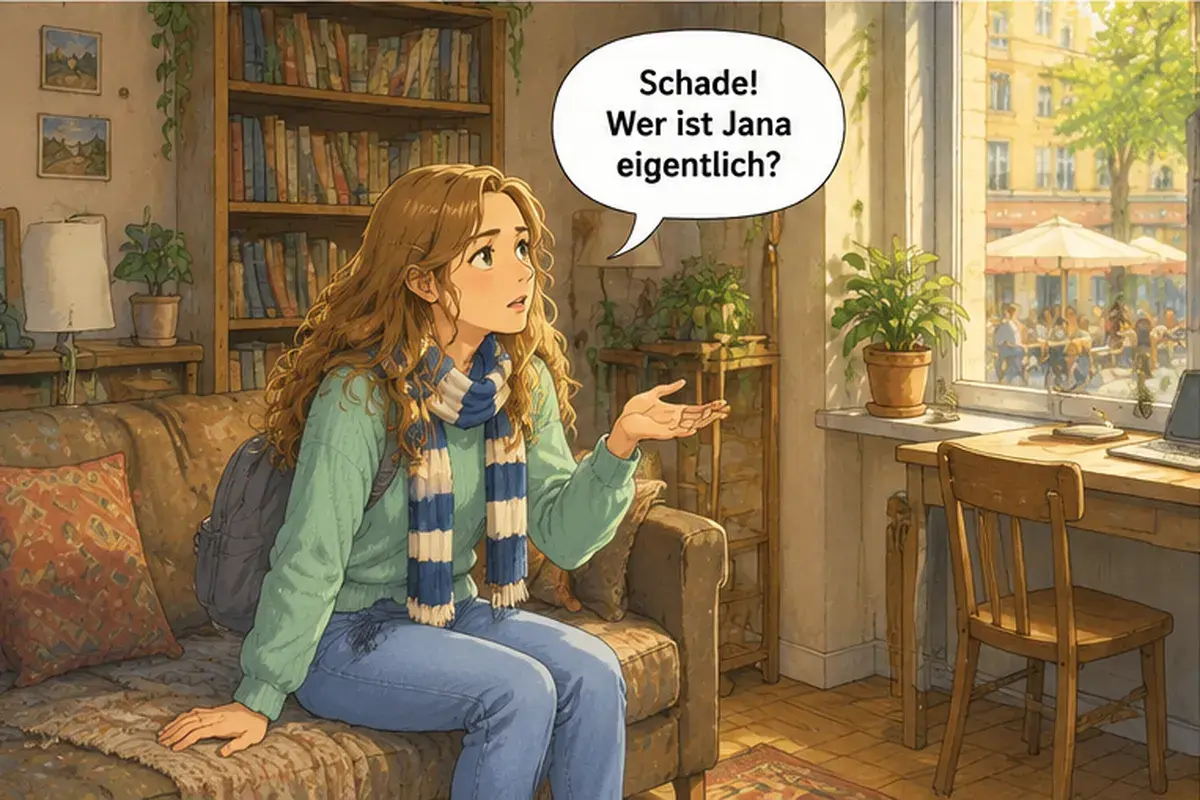
Schade! Wer ist Jana eigentlich?
Too bad! Who is Jana, anyway?

- Lukas
Eine Freundin von mir. Sie ist nett und will dich kennenlernen.
A friend of mine. She's nice and wants to meet you.
- Katja
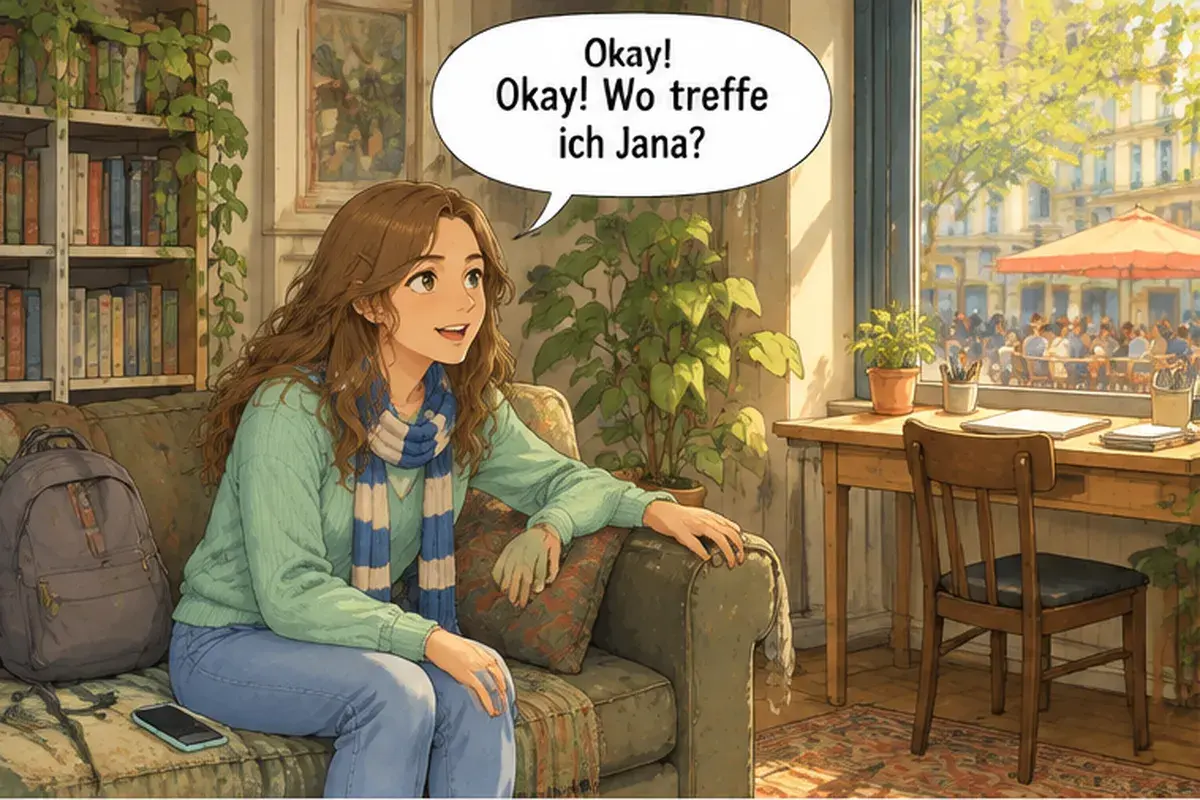
Okay! Wo treffe ich Jana?
Okay! Where do I meet Jana?
- Lukas
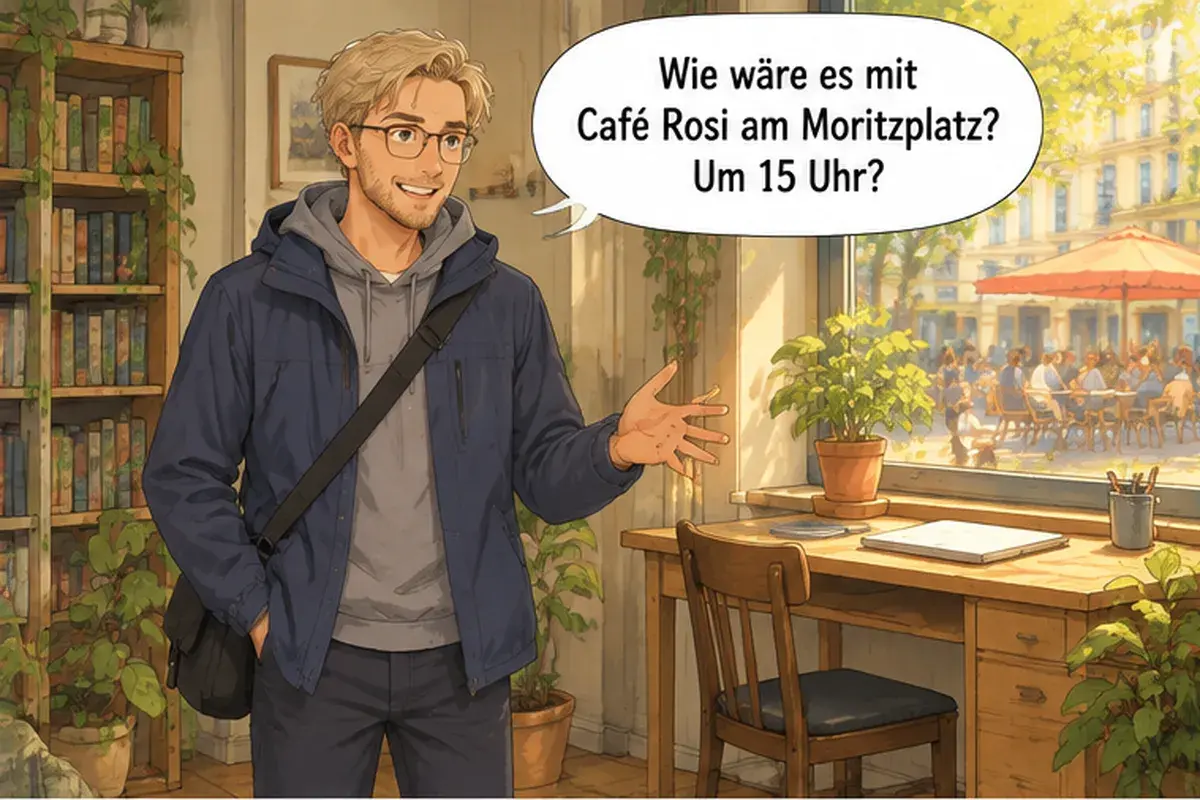
Wie wäre es mit Café Rosi am Moritzplatz? Um 15 Uhr?
How about Café Rosi at Moritzplatz? At 15:00?
- Katja
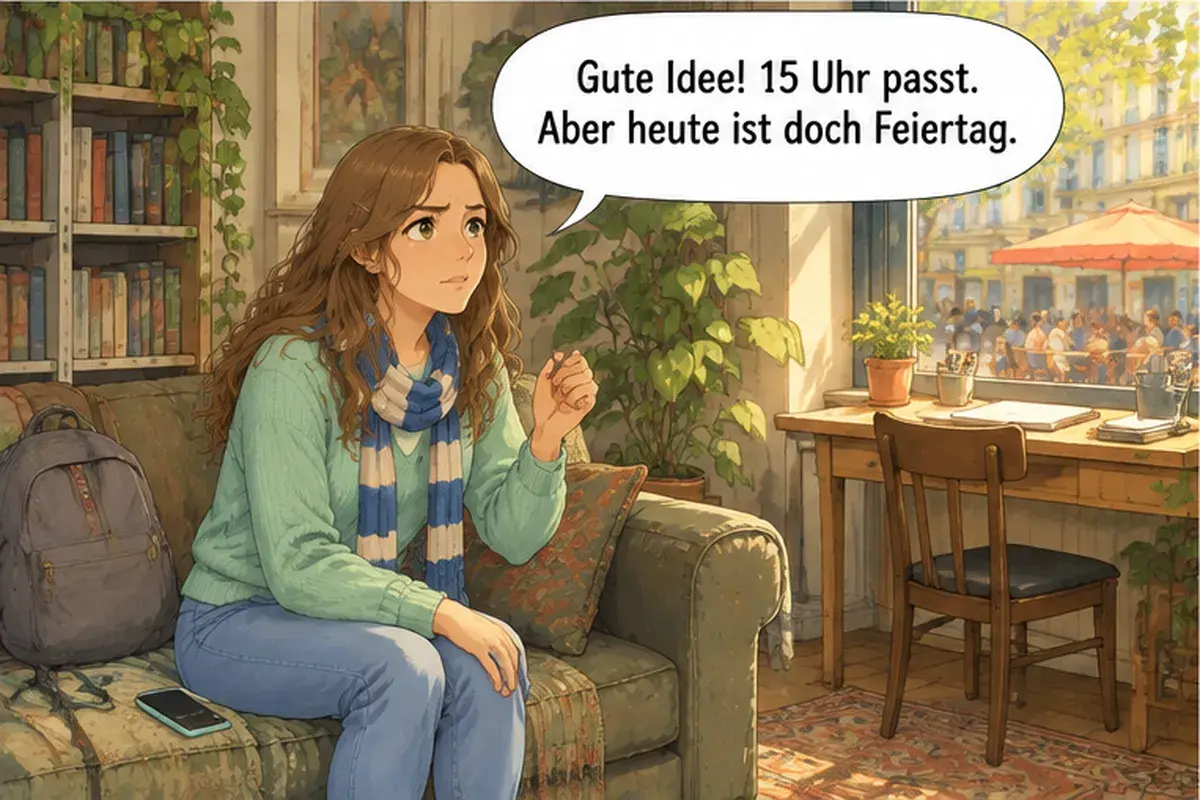
Gute Idee! 15 Uhr passt. Aber heute ist doch Feiertag.
Good idea! 15:00 works. But today is a public holiday, you know.
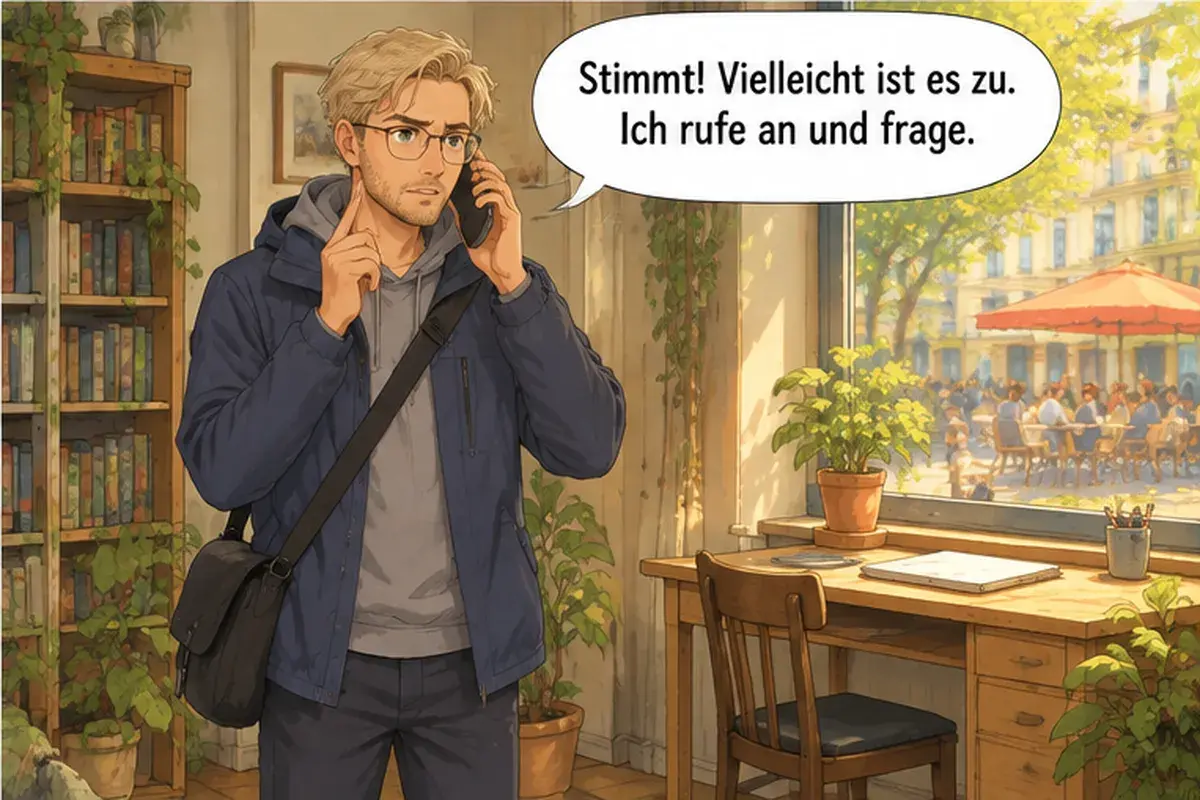
- Lukas
Stimmt! Vielleicht ist es zu. Ich rufe an und frage.
That's right! Maybe it's closed. I'll call and ask.
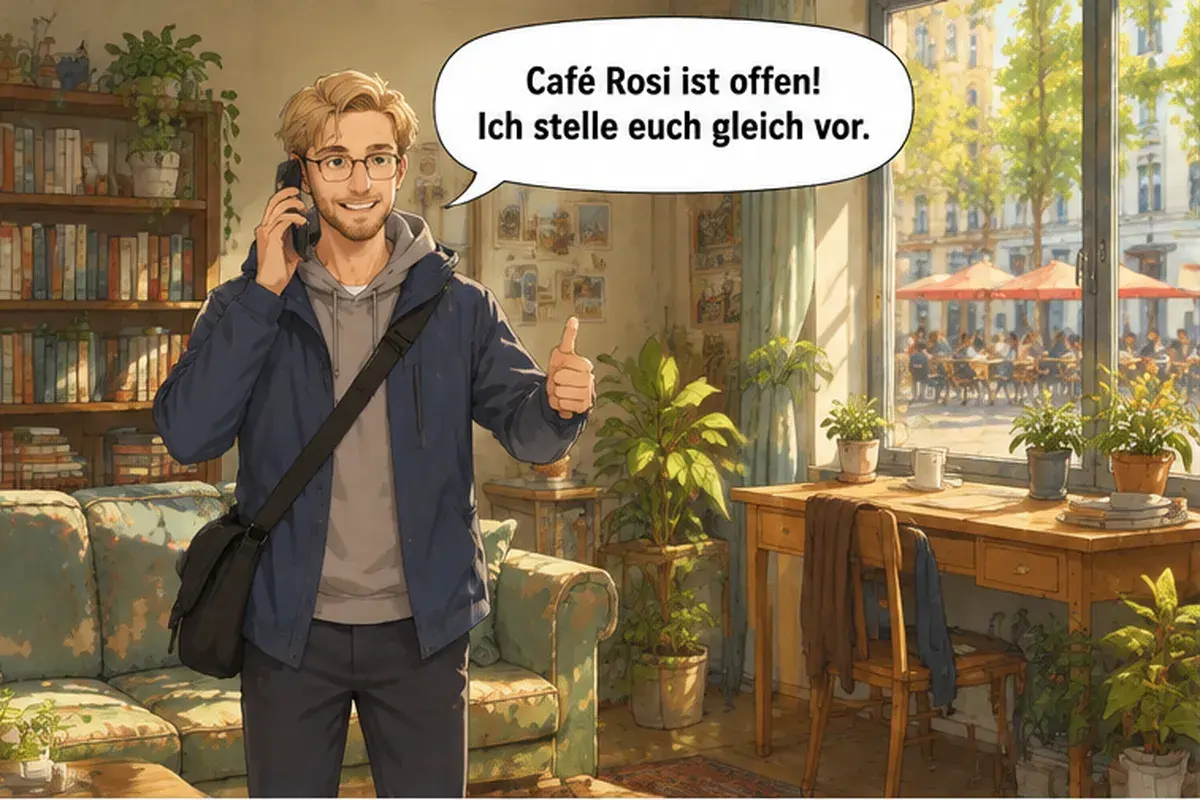
- Lukas
Café Rosi ist offen! Ich stelle euch gleich vor.
Café Rosi is open! I'll introduce you two right away.
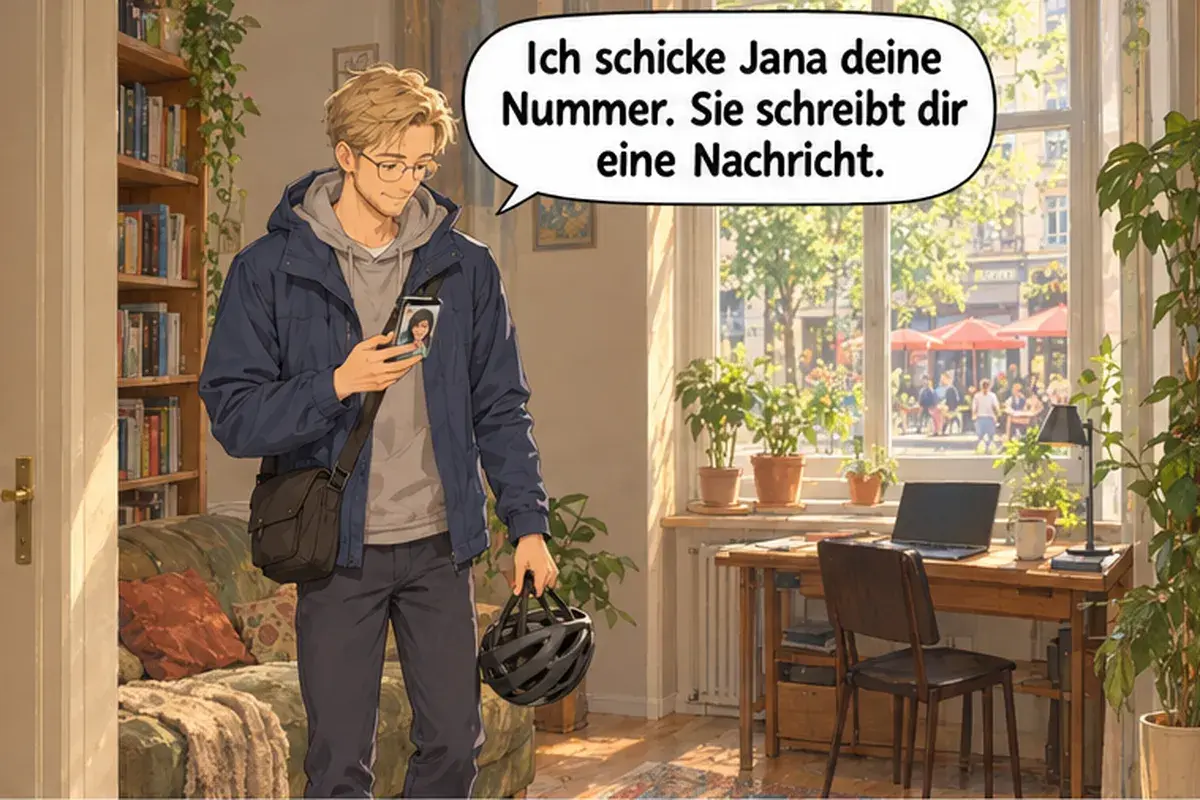
- Lukas
Ich schicke Jana deine Nummer. Sie schreibt dir eine Nachricht.
I'll send Jana your number. She'll write you a message.

- Katja
Super, danke! Ich freue mich.
Great, thanks! I'm glad.

- Lukas
Jana freut sich auch. Viel Spaß, ihr zwei!
Jana is glad too. Have fun, you two!

- Katja
Danke! Liebe Grüße an deine Eltern!
Thanks! Say hi to your parents for me!
Grammar for this text
- Hast du heute Lust auf Kaffee und Kuchen? — a yes/no question with no question word: the verb comes first.
Lust haben auf …— to feel like something;KaffeeandKuchenhave no article here, just like English "coffee and cake". - Kommst du mit?, Ich rufe an and Ich stelle euch gleich vor. — separable verbs (unit 7):
mitkommen,anrufen,vorstellen. The verb is in second place, andmit,anandvorgo to the end.euchis "you" forihr(two or more people). Lukas introduces them by message. - Tut mir leid, ich muss zu meinen Eltern. —
Tut mir leidis a set phrase: "I'm sorry" (miris the dative, A2).mussis the ich form ofmüssen, with no ending. There's no second verb: with a modal and a place, German can leave out "go".zu meinen Eltern— to my parents' place, dative (A2): for now, learn it as a whole, likezum Bahnhof. - Sie ist nett und will dich kennenlernen. —
willis the er / sie / es form ofwollen, with no ending (ich will,sie will).kennenlernengoes to the end: the sentence bracket.dichis "you" as an object, fromdu(unit 8). Aber Jana hat frei. —hatis the er / sie / es form ofhaben;frei haben— to have the day off. - Wie wäre es mit Café Rosi am Moritzplatz? — a set phrase: "How about …?"
wäreis a special form ofseinfrom A2; for now, learn it as a whole. - Ich freue mich. and Jana freut sich auch. —
sich freuen(to be glad) comes withsich, a word like "oneself": ich freue mich, er / sie freut sich (A2). Sie schreibt dir eine Nachricht. —diris "(to) you" (dative, A2); for now, learn it as a whole.
Words and grammar of the unit: Make plans to meet.
Learn the words from the texts with flashcards
In the app, you can tap any word in a text to see its translation, forms and examples, and new words stick with flashcards. 15 minutes a day.
Start for freeEverything is open for free. No card needed to sign up.