

German dialogue with translation · A1 · 14 lines
Was machen wir am Wochenende? What are we doing on the weekend?
Comic · 14 panels
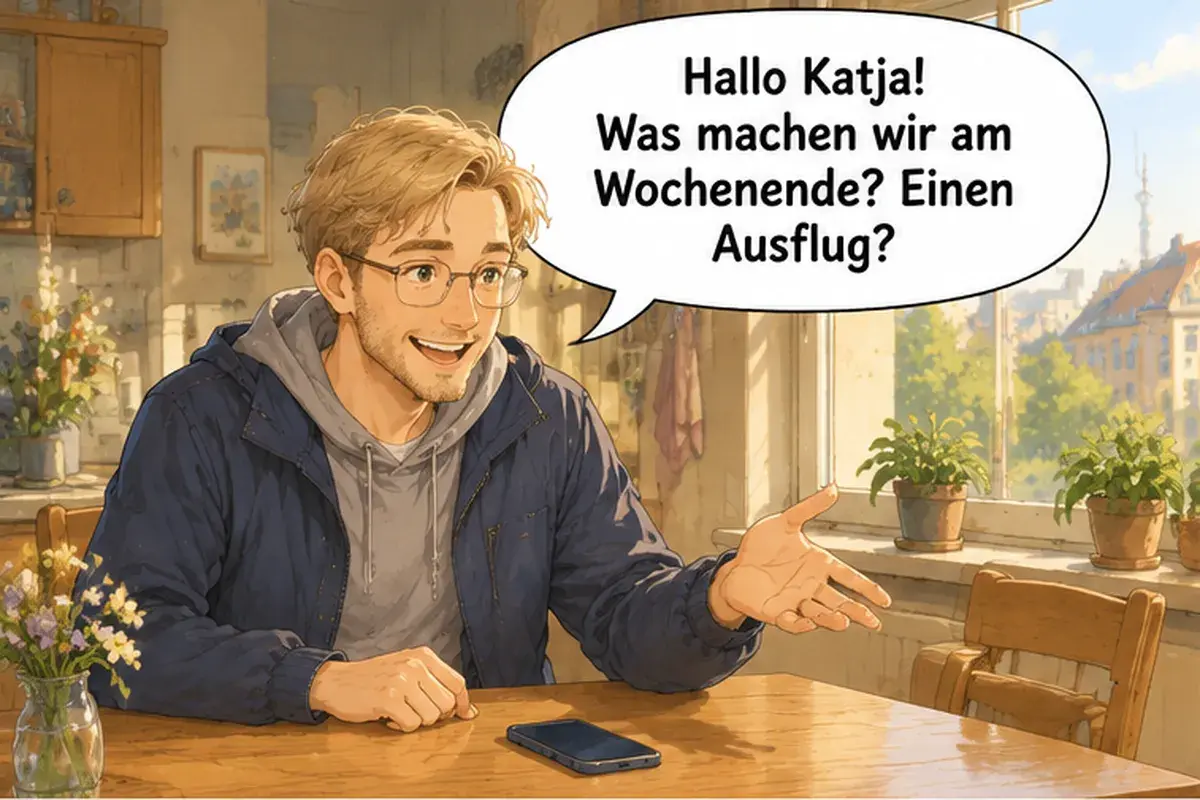
- Lukas
Hallo Katja! Was machen wir am Wochenende? Einen Ausflug?
Hi, Katja! What are we doing on the weekend? A day trip?
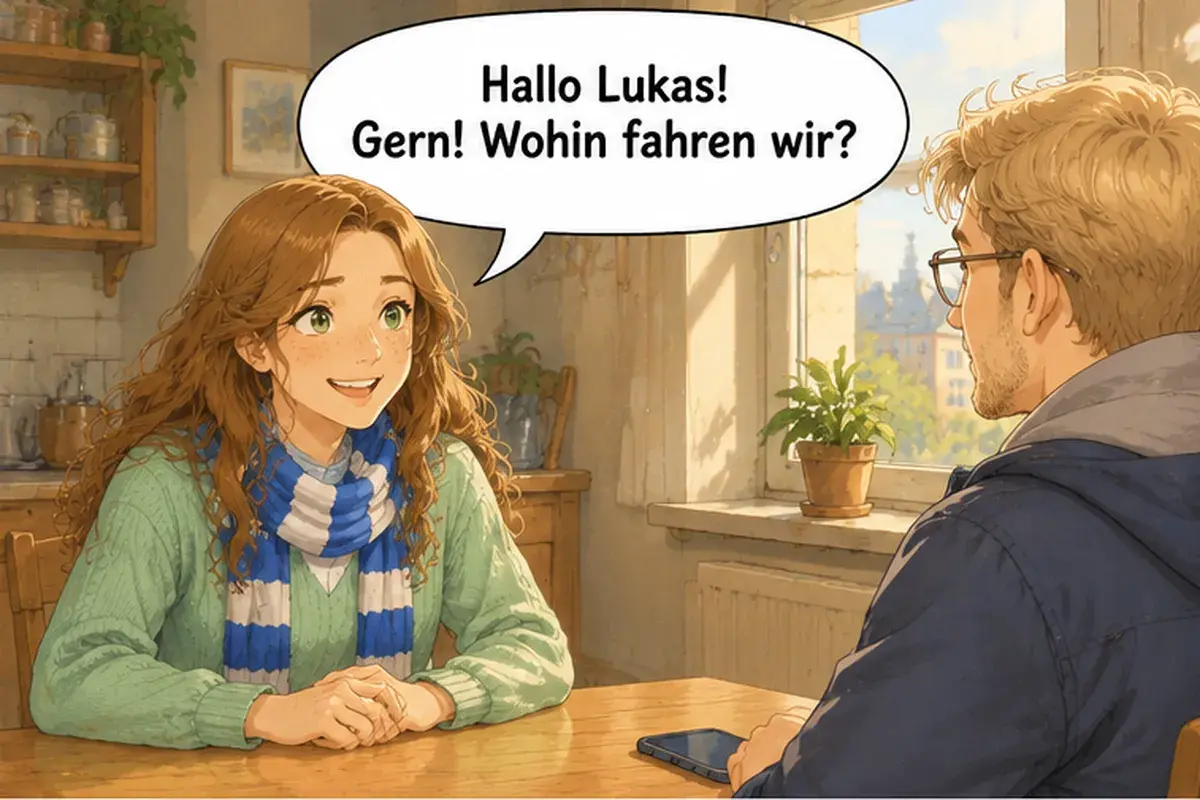
- Katja
Hallo Lukas! Gern! Wohin fahren wir?
Hi, Lukas! Sure! Where are we going?
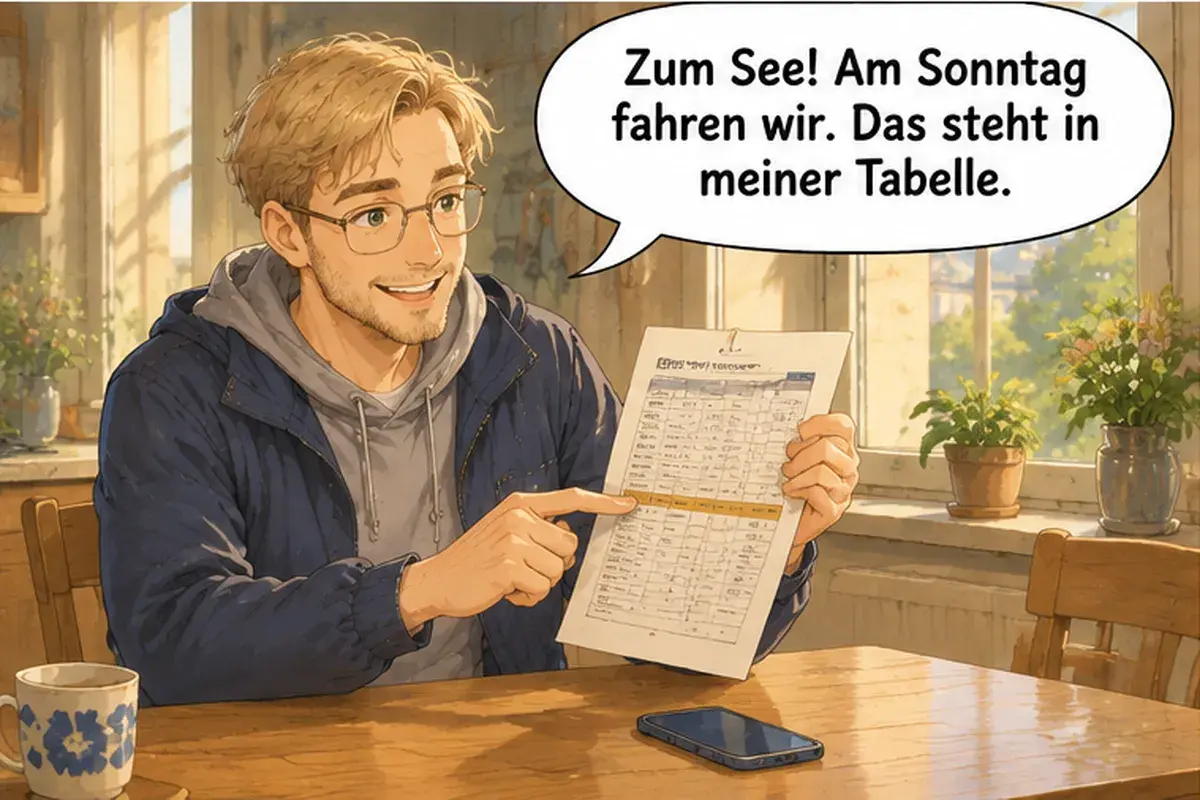
- Lukas
Zum See! Am Sonntag fahren wir. Das steht in meiner Tabelle.
To the lake! We're going on Sunday. It's in my spreadsheet.
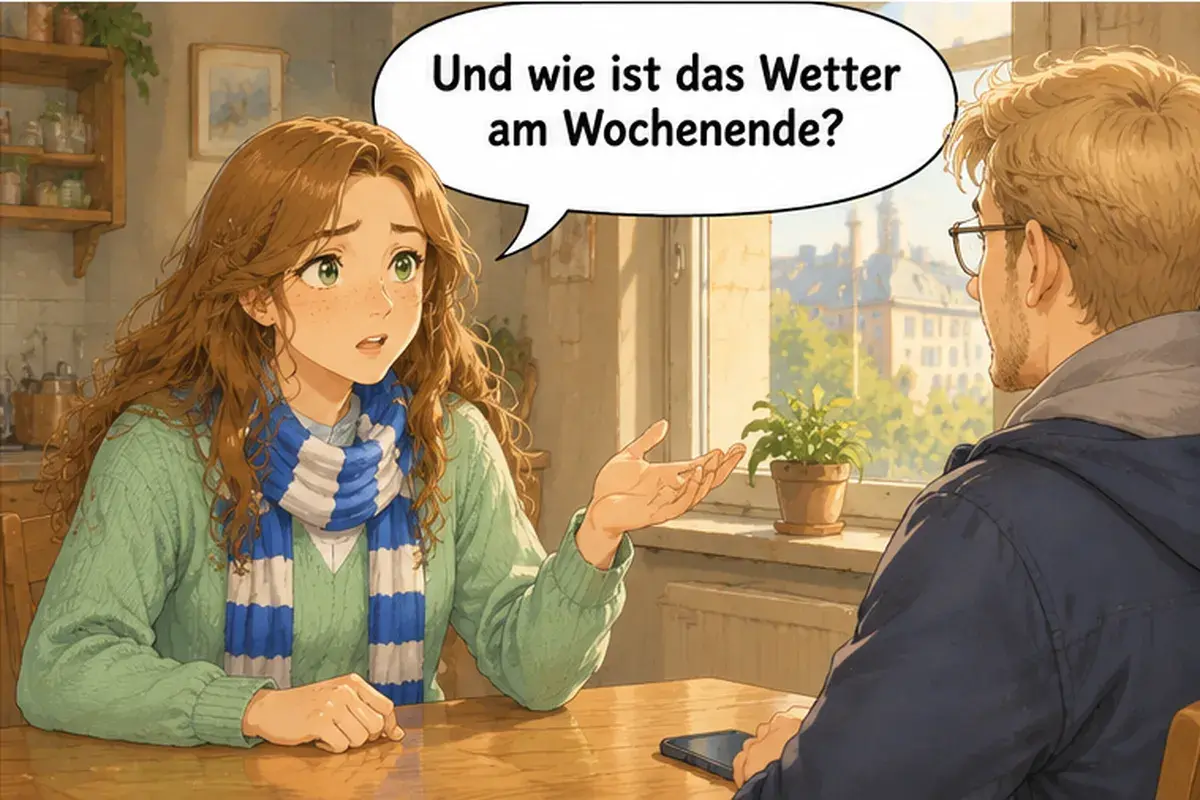
- Katja
Und wie ist das Wetter am Wochenende?
And what's the weather like on the weekend?
- Lukas
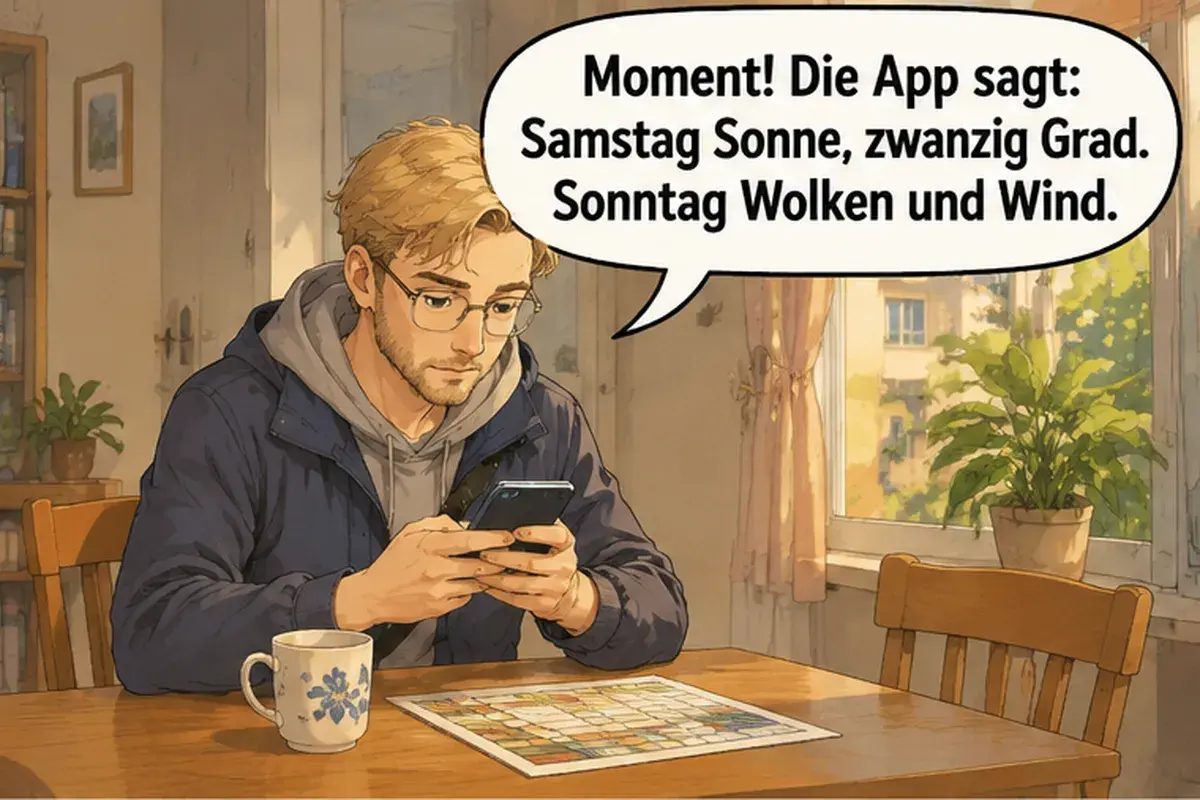
Moment! Die App sagt: Samstag Sonne, zwanzig Grad. Sonntag Wolken und Wind.
Just a moment! The app says: Saturday, sun, twenty degrees. Sunday, clouds and wind.
- Katja
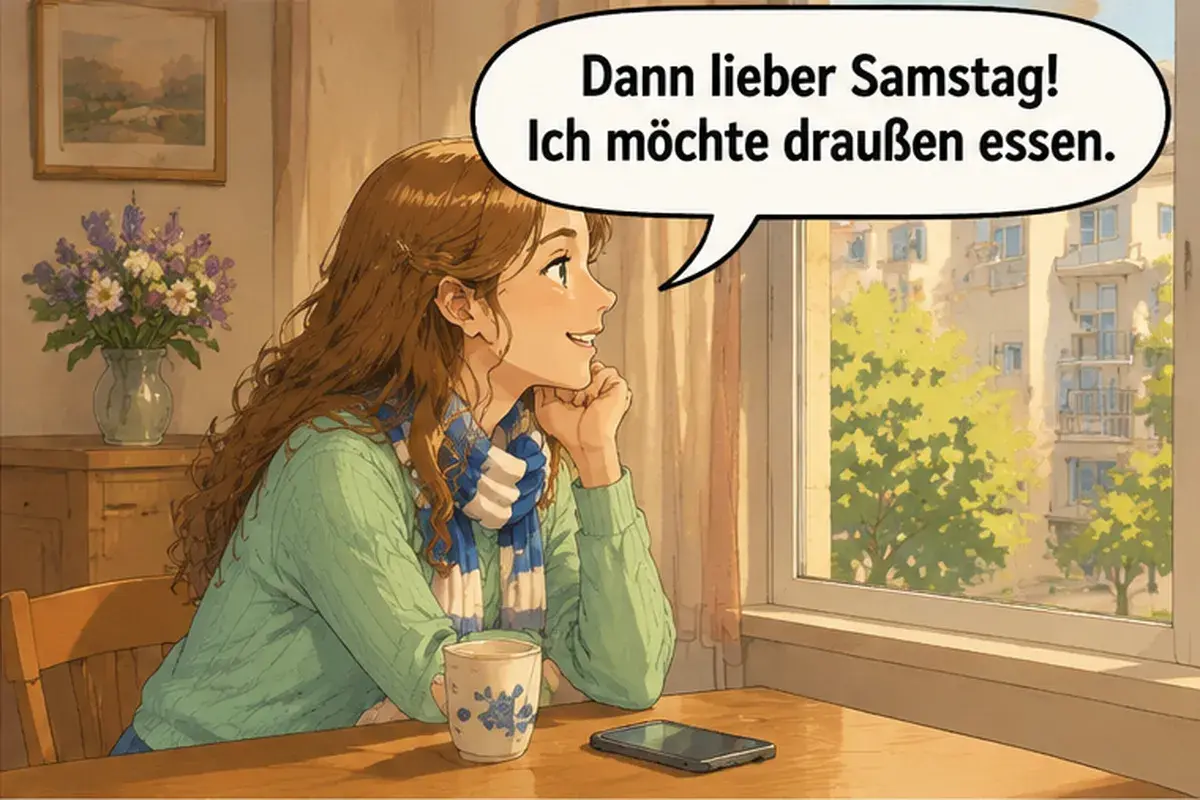
Dann lieber Samstag! Ich möchte draußen essen.
Then Saturday instead! I'd like to eat outside.
- Lukas
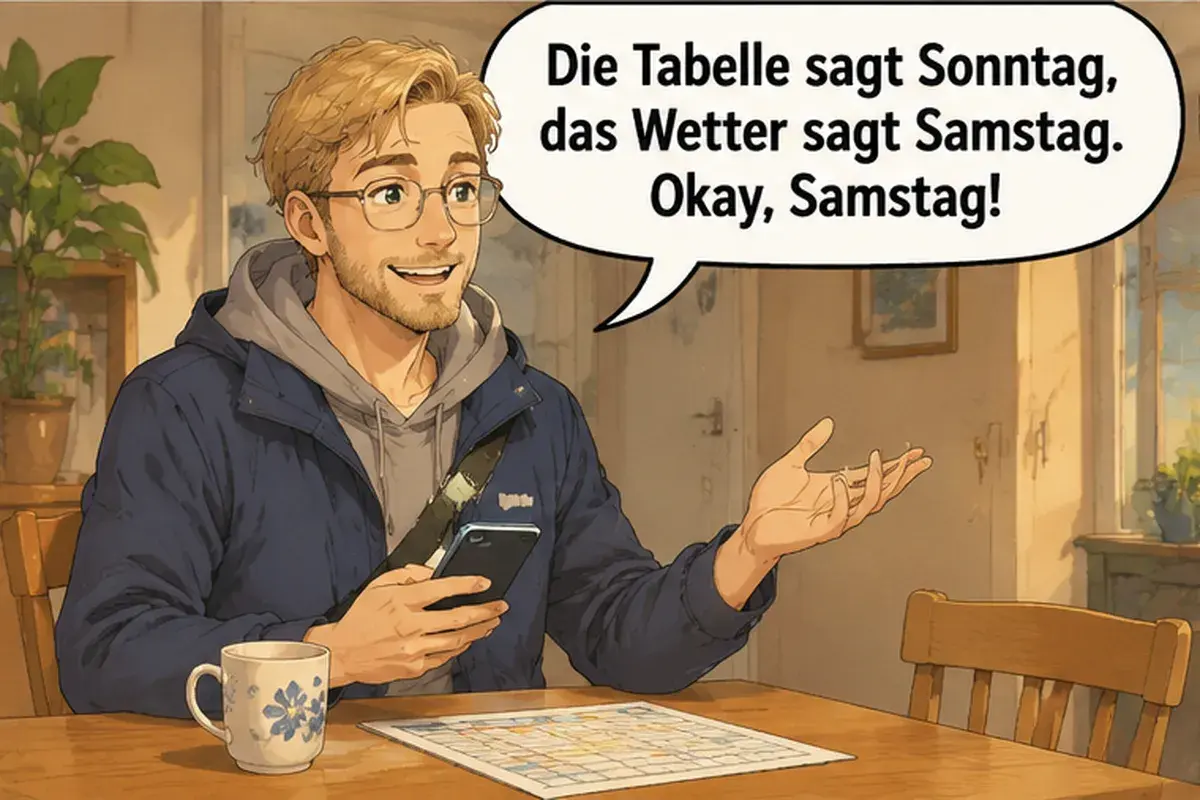
Die Tabelle sagt Sonntag, das Wetter sagt Samstag. Okay, Samstag!
The spreadsheet says Sunday, the weather says Saturday. Okay, Saturday!
- Katja
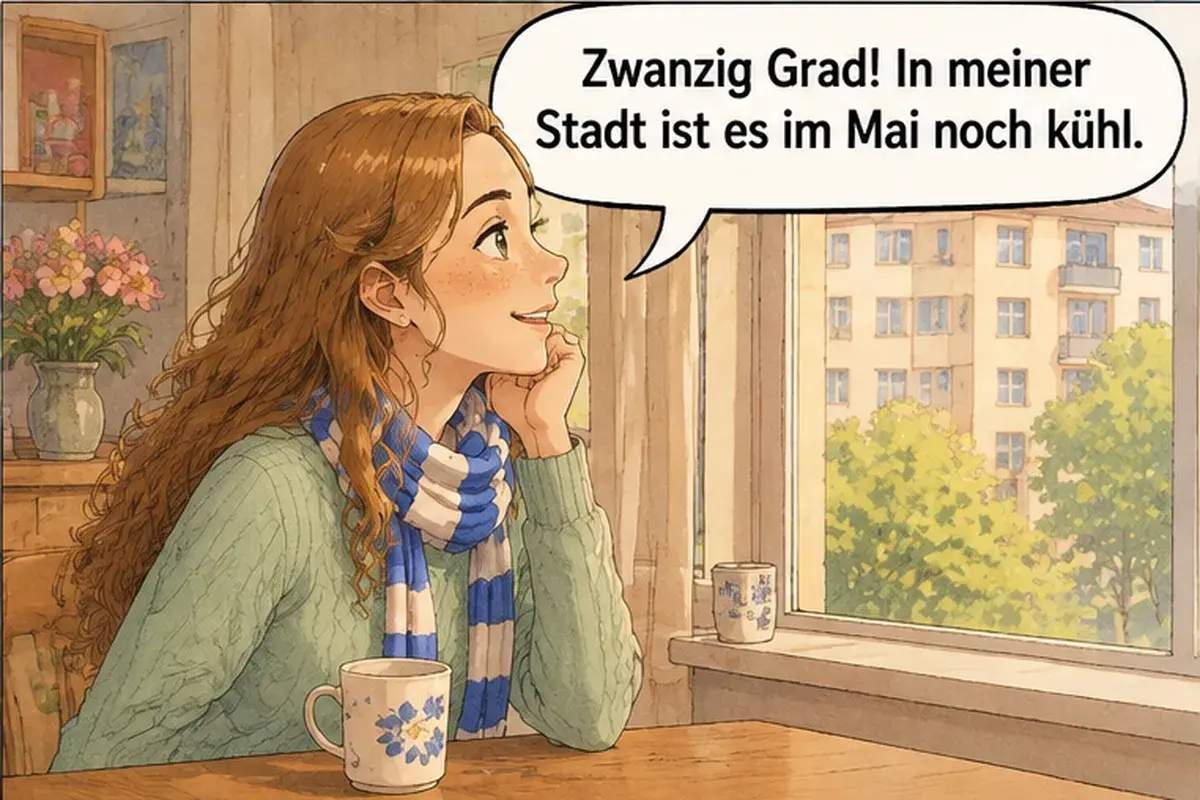
Zwanzig Grad! In meiner Stadt ist es im Mai noch kühl.
Twenty degrees! In my city it's still cool in May.
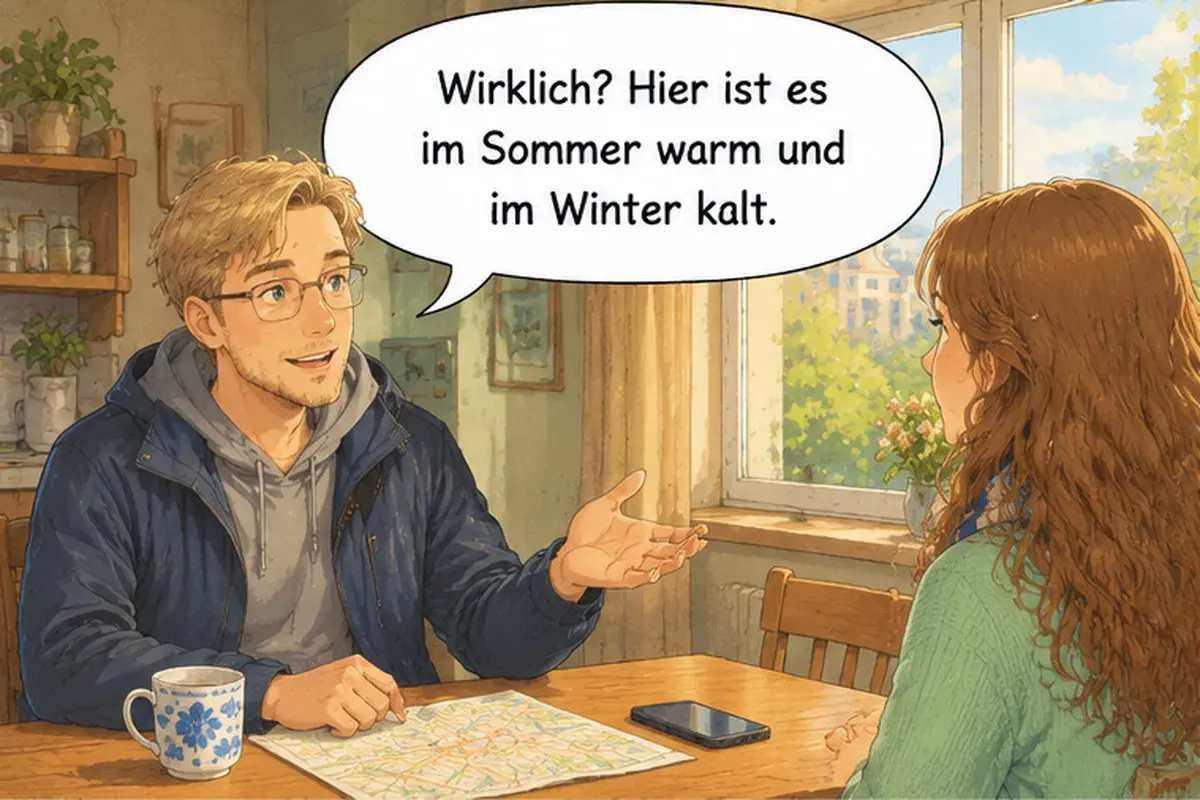
- Lukas
Wirklich? Hier ist es im Sommer warm und im Winter kalt.
Really? Here it's warm in the summer and cold in the winter.
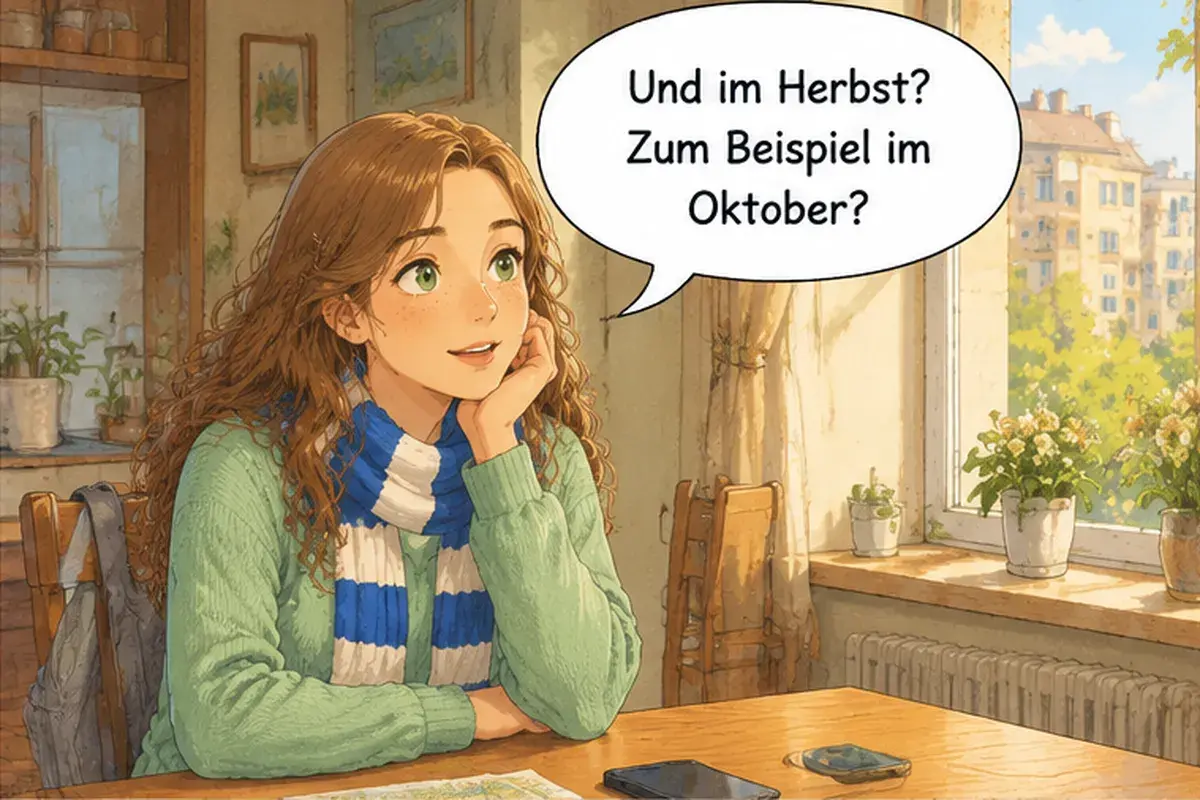
- Katja
Und im Herbst? Zum Beispiel im Oktober?
And in the fall? In October, for example?
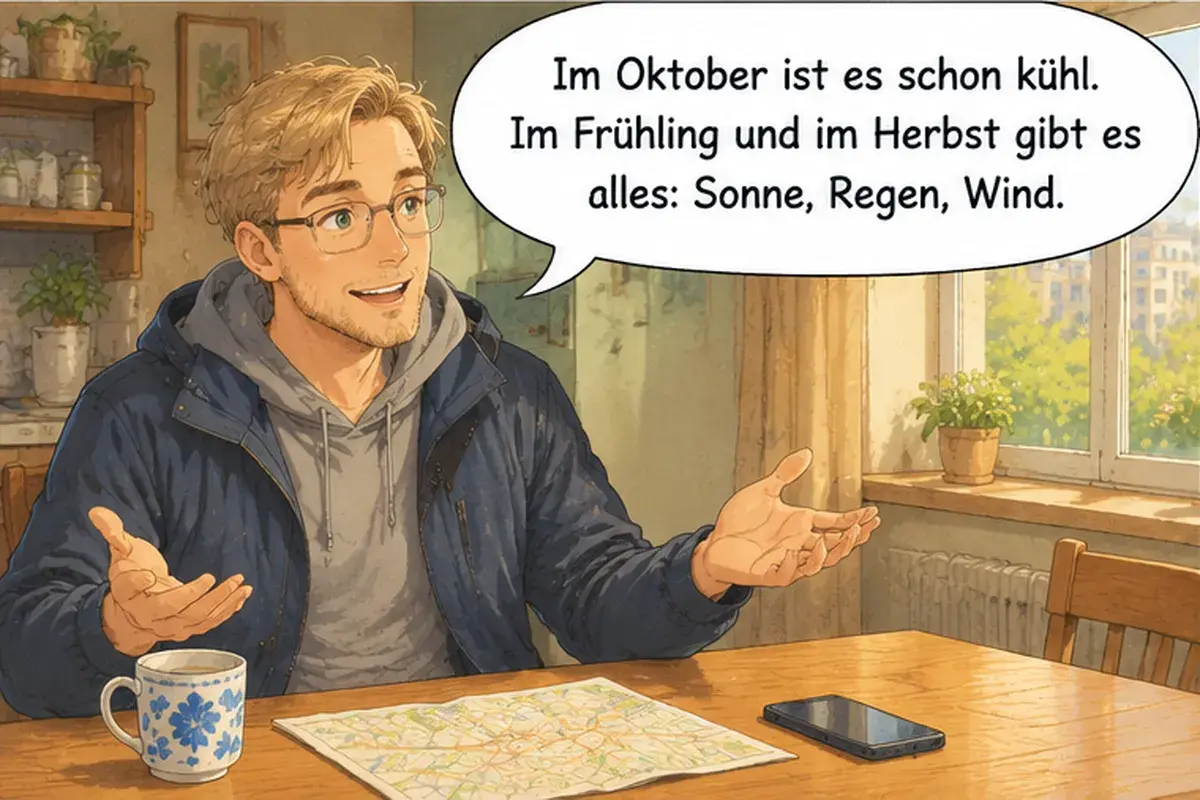
- Lukas
Im Oktober ist es schon kühl. Im Frühling und im Herbst gibt es alles: Sonne, Regen, Wind.
In October it's already cool. In the spring and fall there's everything: sun, rain, wind.
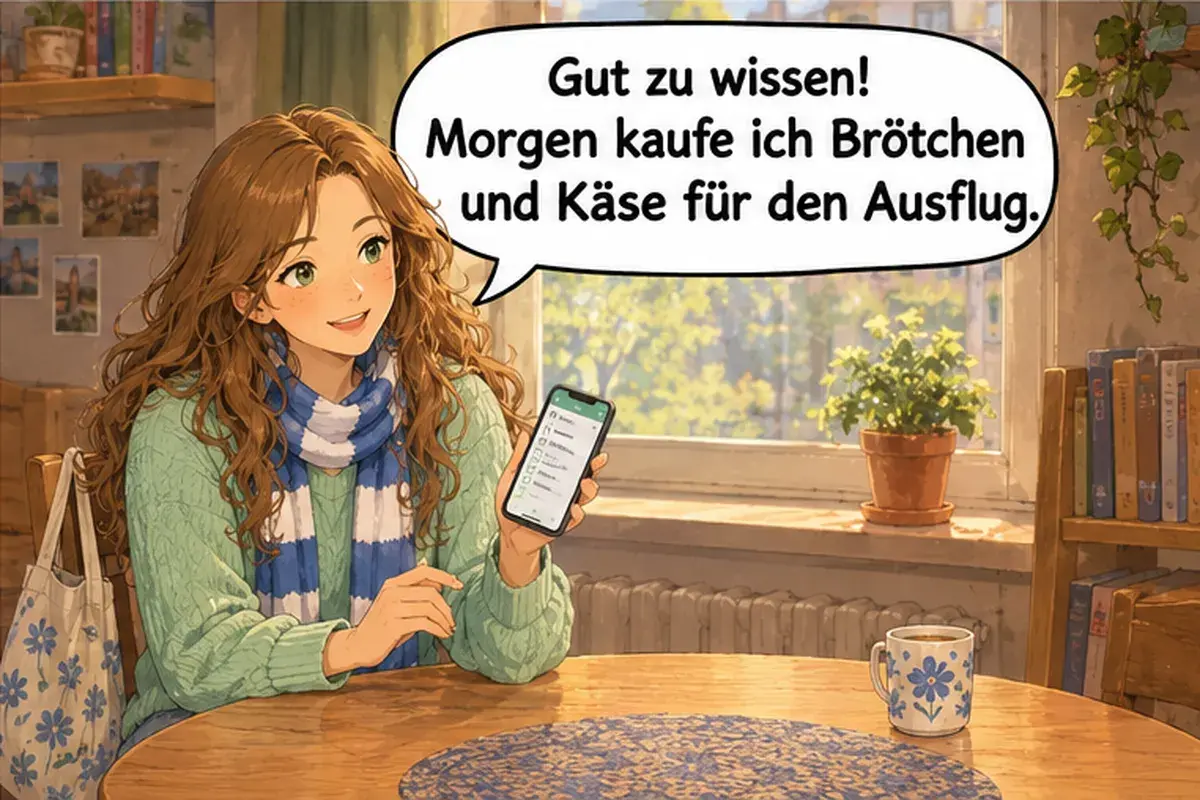
- Katja
Gut zu wissen! Morgen kaufe ich Brötchen und Käse für den Ausflug.
Good to know! Tomorrow I'll buy rolls and cheese for the trip.
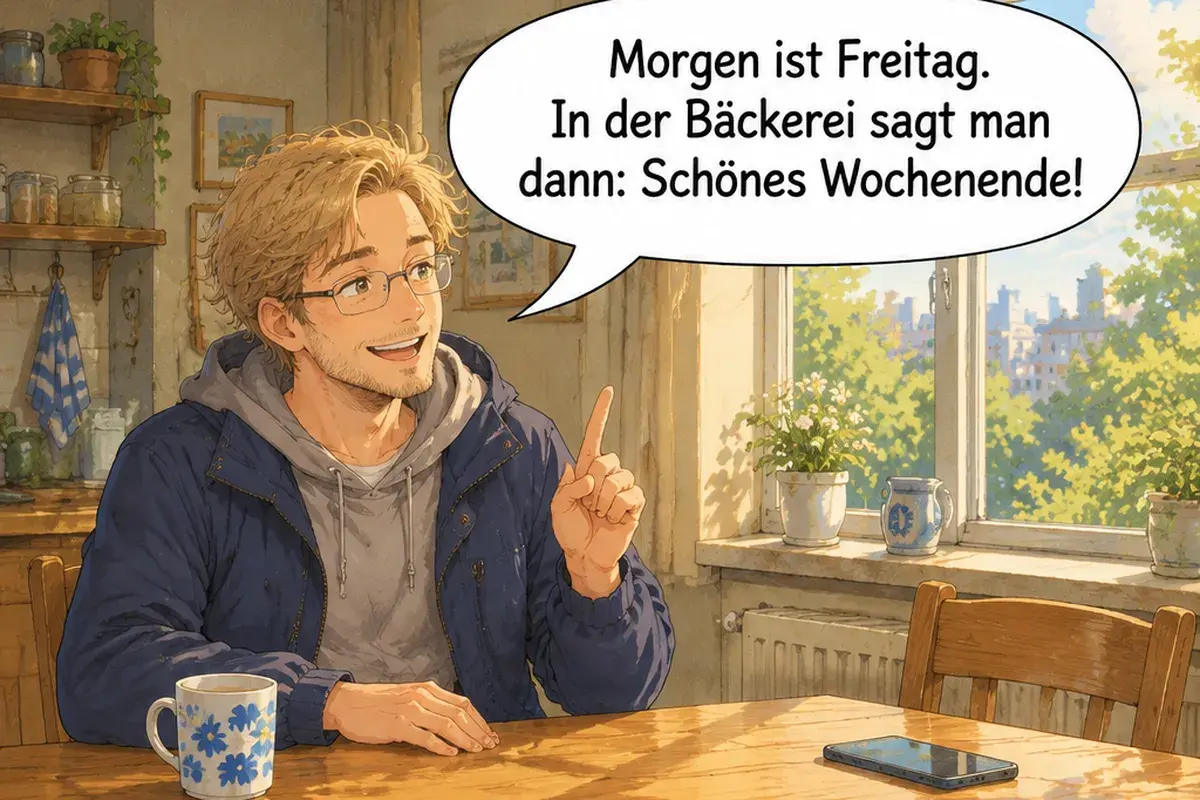
- Lukas
Morgen ist Freitag. In der Bäckerei sagt man dann: Schönes Wochenende!
Tomorrow's Friday. Then at the bakery people say, "Have a nice weekend!"
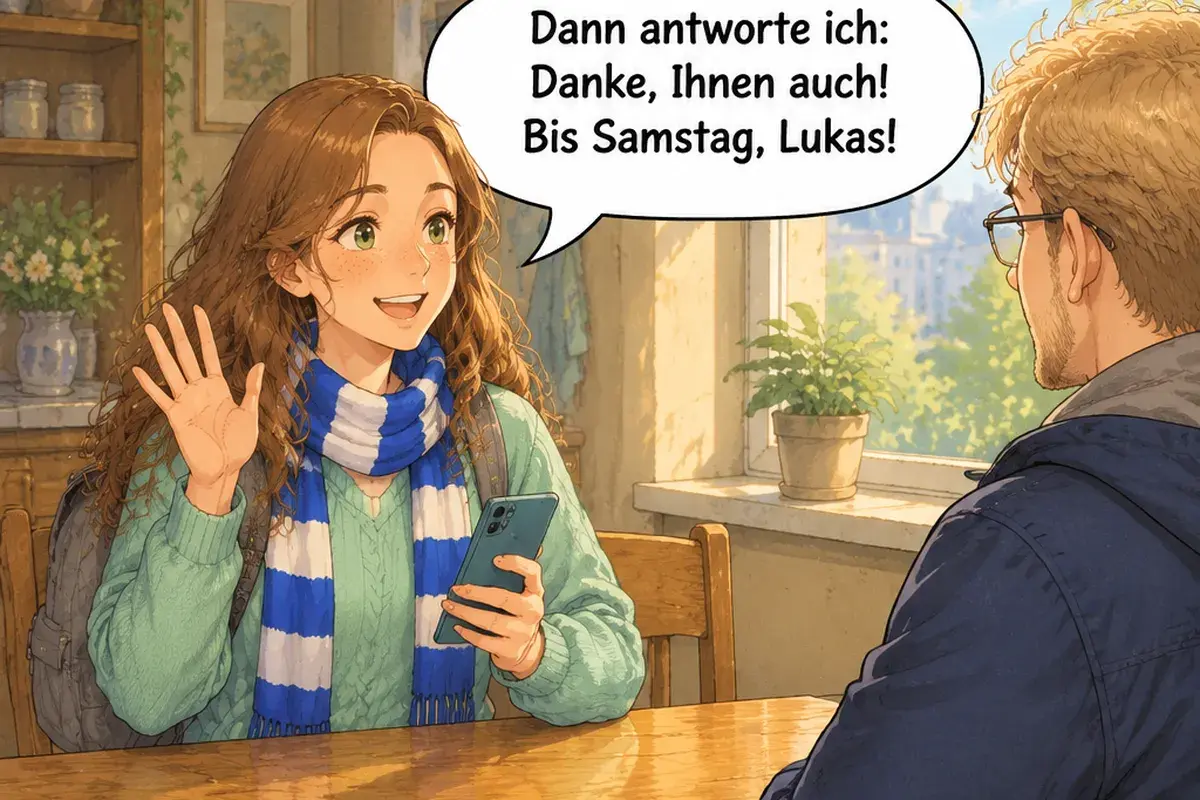
- Katja
Dann antworte ich: Danke, Ihnen auch! Bis Samstag, Lukas!
Then I'll answer, "Thanks, you too (formal)!" See you Saturday, Lukas!
Grammar for this text
- Was machen wir am Wochenende? Einen Ausflug? — a question with
was, the verb in second place. The second part is a short question with no verb: "(How about) a day trip?"einenis the accusative (unit 5), because it'sder Ausflug. The present tense here talks about the future. - Am Sonntag fahren wir — the time word comes first, the verb right after it, then
wir(unit 9). This is how German talks about plans: "we're going on Sunday".Das steht in meiner Tabelle— "it's in my spreadsheet": the formmeinercomes in A2, so for now learn the phrase as a whole. - Dann lieber Samstag! —
liebermeans "rather, preferably": it's the comparative ofgern(gladly). Here: "then Saturday is better". - Die Tabelle sagt Sonntag, das Wetter sagt Samstag — Lukas's joke: he has a spreadsheet for everything, but the weather decides for itself.
- In meiner Stadt ist es im Mai noch kühl —
im+ a month or season:im Mai,im Winter,im Oktober(in May, in the winter, in October). Here's the impersonalesagain: "it's cool".in meiner Stadt— in my city: afterin,meinechanges (cases come in A2). - Im Frühling und im Herbst gibt es alles —
es gibt— there is, there are (unit 3). Then Katja says Gut zu wissen! — "Good to know!": that's what you say when you hear something useful. - Dann antworte ich: Danke, Ihnen auch! — the answer to
Schönes Wochenende!is "Thanks, you too".Ihnenis the formal "(to) you", a case form for A2; for now, it's a set phrase. To a friend you sayDanke, dir auch!Insagt man,manis the general "you" or "people".
Words and grammar of the unit: Talk about the weather and weekend plans.
Learn the words from the texts with flashcards
In the app, you can tap any word in a text to see its translation, forms and examples, and new words stick with flashcards. 15 minutes a day.
Start for freeEverything is open for free. No card needed to sign up.