

German dialogue with translation · A1 · 14 lines
Gehen Sie über den Platz Go across the square
Comic · 8 panels
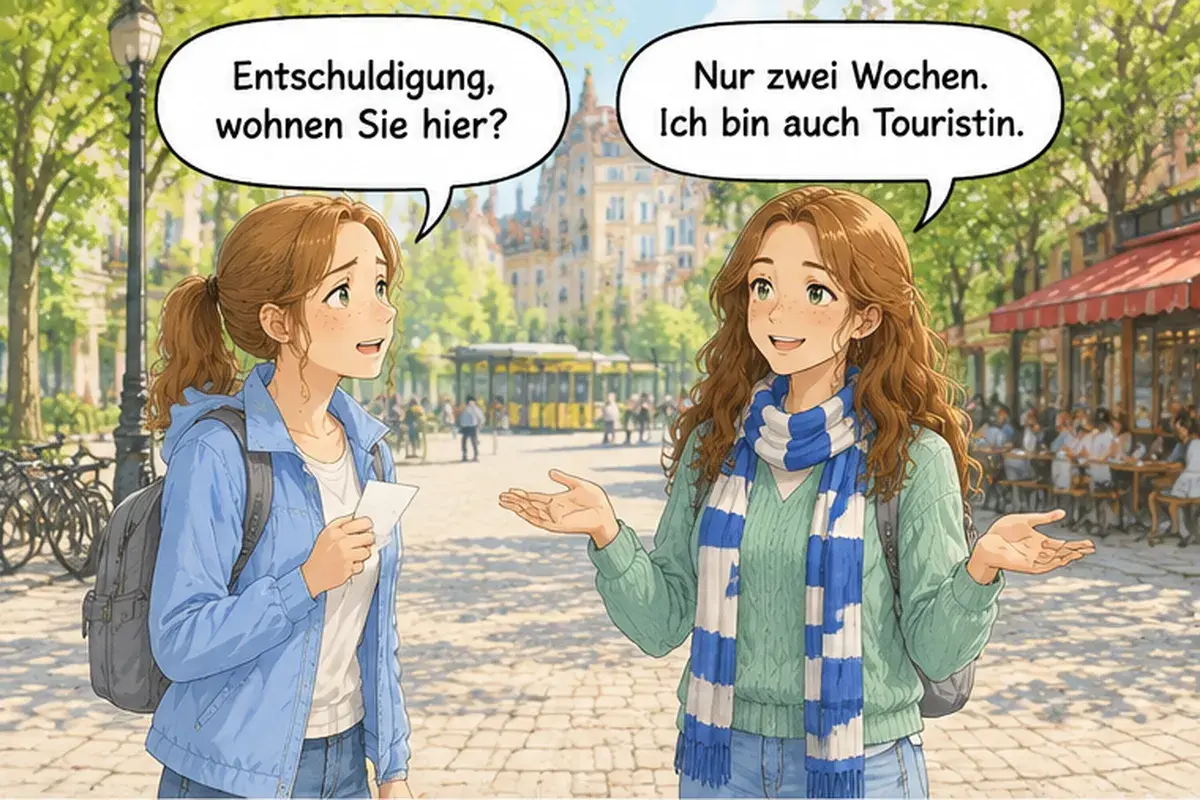
- Touristin
Entschuldigung, wohnen Sie hier?
Excuse me, do you live here? (formal)
- Katja
Nur zwei Wochen. Ich bin auch Touristin.
Only for two weeks. I'm a tourist too (woman speaking).
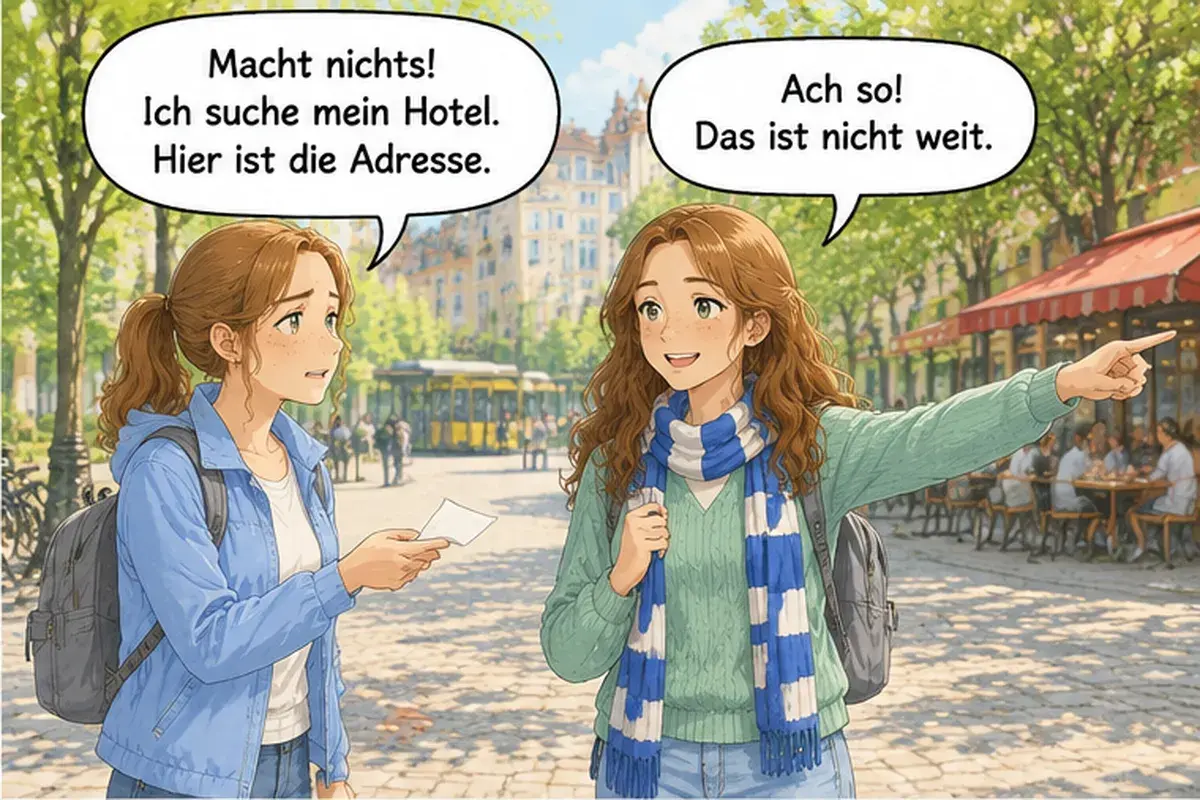
- Touristin
Macht nichts! Ich suche mein Hotel. Hier ist die Adresse.
Never mind! I'm looking for my hotel. Here's the address.
- Katja
Ach so! Das ist nicht weit.
Oh, I see! That's not far.
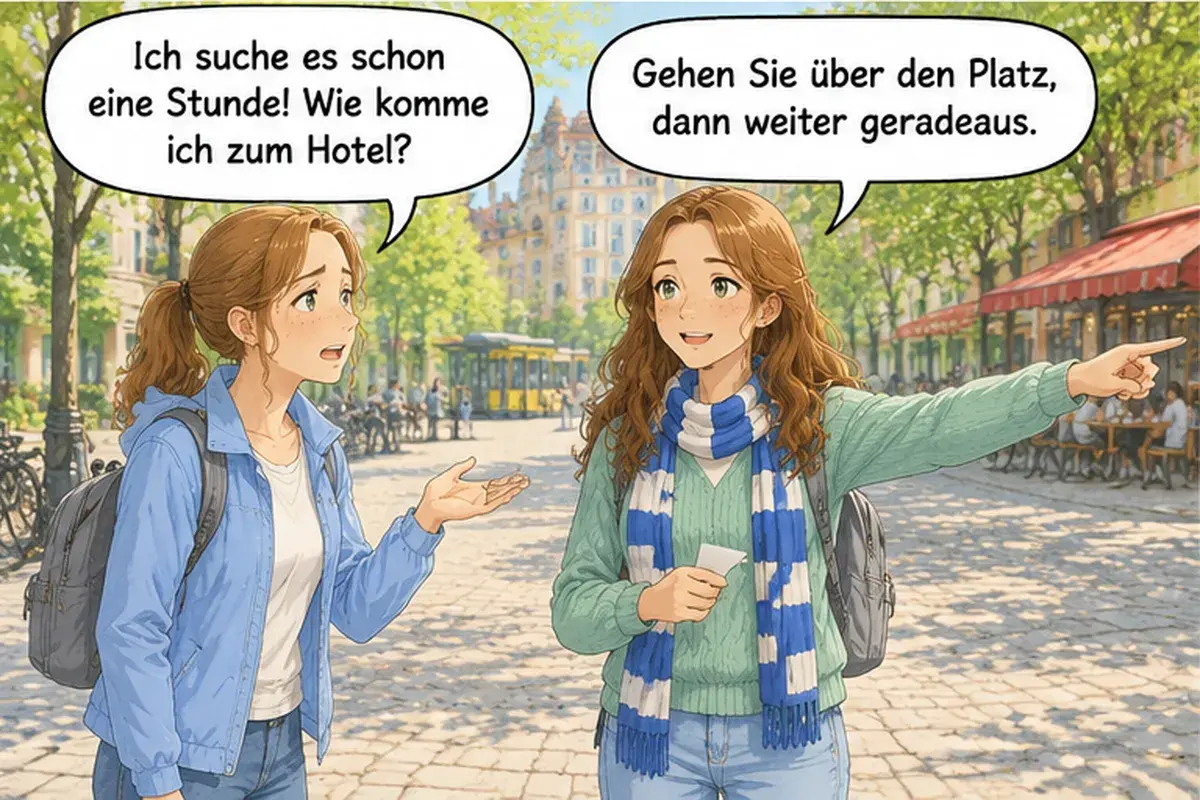
- Touristin
Ich suche es schon eine Stunde! Wie komme ich zum Hotel?
I've been looking for it for an hour! How do I get to the hotel?
- Katja
Gehen Sie über den Platz, dann weiter geradeaus.
Go across the square, then keep going straight ahead (formal).
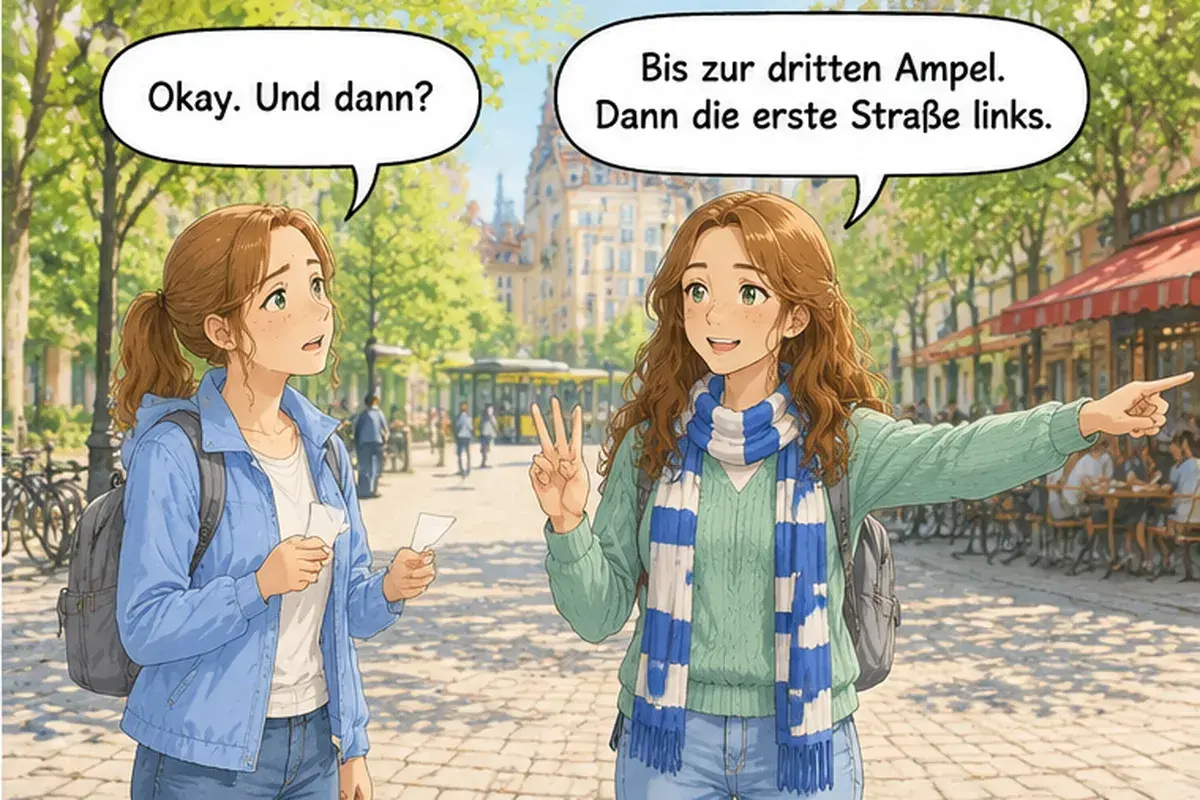
- Touristin
Okay. Und dann?
Okay. And then?
- Katja
Bis zur dritten Ampel. Dann die erste Straße links.
To the third traffic light. Then the first street on the left.
- Touristin
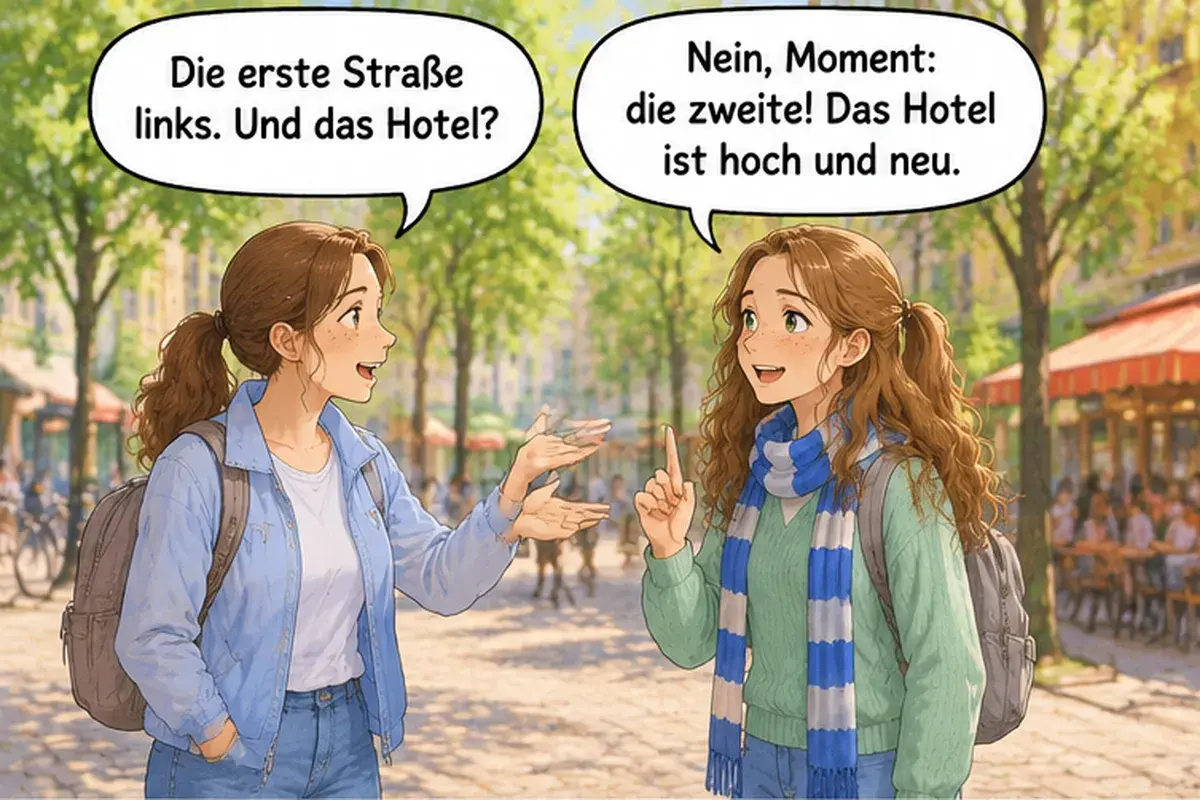
Die erste Straße links. Und das Hotel?
The first street on the left. And the hotel?
- Katja
Nein, Moment: die zweite! Das Hotel ist hoch und neu.
No, one moment: the second one! The hotel is tall and new.
- Touristin
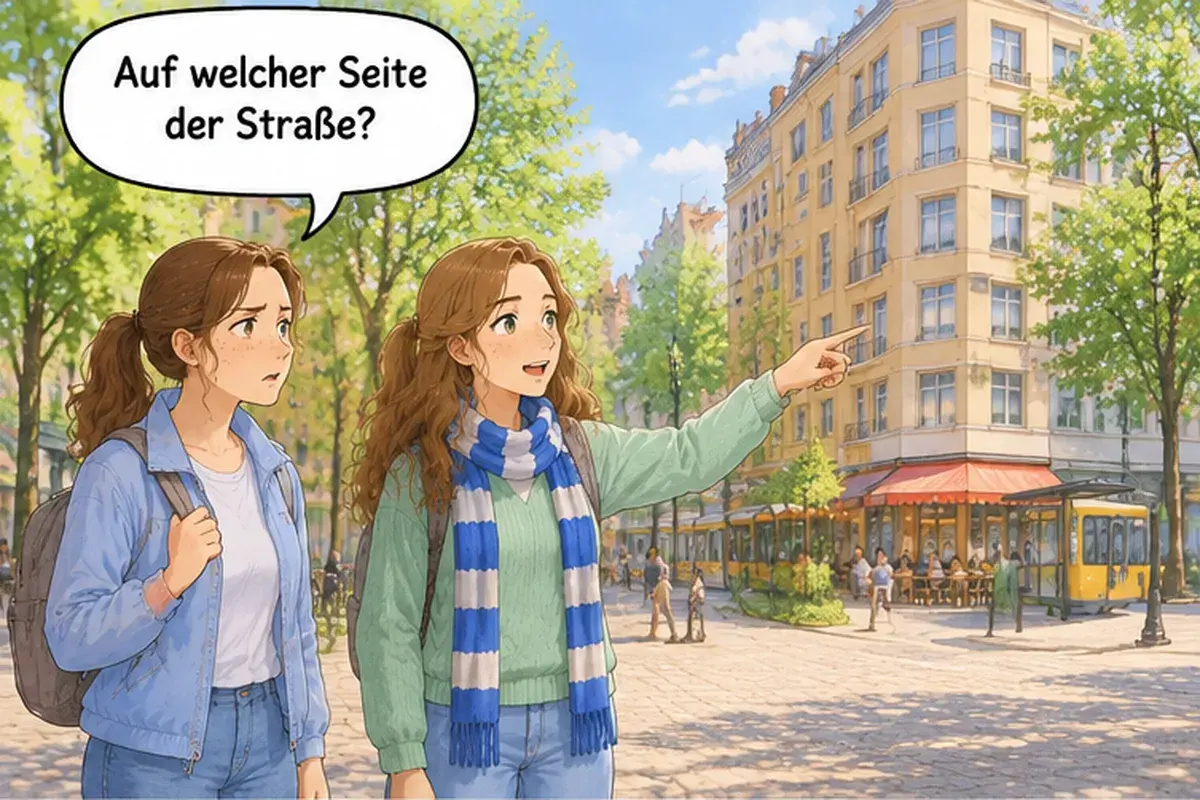
Auf welcher Seite der Straße?
Which side of the street?
- Katja
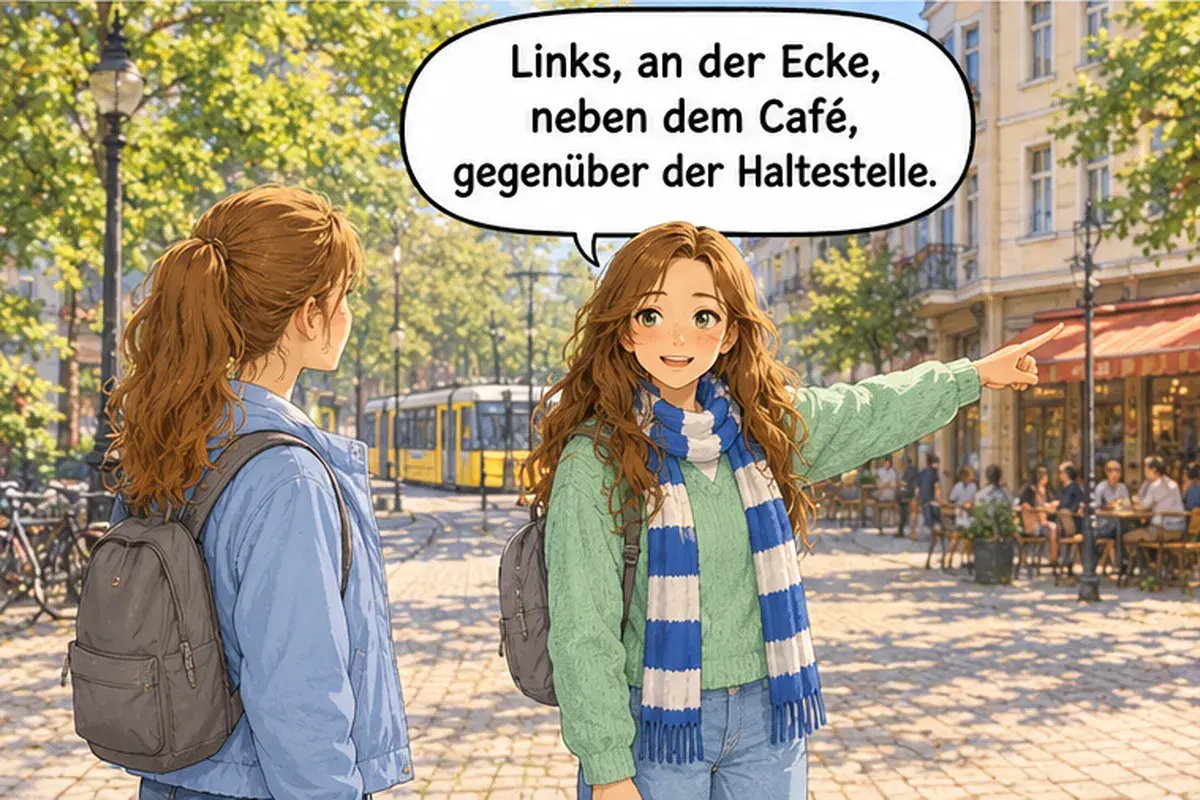
Links, an der Ecke, neben dem Café, gegenüber der Haltestelle.
On the left, on the corner, next to the café, across from the stop.
- Touristin
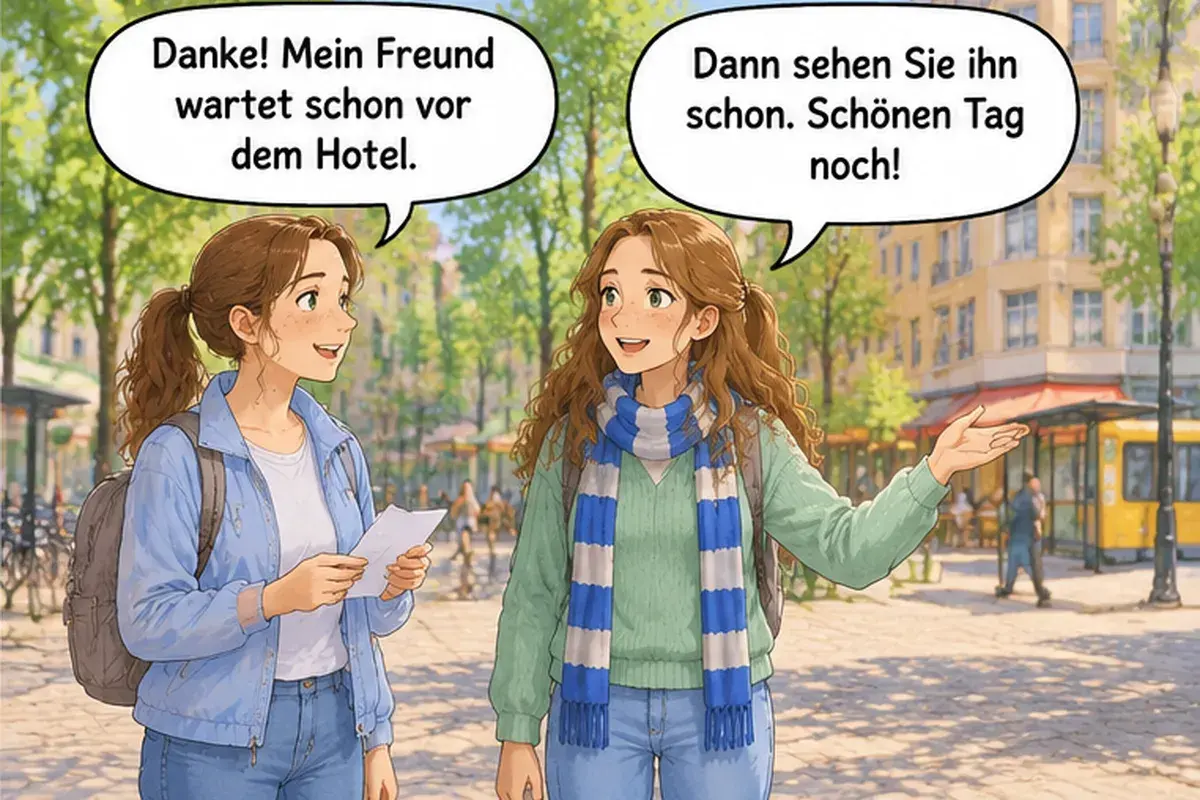
Danke! Mein Freund wartet schon vor dem Hotel.
Thanks! My friend is already waiting in front of the hotel.
- Katja
Dann sehen Sie ihn schon. Schönen Tag noch!
Then you'll see him right away. Have a nice day! (formal)
Grammar for this text
- Nur zwei Wochen. Ich bin auch Touristin. — Tourist is a man, Touristin a woman. German says "I am tourist", with no word for "a". Macht nichts! — "never mind", "no problem"; literally "makes nothing": es is left out and only the verb macht is left.
- Ich suche es schon eine Stunde! — es means "it": das Hotel is neuter. schon eine Stunde — "for an hour already": German uses the present tense here, where English says "I've been looking for it for an hour".
- Ach so! Das ist nicht weit. — Katja looked at the address and saw where it is. nicht weit — "not far".
- Gehen Sie über den Platz, dann weiter geradeaus. — a Sie command: the verb first. der Platz becomes den Platz after über ("across"). weiter — "on", "keep going"; don't mix it up with weit ("far").
- Bis zur dritten Ampel. Dann die erste Straße links. — there's no verb, and that's normal: people give directions like this. die dritte, die erste are ordinal numbers ("third", "first"); after zur they get an -n. Nein, Moment: die zweite! — a correction on the fly; Straße isn't repeated.
- Auf welcher Seite der Straße? — "Which side of the street?": a set phrase. Links, an der Ecke, neben dem Café, gegenüber der Haltestelle. — an ("at"), neben ("next to"), gegenüber ("across from"): the article after them changes (das Café → dem Café). This is the dative (A2); for now, learn these phrases as a whole.
- Dann sehen Sie ihn schon. — ihn means "him": that's how er looks after a verb (the accusative, see the unit grammar). Here it's the tourist's friend. After dann the verb is second, and Sie comes after it.
Words and grammar of the unit: Ask for directions.
Learn the words from the texts with flashcards
In the app, you can tap any word in a text to see its translation, forms and examples, and new words stick with flashcards. 15 minutes a day.
Start for freeEverything is open for free. No card needed to sign up.