

German dialogue with translation · A1 · 14 lines
Wie spät ist es? What time is it?
Comic · 14 panels
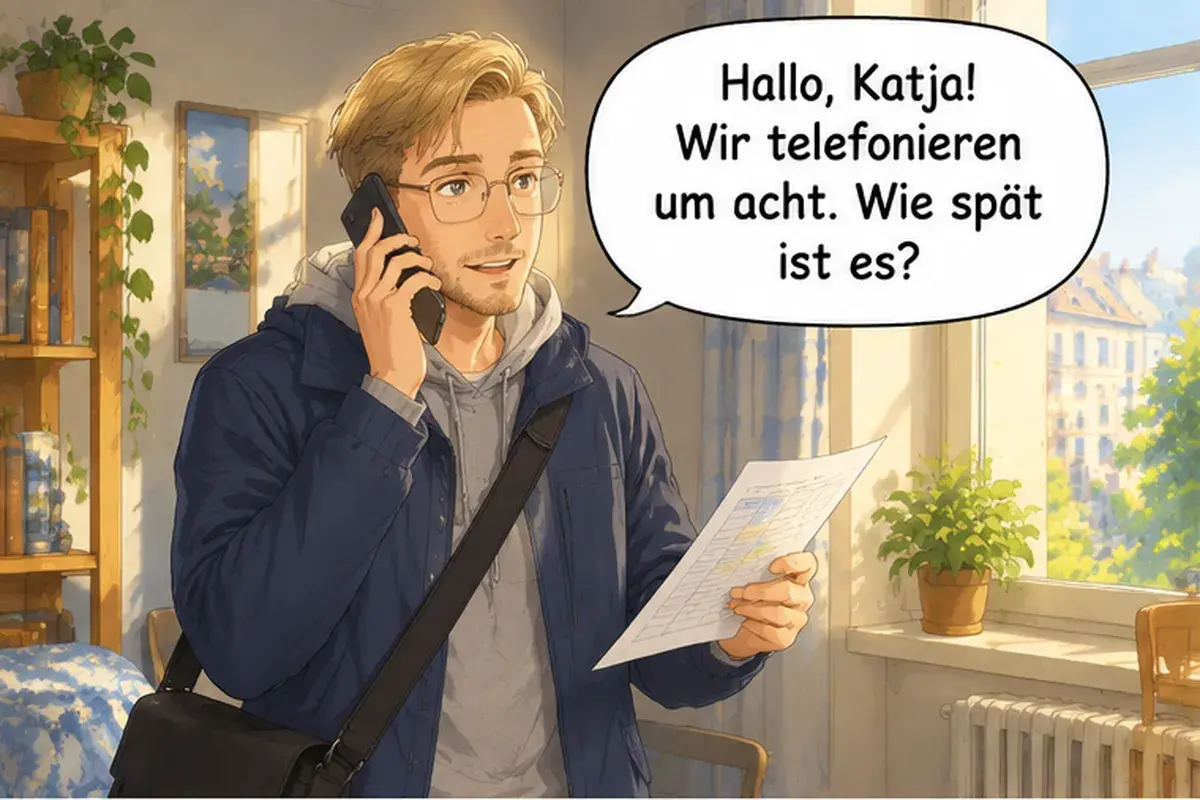
- Lukas
Hallo, Katja! Wir telefonieren um acht. Wie spät ist es?
Hi, Katja! We're talking on the phone at eight. What time is it?

- Katja
Viertel nach acht. Entschuldigung, ich habe die Zeit vergessen.
A quarter past eight. Sorry, I forgot about the time.
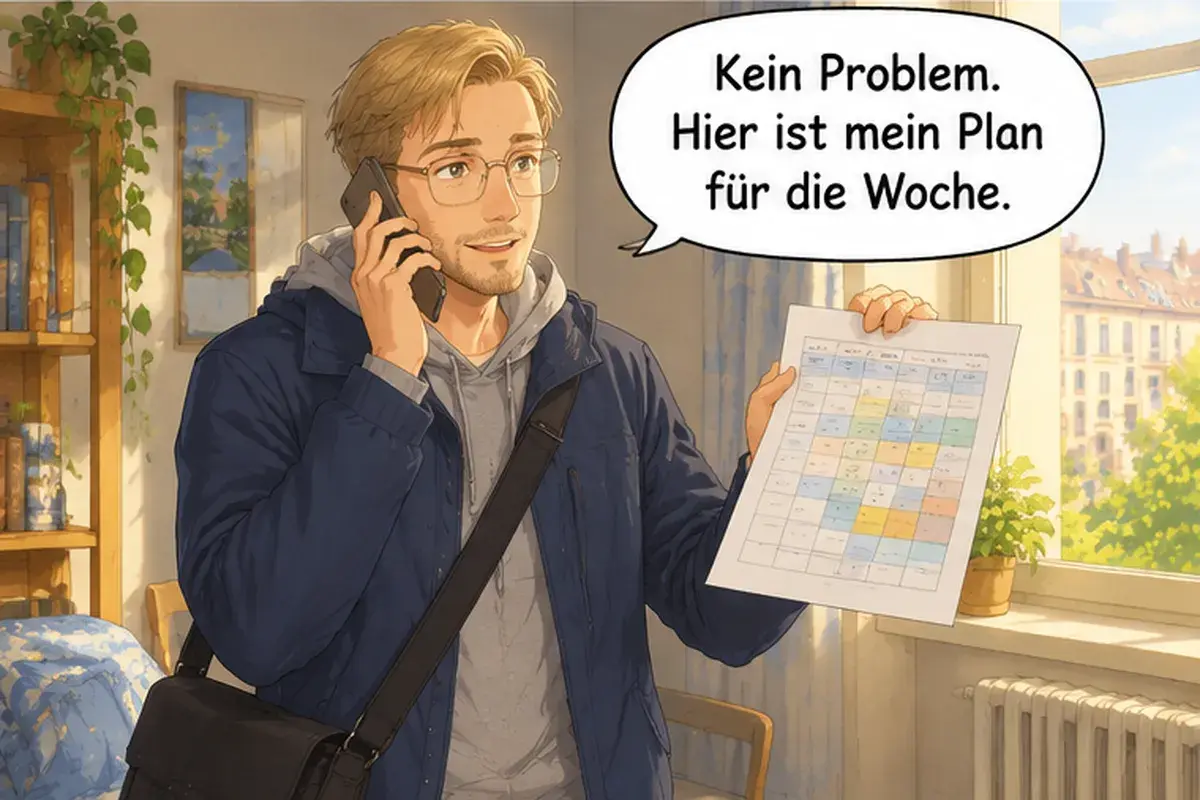
- Lukas
Kein Problem. Hier ist mein Plan für die Woche.
No problem. Here's my plan for the week.

- Katja
Eine Tabelle! Du kommst nie zu spät, oder?
A spreadsheet! You're never late, are you?

- Lukas
Nie. Ich bin pünktlich, auf die Minute!
Never. I'm on time, to the minute!

- Katja
Wann stehst du am Montag auf?
When do you get up on Monday?
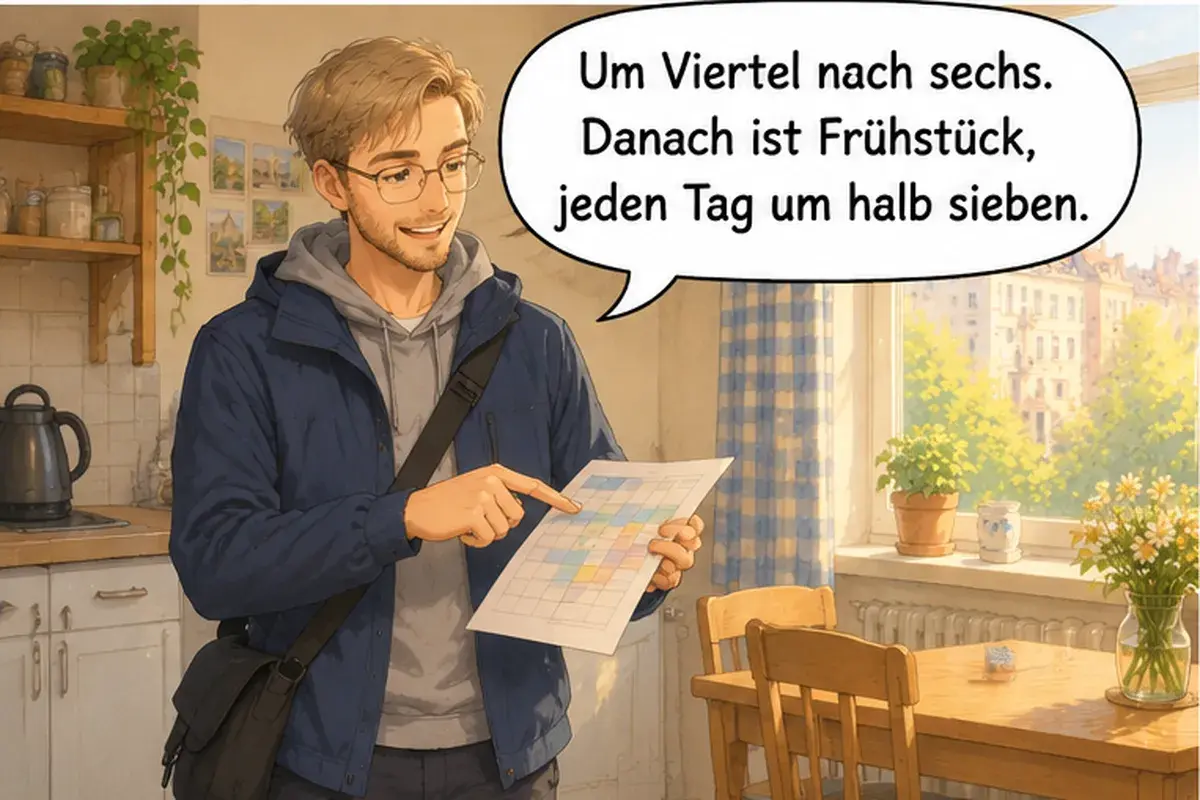
- Lukas
Um Viertel nach sechs. Danach ist Frühstück, jeden Tag um halb sieben.
At a quarter past six. After that it's breakfast, every day at six thirty.

- Katja
Das ist früh! Und am Wochenende? Schläfst du lange?
That's early! And on the weekend? Do you sleep late?

- Lukas
Am Samstag bis halb acht. Das ist lange für mich!
On Saturday until seven thirty. That's a long time for me!

- Katja
Wann hast du Zeit? Ich habe Urlaub.
When do you have time? I'm on vacation.
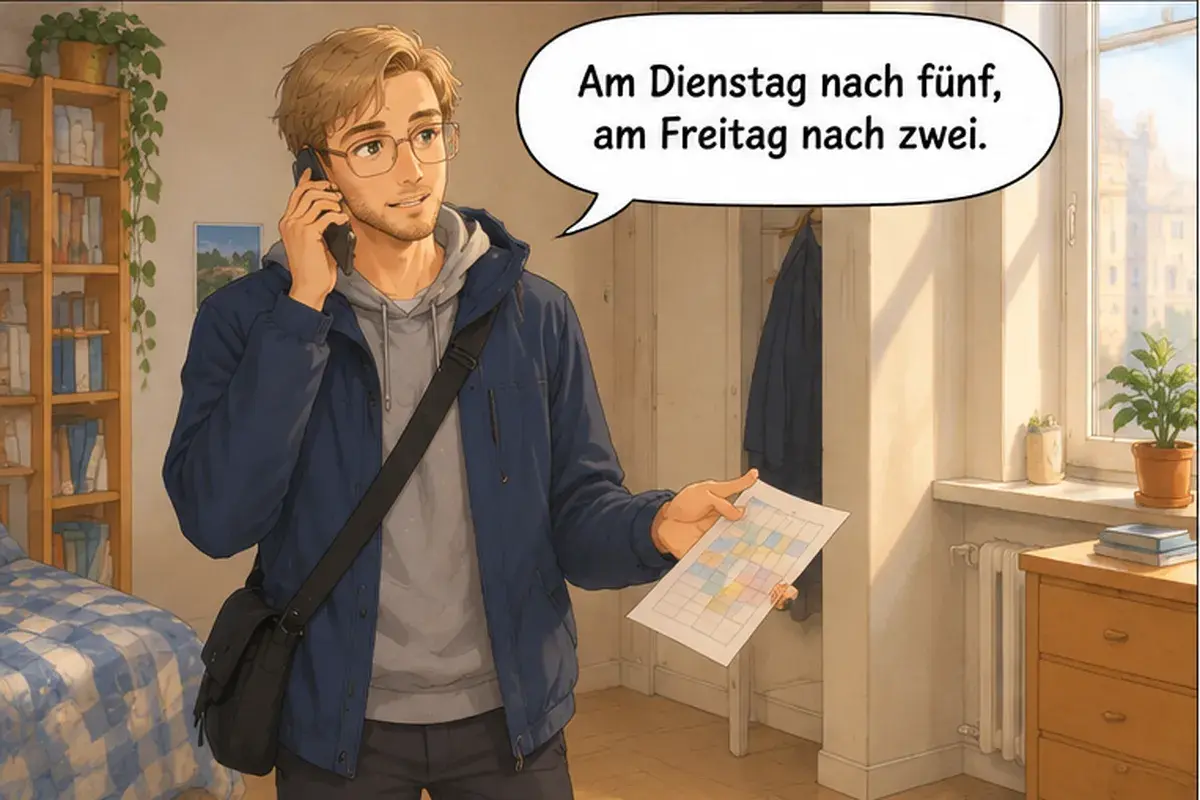
- Lukas
Am Dienstag nach fünf, am Freitag nach zwei.
On Tuesday after five, on Friday after two.

- Katja
Moment! Heute ist Mittwoch, und hier steht: Abendessen um acht Uhr.
Wait a moment! Today is Wednesday, and it says here: dinner at eight o'clock.
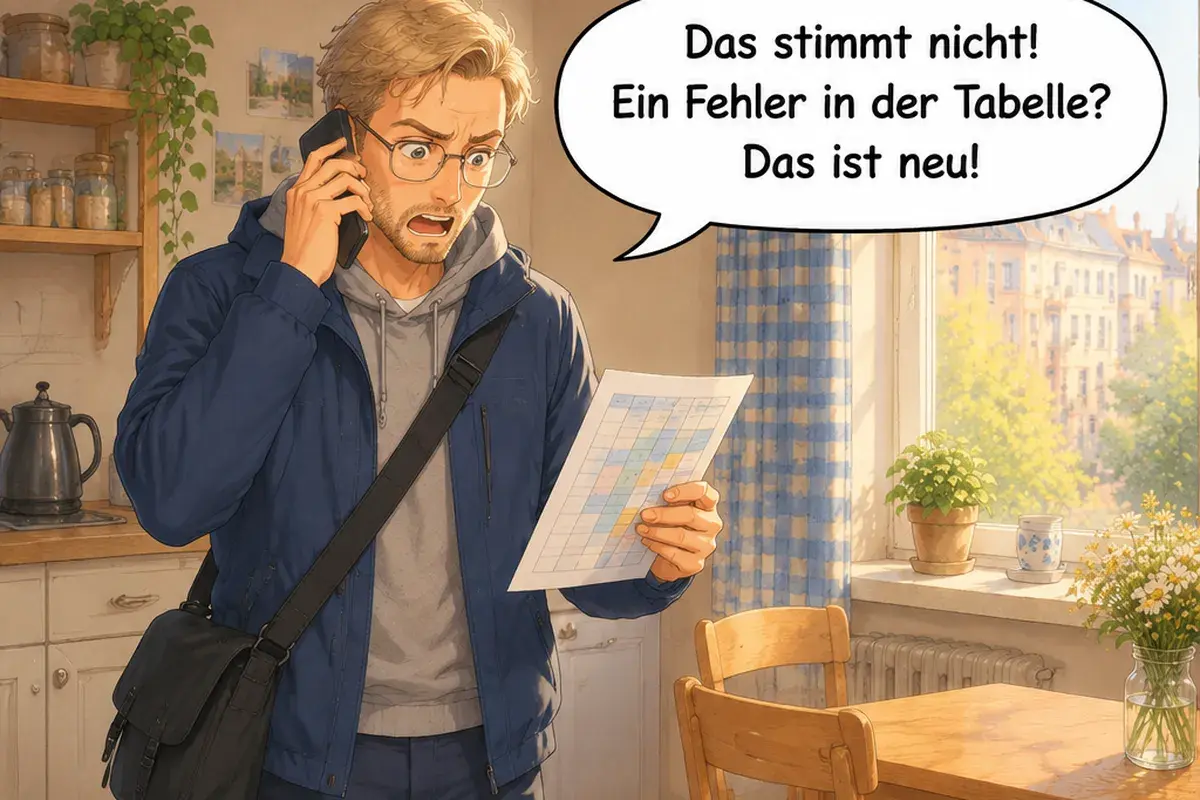
- Lukas
Das stimmt nicht! Ein Fehler in der Tabelle? Das ist neu!
That's not right! A mistake in the spreadsheet? That's new!

- Katja
Ich lache nicht! Guten Appetit, Lukas. Bis morgen.
I'm not laughing! Enjoy your meal, Lukas. See you tomorrow.
Grammar for this text
- Wie spät ist es? — What time is it? Word for word, "how late is it?". The answer also uses es: Es ist acht Uhr — It's eight o'clock. This es is just like the "it" in "it's eight". To ask a stranger: Entschuldigung, wie spät ist es?
- Viertel nach acht — 8:15, a quarter past eight. nach means "after" here: a quarter of an hour after eight. And halb sieben is 6:30: the half hour is counted toward the next hour (half way to seven).
- Ich habe die Zeit vergessen — I forgot about the time. A ready-made phrase: habe is the ich form of haben (unit 2), and vergessen (forgotten) is the Perfekt (spoken past), which comes in unit 17. For now, learn it as a whole: Ich habe … vergessen — I forgot …
- Du kommst nie zu spät, oder? — kommst is the du form of kommen. nie means "never"; with it you don't need nicht. zu spät kommen — to be late. oder? at the end means "right?" or "are you?".
- Wann stehst du am Montag auf? — aufstehen is a separable verb (unit 7): stehst is in second place, and auf goes to the end. am Montag — on Monday.
- Schläfst du lange? — schläfst is the du form of schlafen (to sleep). The vowel changes a → ä, like fahren → du fährst (unit 4). The er / sie / es form changes too; the ich form keeps the plain vowel.
- Das stimmt nicht! — That's not right! stimmt is the er / sie / es form of stimmen (to be right). You say it about a thing, not about a person.
Words and grammar of the unit: Tell the time and make plans.
Learn the words from the texts with flashcards
In the app, you can tap any word in a text to see its translation, forms and examples, and new words stick with flashcards. 15 minutes a day.
Start for freeEverything is open for free. No card needed to sign up.