

German dialogue with translation · A1 · 14 lines
Ich suche den Weg zur Museumsinsel I'm looking for the way to Museum Island
Comic · 14 panels
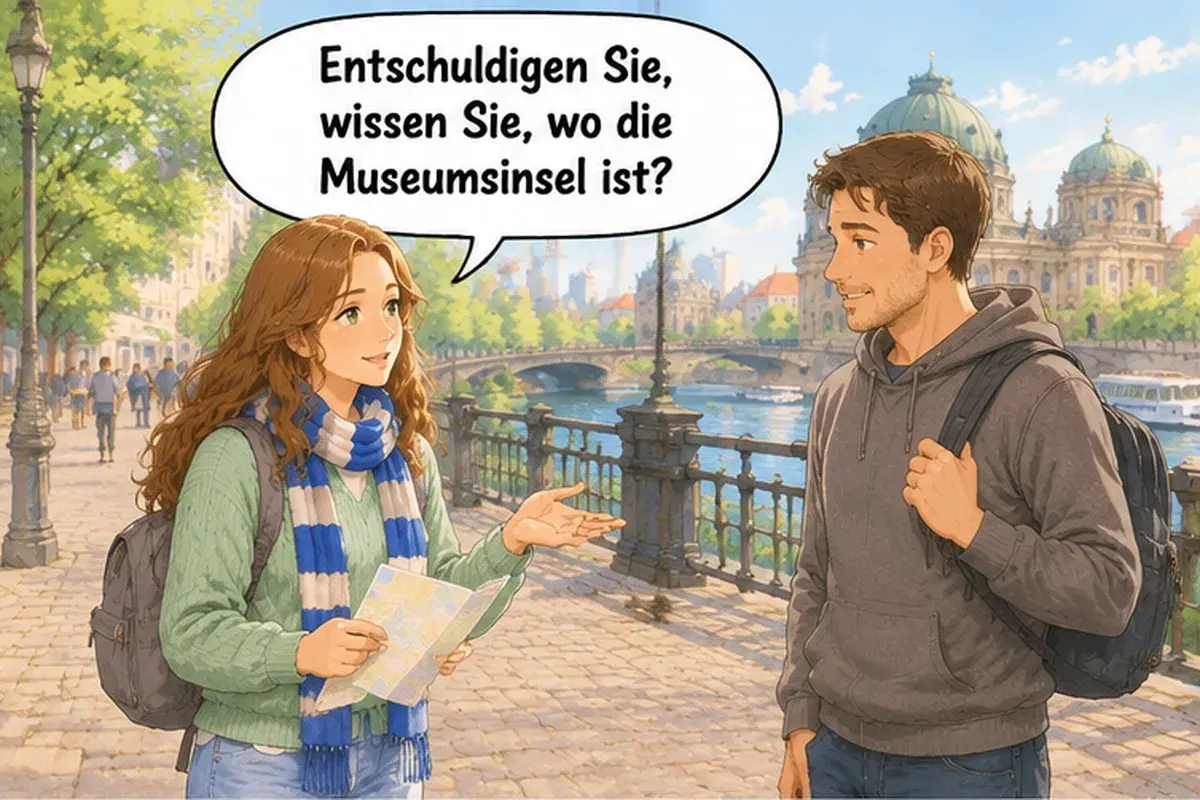
- Katja
Entschuldigen Sie, wissen Sie, wo die Museumsinsel ist?
Excuse me, do you know where Museum Island is? (formal)
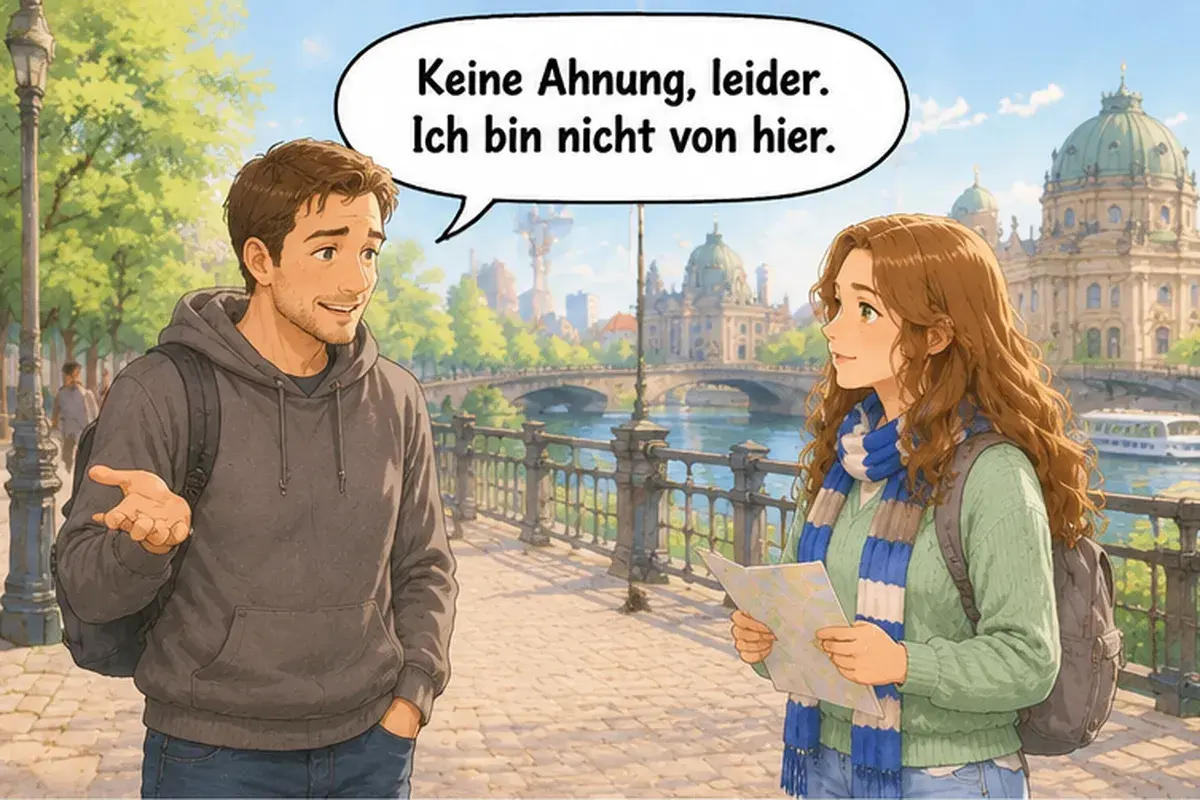
- Passant
Keine Ahnung, leider. Ich bin nicht von hier.
No idea, I'm afraid. I'm not from here.
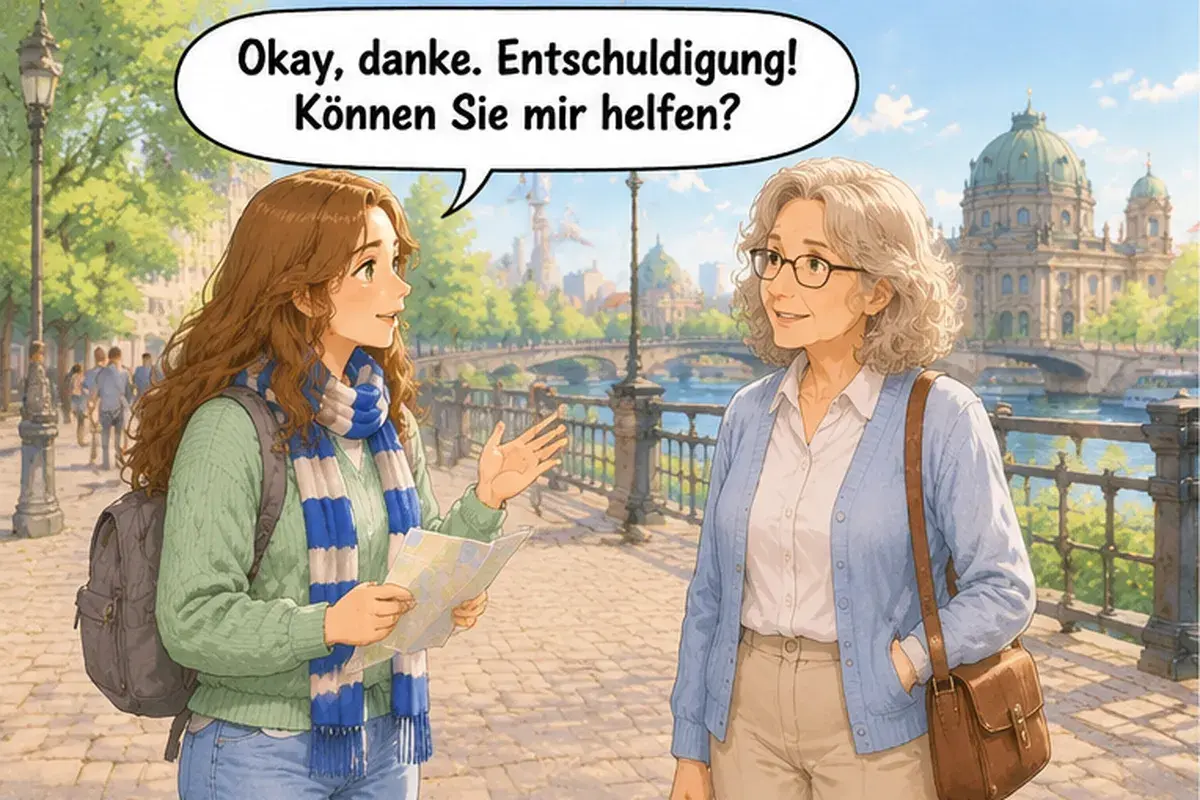
- Katja
Okay, danke. Entschuldigung! Können Sie mir helfen?
Okay, thanks. Excuse me! Can you help me? (formal)
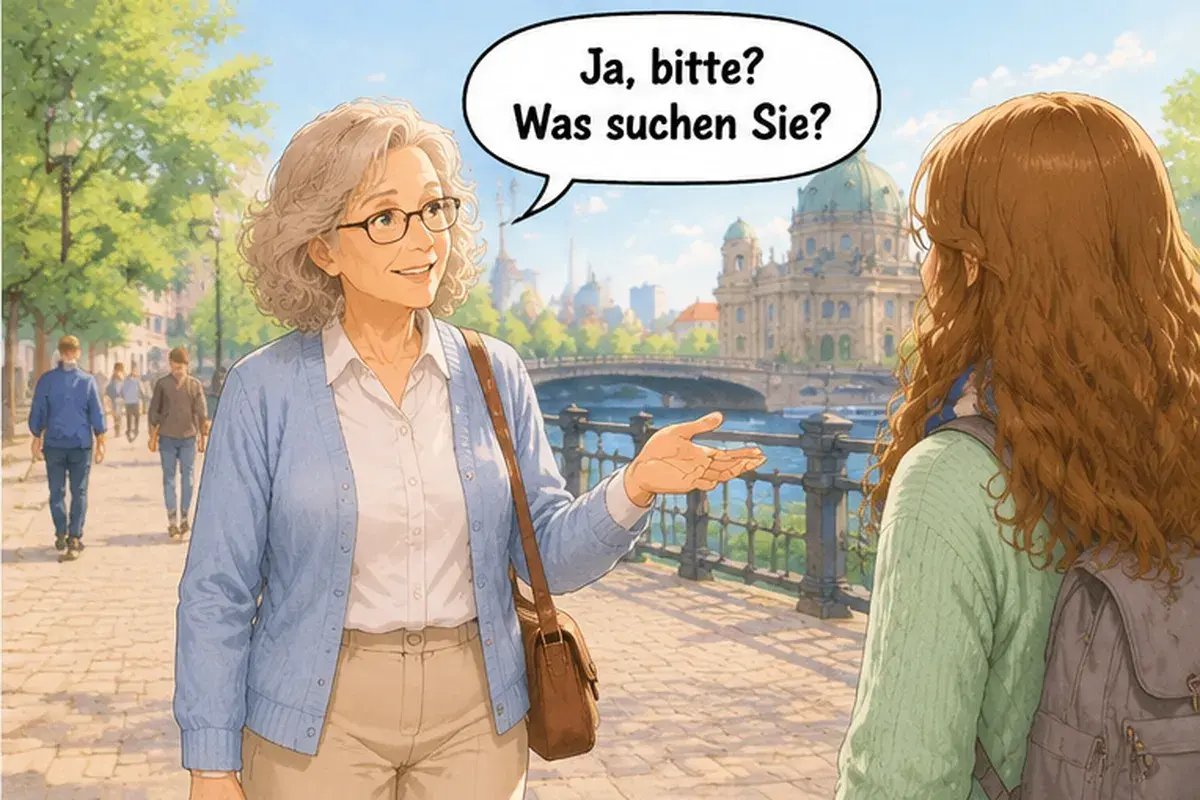
- Frau
Ja, bitte? Was suchen Sie?
Yes? What are you looking for? (formal)
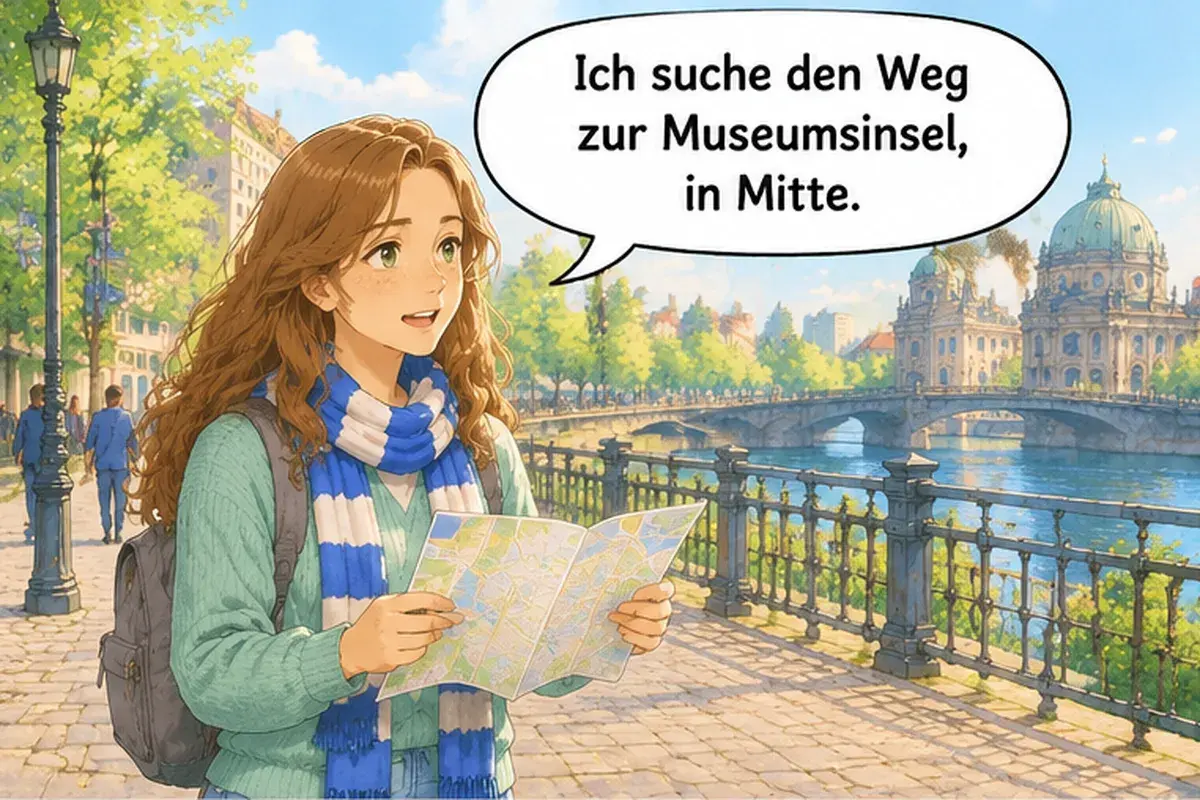
- Katja
Ich suche den Weg zur Museumsinsel, in Mitte.
I'm looking for the way to Museum Island, in Mitte.
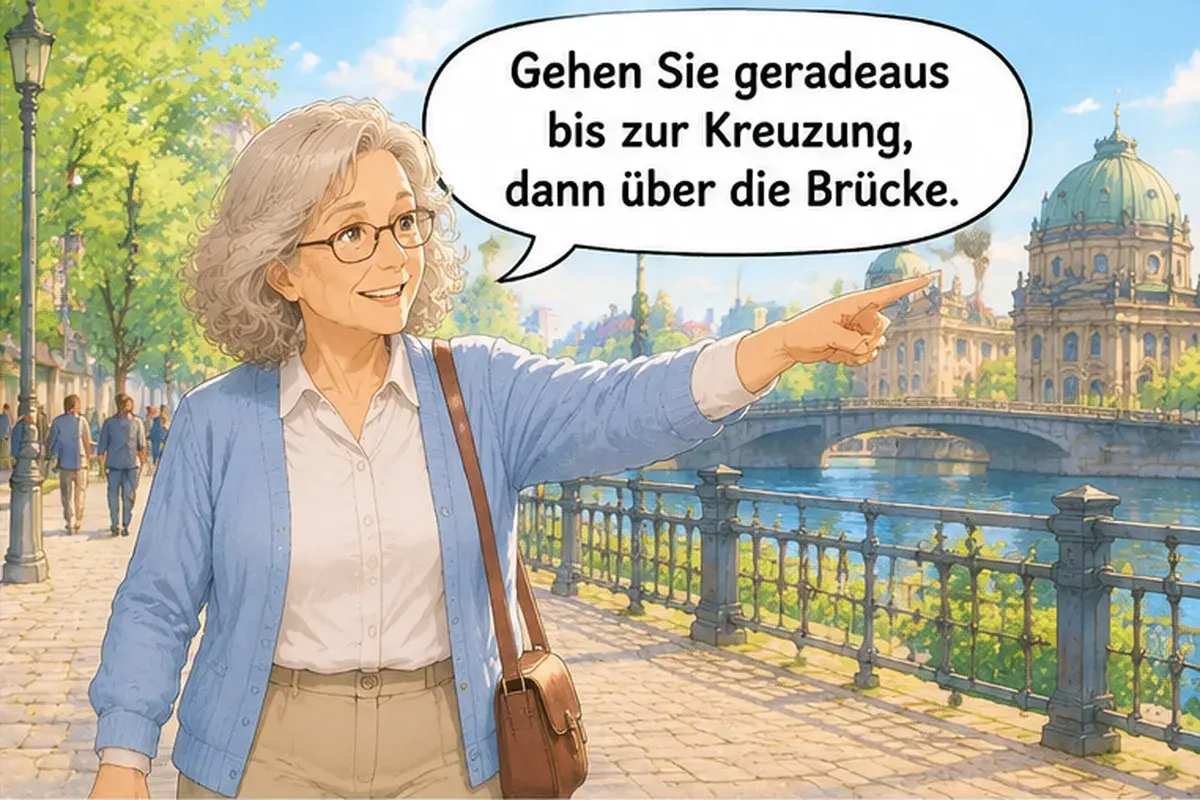
- Frau
Gehen Sie geradeaus bis zur Kreuzung, dann über die Brücke.
Go straight ahead to the intersection, then over the bridge (formal).
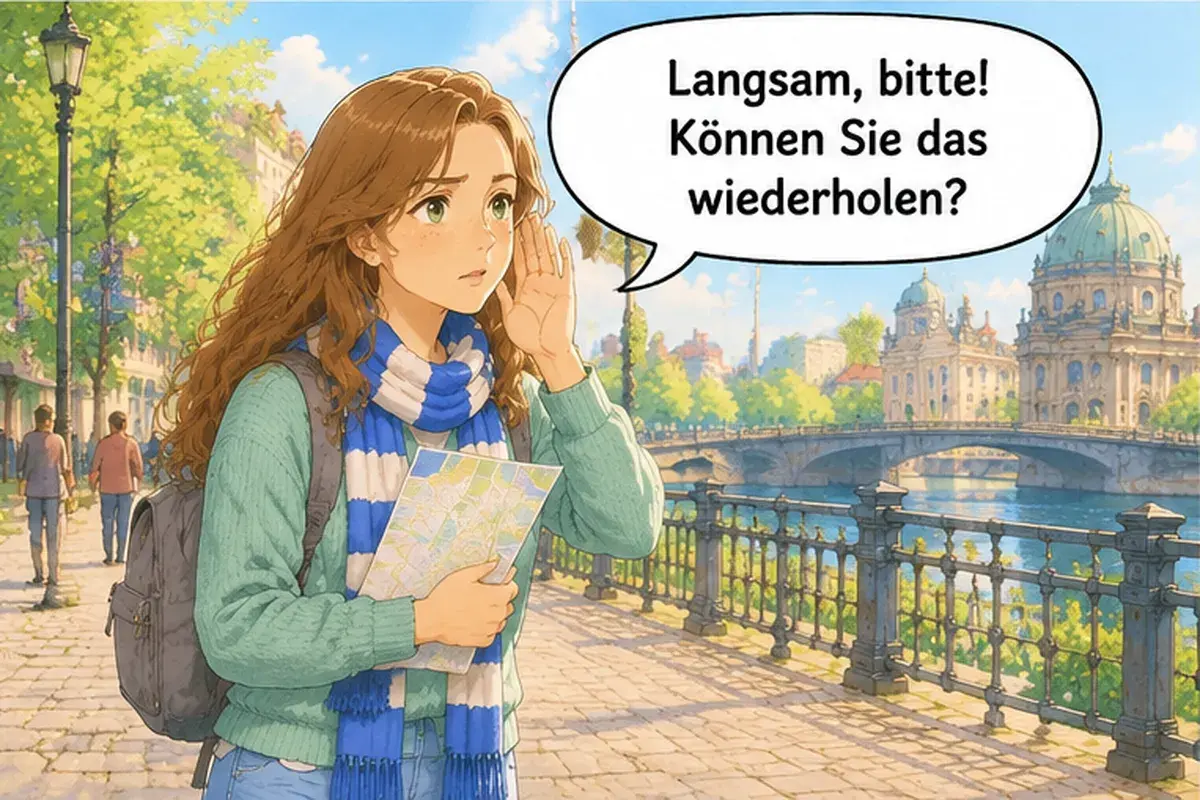
- Katja
Langsam, bitte! Können Sie das wiederholen?
Slowly, please! Can you repeat that? (formal)
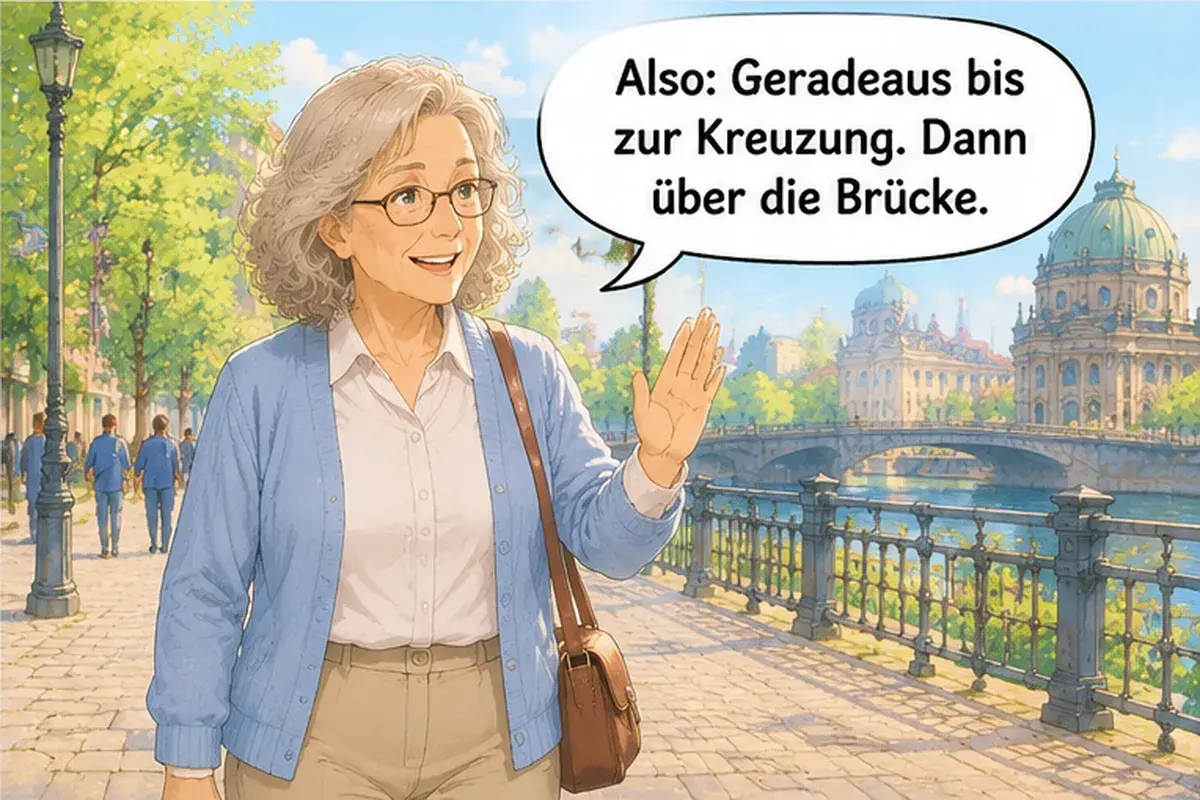
- Frau
Also: Geradeaus bis zur Kreuzung. Dann über die Brücke.
So: straight ahead to the intersection. Then over the bridge.
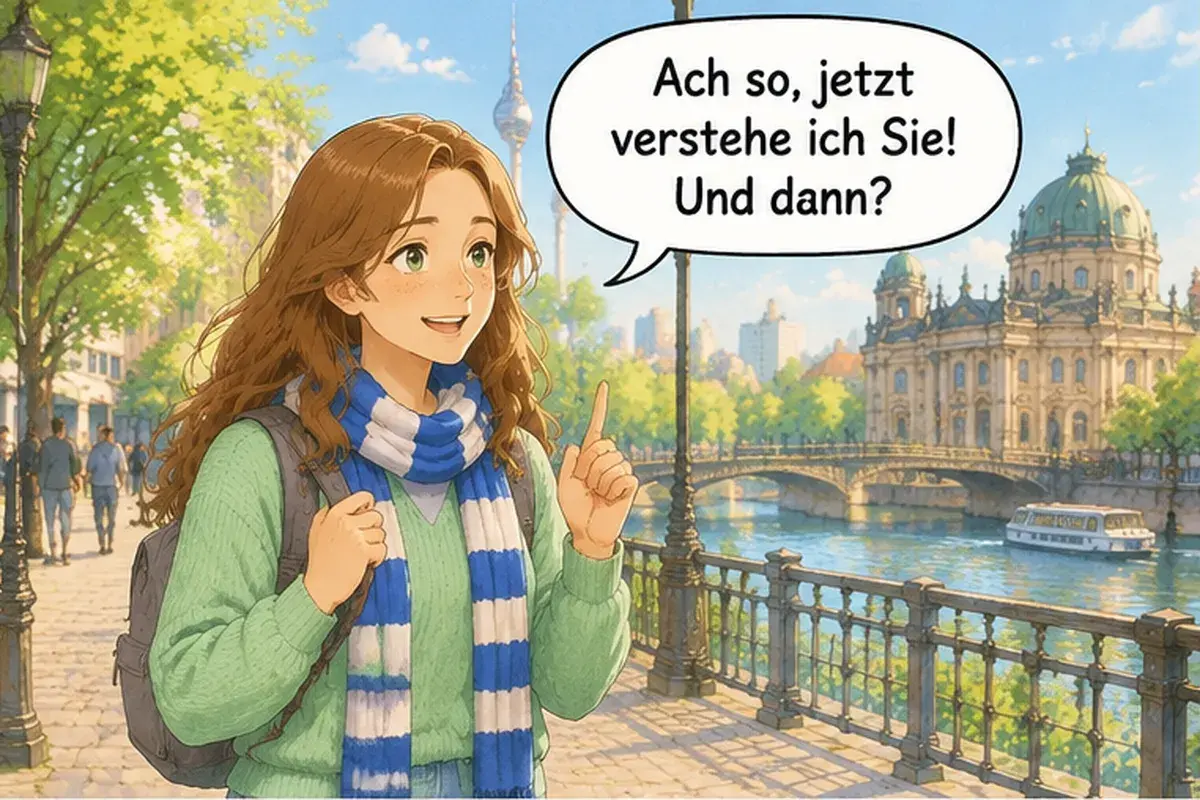
- Katja
Ach so, jetzt verstehe ich Sie! Und dann?
Oh, I see, now I understand you! And then? (formal)
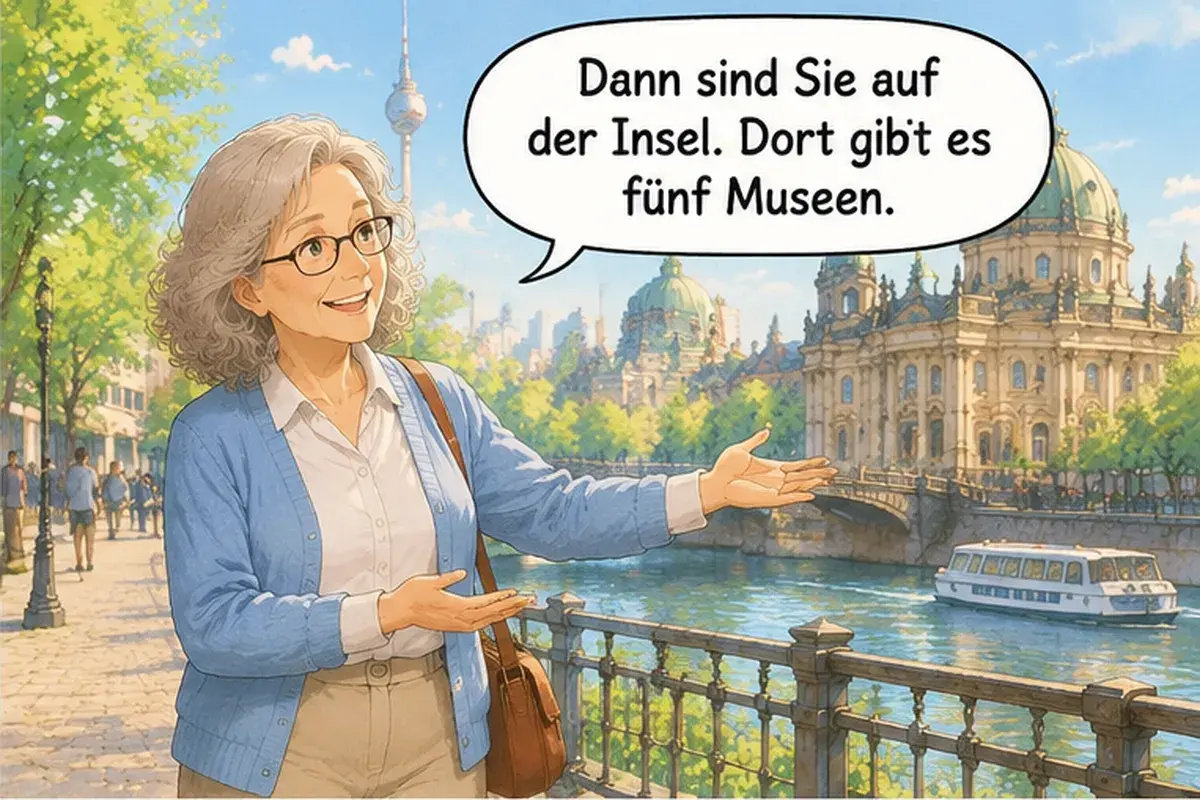
- Frau
Dann sind Sie auf der Insel. Dort gibt es fünf Museen.
Then you're on the island. There are five museums there. (formal)
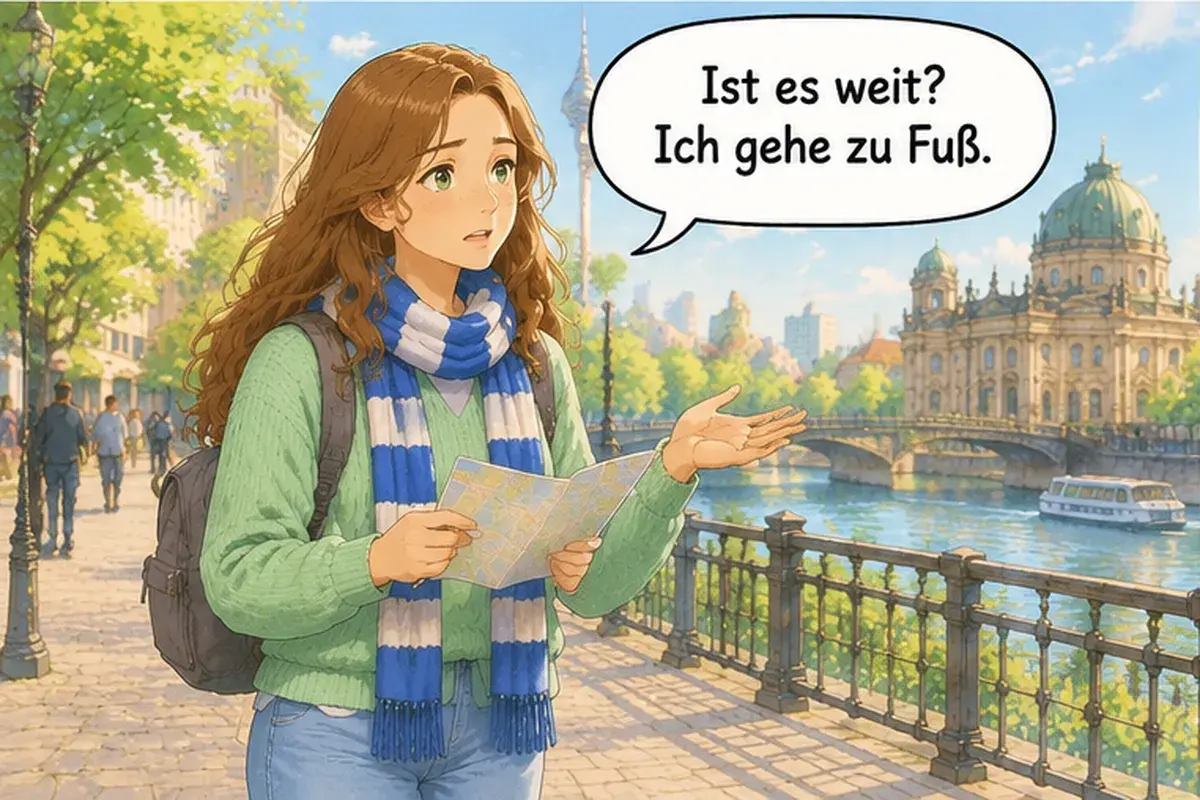
- Katja
Ist es weit? Ich gehe zu Fuß.
Is it far? I'm going on foot.
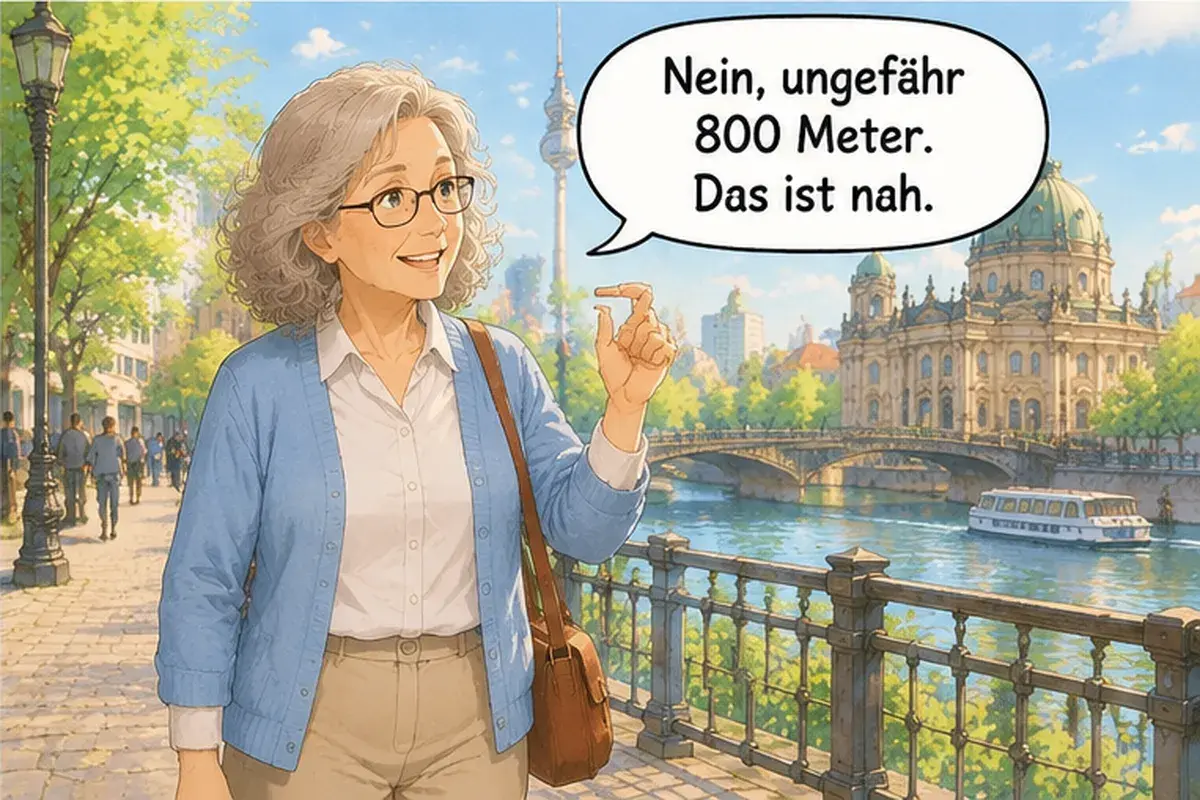
- Frau
Nein, ungefähr 800 Meter. Das ist nah.
No, about 800 meters. That's close.

- Katja
Vielen Dank für Ihre Hilfe! Schönen Tag noch!
Thank you very much for your help! Have a nice day! (formal)
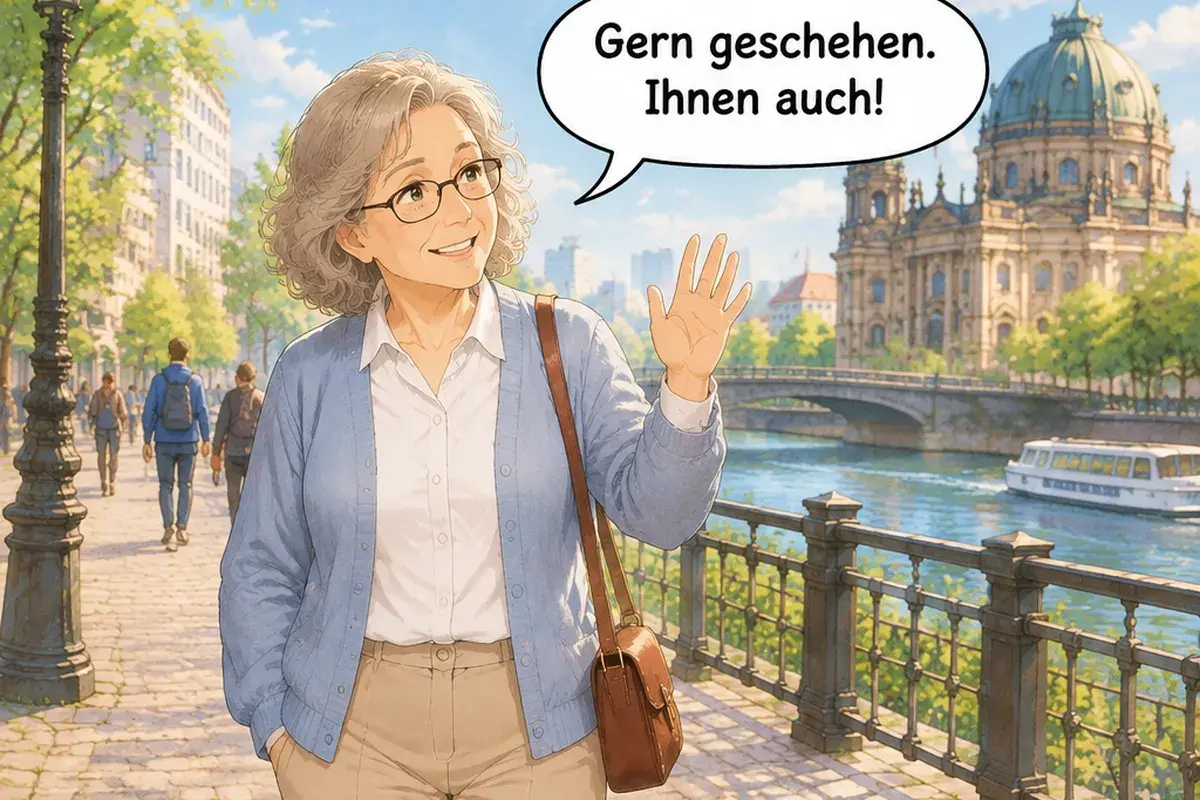
- Frau
Gern geschehen. Ihnen auch!
You're welcome. You too! (formal)
Grammar for this text
- Entschuldigen Sie, wissen Sie, wo die Museumsinsel ist? — Entschuldigen Sie means "excuse me": the verb first, then Sie. wissen Sie — "do you know" (a fact). After wo the verb ist moves to the very end, like English "where the island is". Museumsinsel is Museum + Insel in one word: Museum Island.
- Keine Ahnung, leider. Ich bin nicht von hier. — keine Ahnung is casual "no idea"; leider ("unfortunately", "I'm afraid") softens the answer. Ich bin nicht von hier — "I'm not from here": the usual answer when you don't know the way.
- Können Sie mir helfen? — Können is the Sie form of können ("can"). The second verb, helfen, goes to the end. mir means "me": after helfen German uses a special form of ich (not mich). You'll learn it at A2; for now, learn the whole phrase.
- Ich suche den Weg zur Museumsinsel, in Mitte. — der Weg becomes den Weg: it's the direct object, so it's in the accusative (unit 5). zur = zu + der, "to the". Mitte is Berlin's central district.
- Gehen Sie geradeaus bis zur Kreuzung, dann über die Brücke. — a Sie command: the verb first, then Sie. It isn't a question, it means "go!". bis zur — "up to", "as far as".
- Ach so, jetzt verstehe ich Sie! — jetzt comes first, but the verb still stays second, so ich moves after it. Sie here is the object, "you" (accusative); it looks the same as the subject Sie.
- Nein, ungefähr 800 Meter. Das ist nah. — 800 is read achthundert; Meter doesn't change after a number. ungefähr — "about", nah — "close". Gern geschehen. Ihnen auch! — "you're welcome", the answer to a thank-you; Ihnen auch — "you too" (the form Ihnen, like mir, comes at A2).
Words and grammar of the unit: Ask for directions.
Learn the words from the texts with flashcards
In the app, you can tap any word in a text to see its translation, forms and examples, and new words stick with flashcards. 15 minutes a day.
Start for freeEverything is open for free. No card needed to sign up.