
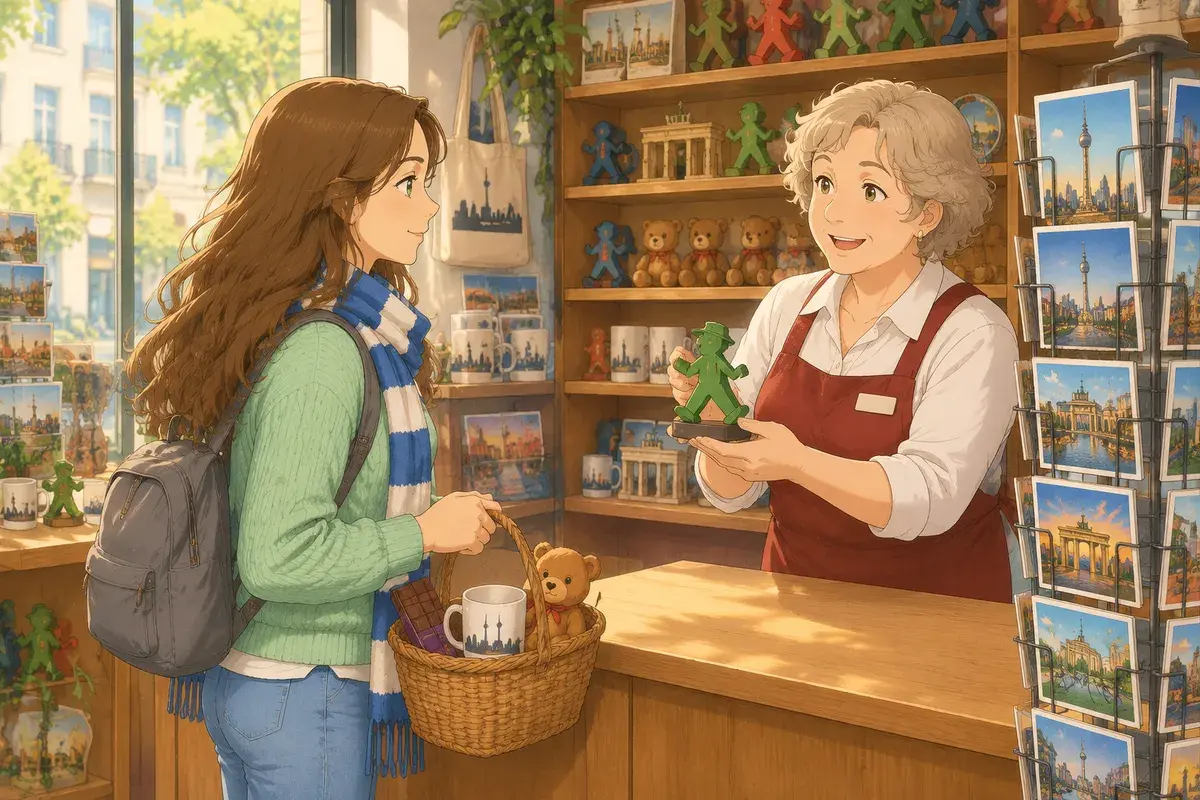
German dialogue with translation · A1 · 14 lines
Was empfehlen Sie? What do you recommend?
Comic · 14 panels
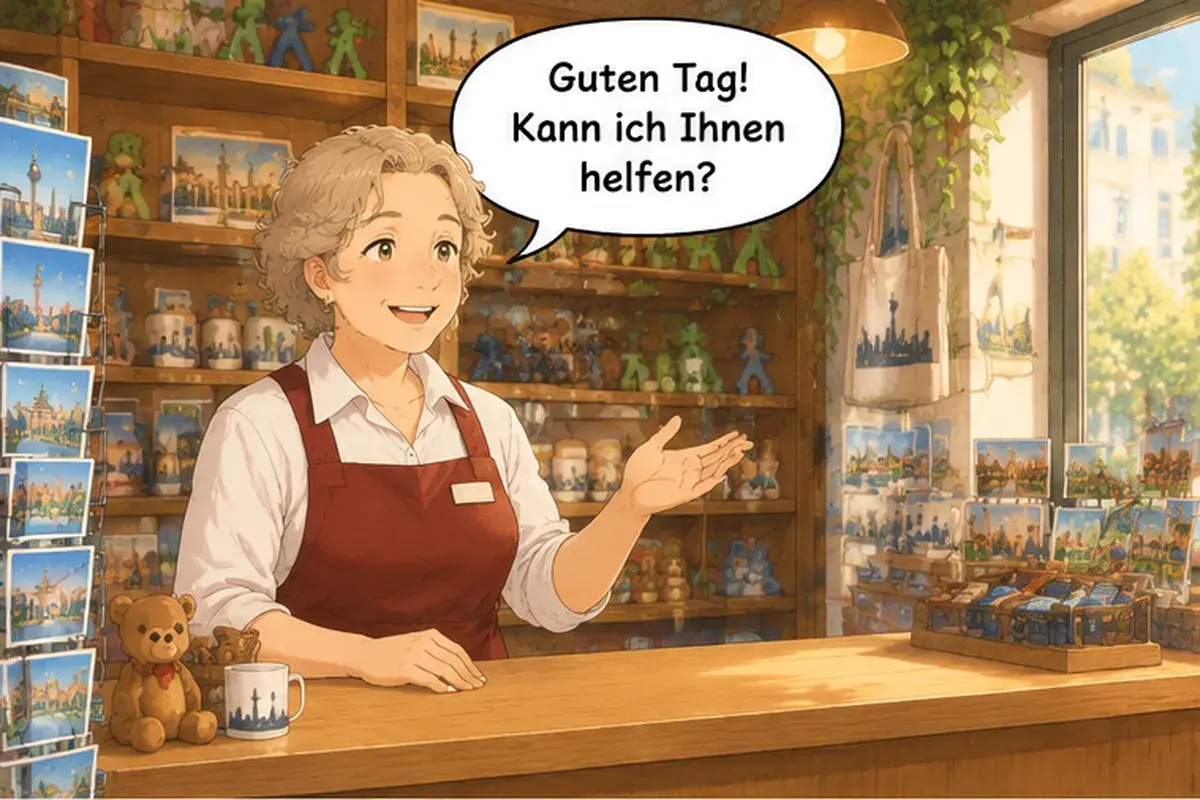
- Verkäuferin
Guten Tag! Kann ich Ihnen helfen?
Hello! Can I help you? (formal)
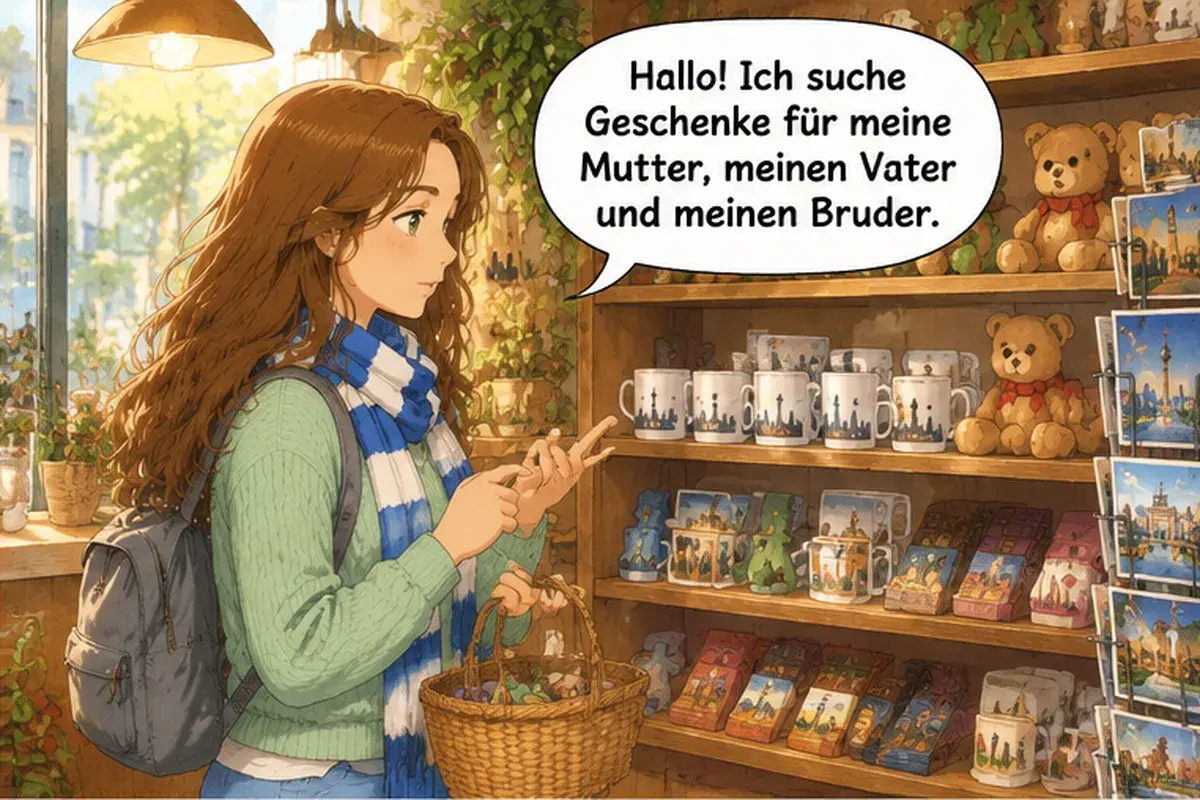
- Katja
Hallo! Ich suche Geschenke für meine Mutter, meinen Vater und meinen Bruder.
Hi! I'm looking for gifts for my mother, my father and my brother.
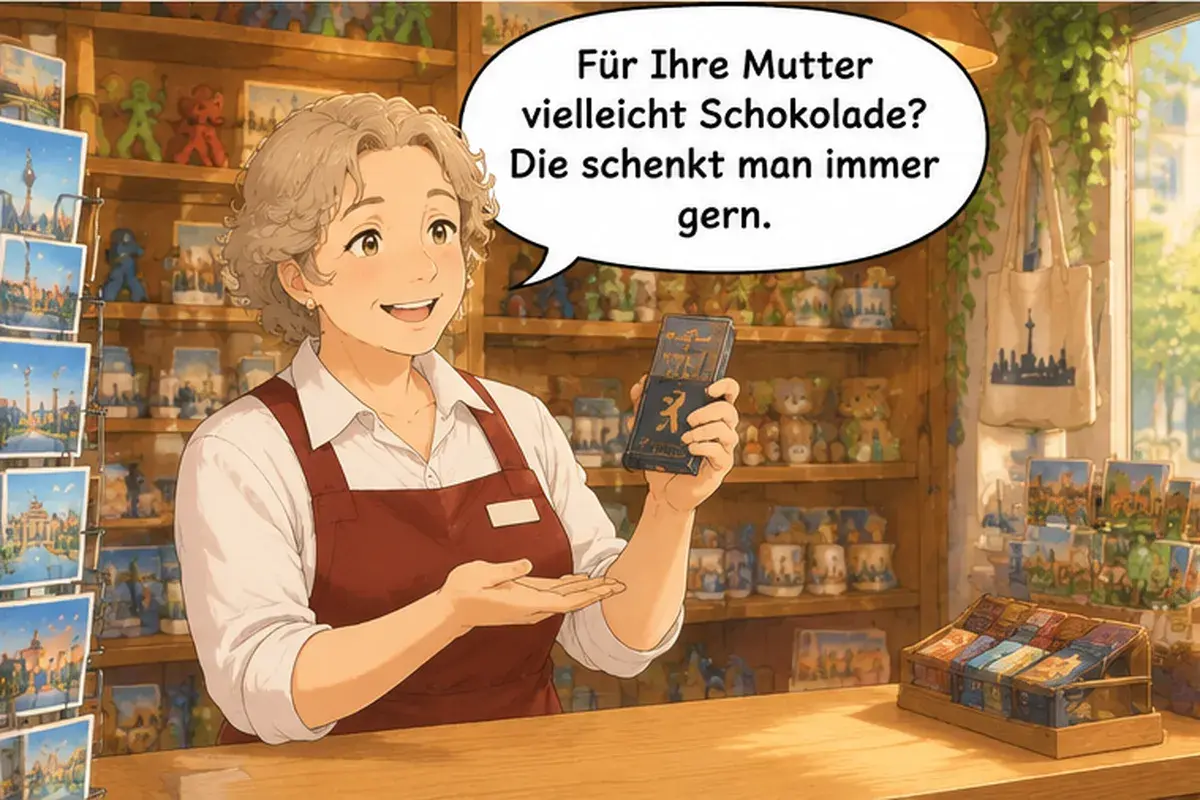
- Verkäuferin
Für Ihre Mutter vielleicht Schokolade? Die schenkt man immer gern.
Maybe chocolate for your mother? People always like to give it. (formal)
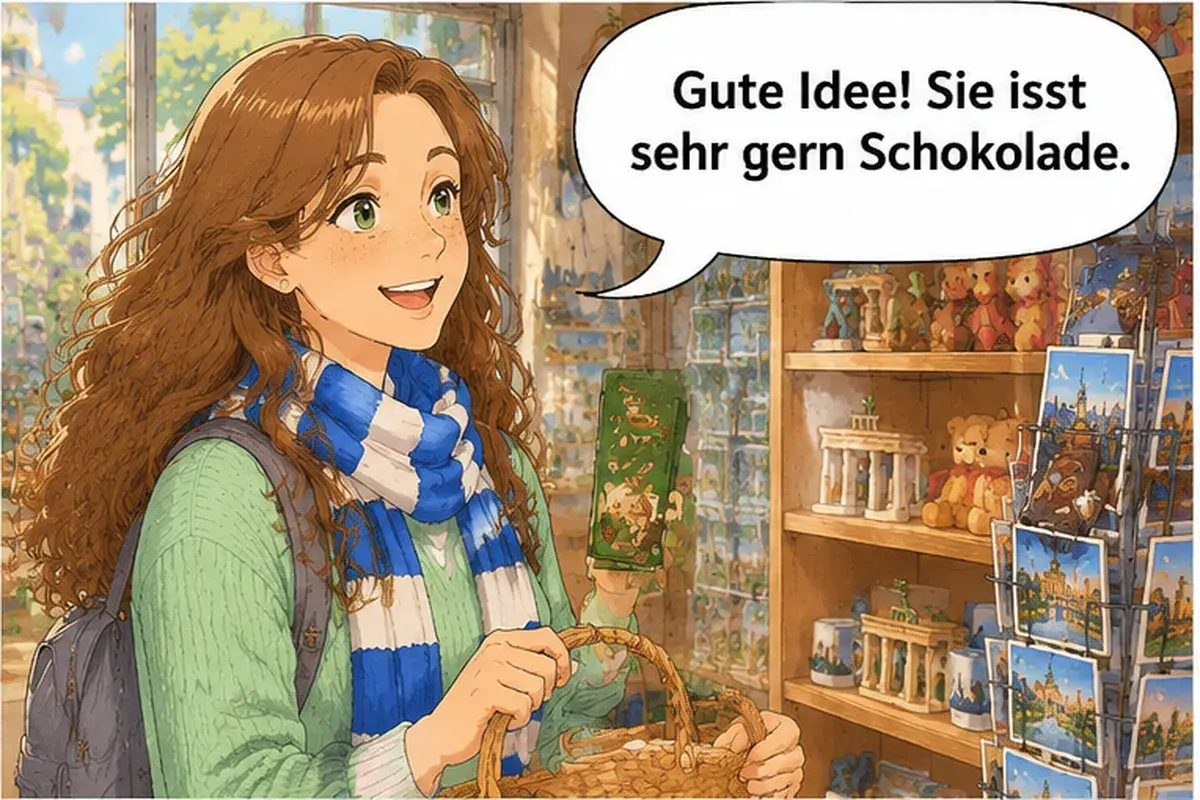
- Katja
Gute Idee! Sie isst sehr gern Schokolade.
Good idea! She loves eating chocolate.
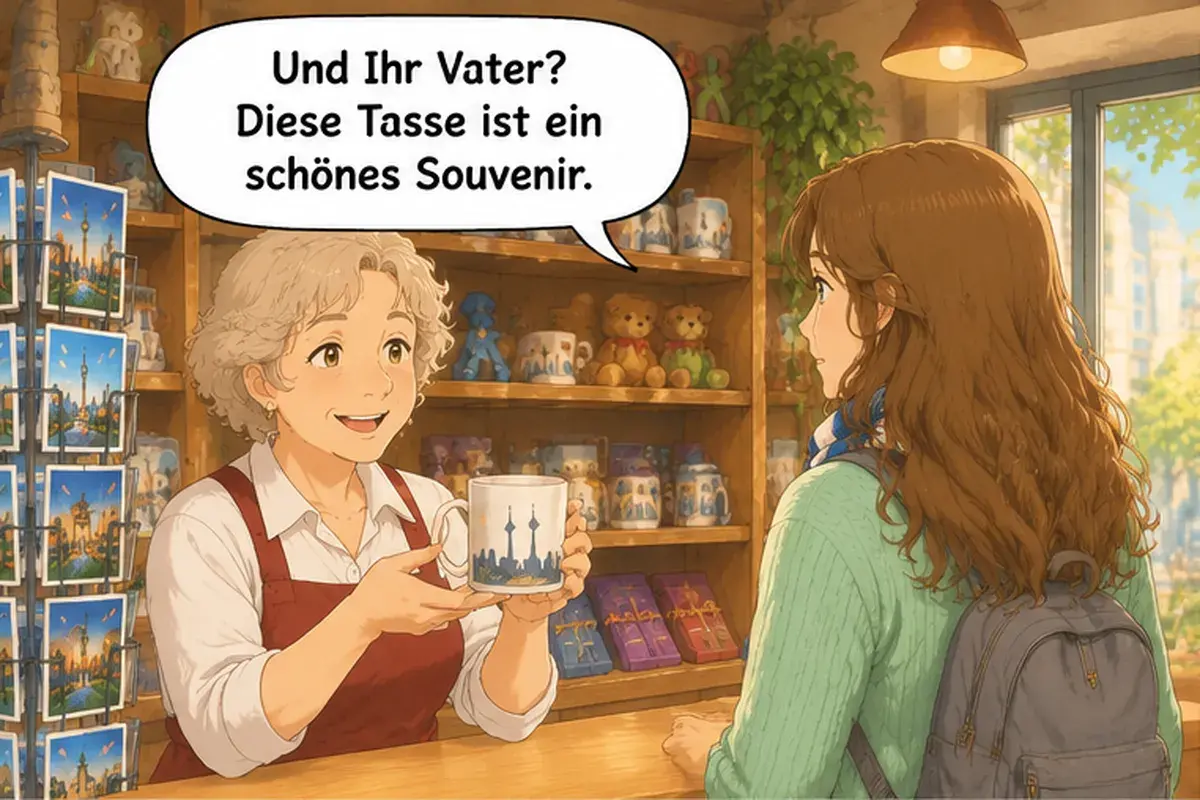
- Verkäuferin
Und Ihr Vater? Diese Tasse ist ein schönes Souvenir.
And your father? This cup is a nice souvenir. (formal)
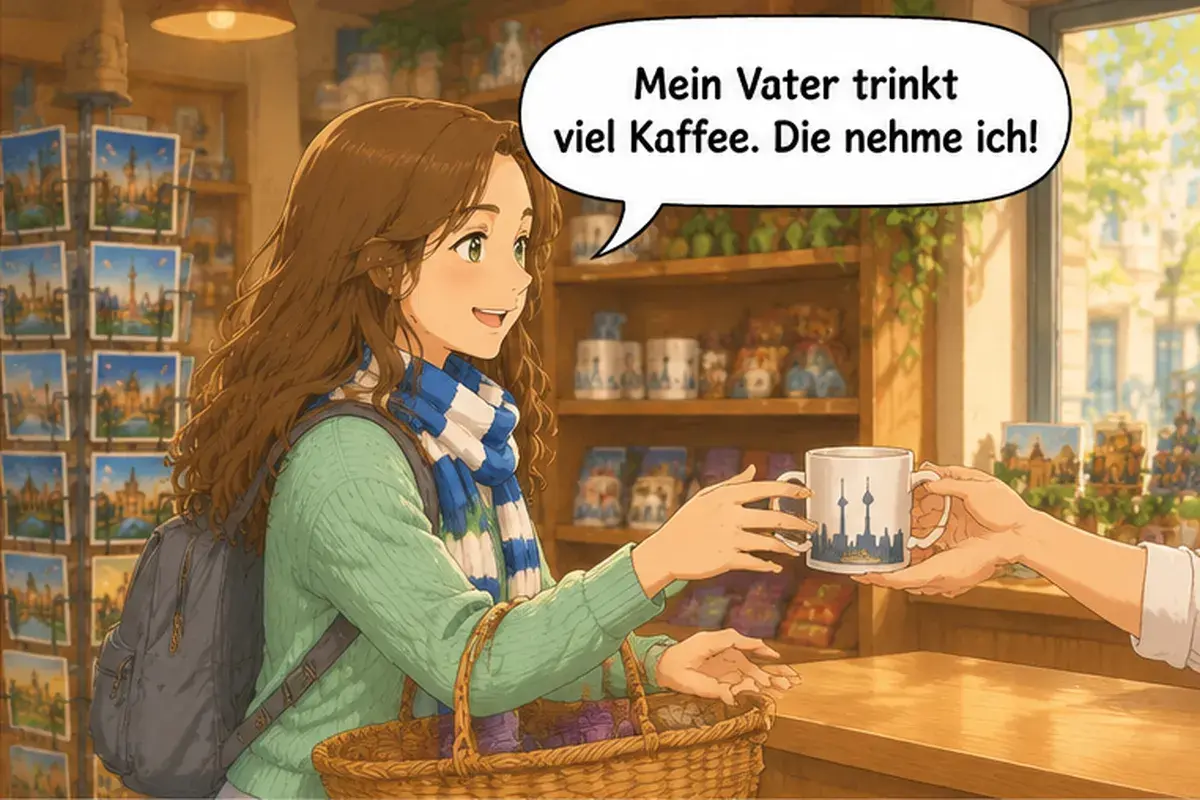
- Katja
Mein Vater trinkt viel Kaffee. Die nehme ich!
My father drinks a lot of coffee. I'll take it!
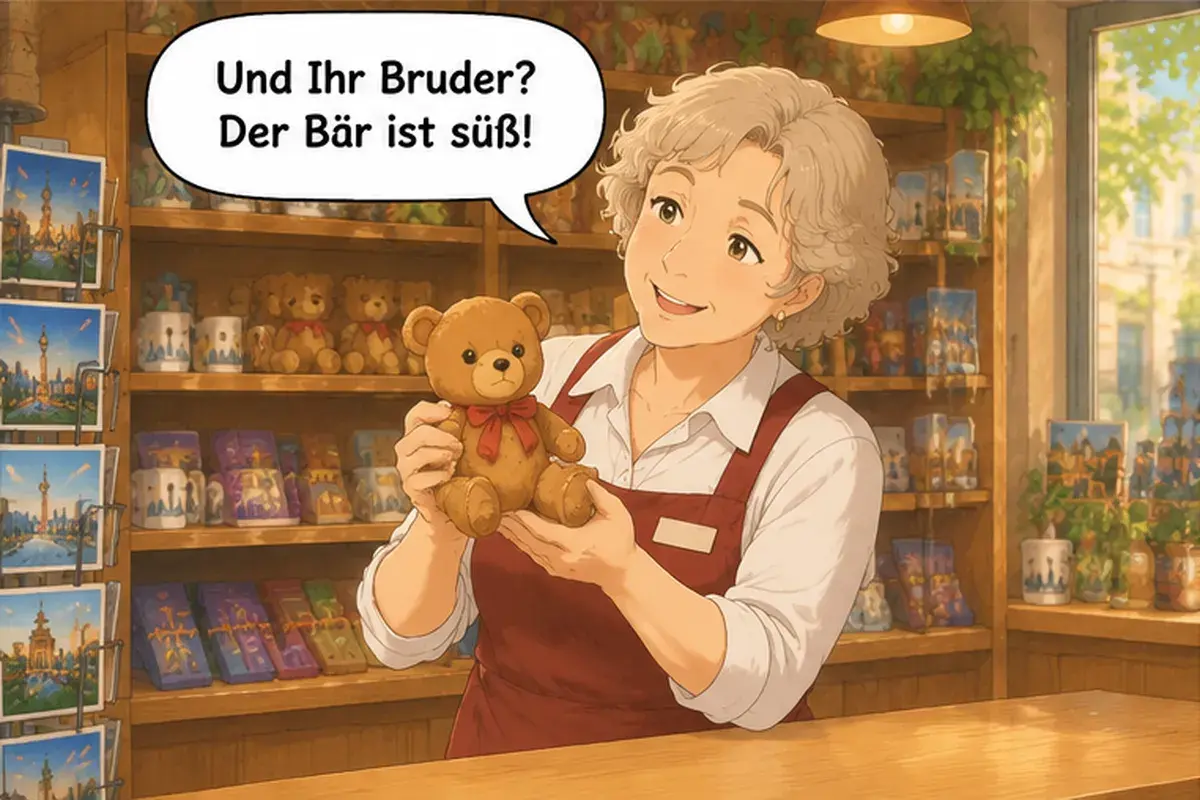
- Verkäuferin
Und Ihr Bruder? Der Bär ist süß!
And your brother? The bear is cute! (formal)
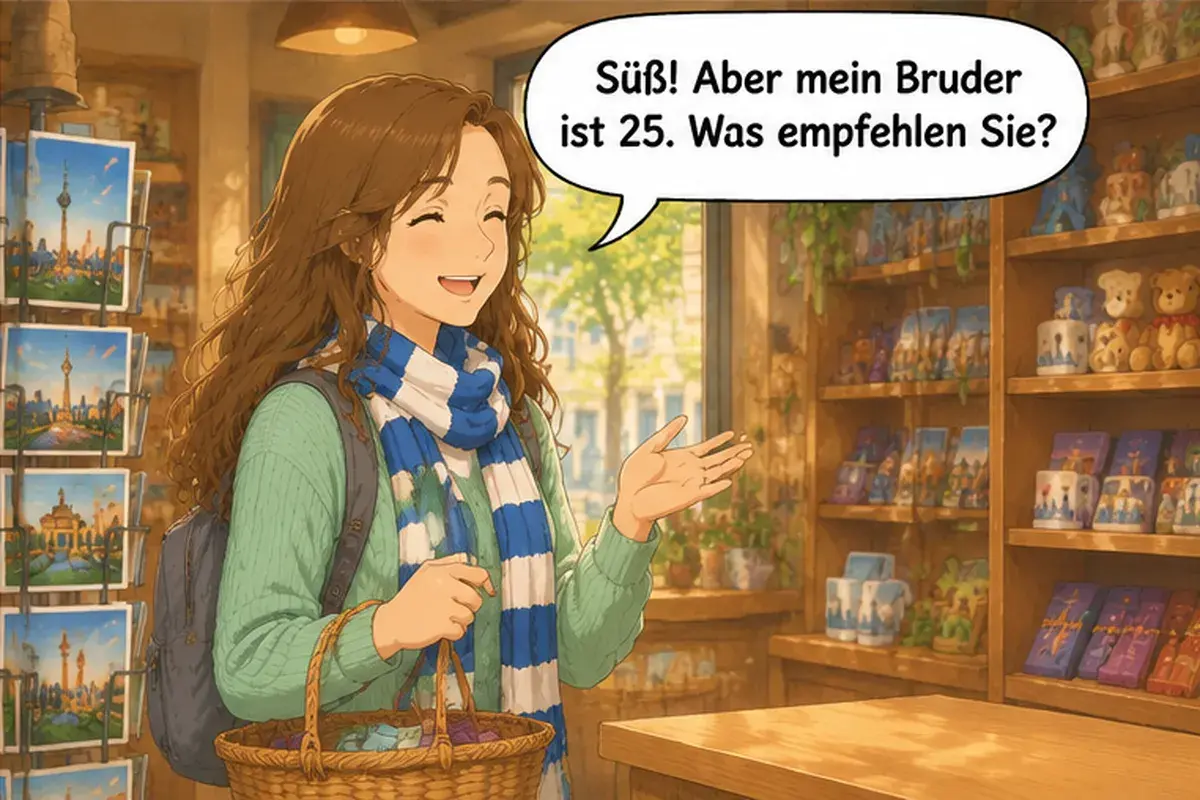
- Katja
Süß! Aber mein Bruder ist 25. Was empfehlen Sie?
Cute! But my brother is 25. What do you recommend? (formal)
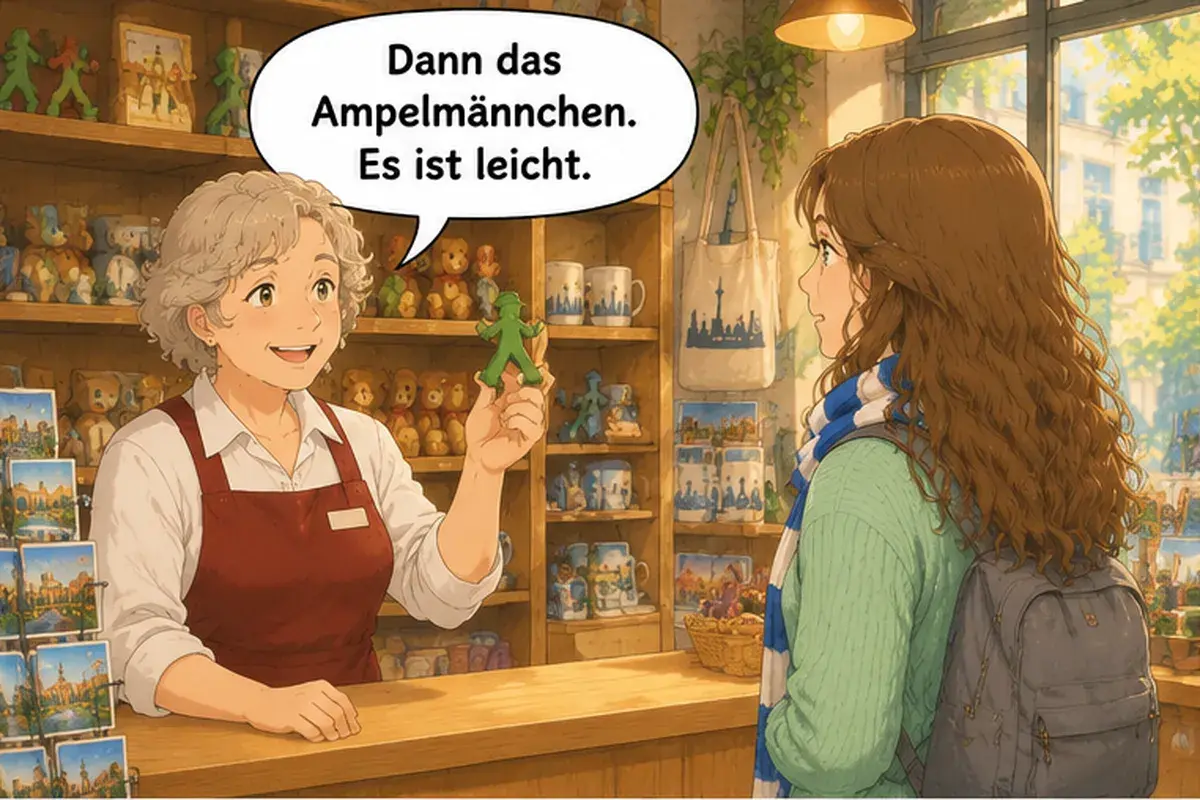
- Verkäuferin
Dann das Ampelmännchen. Es ist leicht.
Then the Ampelmännchen. It's light.
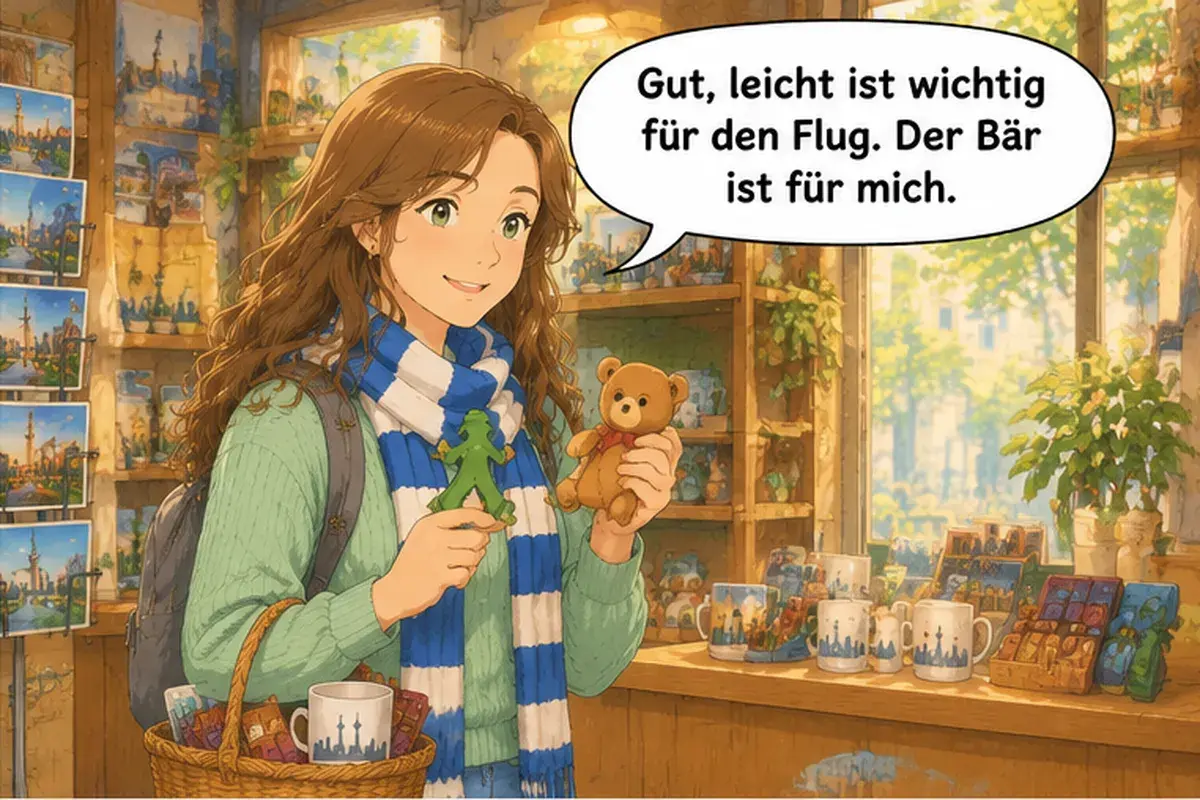
- Katja
Gut, leicht ist wichtig für den Flug. Der Bär ist für mich.
Good, light is important for the flight. The bear is for me.
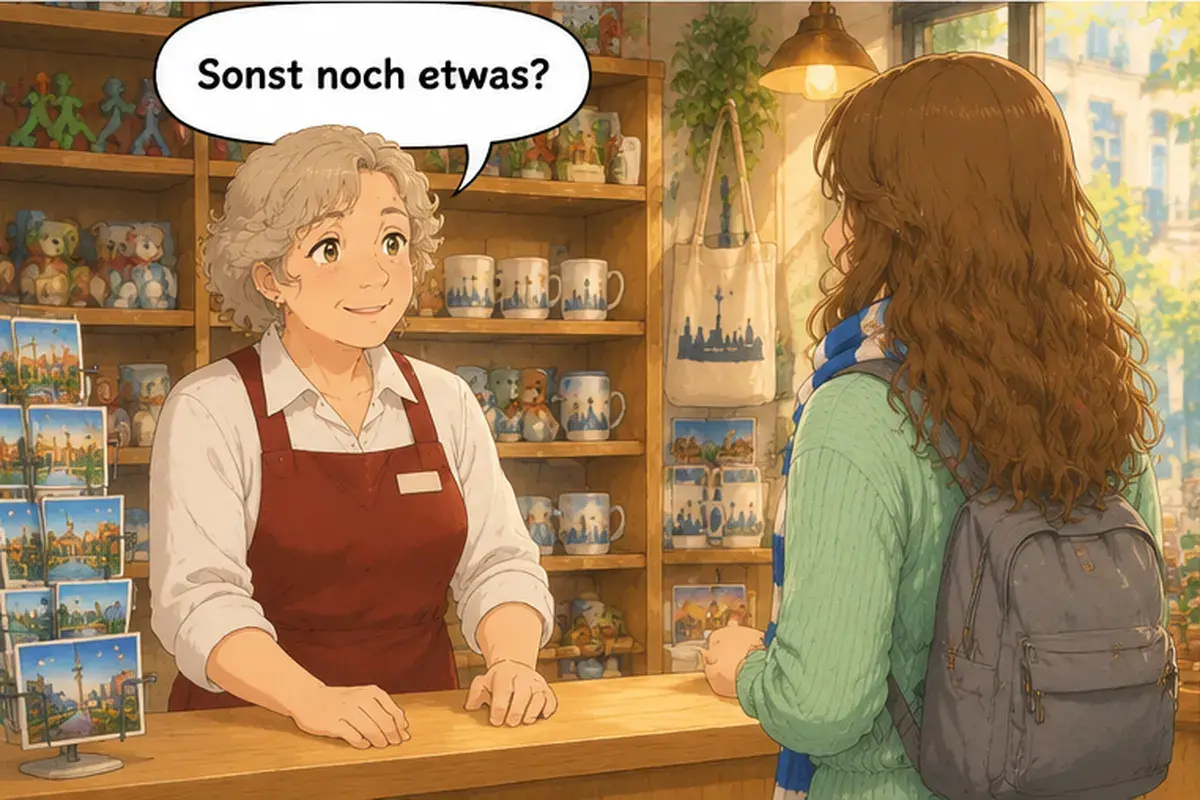
- Verkäuferin
Sonst noch etwas?
Anything else?
- Katja
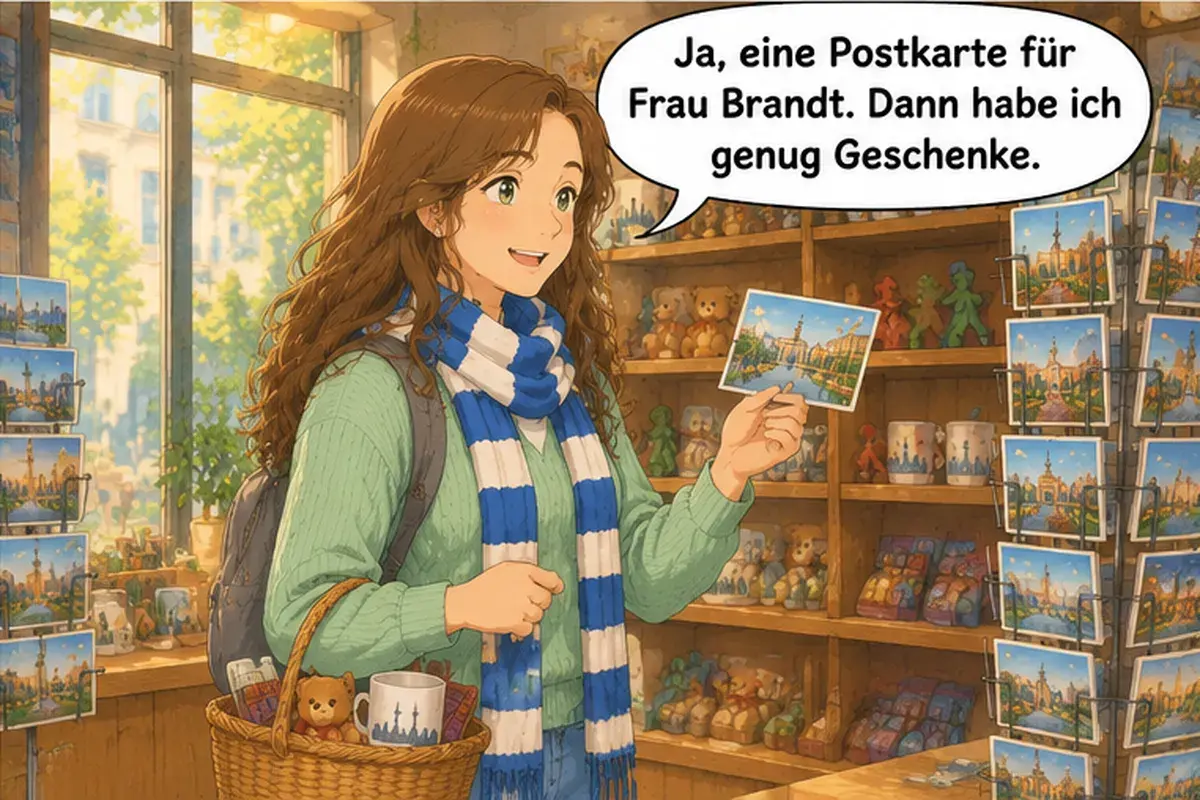
Ja, eine Postkarte für Frau Brandt. Dann habe ich genug Geschenke.
Yes, a postcard for Frau Brandt. Then I have enough gifts.
- Verkäuferin
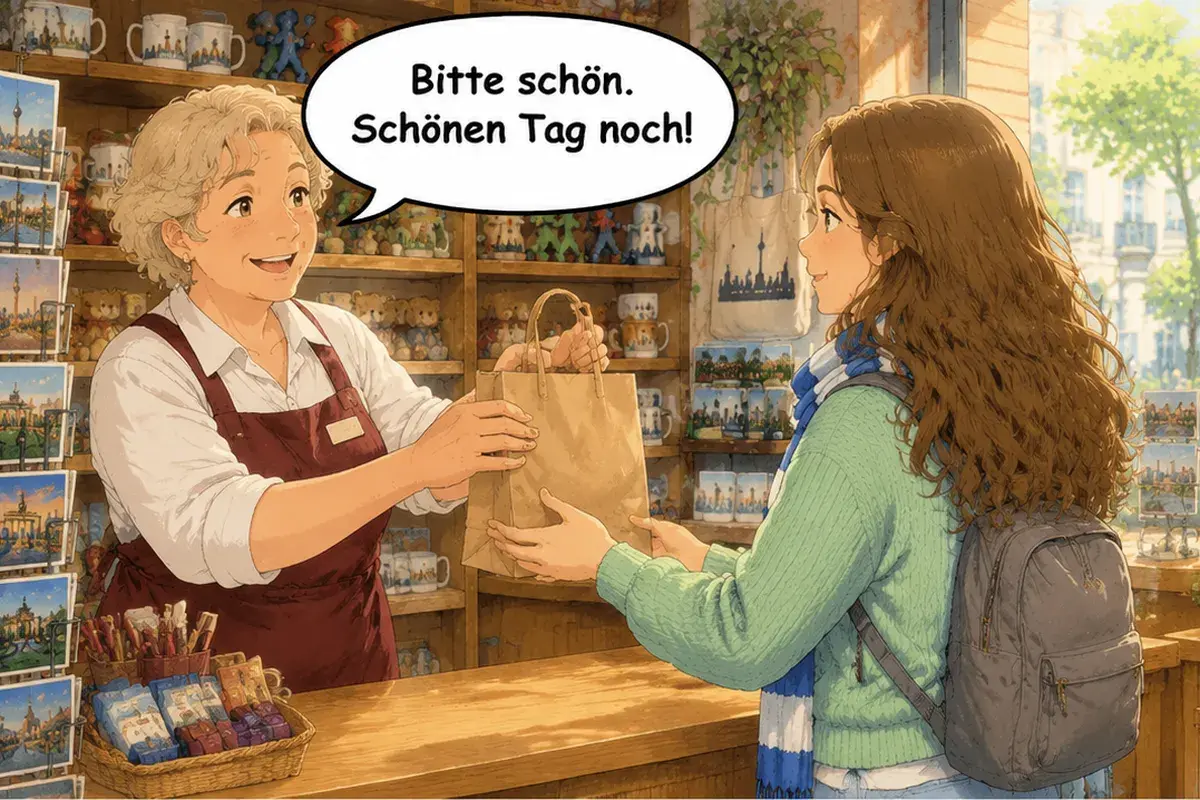
Bitte schön. Schönen Tag noch!
Here you go. Have a nice day!
- Katja
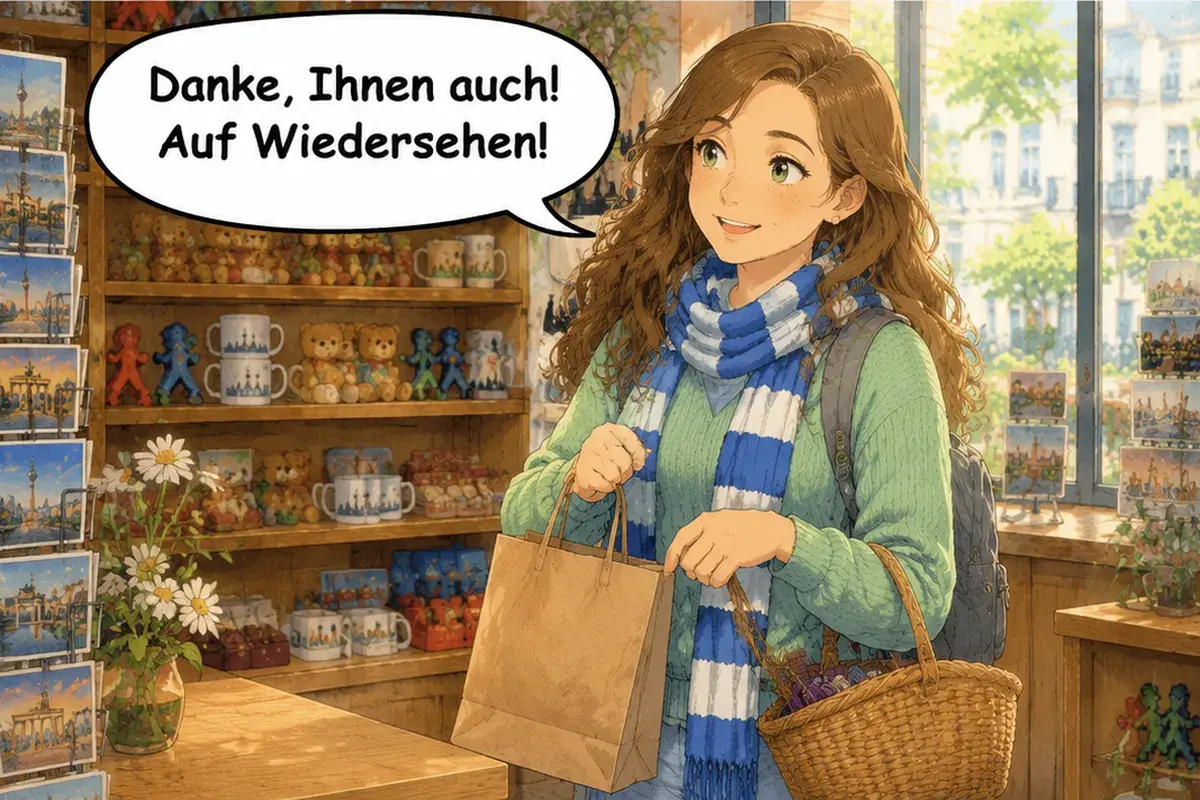
Danke, Ihnen auch! Auf Wiedersehen!
Thanks, you too! Goodbye! (formal)
Grammar for this text
- Ich suche Geschenke für meine Mutter, meinen Vater und meinen Bruder — after
fürcomes the accusative. The masculine changes:der Vaterbecomesmeinen Vater; the feminine doesn't:meine Mutter.Geschenkemeans "gifts", the plural ofdas Geschenk. - Für Ihre Mutter vielleicht Schokolade? Die schenkt man immer gern — the seller uses the formal Sie:
Ihrewith a capital I means "your".Diemeans "it" (the chocolate): it comes first, but the verbschenktis still second.man schenkt— "people give":manis the general "you" or "people", and the verb takes the er form. - Diese Tasse ist ein schönes Souvenir —
diesemeans "this" with a feminine word (die Tasse); it's a form ofdieser. Inein schönes Souvenirthe adjective gets-es, becauseSouveniris neuter. - Die nehme ich! — "I'll take it!"
Dieisdie Tasse: it comes first, andnehme(fromnehmen) stays in second place. - Süß! Aber mein Bruder ist 25 —
süßabout a small animal means "cute"; about food, "sweet". You say the number asfünfundzwanzig, literally "five-and-twenty". - Was empfehlen Sie? — a set phrase: "What do you recommend?"
empfehlenchanges its vowel (likenehmenandnimmt):er empfiehlt. With the formal Sie, the verb has the same form as with sie (they):empfehlen Sie. - Der Bär ist für mich — after
füra pronoun is in the accusative too:ichbecomesmich(unit 8), just like English "for me", not "for I".
Words and grammar of the unit: Choose gifts to take home.
Learn the words from the texts with flashcards
In the app, you can tap any word in a text to see its translation, forms and examples, and new words stick with flashcards. 15 minutes a day.
Start for freeEverything is open for free. No card needed to sign up.