

German dialogue with translation · A1 · 13 lines
Erzähl mal! Go on, tell us!
Comic · 13 panels

- Jana
Katja, erzähl mal! Du lebst in einer großen Stadt, oder?
Katja, go on, tell us! You live in a big city, right?

- Katja
Ja, das ist meine Heimat. Dort sind viele junge Leute.
Yes, that's my home. There are lots of young people there.

- Felix
Ich kenne kalte Winter nur aus Filmen. Gibt es viel Schnee?
I only know cold winters from movies. Is there a lot of snow?

- Katja
Natürlich! Minus zwanzig ist im Winter normal.
Of course! Minus twenty is normal in winter.

- Jana
Echt? Dann ist Berlin für euch warm!
Really? Then Berlin is warm for you! (to several people)

- Katja
Ja! Minus fünf ist bei uns schon Frühling.
Yes! Back home, minus five is already spring.
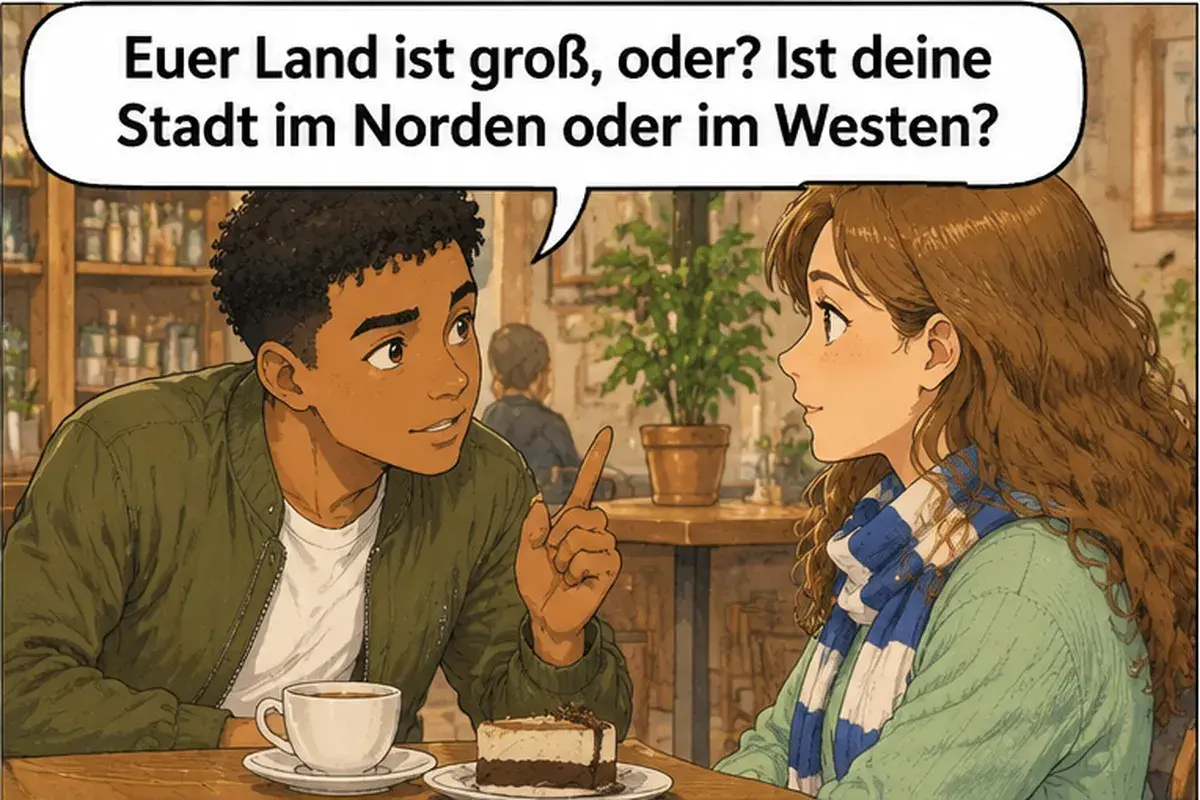
- Felix
Euer Land ist groß, oder? Ist deine Stadt im Norden oder im Westen?
Your country is big, right? (to several people) Is your city in the north or in the west?

- Katja
Nein, im Süden, weit im Osten. Bis Berlin sind es sieben Stunden Flug.
No, in the south, far in the east. It's a seven-hour flight to Berlin.

- Jana
Und was ist für dich typisch deutsch?
And what's typically German to you?

- Katja
Die Deutschen sagen immer „Genau!“ Das ist typisch.
Germans always say "Genau!" That's typical.

- Lukas
Genau! Moment, jetzt sage ich es schon wieder.
Exactly! Wait, now I'm saying it again.

- Felix
Ich habe eine Frage: Was ist bei euch typisch?
I have a question: what's typical where you're from? (to several people)

- Katja
Die Antwort ist einfach: Bei uns isst man im Winter viel Suppe.
The answer is easy: back home, people eat a lot of soup in winter.
Grammar for this text
- Katja, erzähl mal! — the du command of
erzählen:du erzählstwithoutduand-st.malmakes the request softer, like "go on" in English. - Ich kenne kalte Winter nur aus Filmen. —
kennen— to know a person, a place or a thing;wissen— to know a fact (unit 8).aus Filmen— from movies (afterauscomes the dative; for now, learn it as a whole). - Euer Land ist groß, oder? Ist deine Stadt im Norden oder im Westen? —
eueris "your" when "you" means several people you calldu(ihr). Felix means Katja and the people from her country; the city is hers, sodeine Stadt.im Norden— in the north,im Westen— in the west:im=in+dem. - Nein, im Süden, weit im Osten. Bis Berlin sind es sieben Stunden Flug. — an answer with no verb, just like in English ("No, in the south.").
sind esuses the impersonales, as inEs regnet(unit 11); the verb issindbecause there are several hours. - Dann ist Berlin für euch warm! —
euchis "you" as an object forihr(unit 8):für euch— for you (several people). Katja's answer,Minus fünf ist bei uns schon Frühling, is a joke: minus five already feels like spring to her.bei uns— back home, where we live. - Die Deutschen sagen immer „Genau!“ —
der Deutsche(a German man) takes adjective endings:ein Deutscher,eine Deutsche; the plural isdie Deutschen. - Bei uns isst man im Winter viel Suppe. —
isstis the form ofessenforerand forman(unit 4:essen→isst).manmeans people in general: "back home, people eat …".
Words and grammar of the unit: Spend an evening with friends.
Learn the words from the texts with flashcards
In the app, you can tap any word in a text to see its translation, forms and examples, and new words stick with flashcards. 15 minutes a day.
Start for freeEverything is open for free. No card needed to sign up.