

German dialogue with translation · A1 · 14 lines
Probieren Sie mal! Have a taste!
Comic · 14 panels
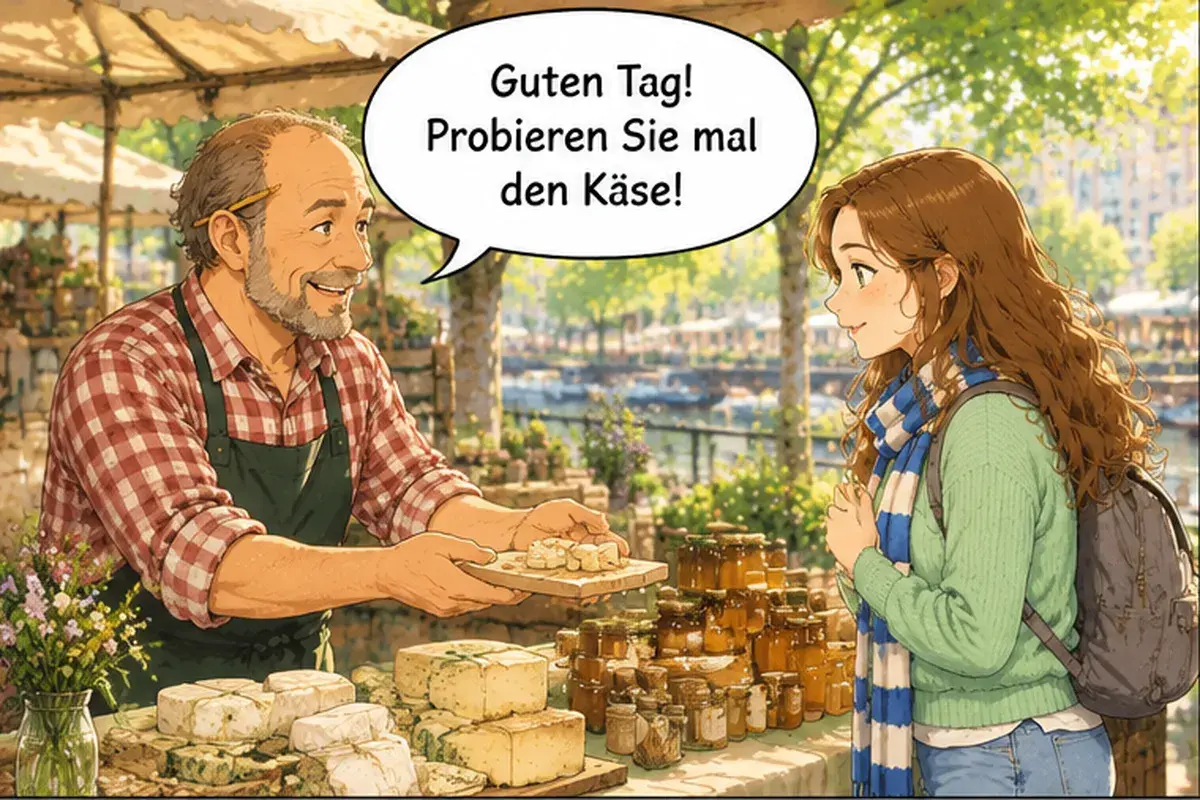
- Verkäufer
Guten Tag! Probieren Sie mal den Käse!
Hello! Try the cheese! (formal)

- Katja
Der ist frisch und gut! Der Markt am Kanal ist schön.
It's fresh and good! The market by the canal is nice.
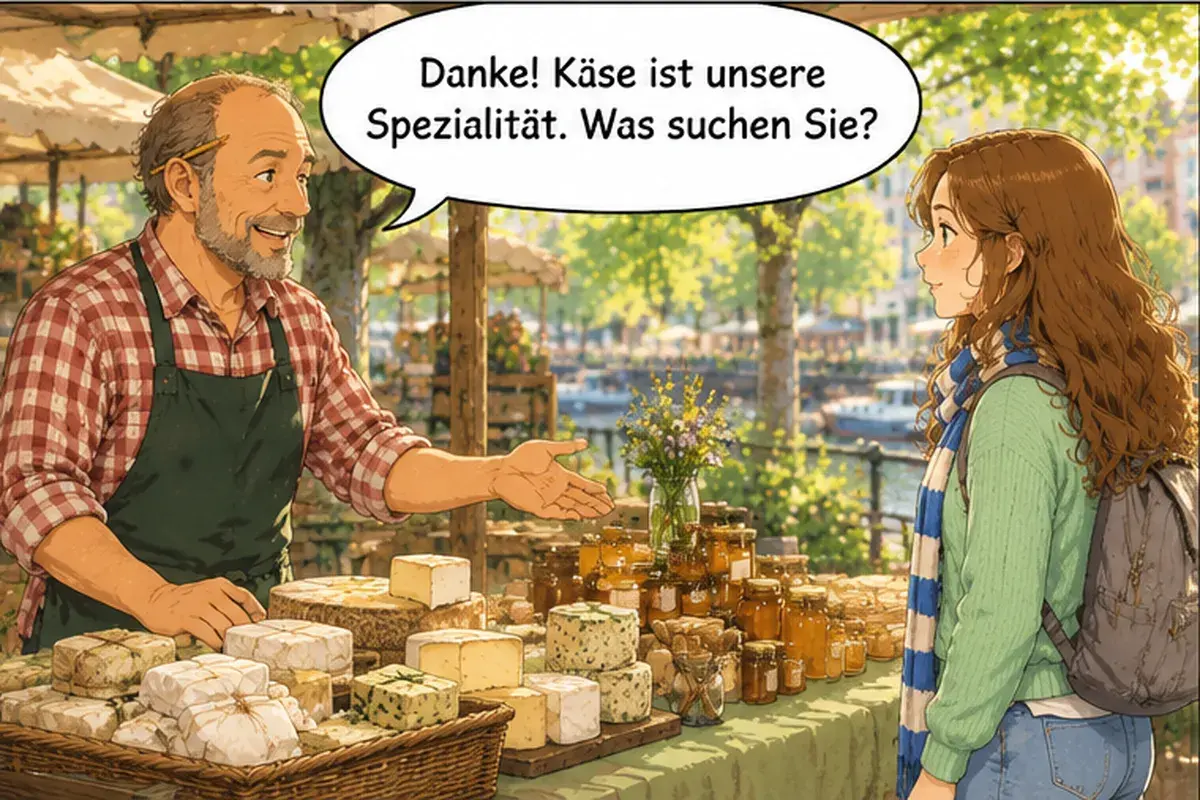
- Verkäufer
Danke! Käse ist unsere Spezialität. Was suchen Sie?
Thank you! Cheese is our specialty. What are you looking for? (formal)
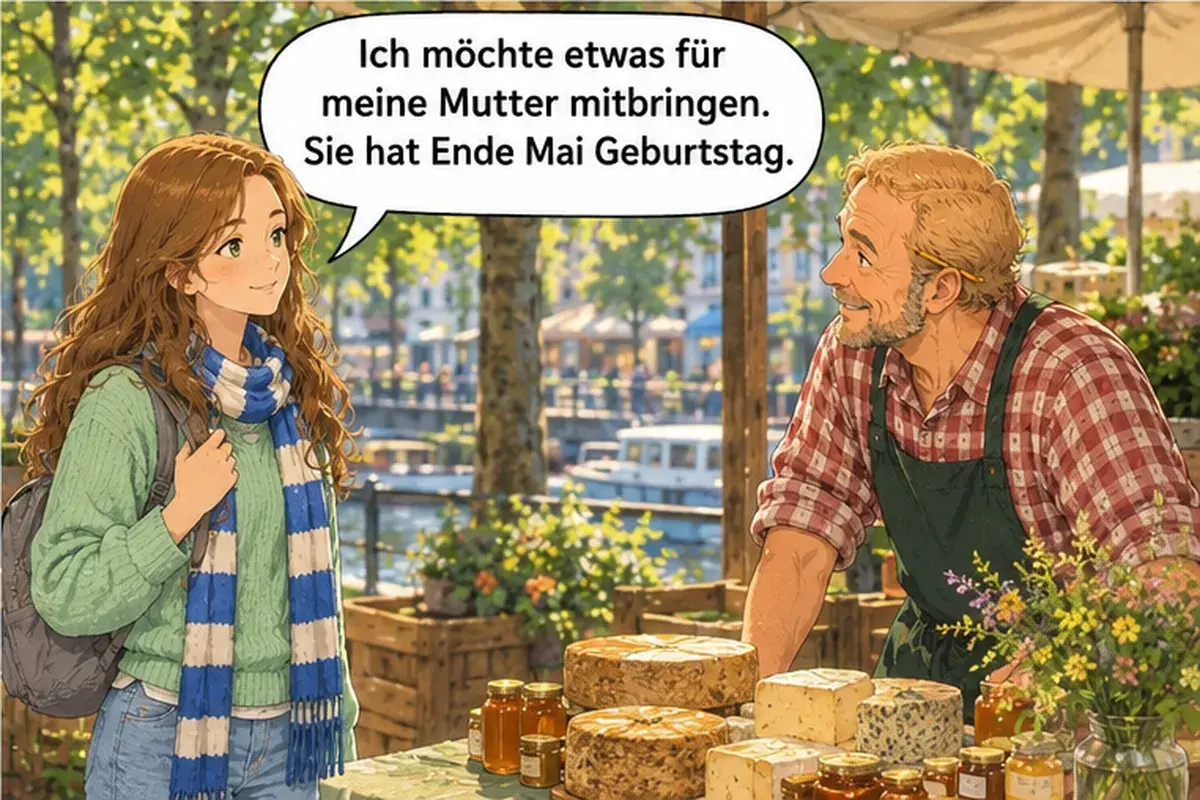
- Katja
Ich möchte etwas für meine Mutter mitbringen. Sie hat Ende Mai Geburtstag.
I'd like to bring something back for my mother. Her birthday is at the end of May.
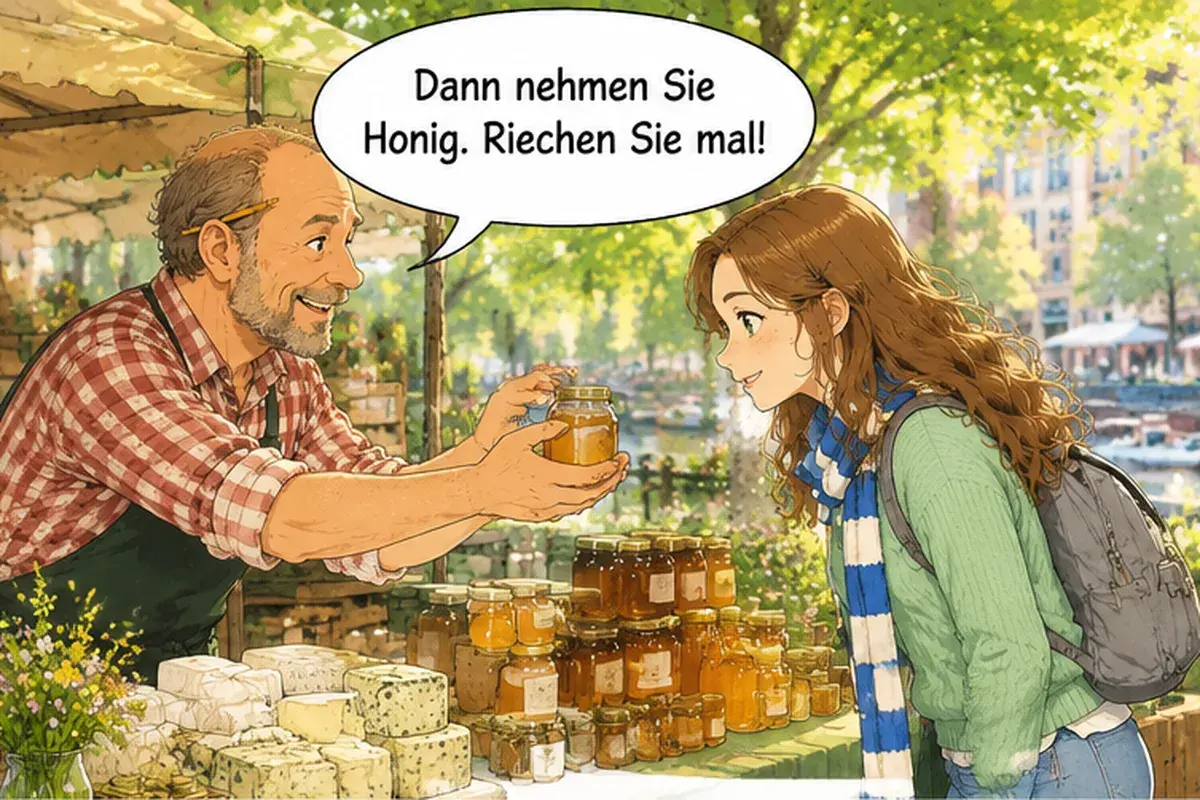
- Verkäufer
Dann nehmen Sie Honig. Riechen Sie mal!
Then take some honey. Have a smell! (formal)

- Katja
Der riecht gut! Woher kommt er?
It smells good! Where does it come from?
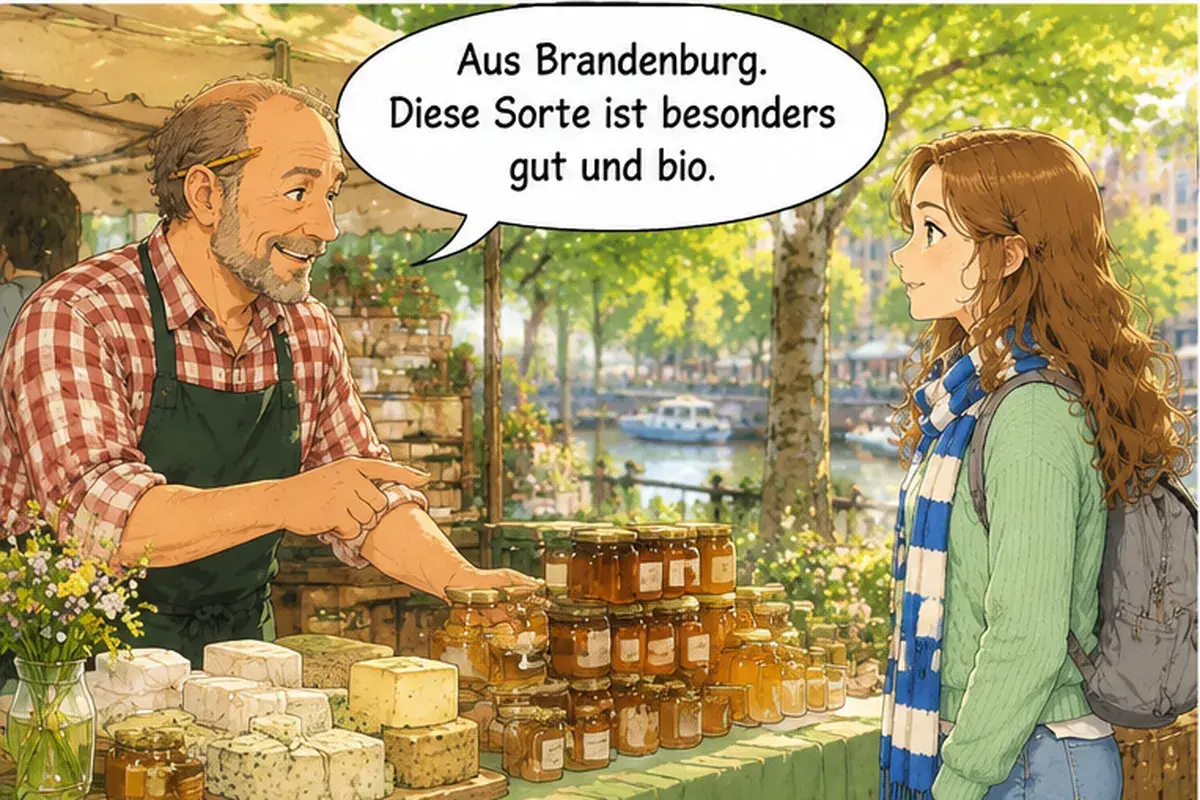
- Verkäufer
Aus Brandenburg. Diese Sorte ist besonders gut und bio.
From Brandenburg. This kind is especially good and organic.
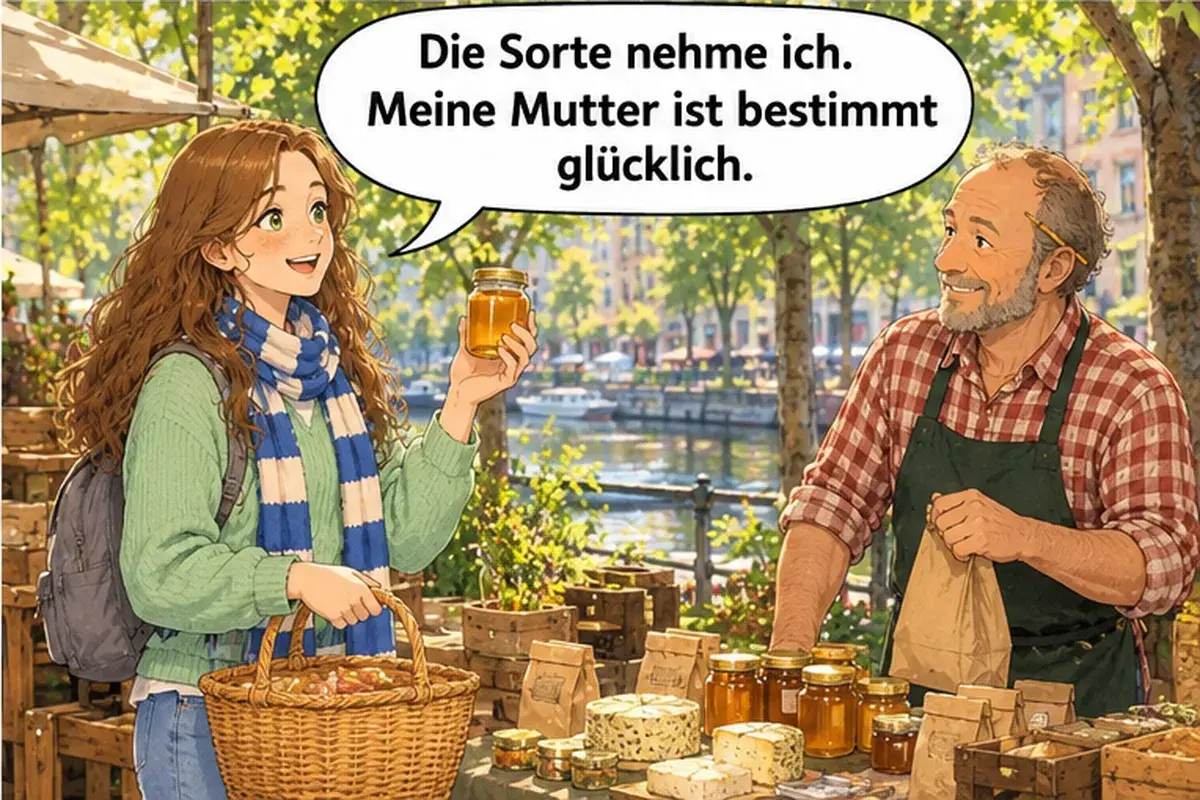
- Katja
Die Sorte nehme ich. Meine Mutter ist bestimmt glücklich.
I'll take that kind. My mother will definitely be happy.
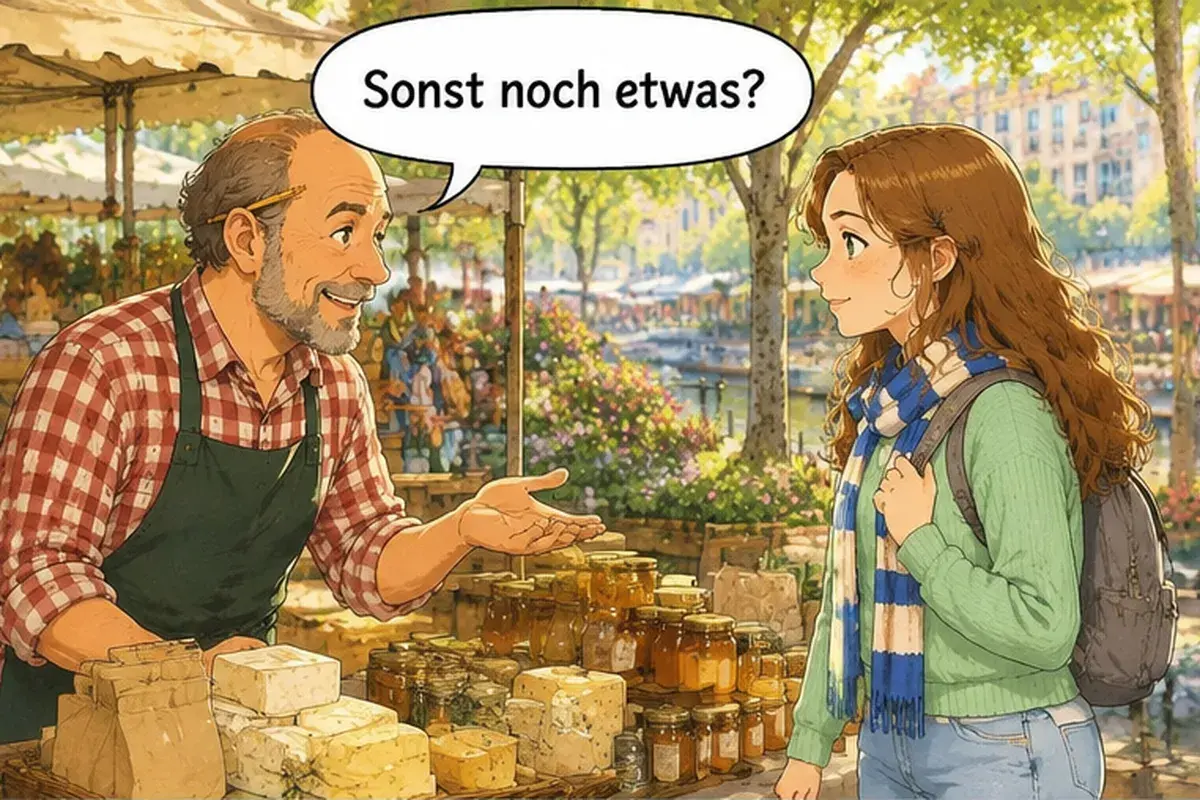
- Verkäufer
Sonst noch etwas?
Anything else?
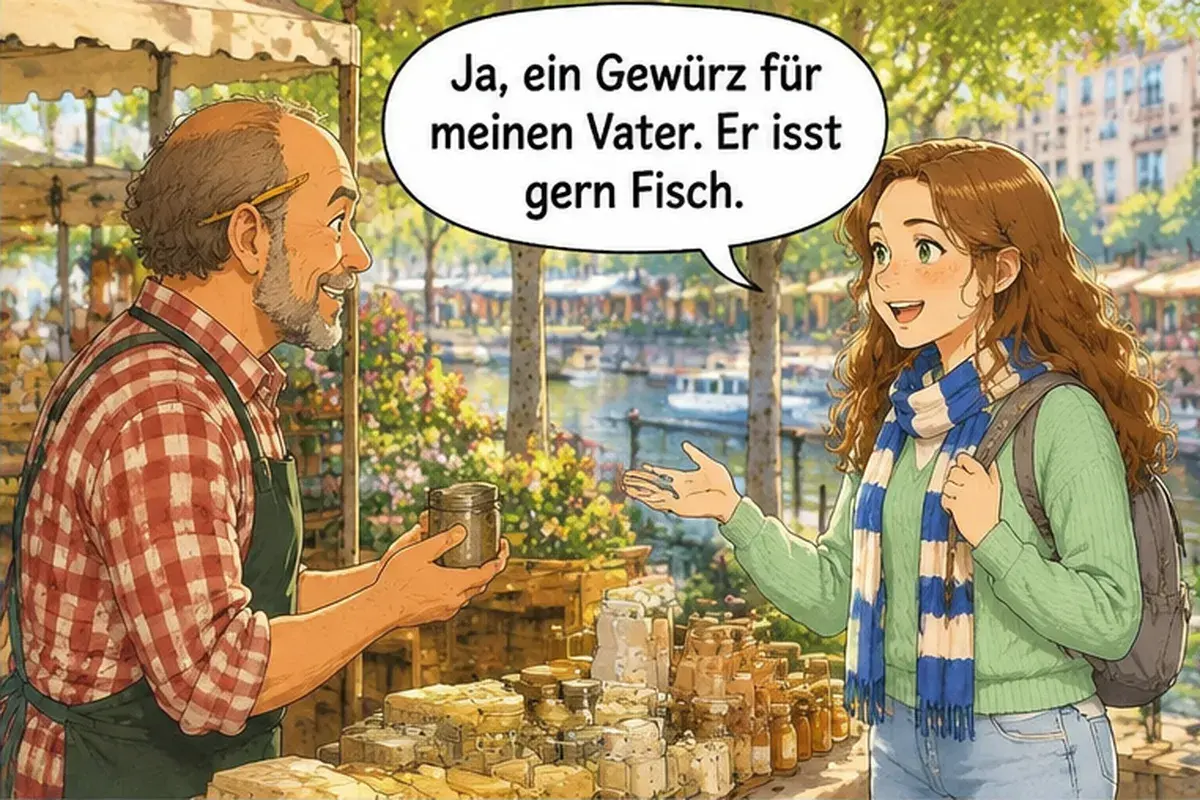
- Katja
Ja, ein Gewürz für meinen Vater. Er isst gern Fisch.
Yes, a spice for my father. He likes eating fish.
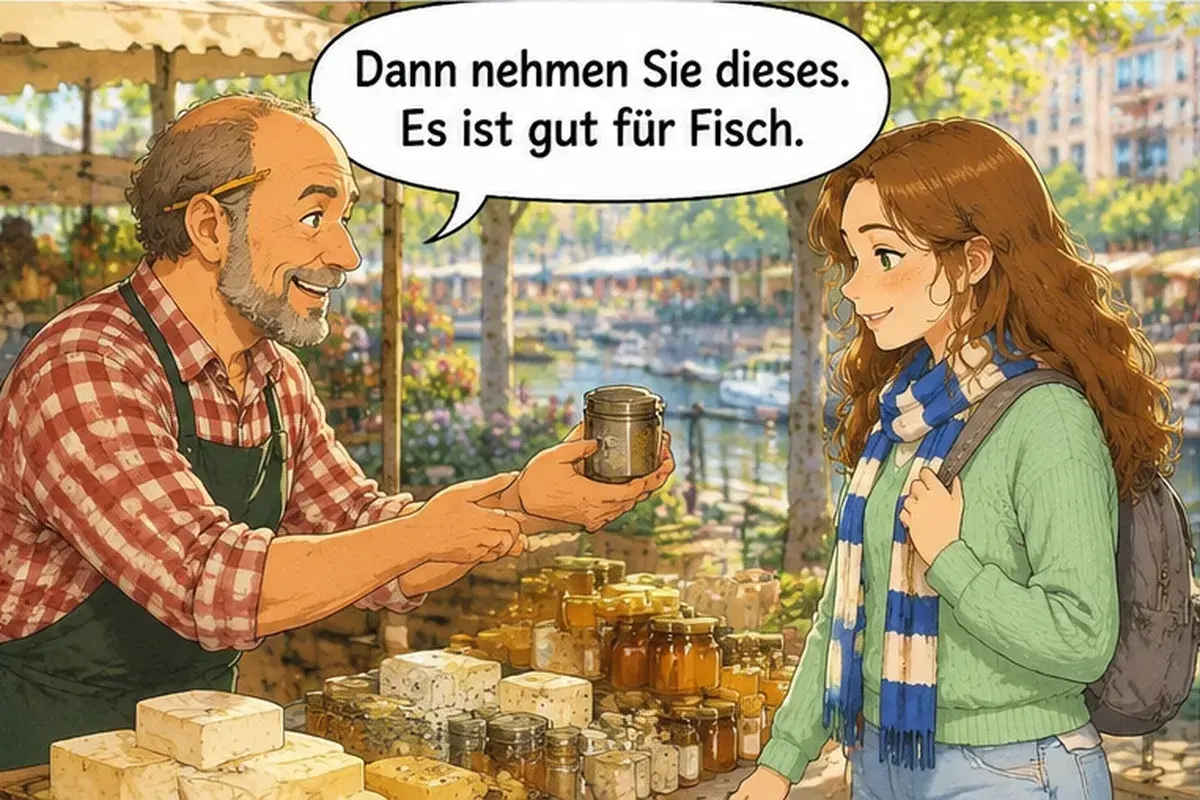
- Verkäufer
Dann nehmen Sie dieses. Es ist gut für Fisch.
Then take this one. It's good for fish. (formal)

- Katja
Super! Können Sie das bitte einpacken? Es ist eine Überraschung.
Great! Can you wrap that, please? It's a surprise. (formal)
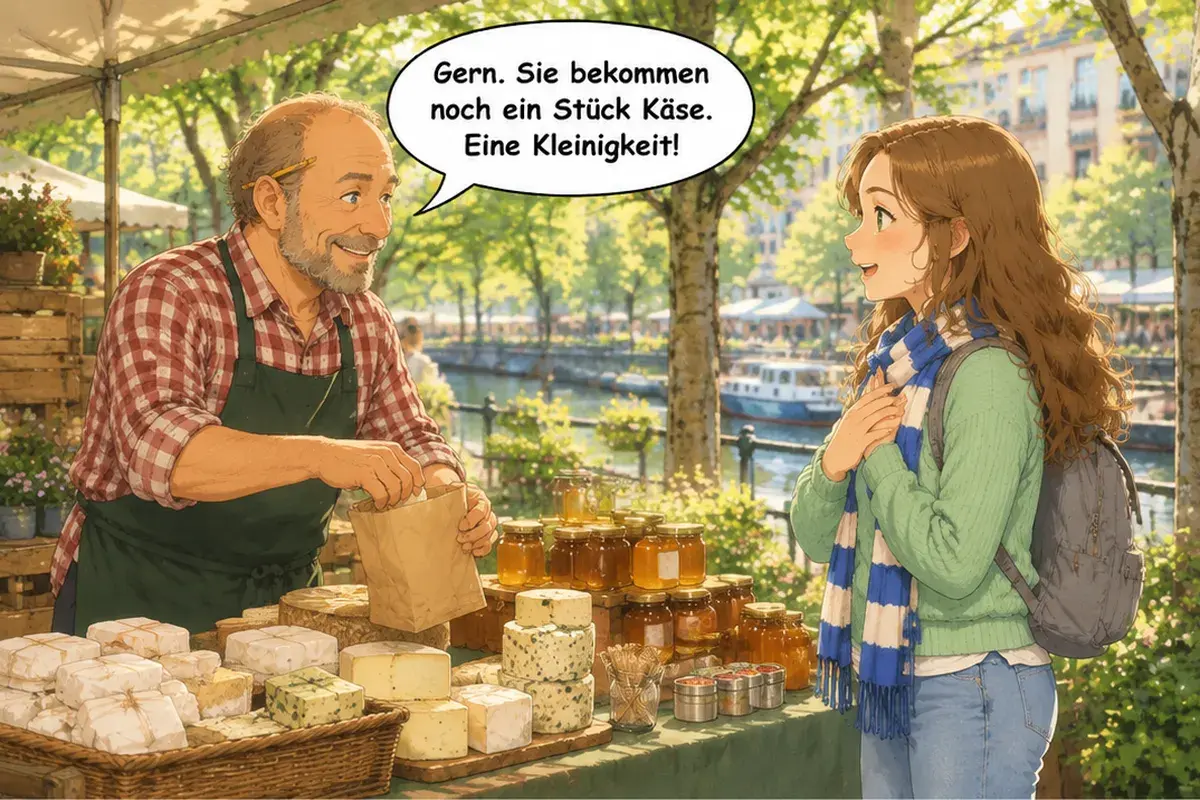
- Verkäufer
Gern. Sie bekommen noch ein Stück Käse. Eine Kleinigkeit!
Sure. You also get a piece of cheese. A little something! (formal)
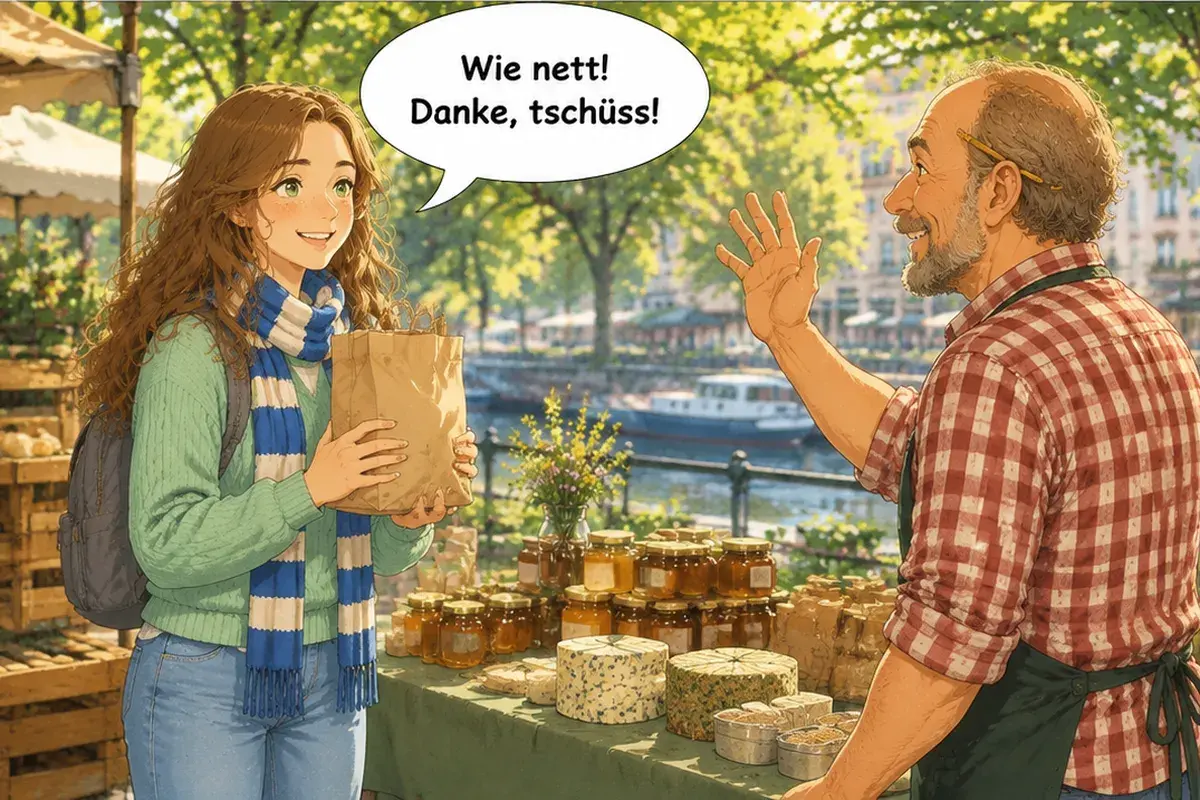
- Katja
Wie nett! Danke, tschüss!
How nice! Thanks, bye!
Grammar for this text
- Probieren Sie mal den Käse — a polite command: the verb first, then
Sie(likeGehen Sie geradeaus, unit 8).malmakes it softer and friendlier.der Käsebecomesden Käsebecause it's the thing being tried (the accusative, unit 5). - Der riecht gut! Woher kommt er? — in speech, people often say
derinstead oferfor a masculine word: here it'sder Honig. English says "it", but German useserorderbecauseHonigis masculine.riechtis fromriechen(to smell); Riechen Sie mal — "have a smell".Woher kommt er?— "Where does it come from?" (unit 2). The answerAus Brandenburghas no verb, just like English "From Brandenburg." Brandenburg is the state around Berlin. - Ich möchte etwas für meine Mutter mitbringen —
möchteand an infinitive at the end.mitbringen— "to bring along": the prefixmitsplits off (ich bringe Honig mit), but aftermöchtethe verb stays whole. - Sie hat Ende Mai Geburtstag — at the start of a sentence you can't see if
Siehas a capital letter; here it means "she" (the mother).hat Geburtstag— literally "has birthday": "her birthday is", with no article.Ende Mai— "at the end of May". - Ein Gewürz für meinen Vater. Er isst gern Fisch —
das Gewürzis neuter, so it'sein Gewürz.isstis the er form ofessen(unit 4); verb +gernmeans "likes doing". - Können Sie das bitte einpacken? — a polite request:
Können Sie …?with the infinitive at the end.einpacken— "to wrap":einsplits off (ich packe das ein), but the infinitive is one word. - Sie bekommen noch ein Stück Käse —
bekommenmeans "to get", not "to become". HereSieis the formal "you": the seller is talking to Katja. A small free extra with a purchase iseine Kleinigkeit, "a little something".
Words and grammar of the unit: Choose gifts to take home.
Learn the words from the texts with flashcards
In the app, you can tap any word in a text to see its translation, forms and examples, and new words stick with flashcards. 15 minutes a day.
Start for freeEverything is open for free. No card needed to sign up.