

Portuguese dialogue with translation · B1 · 18 lines
Traduz para mim, por favor! Translate it for me, please!
Comic · 14 panels
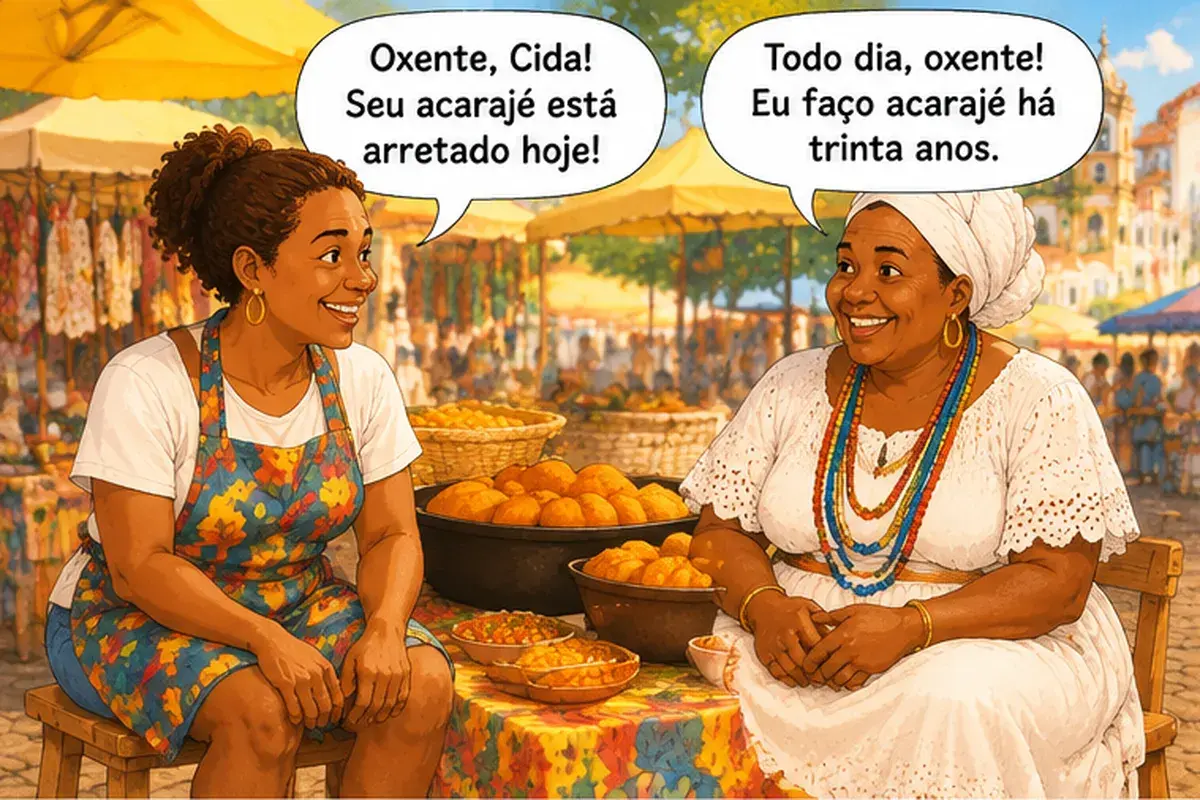
- Vendedora
Oxente, Cida! Seu acarajé está arretado hoje!
Oh my, Cida! Your acarajé is awesome today!
- Dona Cida
Todo dia, oxente! Eu faço acarajé há trinta anos.
Every day, come on! I've been making acarajé for thirty years.
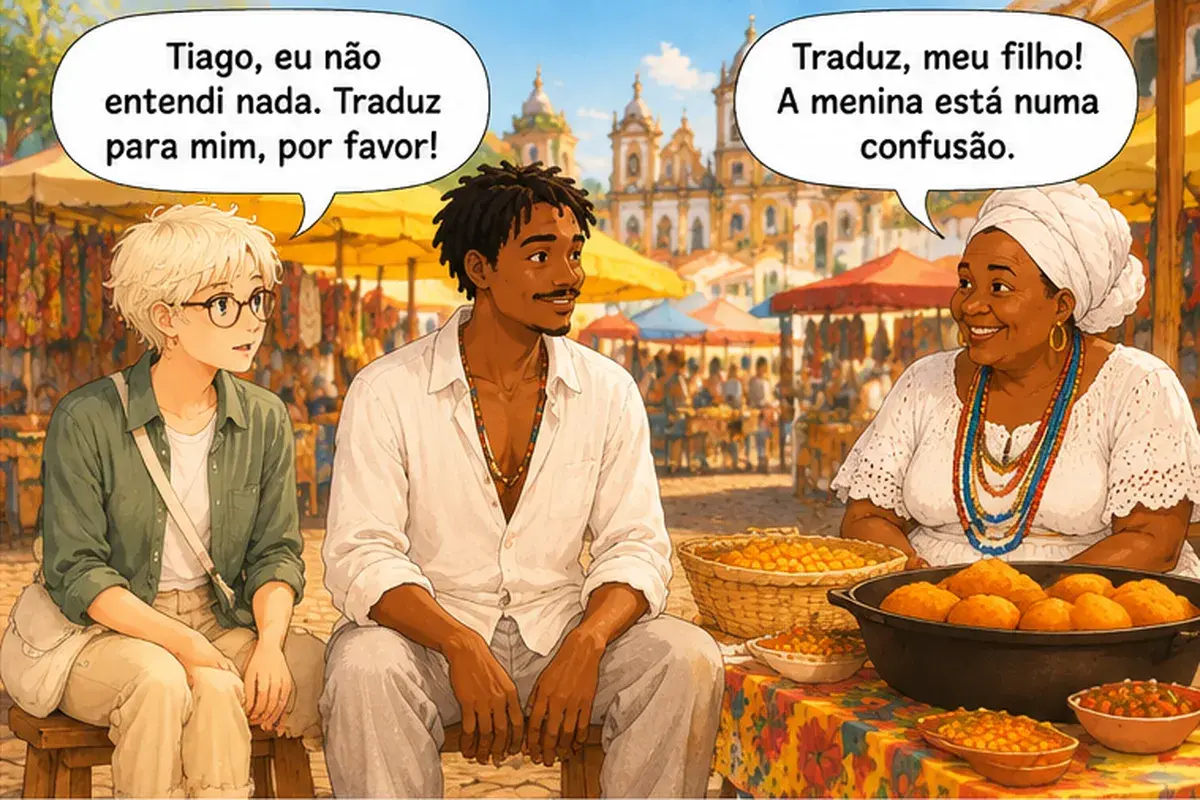
- Nina
Tiago, eu não entendi nada. Traduz para mim, por favor!
Tiago, I didn't understand a thing. Translate it for me, please!
- Dona Cida
Traduz, meu filho! A menina está numa confusão.
Translate it, son! The girl is all mixed up.
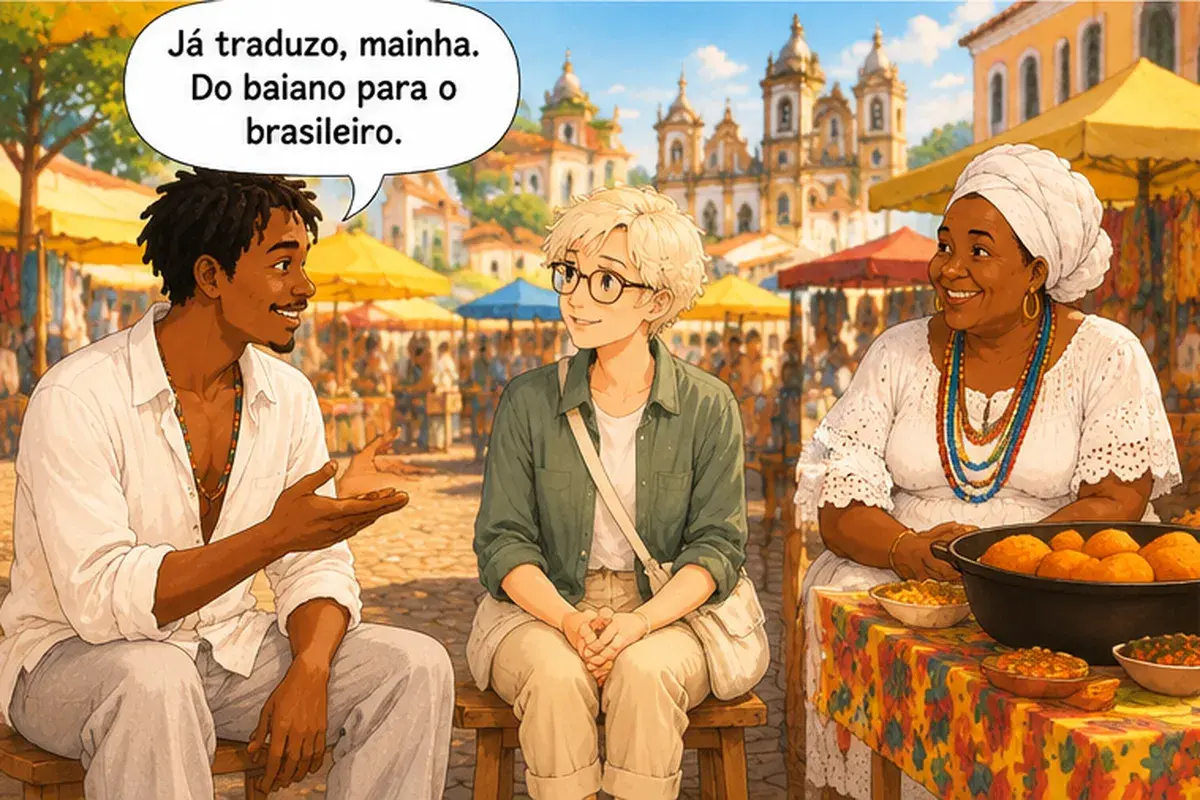
- Tiago
Já traduzo, mainha. Do baiano para o brasileiro.
I'll translate right now, Mom. From Bahian into Brazilian.
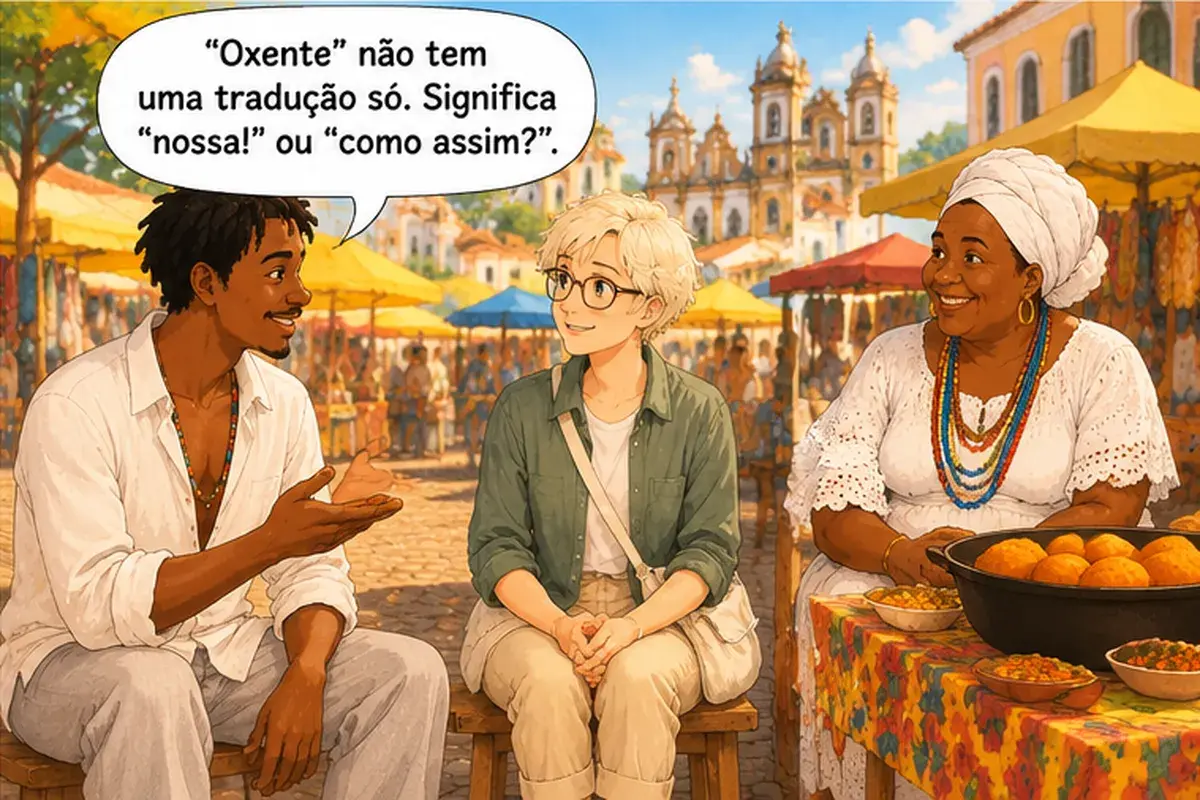
- Tiago
“Oxente” não tem uma tradução só. Significa “nossa!” ou “como assim?”.
"Oxente" doesn't have just one translation. It means "wow!" or "what do you mean?".
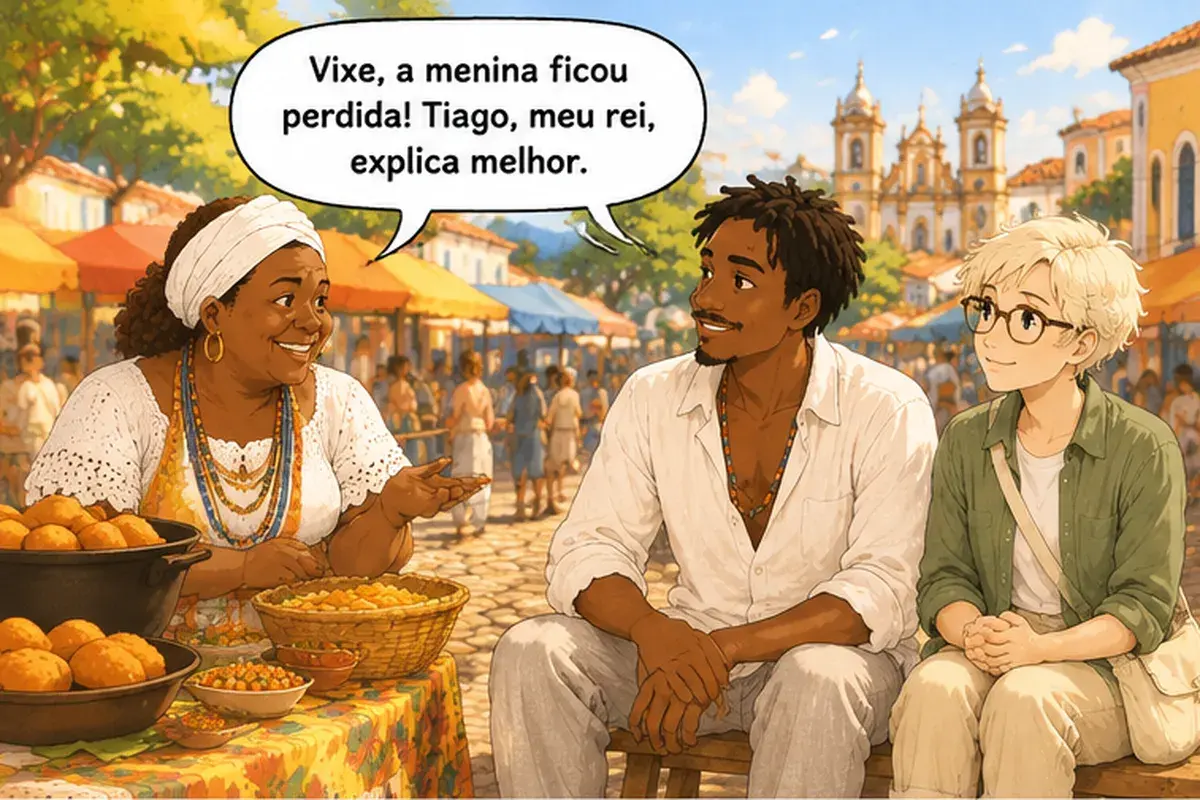
- Vendedora
Vixe, a menina ficou perdida! Tiago, meu rei, explica melhor.
Uh-oh, the girl is lost! Tiago, dear, explain it better.
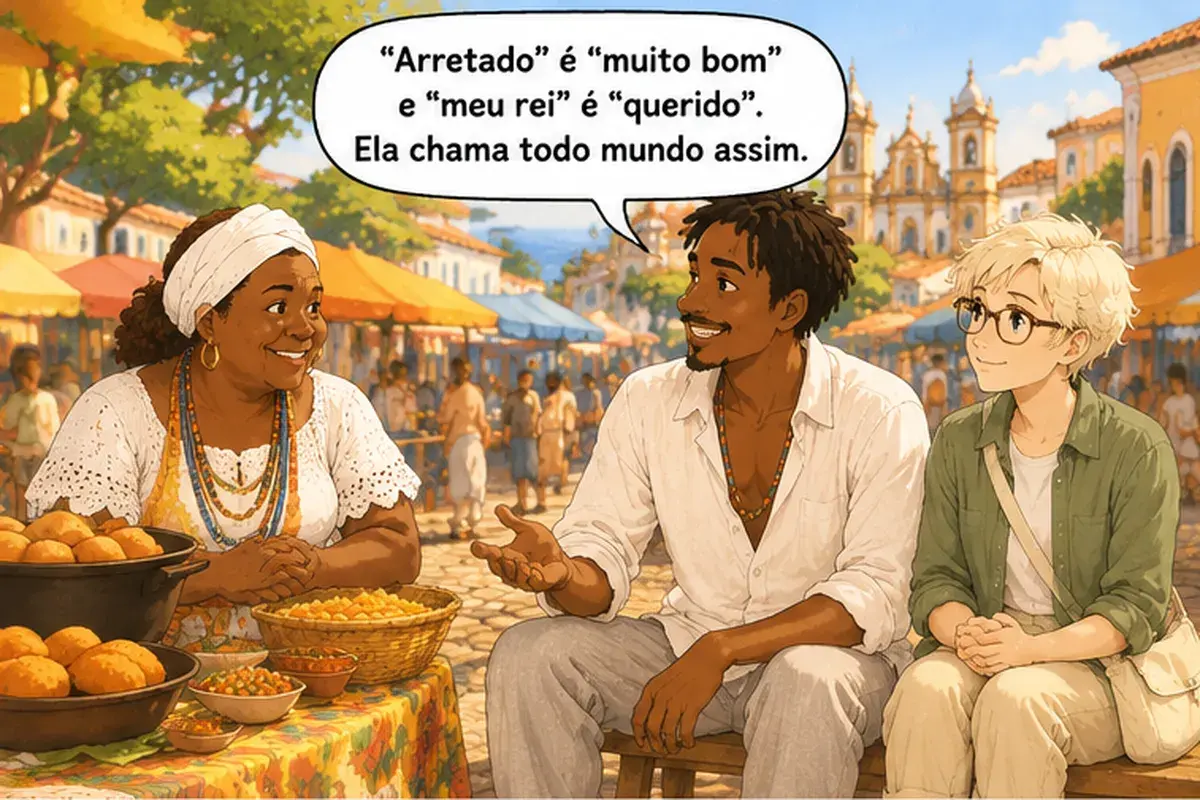
- Tiago
“Arretado” é “muito bom” e “meu rei” é “querido”. Ela chama todo mundo assim.
"Arretado" means "very good" and "meu rei" means "dear". She calls everyone that.

- Nina
Eu confundo tudo: isso é gíria ou é outro dialeto?
I mix everything up: is this slang or another dialect?
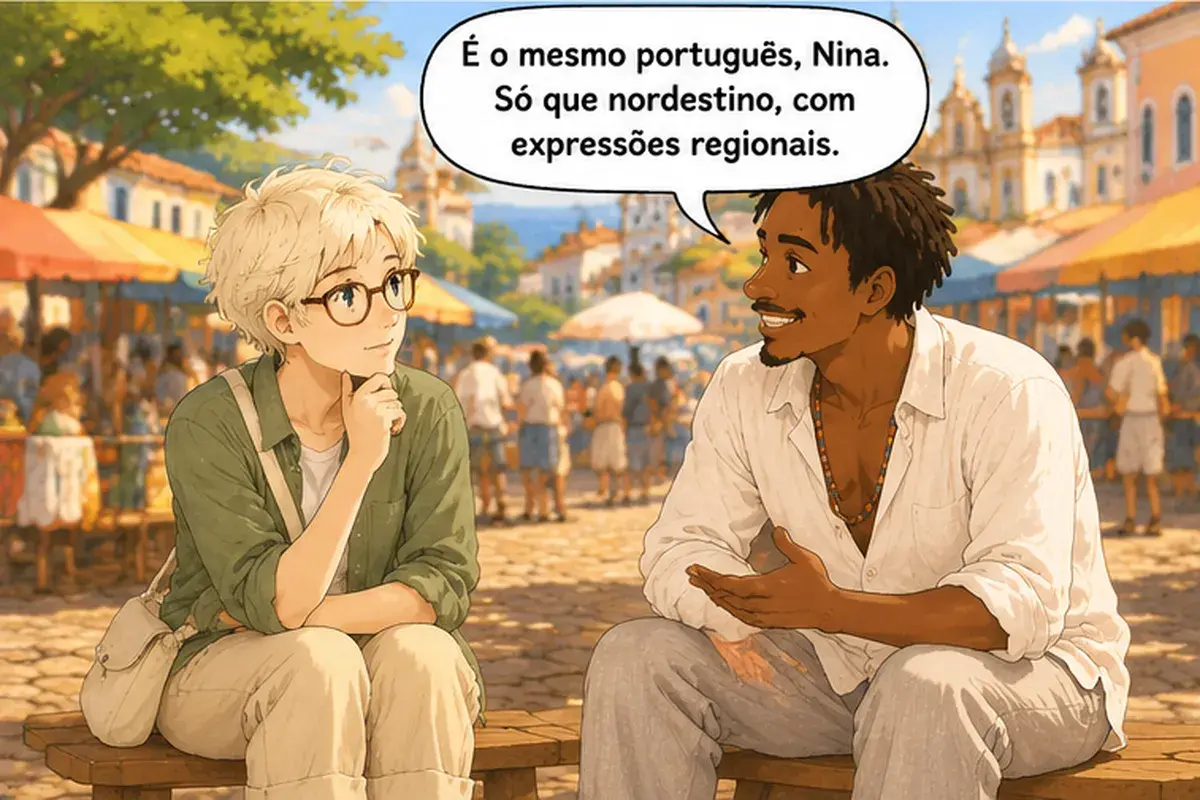
- Tiago
É o mesmo português, Nina. Só que nordestino, com expressões regionais.
It's the same Portuguese, Nina. Just Northeastern, with regional expressions.

- Nina
Espera! Eu achei que “mainha” era o apelido da dona Cida.
Wait! I thought "mainha" was Dona Cida's nickname.

- Tiago
Mainha é mãe, painho é pai. Só dizemos isso em casa e com a família.
Mainha is mom, painho is dad. We only say that at home and with family.
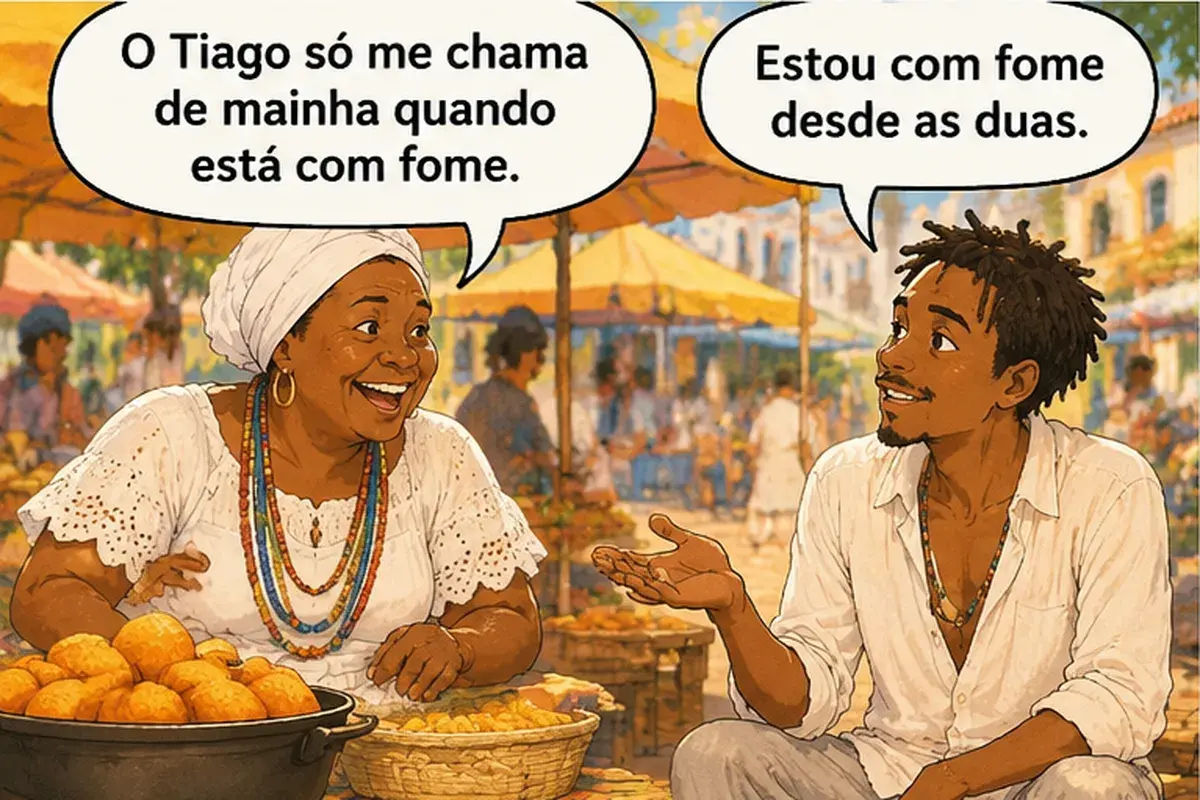
- Dona Cida
O Tiago só me chama de mainha quando está com fome.
Tiago only calls me mainha when he's hungry.
- Tiago
Estou com fome desde as duas.
I've been hungry since two.
- Nina
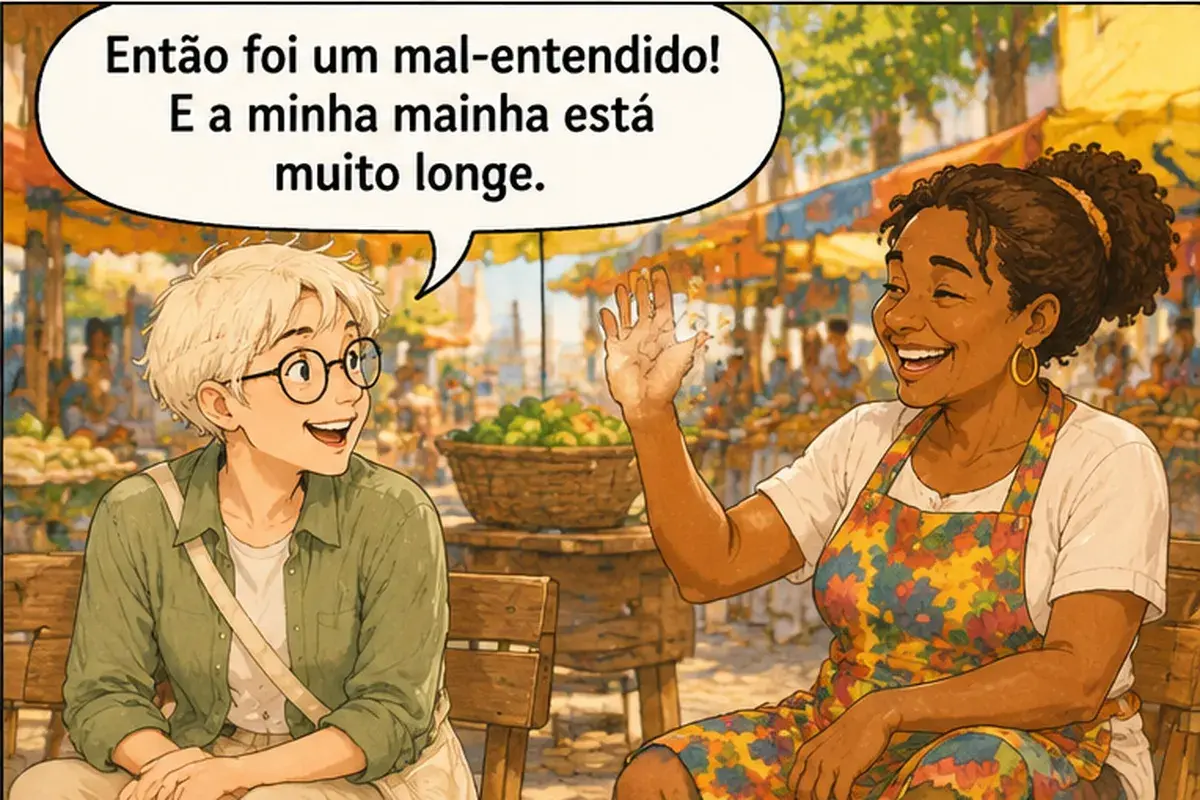
Então foi um mal-entendido! E a minha mainha está muito longe.
So it was a misunderstanding! And my mainha is very far away.
- Vendedora
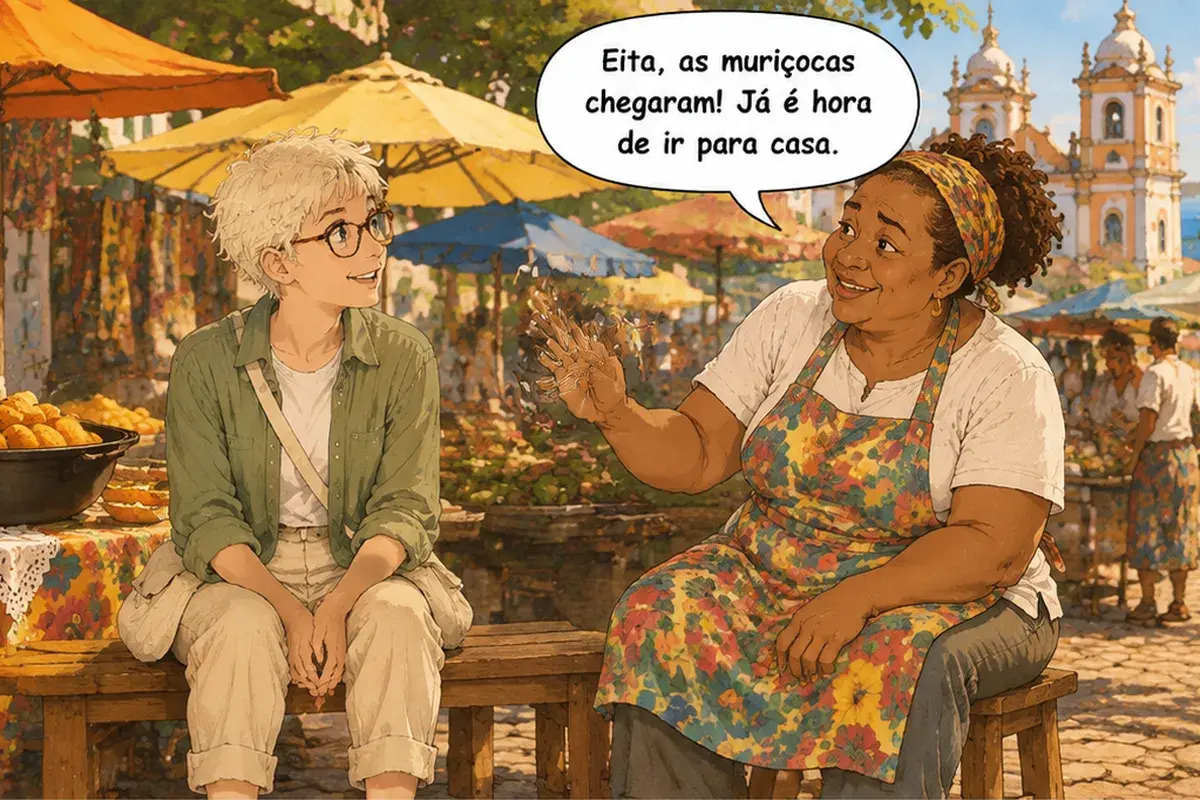
Eita, as muriçocas chegaram! Já é hora de ir para casa.
Whoa, the mosquitoes are here! It's already time to go home.
- Nina
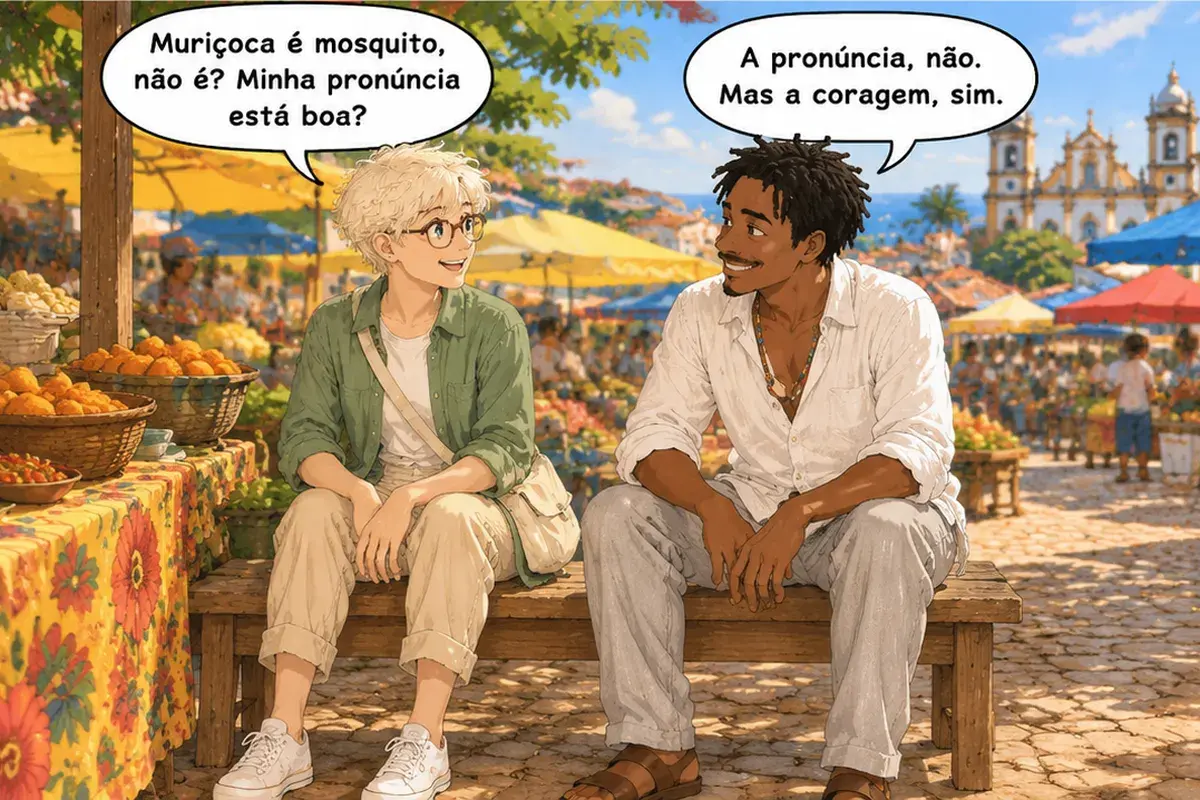
Muriçoca é mosquito, não é? Minha pronúncia está boa?
Muriçoca is a mosquito, right? Is my pronunciation good?
- Tiago
A pronúncia, não. Mas a coragem, sim.
Your pronunciation, no. But your courage, yes.
Grammar for this text
- Oxente, Cida! — oxente is an exclamation from the Northeast (Bahia, Pernambuco, Ceará): "oh my!", "come on!". People say it at home and with friends; not to a boss, a clerk or a stranger.
- está arretado — arretado is casual Northeastern "awesome, great" (in Pernambuco it can also mean "hot-tempered"; we use the first meaning). It changes with gender: arretada.
- Eu faço acarajé há trinta anos — há + time with the present tense: "I've been making acarajé for thirty years". The same with desde: Estou com fome desde as duas — I've been hungry since two.
- Vixe, a menina ficou perdida! Tiago, meu rei — vixe is "uh-oh!", heard all over Brazil, most of all in the Northeast. meu rei is an affectionate "dear" (literally "my king"), especially in Bahia; not to a stranger in a serious conversation.
- Mainha é mãe, painho é pai — affectionate Bahian words, only at home and with close family. Tiago calls Dona Cida that, so Nina took mainha for a nickname.
- Eita, as muriçocas chegaram! — eita is another Northeastern "whoa!". muriçoca is "mosquito" in the Northeast (in São Paulo pernilongo, and mosquito is understood everywhere).
- Do baiano para o brasileiro — a joke: baiano isn't a separate language, just the local way of speaking. There's one language: Portuguese.
Words and grammar of the unit: Understand speech from the Northeast.
Learn the words from the texts with flashcards
In the app, you can tap any word in a text to see its translation, forms and examples, and new words stick with flashcards. 15 minutes a day.
Start for freeEverything is open for free. No card needed to sign up.