

Portuguese dialogue with translation · B1 · 18 lines
Não sei, só sei que foi assim I don't know, I just know that's how it was
Comic · 17 panels
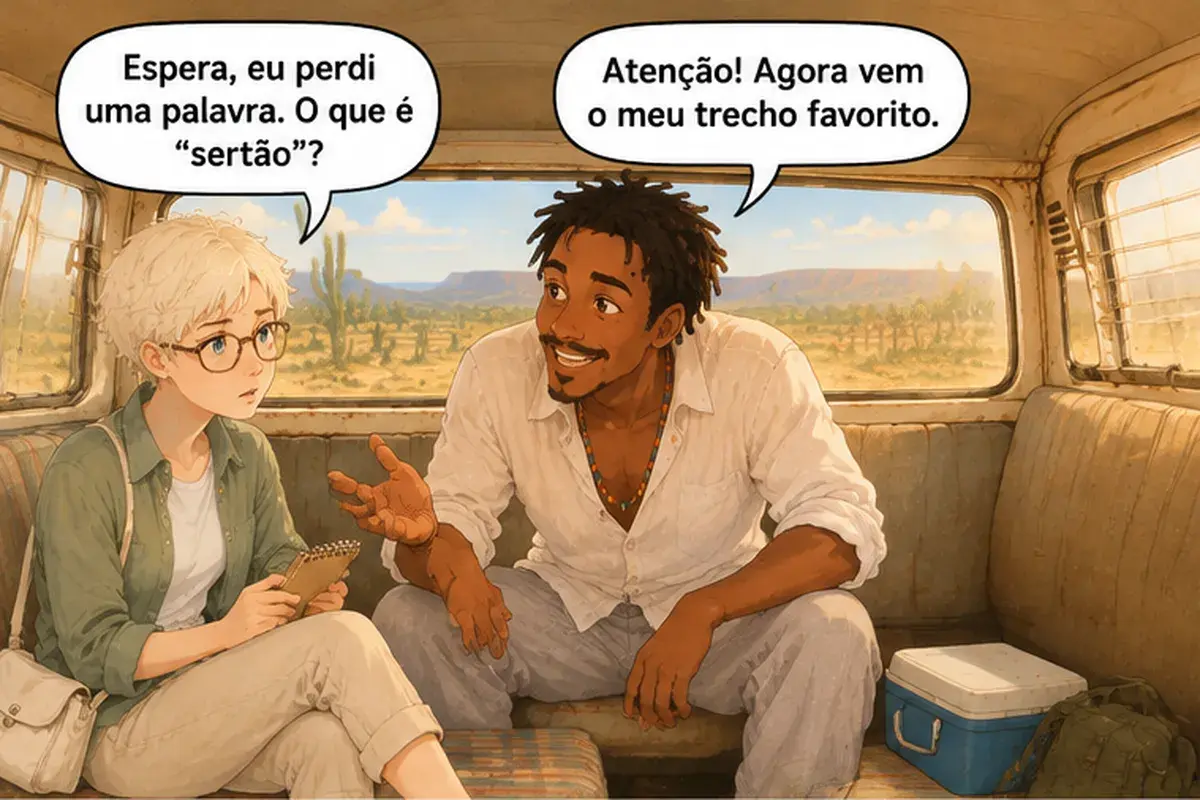
- Tiago
Atenção! Agora vem o meu trecho favorito.
Attention! Now comes my favorite part.
- Nina
Espera, eu perdi uma palavra. O que é “sertão”?
Wait, I missed a word. What's "sertão"?
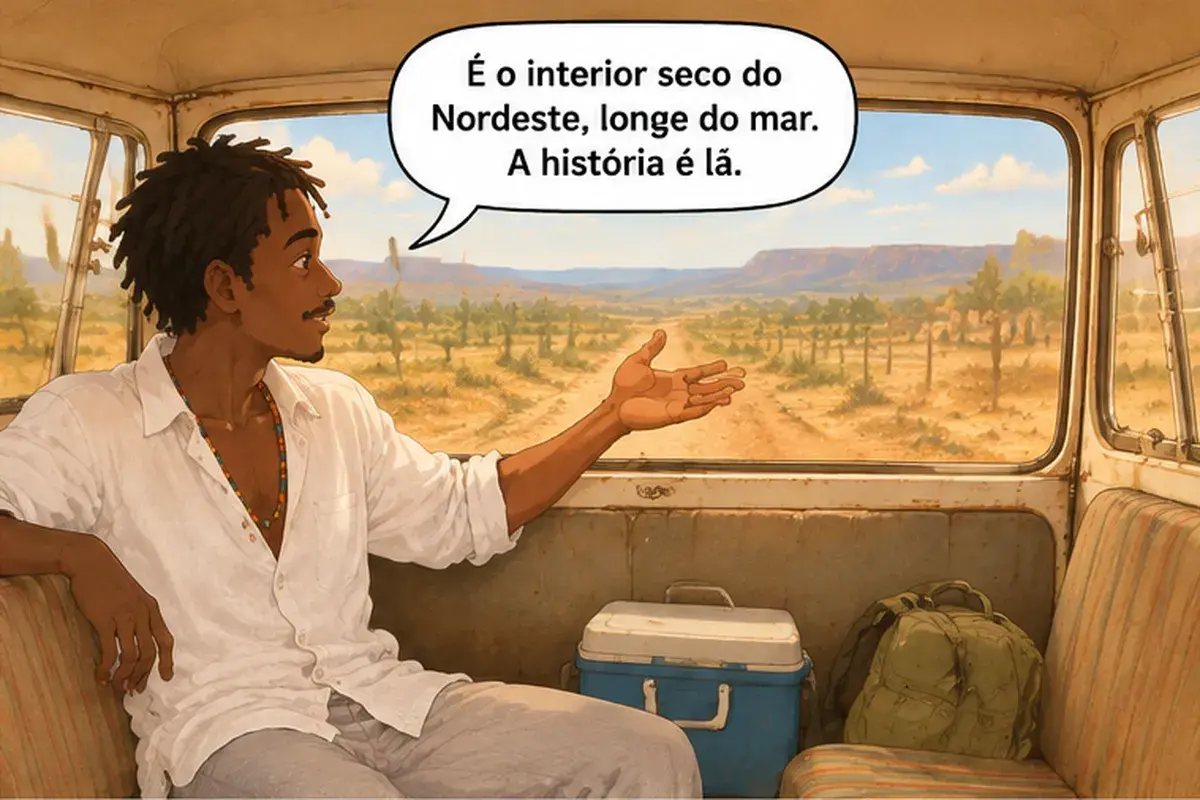
- Tiago
É o interior seco do Nordeste, longe do mar. A história é lá.
It's the dry backcountry of the Northeast, far from the sea. The story is set there.
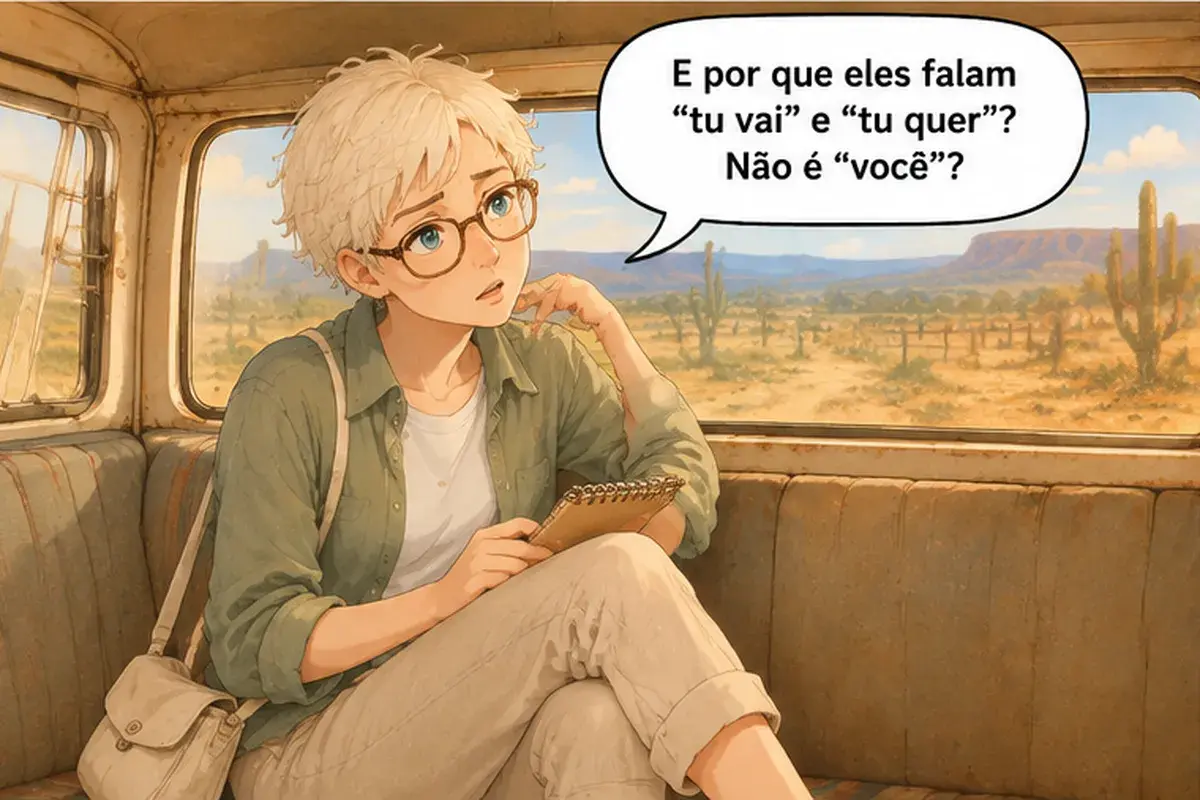
- Nina
E por que eles falam “tu vai” e “tu quer”? Não é “você”?
And why do they say "tu vai" and "tu quer"? Isn't it "você"?
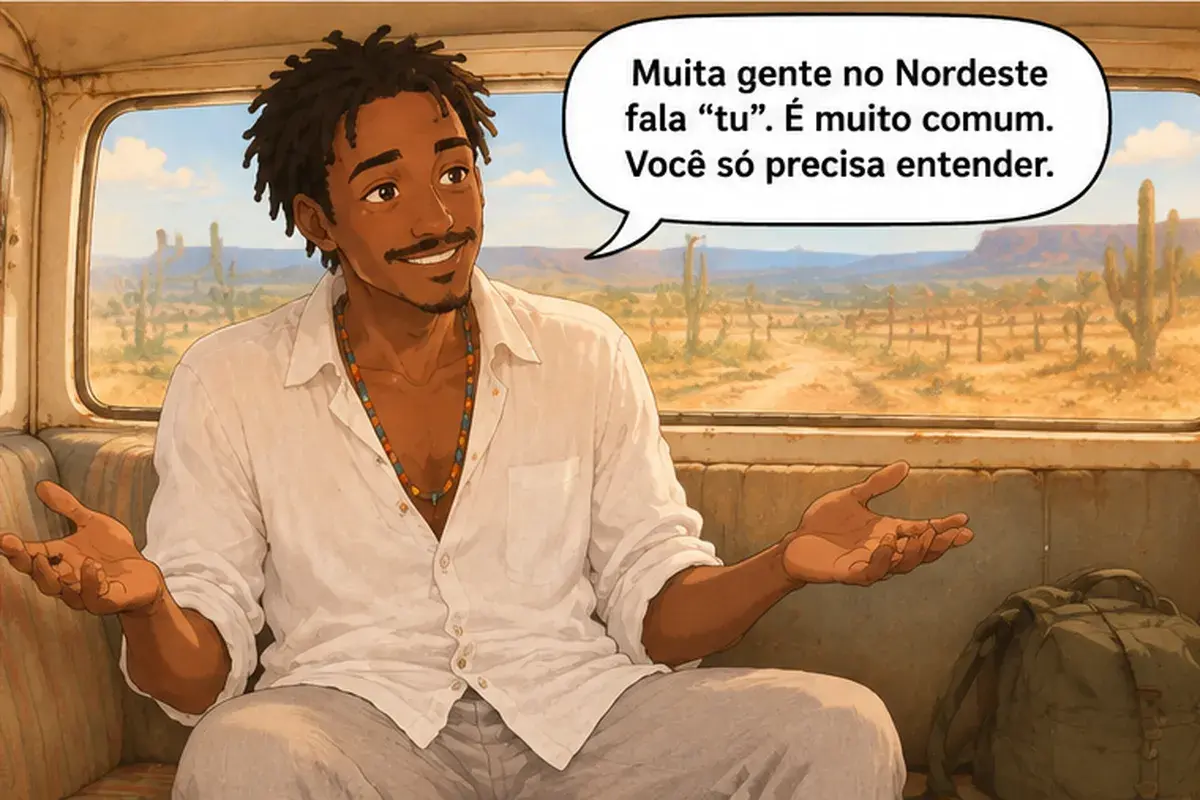
- Tiago
Muita gente no Nordeste fala “tu”. É muito comum. Você só precisa entender.
A lot of people in the Northeast say "tu". It's very common. You just need to understand it.
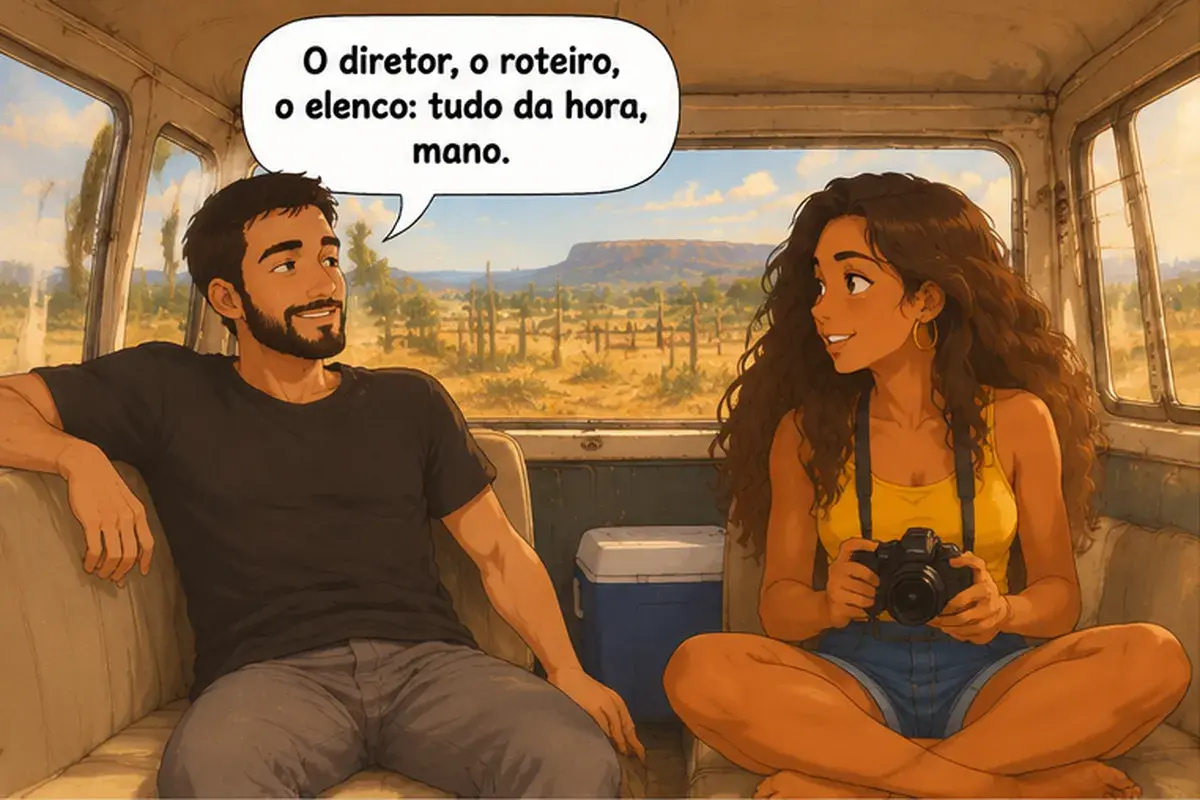
- Léo
O diretor, o roteiro, o elenco: tudo da hora, mano.
The director, the script, the cast: it's all cool, bro.
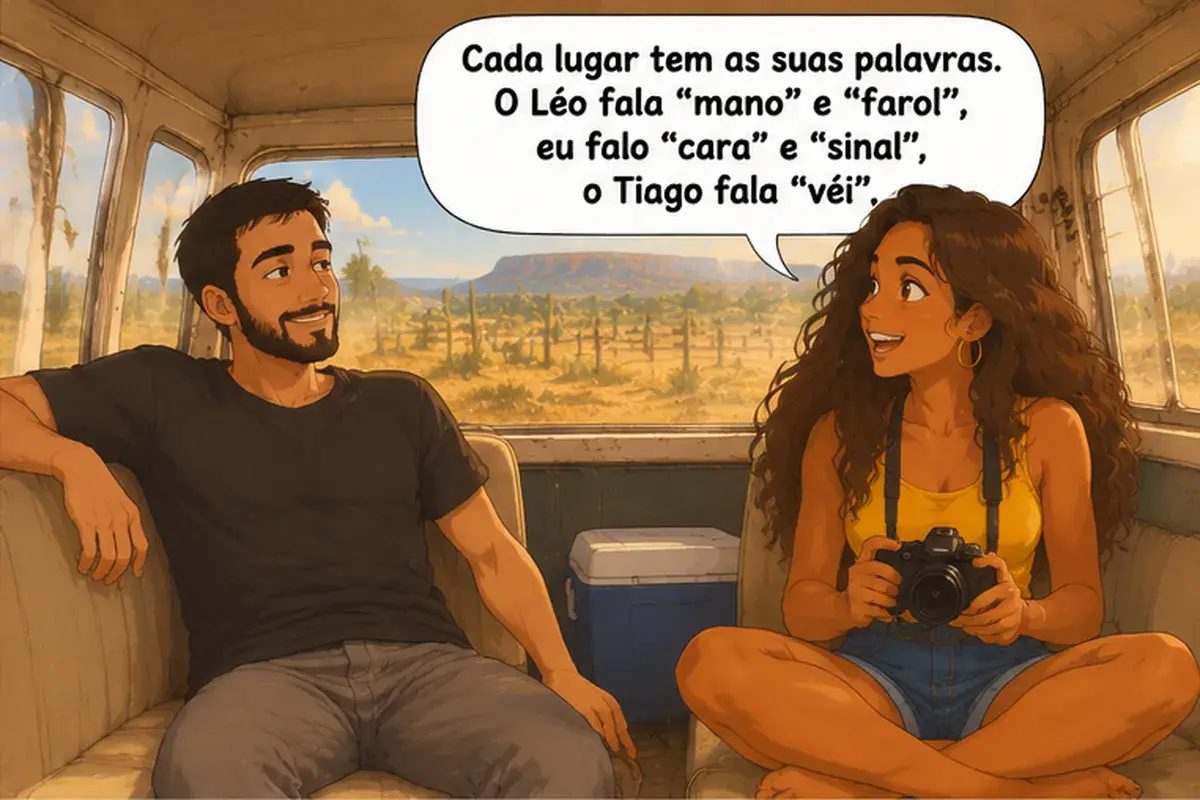
- Bia
Cada lugar tem as suas palavras. O Léo fala “mano” e “farol”, eu falo “cara” e “sinal”, o Tiago fala “véi”.
Each place has its own words. Léo says "mano" and "farol", I say "cara" and "sinal", Tiago says "véi".
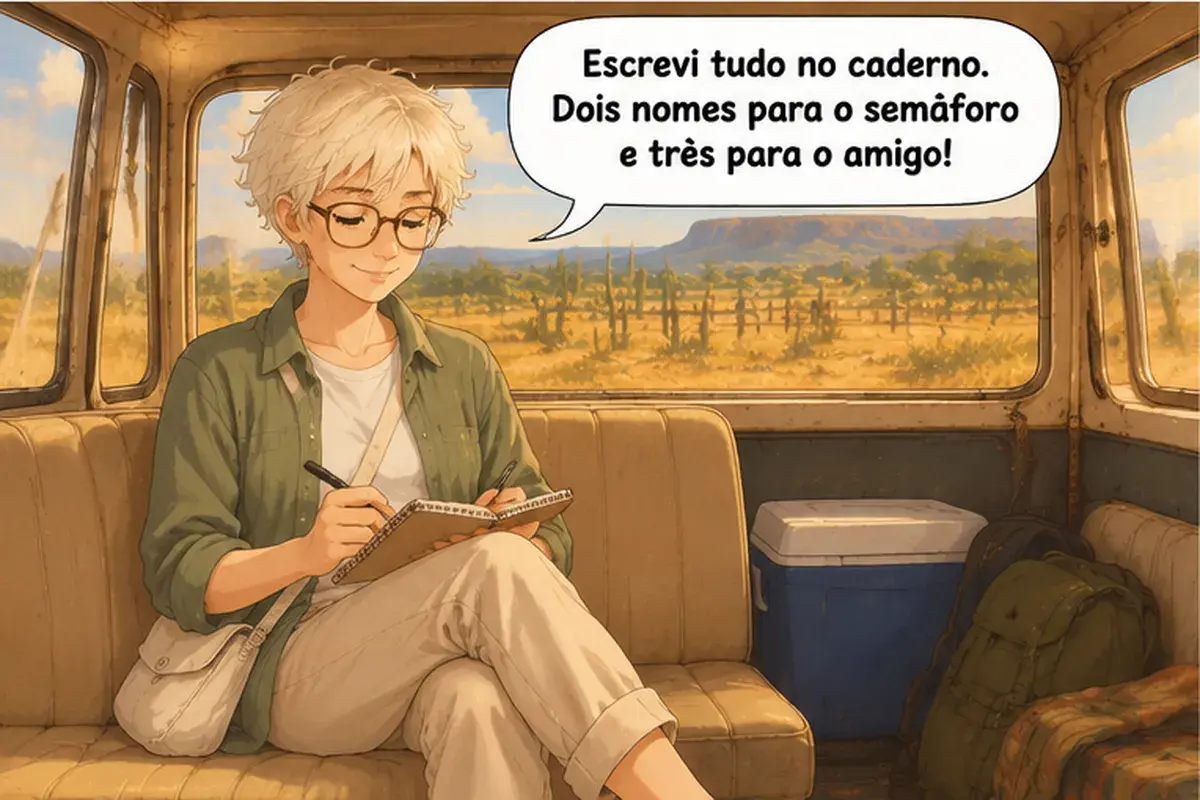
- Nina
Escrevi tudo no caderno. Dois nomes para o semáforo e três para o amigo!
I wrote it all down in my notebook. Two names for the traffic light and three for a buddy!
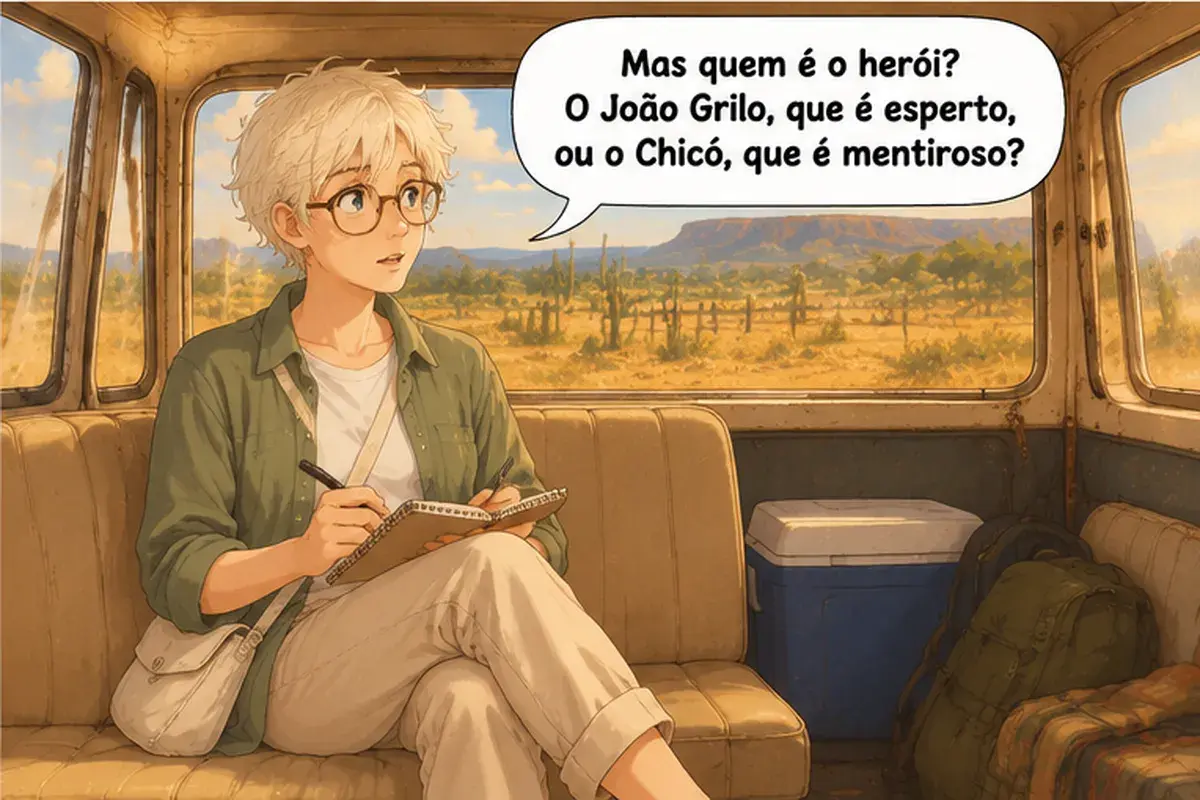
- Nina
Mas quem é o herói? O João Grilo, que é esperto, ou o Chicó, que é mentiroso?
But who's the hero? João Grilo, who's clever, or Chicó, who's a liar?
- Léo
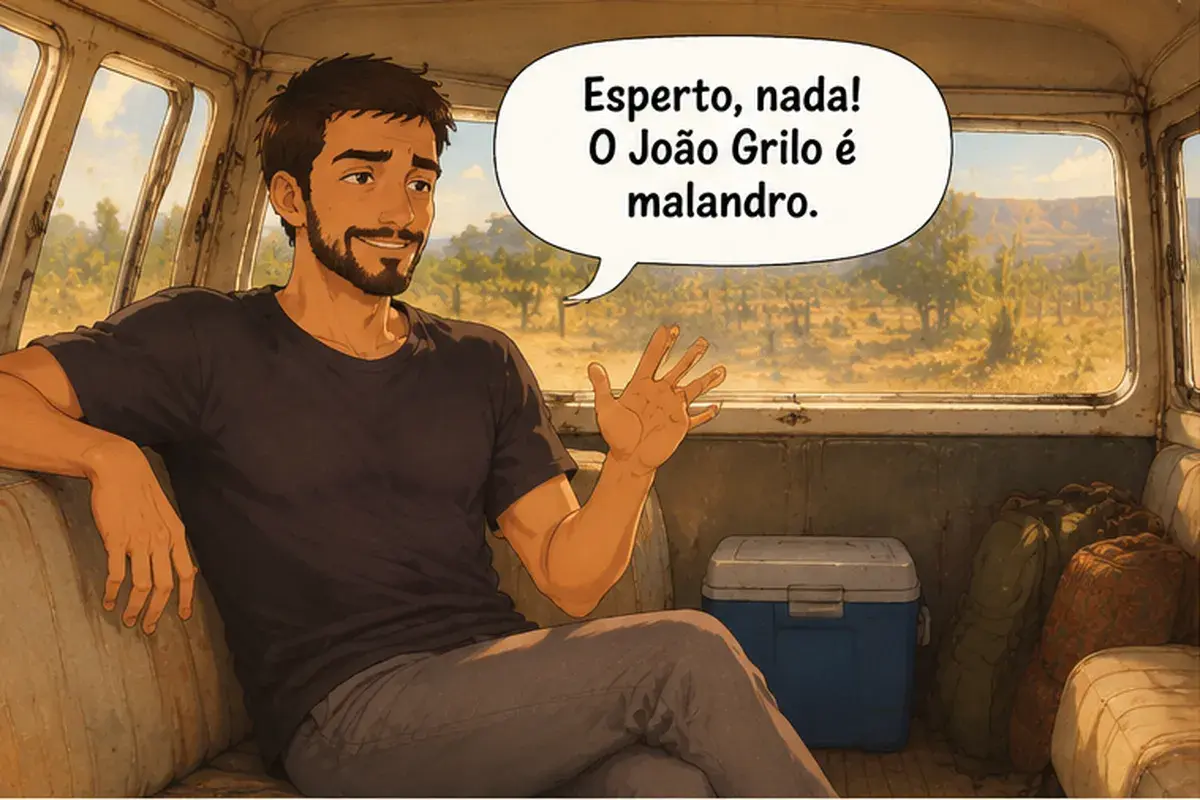
Esperto, nada! O João Grilo é malandro.
Clever, no way! João Grilo is a rascal.
- Tiago
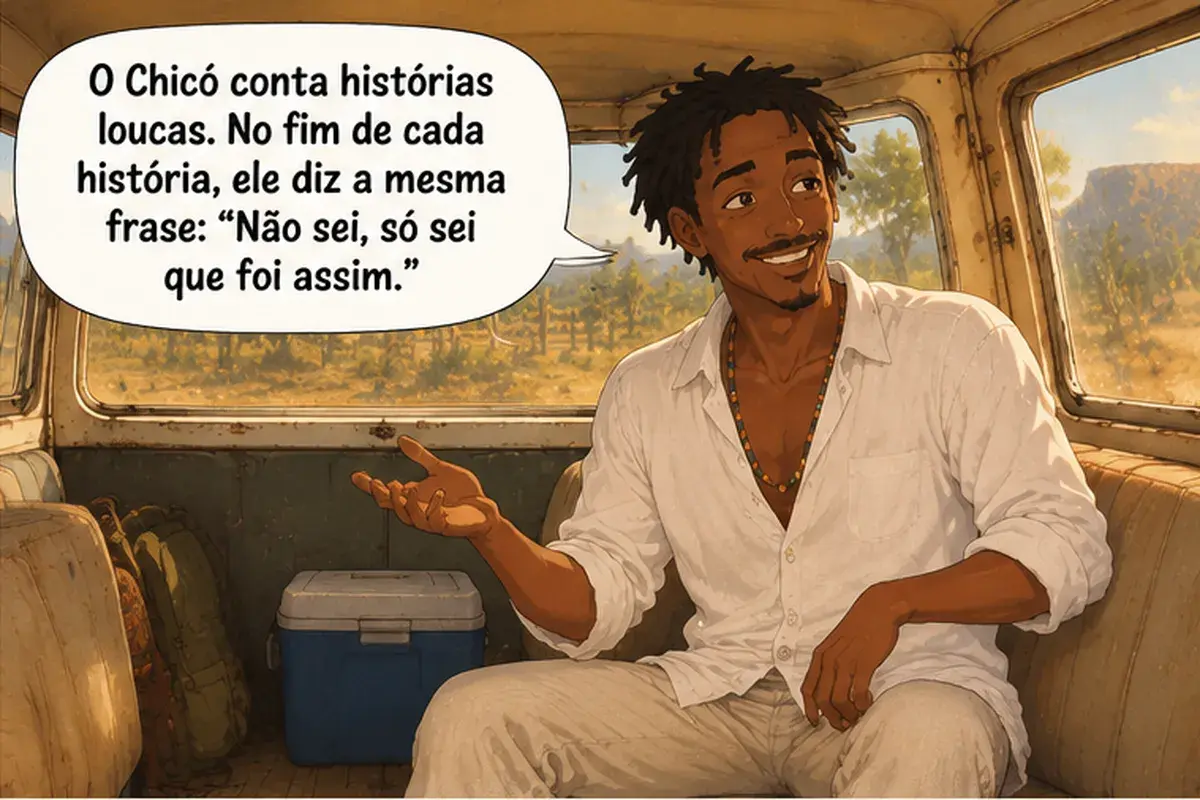
O Chicó conta histórias loucas. No fim de cada história, ele diz a mesma frase: “Não sei, só sei que foi assim.”
Chicó tells crazy stories. At the end of each story, he says the same phrase: "I don't know, I just know that's how it was."
- Léo
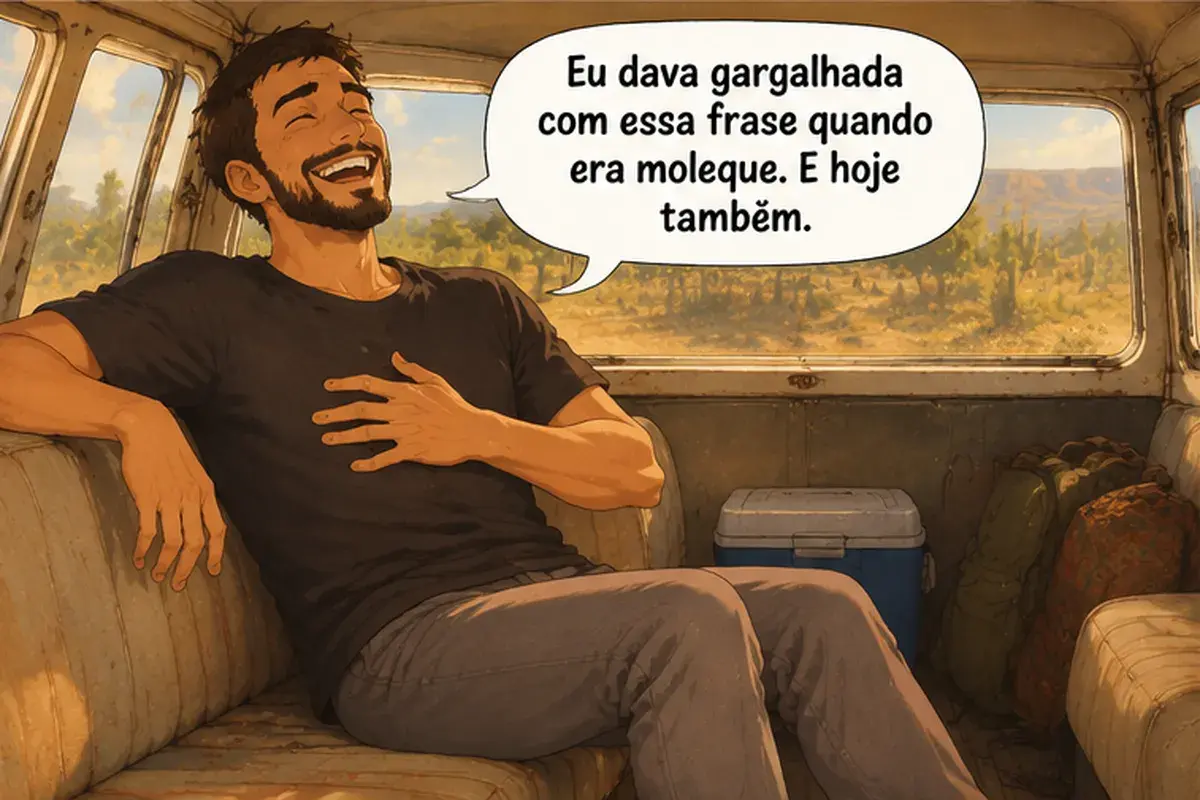
Eu dava gargalhada com essa frase quando era moleque. E hoje também.
I used to crack up at that phrase when I was a kid. And today too.
- Nina
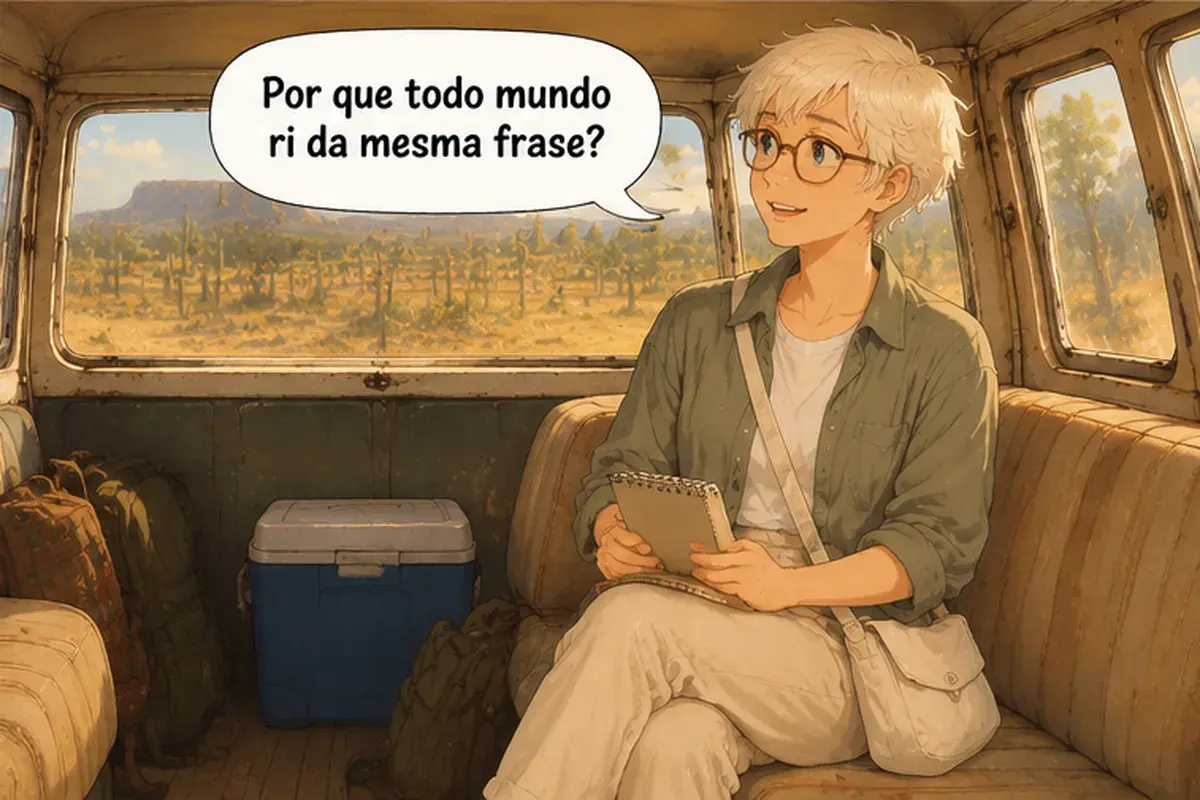
Por que todo mundo ri da mesma frase?
Why does everyone laugh at the same phrase?
- Tiago
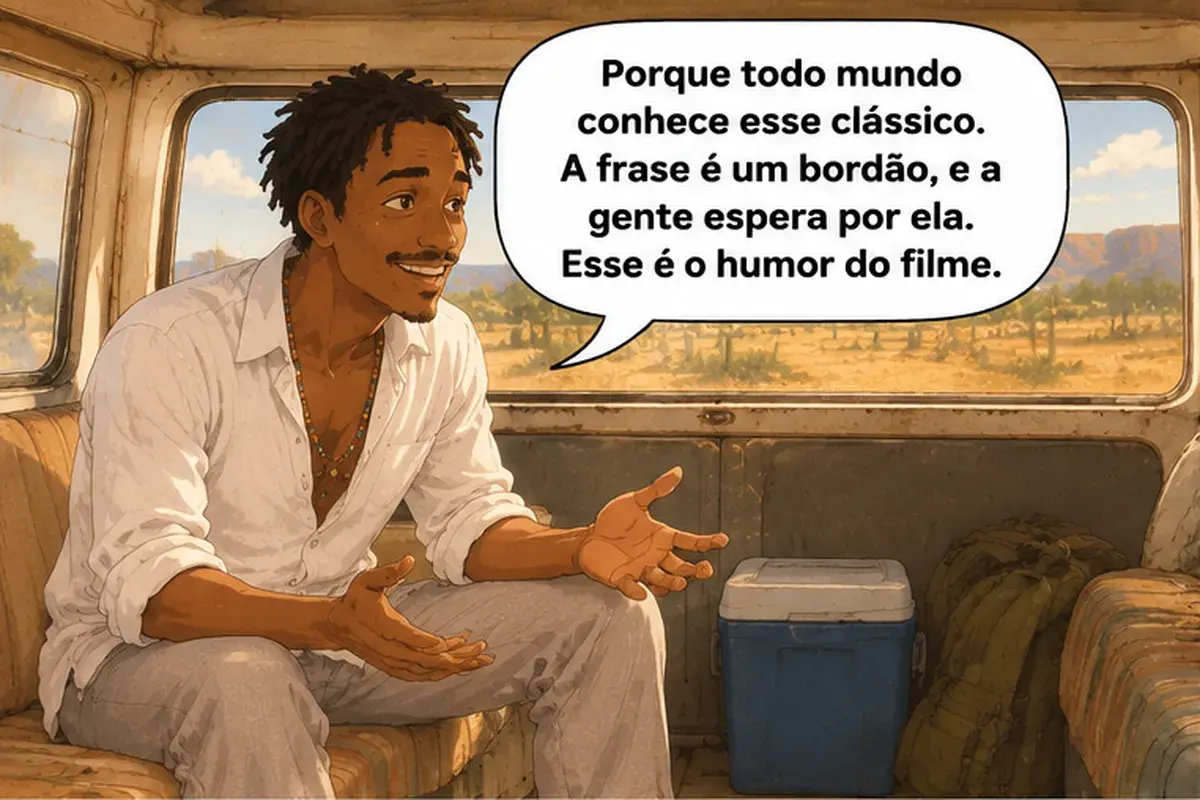
Porque todo mundo conhece esse clássico. A frase é um bordão, e a gente espera por ela. Esse é o humor do filme.
Because everyone knows this classic. The phrase is a catchphrase, and we wait for it. That's the movie's humor.
- Nina
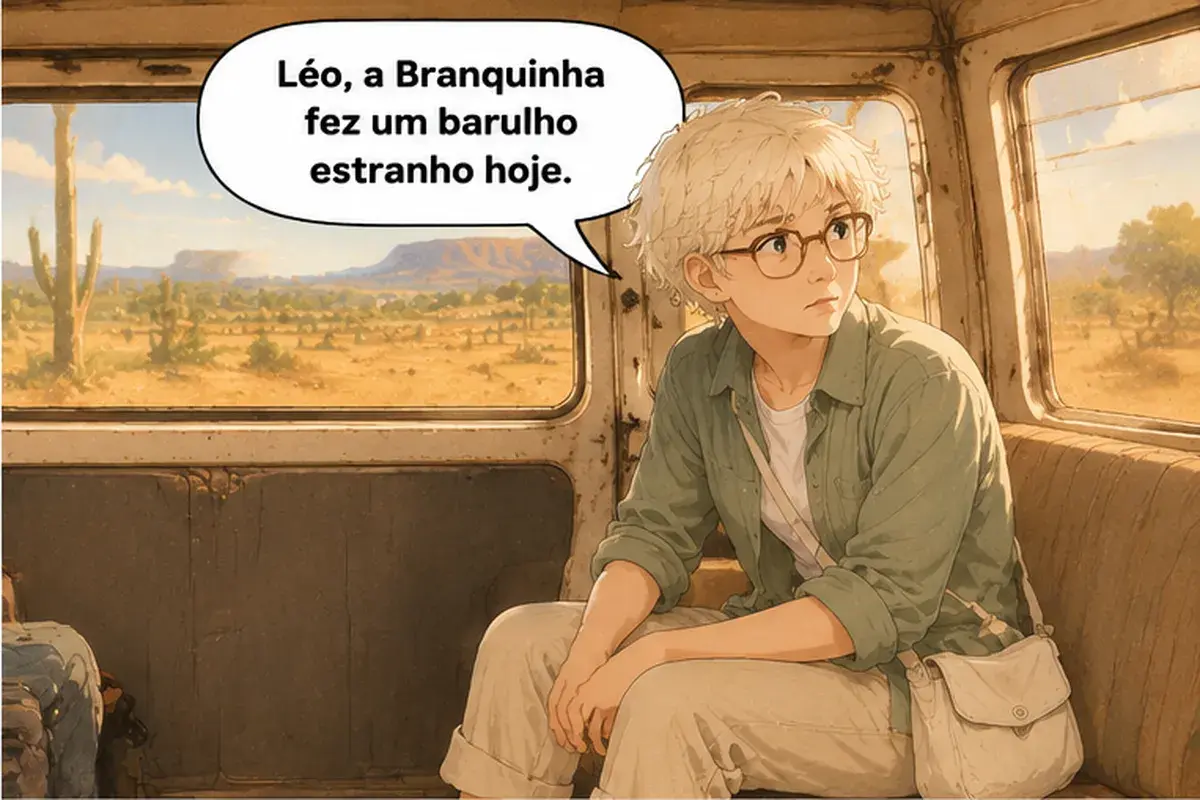
Léo, a Branquinha fez um barulho estranho hoje.
Léo, Branquinha made a strange noise today.
- Léo
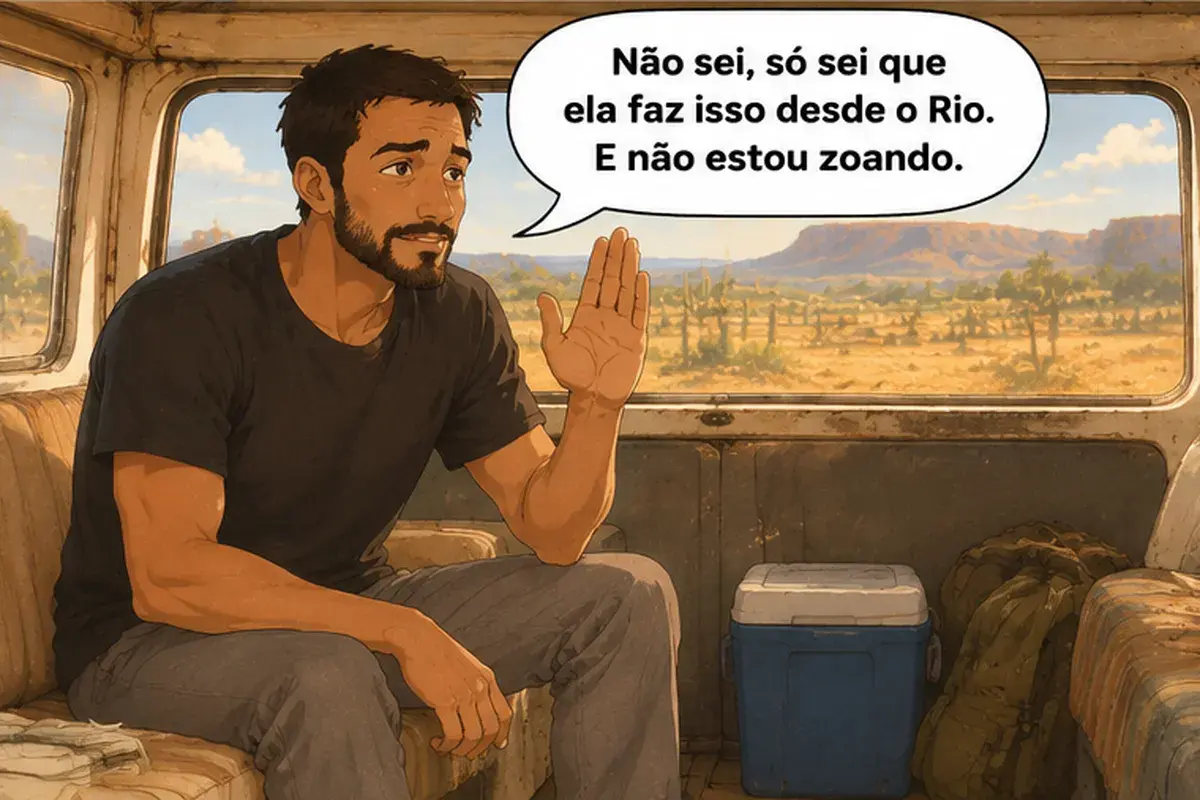
Não sei, só sei que ela faz isso desde o Rio. E não estou zoando.
I don't know, I just know she's been doing that since Rio. And I'm not kidding.
- Nina
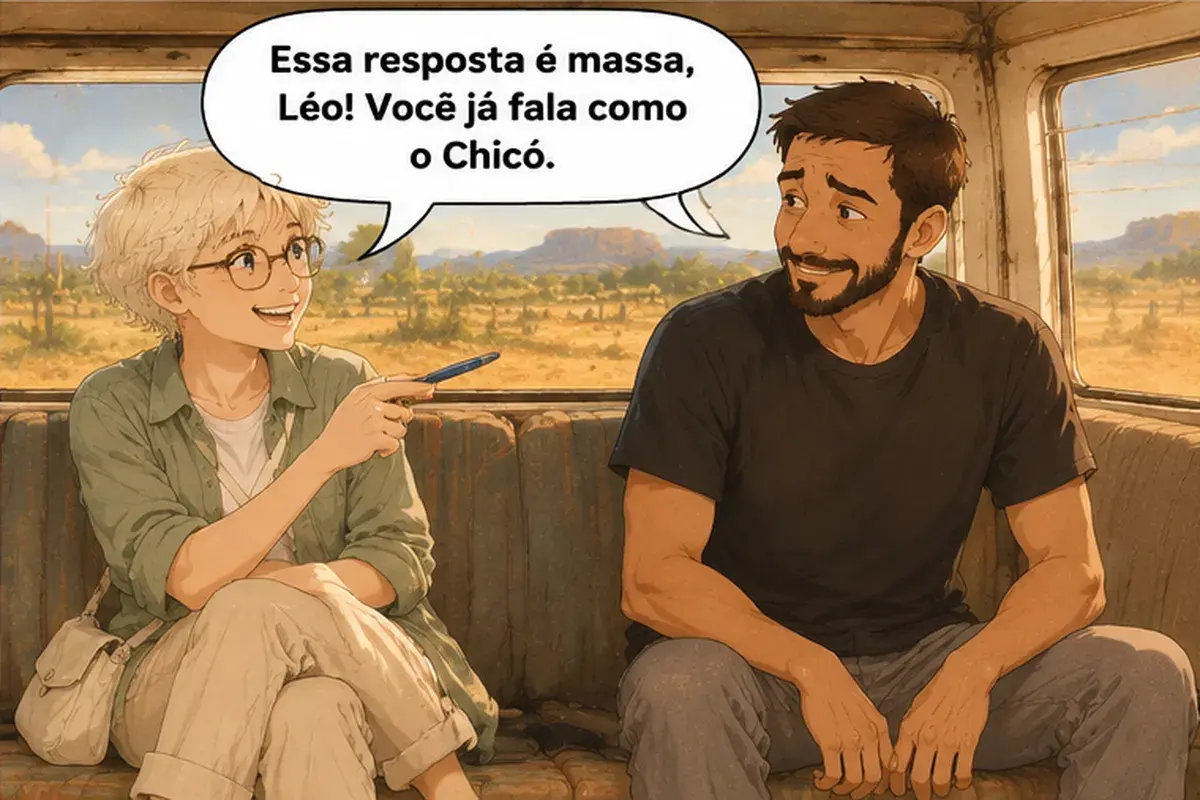
Essa resposta é massa, Léo! Você já fala como o Chicó.
That answer is awesome, Léo! You already talk like Chicó.
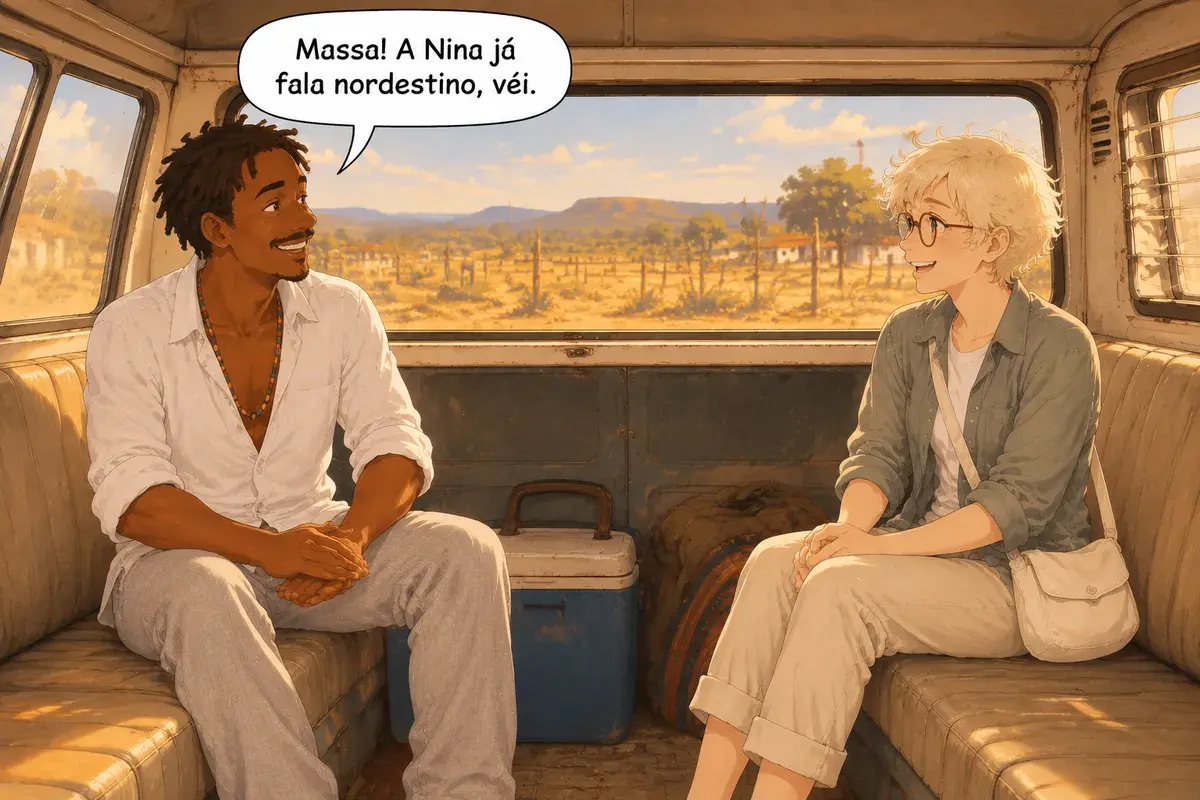
- Tiago
Massa! A Nina já fala nordestino, véi.
Awesome! Nina already talks like a Northeasterner, man.
Grammar for this text
- Muita gente no Nordeste fala "tu" — tu is "you" for many people in the Northeast; the verb takes the ele / ela form: tu vai, tu quer. Recognize only: understand it, but say você yourself.
- tudo da hora, mano — da hora is "cool", São Paulo slang (not "on time": that's na hora); mano is "bro", São Paulo, mostly between guys. Bia says cara (Rio), Tiago says véi (all over Brazil, from velho, "old"). They all mean "buddy", but only with friends.
- Dois nomes para o semáforo e três para o amigo — traffic light: farol (São Paulo) and sinal (Rio), while semáforo is the neutral word (in writing and official); "buddy": mano, cara, véi. Everyone understands all these words. farol has other meanings too: "lighthouse", "headlight".
- Esperto, nada! — esperto is "smart" (praise), malandro is "rascal, trickster": to a friend as a joke, to a stranger it's an insult. nada after a word means "no way": "Clever? No way!".
- Não sei, só sei que foi assim — the catchphrase of Chicó, a character in the 2000 comedy O Auto da Compadecida; foi — "it was" (from ser). He ends his tall tales with it, and people laugh because they're waiting for it.
- Essa resposta é massa, Léo! — massa ("dough") has another meaning too: "awesome" (the Northeast, with friends). Não estou zoando — zoar: to tease, to joke around; quando era moleque — moleque: "kid", casual.
Words and grammar of the unit: Understand speech from the Northeast.
Learn the words from the texts with flashcards
In the app, you can tap any word in a text to see its translation, forms and examples, and new words stick with flashcards. 15 minutes a day.
Start for freeEverything is open for free. No card needed to sign up.