
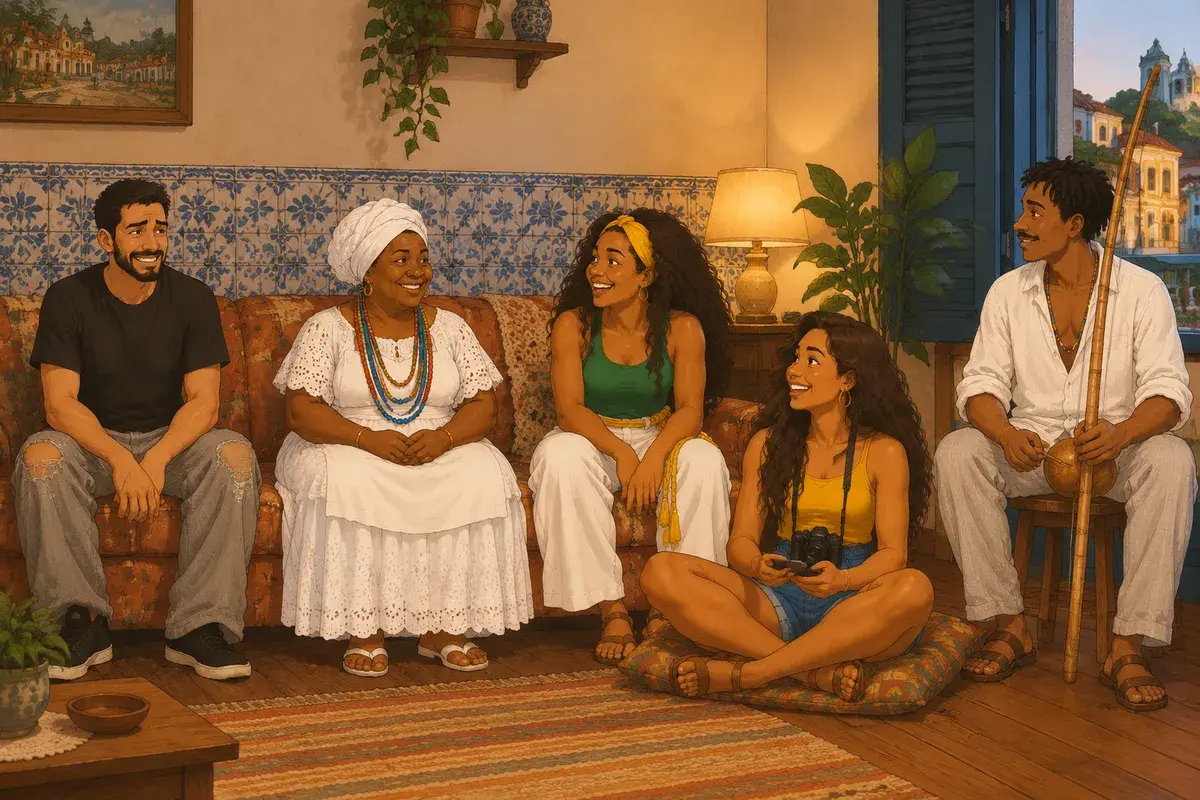
Portuguese dialogue with translation · B1 · 18 lines
A senhora não soube? Didn't you hear? (formal)
Comic · 18 panels
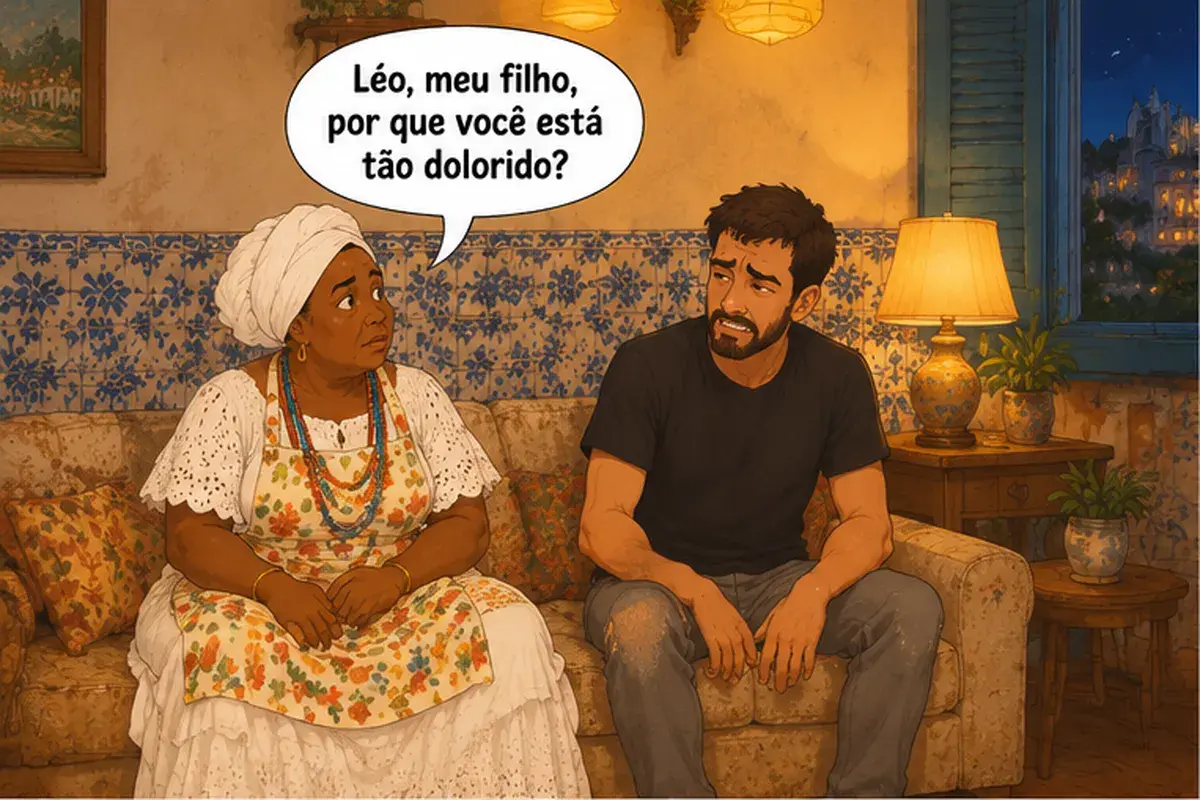
- Dona Cida
Léo, meu filho, por que você está tão dolorido?
Léo, dear, why are you so sore?
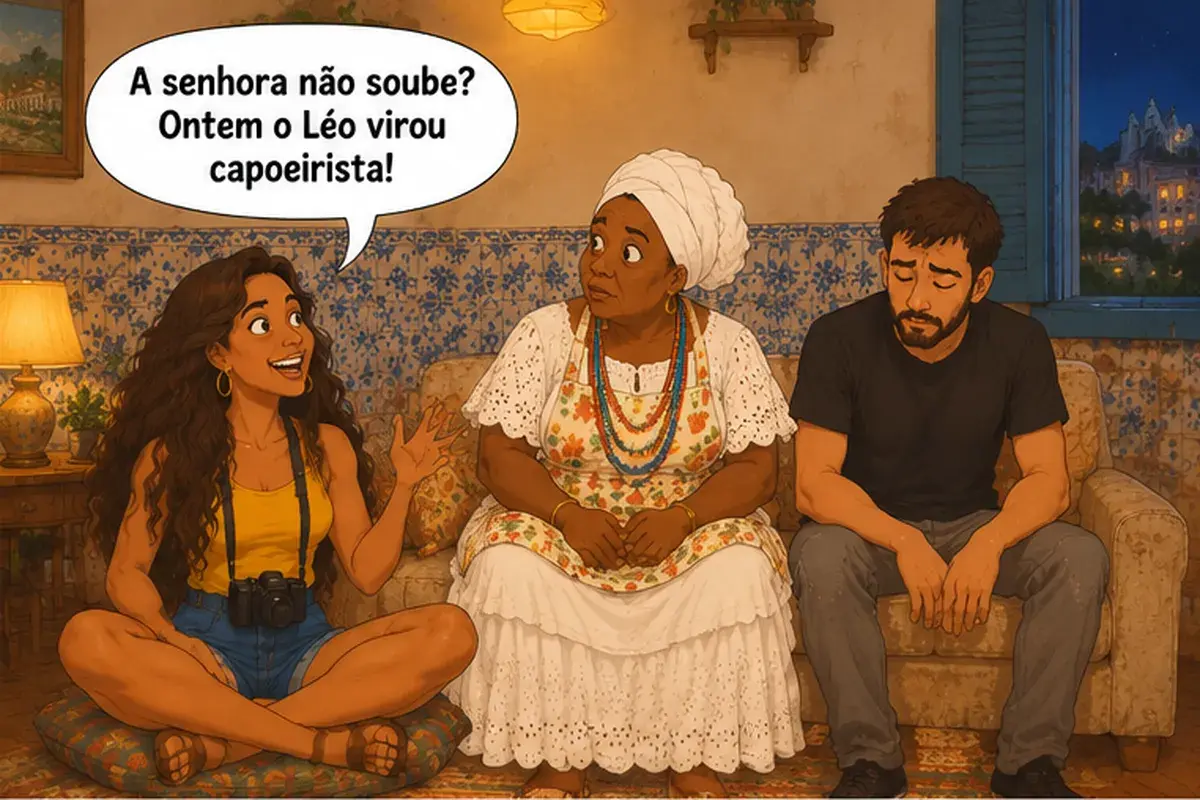
- Bia
A senhora não soube? Ontem o Léo virou capoeirista!
Didn't you hear? (to a woman, formal) Yesterday Léo became a capoeirista!
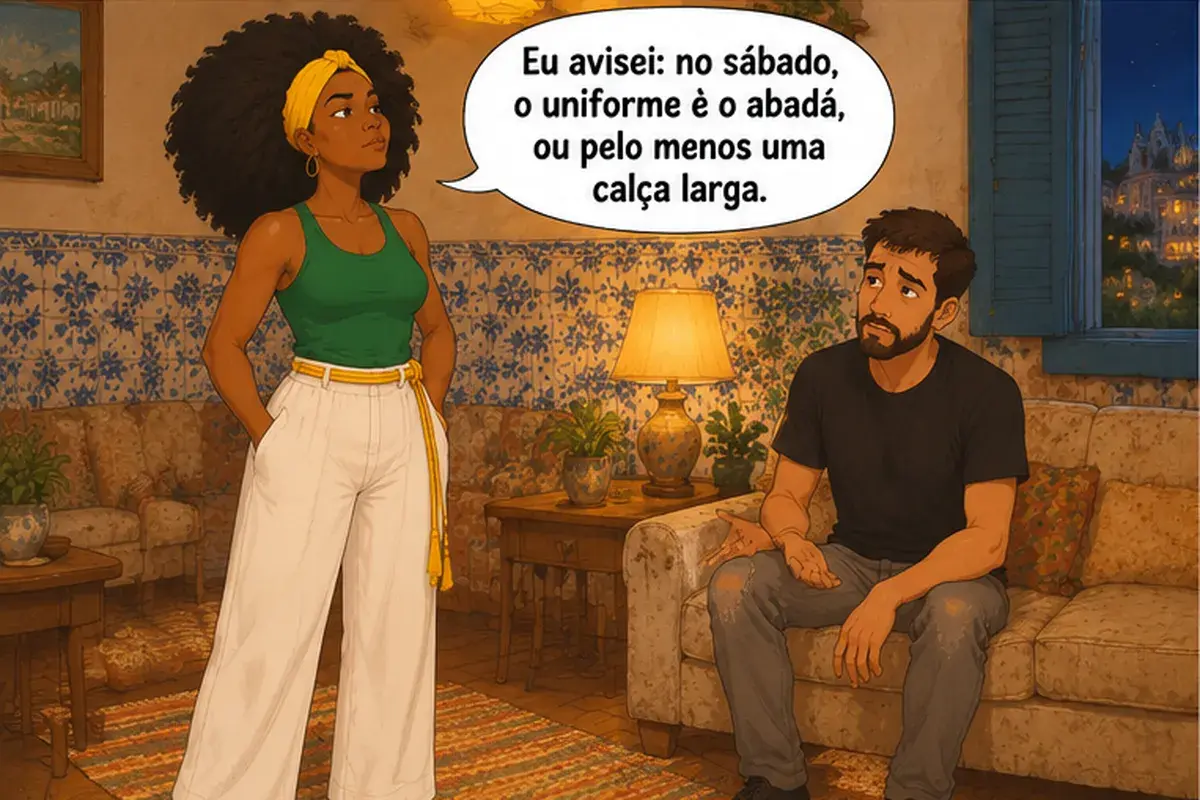
- Jamile
Eu avisei: no sábado, o uniforme é o abadá, ou pelo menos uma calça larga.
I warned you: on Saturday, the uniform is the abadá, or at least loose pants.
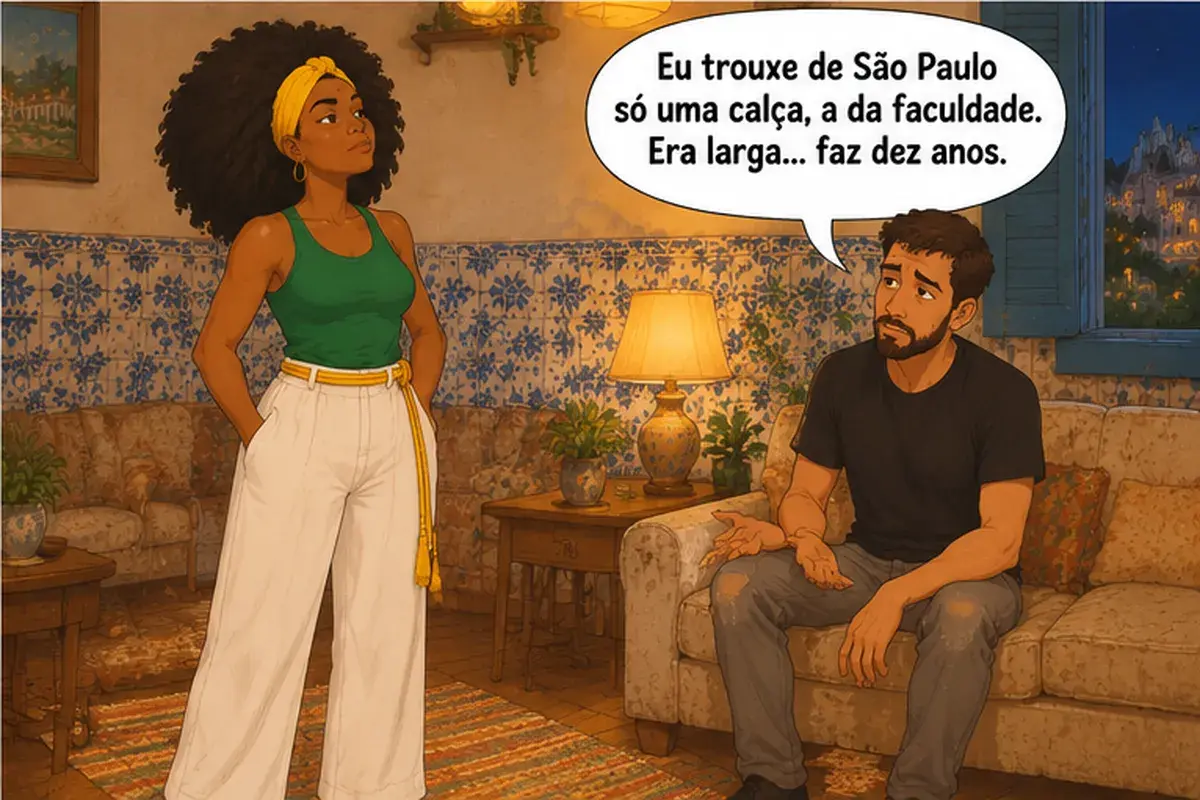
- Léo
Eu trouxe de São Paulo só uma calça, a da faculdade. Era larga... faz dez anos.
I only brought one pair of pants from São Paulo, the ones from college. They were loose... ten years ago.
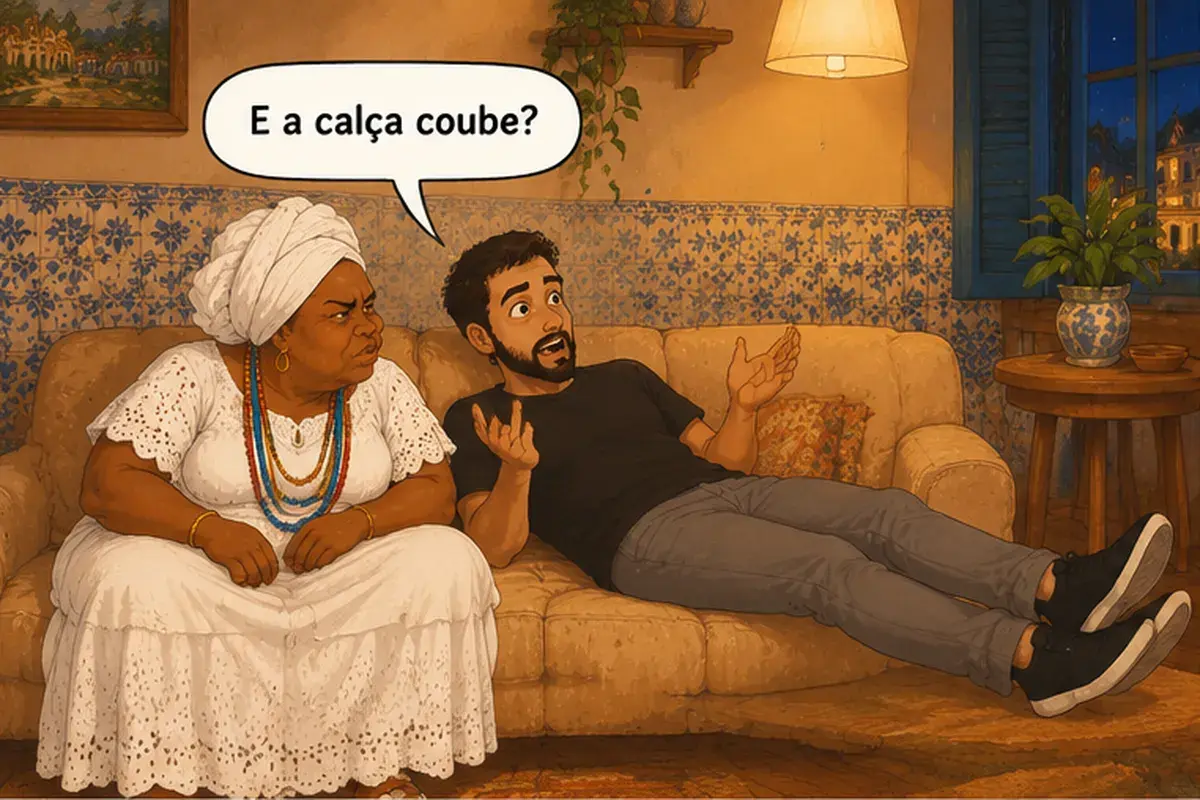
- Dona Cida
E a calça coube?
And did the pants fit?
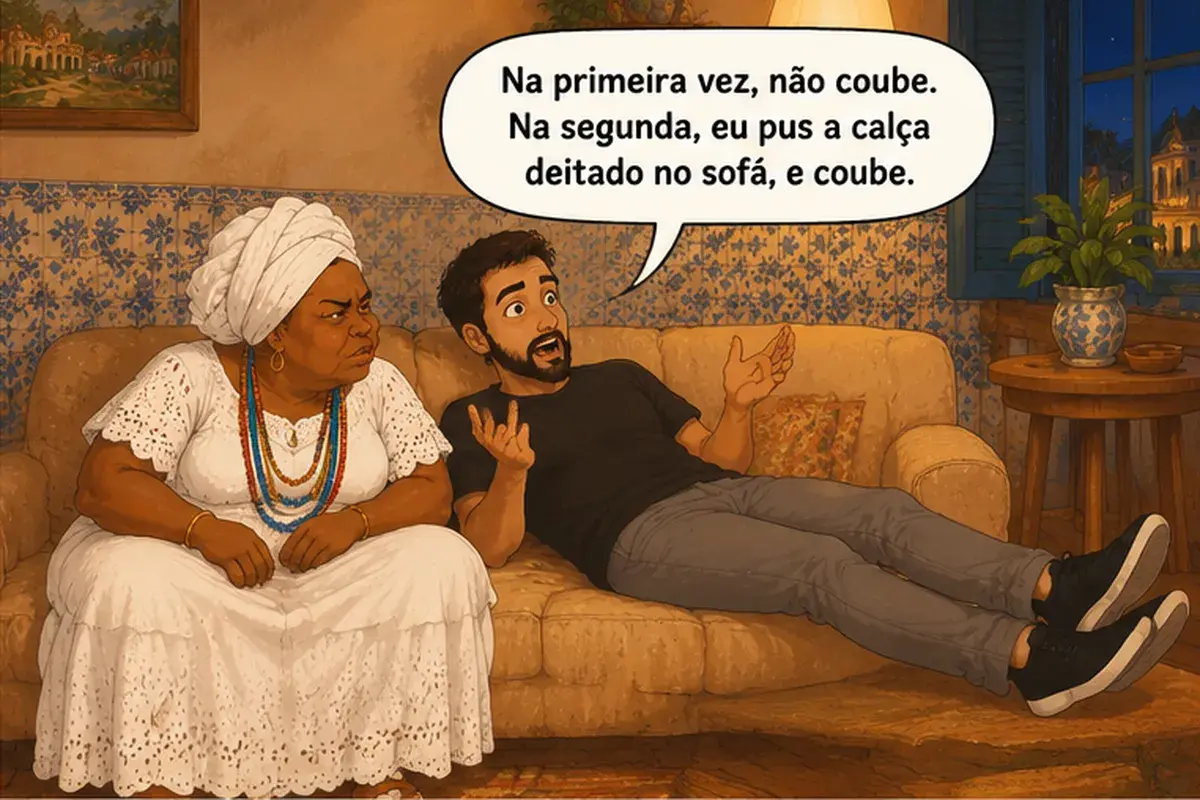
- Léo
Na primeira vez, não coube. Na segunda, eu pus a calça deitado no sofá, e coube.
The first time, they didn't fit. The second time, I put them on lying on the couch, and they fit (man speaking).
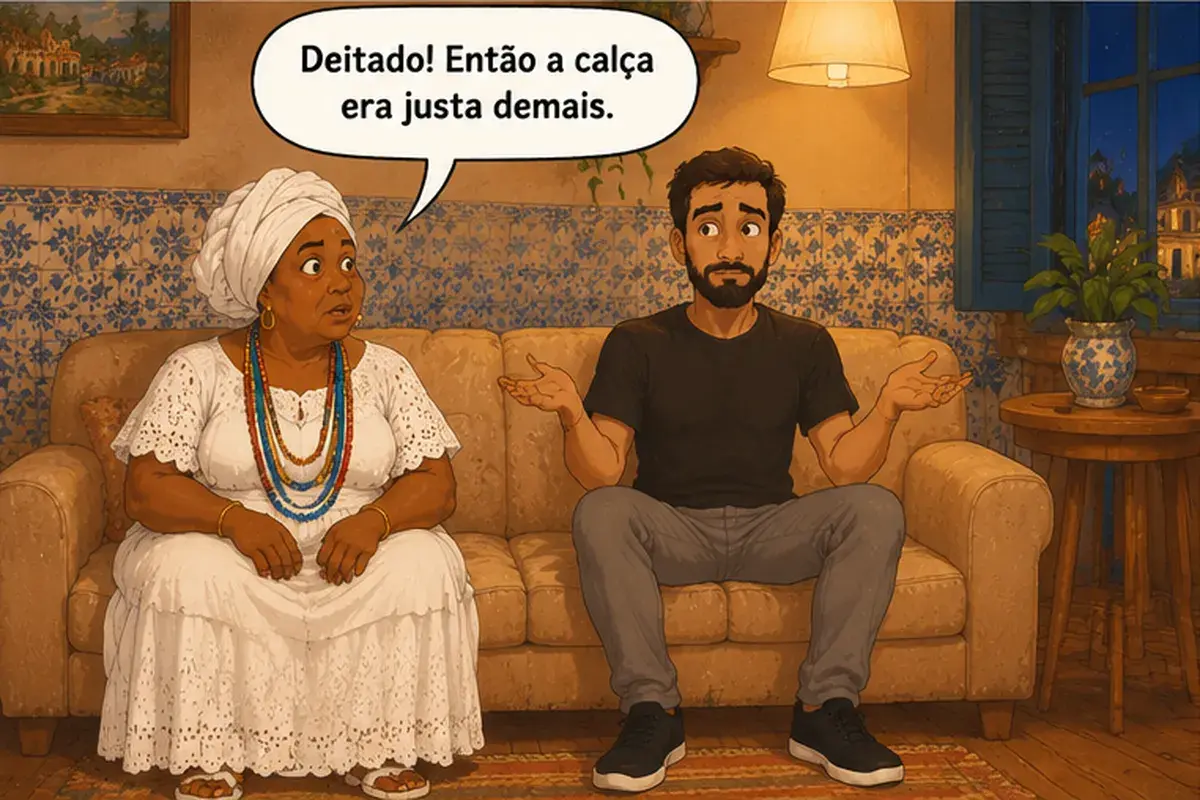
- Dona Cida
Deitado! Então a calça era justa demais.
Lying down! So the pants were way too tight.
- Léo
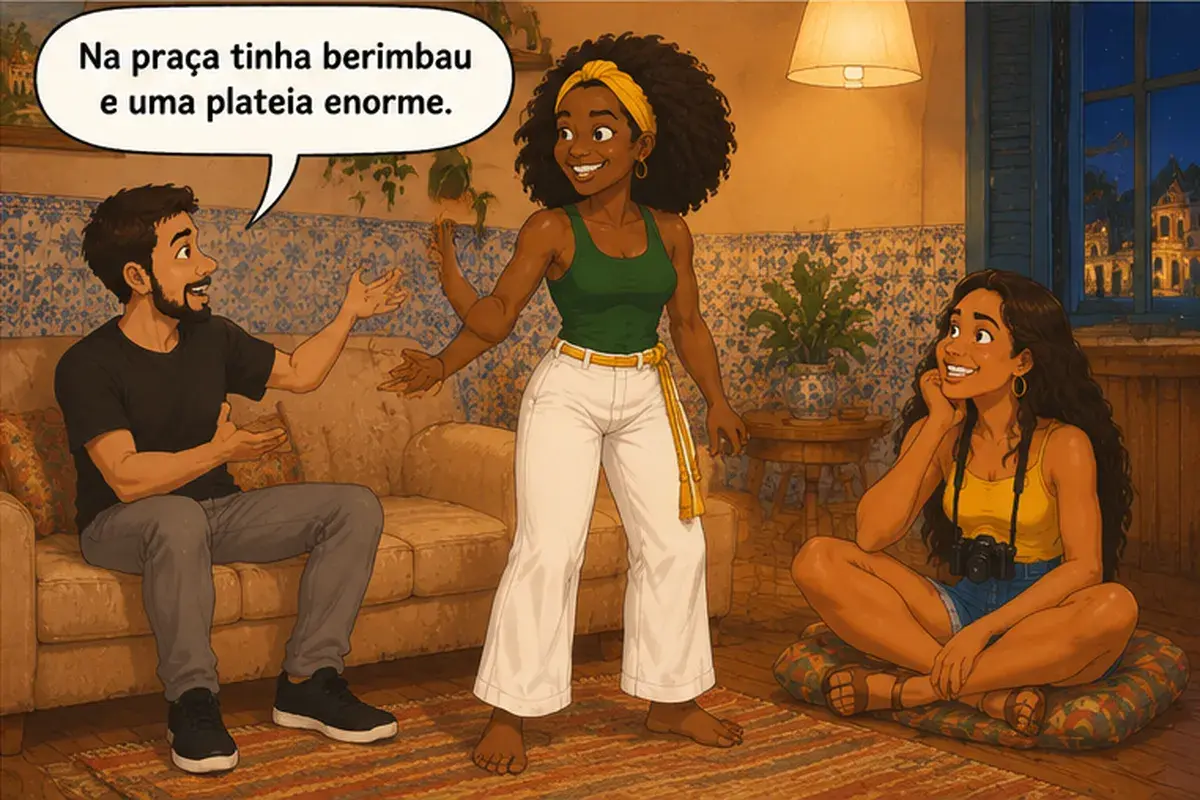
Na praça tinha berimbau e uma plateia enorme.
In the square there was a berimbau and a huge audience.
- Jamile
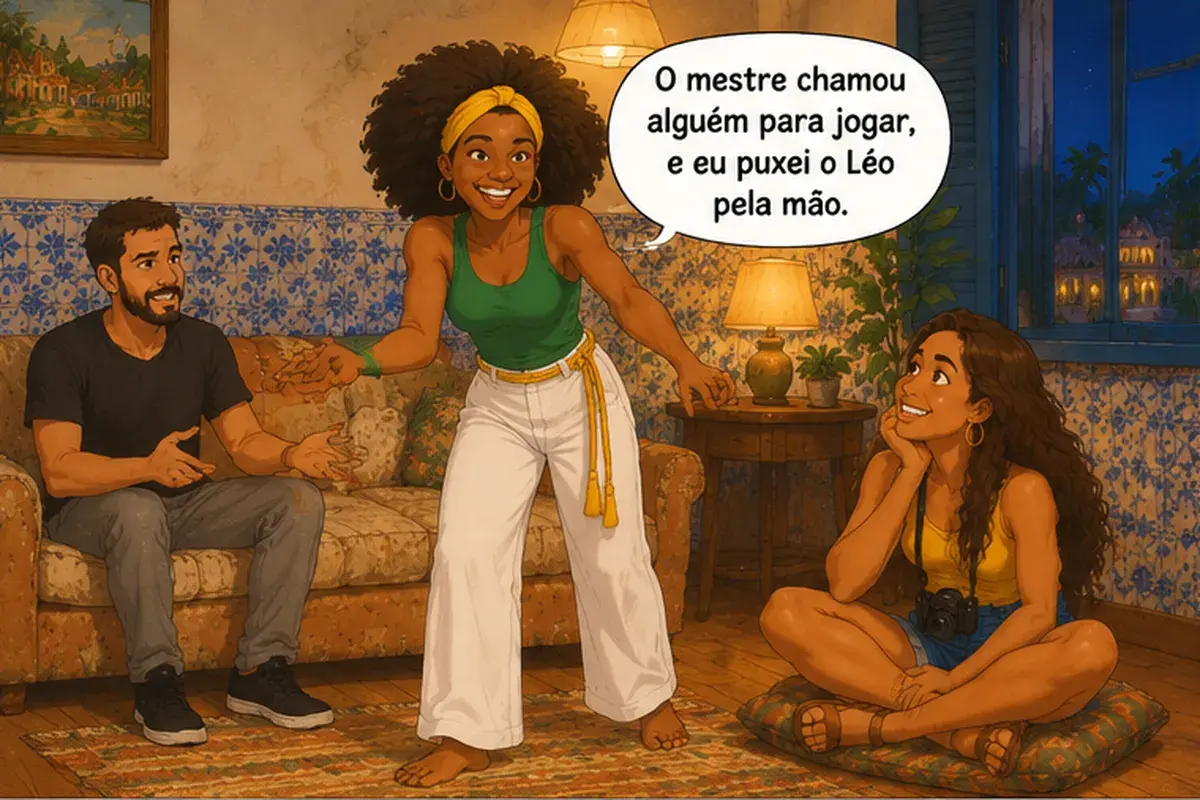
O mestre chamou alguém para jogar, e eu puxei o Léo pela mão.
The master called someone to play, and I pulled Léo by the hand.
- Léo
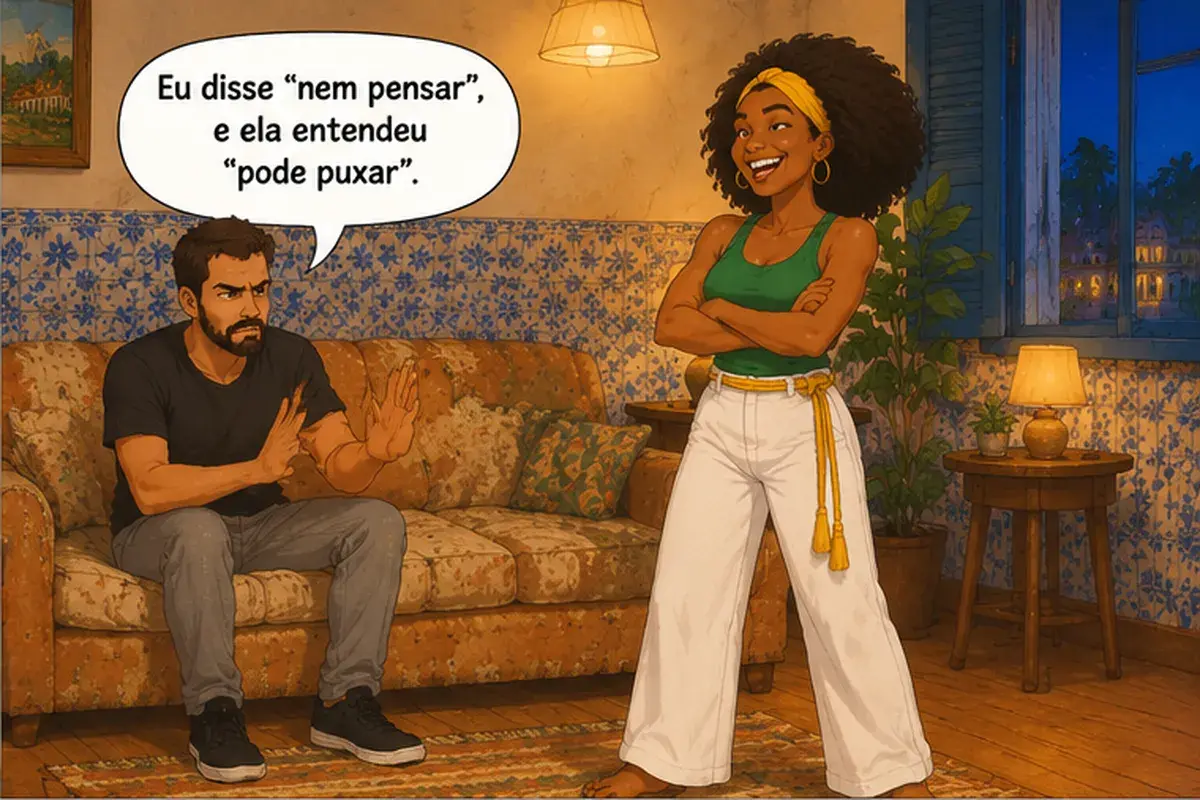
Eu disse “nem pensar”, e ela entendeu “pode puxar”.
I said “no way,” and she understood “go ahead and pull.”
- Tiago
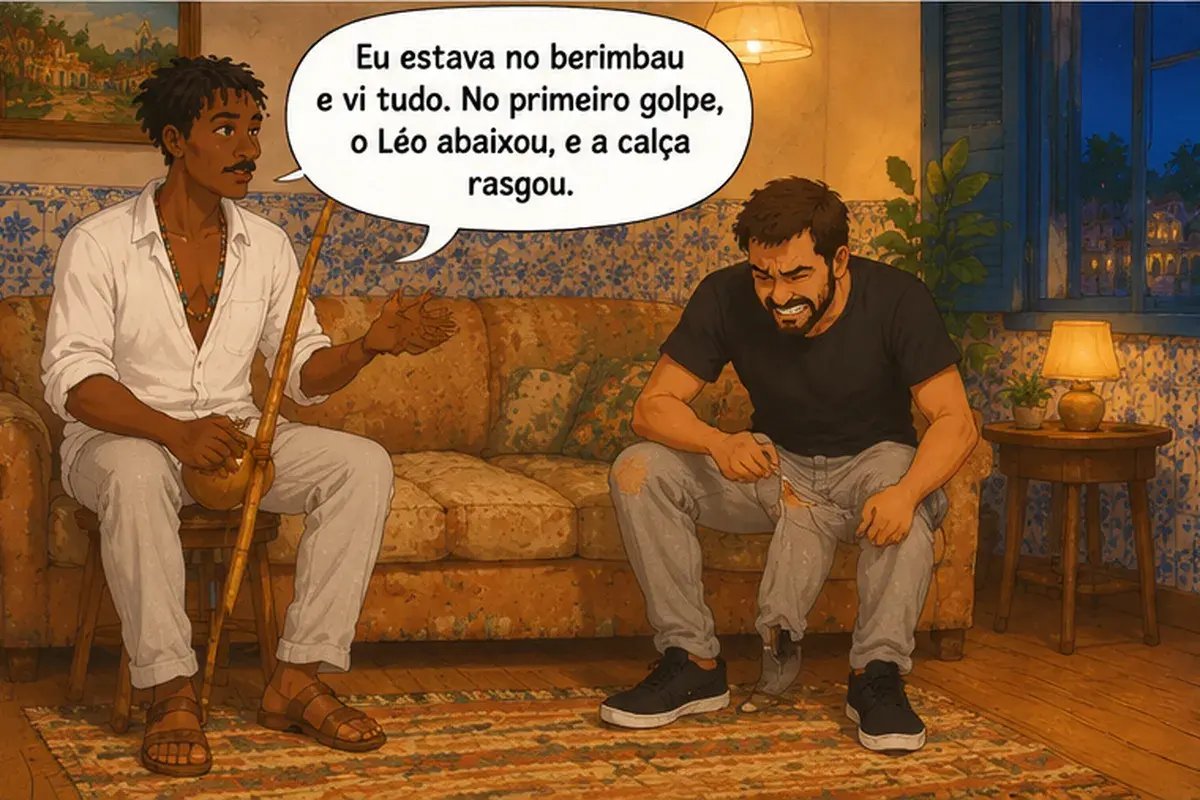
Eu estava no berimbau e vi tudo. No primeiro golpe, o Léo abaixou, e a calça rasgou.
I was on the berimbau and saw everything. On the first strike, Léo crouched, and the pants ripped.
- Bia
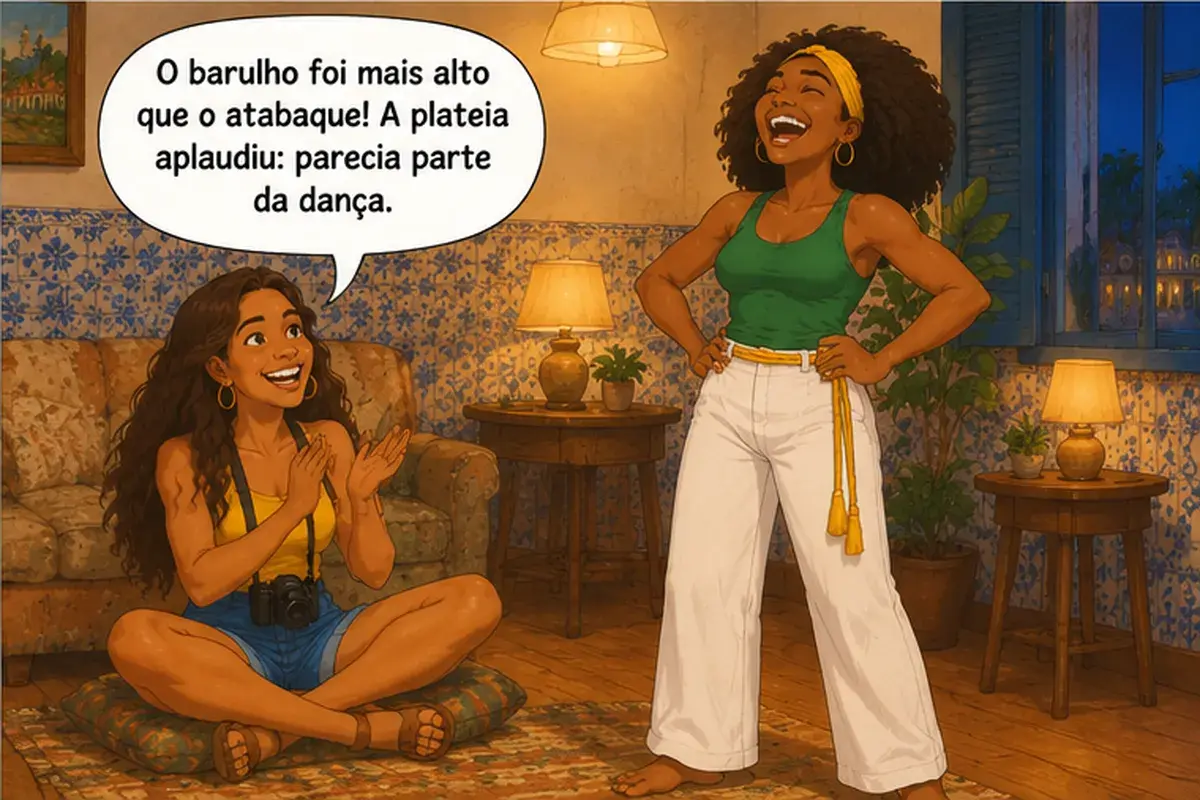
O barulho foi mais alto que o atabaque! A plateia aplaudiu: parecia parte da dança.
The noise was louder than the atabaque! The audience applauded: it looked like part of the dance.
- Léo
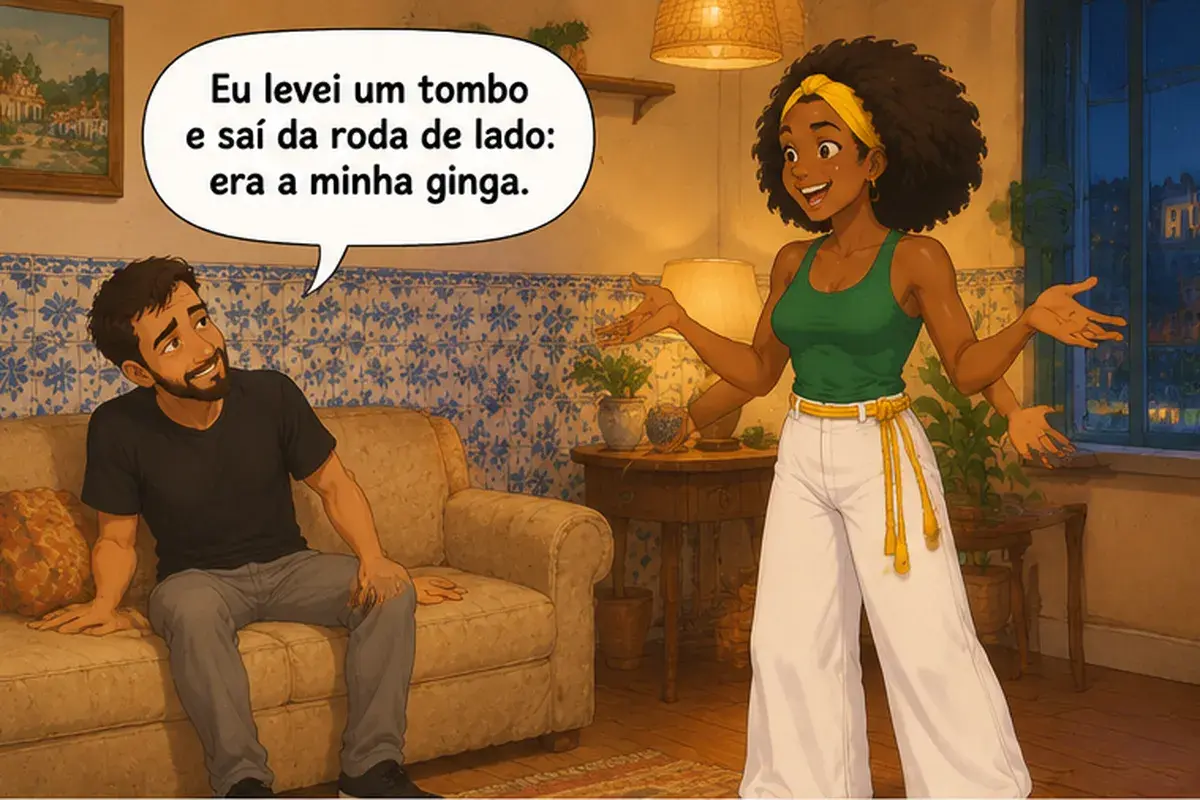
Eu levei um tombo e saí da roda de lado: era a minha ginga.
I took a fall and left the roda sideways: that was my ginga.
- Jamile
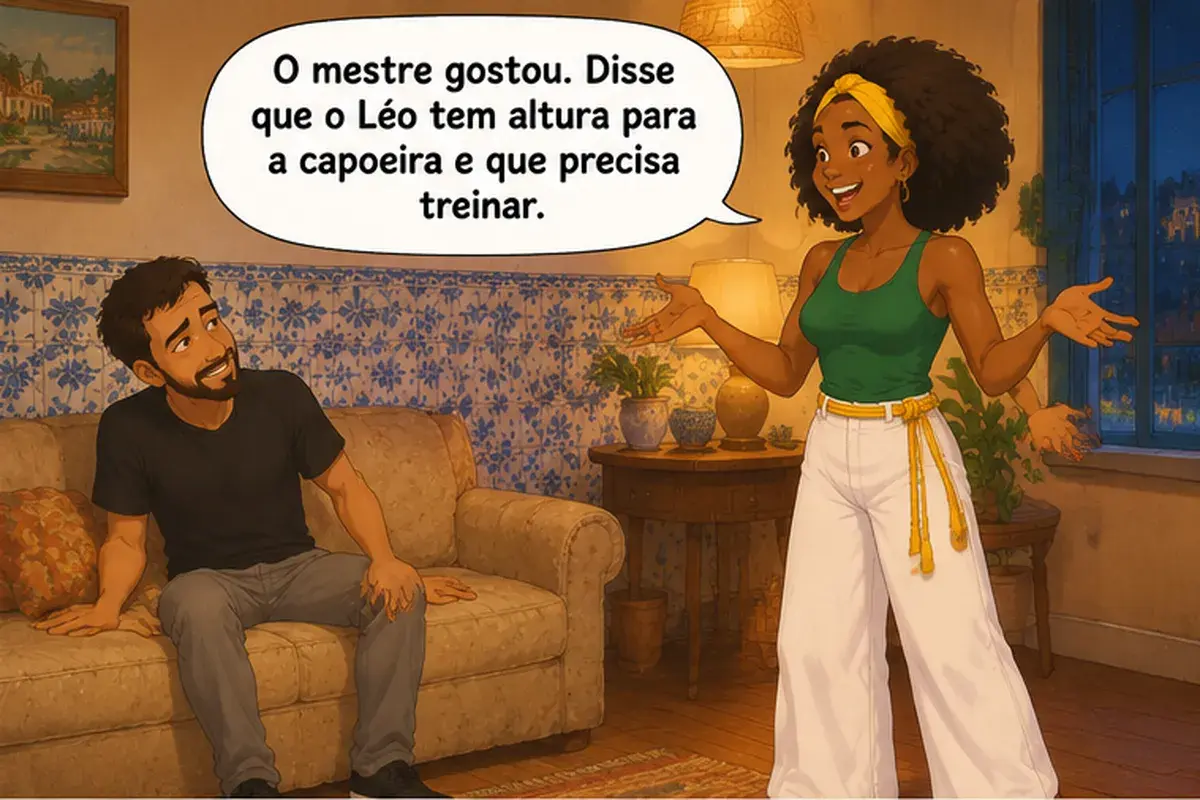
O mestre gostou. Disse que o Léo tem altura para a capoeira e que precisa treinar.
The master liked it. He said Léo has the height for capoeira and needs to train.
- Léo
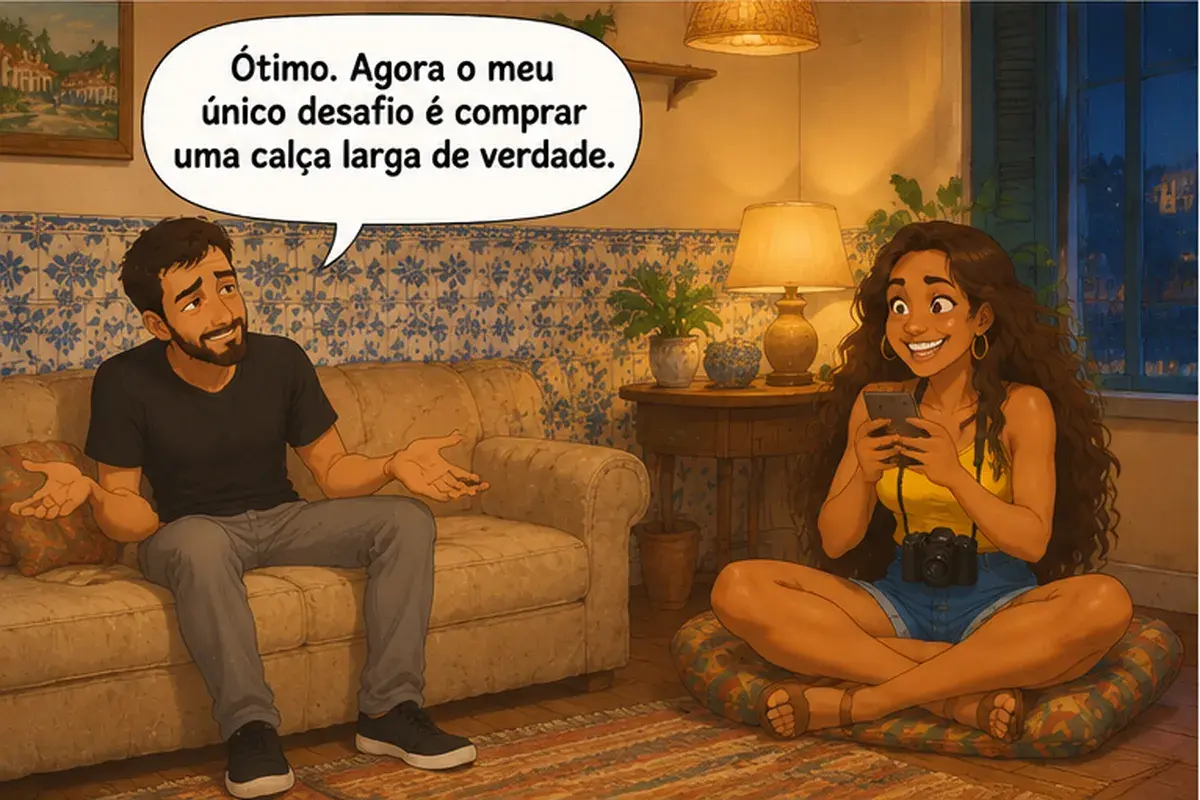
Ótimo. Agora o meu único desafio é comprar uma calça larga de verdade.
Great. Now my only challenge is to buy some really loose pants.
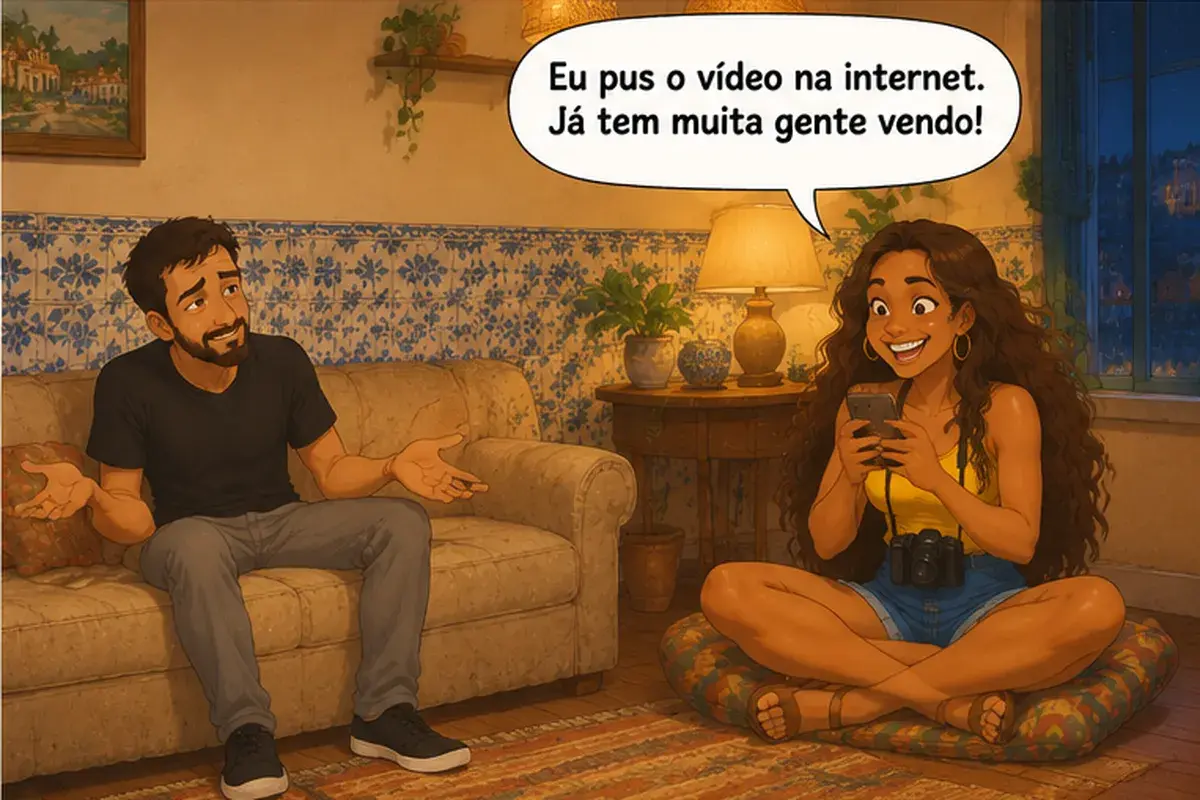
- Bia
Eu pus o vídeo na internet. Já tem muita gente vendo!
I put the video on the internet. Lots of people are already watching!
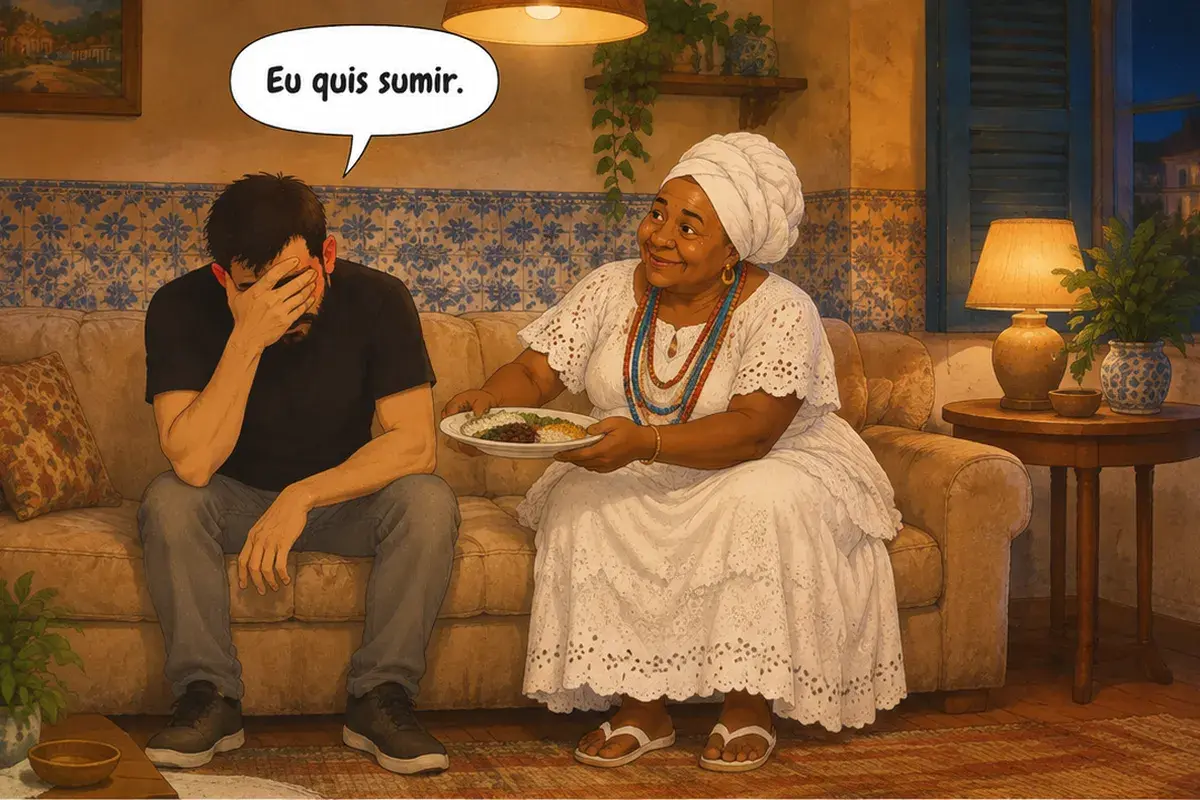
- Léo
Eu quis sumir.
I wanted to disappear.
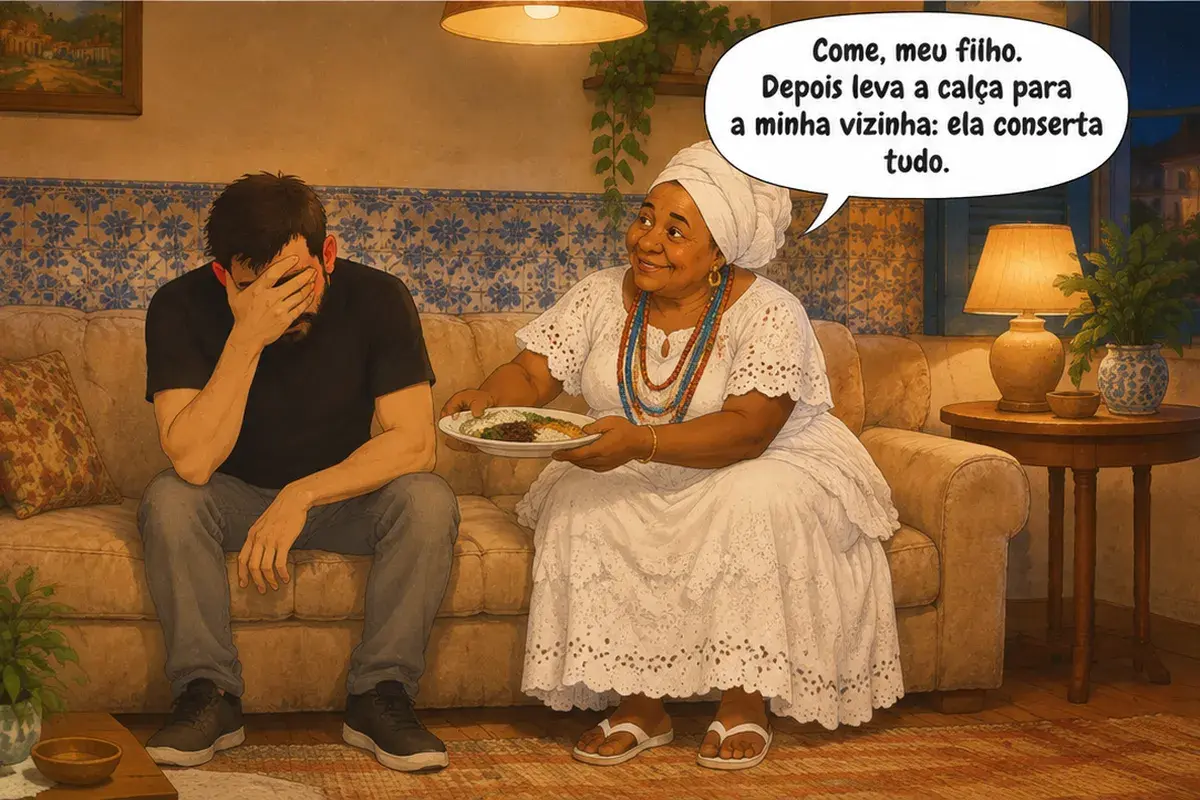
- Dona Cida
Come, meu filho. Depois leva a calça para a minha vizinha: ela conserta tudo.
Eat, dear. Then take the pants to my neighbor: she fixes everything.
Grammar for this text
- A senhora não soube? — soube is the preterite of saber: "found out, heard". Não soube — "didn't hear, didn't find out"; sabia is simply "knew". A senhora is the polite "you": that's how Bia talks to Dona Cida.
- Eu trouxe de São Paulo só uma calça and leva a calça para a minha vizinha — trouxe is from trazer, "brought here"; leva is from levar, "take away from here". The rule is in the unit grammar.
- Na primeira vez, não coube and e coube — coube is from caber (to fit): pants that "don't fit" won't go on. And in eu pus a calça deitado no sofá, pus is from pôr, "to put"; with clothes it means "to put on". Deitado means "lying down".
- Ontem o Léo virou capoeirista! — virou is from virar. You know it as "to turn" (A1); here it has a new meaning, "to become": virar capoeirista.
- Era larga... faz dez anos — faz dez anos means "ten years ago" (A2). The joke: the pants were loose only back then.
- Eu levei um tombo — casual for "I took a fall"; friends and family say it. And in Eu disse “nem pensar”, e ela entendeu “pode puxar”, the joke is that Jamile hears a "yes" where there was a "no".
- Eu quis sumir — quis without não: "wanted to". Sumir means "to disappear"; in English you might say "I wanted the ground to swallow me up".
Words and grammar of the unit: Talk about a first class that went wrong.
Learn the words from the texts with flashcards
In the app, you can tap any word in a text to see its translation, forms and examples, and new words stick with flashcards. 15 minutes a day.
Start for freeEverything is open for free. No card needed to sign up.