

Portuguese dialogue with translation · A2 · 16 lines
Perdi meu celular! I lost my phone!
Comic · 14 panels
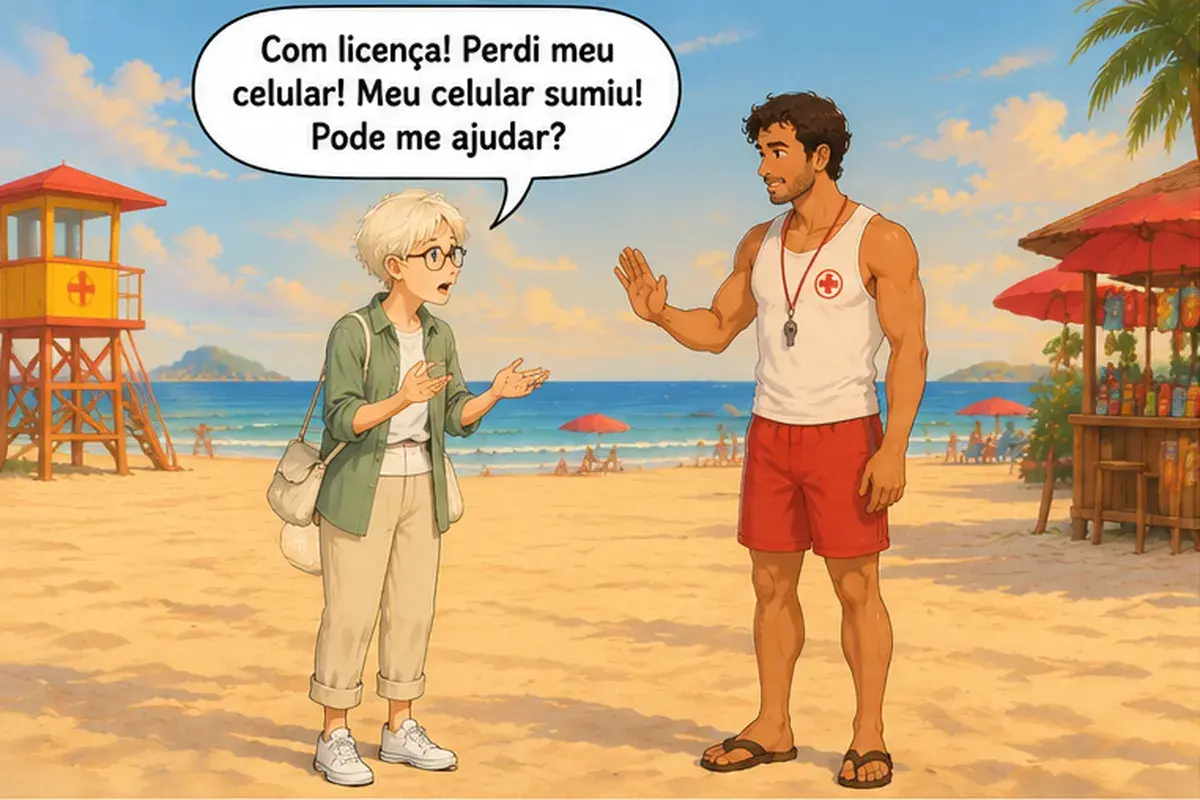
- Nina
Com licença! Perdi meu celular! Meu celular sumiu! Pode me ajudar?
Excuse me! I lost my phone! My phone disappeared! Can you help me?
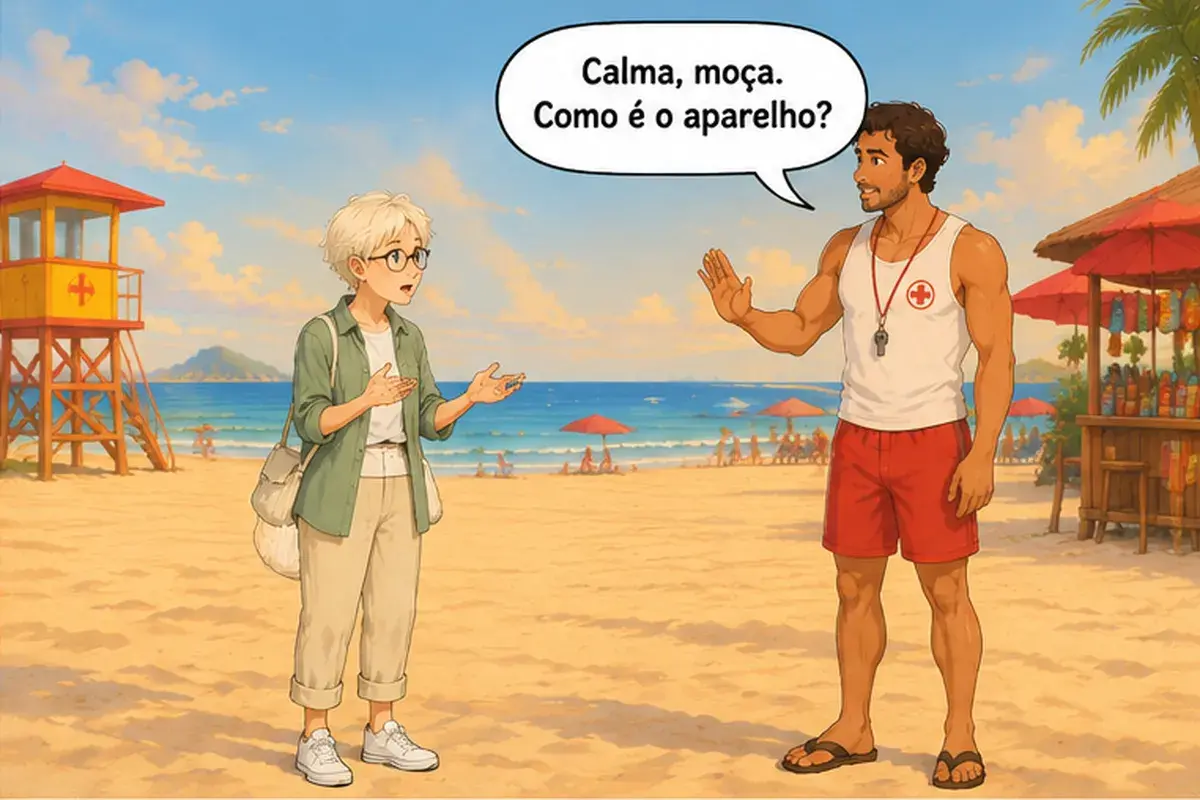
- Salva-vidas
Calma, moça. Como é o aparelho?
Calm down, miss. What does the device look like?
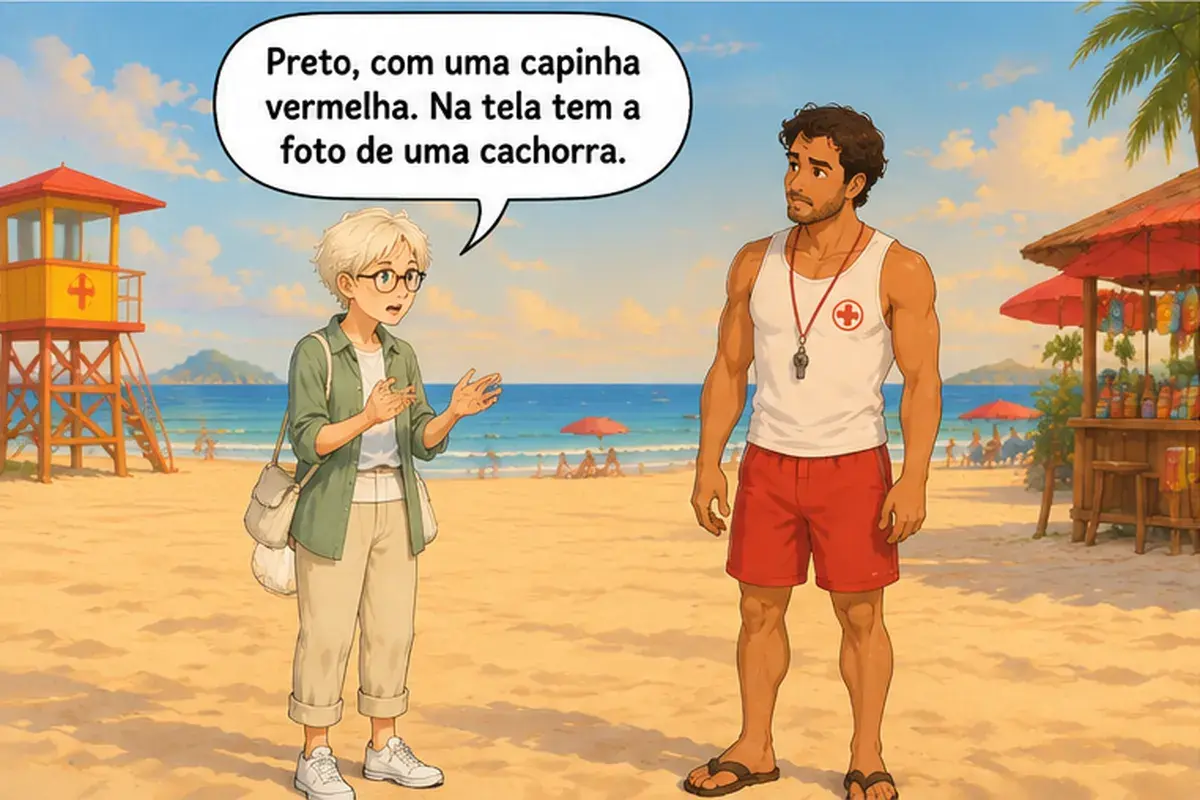
- Nina
Preto, com uma capinha vermelha. Na tela tem a foto de uma cachorra.
Black, with a red phone case. On the screen there's a picture of a dog.
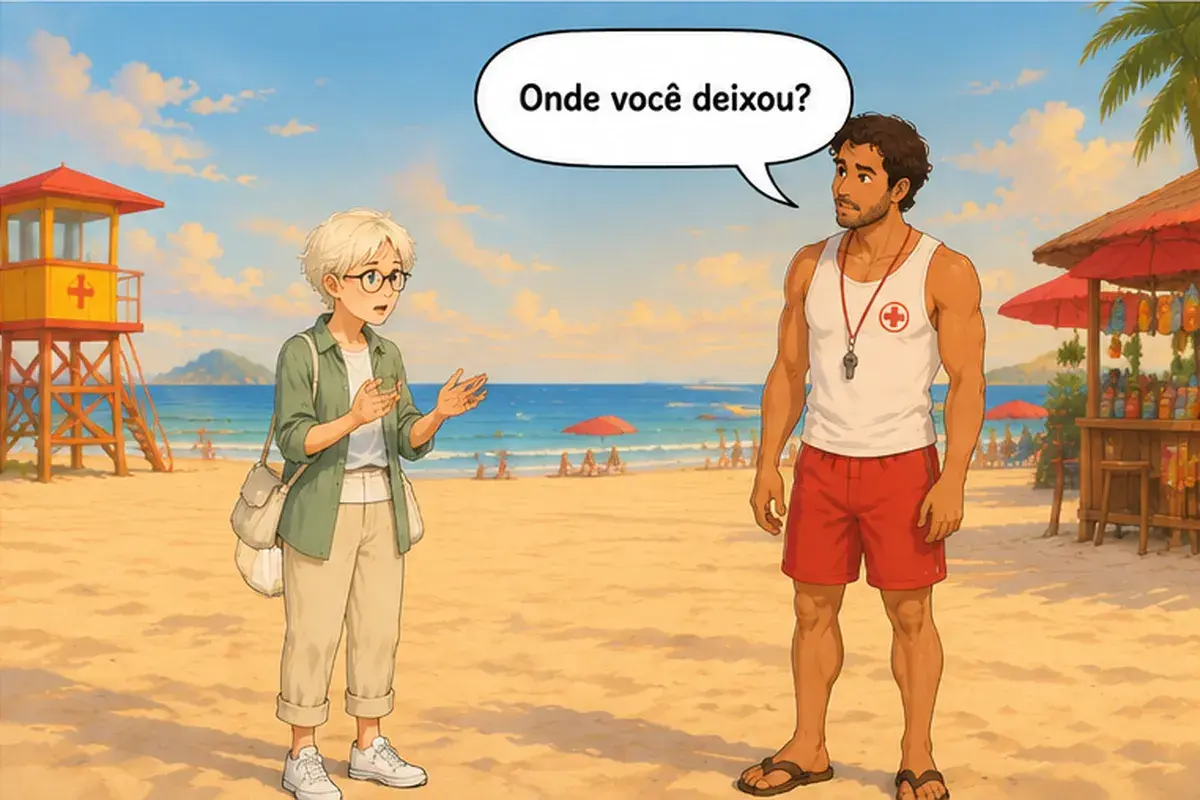
- Salva-vidas
Onde você deixou?
Where did you leave it?
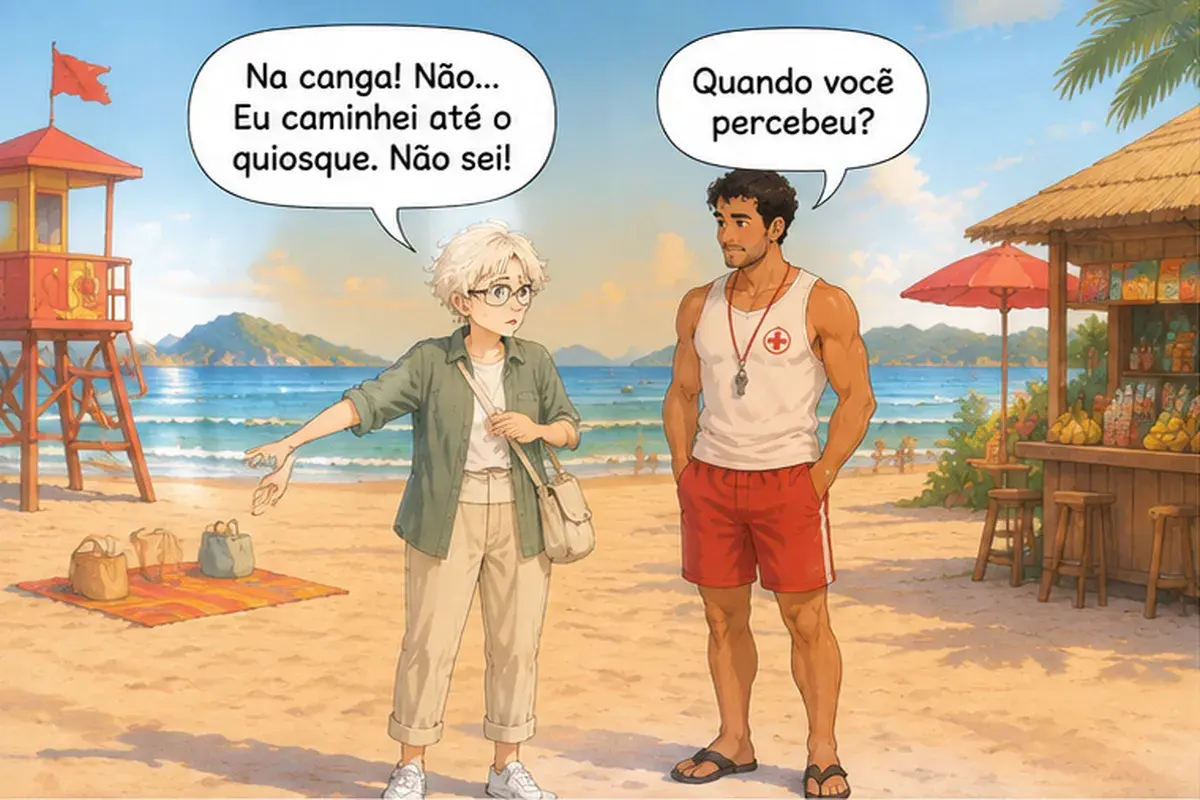
- Nina
Na canga! Não... Eu caminhei até o quiosque. Não sei!
On my beach wrap! No... I walked to the kiosk. I don't know!
- Salva-vidas
Quando você percebeu?
When did you notice?
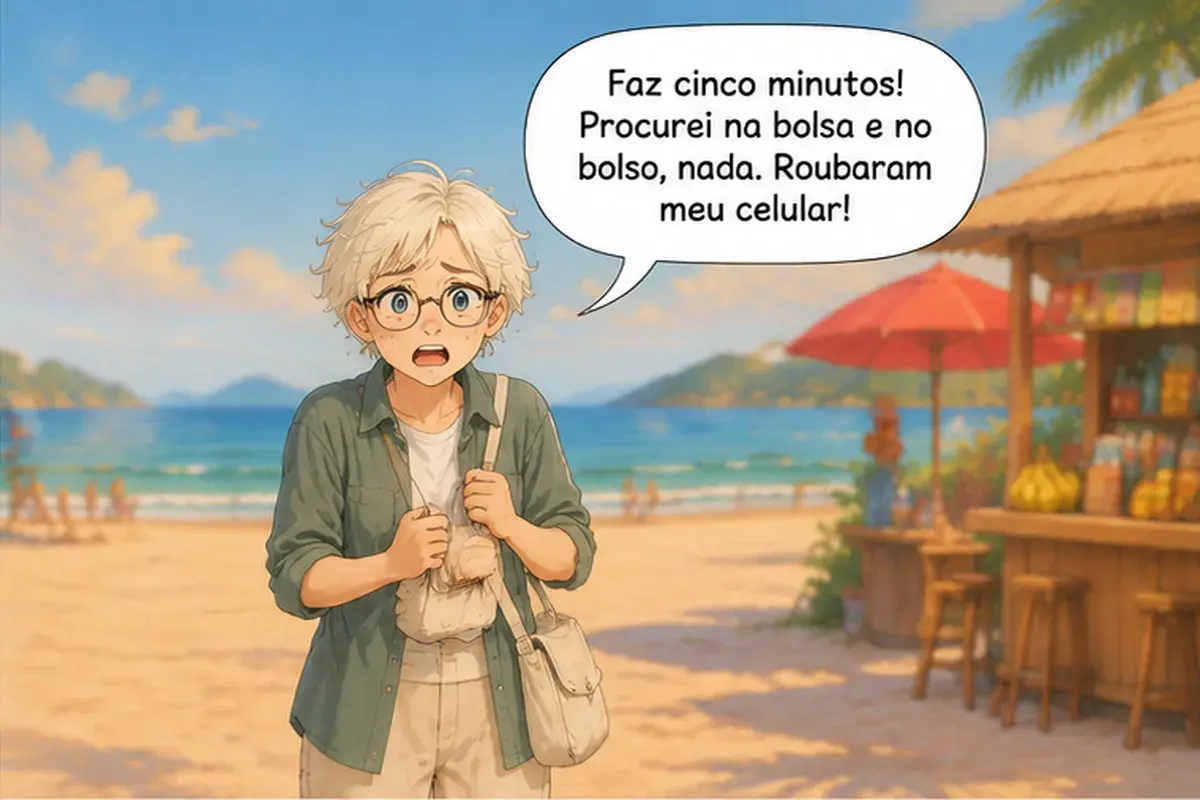
- Nina
Faz cinco minutos! Procurei na bolsa e no bolso, nada. Roubaram meu celular!
Five minutes ago! I looked in my bag and in my pocket, nothing. My phone was stolen!
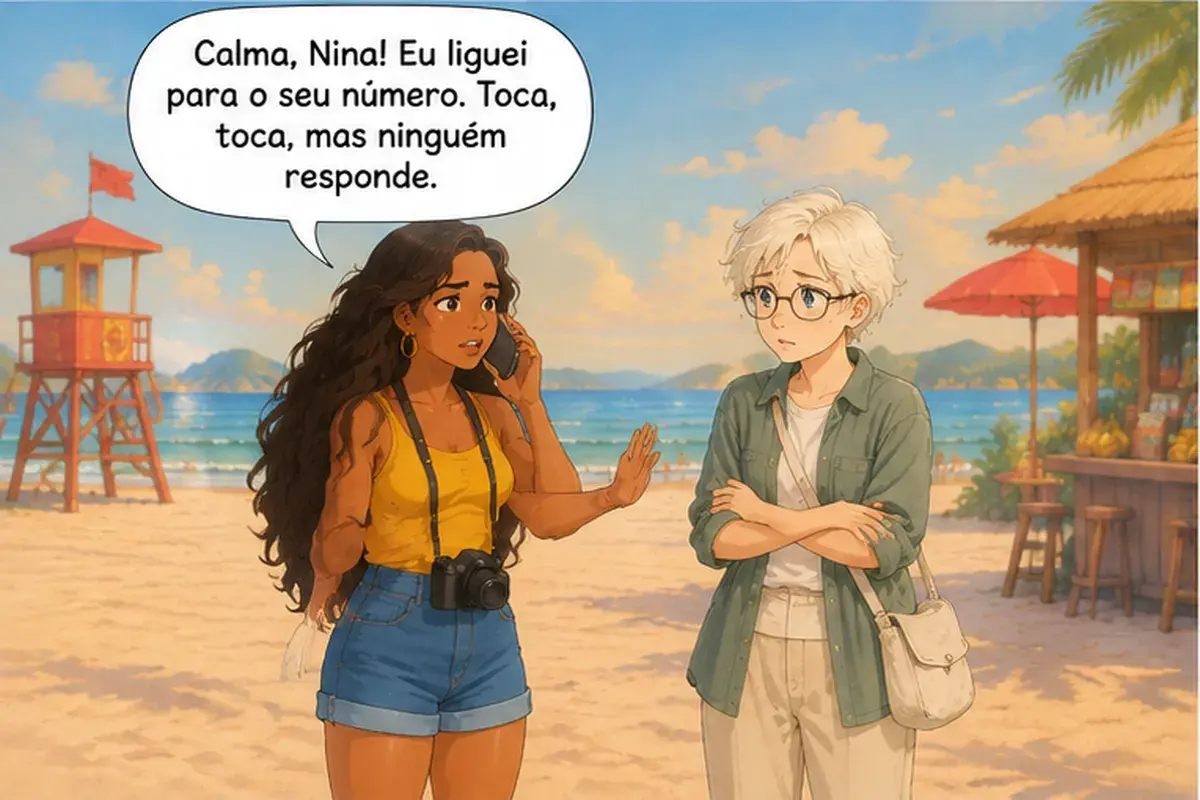
- Bia
Calma, Nina! Eu liguei para o seu número. Toca, toca, mas ninguém responde.
Calm down, Nina! I called your number. It rings and rings, but nobody answers.
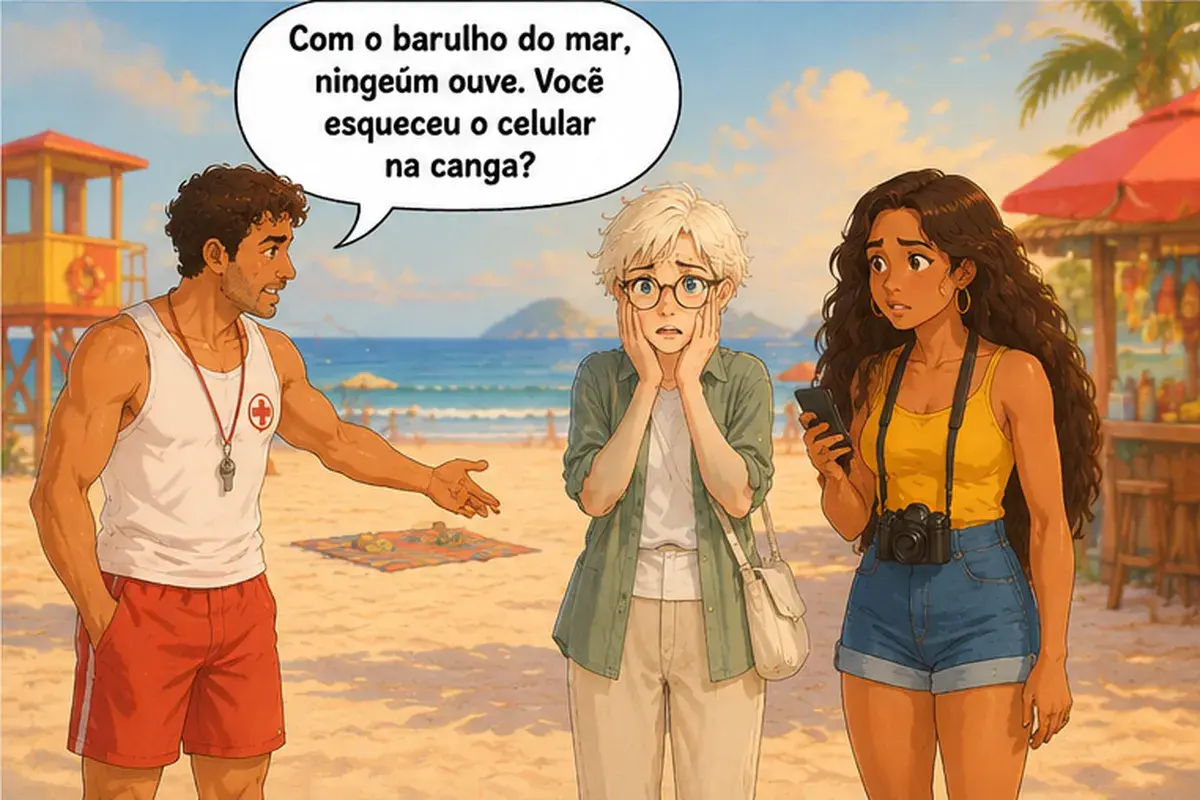
- Salva-vidas
Com o barulho do mar, ninguém ouve. Você esqueceu o celular na canga?
With the noise of the sea, nobody hears it. Did you forget your phone on the beach wrap?
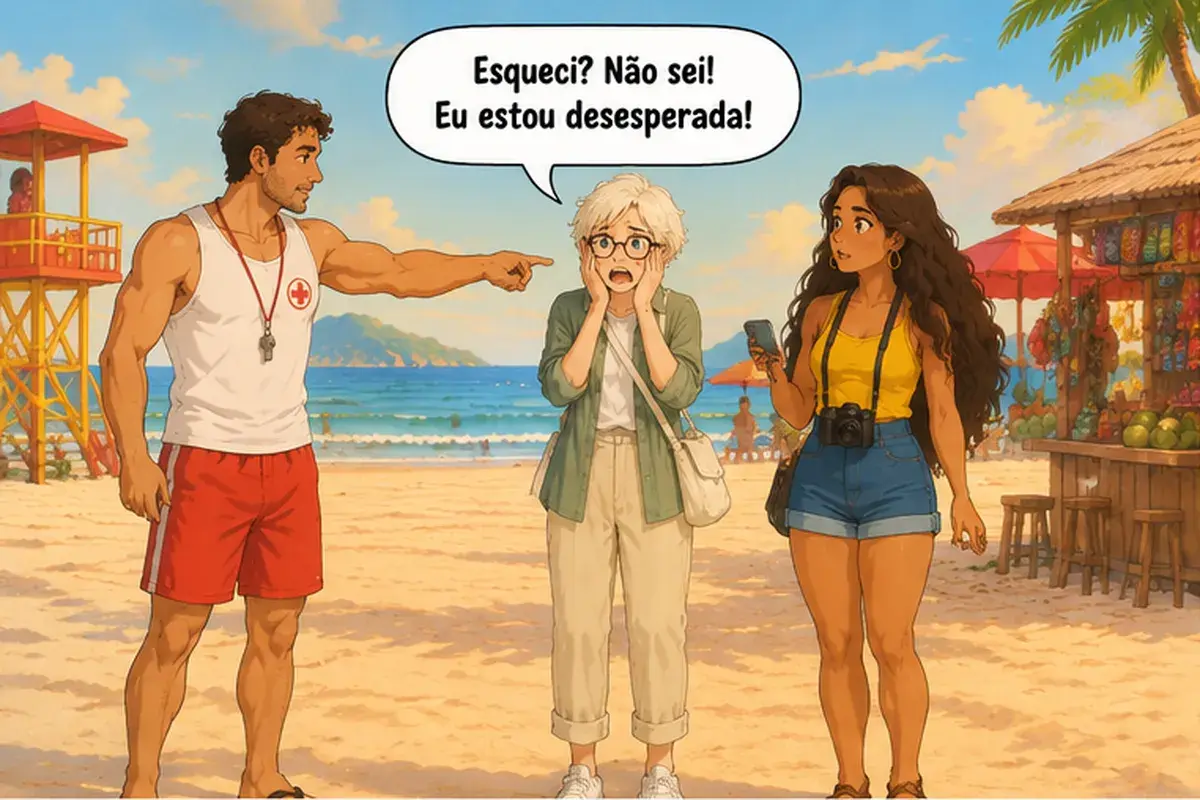
- Nina
Esqueci? Não sei! Eu estou desesperada!
Did I forget it? I don't know! I'm desperate! (woman speaking)
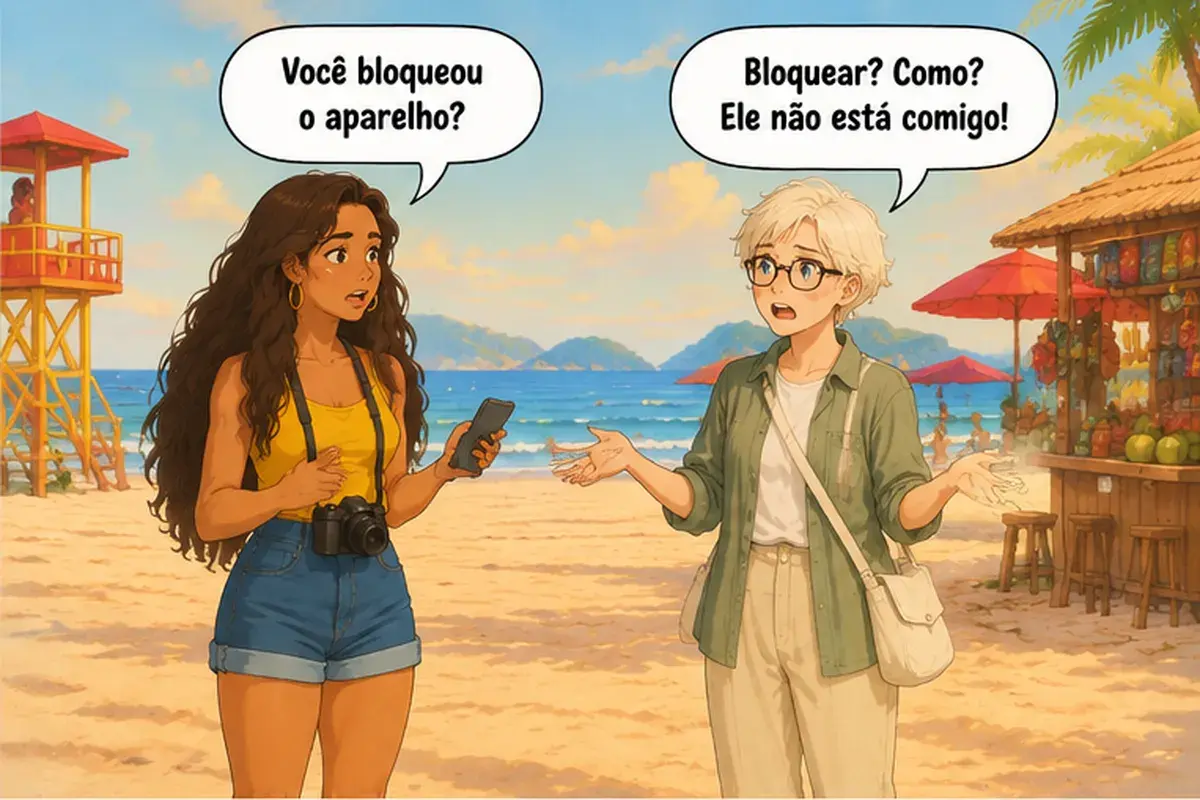
- Bia
Você bloqueou o aparelho?
Did you lock the device?
- Nina
Bloquear? Como? Ele não está comigo!
Lock it? How? It's not with me!

- Salva-vidas
Aqui não tem achados e perdidos, mas tem muita areia. Você pode perguntar no quiosque e para os vendedores.
There's no lost and found here, but there's lots of sand. You can ask at the kiosk and ask the vendors.
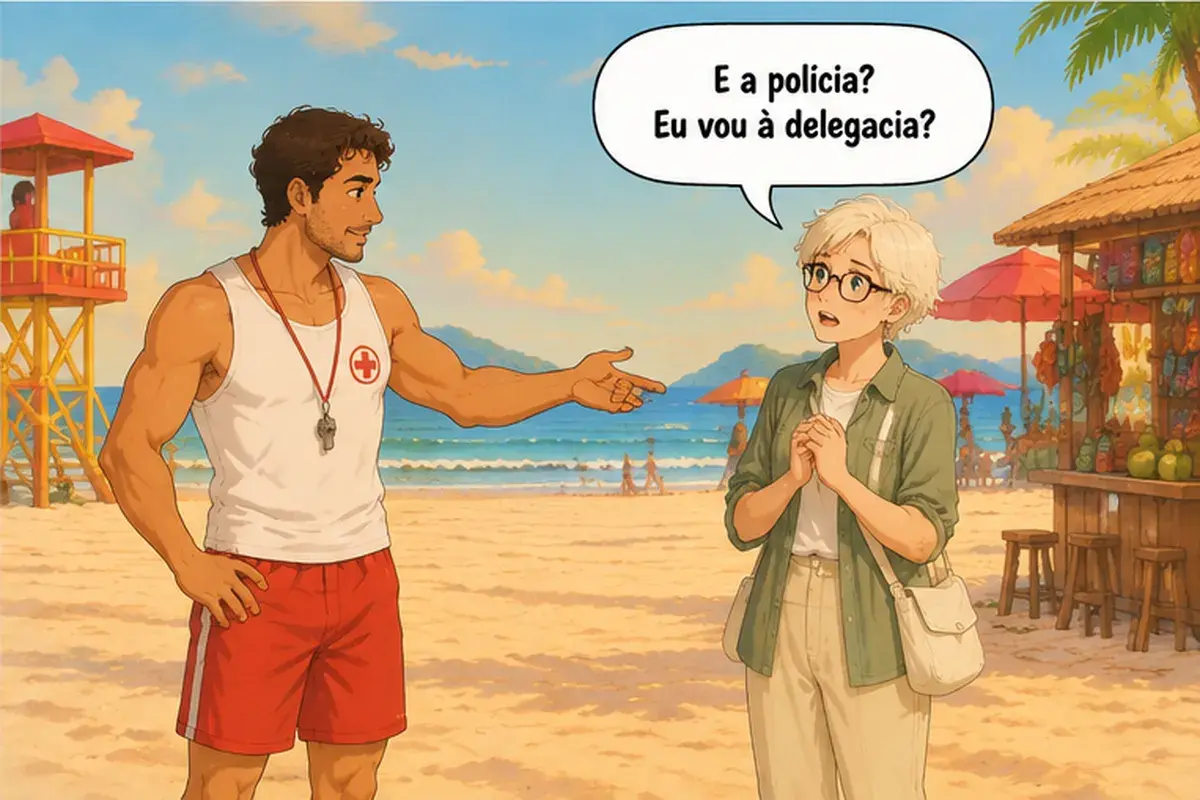
- Nina
E a polícia? Eu vou à delegacia?
What about the police? Do I go to the police station?

- Salva-vidas
Primeiro o quiosque. Os vendedores passam o dia aqui e veem tudo.
The kiosk first. The vendors spend the day here and see everything.

- Nina
Muito obrigada! O senhor é muito gentil.
Thank you so much! You're very kind. (formal)
Grammar for this text
Meu celular sumiu!—sumiumeans "disappeared": the preterite ofsumir, você / ele / ela form, stemsum-+-iu. Compare:Perdi meu celularmeans "I lost it" (my fault), whilesumiusays the phone disappeared "by itself".Pode me ajudar?—pode(poder) + infinitive: "can you help?";memeans "me" (unit 1). This is how you ask a stranger for help.Onde você deixou?—deixoumeans "left", fromdeixar. Portuguese doesn't need a word for "it" here: the question makes clear what you mean. English does: "Where did you leave it?"Faz cinco minutos!— herefazdoesn't mean "does":faz+ time = "that long ago" (a small topic of this unit).Roubaram meu celular!—roubarammeans "they stole" (roubar, eles form). Nobody knows who did it, so "they" isn't said. In English: "My phone was stolen!"Toca, toca, mas ninguém responde.—tocameans "rings" (tocar, ele form; the subject,celular, isn't said). Whenninguémcomes before the verb, there's nonão, just like English "nobody answers".Aqui não tem achados e perdidos—achados e perdidosmeans "lost and found", word for word "found and lost".Os vendedores passam o dia aqui e veem tudo.—veemmeans "see": the present ofver(to see), eles form; the ele form isvê.passam o dia— "spend the day".
Words and grammar of the unit: Explain what went missing.
Learn the words from the texts with flashcards
In the app, you can tap any word in a text to see its translation, forms and examples, and new words stick with flashcards. 15 minutes a day.
Start for freeEverything is open for free. No card needed to sign up.