
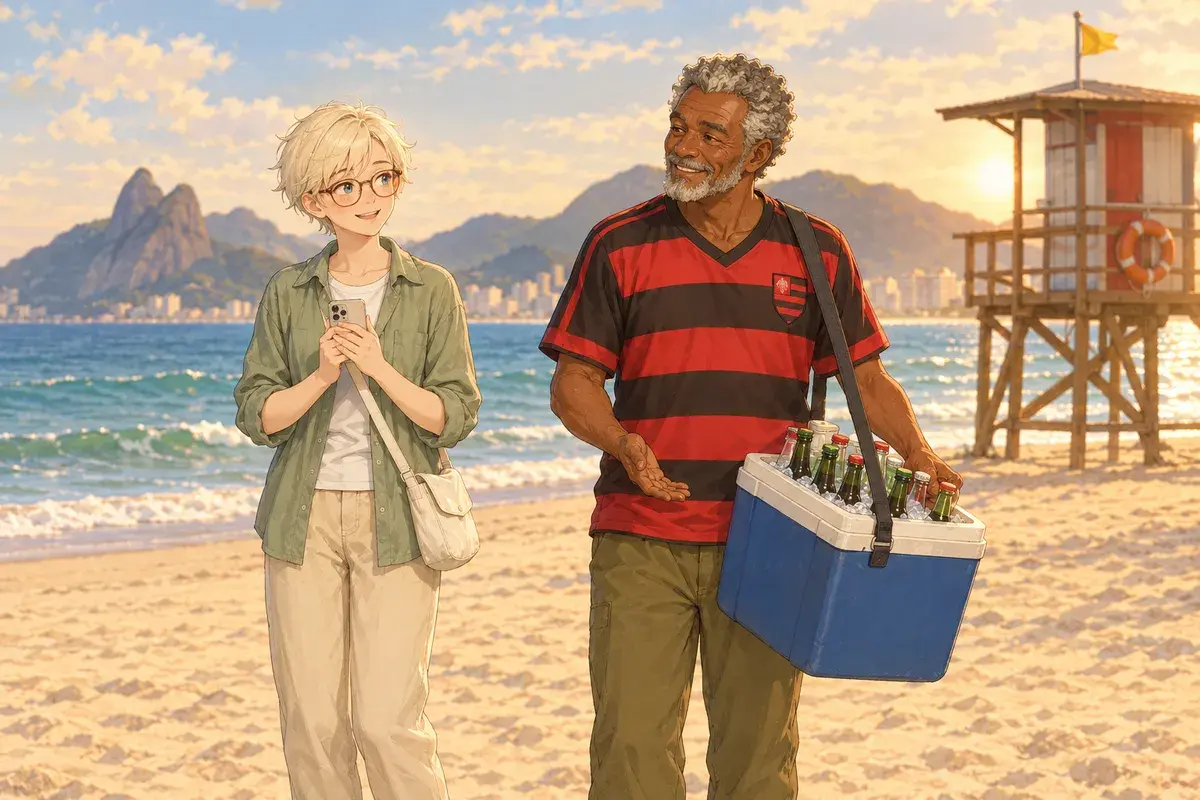
Portuguese story with translation · A2 · 16 lines
Ainda bem que você achou meu celular! Good thing you found my phone!
Comic · 15 panels
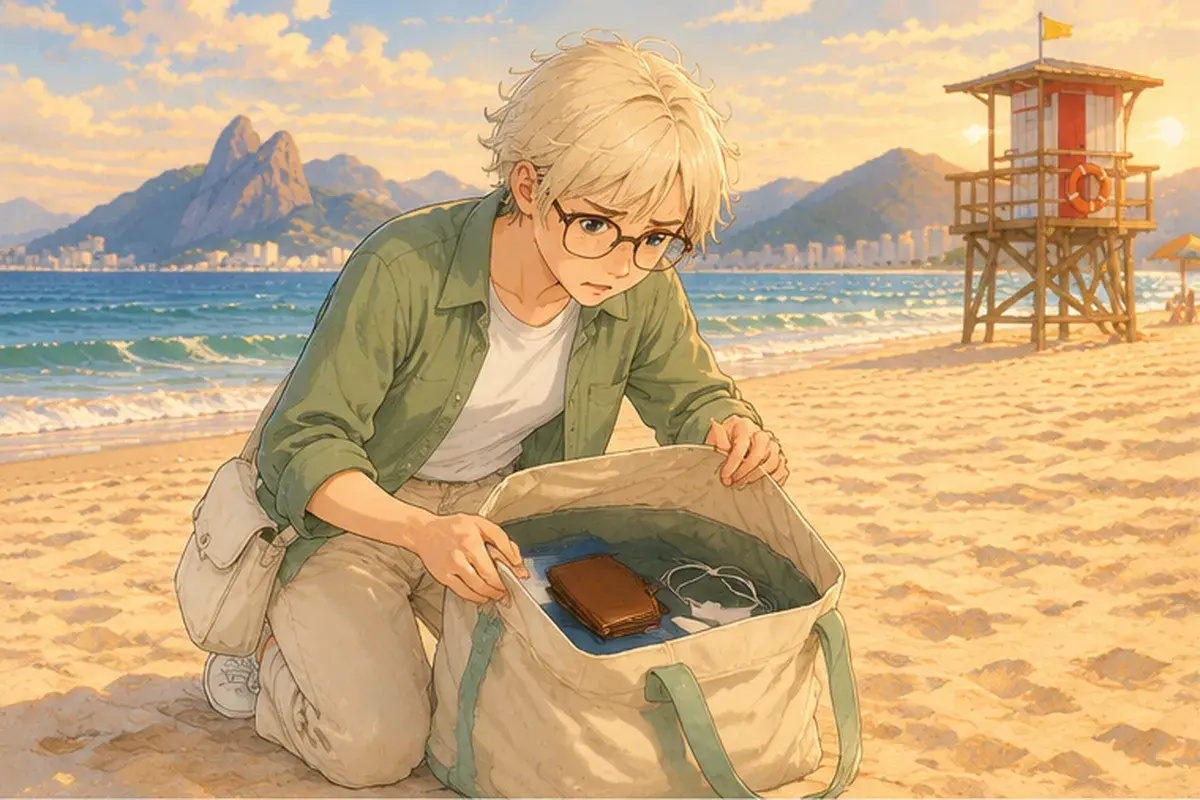
Hoje meu celular sumiu na praia. Olhei na bolsa: carteira, documento, carregador, tudo ali.
Today my phone disappeared at the beach. I looked in my bag: wallet, ID, charger, all there.

Só o celular não. Procurei no bolso, na canga e na areia, com muita atenção.
Just not the phone. I looked in my pocket, on the beach wrap and in the sand, paying close attention.
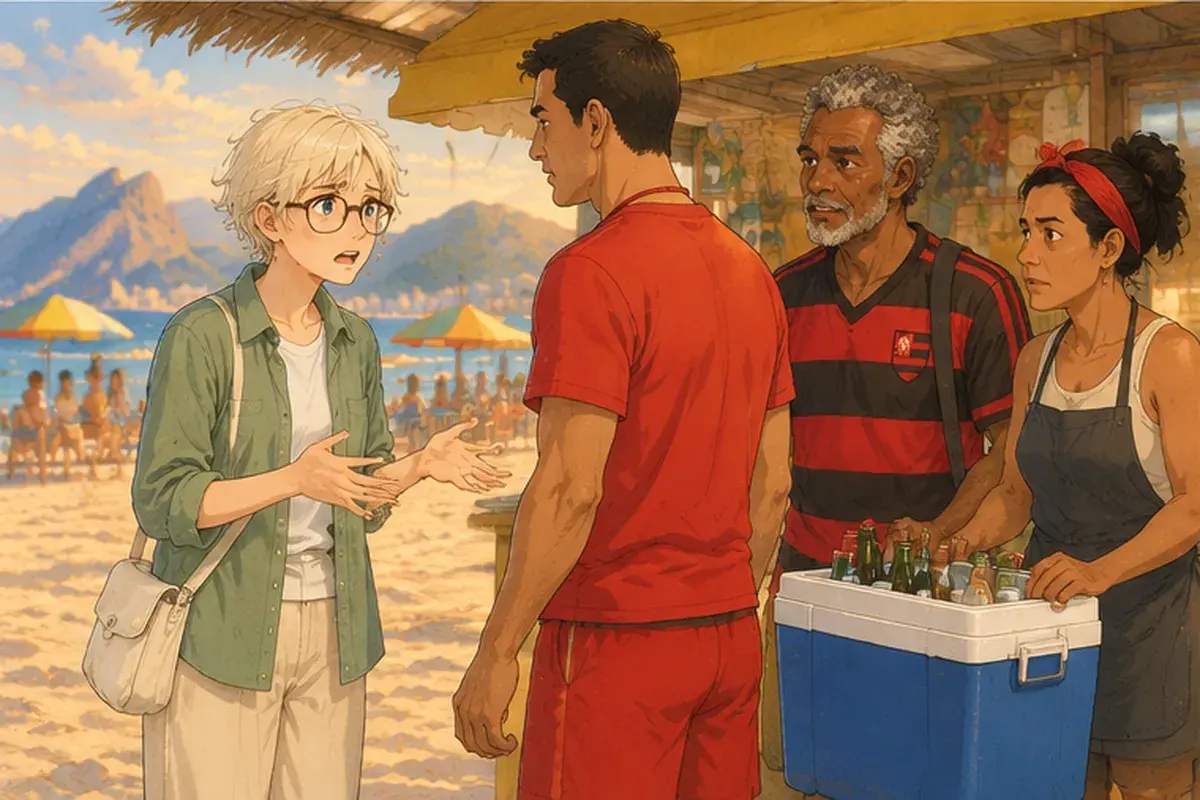
Falei com o salva-vidas. Perguntei no quiosque e para dois vendedores.
I talked to the lifeguard. I asked at the kiosk and asked two vendors.
Ninguém achou nada. Eu estava desesperada.
Nobody found anything. I was desperate. (woman speaking)

Pensei nos meus desenhos e nas fotos da minha família. Que azar!
I thought about my drawings and the photos of my family. What bad luck!

Então um vendedor de mate me chamou: «Moça!» Levei um susto!
Then a mate vendor called me: "Miss!" I got a scare!
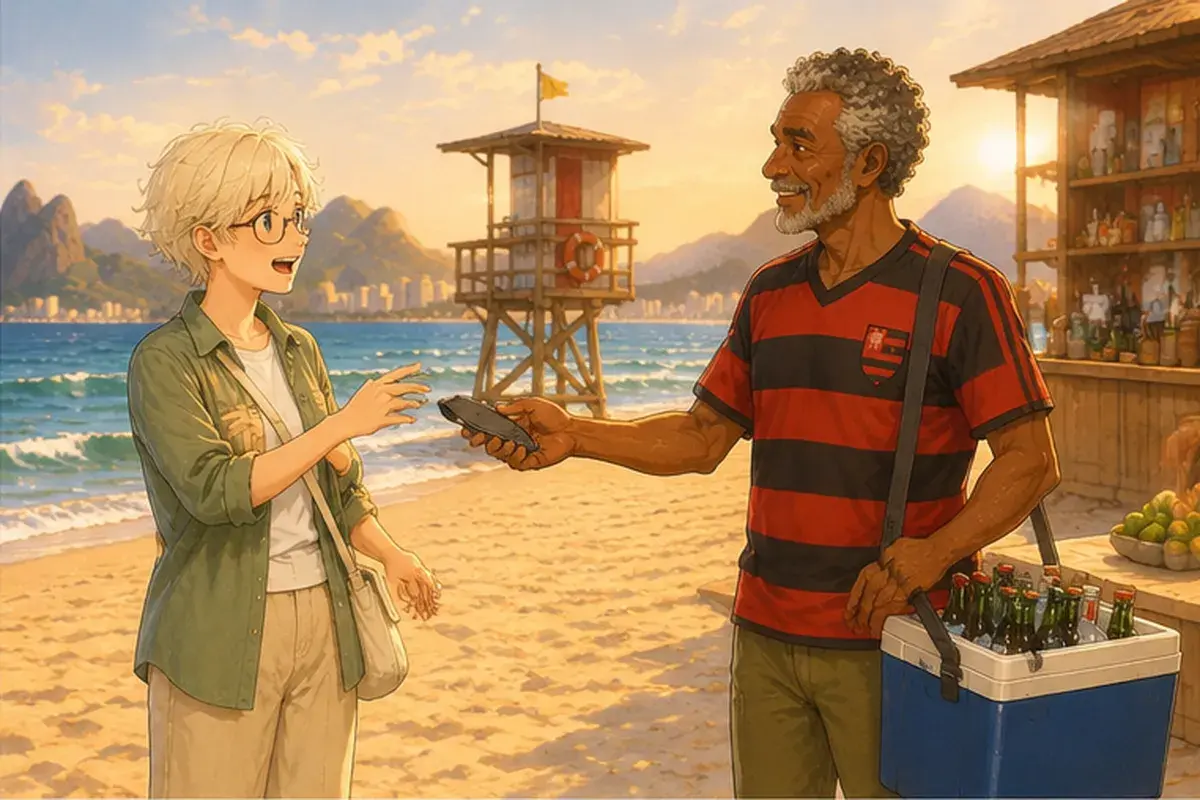
Ele devolveu meu celular e falou: «Achei na areia, no sol. Esperei você voltar.»
He gave my phone back and said: "I found it in the sand, in the sun. I waited for you to come back."
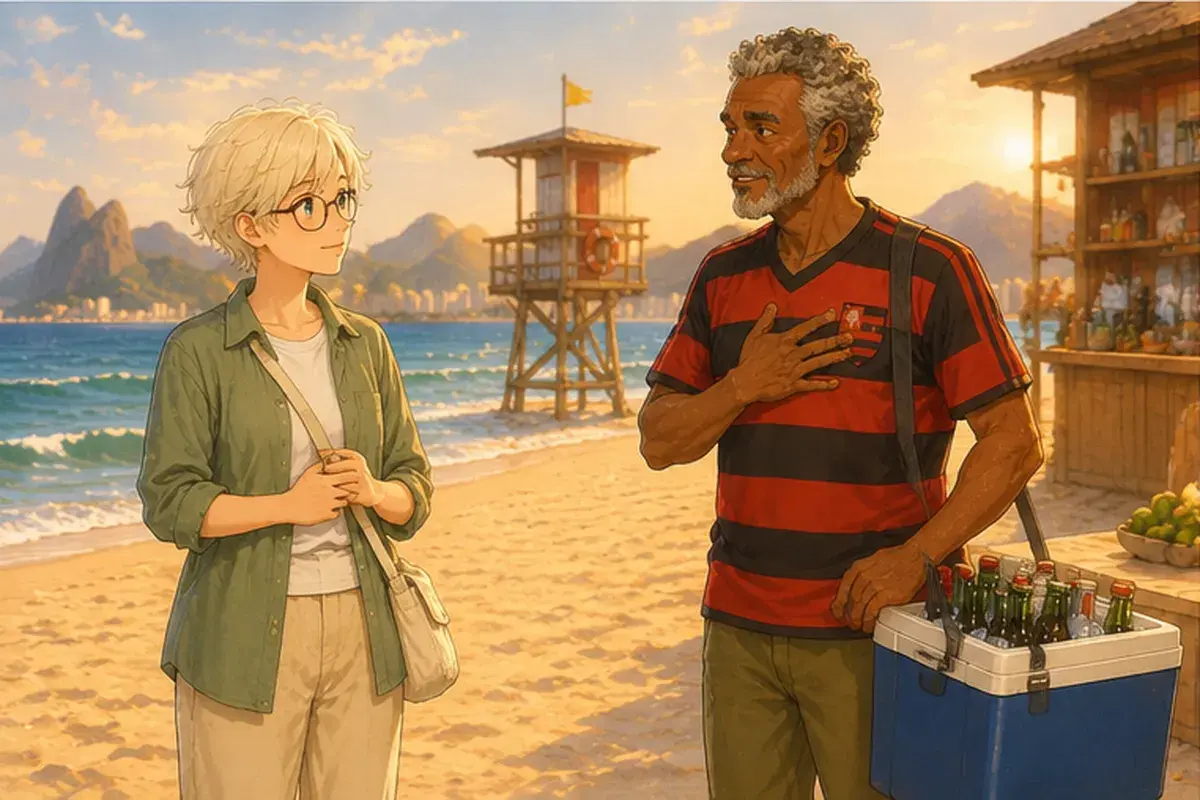
Depois ele jurou: «Cuidei dele e não olhei as fotos. Pode confiar!»
Then he swore: "I looked after it and didn't look at the photos. You can trust me!"
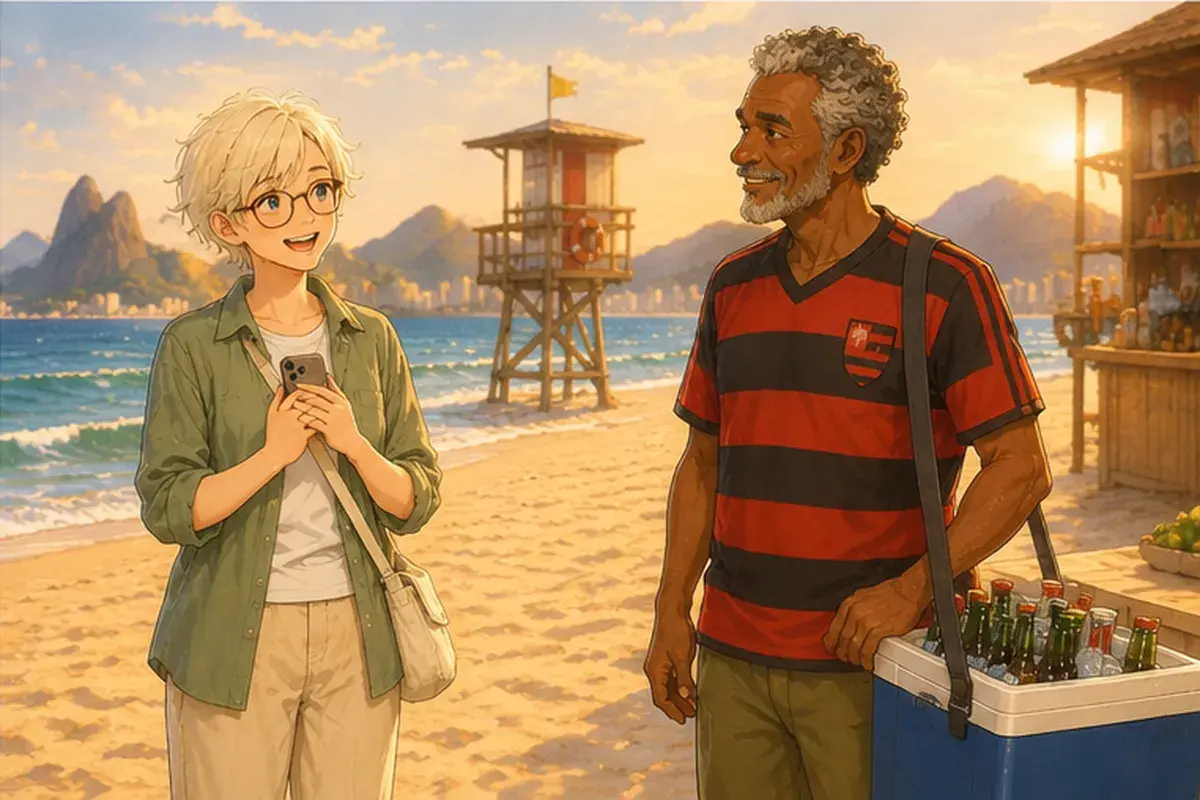
Eu estava aliviada! «Ainda bem que você achou meu celular! Você é honesto!»
I was relieved! "Good thing you found my phone! You're honest!" (woman speaking, to a man)
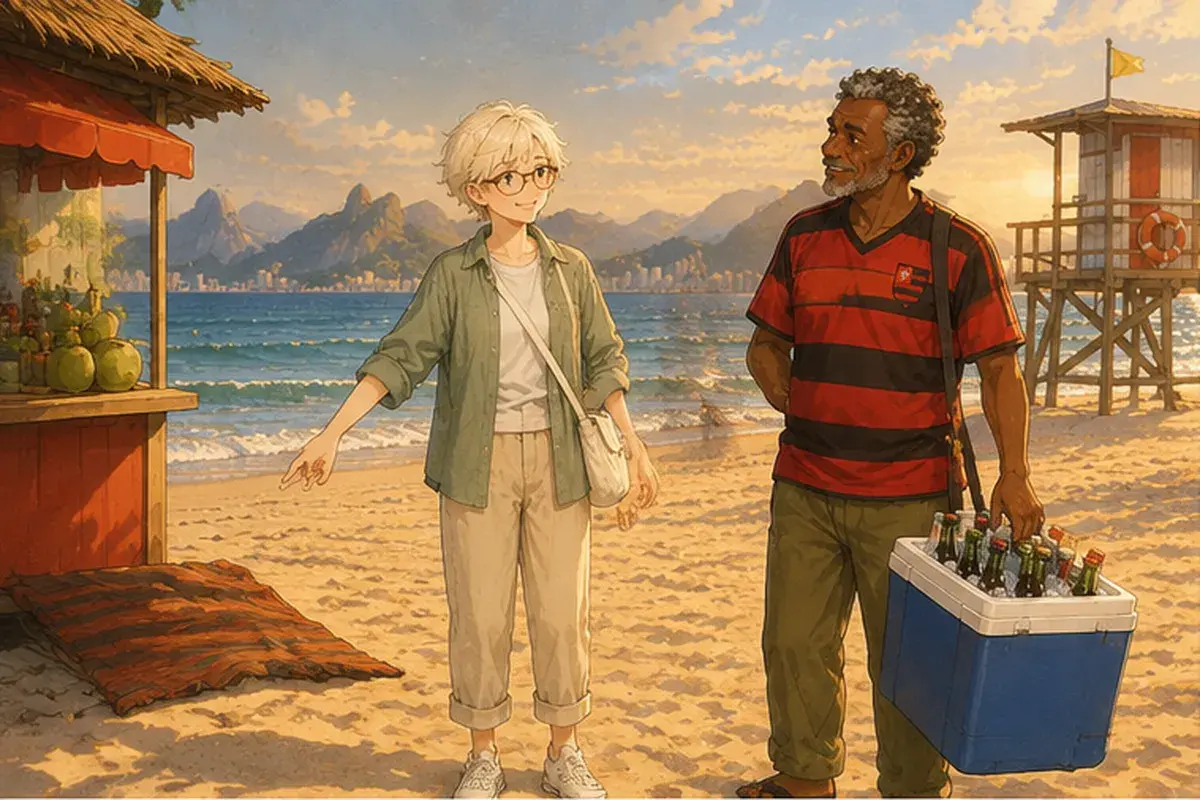
Eu falei: «A culpa é minha! Mudei a canga para a sombra e esqueci o celular na areia.»
I said: "It's my fault! I moved my beach wrap into the shade and forgot my phone in the sand."
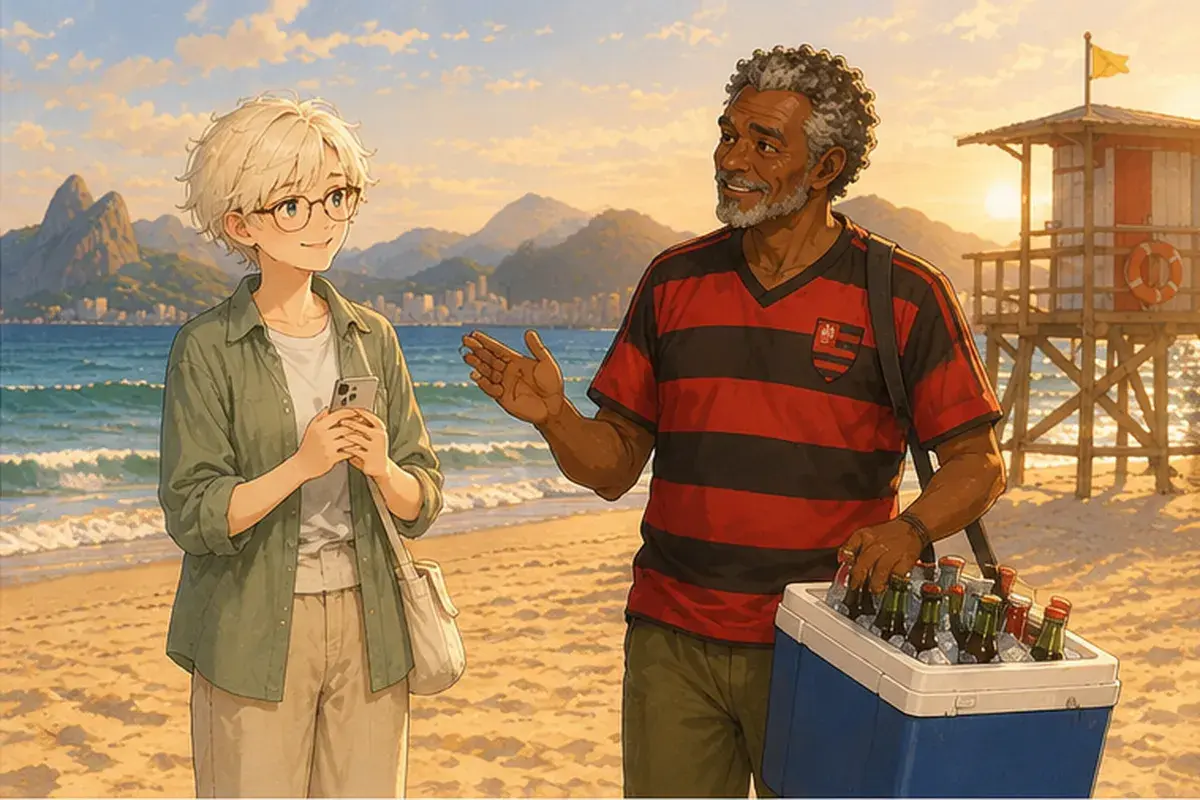
Ele respondeu: «Isso acontece. Toma cuidado, moça.»
He answered: "That happens. Be careful, miss."
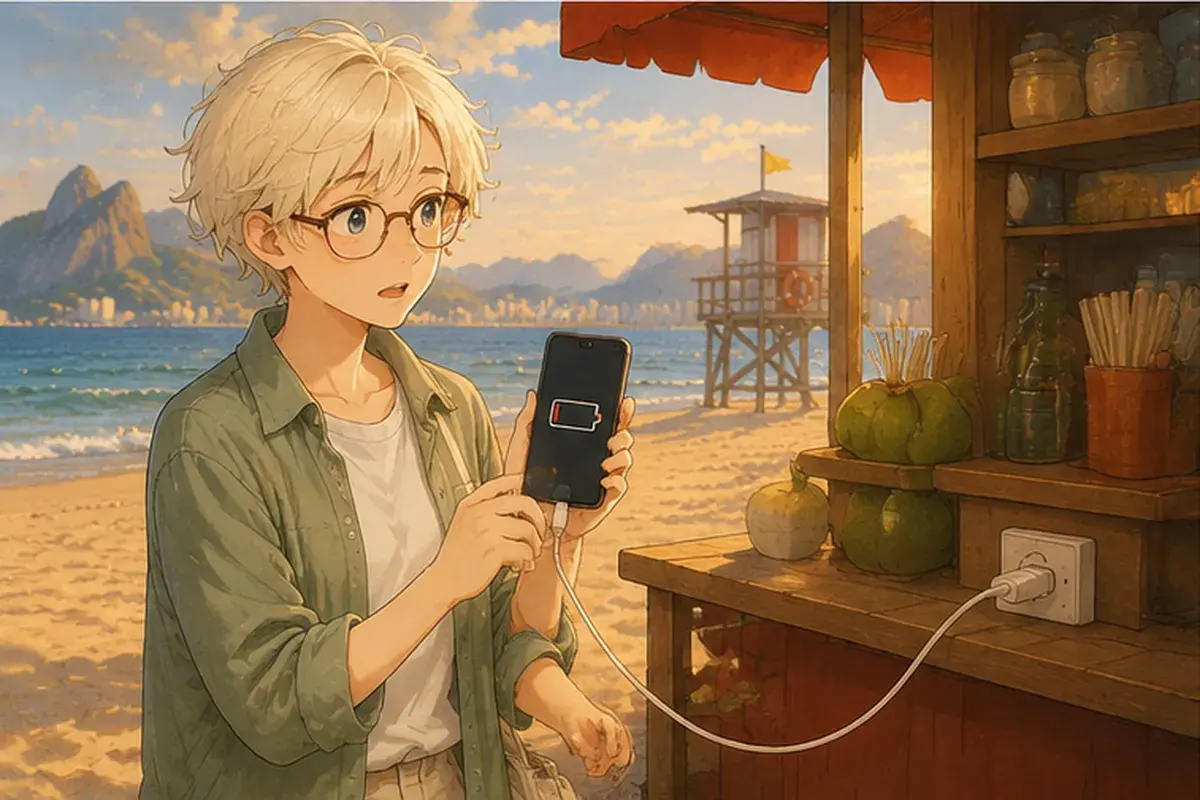
Na tela, só dez por cento de bateria. Carreguei o aparelho no quiosque.
On the screen, only ten percent battery. I charged the device at the kiosk.
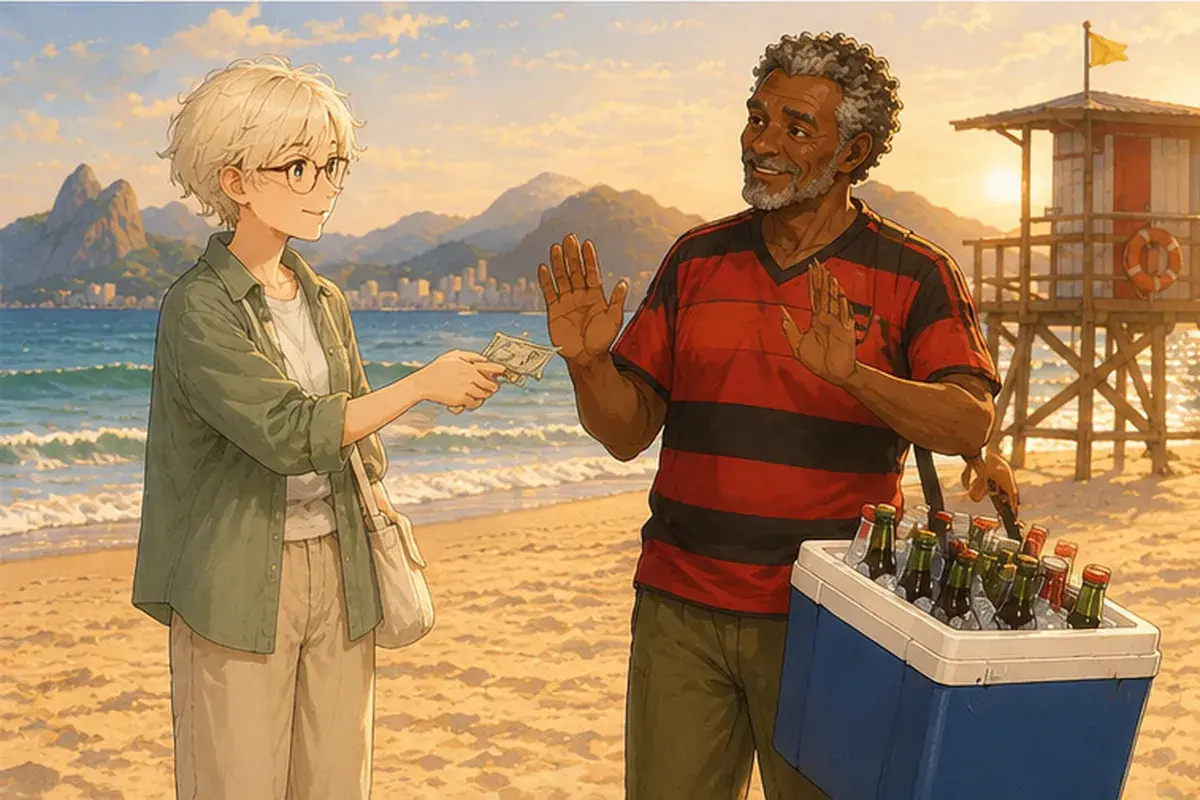
Eu queria pagar, mas ele falou: «Dinheiro, não! Compra um mate.»
I wanted to pay, but he said: "No money! Buy a mate."

Comprei dois. Agradeci muito e prometi voltar amanhã.
I bought two. I thanked him a lot and promised to come back tomorrow.

Em casa, Dona Zezé olhou para o céu e falou: «Que susto! Graças a Deus!»
At home, Dona Zezé looked up at the sky and said: "What a scare! Thank God!"

Seu Jorge ouviu tudo e falou só uma coisa: «Celular não tem pé, mas some.»
Seu Jorge heard everything and said just one thing: "A phone has no feet, but it disappears."
Grammar for this text
Eu estava desesperada—estavais a ready-made form ofestar(to be): "I was" at that moment. The same inEu estava aliviada(I was relieved). The rule for this past form is in unit 11; for now, learnestava+ a feeling as a set form.Esperei você voltar—esperar+ a person + infinitive: "I waited for you to come back".Cuidei dele—cuideimeans "I looked after": the preterite ofcuidar, eu form.cuidar de— "to look after";dele=de+ele: here "after it" (the phone).Pode confiar!—pode(poder) + infinitive: "you can trust (me)".Toma cuidado,Compra um mate— casual commands: the form is the same as the você form (toma,compra). The rule is in unit 6.tomar cuidado— "to be careful".Eu queria pagar—queriais a form ofquereryou know from A1 (ordering at the bakery). Here it means "I wanted to pay"; when and why this form is used, see unit 11.Levei um susto!—levar um susto— "to get a scare", word for word "to take a scare".Celular não tem pé, mas some—someis the present ofsumir: the stem changes (u→o); in the preterite it'ssumiu. A dry joke: a phone has no feet, but it still walks off.
Words and grammar of the unit: Explain what went missing.
Learn the words from the texts with flashcards
In the app, you can tap any word in a text to see its translation, forms and examples, and new words stick with flashcards. 15 minutes a day.
Start for freeEverything is open for free. No card needed to sign up.