

Portuguese dialogue with translation · A2 · 16 lines
E se eu levar dois? What if I take two?
Comic · 14 panels
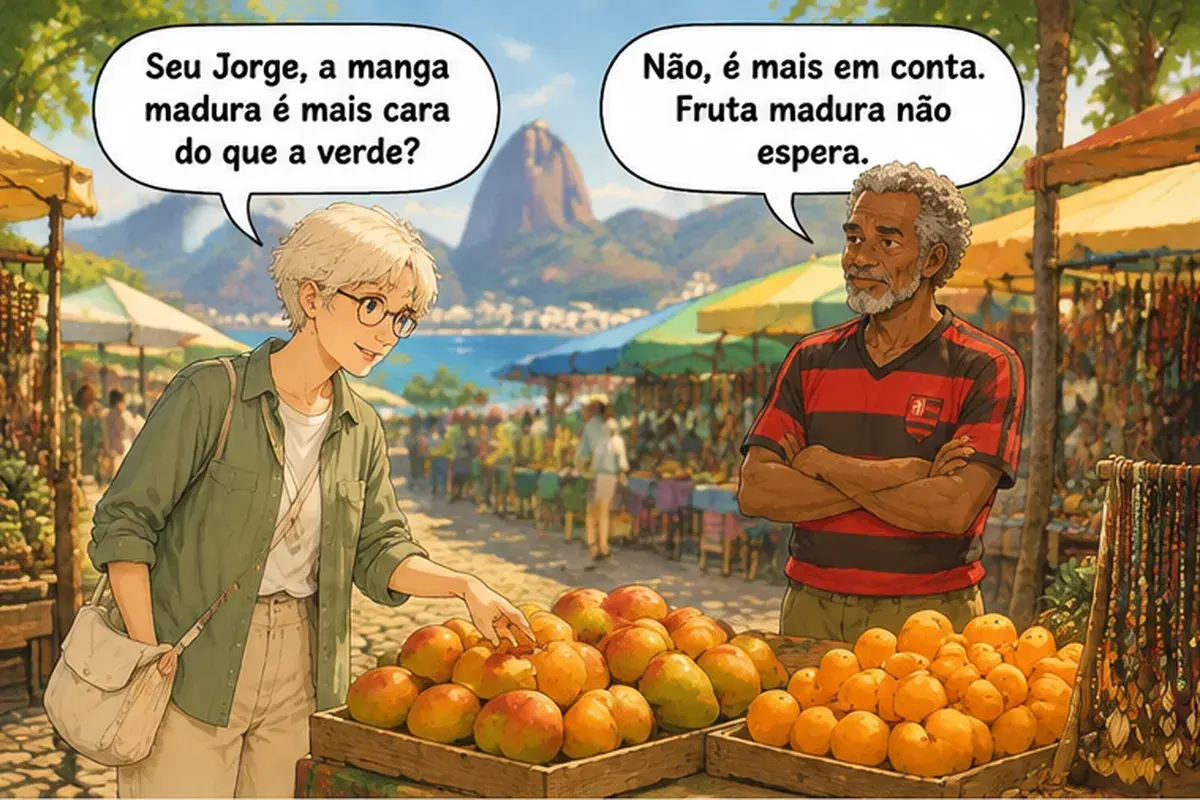
- Nina
Seu Jorge, a manga madura é mais cara do que a verde?
Seu Jorge, is the ripe mango more expensive than the green one?
- Jorge
Não, é mais em conta. Fruta madura não espera.
No, it's more affordable. Ripe fruit doesn't wait.
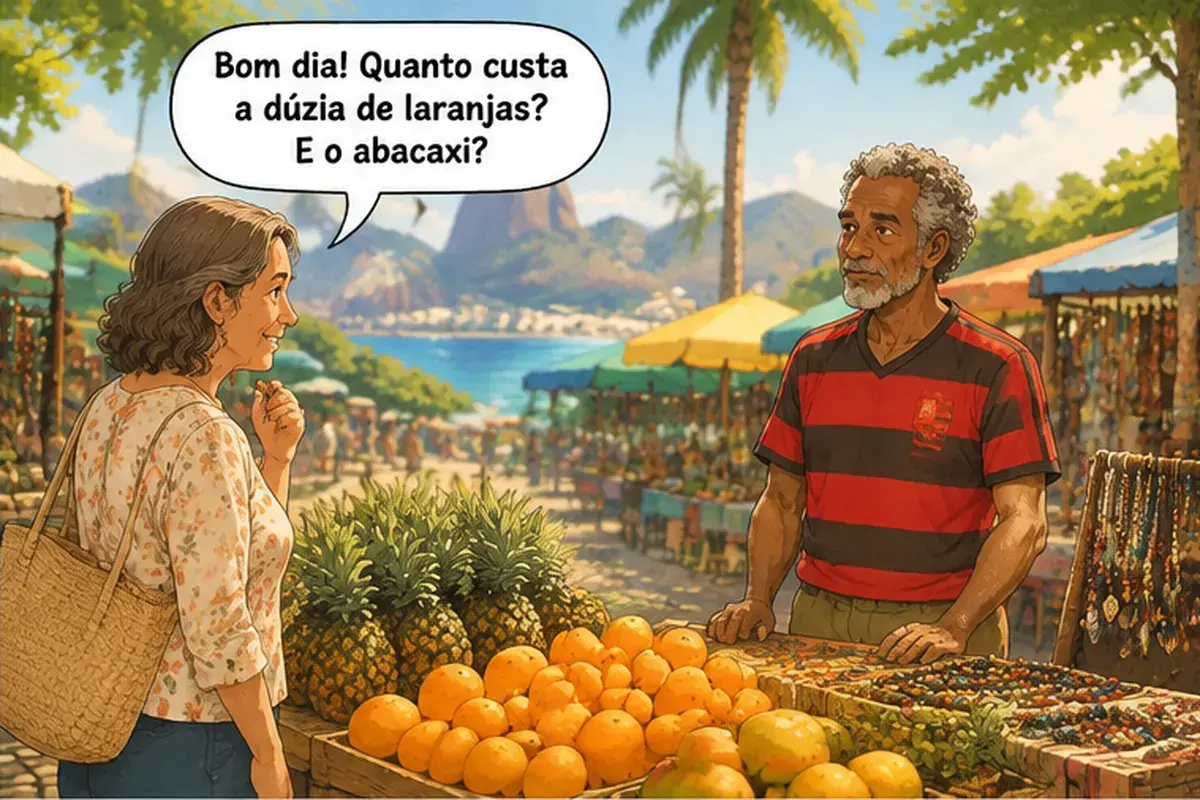
- Moça
Bom dia! Quanto custa a dúzia de laranjas? E o abacaxi?
Good morning! How much is a dozen oranges? And the pineapple?
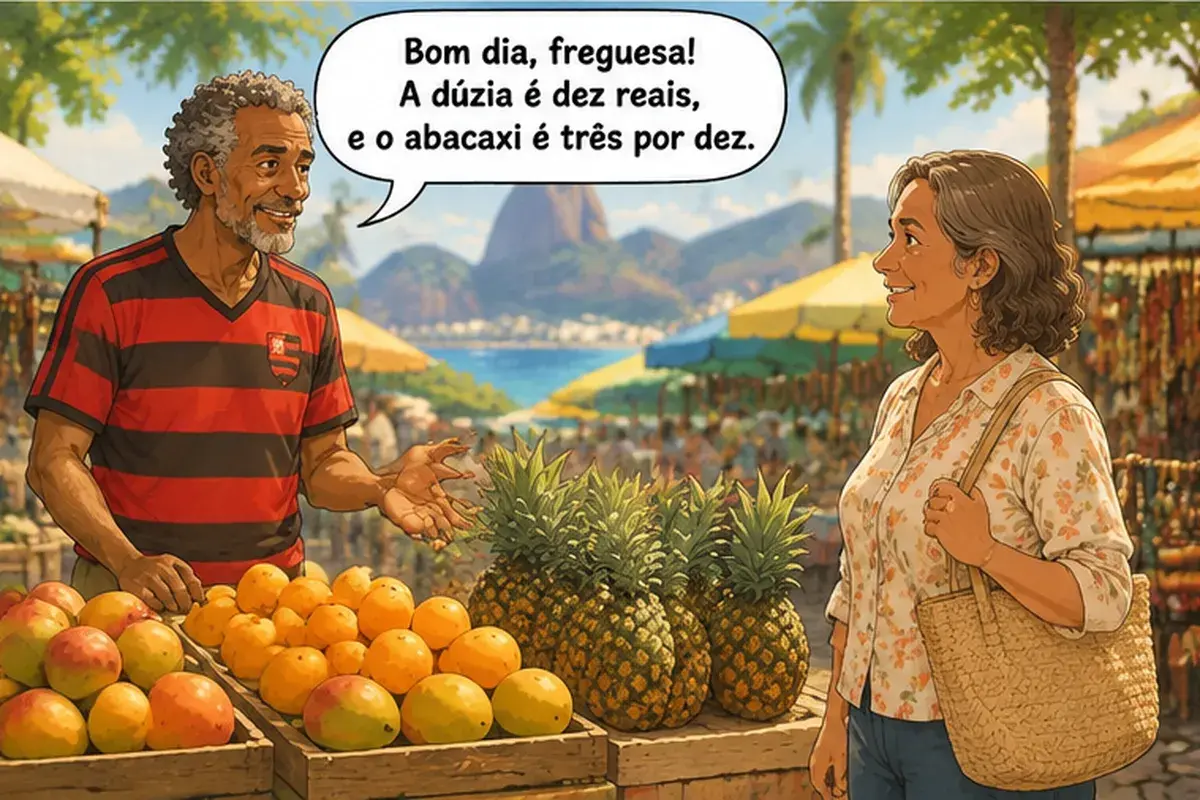
- Jorge
Bom dia, freguesa! A dúzia é dez reais, e o abacaxi é três por dez.
Good morning, ma'am! A dozen is ten reais, and pineapples are three for ten.
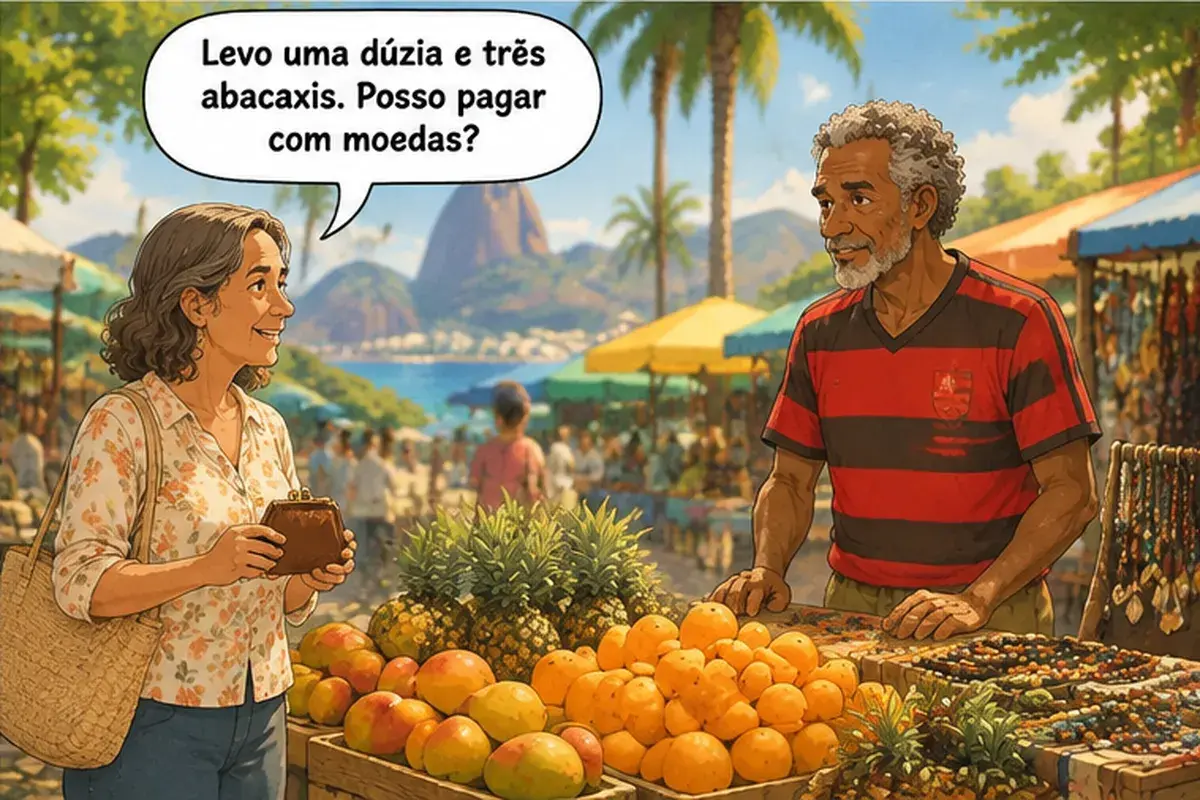
- Moça
Levo uma dúzia e três abacaxis. Posso pagar com moedas?
I'll take a dozen and three pineapples. Can I pay with coins?
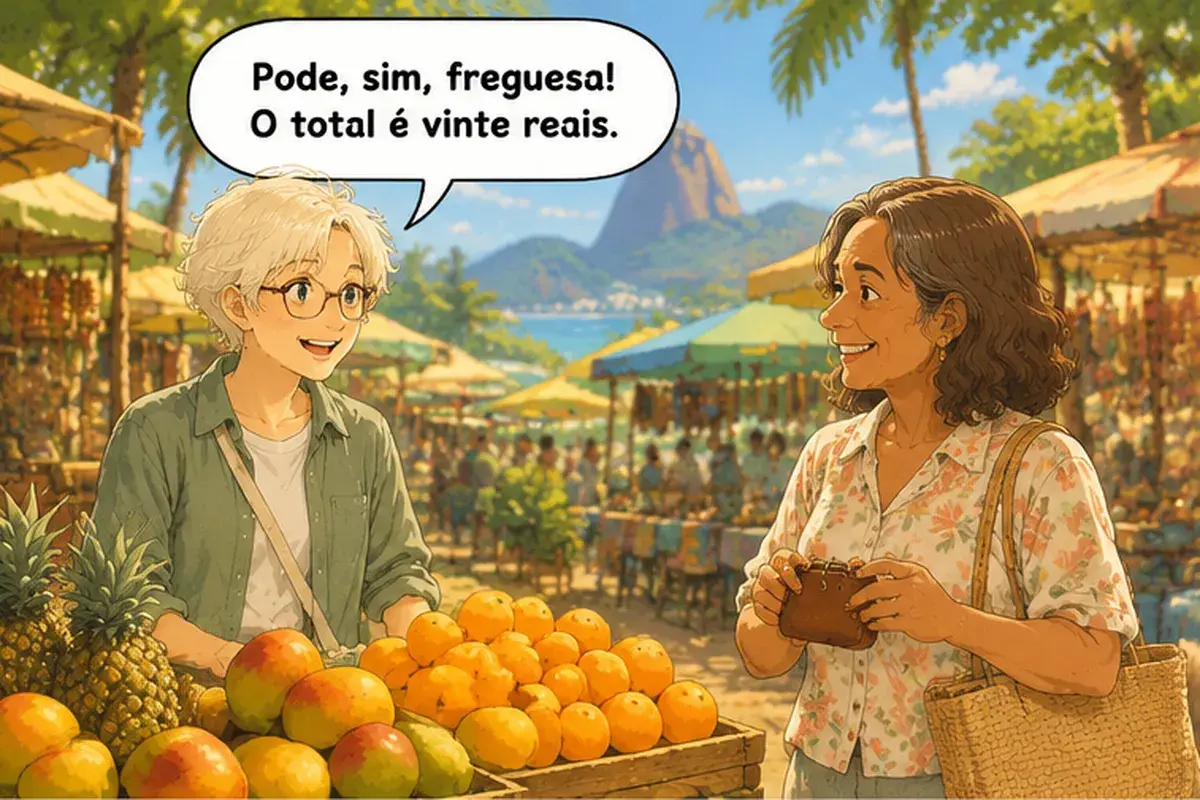
- Nina
Pode, sim, freguesa! O total é vinte reais.
Sure you can, ma'am! The total is twenty reais.
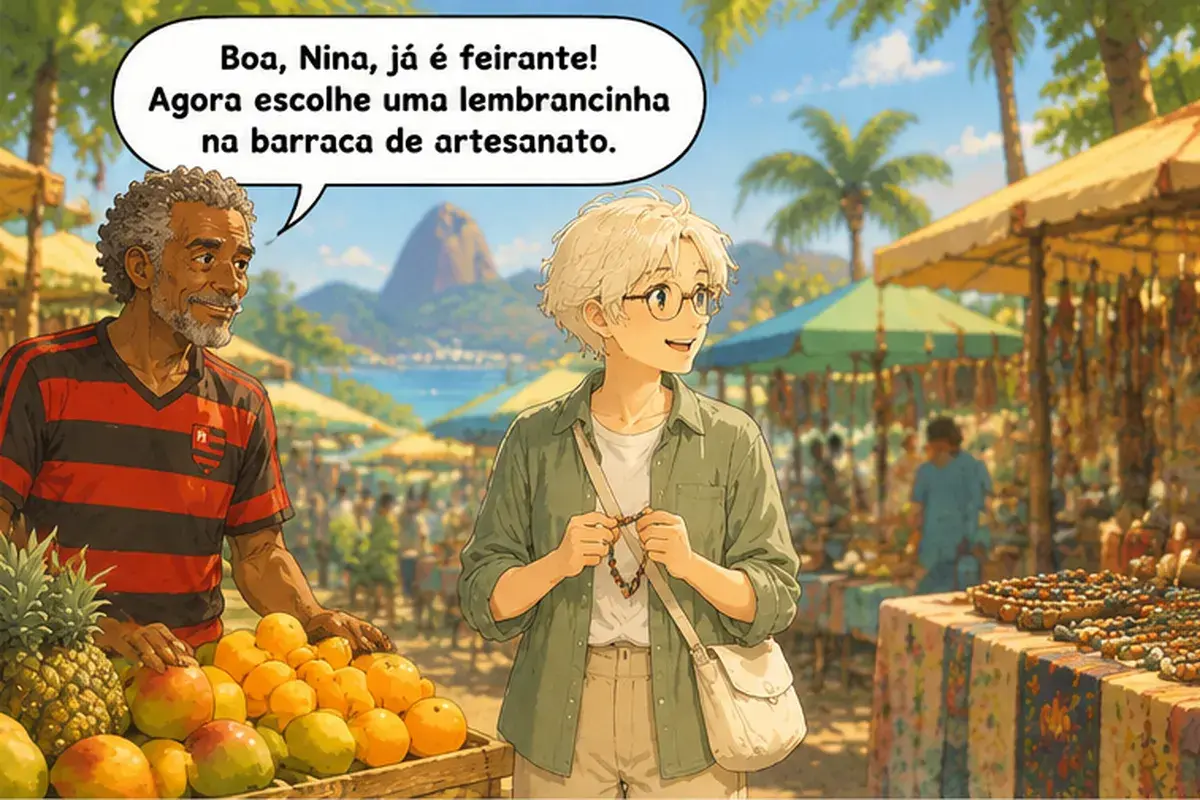
- Jorge
Boa, Nina, já é feirante! Agora escolhe uma lembrancinha na barraca de artesanato.
Nice, Nina, you're already a market vendor! Now choose a souvenir at the craft stall.
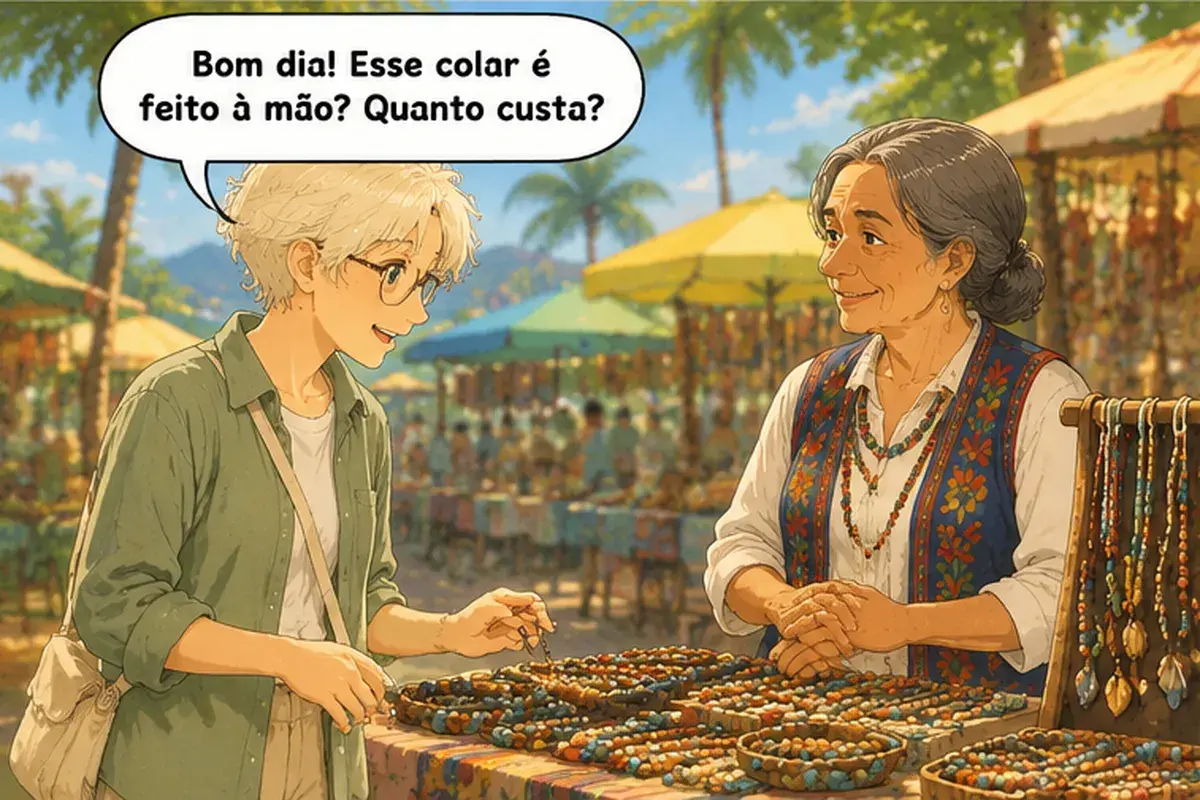
- Nina
Bom dia! Esse colar é feito à mão? Quanto custa?
Good morning! Is this necklace handmade? How much is it?
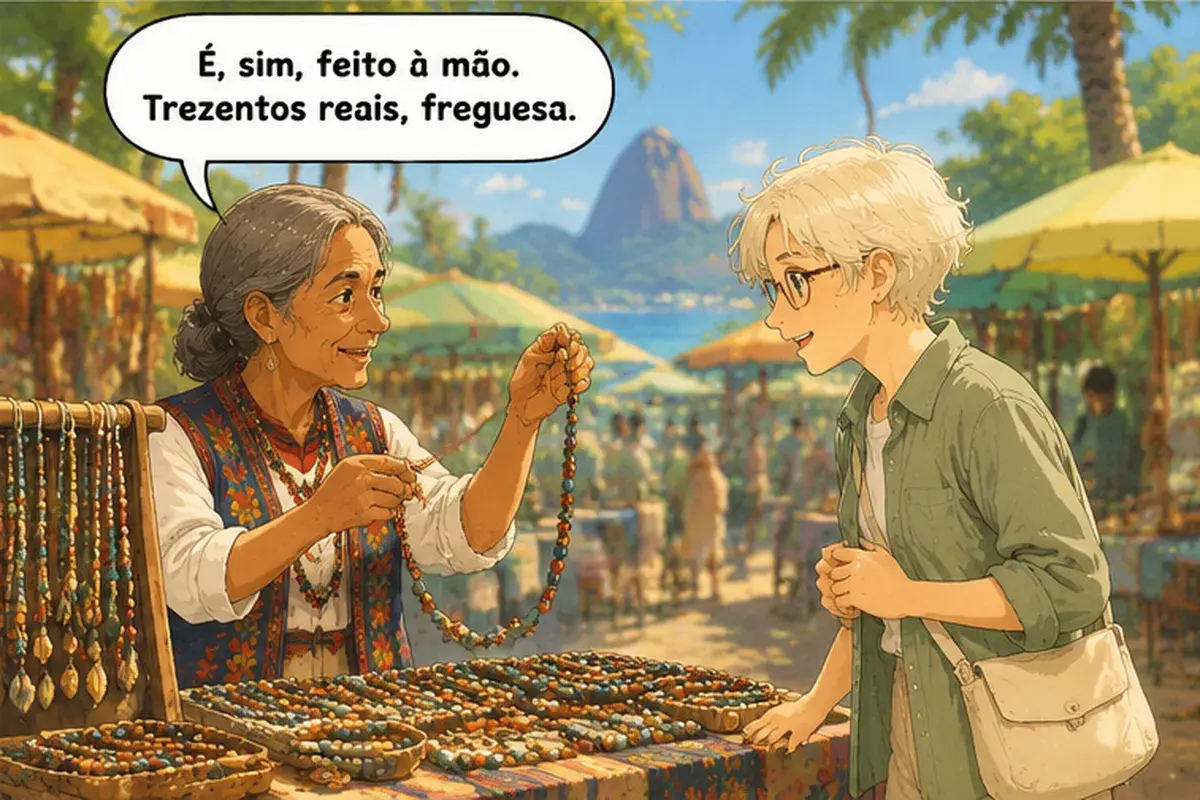
- Vendedora
É, sim, feito à mão. Trezentos reais, freguesa.
Yes, it's handmade. Three hundred reais, ma'am.
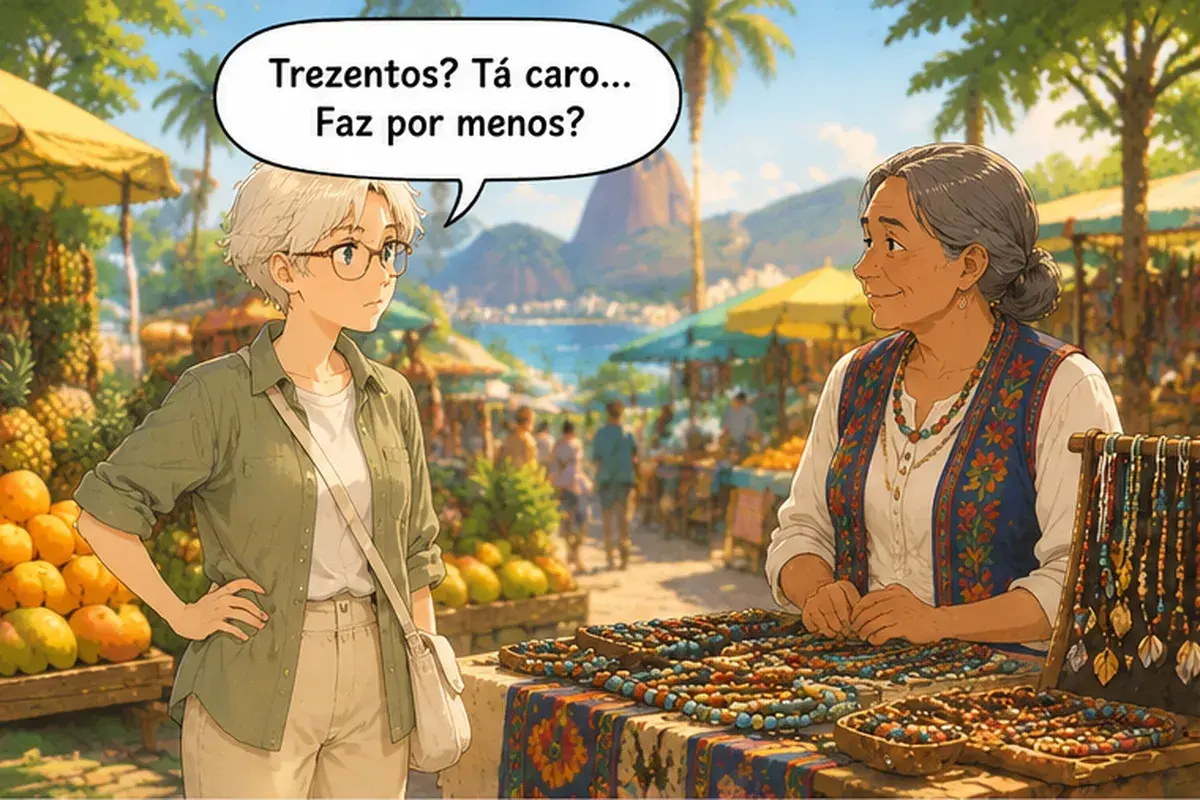
- Nina
Trezentos? Tá caro… Faz por menos?
Three hundred? That's expensive… Will you do it for less?

- Vendedora
Para você, duzentos e cinquenta.
For you, two hundred fifty.
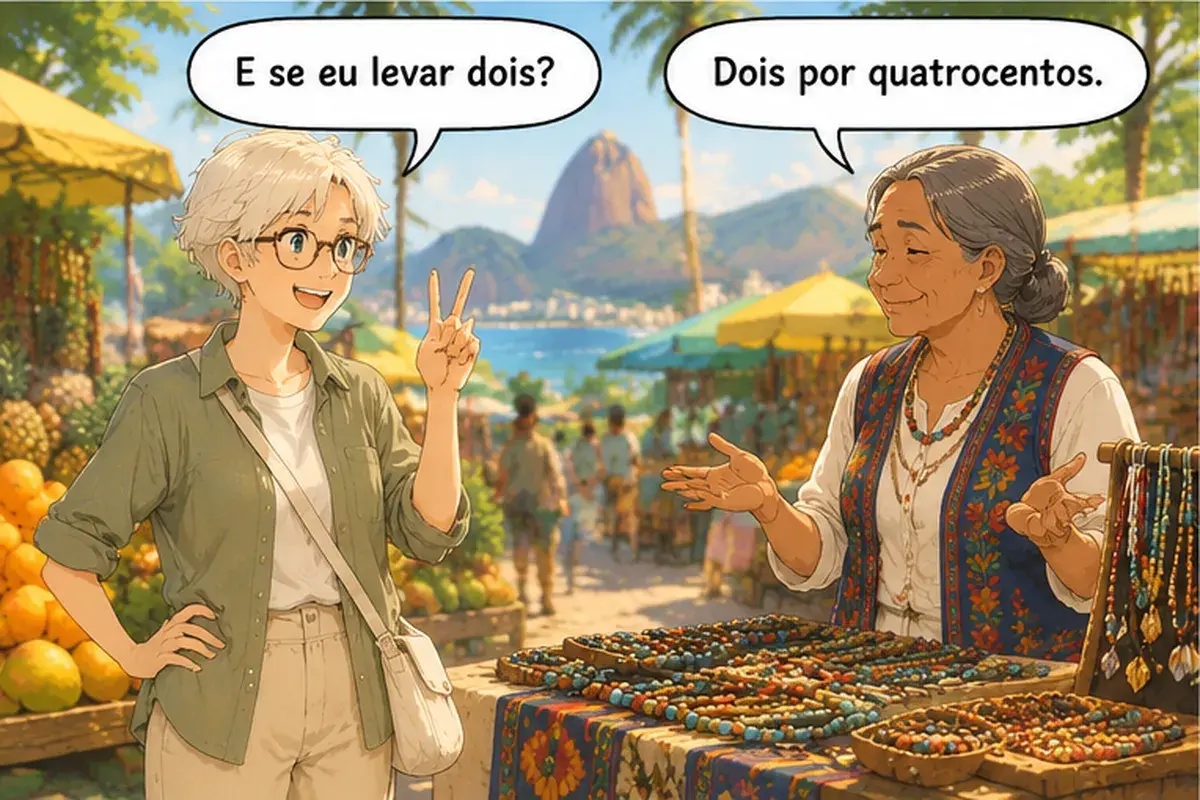
- Nina
E se eu levar dois?
What if I take two?
- Vendedora
Dois por quatrocentos.
Two for four hundred.
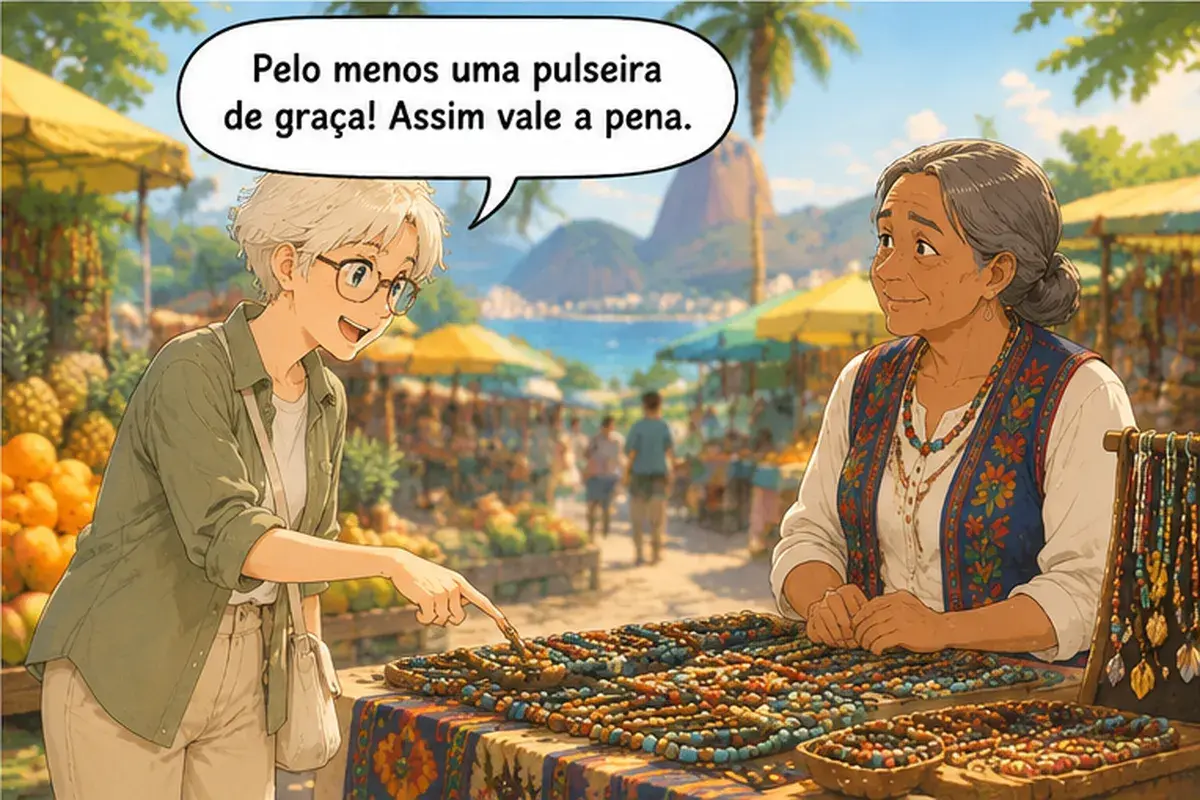
- Nina
Pelo menos uma pulseira de graça! Assim vale a pena.
At least a free bracelet! Then it's worth it.
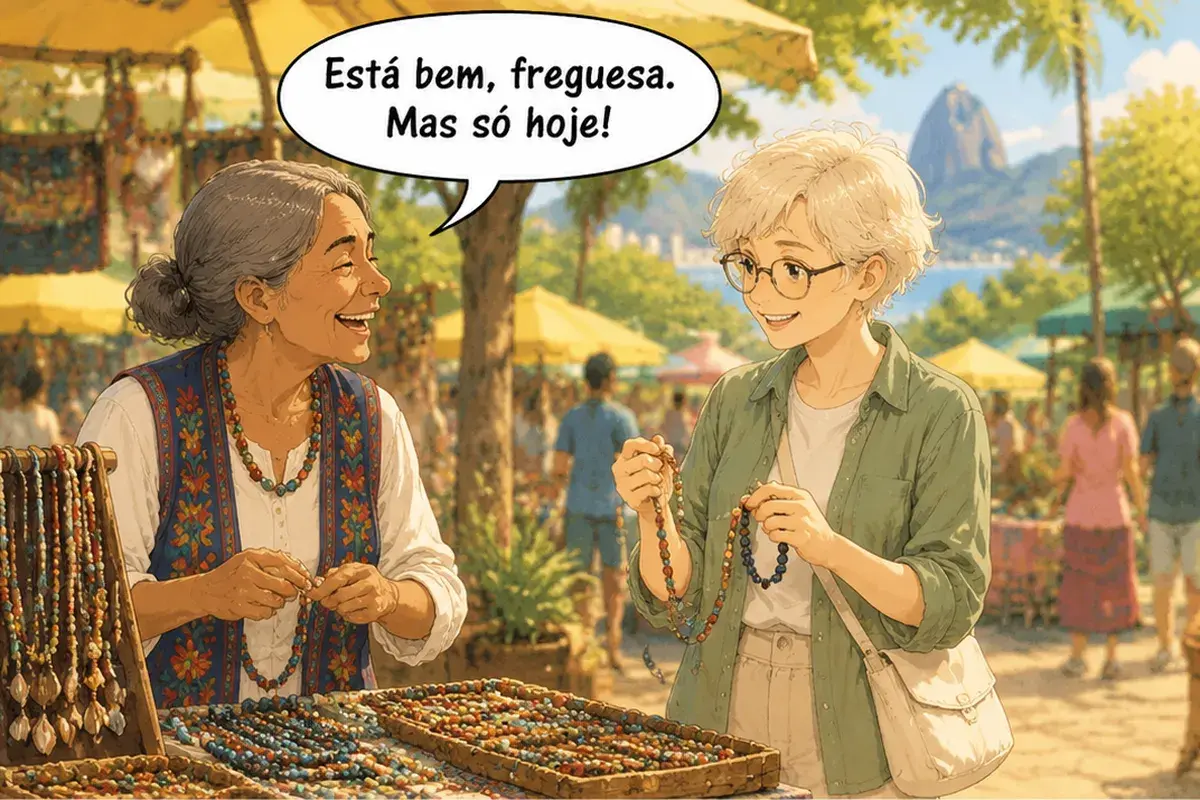
- Vendedora
Está bem, freguesa. Mas só hoje!
All right, ma'am. But only today!
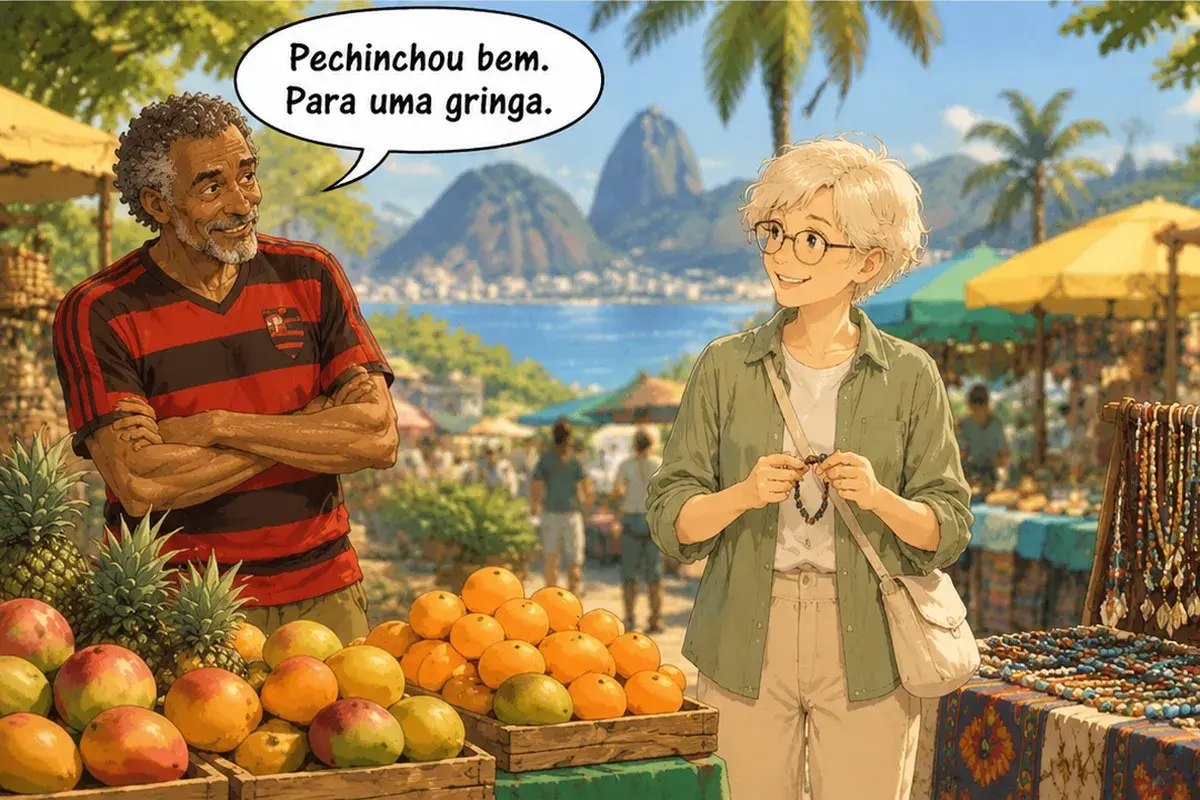
- Jorge
Pechinchou bem. Para uma gringa.
You haggled well. For a gringa.
Grammar for this text
- E se eu levar dois? — a set phrase: "what if I take two?" Here levar isn't the infinitive. It's a special eu form of levar, the future subjunctive: after se (if), when you talk about something that may happen, the verb takes this form. For all regular verbs it looks just like the infinitive, so it's easy to mistake it for one. This is a B1 topic; for now, learn the whole phrase.
- Faz por menos? — literally "do you make it for less?", that is, "can you go lower?" faz is the você / ele form of fazer (to do, to make), and por means "for" (a price). A standard bargaining question.
- Tá caro — tá is casual Brazilian speech for está. People say it in everyday talk; in writing and in serious conversations they use está.
- três por dez — "three for ten" (reais). In a price, por means "for", and the word reais is dropped. The same goes for Dois por quatrocentos — "two for four hundred": there's no need to say colares (necklaces).
- é mais em conta — "it's cheaper".
mais em conta— "cheaper"; em conta alone means "affordable". Don't confuse it with a conta — "the check". Fruta madura não espera — Jorge's joke: ripe fruit "doesn't wait", by tomorrow it will go bad, so he sells it cheaper. - freguesa — what market vendors call a woman customer, warm and friendly (a man is freguês). We translate it as "ma'am".
- Boa, Nina, já é feirante! — Boa! means "nice!", and já means "already".
- Agora escolhe uma lembrancinha — escolhe is a casual command, "choose!": it has the same form as the ele / ela form. The rule is in unit 6.
- Pelo menos uma pulseira de graça! — Nina asks for a little extra on top of the discount: "at least a free bracelet!" More in the block on bargaining phrases.
- Para uma gringa — para here means "for" as in "considering": "not bad, for a foreigner." gringa is a casual word for a foreign woman (a man is gringo). It's Seu Jorge's dry humor.
Words and grammar of the unit: Compare and haggle at the market.
Learn the words from the texts with flashcards
In the app, you can tap any word in a text to see its translation, forms and examples, and new words stick with flashcards. 15 minutes a day.
Start for freeEverything is open for free. No card needed to sign up.