
Portuguese story with translation · A2 · 16 lines
Quando eu era criança, eu andava de trenó When I was a kid, I used to go sledding
Comic · 8 panels
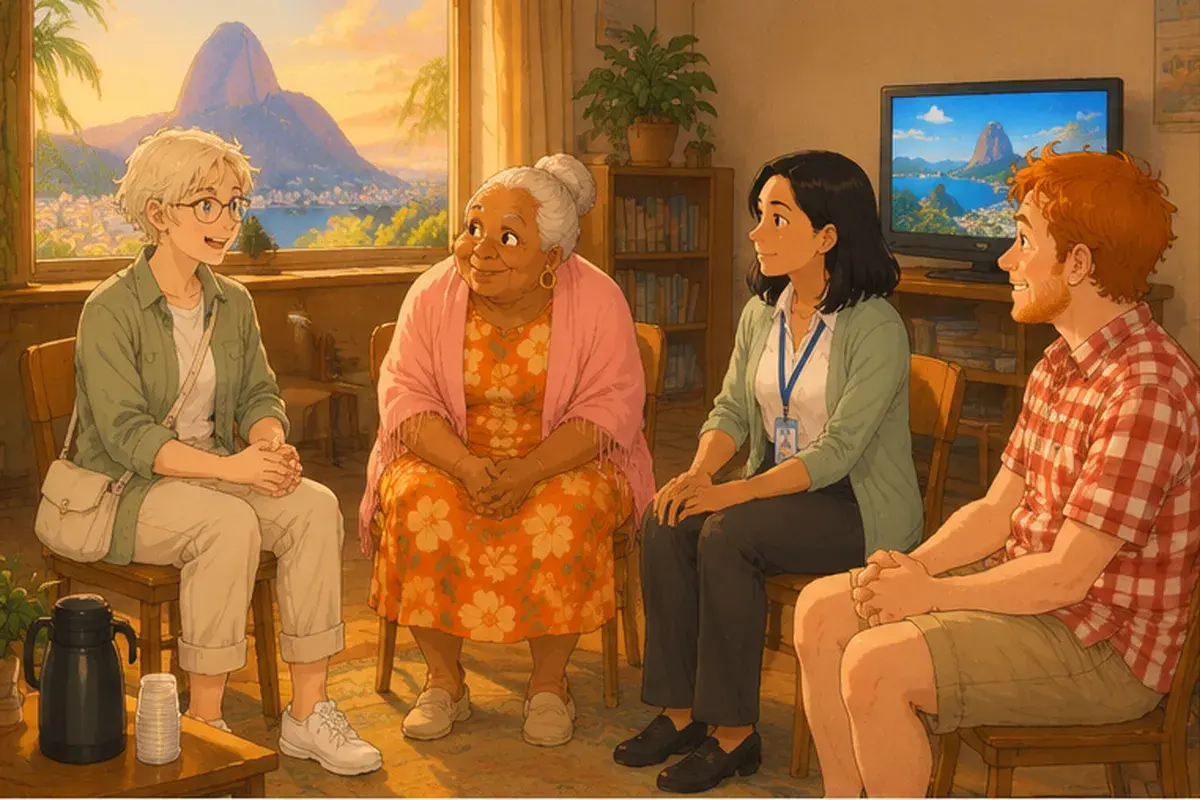
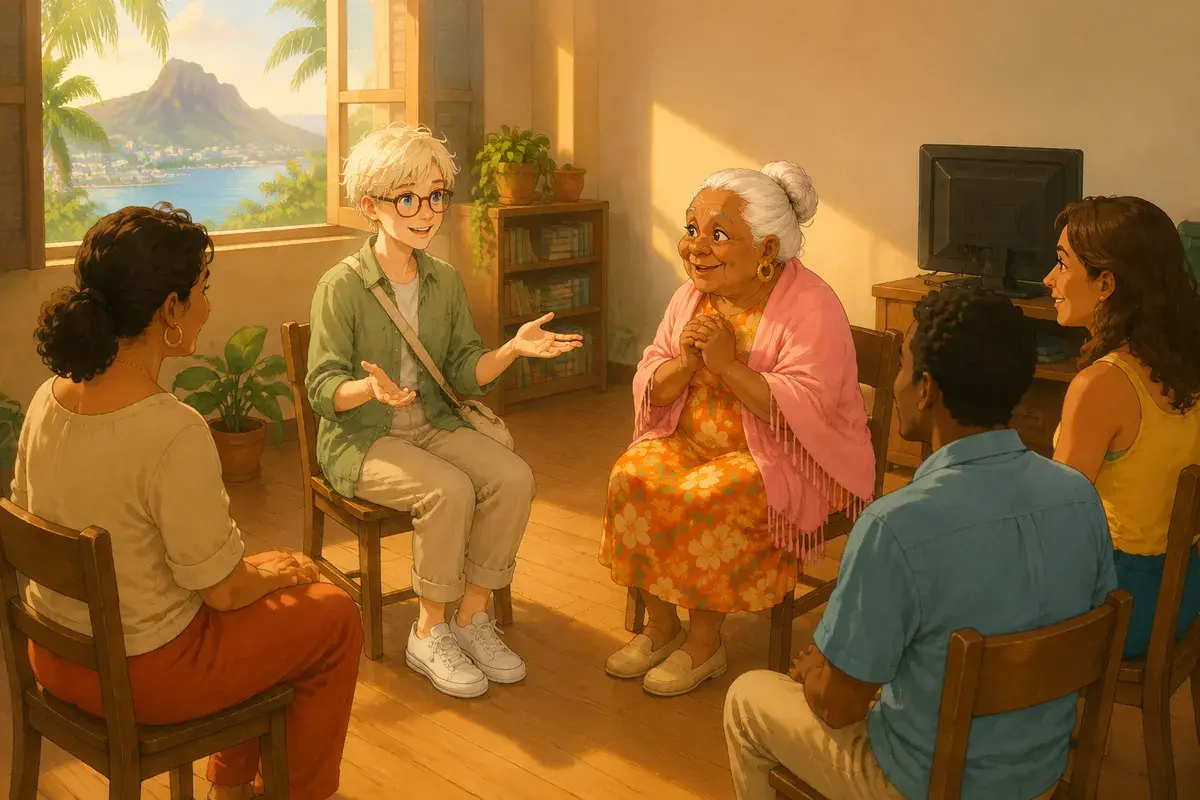
Hoje a Dona Zezé pediu: “Agora você, Nina! Conta da sua infância.”
Today Dona Zezé asked: "Now you, Nina! Tell us about your childhood."
Eu comecei assim: “Era uma vez uma menina numa cidade fria.”
I started like this: "Once upon a time, there was a girl in a cold city."
Essa menina era eu. Eu nasci em mil novecentos e noventa e oito, longe daqui.
That girl was me. I was born in nineteen ninety-eight, far from here.
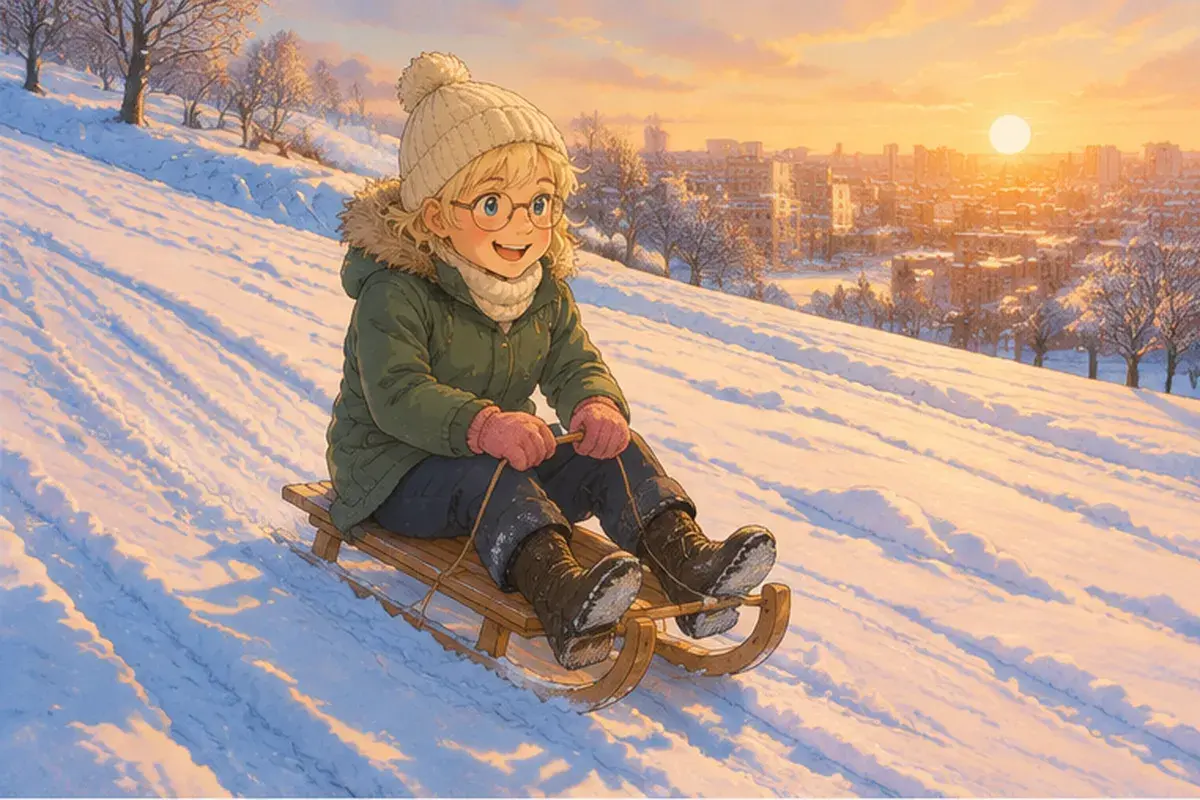
Era uma época fria, mas feliz. O inverno tinha sete meses de neve e de gelo.
It was a cold but happy time. Winter had seven months of snow and ice.
Quando eu era criança, eu andava de trenó.
When I was a kid, I used to go sledding.
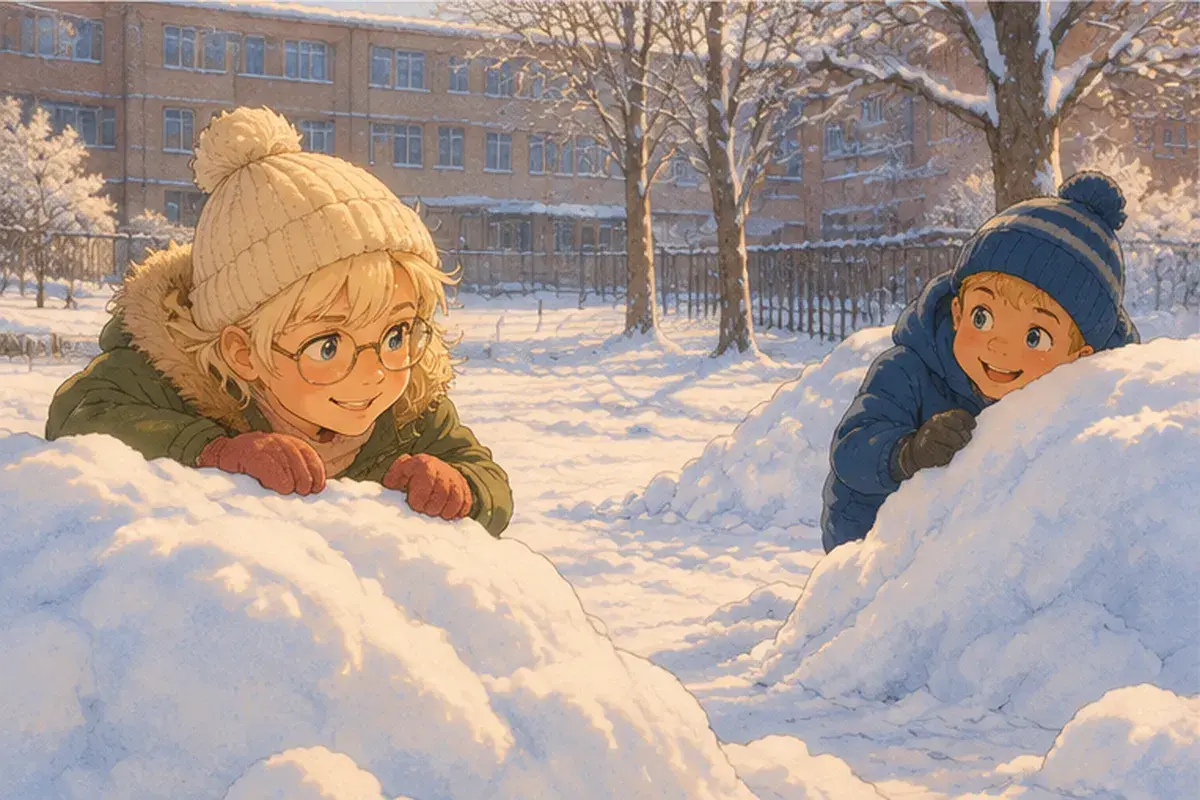
Na escola, eu era uma aluna comportada. No recreio, a turma toda brincava de esconde-esconde na neve.
At school, I was a well-behaved student (woman speaking). At recess, the whole class would play hide-and-seek in the snow.
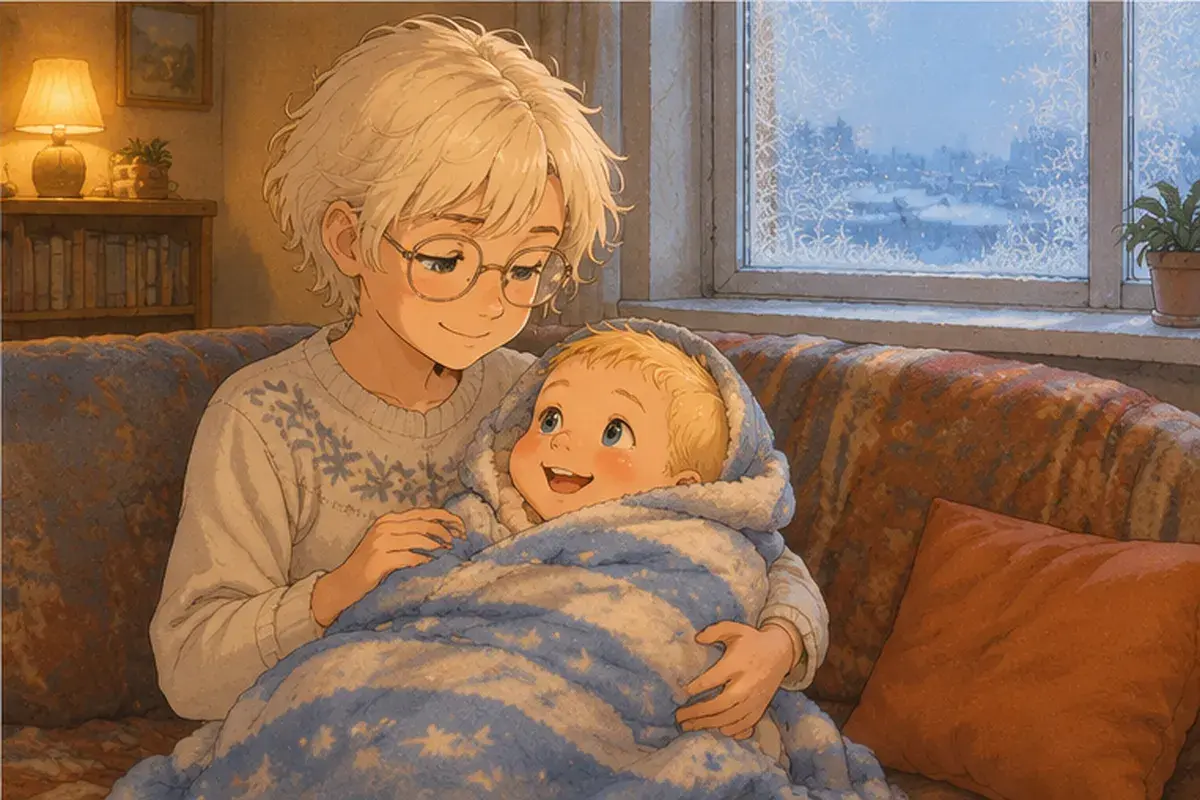
Eu era filha única até os nove anos. Depois nasceu o Dima, o caçula.
I was an only child until I was nine (woman speaking). Then Dima, the youngest, was born.
Nós crescemos juntos, e para mim ele ainda é o irmãozinho.
We grew up together, and to me he's still my little brother.
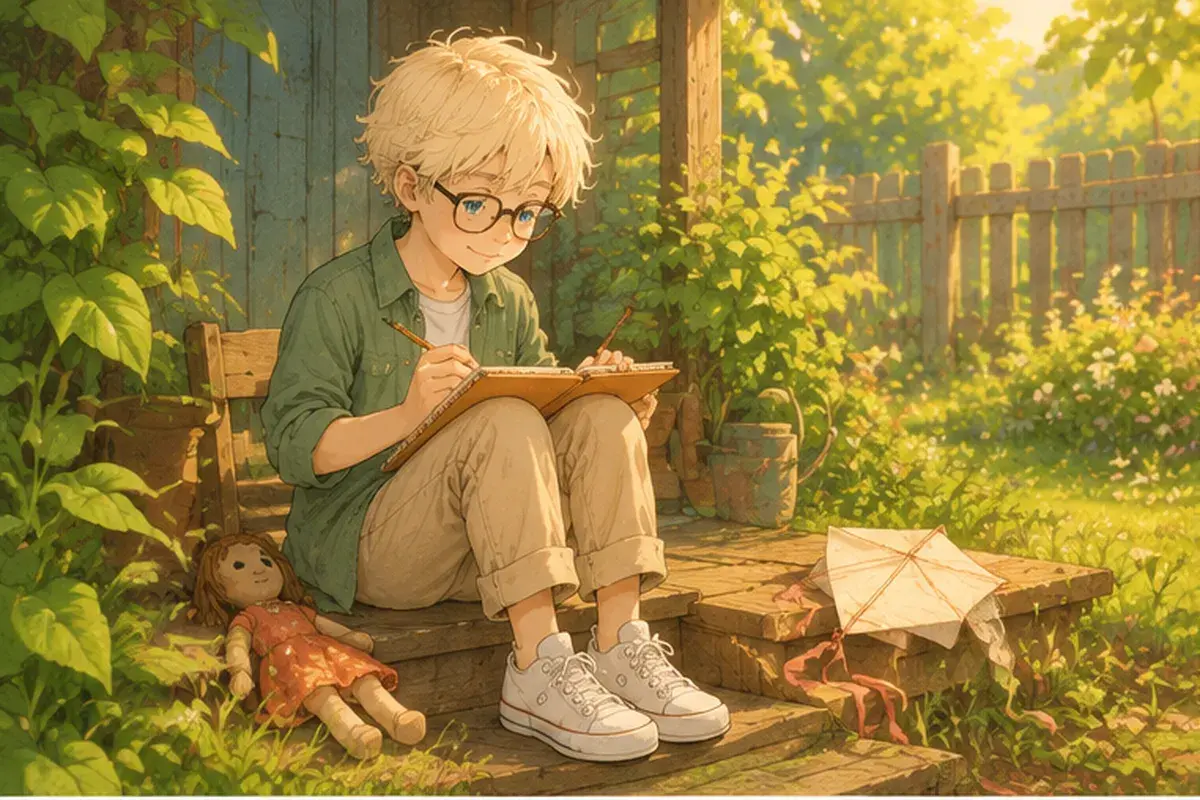
No verão, a gente ia para um sítio. Eu tinha poucos brinquedos: uma boneca e uma pipa.
In the summer, we used to go to a small farm. I had few toys: a doll and a kite.
Eu tinha o hábito de desenhar: via desenho animado e desenhava os animais no caderno.
I had a habit of drawing: I'd watch cartoons and draw the animals in my notebook.
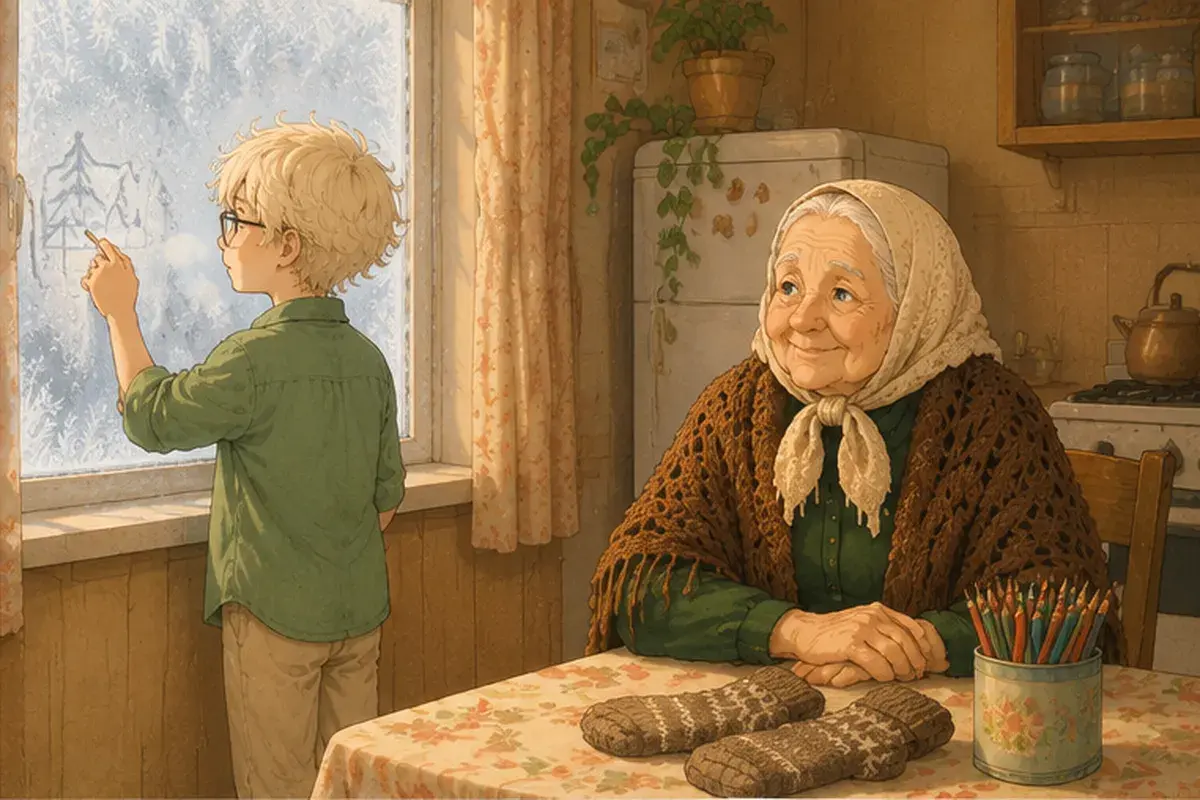
Eu vivia com um lápis na mão e desenhava em tudo, até no gelo da janela.
I lived with a pencil in my hand and drew on everything, even on the ice on the window.
A minha avó Vera me dava meias quentes e lápis de cor.
My grandma Vera used to give me warm socks and colored pencils.
Em casa, o meu apelido era Nininha. Aqui, a Dona Zezé também me chama assim!
At home, my nickname was Nininha. Here, Dona Zezé calls me that too!
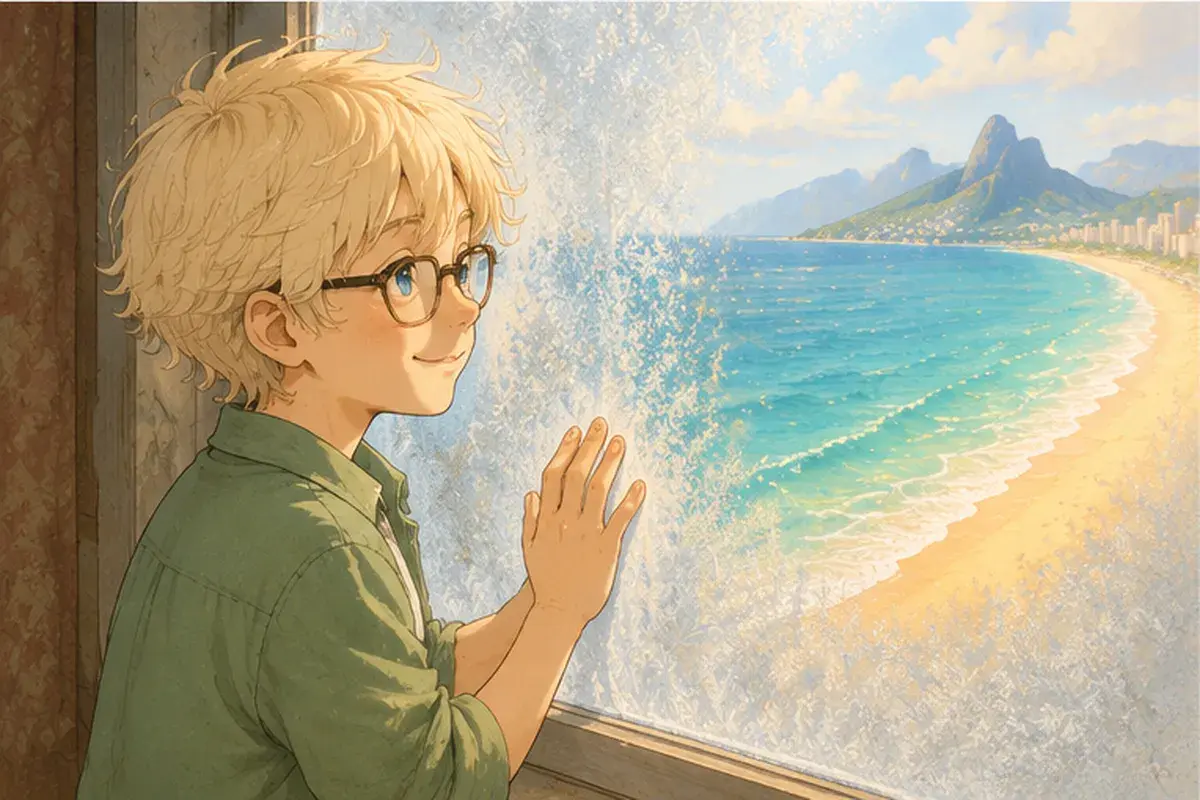
Antigamente, o meu mundo era branco. Hoje em dia, ele é azul de mar e amarelo de areia.
In the old days, my world was white. Nowadays, it's sea blue and sand yellow.
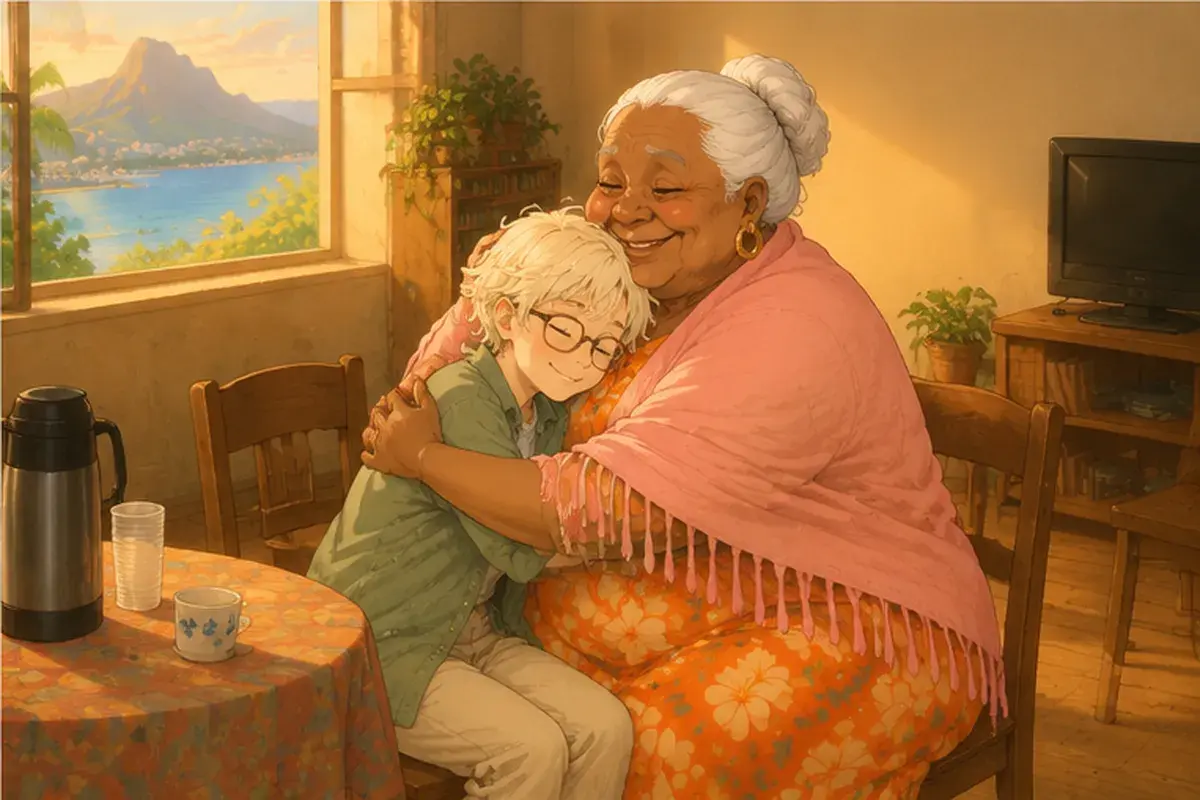
A Dona Zezé ouviu tudo sem olhar para a novela. Isso nunca acontece!
Dona Zezé heard everything without looking at the soap opera. That never happens!
Ela me abraçou, me deu um cafezinho e disse: “Coitadinha, tanto frio!”
She hugged me, gave me a little coffee, and said: "Poor thing, all that cold!" (to a woman)
Grammar for this text
- Conta da sua infância — conta here isn't "bill": it's a casual command, "tell" (the você form of contar). contar de — to tell about.
- Era uma vez — the start of a fairy tale, "once upon a time". era is the imperfect of ser: this is how a story about the past begins.
- Eu nasci em mil novecentos e noventa e oito — nasci is the preterite of nascer: you're born only once. The year is read as one full number; see the unit grammar.
- eu andava de trenó, o inverno tinha sete meses de neve — the imperfect: andava from andar (to walk, to ride) and tinha from ter (to have). andar de — to ride, to go by (a sled, a bike); word for word, the winter "had seven months of snow".
- a gente ia para um sítio — ia is the imperfect of ir (to go): "we used to go". a gente means "we", with the ele / ela form of the verb; para — where to.
- Eu tinha o hábito de desenhar: via desenho animado — tinha o hábito de + infinitive: "I had a habit of". via is the imperfect of ver (to see, to watch): v- + -ia; the eu and ele forms are the same.
- Eu vivia com um lápis na mão — vivia from viver: "I was never without a pencil".
- meias quentes — meias means "socks"; not meia (half). me dava — the imperfect of dar (she used to give me): the pronoun me comes before the verb.
- o meu apelido era Nininha — a pet name: Nina + the affectionate -inha.
- Coitadinha, tanto frio! — coitadinha = coitada + -inha: "poor thing", pity with warmth; tanto frio — "so much cold". irmãozinho and cafezinho work the same way: not size, but affection (see the unit grammar).
Words and grammar of the unit: Talk about your childhood.
Learn the words from the texts with flashcards
In the app, you can tap any word in a text to see its translation, forms and examples, and new words stick with flashcards. 15 minutes a day.
Start for freeEverything is open for free. No card needed to sign up.