

Portuguese dialogue with translation · A2 · 16 lines
Qual era o seu apelido? What was your nickname?
Comic · 14 panels
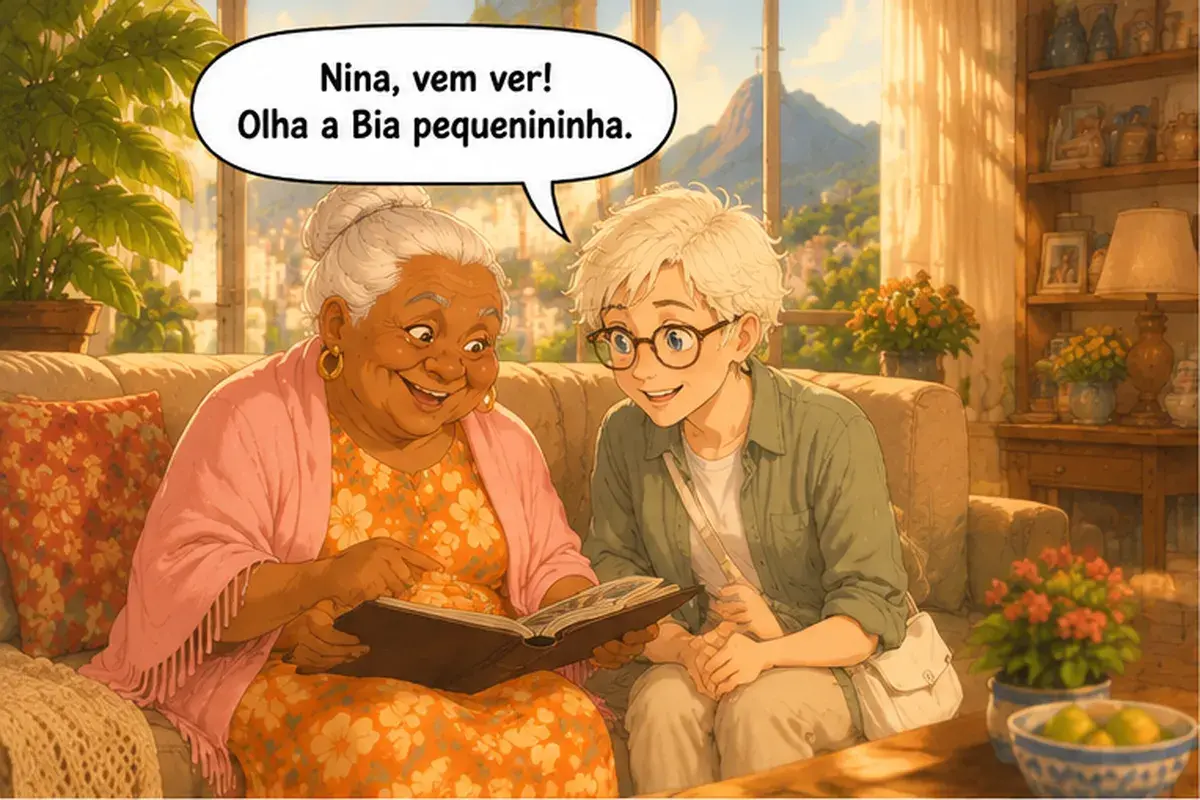
- Dona Zezé
Nina, vem ver! Olha a Bia pequenininha.
Nina, come and see! Look at tiny little Bia.
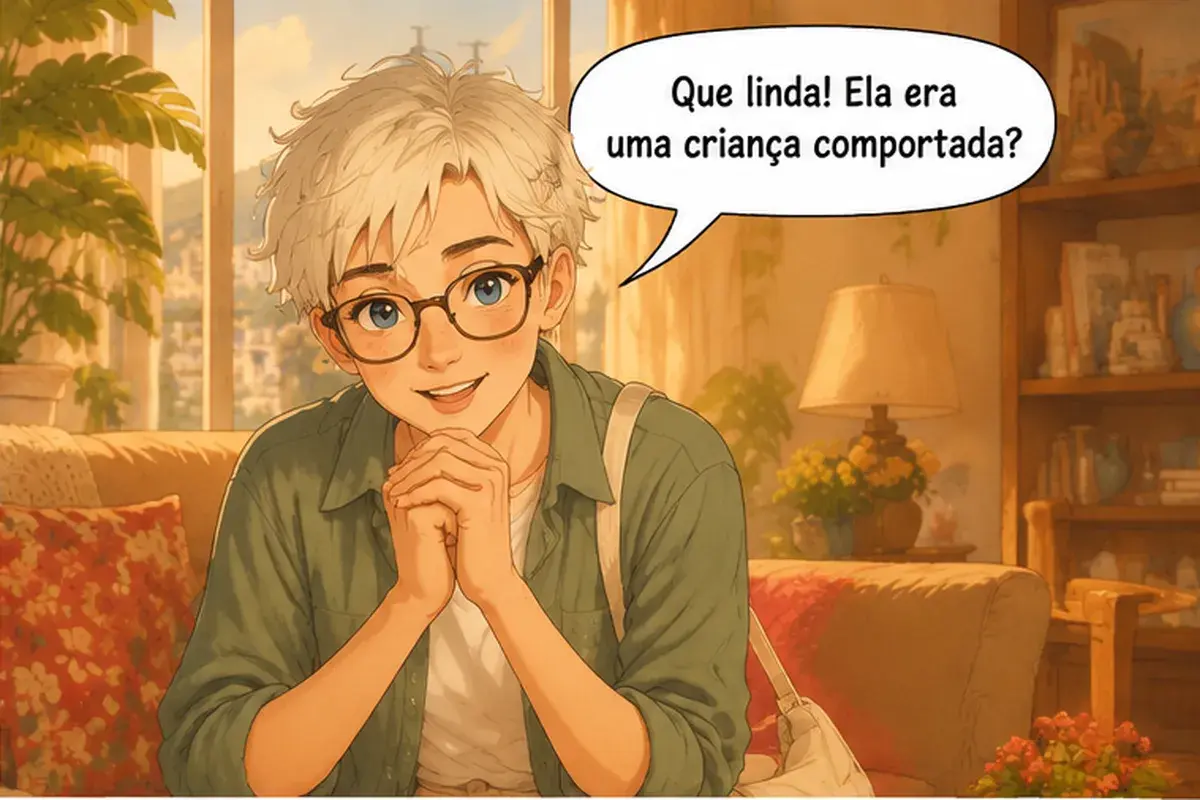
- Nina
Que linda! Ela era uma criança comportada?
How cute! Was she a well-behaved child?
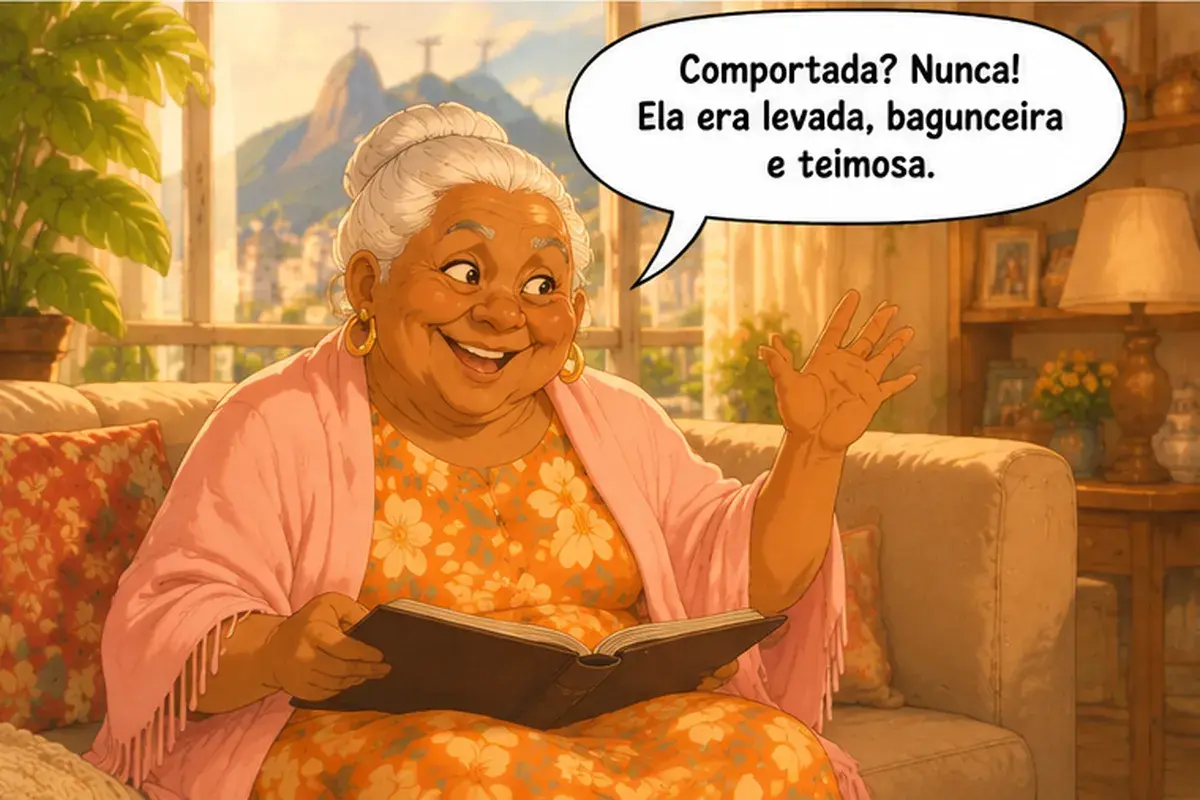
- Dona Zezé
Comportada? Nunca! Ela era levada, bagunceira e teimosa.
Well-behaved? Never! She was mischievous, rowdy, and stubborn.
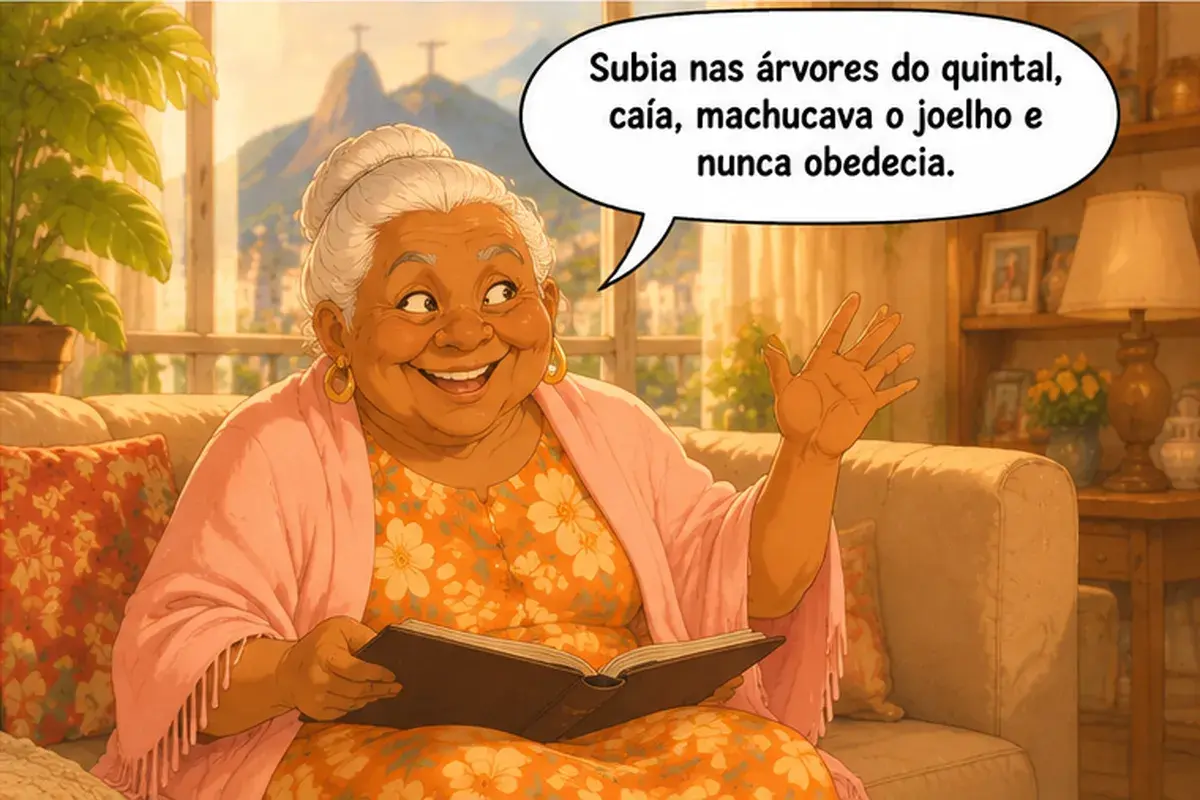
- Dona Zezé
Subia nas árvores do quintal, caía, machucava o joelho e nunca obedecia.
She'd climb the trees in the backyard, fall, hurt her knee, and never obey.
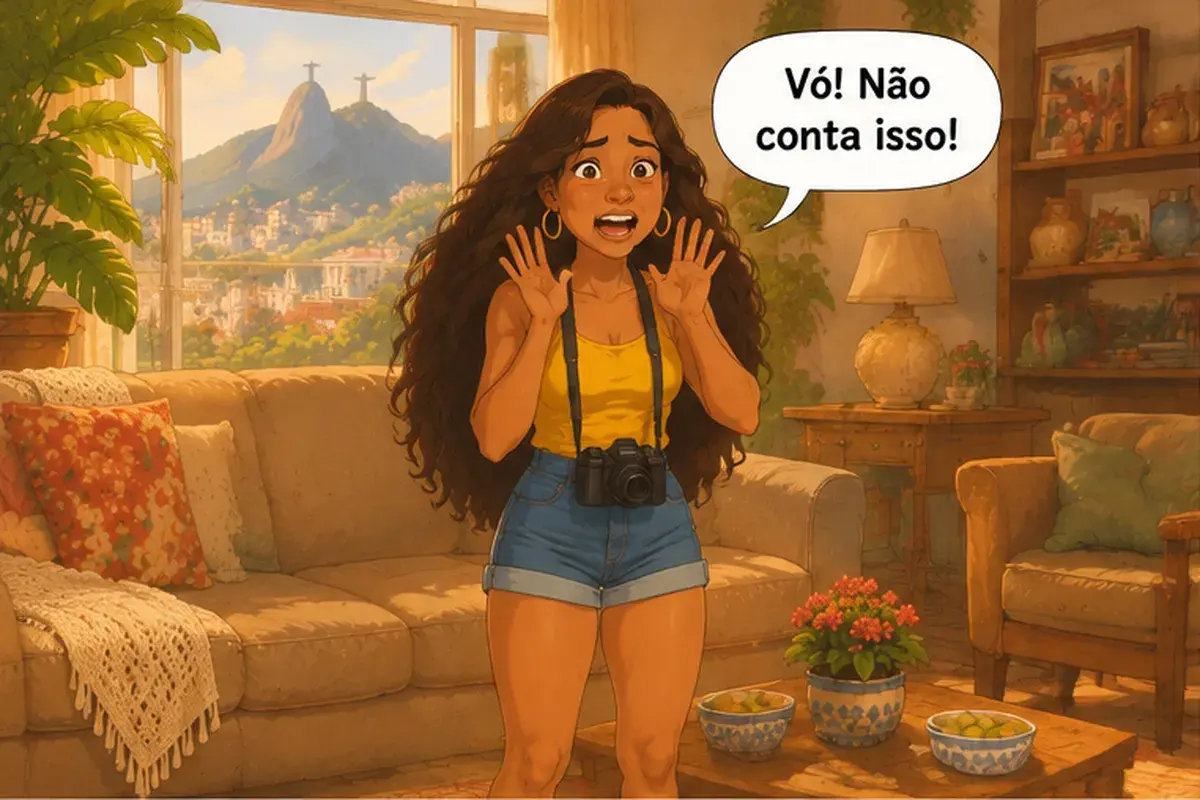
- Bia
Vó! Não conta isso!
Grandma! Don't tell that one!
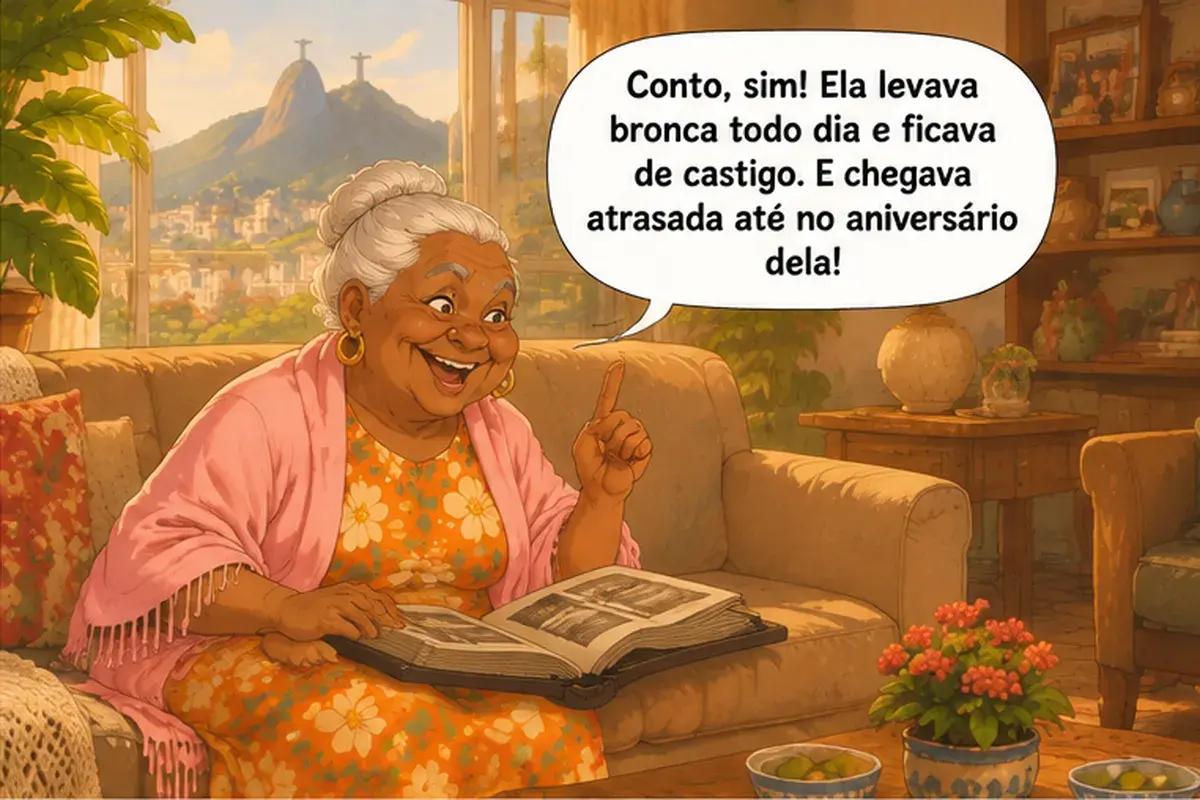
- Dona Zezé
Conto, sim! Ela levava bronca todo dia e ficava de castigo. E chegava atrasada até no aniversário dela!
Oh yes, I'm telling! She got scolded every day and got grounded. And she'd be late even for her own birthday!
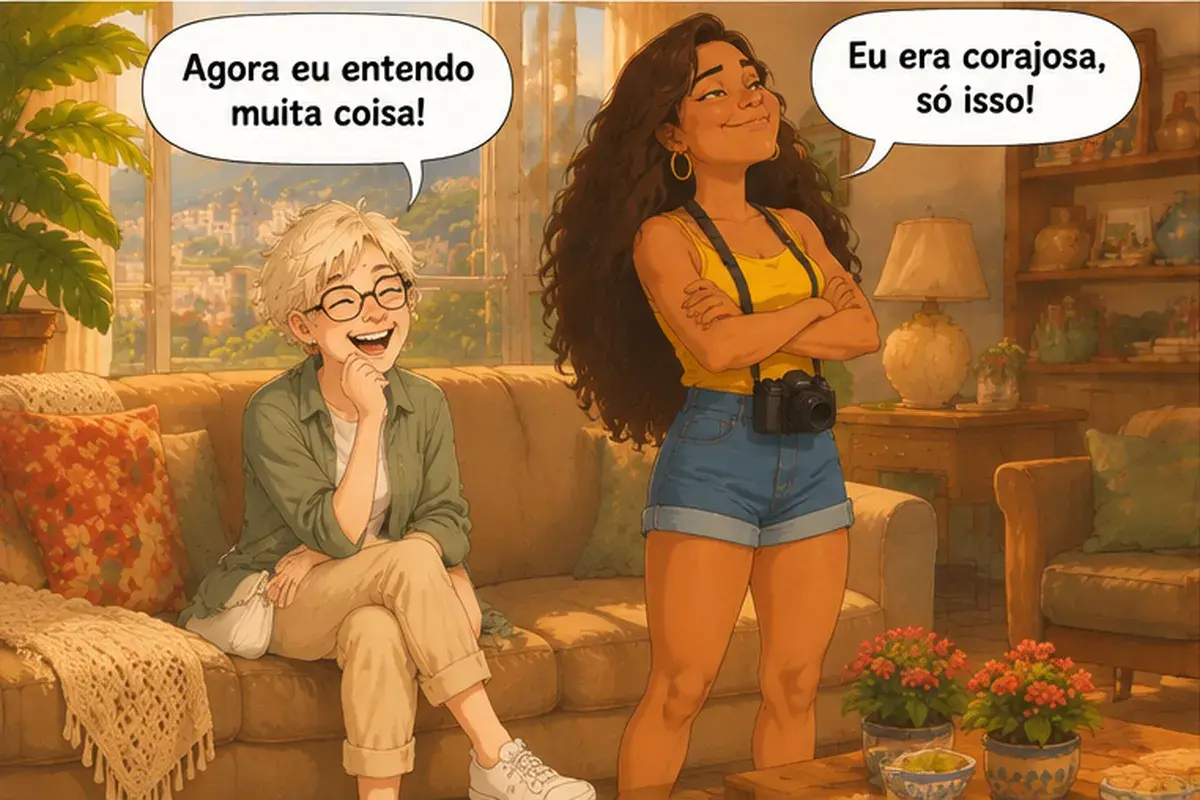
- Nina
Agora eu entendo muita coisa!
Now I understand a lot of things!
- Bia
Eu era corajosa, só isso!
I was brave, that's all! (woman speaking)
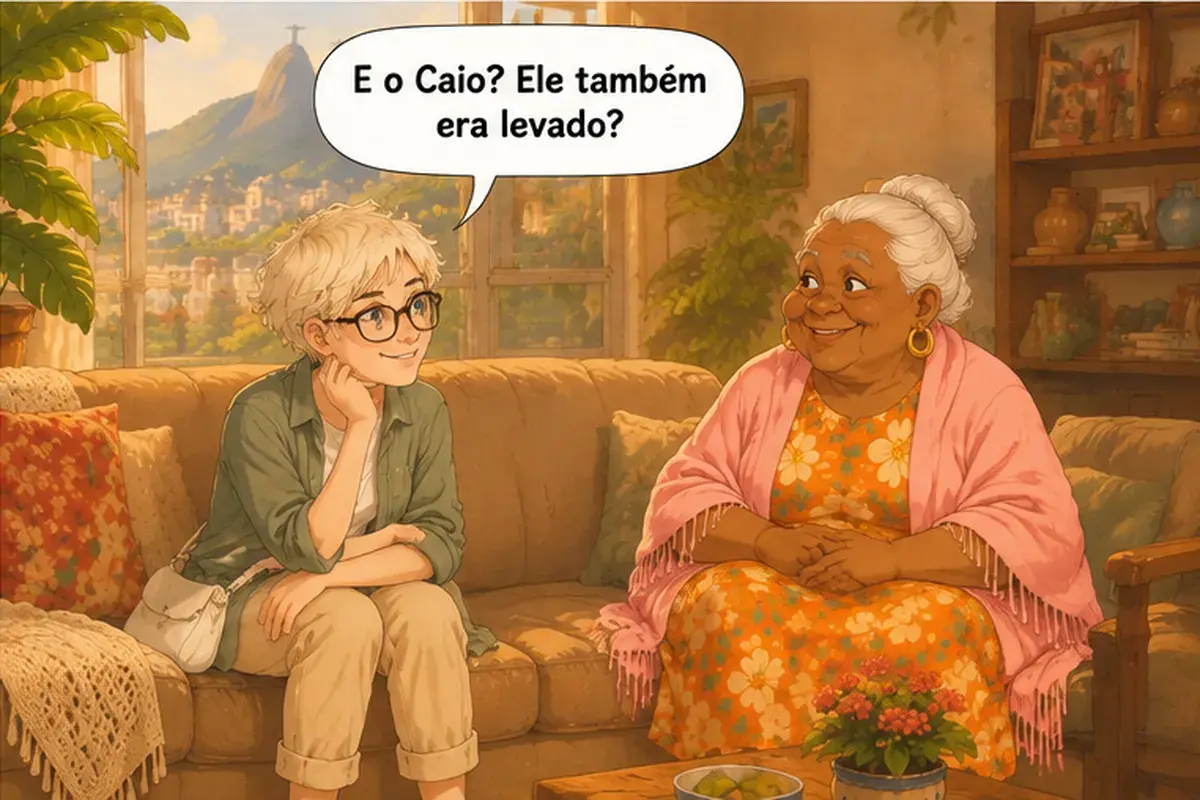
- Nina
E o Caio? Ele também era levado?
And Caio? Was he mischievous too?
- Dona Zezé
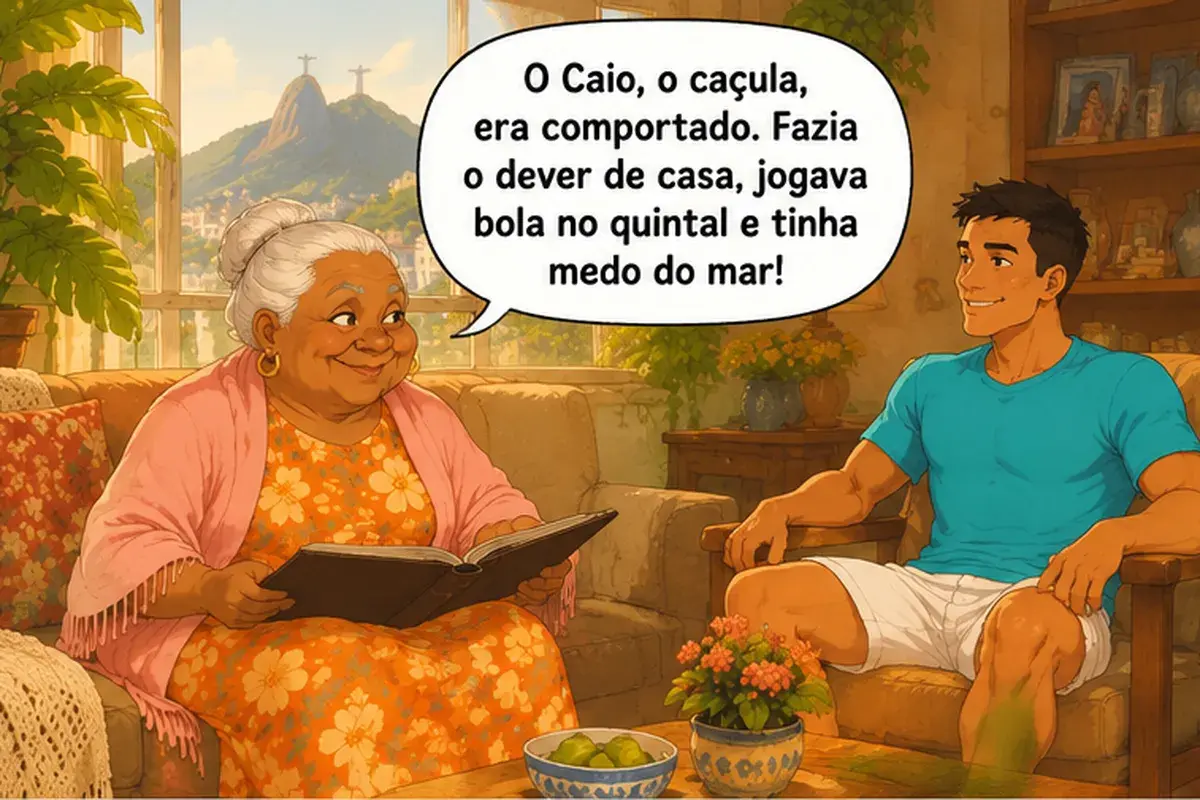
O Caio, o caçula, era comportado. Fazia o dever de casa, jogava bola no quintal e tinha medo do mar!
Caio, the youngest, was well-behaved. He did his homework, played ball in the backyard, and was afraid of the sea!

- Caio
Antigamente eu tinha medo. Hoje em dia eu entro no mar todo dia, vó.
In the old days, I was afraid. Nowadays I go into the sea every day, Grandma.
- Nina
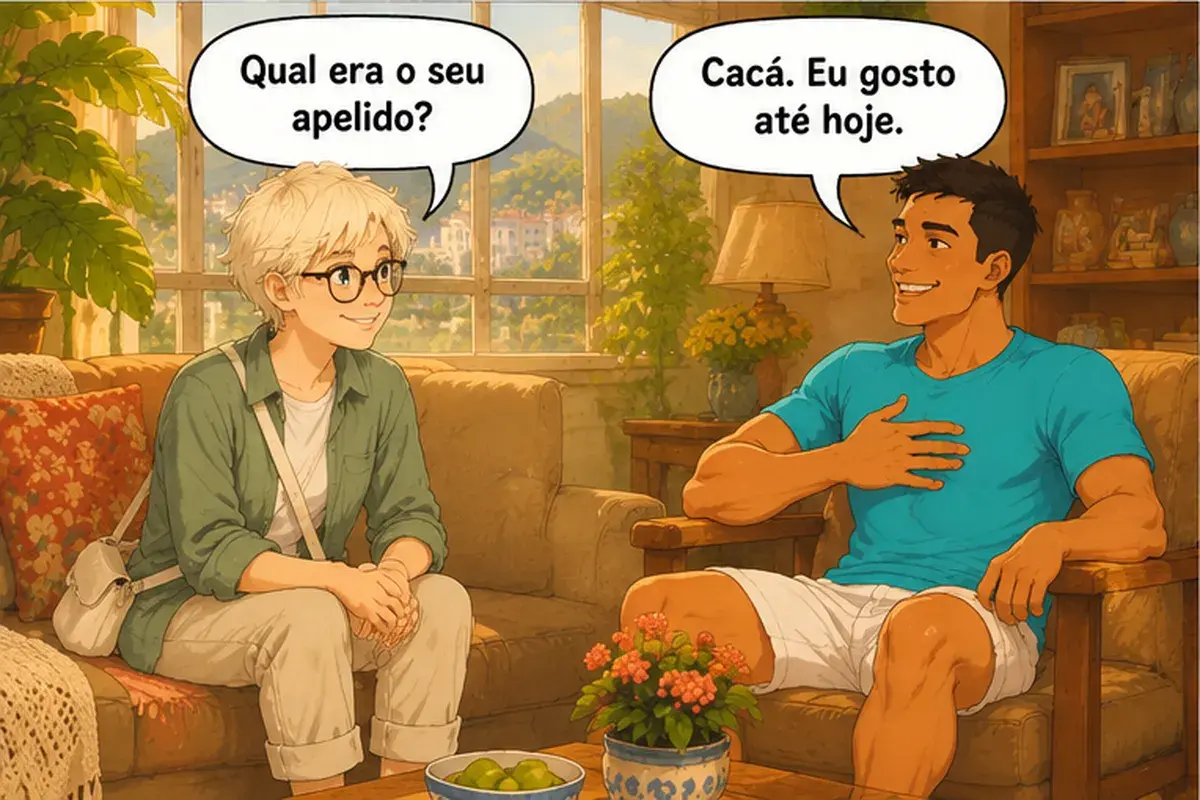
Qual era o seu apelido?
What was your nickname?
- Caio
Cacá. Eu gosto até hoje.
Cacá. I still like it to this day.
- Dona Zezé
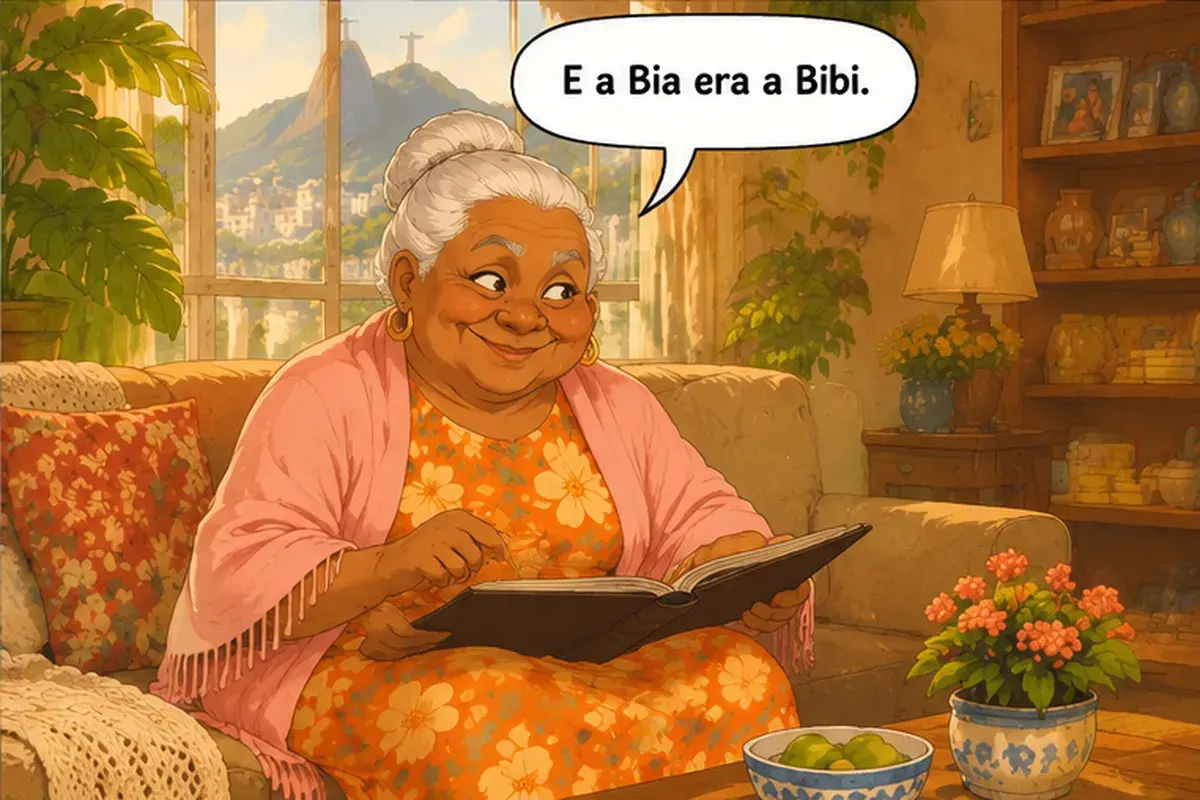
E a Bia era a Bibi.
And Bia was Bibi.

- Nina
Bibi... Já está no meu caderno!
Bibi... It's already in my notebook!
- Dona Zezé
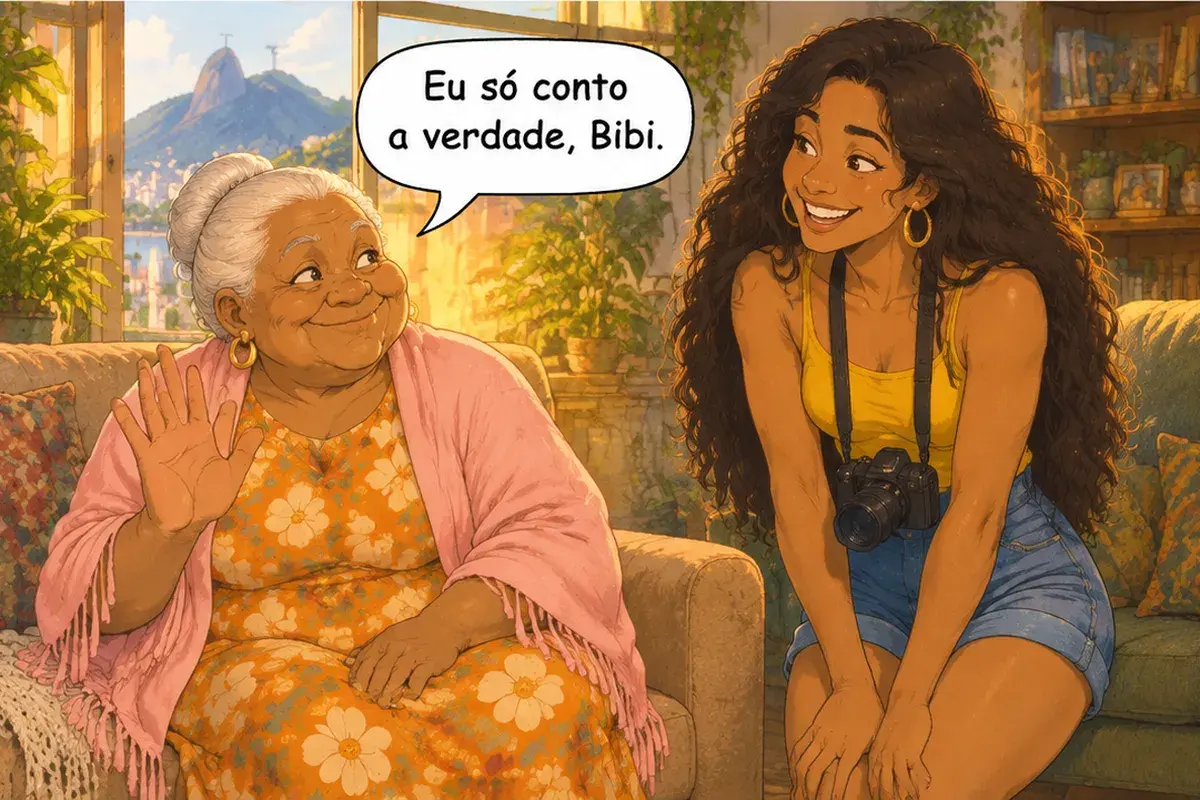
Eu só conto a verdade, Bibi.
I only tell the truth, Bibi.
Grammar for this text
- Ela era uma criança comportada? era is the imperfect of ser (to be): "she was". This is how you say what someone was like in the past. The eu form and the ela form are the same: eu era, ela era. The unit grammar explains this tense.
- Subia nas árvores… caía… machucava… obedecia — also the imperfect: it tells what happened again and again (English often says "would" or "used to"). -er / -ir verbs end in -ia (subir → subia, obedecer → obedecia), -ar verbs end in -ava (machucar → machucava). cair has caía, with í: the i and the a are said separately. Caio's lines work the same way: fazia (from fazer), jogava (from jogar). Words like nunca and todo dia point to a habit.
- Tinha medo do mar — tinha is the imperfect of ter (to have): word for word "had fear of the sea", in English "was afraid of the sea".
- Não conta isso! — conta is the você form of contar (to tell); in speech the same form gives commands: "don't tell". Conto, sim! — conto means "I tell" (not "a short story"), and sim adds emphasis: "oh yes, I'm telling!"
- até no aniversário dela — here até means "even"; no = em + o; dela = de + ela, that is, "her" (Bia's).
- Olha a Bia pequenininha — pequenininha = pequena + -ininha: "teeny-tiny". The ending shows affection more than size: it's how you talk tenderly about a little one (see the unit grammar).
- Cacá, Bibi — childhood pet names made from Caio and Bia by repeating a syllable.
Words and grammar of the unit: Talk about your childhood.
Learn the words from the texts with flashcards
In the app, you can tap any word in a text to see its translation, forms and examples, and new words stick with flashcards. 15 minutes a day.
Start for freeEverything is open for free. No card needed to sign up.