
Portuguese dialogue with translation · A2 · 16 lines
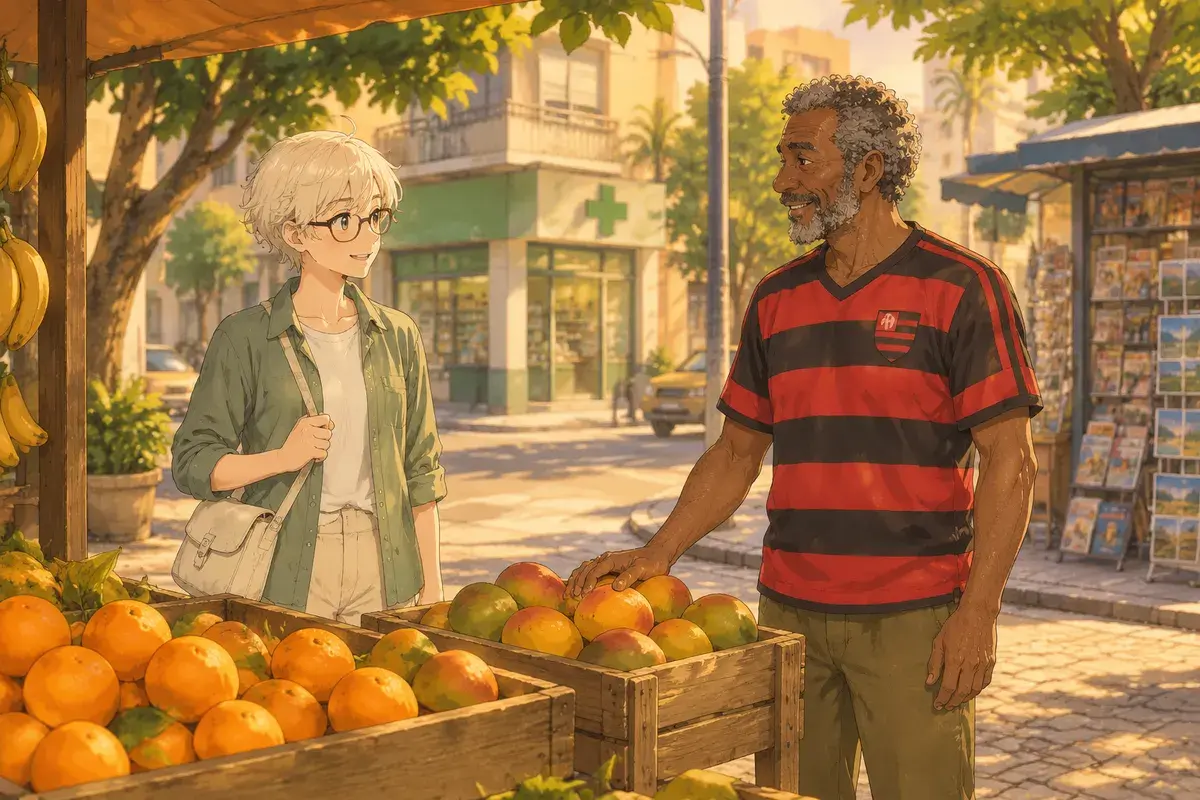
Naquele tempo, aqui tinha um cinema At that time, there was a movie theater here
Comic · 12 panels
- Nina
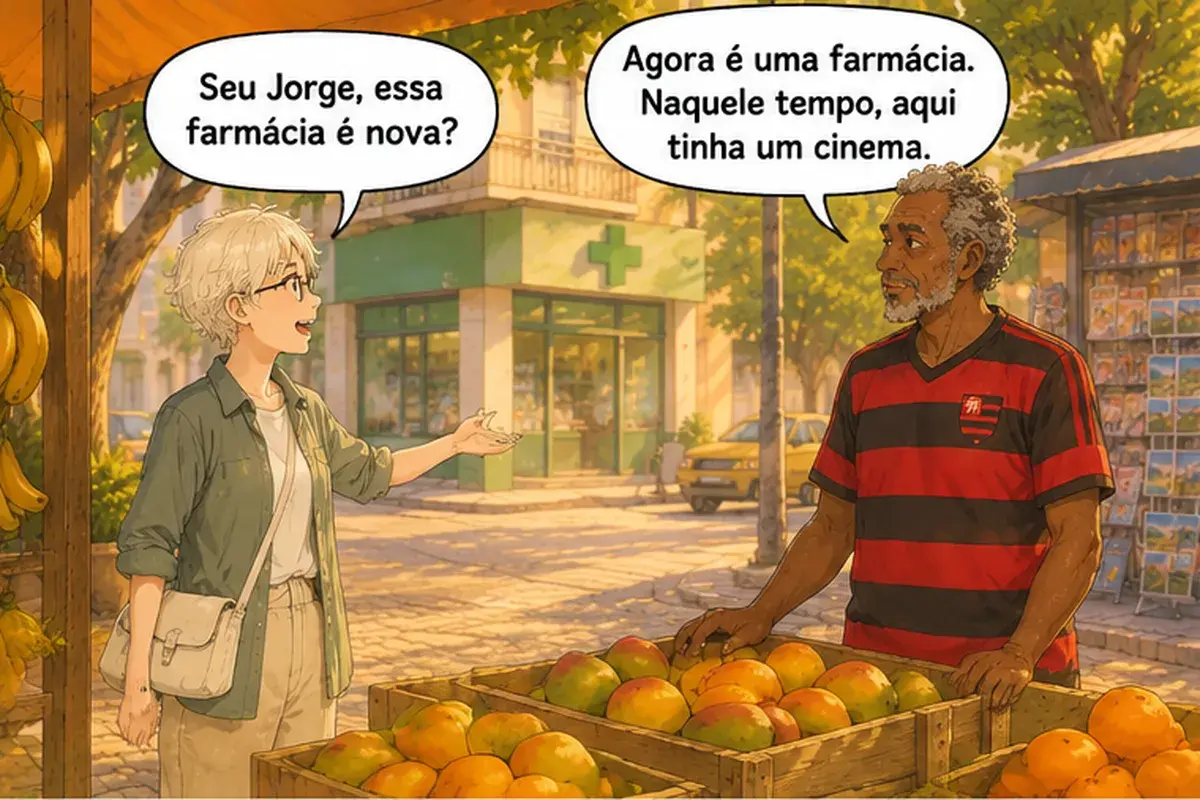
Seu Jorge, essa farmácia é nova?
Seu Jorge, is this pharmacy new?
- Jorge
Agora é uma farmácia. Naquele tempo, aqui tinha um cinema.
Now it's a pharmacy. At that time, there was a movie theater here.
- Nina
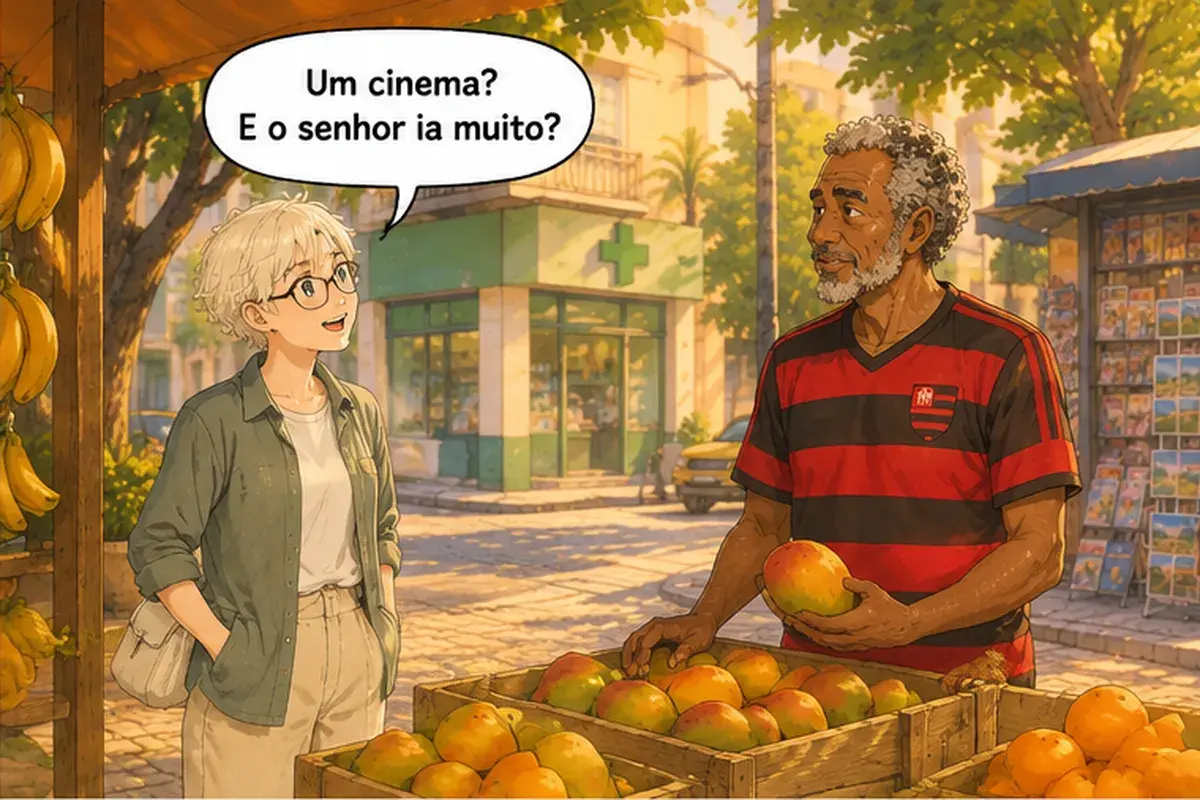
Um cinema? E o senhor ia muito?
A movie theater? And did you go often? (formal)
- Jorge
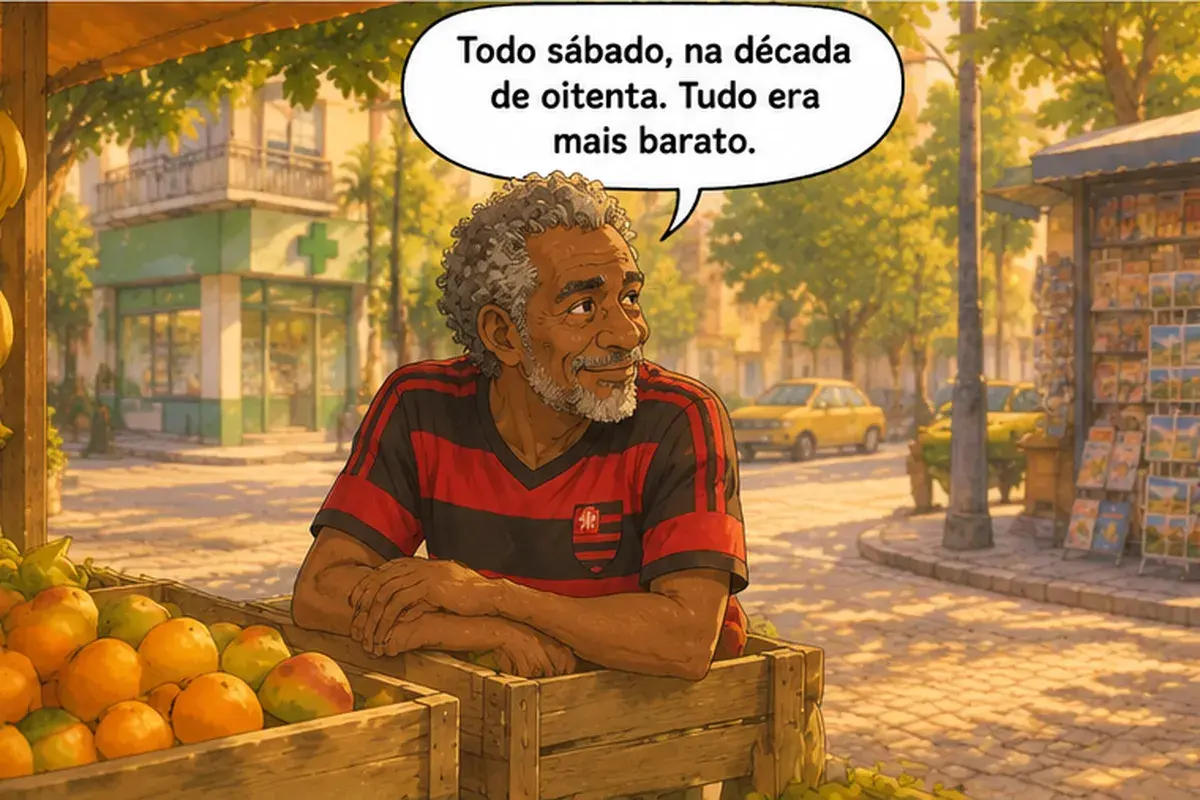
Todo sábado, na década de oitenta. Tudo era mais barato.
Every Saturday, in the eighties. Everything was cheaper.
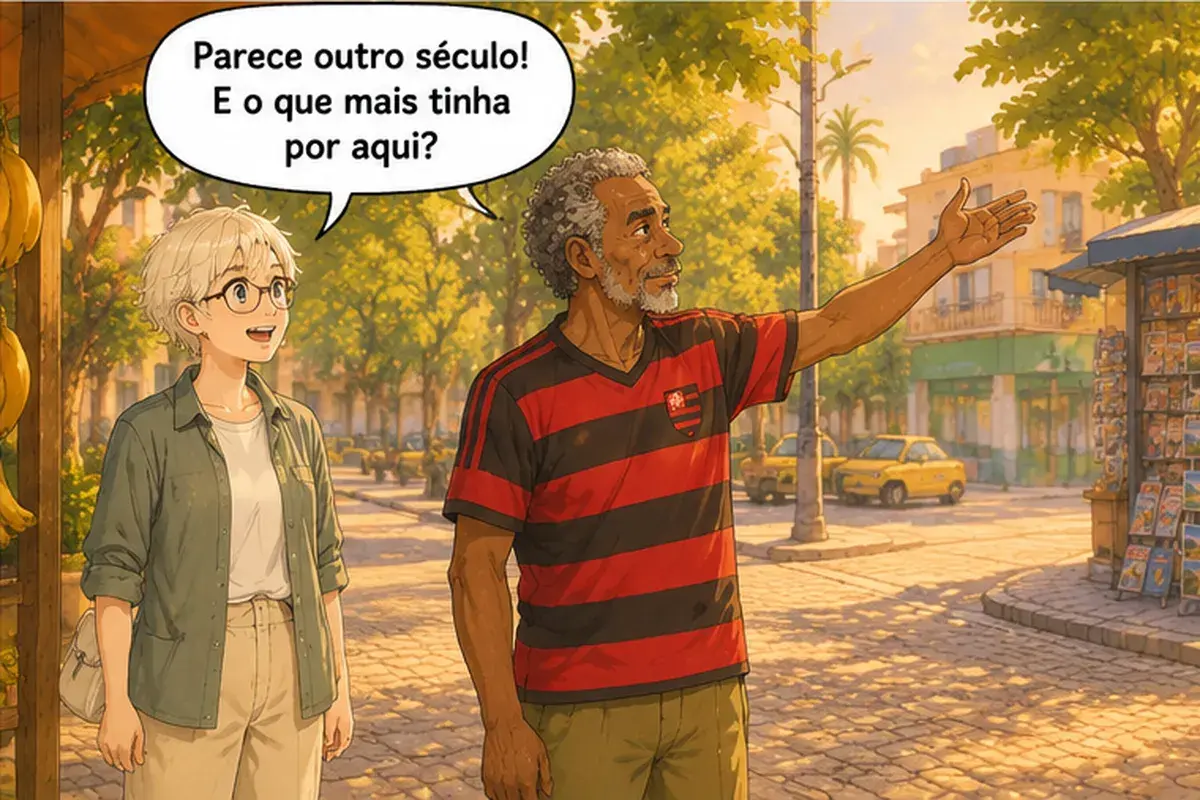
- Nina
Parece outro século! E o que mais tinha por aqui?
It sounds like another century! And what else was there around here?
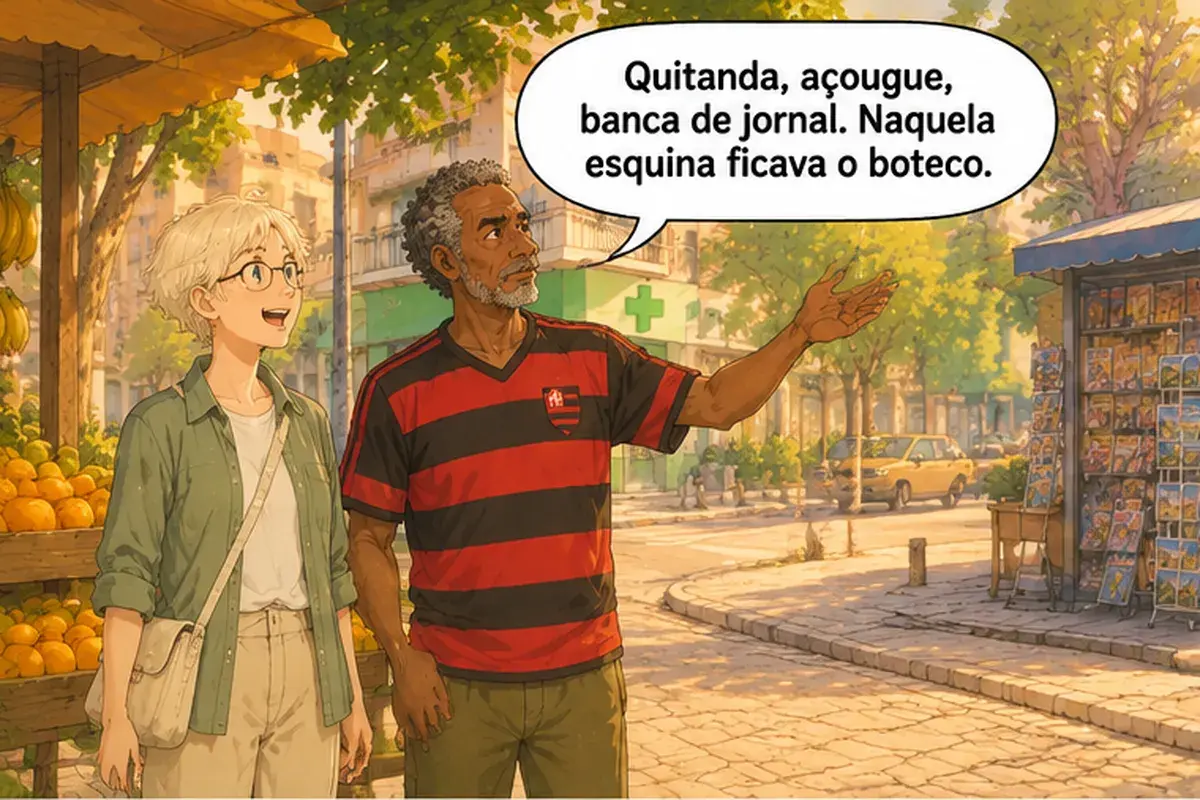
- Jorge
Quitanda, açougue, banca de jornal. Naquela esquina ficava o boteco.
A produce shop, a butcher shop, a newsstand. The bar was on that corner.
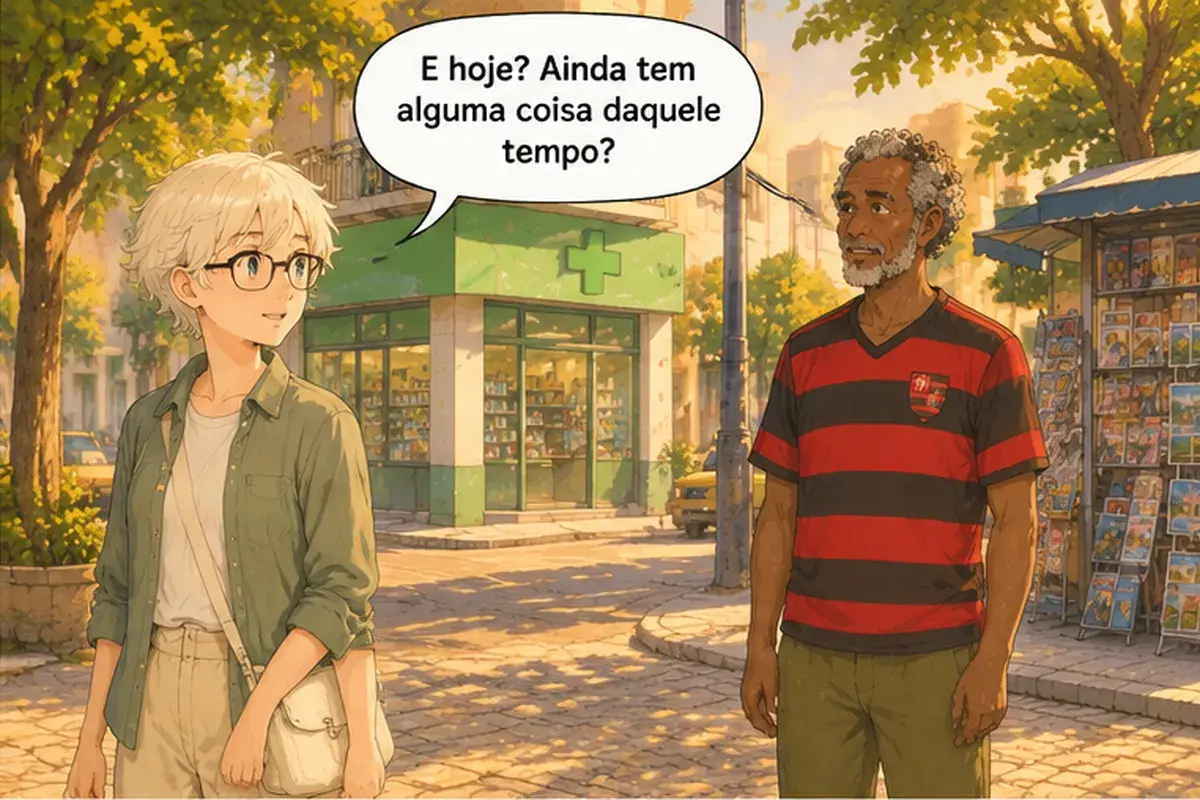
- Nina
E hoje? Ainda tem alguma coisa daquele tempo?
And today? Is there still anything from that time?
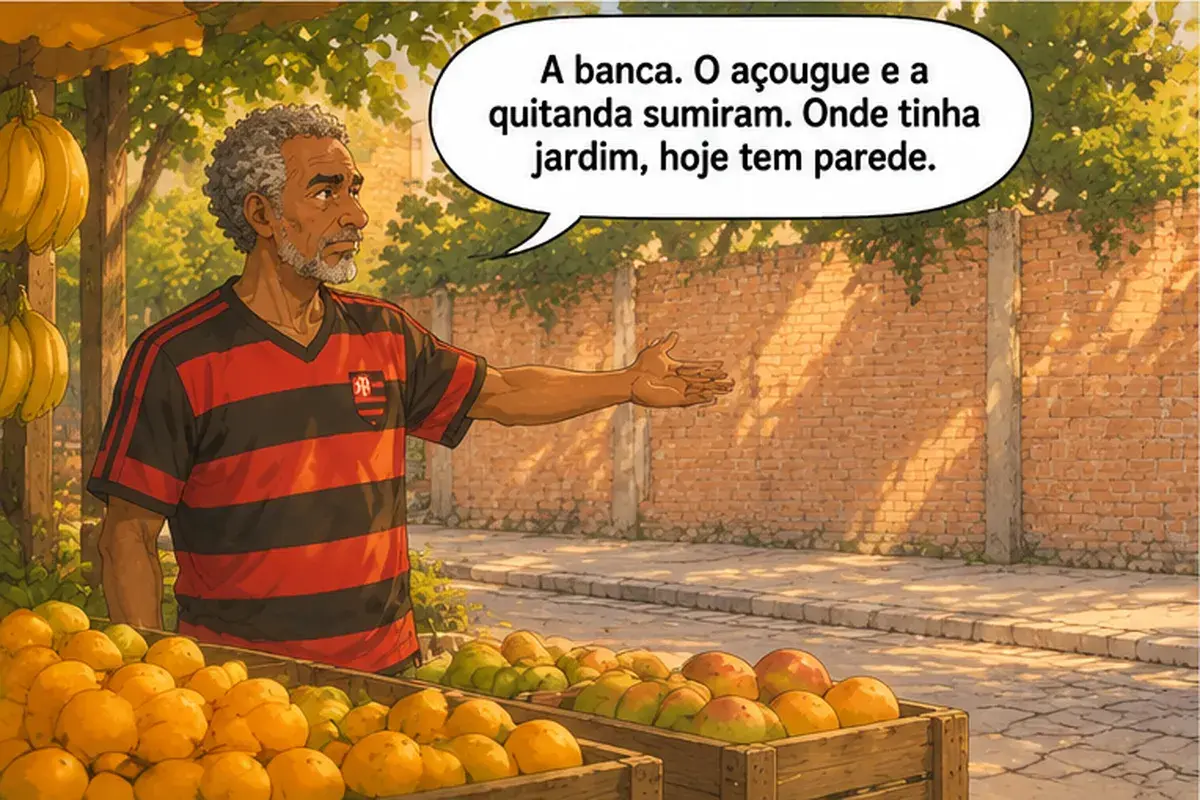
- Jorge
A banca. O açougue e a quitanda sumiram. Onde tinha jardim, hoje tem parede.
The newsstand. The butcher shop and the produce shop disappeared. Where there used to be a garden, today there's a wall.
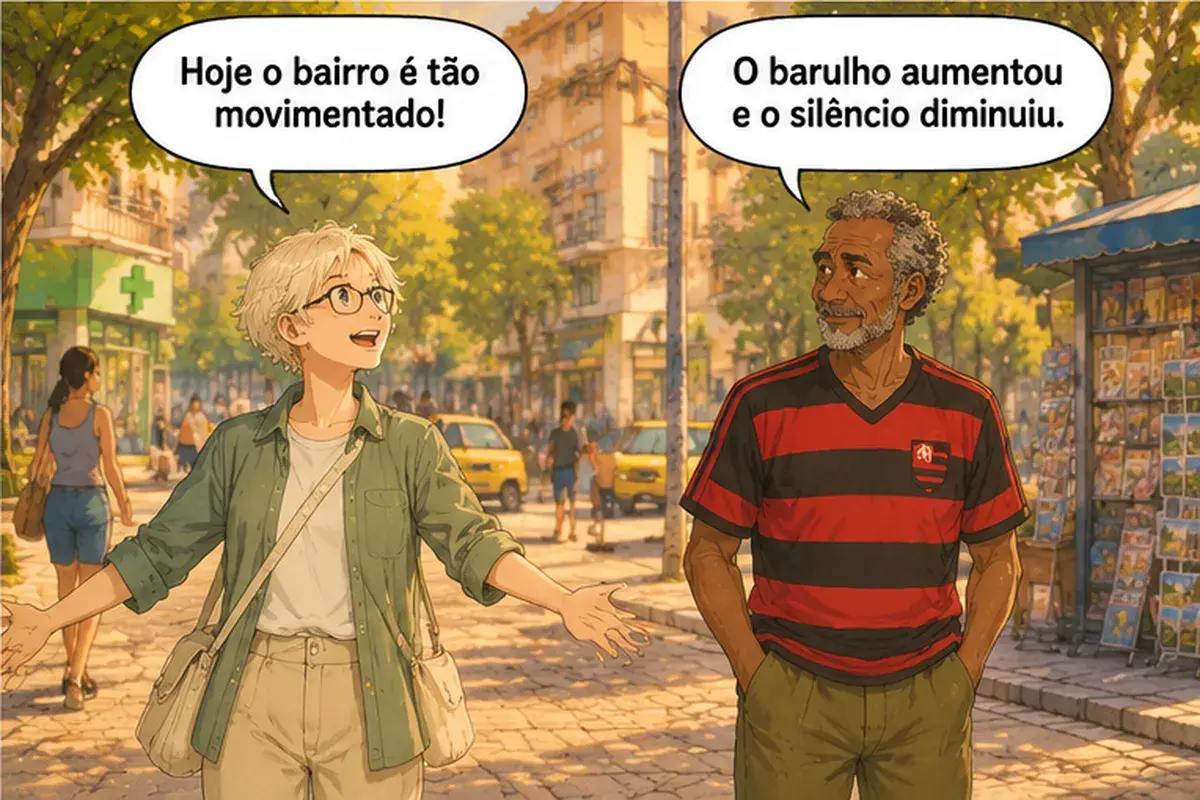
- Nina
Hoje o bairro é tão movimentado!
Today the neighborhood is so busy!
- Jorge
O barulho aumentou e o silêncio diminuiu.
The noise has increased, and the silence has decreased.
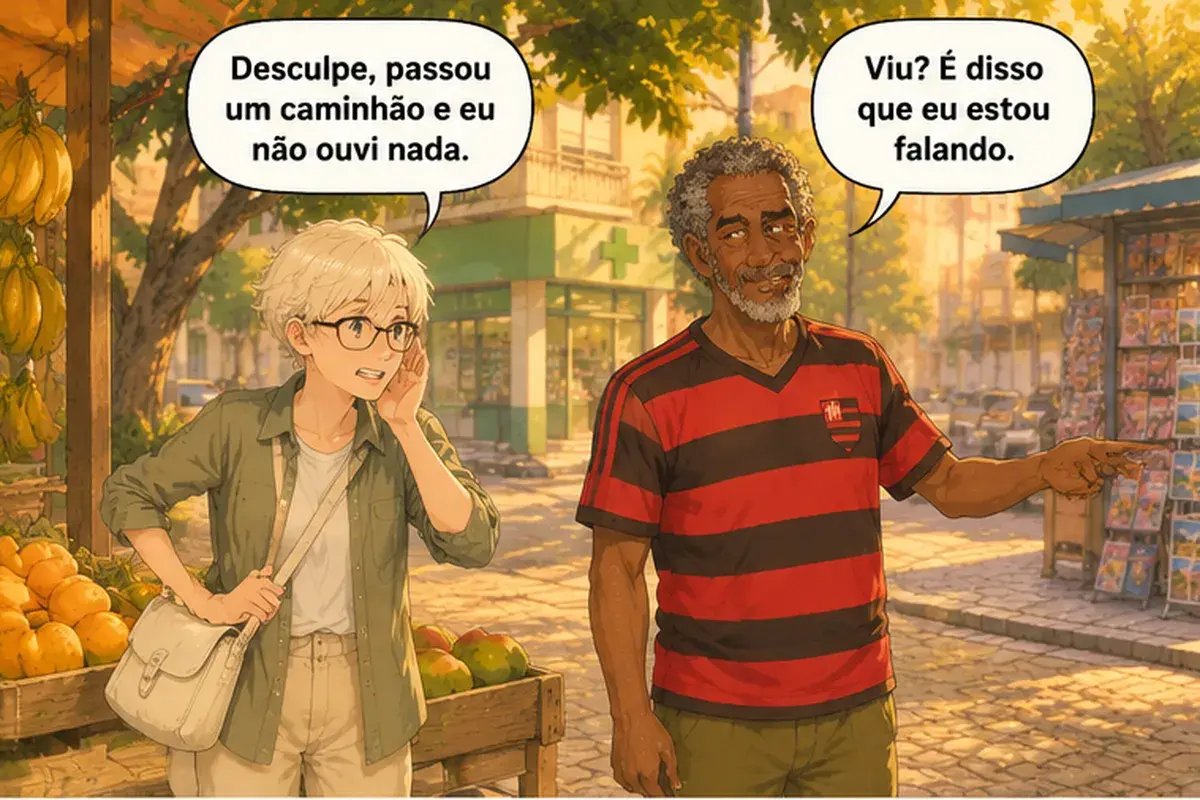
- Nina
Desculpe, passou um caminhão e eu não ouvi nada.
Sorry, a truck went by and I didn't hear anything.
- Jorge
Viu? É disso que eu estou falando.
See? That's what I'm talking about.
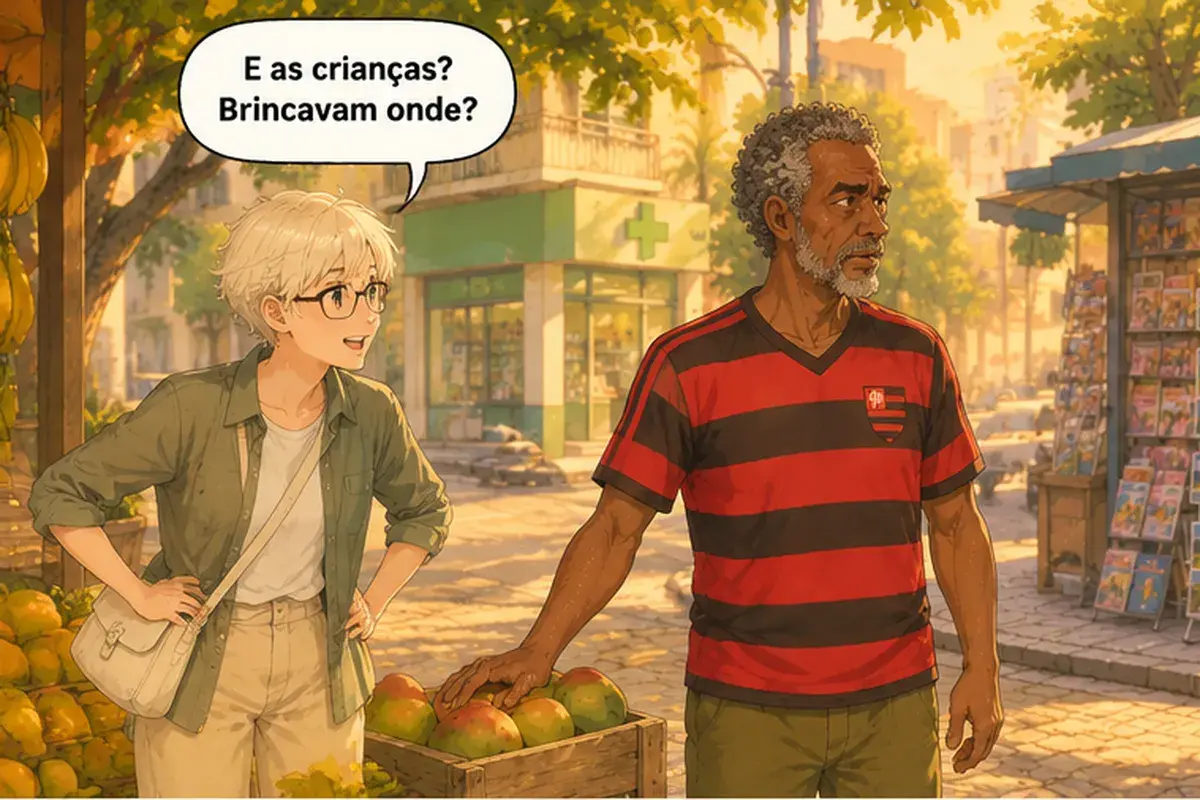
- Nina
E as crianças? Brincavam onde?
And the kids? Where did they play?
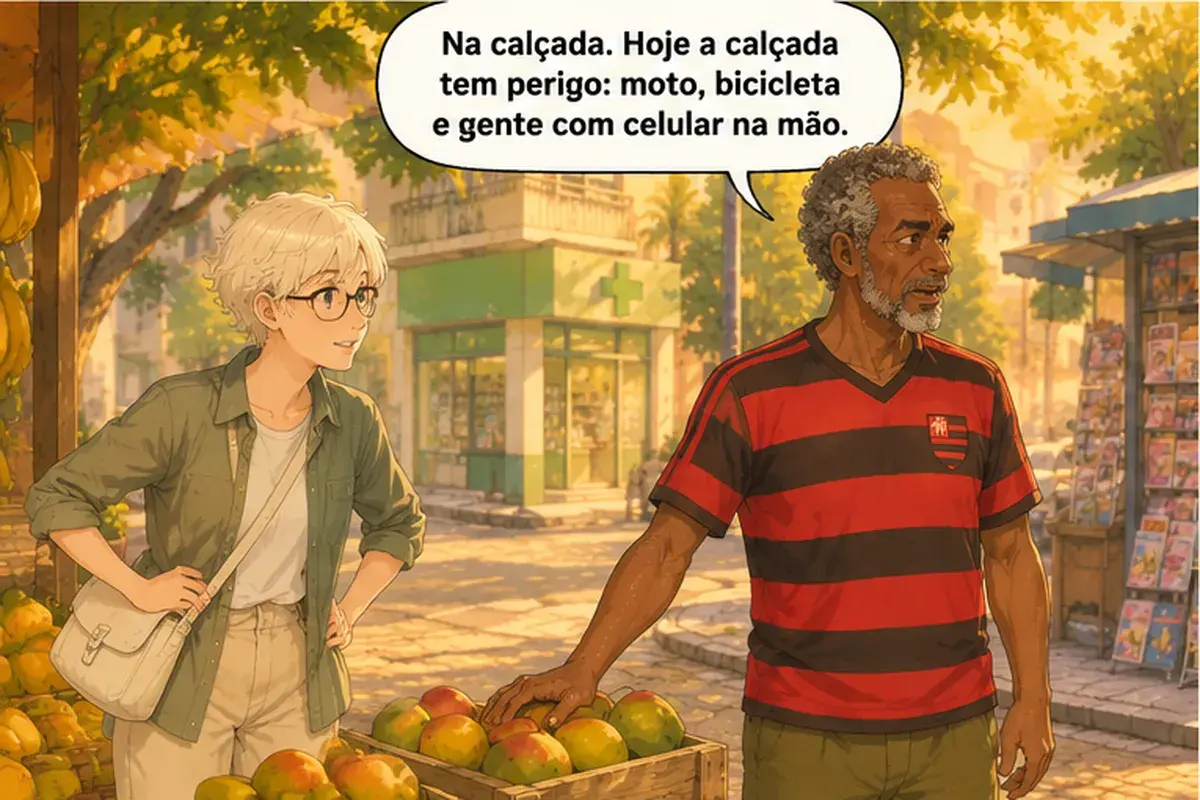
- Jorge
Na calçada. Hoje a calçada tem perigo: moto, bicicleta e gente com celular na mão.
On the sidewalk. Today there's danger on the sidewalk: motorcycles, bikes and people with phones in their hands.
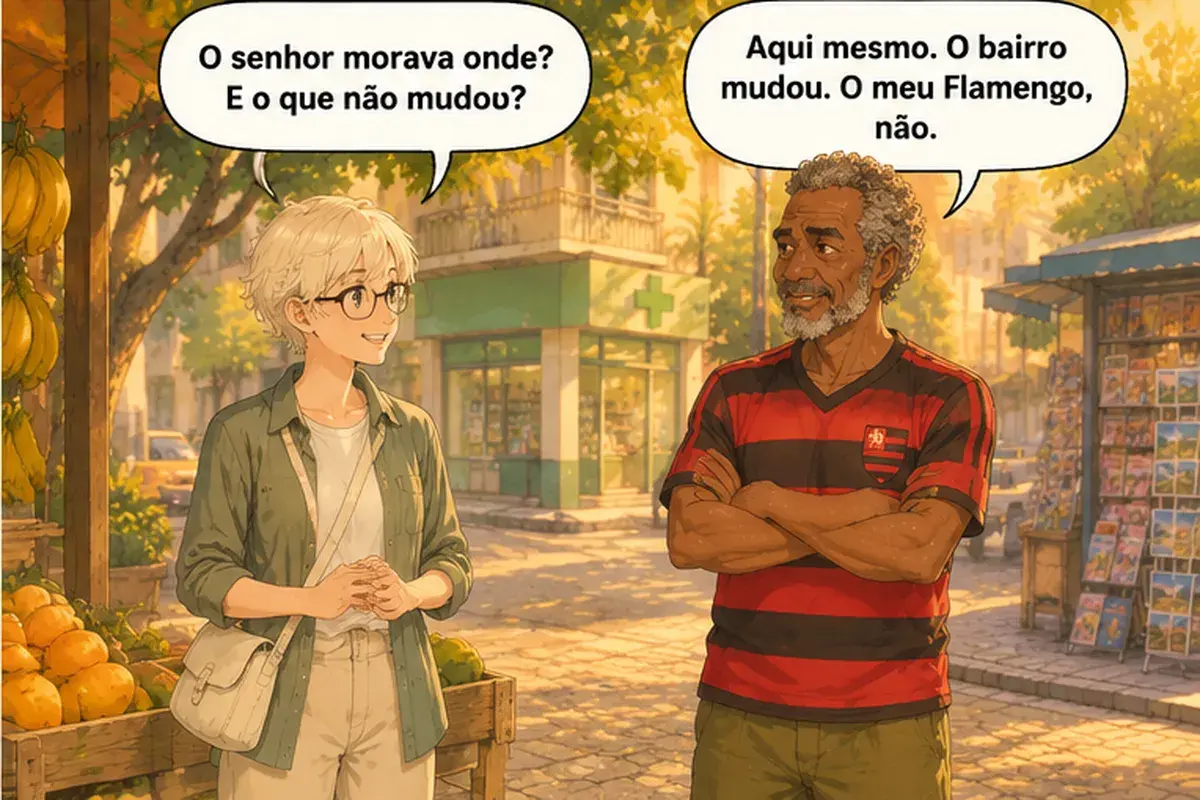
- Nina
O senhor morava onde? E o que não mudou?
Where did you live? (formal) And what hasn't changed?
- Jorge
Aqui mesmo. O bairro mudou. O meu Flamengo, não.
Right here. The neighborhood has changed. My Flamengo hasn't.
Grammar for this text
- Naquele tempo, aqui tinha um cinema. — naquele = em + aquele: "at that time, back then". tinha is the imperfect of ter (to have); here it means "there was". About today you'd say aqui tem.
- E o senhor ia muito? — ia is the imperfect of the irregular verb ir: "went, used to go". The ending is different from falava: eu ia, ele ia, nós íamos.
- Naquela esquina ficava o boteco. — ficava is the imperfect of ficar in the sense "to be located". The verb comes before the subject: this is how people tell where things used to be. You can also say o boteco ficava naquela esquina.
- Ainda tem alguma coisa daquele tempo? — daquele = de + aquele: "from that time". ainda tem — "is there still": the question is about today, so it's in the present.
- Onde tinha jardim, hoje tem parede. — a handy "back then — now" frame: tinha (there was) and tem (there is).
- Desculpe, passou um caminhão e eu não ouvi nada. — desculpe is more polite than casual desculpa; that's the right choice with o senhor. passou is the preterite of passar: the truck went by once. ouvi is the eu form of ouvir in the preterite, with the ending -i, like saí.
- Viu? É disso que eu estou falando. — viu is the preterite of ver (unit 7), "you saw"; here it means "See? Told you!". disso = de + isso, because falar de means "to talk about"; É disso que… — "That's what… about".
- O meu Flamengo, não. — Flamengo here is Seu Jorge's favorite soccer team, not the neighborhood (there is a neighborhood called Flamengo too, but that one has changed): "my Flamengo hasn't changed".
Words and grammar of the unit: Describe how a place used to be.
Learn the words from the texts with flashcards
In the app, you can tap any word in a text to see its translation, forms and examples, and new words stick with flashcards. 15 minutes a day.
Start for freeEverything is open for free. No card needed to sign up.