

Portuguese dialogue with translation · A1 · 14 lines
Três passagens para Ubatuba, por favor Three tickets to Ubatuba, please
Comic · 9 panels

- Nina
Bia? Na rodoviária antes de mim? Quem é você?
Bia? At the bus station before me? Who are you?
- Bia
É praia, Nina! Para a praia eu chego cedo.
It's the beach, Nina! For the beach, I arrive early.
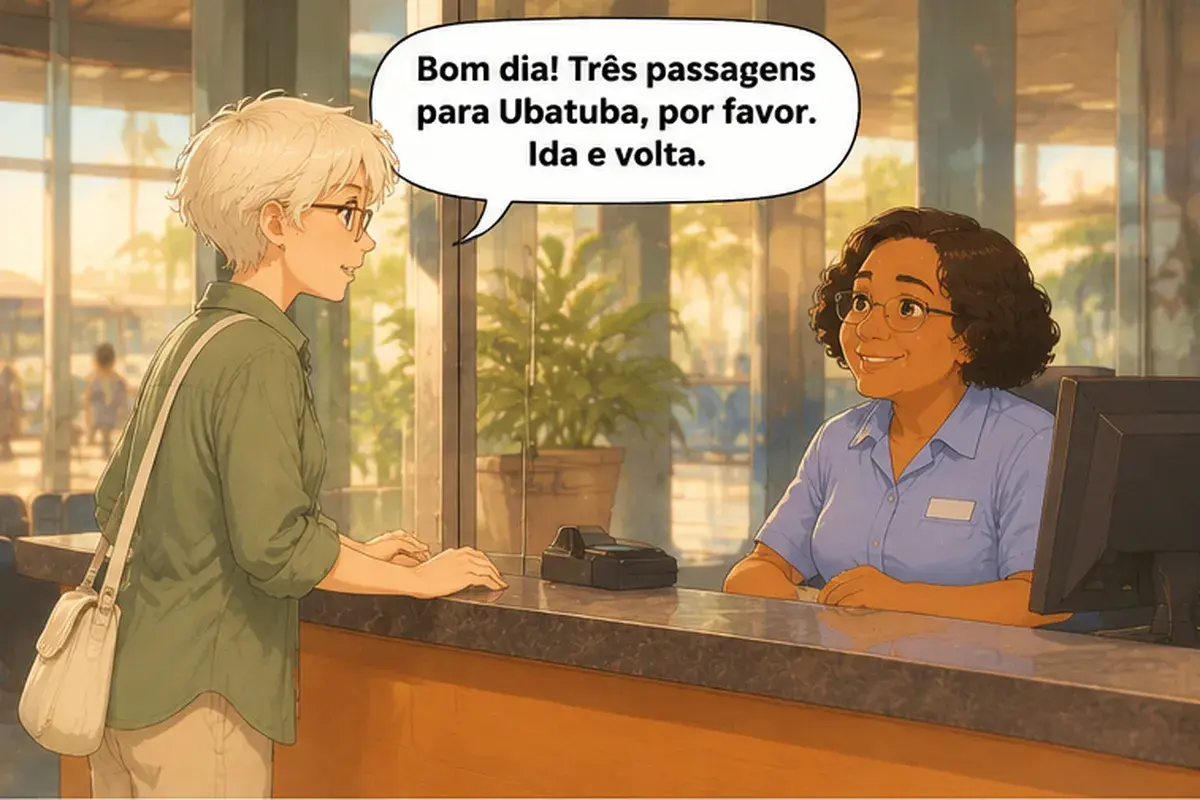
- Nina
Bom dia! Três passagens para Ubatuba, por favor. Ida e volta.
Good morning! Three tickets to Ubatuba, please. Round trip.
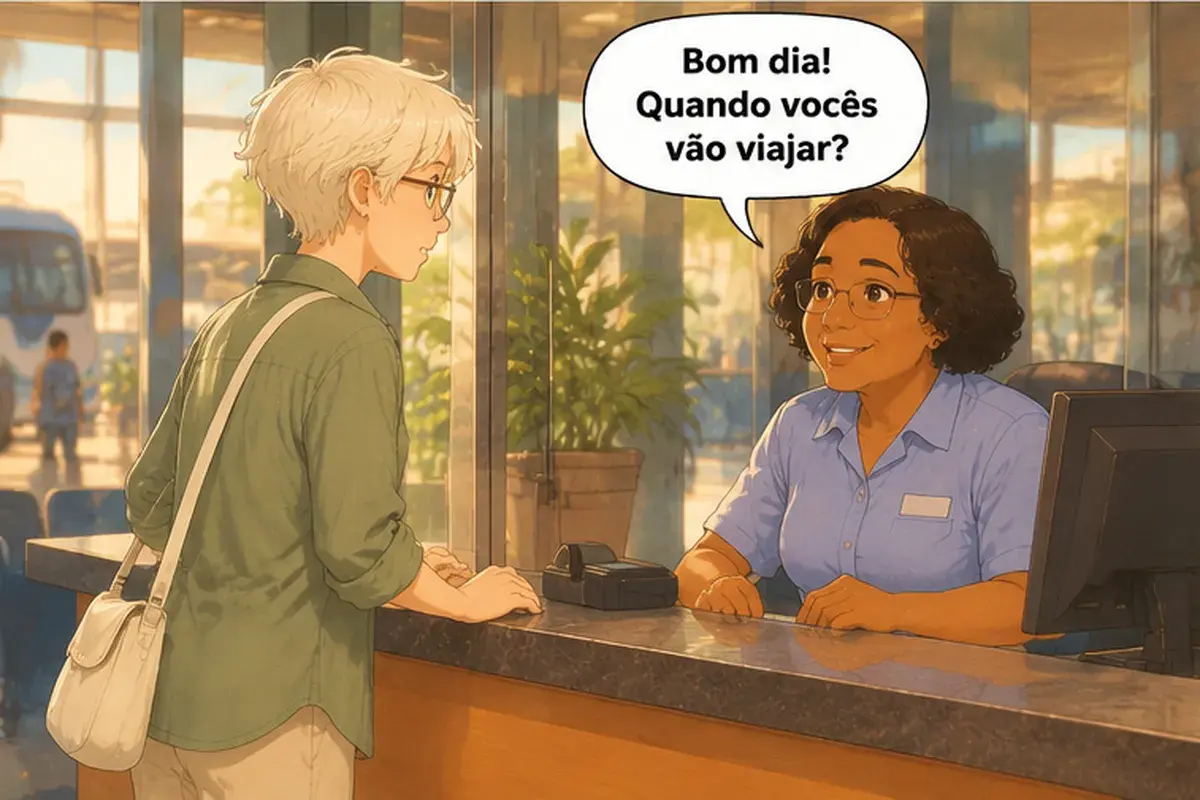
- Atendente
Bom dia! Quando vocês vão viajar?
Good morning! When are you going to travel? (to several people)

- Bia
Sexta-feira. A volta é na segunda, no feriado.
Friday. The return is on Monday, on the holiday.
- Nina
Qual é o horário? E quanto custa?
What's the schedule? And how much does it cost?
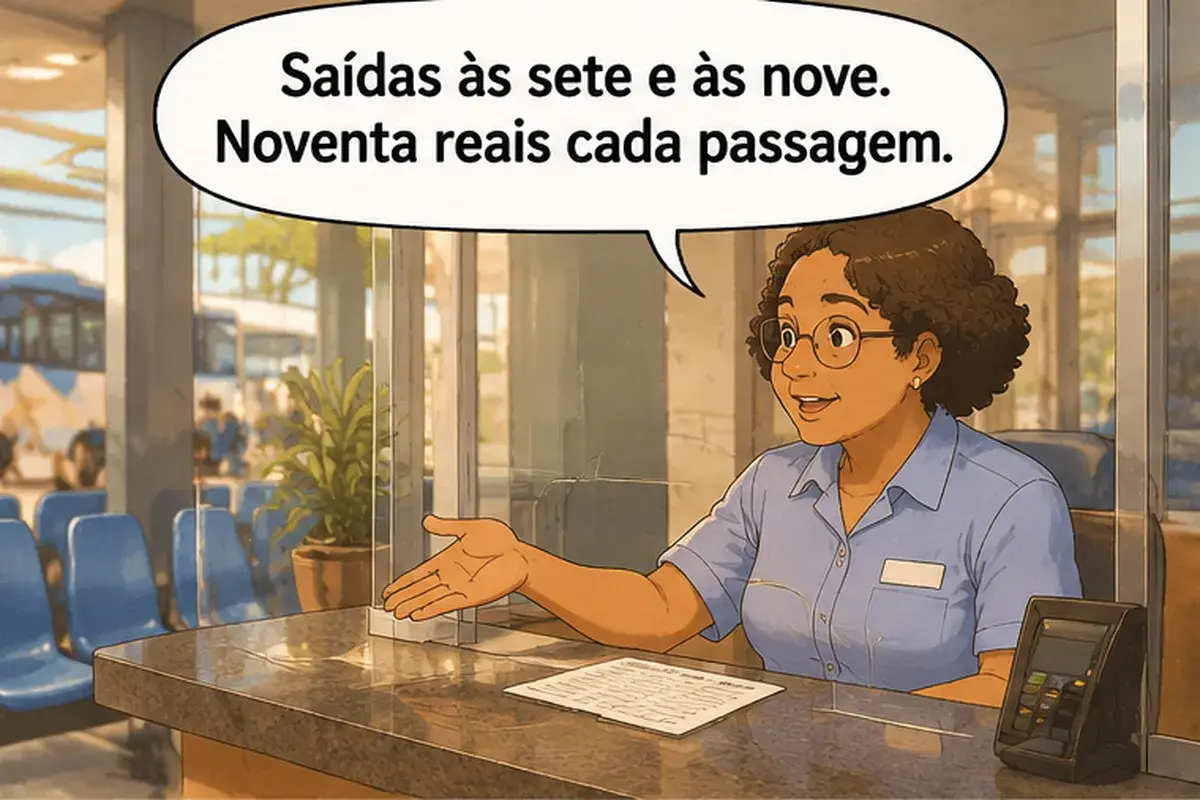
- Atendente
Saídas às sete e às nove. Noventa reais cada passagem.
Departures at seven and at nine. Ninety reais per ticket.
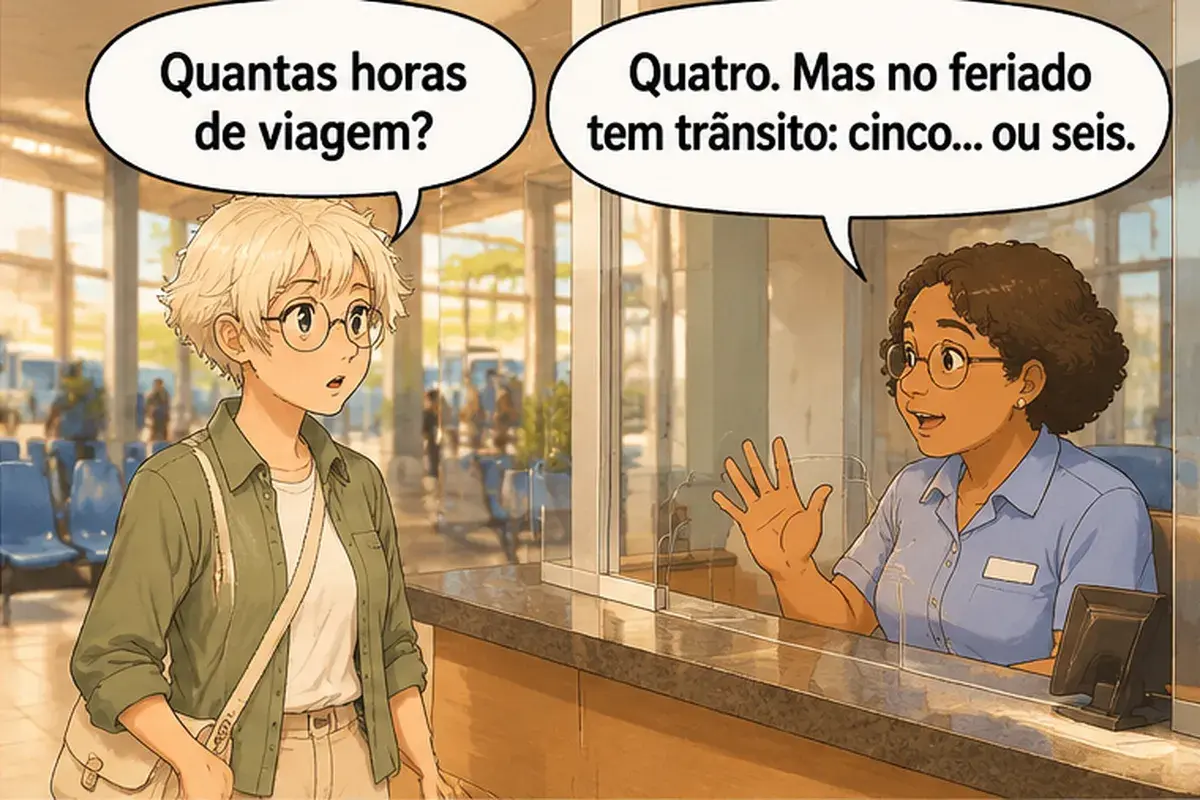
- Nina
Quantas horas de viagem?
How many hours is the trip?
- Atendente
Quatro. Mas no feriado tem trânsito: cinco... ou seis.
Four. But on the holiday there's traffic: five... or six.
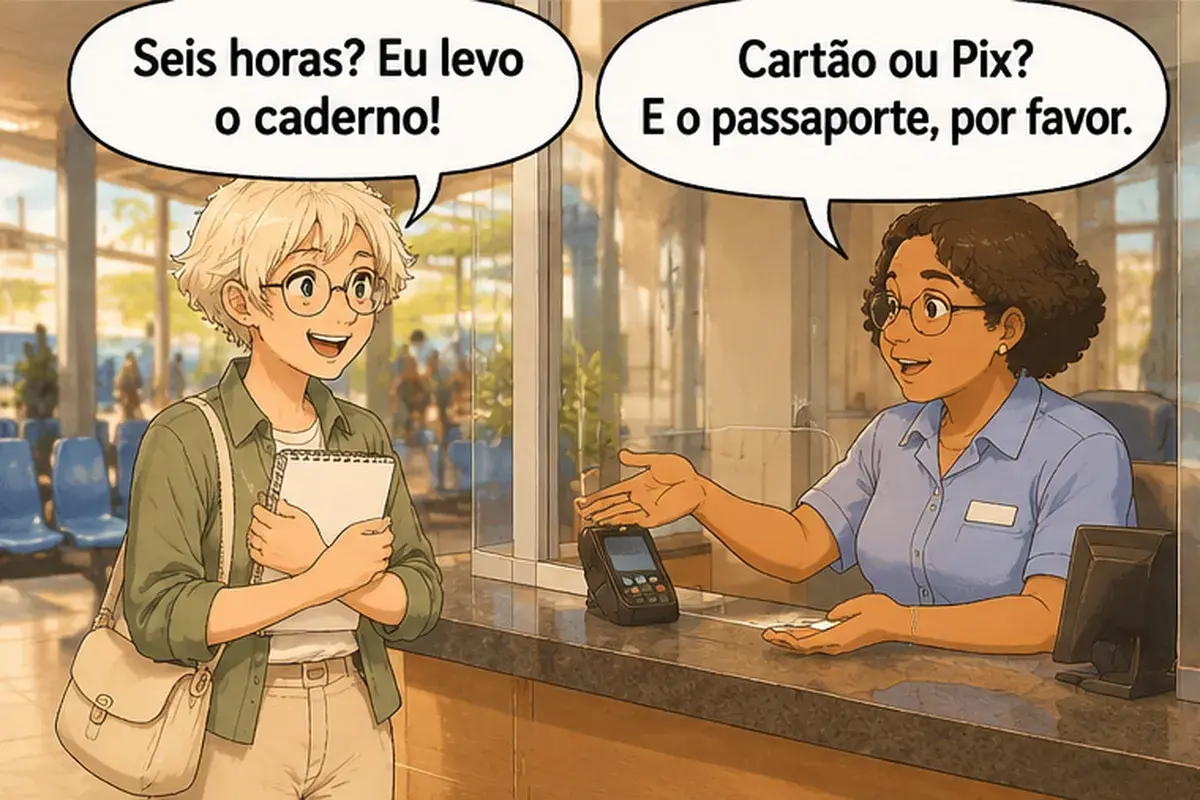
- Nina
Seis horas? Eu levo o caderno!
Six hours? I'll take my notebook!
- Atendente
Cartão ou Pix? E o passaporte, por favor.
Card or Pix? And your passport, please.
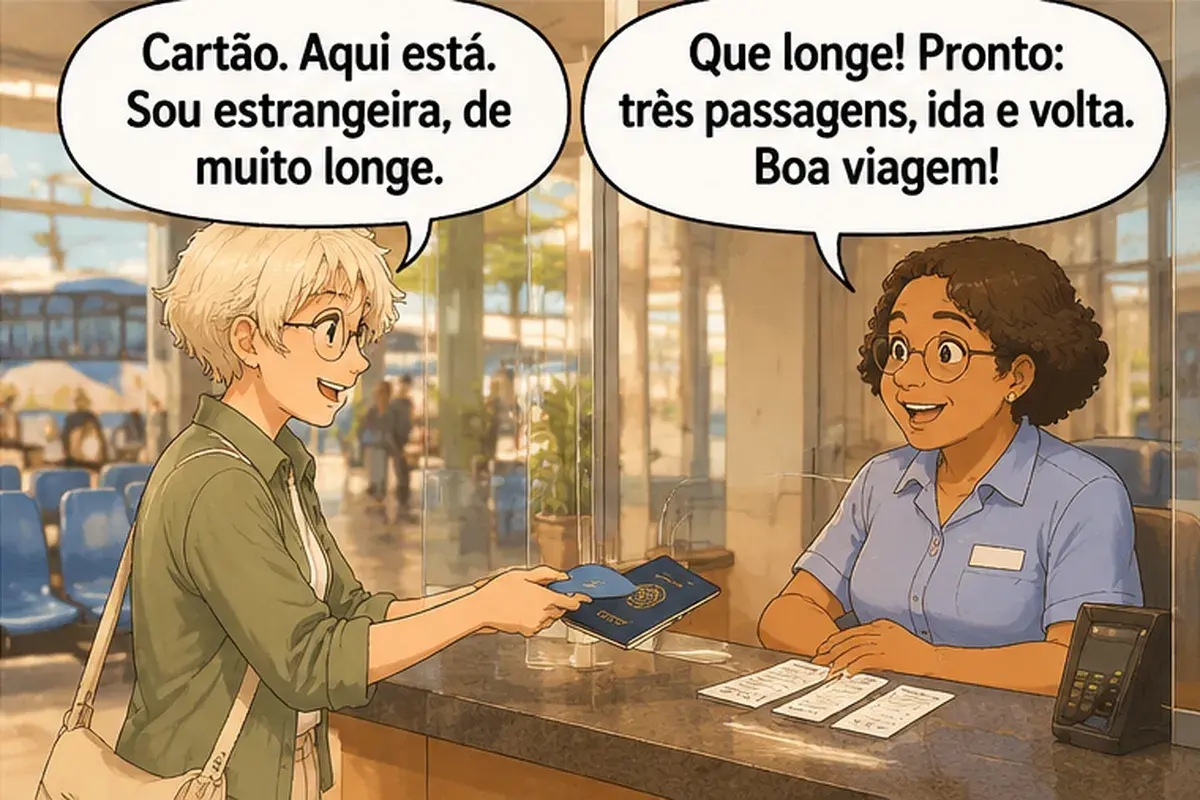
- Nina
Cartão. Aqui está. Sou estrangeira, de muito longe.
Card. Here you go. I'm a foreigner, from very far away (woman speaking).
- Atendente
Que longe! Pronto: três passagens, ida e volta. Boa viagem!
That's so far! All set: three tickets, round trip. Have a good trip!

- Bia
Obrigada! Agora vamos esperar o Léo na entrada.
Thank you! Now let's wait for Léo at the entrance.
Grammar for this text
- Quando vocês vão viajar? — vão is the vocês / eles / elas form of ir (to go). Here it isn't about moving: it's the future. vão viajar — "are going to travel". This is the near future, ir + infinitive, just like English "be going to". The rule is in the unit grammar.
- Três passagens para Ubatuba, por favor. Ida e volta. — para goes before the place you're going to: "tickets to Ubatuba". ida e volta — literally "going and coming back", that is, a round-trip ticket.
- A volta é na segunda, no feriado. — na = em + a, no = em + o. "On Monday" — na segunda (short for segunda-feira, a feminine word); "on the holiday" — no feriado.
- Saídas às sete e às nove. — saídas is the plural of saída: on a schedule it means "departures", on a sign over a door it means "exit". às = a + as: "at seven (o'clock)".
- Cartão ou Pix? E o passaporte, por favor. — this is how a ticket clerk asks how you're paying: by card or with Pix (Brazil's instant payment by phone). Long-distance bus tickets are issued in the passenger's name, so the clerk asks for ID; Nina is a foreigner, so she shows her passport.
- Quantas horas de viagem? — quantas is the feminine plural of quanto: it agrees with horas.
- Que longe! — que + an adjective makes an exclamation: "That's so far!" or "How far!" The same way: que legal! (how cool!).
- Eu levo o caderno! — levo is the eu form of levar (to take along). It's the present tense, but the meaning is future: "I'll take".
Words and grammar of the unit: Buy a bus ticket.
Learn the words from the texts with flashcards
In the app, you can tap any word in a text to see its translation, forms and examples, and new words stick with flashcards. 15 minutes a day.
Start for freeEverything is open for free. No card needed to sign up.