
Portuguese story with translation · A1 · 14 lines
Hoje não é meu dia Today isn't my day
Comic · 8 panels
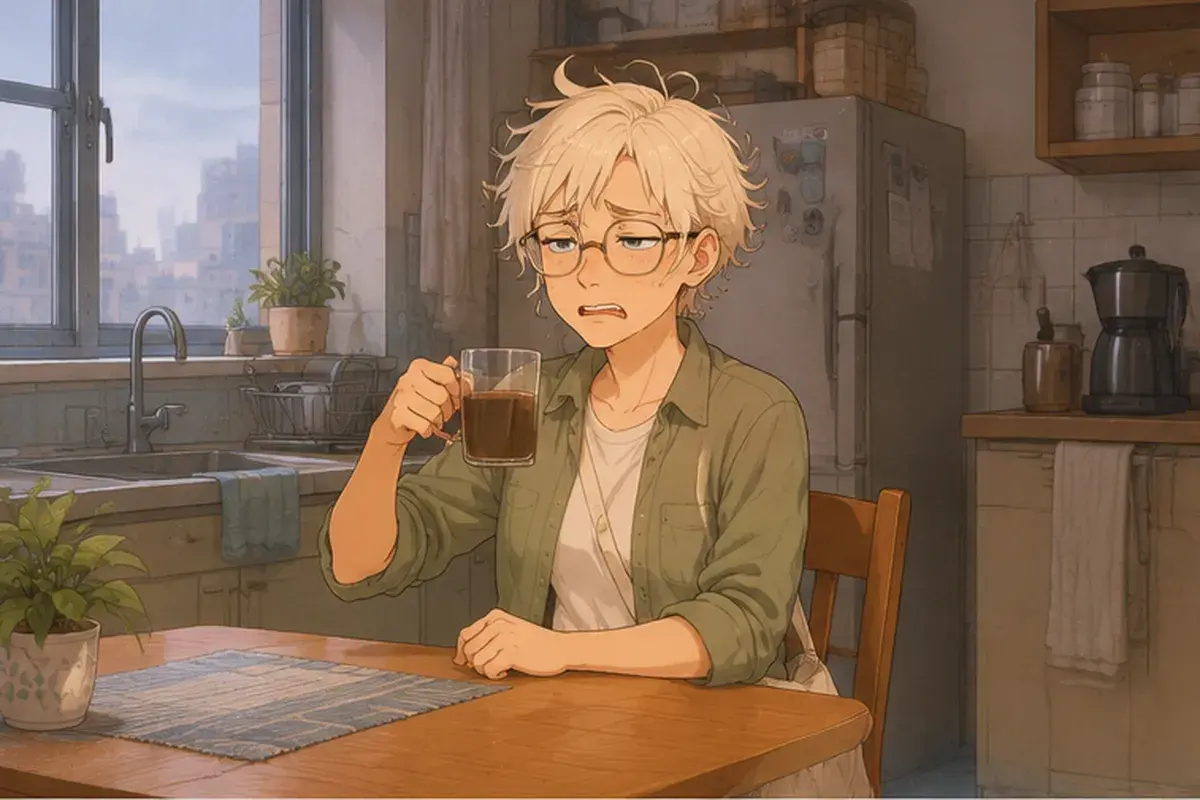
Hoje não é meu dia.
Today isn't my day.
Durmo mal, acordo tarde e o café está frio.
I sleep badly, I wake up late, and the coffee is cold.
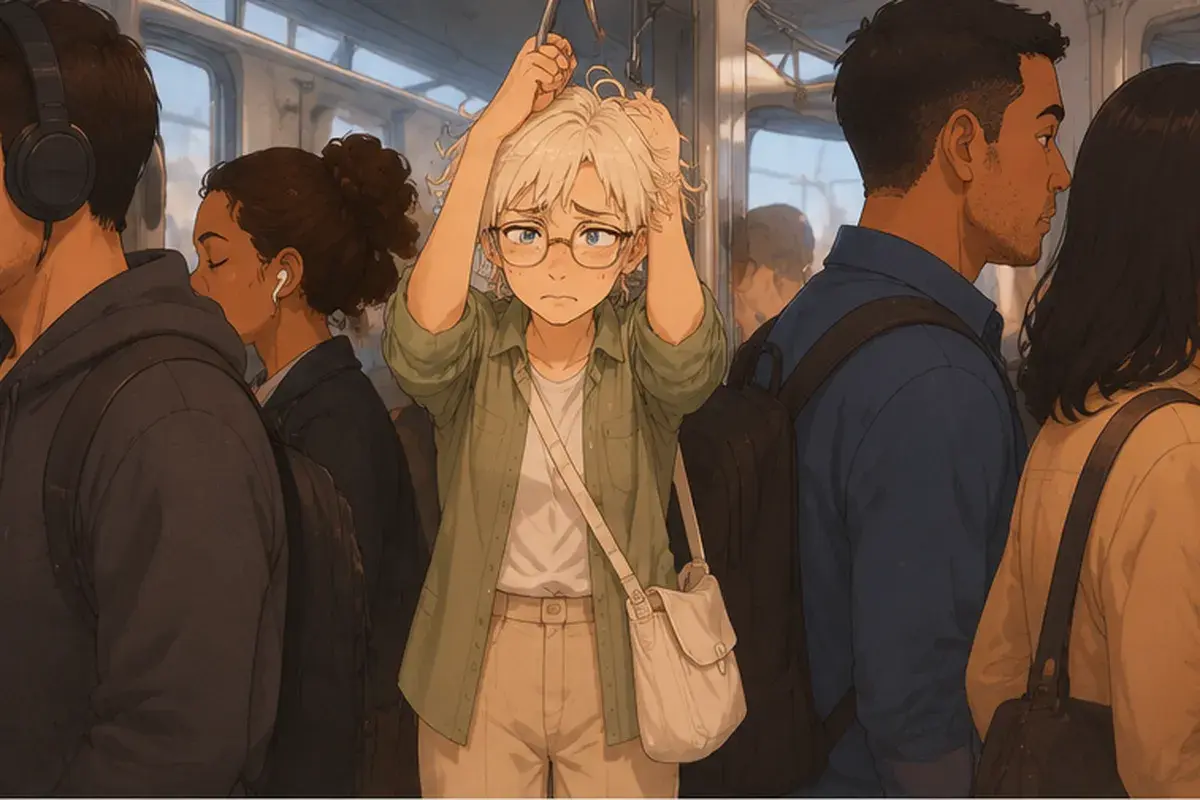
No metrô não tem lugar para ninguém. Estou nervosa: a aula começa às nove.
On the subway, there's no room for anyone. I'm nervous: class starts at nine (woman speaking).

Na aula, a Camila pergunta: “Você é de onde?” Eu digo, sem pensar: “Estou cansada.”
In class, Camila asks: "Where are you from?" Without thinking, I say: "I'm tired." (woman speaking)
Todo mundo olha para mim. O Tom diz: “Eu também!”
Everyone looks at me. Tom says: "Me too!"

À tarde, o cliente diz: “Tem algum problema com a cor.” Estou chateada.
In the afternoon, the client says: "There's some problem with the color." I'm upset (woman speaking).

Chove, e meu guarda-chuva está em casa.
It's raining, and my umbrella is at home.
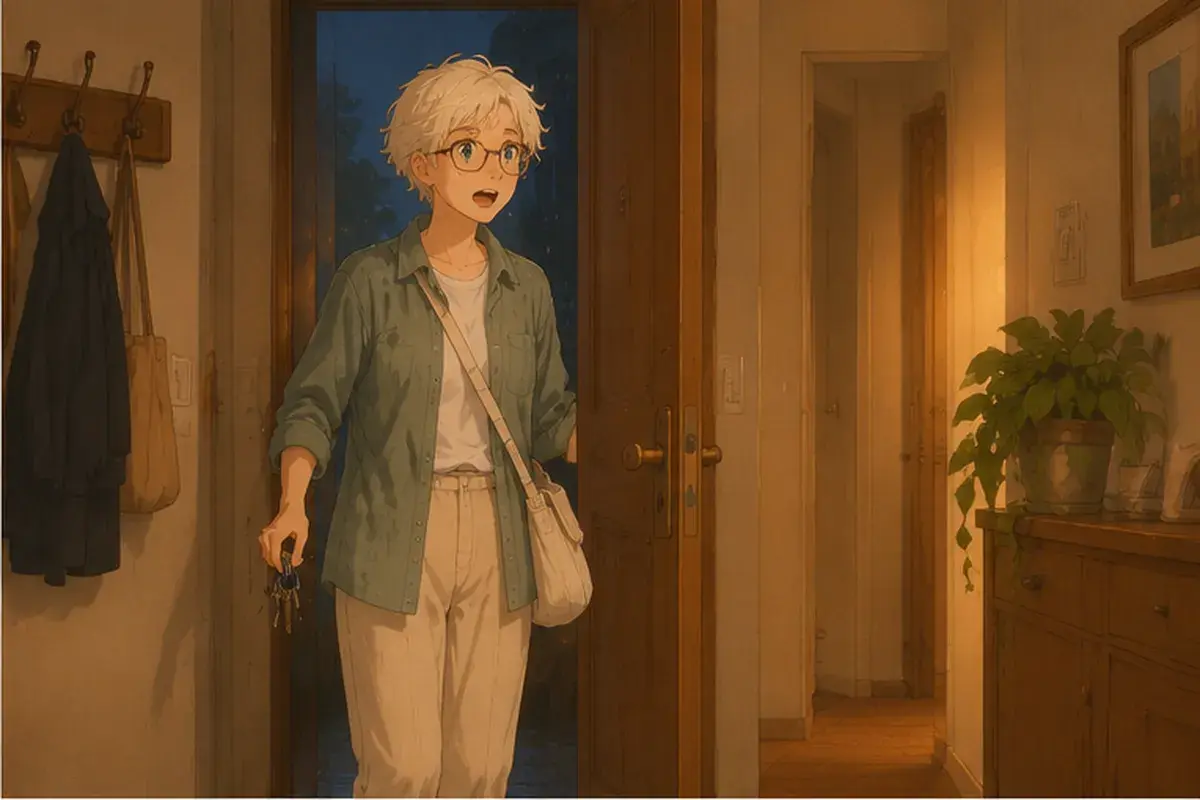
Volto para casa bastante triste.
I go back home pretty sad.
Abro a porta e… nossa!
I open the door and… wow!
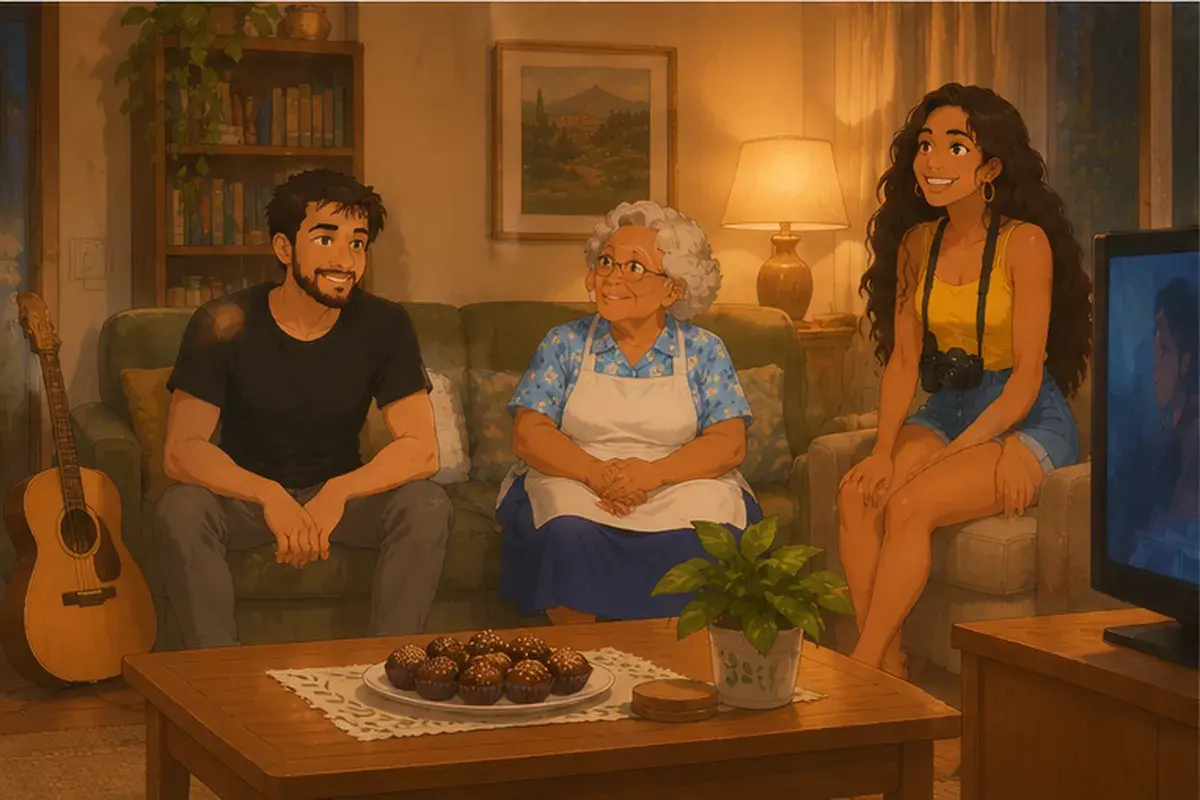
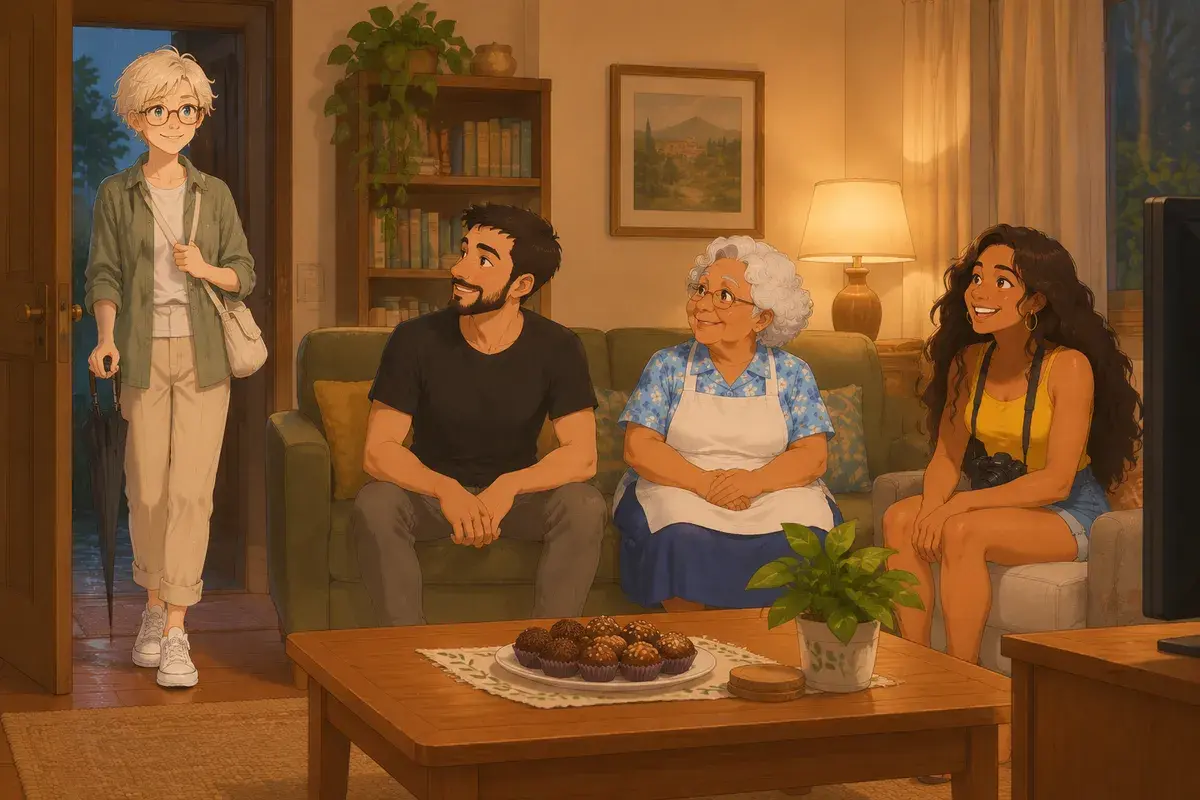
O Léo, a Dona Lúcia e a Bia estão na sala.
Léo, Dona Lúcia and Bia are in the living room.
Tem brigadeiro na mesa e uma série na televisão.
There's brigadeiro on the table and a series on TV.
Até a Bia está aqui, e não está atrasada!
Even Bia is here, and she's not late!
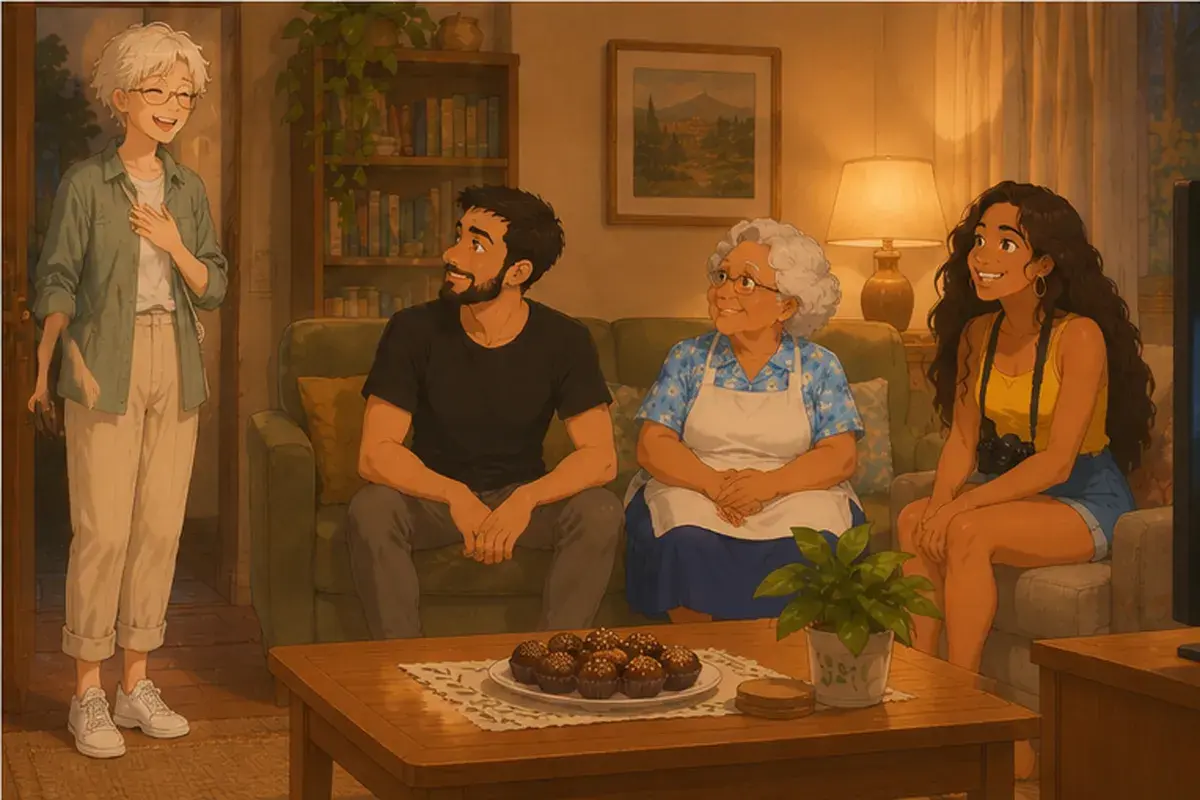
Meu Deus! Não acredito!
Oh my God! I can't believe it!
Estou cansada, mas feliz. Acho que hoje é meu dia, sim.
I'm tired but happy (woman speaking). I think today is my day, yes.
Grammar for this text
- Durmo mal — durmo is the eu form of dormir (to sleep). The o in the stem changes to u: durmo, but dorme (he sleeps). mal — "badly", an adverb that goes with a verb; the adjective "bad" is a different word, mau.
- Você é de onde? … Estou cansada. — a joke: Camila asks where Nina is from, and Nina, worn out, answers something else, as if she'd been asked "how are you?". That's why Tom says "me too!". ser de — to be from; estar — how you feel right now.
- Estou cansada — the adjective agrees with the speaker: Nina is a woman, so -a. Léo would say estou cansado. Estou chateada works the same way: chateada — upset, annoyed; a man says chateado. sem pensar — without thinking.
- não tem lugar para ninguém — a double negative: não before the verb and ninguém after it. Portuguese needs both, while English uses one: "there's no room for anyone".
- Tem algum problema com a cor. — tem — there is; algum — some; problema is masculine even though it ends in -a; a cor — color, feminine.
- Abro a porta e… nossa! — abro is the eu form of abrir (to open). nossa! — "wow!" (short for Nossa Senhora, "Our Lady"), not "our"; people say it to friends and people they know when they're surprised.
- Não acredito! — acredito is the eu form of acreditar (to believe); literally "I don't believe", in English "I can't believe it!". Meu Deus — oh my God.
- Acho que hoje é meu dia, sim. — acho is the eu form of achar (to think): acho que + a sentence, "I think (that)...". sim at the end adds weight: "after all".
Words and grammar of the unit: Chat about how you feel and what's new.
Learn the words from the texts with flashcards
In the app, you can tap any word in a text to see its translation, forms and examples, and new words stick with flashcards. 15 minutes a day.
Start for freeEverything is open for free. No card needed to sign up.