

Portuguese dialogue with translation · A1 · 13 lines
Estou com saudade de casa I miss home
Comic · 12 panels
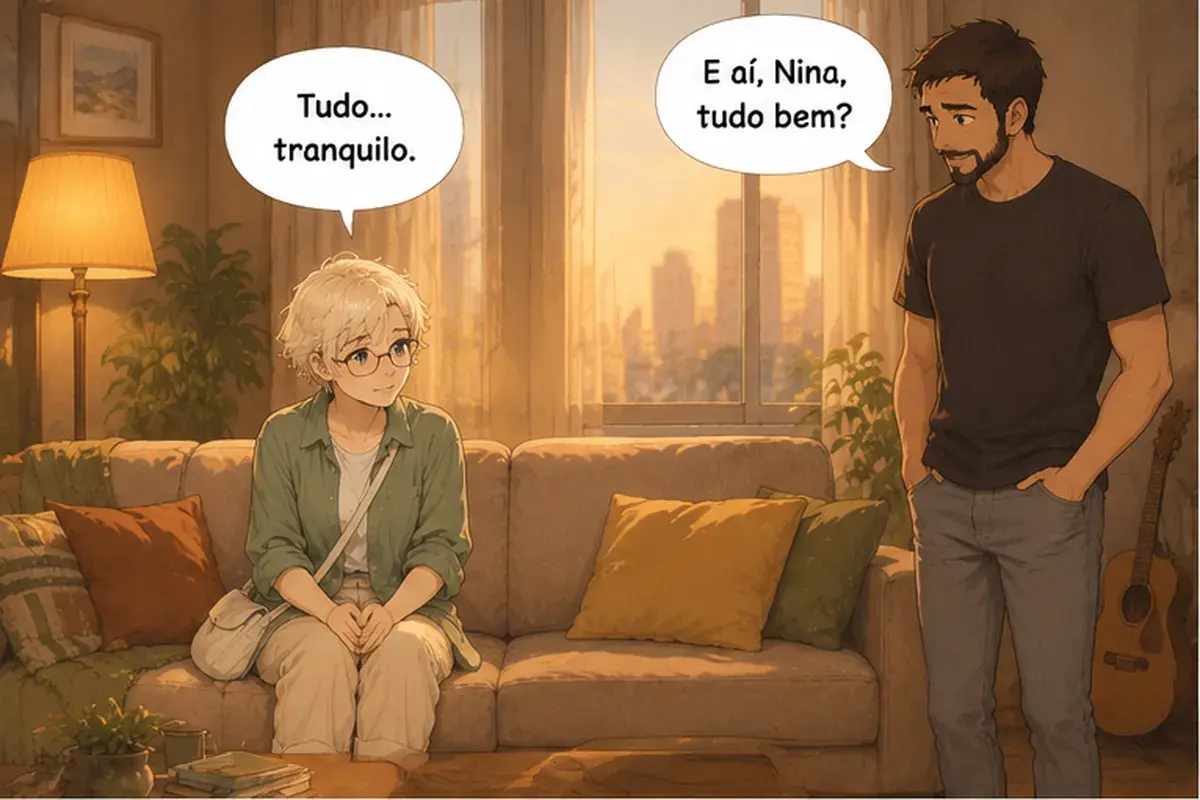
- Léo
E aí, Nina, tudo bem?
Hey, Nina, how's it going?
- Nina
Tudo… tranquilo.
Everything's… calm.
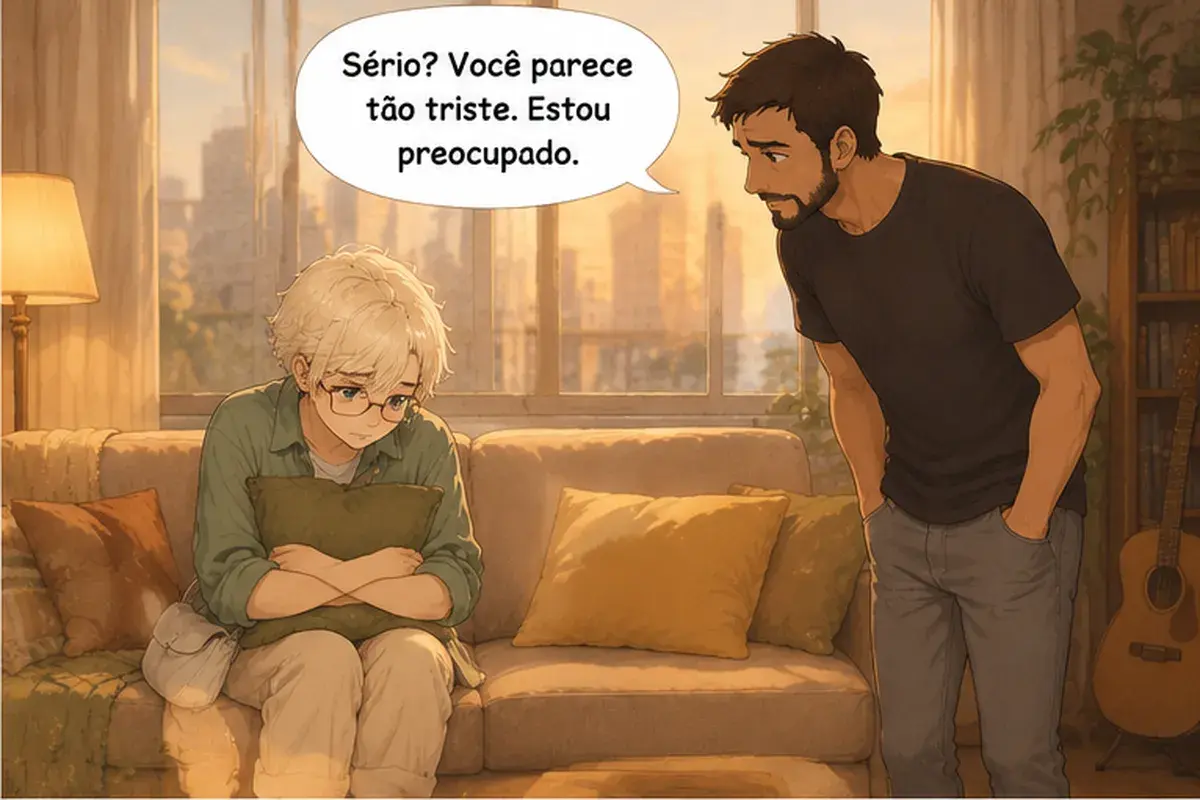
- Léo
Sério? Você parece tão triste. Estou preocupado.
Seriously? You look so sad. I'm worried (man speaking).
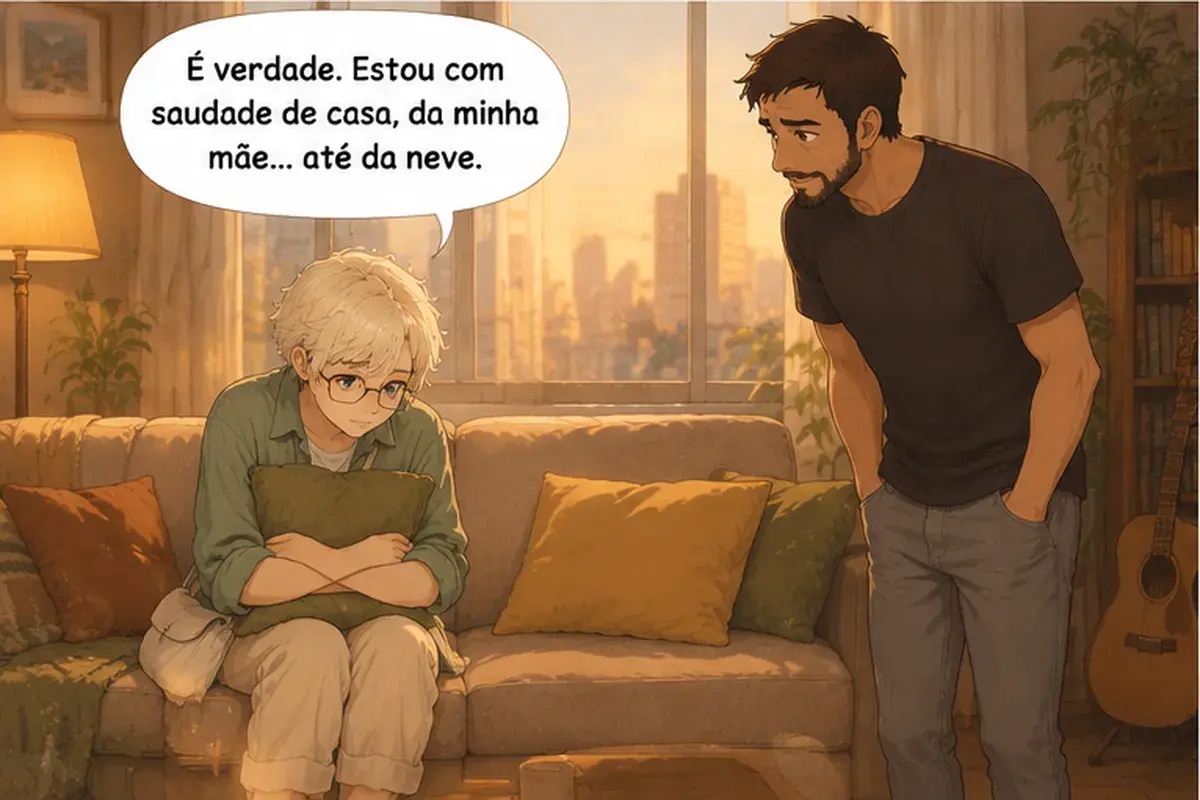
- Nina
É verdade. Estou com saudade de casa, da minha mãe… até da neve.
It's true. I miss home, my mom… even the snow.
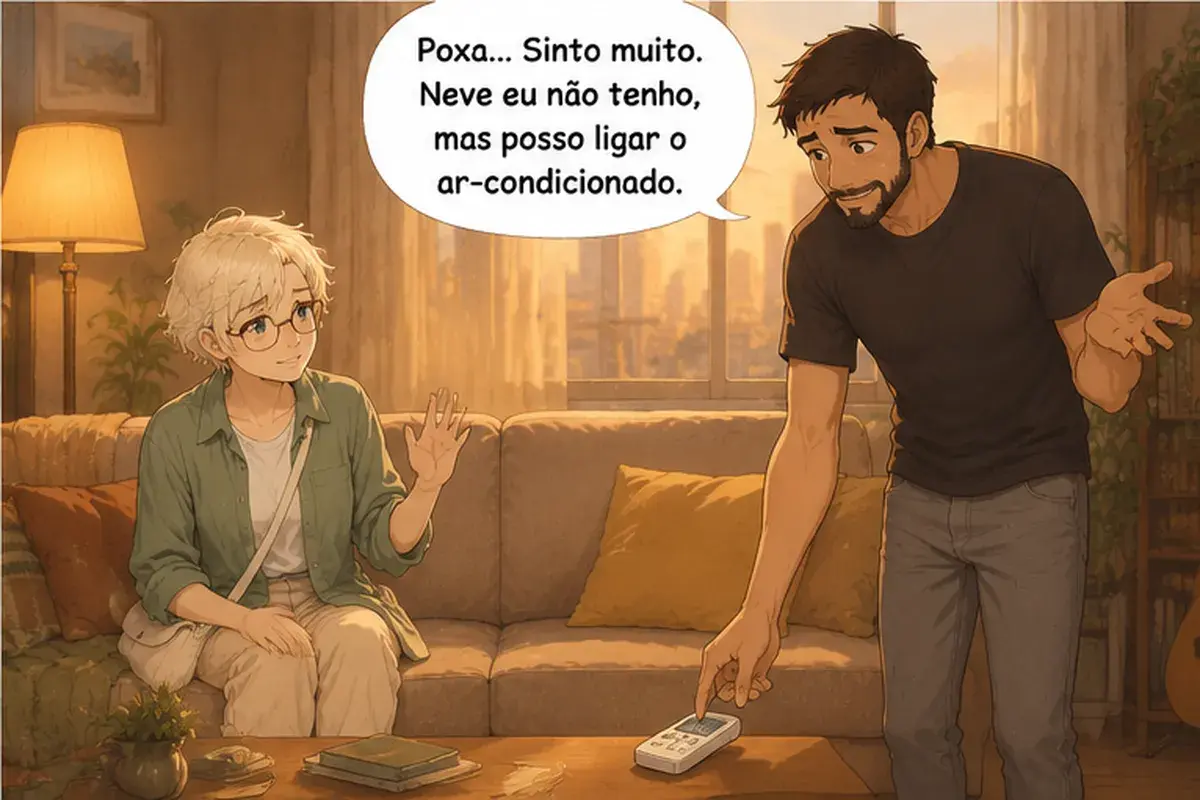
- Léo
Poxa… Sinto muito. Neve eu não tenho, mas posso ligar o ar-condicionado.
Aw… I'm so sorry. Snow I don't have, but I can turn on the air conditioner.
- Nina
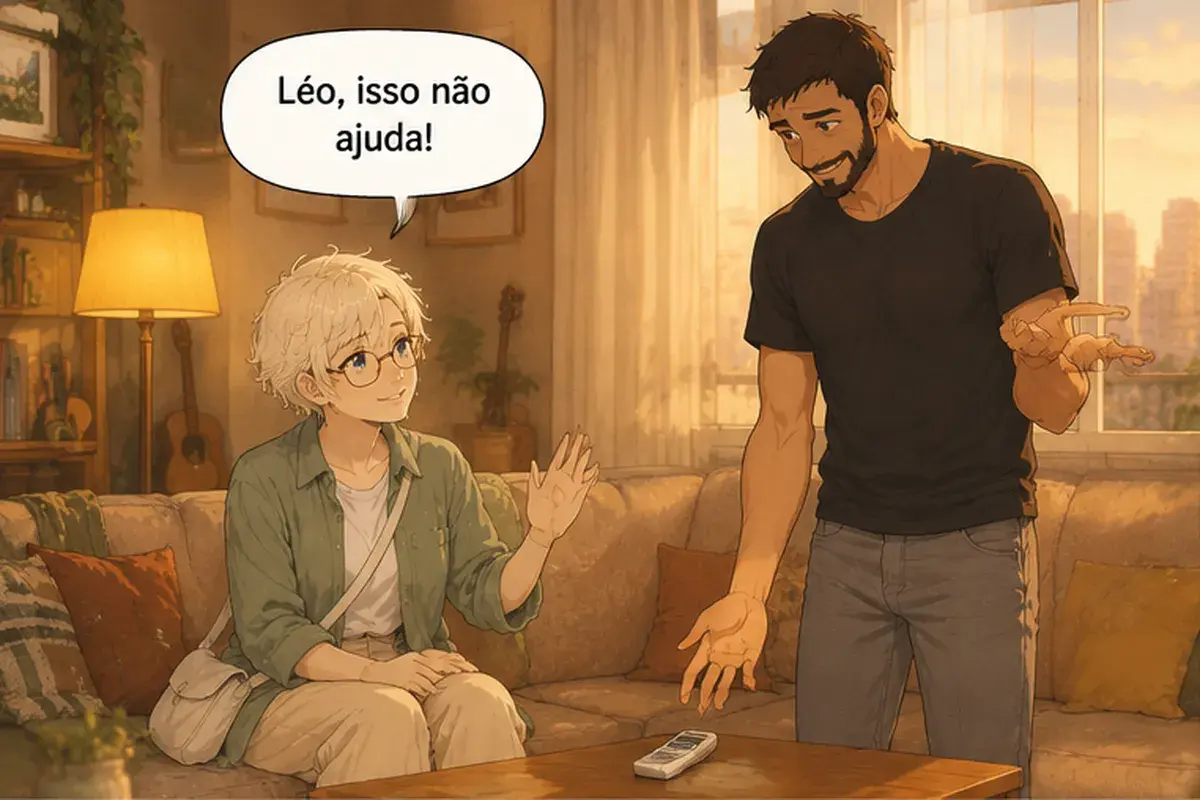
Léo, isso não ajuda!
Léo, that doesn't help!
- Léo
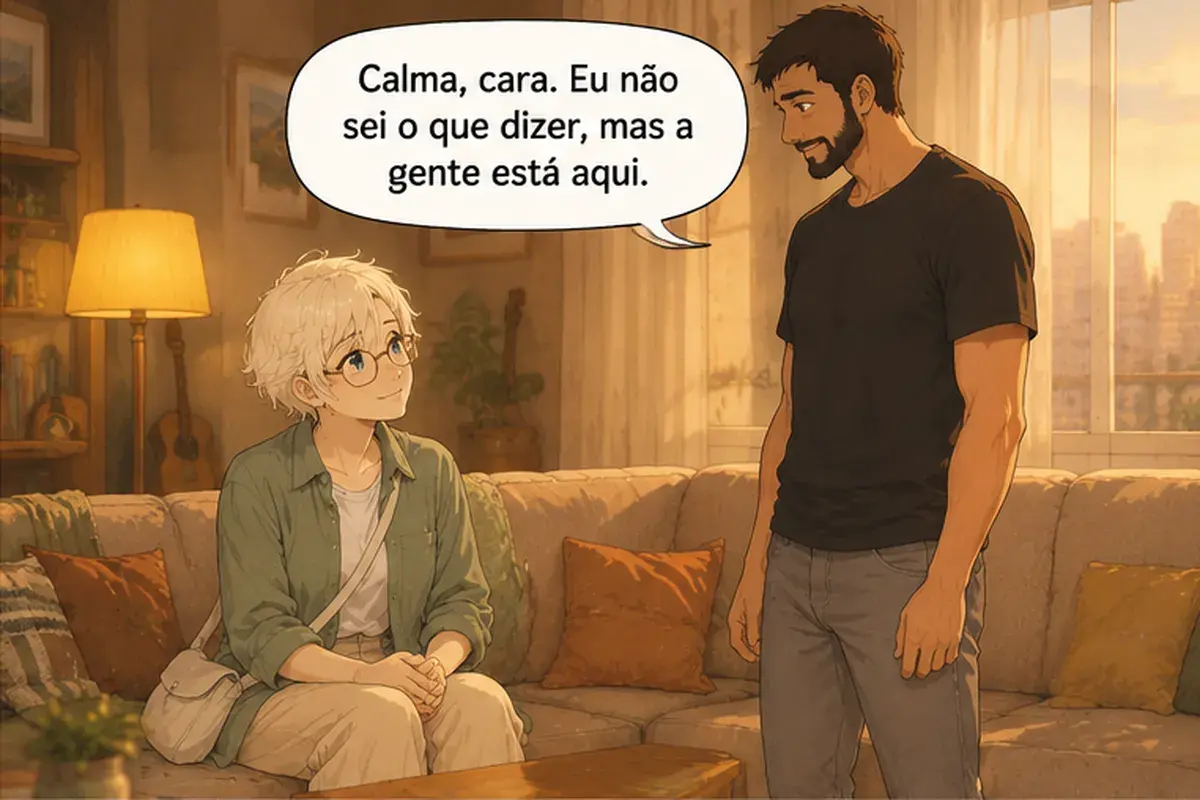
Calma, cara. Eu não sei o que dizer, mas a gente está aqui.
Calm down, dude. I don't know what to say, but we're here.
- Nina
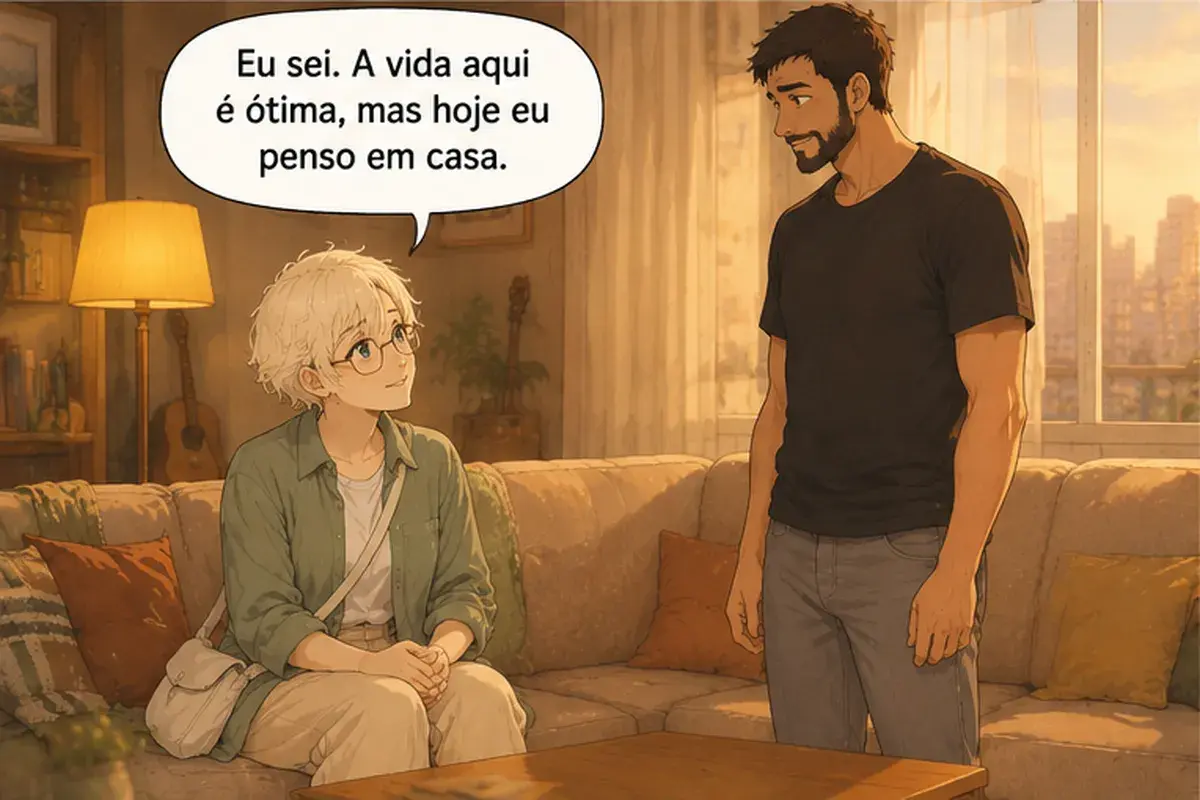
Eu sei. A vida aqui é ótima, mas hoje eu penso em casa.
I know. Life here is great, but today I'm thinking about home.

- Léo
Saudade é uma palavra bonita. Na minha opinião, quem tem saudade, tem alguém no mundo.
Saudade is a beautiful word. In my opinion, whoever has saudade has someone in the world.
- Nina
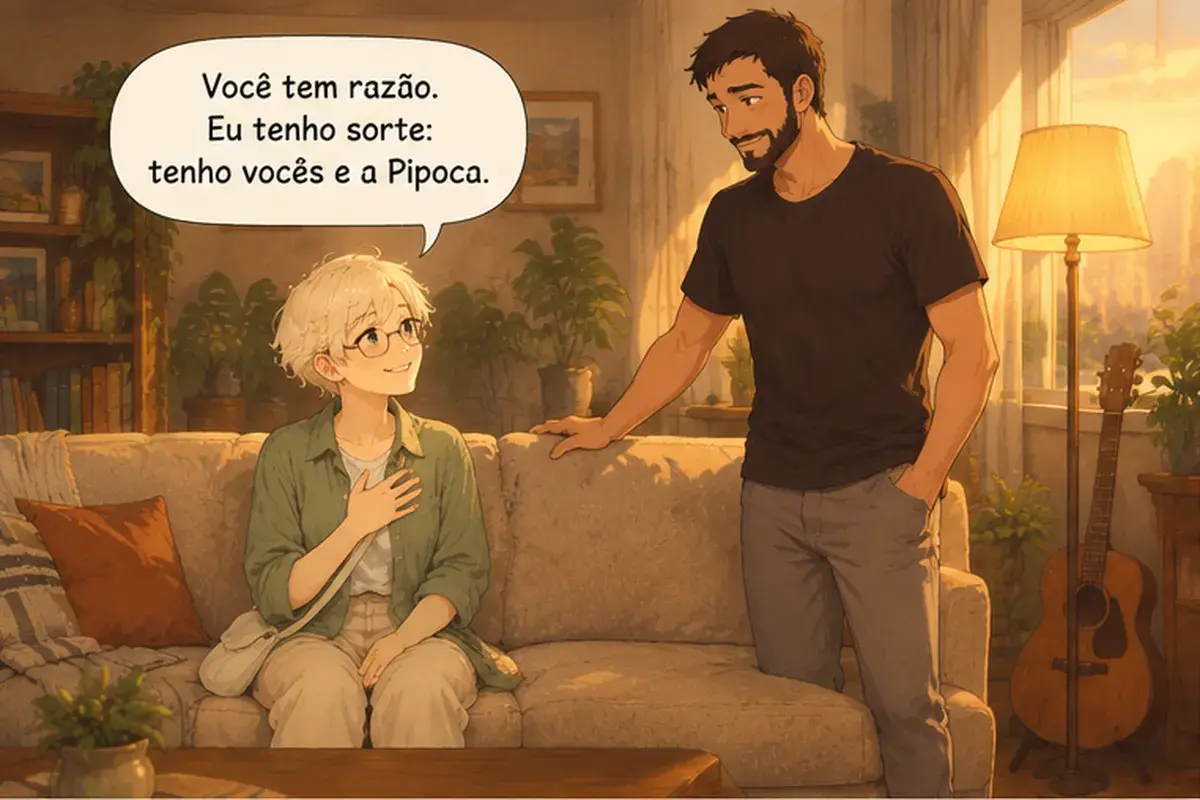
Você tem razão. Eu tenho sorte: tenho vocês e a Pipoca.
You're right. I'm lucky: I have you guys and Pipoca.
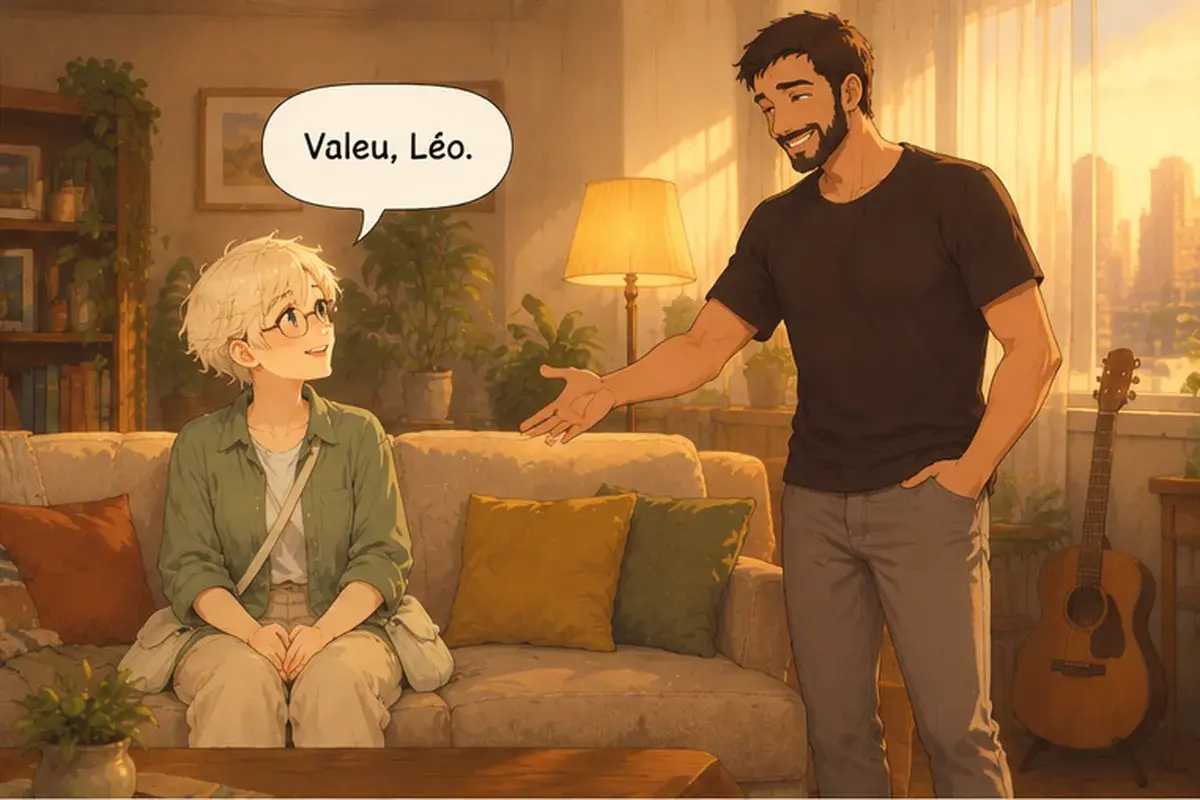
- Nina
Valeu, Léo.
Thanks, Léo.
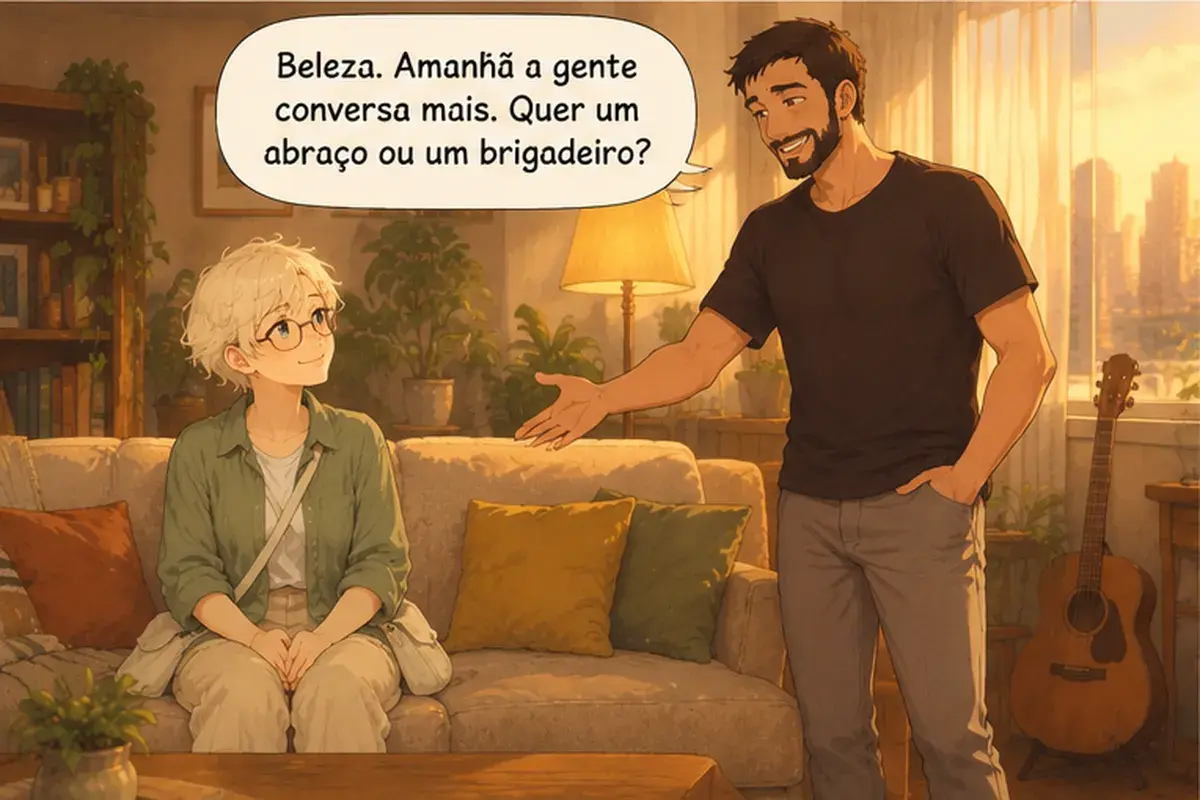
- Léo
Beleza. Amanhã a gente conversa mais. Quer um abraço ou um brigadeiro?
Cool. We'll talk more tomorrow. Do you want a hug or a brigadeiro?

- Nina
Os dois!
Both!
Grammar for this text
- Você parece tão triste. — parece is the você / ele / ela form of parecer (to seem, to look), like come from comer. With an adjective it means "you look...". tão — so; it goes before the adjective.
- Estou com saudade de casa — estou is the eu form of estar; estar com works like estou com fome (unit 12). After saudade de you name who or what you miss: da minha mãe = de + a minha mãe.
- Neve eu não tenho — the thing being talked about moves to the front, like English "Snow, I don't have." The usual order is eu não tenho neve, but this order makes the line a joke told with a straight face. posso is the eu form of poder (can); ligar here means "to turn on".
- Poxa… Sinto muito. — sinto is the eu form of sentir (to feel); literally "I feel it a lot", in English "I'm so sorry". This is how you show sympathy. poxa — a soft "aw".
- Calma, cara. — calma — "calm down!"; cara here means "dude, buddy", said to a friend of any gender (not "dear"). It's casual: don't use it with strangers or your boss.
- quem tem saudade, tem alguém no mundo — quem here means "whoever"; no mundo = em + o mundo; alguém — someone.
- E aí — a casual "hey, how's it going?" for friends; with a stranger, Bom dia or Tudo bem? is better.
- Valeu and Beleza — casual "thanks" and "sure, no problem" (the usual answer to valeu); only with friends.
Words and grammar of the unit: Chat about how you feel and what's new.
Learn the words from the texts with flashcards
In the app, you can tap any word in a text to see its translation, forms and examples, and new words stick with flashcards. 15 minutes a day.
Start for freeEverything is open for free. No card needed to sign up.