

Portuguese dialogue with translation · A1 · 13 lines
Bora ver um filme no sábado? Shall we watch a movie on Saturday?
Comic · 11 panels
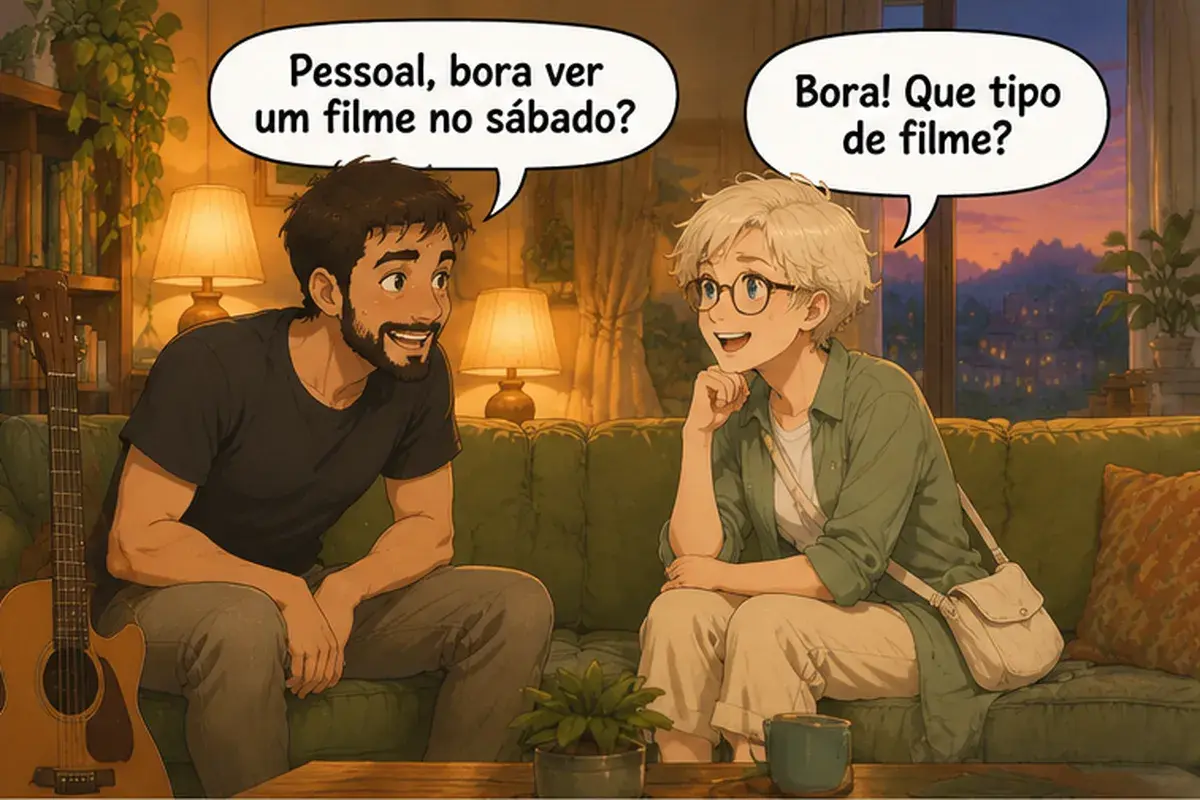
- Léo
Pessoal, bora ver um filme no sábado?
Guys, shall we watch a movie on Saturday?
- Nina
Bora! Que tipo de filme?
Let's go! What kind of movie?
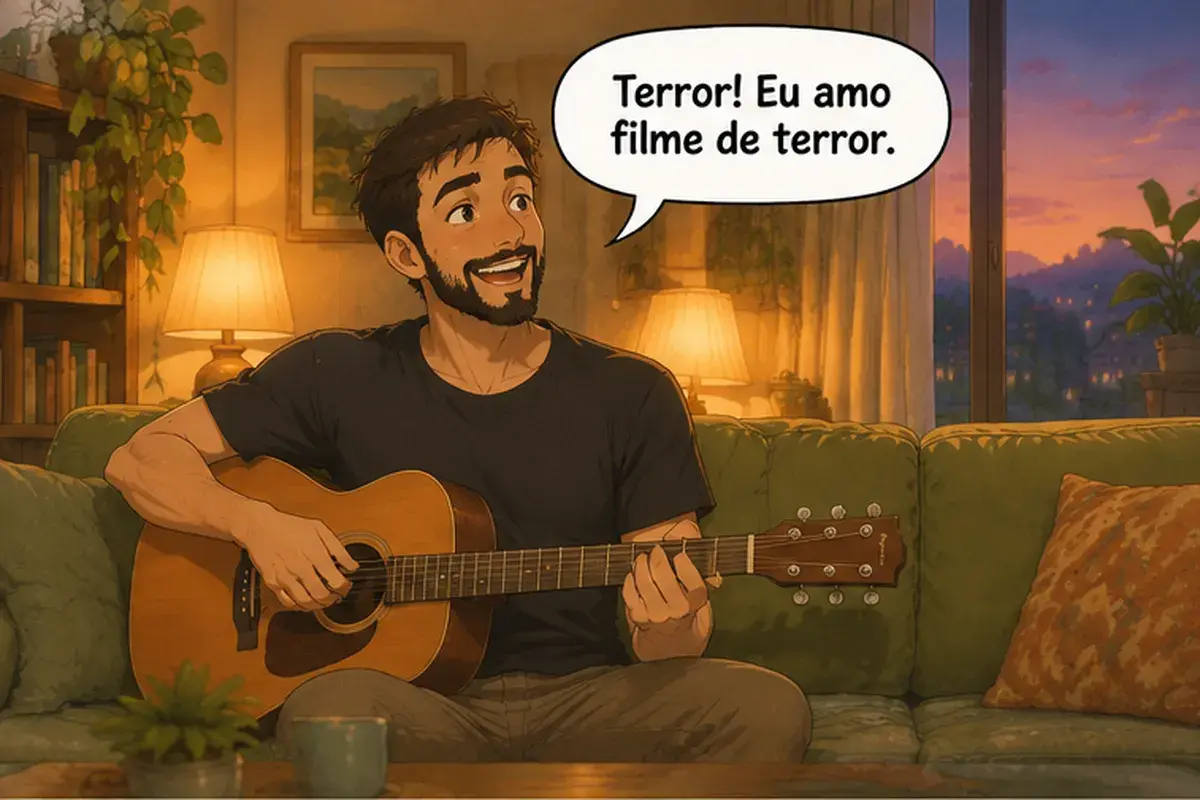
- Léo
Terror! Eu amo filme de terror.
Horror! I love horror movies.

- Bia
Terror de novo? Que chato! Depois eu não durmo.
Horror again? How boring! Afterward I don't sleep.
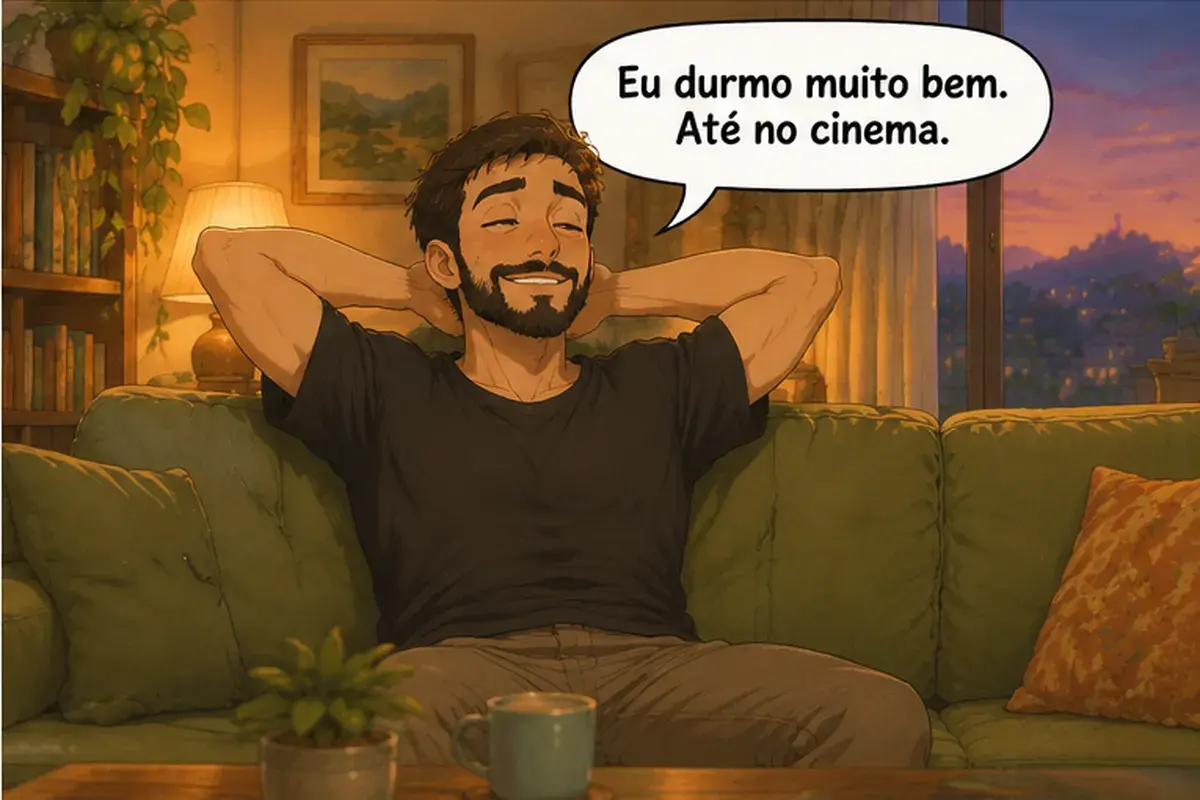
- Léo
Eu durmo muito bem. Até no cinema.
I sleep very well. Even at the movies.

- Nina
Eu gosto de comédia. Uma história engraçada, um filme divertido.
I like comedies. A funny story, a fun movie.
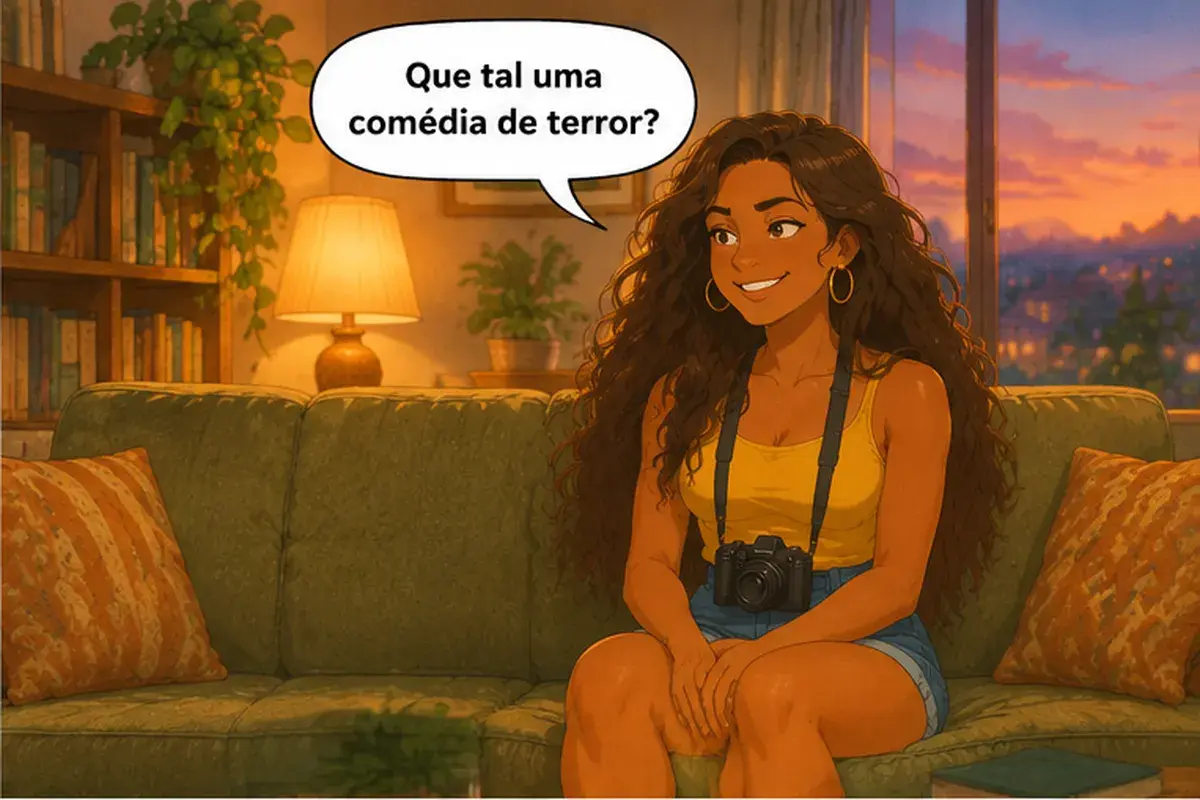
- Bia
Que tal uma comédia de terror?
How about a horror comedy?
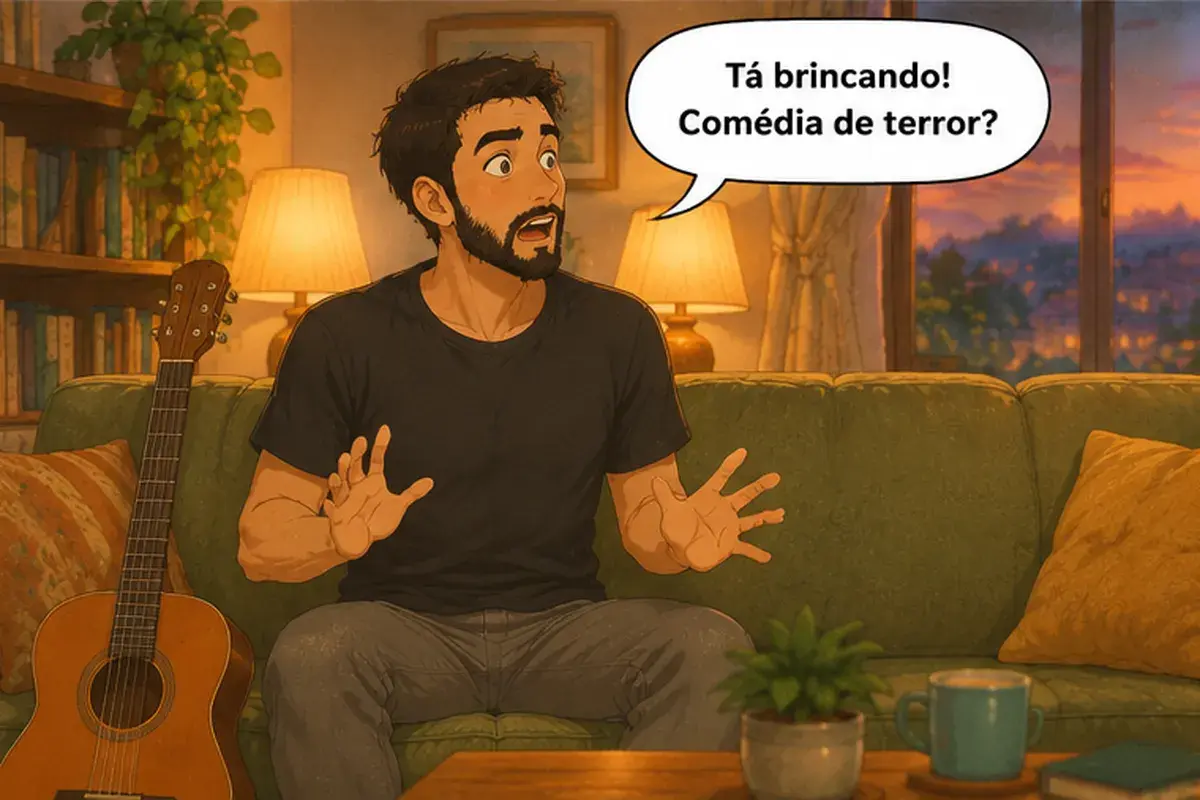
- Léo
Tá brincando! Comédia de terror?
You're kidding! A horror comedy?

- Nina
Tem, sim! Tem filme assim. É engraçado e dá um pouco de medo.
Yes, there are! There are movies like that. It's funny and a little scary.
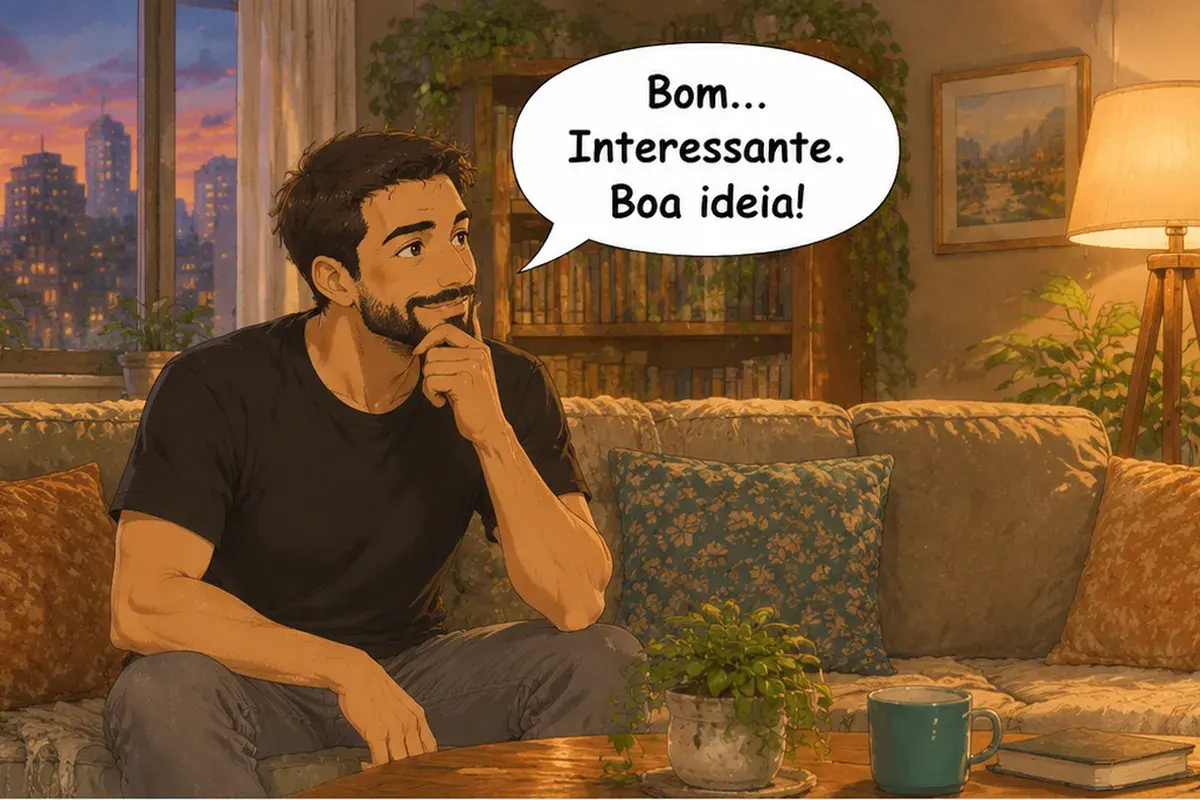
- Léo
Bom... Interessante. Boa ideia!
Well... Interesting. Good idea!

- Nina
Então, combinado? A gente se encontra às sete no cinema.
So, is it a deal? We're meeting at seven at the movie theater.
- Bia
Combinado! Às sete em ponto!
Deal! At seven sharp!
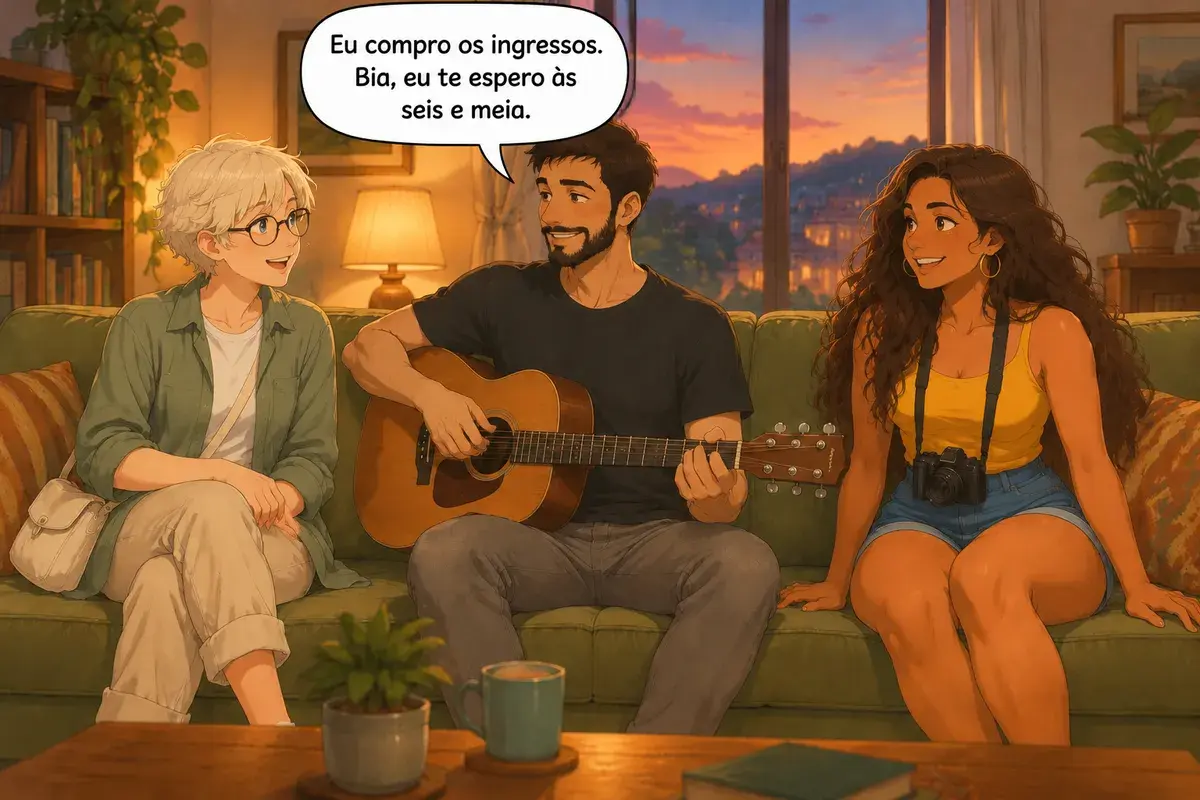
- Léo
Eu compro os ingressos. Bia, eu te espero às seis e meia.
I'll buy the tickets. Bia, I'll wait for you at six thirty.
Grammar for this text
- Bora ver um filme — bora comes from vamos embora, and now it just means "let's go, let's do it". An infinitive comes after it: ver. People say it to friends and family; to a coworker they'd say vamos.
- Que tipo de filme? — tipo means "kind, type". Young people also use tipo as a filler, like "like" — only with friends.
- Que chato! — chato is a casual "boring, annoying". Fine with friends, not with strangers.
- Tá brincando! — "You're kidding!", "No way!". Tá is short for está; brincando comes from brincar (to joke). estar + -ando is the present progressive: something happening right now (unit 10). People say it to friends.
- Eu durmo muito bem — durmo is the eu form of dormir (to sleep): the o of the stem becomes u (eu durmo, but ele dorme).
- Que tal uma comédia de terror? — que tal means "how about...?". In dá um pouco de medo, dá is the ele / ela form of dar: dar medo — to be scary, literally "to give fear".
- Então, combinado? — combinado means "deal, agreed", from combinar (to arrange). A set phrase for when everything is settled; fine with friends and with strangers. Às sete em ponto — "at seven sharp".
- A gente se encontra às sete — se encontrar means "to meet (each other)"; se goes before the verb. A gente takes the ele / ela form: encontra. às = a + as: "at ... o'clock".
- eu te espero — te means "you" and goes before the verb (instead of espero você). The joke: the movie is at seven, but Léo will wait for Bia earlier, because she's always late.
Words and grammar of the unit: Invite a friend to the movies or a concert.
Learn the words from the texts with flashcards
In the app, you can tap any word in a text to see its translation, forms and examples, and new words stick with flashcards. 15 minutes a day.
Start for freeEverything is open for free. No card needed to sign up.