

Portuguese story with translation · A1 · 14 lines
No domingo, eu curto comédia On Sundays, I'm into comedies
Comic · 12 panels

O domingo é um dia livre no nosso apartamento.
Sunday is a free day in our apartment.

O Léo sempre assiste futebol na televisão. O time dele é o Corinthians.
Léo always watches soccer on TV. His team is Corinthians.
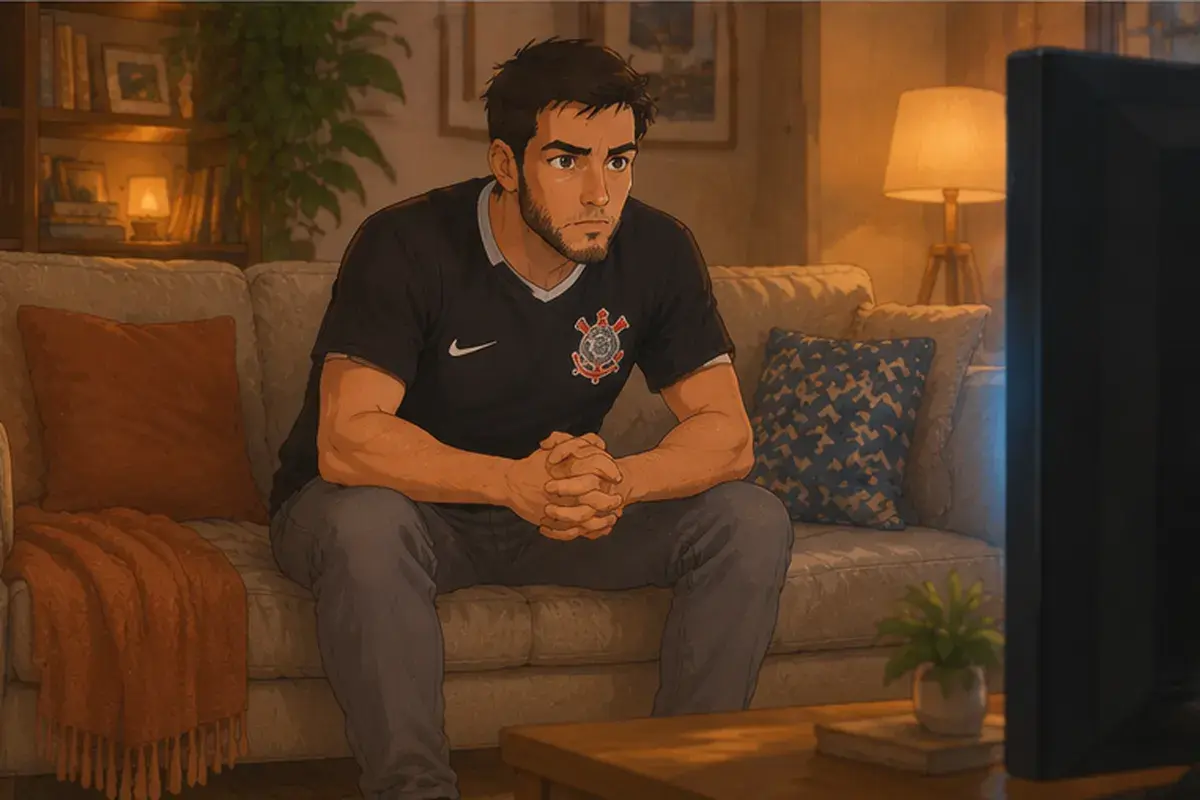
Durante o jogo, ele quase não fala.
During the game, he hardly talks.
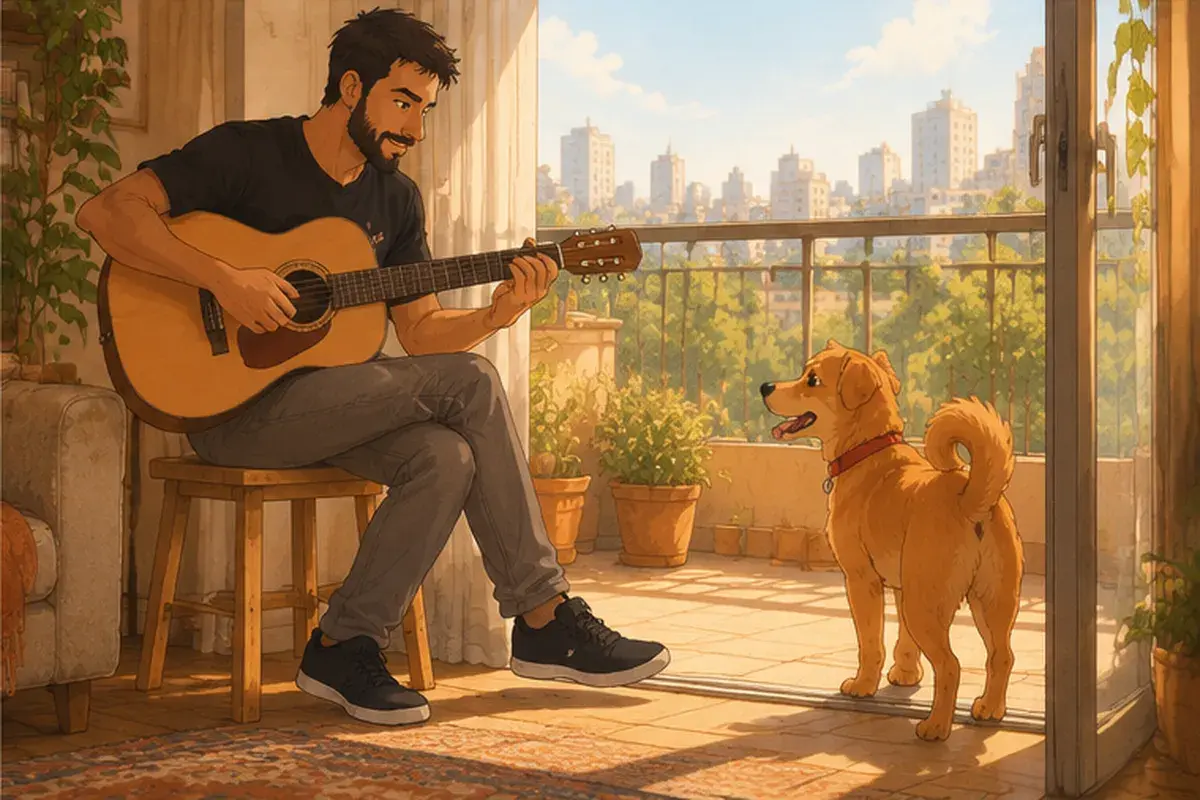
Depois ele toca violão na varanda. A Pipoca ouve a música dois minutos e sai da sala.
Then he plays the guitar on the balcony. Pipoca listens to the music for two minutes and leaves the living room.

Às vezes o Léo faz churrasco para os amigos. Ele só sabe fazer isso.
Sometimes Léo makes churrasco for his friends. That's the only thing he knows how to make.

A Bia quase nunca fica em casa. Ela corre no parque ou dança samba num show.
Bia almost never stays home. She runs in the park or dances samba at a concert.

Ou melhor, ela corre quando está atrasada.
Or rather, she runs when she's late.

A Dona Lúcia brinca com a Pipoca e com as crianças do prédio.
Dona Lúcia plays with Pipoca and with the kids in the building.

Eu não gosto de correr e nunca jogo futebol.
I don't like running, and I never play soccer.

Normalmente eu passeio e desenho no caderno.
I usually go for a walk and draw in my notebook.

À noite, nós três vemos uma série juntos na televisão.
At night, the three of us watch a series together on TV.
O Léo ama terror, mas eu curto comédia, como a Bia.
Léo loves horror, but I'm into comedies, like Bia.
Quase sempre a gente vê comédia. O Léo diz: «Que chato!» Mas ele assiste com a gente.
We almost always watch a comedy. Léo says: "How boring!" But he watches with us.

Domingo é o melhor dia da semana.
Sunday is the best day of the week.
Grammar for this text
- vemos uma série — vemos means "we watch", the nós form of ver (to see, to watch). It's an irregular verb: vejo, vê, vemos, veem. For a movie or a series, both ver and assistir work.
- assiste futebol — assistir is not "to assist" but "to watch" something on a screen. No preposition here.
- toca violão, brinca com a Pipoca, jogo futebol — three verbs for "play". English says "play the guitar"; Portuguese needs no article and no preposition: tocar violão, jogar futebol. brincar is playing like children and dogs, usually com (with) someone.
- quase não fala, quase nunca — quase means "almost": quase não — "hardly", quase nunca — "almost never", quase sempre — "almost always".
- Ou melhor — "or rather": this is how people correct themselves as they speak.
- eu passeio e desenho no caderno — passeio and desenho are verbs here: "I go for a walk" (passear) and "I draw" (desenhar), not the nouns "a walk" and "a drawing".
- eu curto comédia — curto here means "I'm into, I enjoy", the eu form of curtir, not the adjective "short". Casual, for friends; the polite way is gosto de.
- O time dele é o Corinthians — time means "team"; don't mix it up with tempo (time).
- Eu não gosto de correr — after gostar de comes an infinitive (see the unit grammar).
Words and grammar of the unit: Invite a friend to the movies or a concert.
Learn the words from the texts with flashcards
In the app, you can tap any word in a text to see its translation, forms and examples, and new words stick with flashcards. 15 minutes a day.
Start for freeEverything is open for free. No card needed to sign up.