

Portuguese dialogue with translation · A1 · 13 lines
Ela é da sua família? Is she part of your family?
Comic · 10 panels
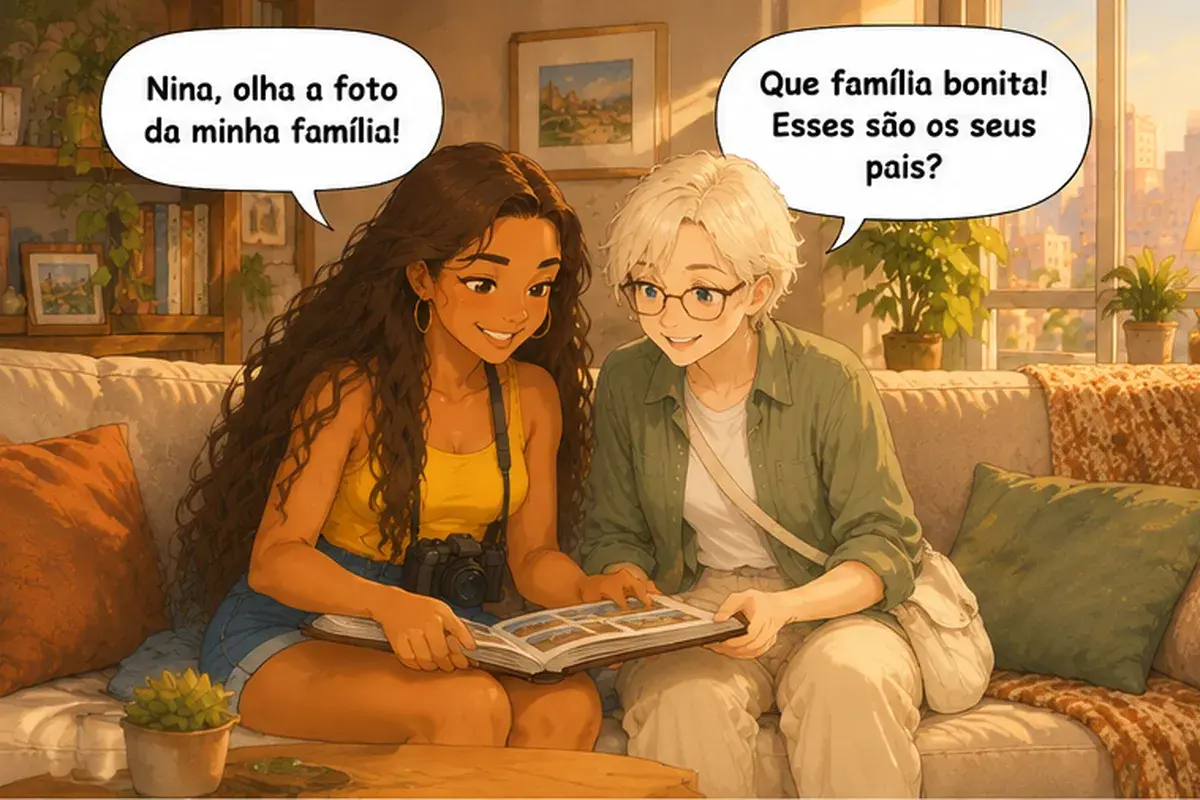
- Bia
Nina, olha a foto da minha família!
Nina, look at the photo of my family!
- Nina
Que família bonita! Esses são os seus pais?
What a beautiful family! Are these your parents?
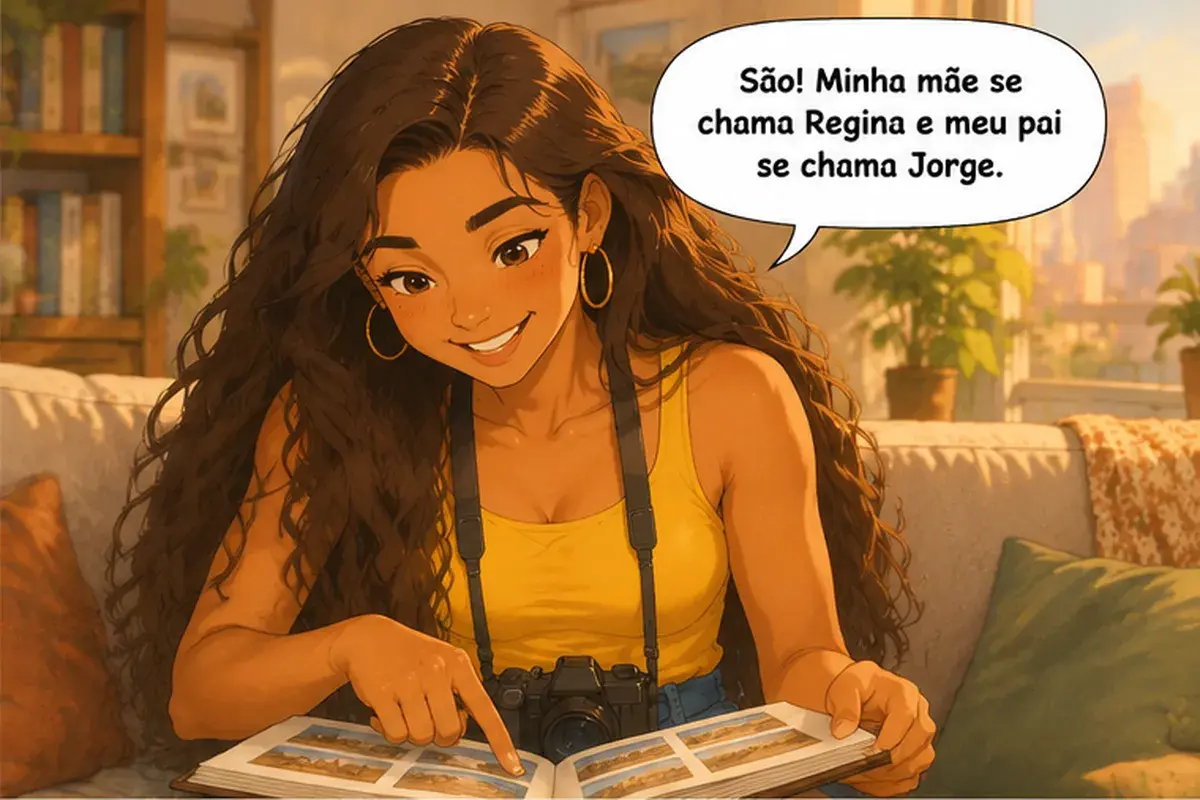
- Bia
São! Minha mãe se chama Regina e meu pai se chama Jorge.
Yes, they are! My mother's name is Regina and my father's name is Jorge.
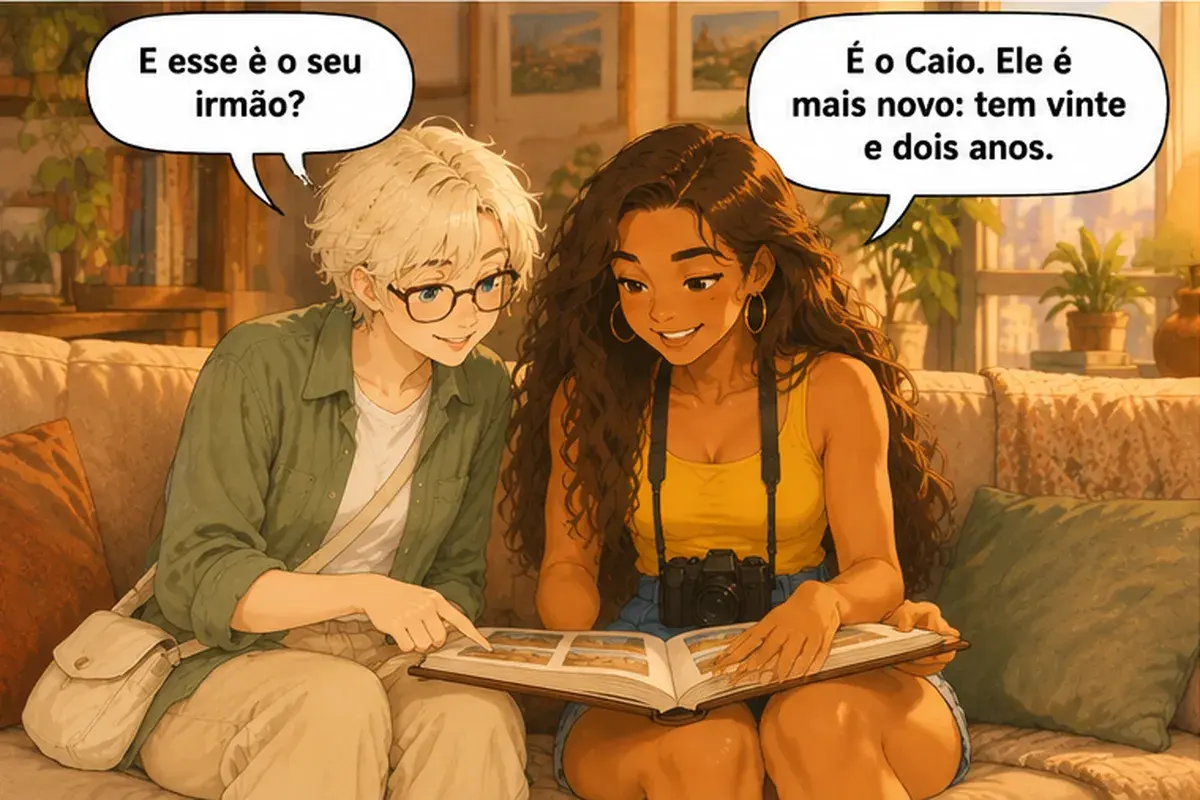
- Nina
E esse é o seu irmão?
And is this your brother?
- Bia
É o Caio. Ele é mais novo: tem vinte e dois anos.
That's Caio. He's younger: he's twenty-two.
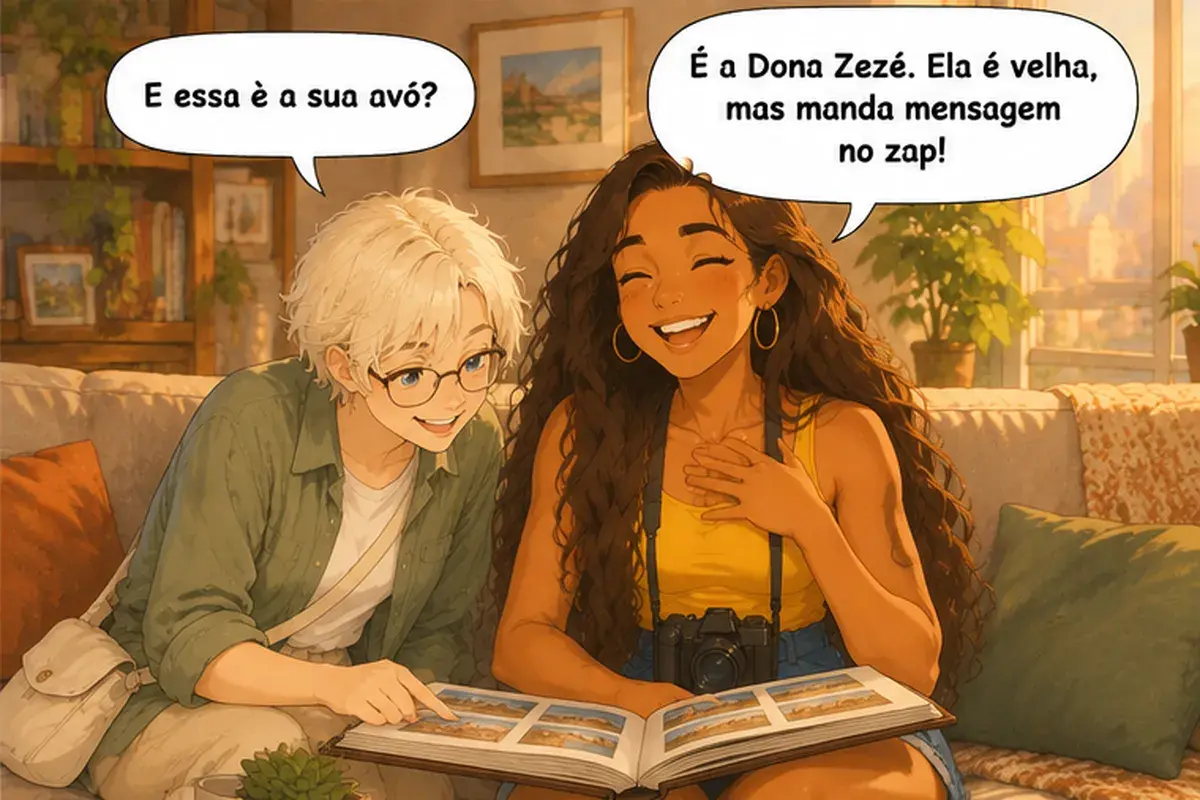
- Nina
E essa é a sua avó?
And is this your grandmother?
- Bia
É a Dona Zezé. Ela é velha, mas manda mensagem no zap!
That's Dona Zezé. She's old, but she sends messages on WhatsApp!
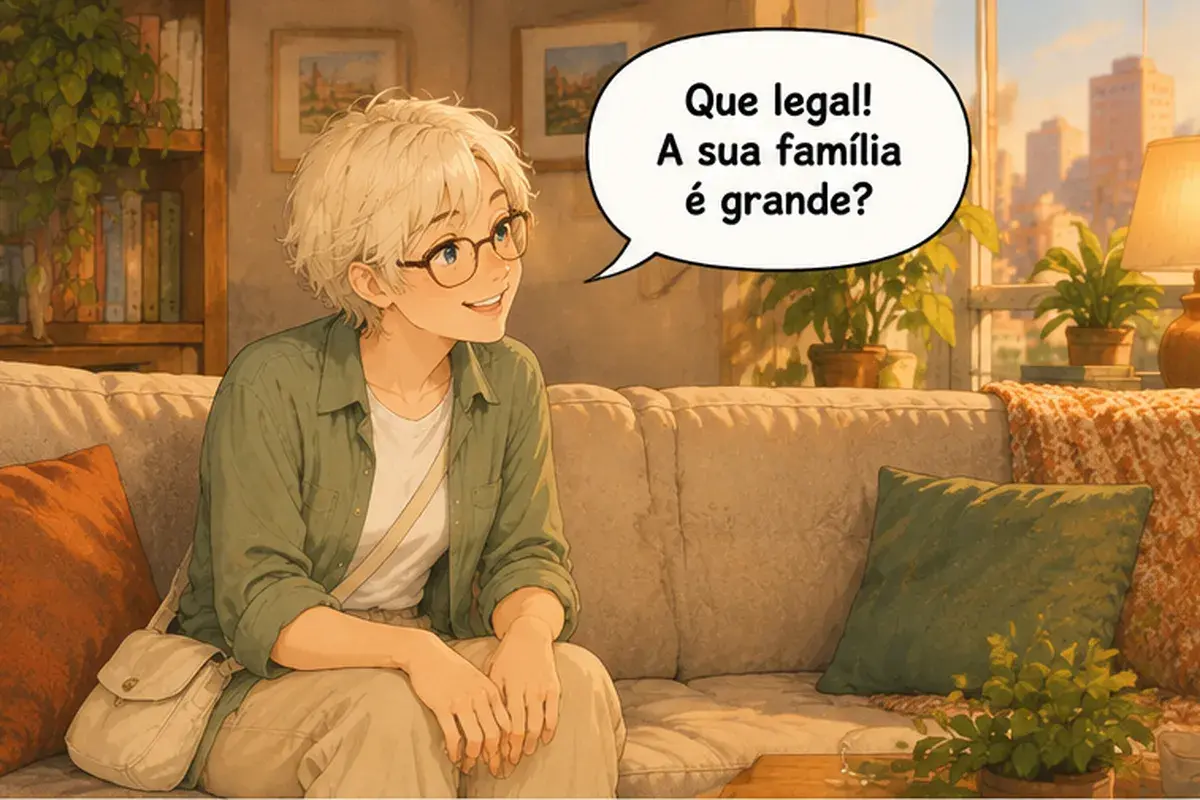
- Nina
Que legal! A sua família é grande?
That's cool! Is your family big?
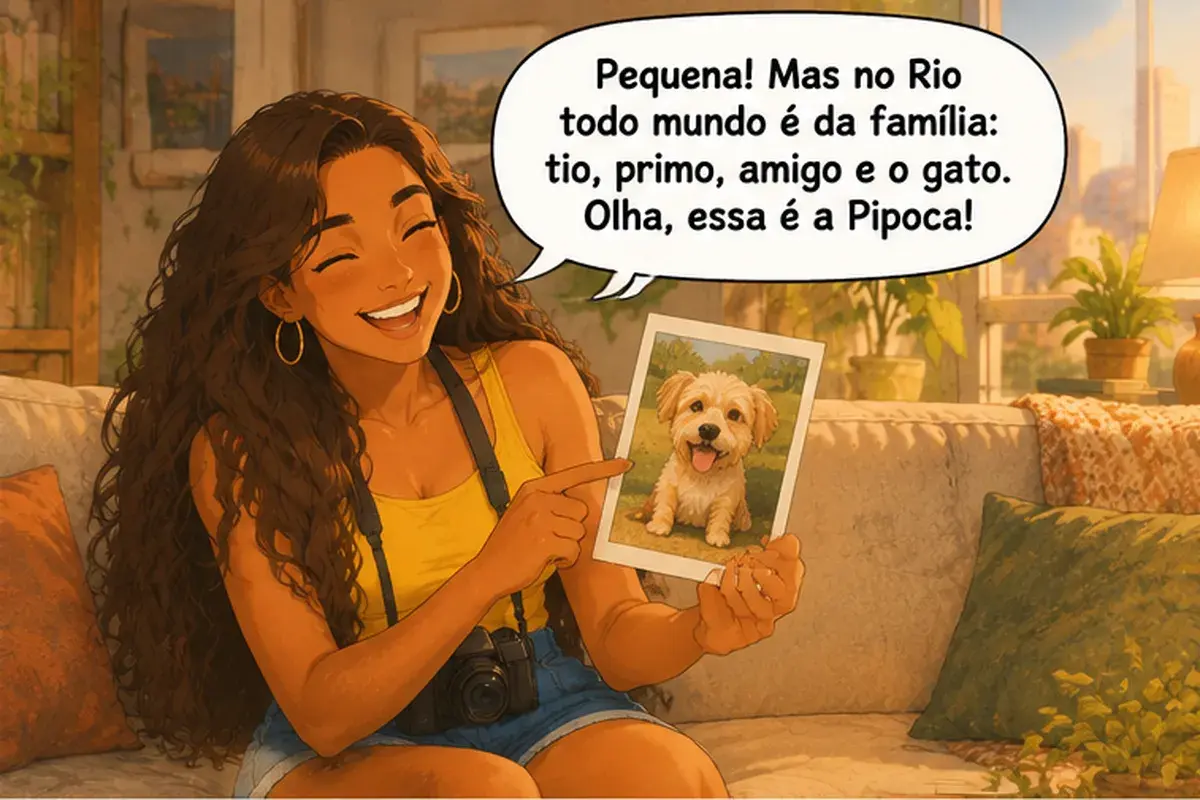
- Bia
Pequena! Mas no Rio todo mundo é da família: tio, primo, amigo e o gato. Olha, essa é a Pipoca!
Small! But in Rio everyone is family: uncles, cousins, friends and the cat. Look, this is Pipoca!
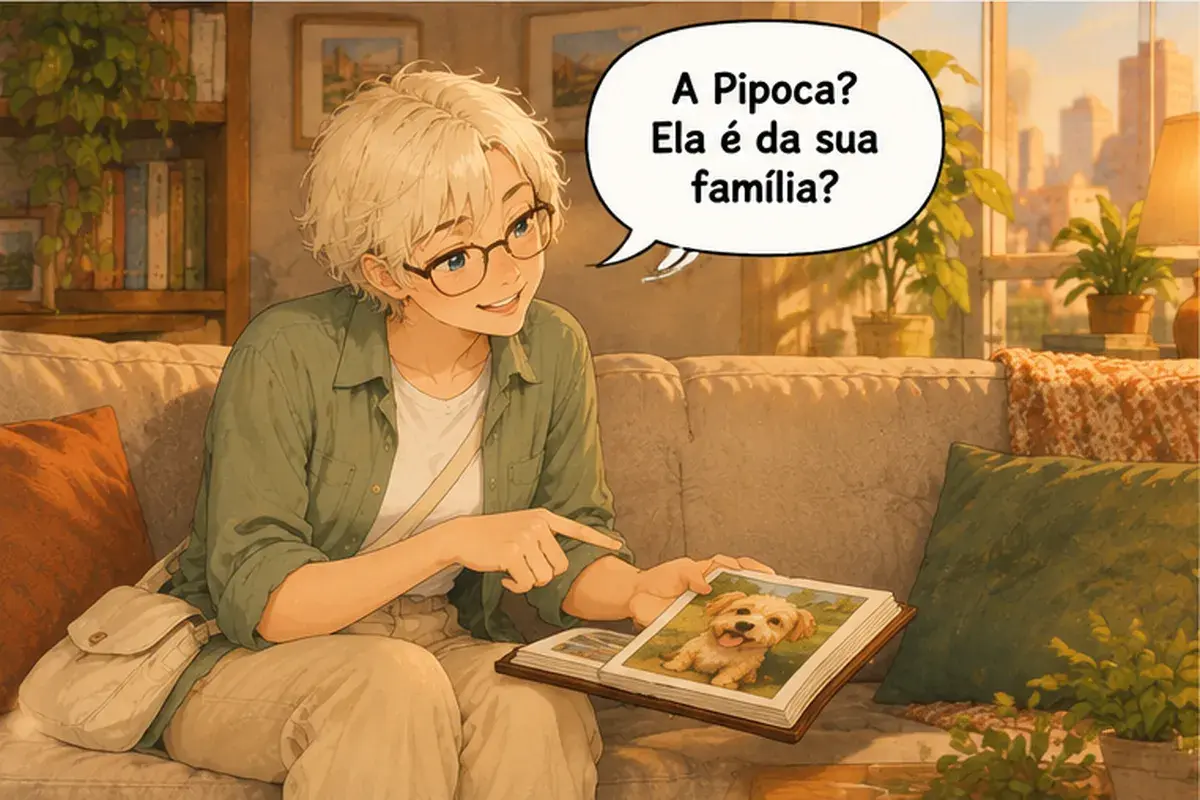
- Nina
A Pipoca? Ela é da sua família?
Pipoca? Is she part of your family?
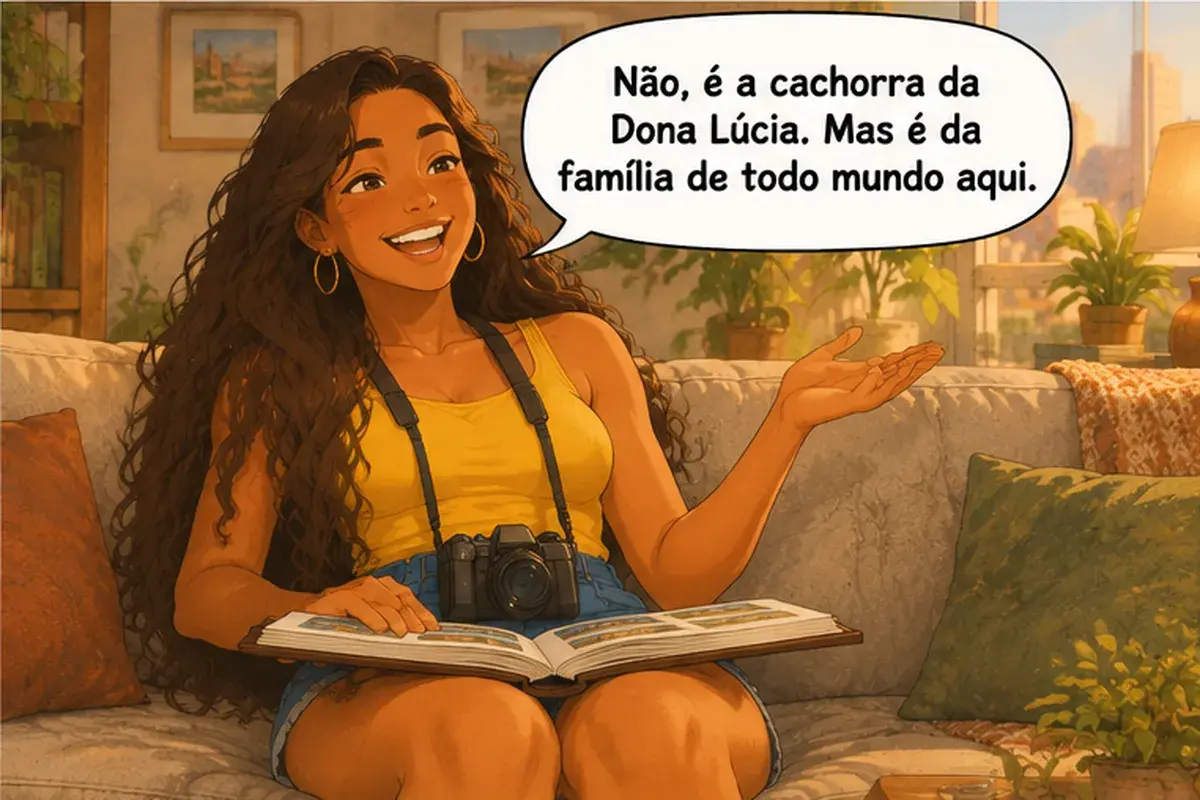
- Bia
Não, é a cachorra da Dona Lúcia. Mas é da família de todo mundo aqui.
No, she's Dona Lúcia's dog. But she's part of everyone's family here.
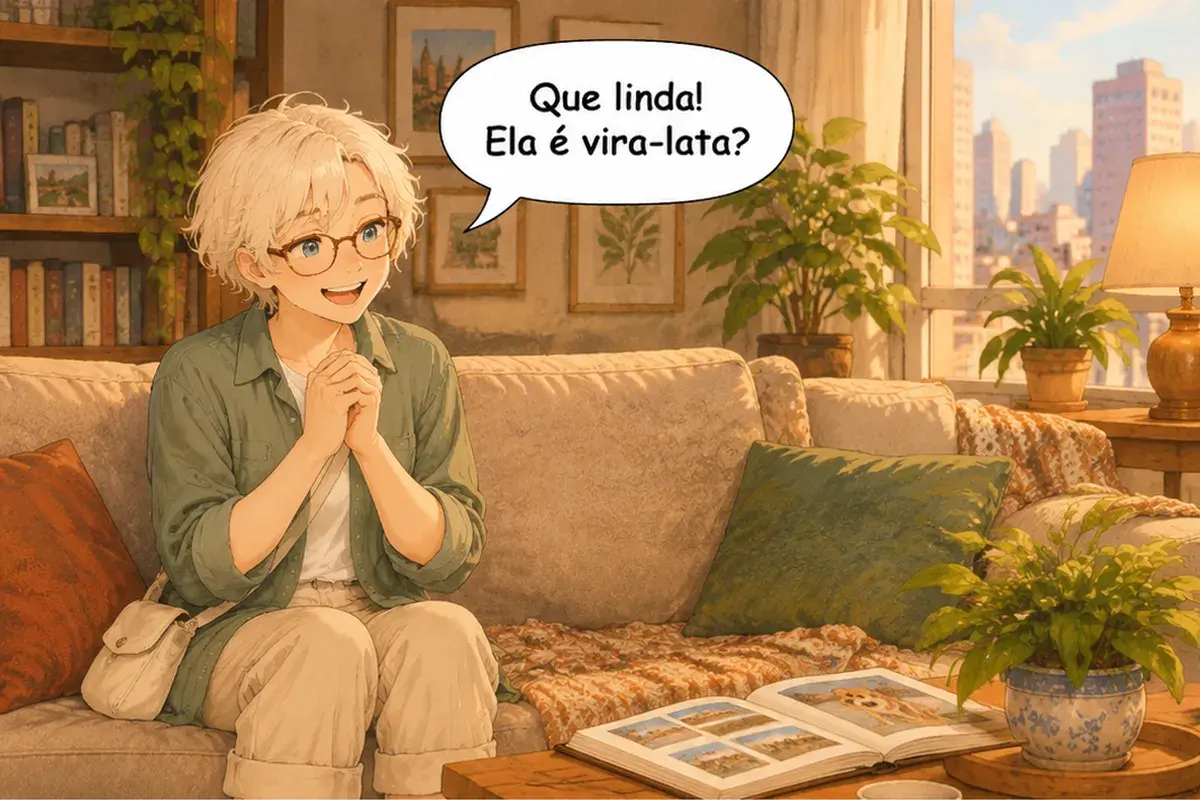
- Nina
Que linda! Ela é vira-lata?
She's beautiful! Is she a mutt?
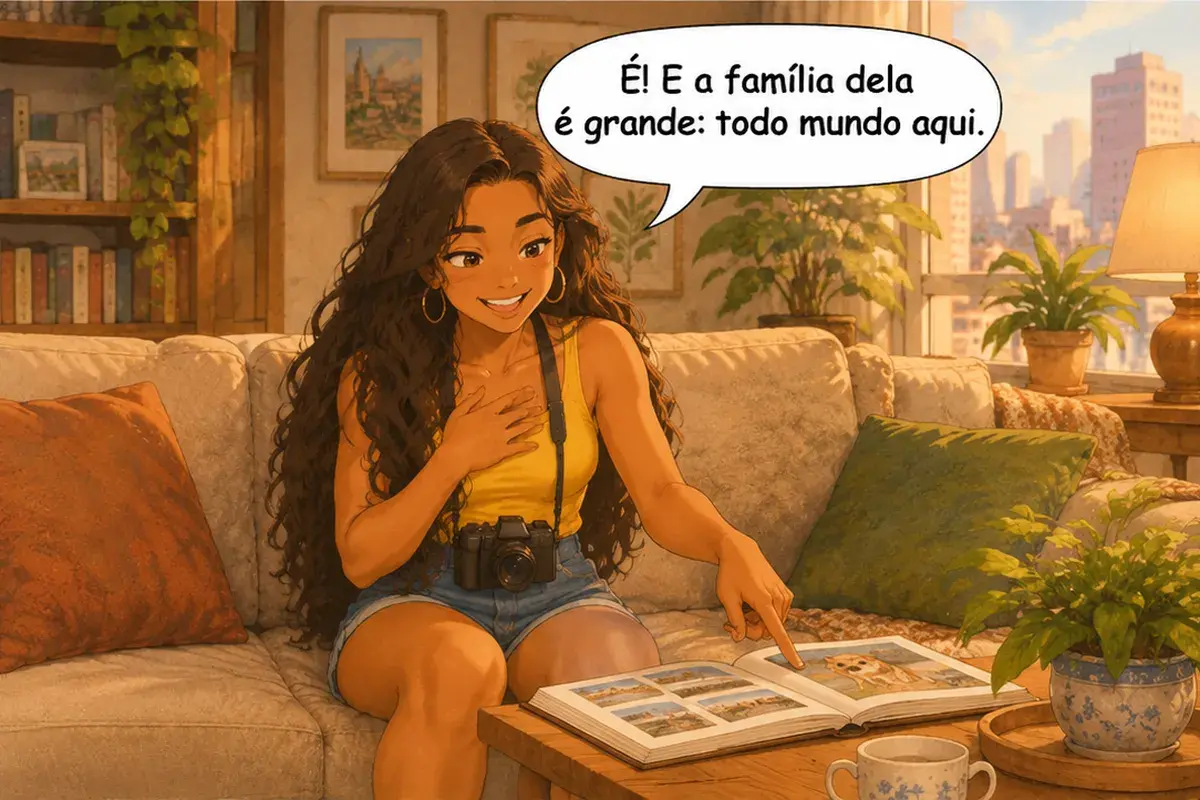
- Bia
É! E a família dela é grande: todo mundo aqui.
Yes! And her family is big: everyone here.
Grammar for this text
- Nina, olha a foto and olha, essa é a Pipoca! — olha is the você / ele / ela form of olhar (to look), but in conversation it works as a command: "look!". The form stays the same. Commands come at A2.
- esses são os seus pais? — esses is the plural of esse (this, that); são is the "they are" form of ser. pais (parents) is not país (country): that one has a written accent.
- ela é velha, mas manda mensagem no zap! — manda is "she sends", from mandar; no = em + o; zap is a casual word for WhatsApp, used with friends. The joke: grandma is old, but she sends WhatsApp messages.
- todo mundo é da família — todo mundo is literally "all the world" and means "everyone"; the verb is singular (é, not são), like English "everyone is". da = de + a: "of the family".
- a cachorra da Dona Lúcia — "Dona Lúcia's dog": the owner comes after the thing, with de (da = de + a), where English uses 's. In a família dela, dela is about Pipoca, not Nina — that's why it isn't sua.
- que linda! — linda is feminine because it's about a cachorra; about a boy or a male cat it would be lindo.
Words and grammar of the unit: Talk about your family.
Learn the words from the texts with flashcards
In the app, you can tap any word in a text to see its translation, forms and examples, and new words stick with flashcards. 15 minutes a day.
Start for freeEverything is open for free. No card needed to sign up.