
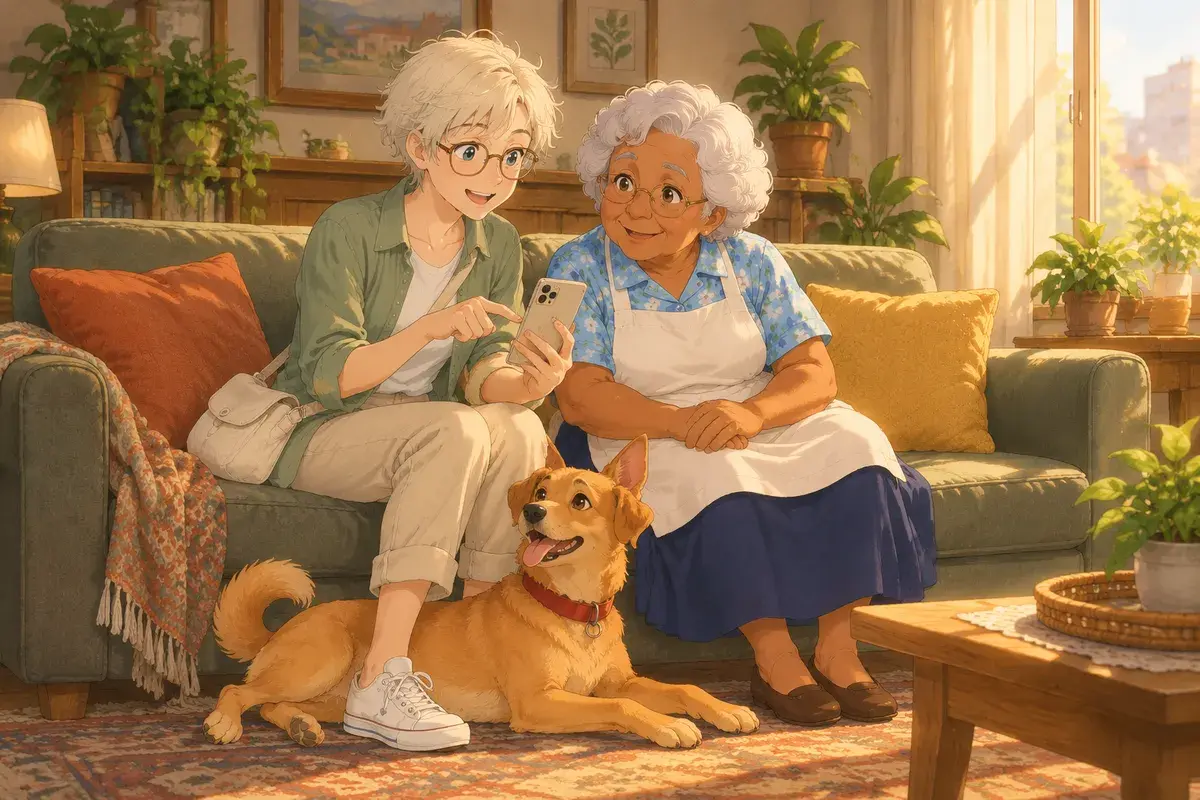
Portuguese dialogue with translation · A1 · 14 lines
É a foto da minha família It's a photo of my family
Comic · 8 panels
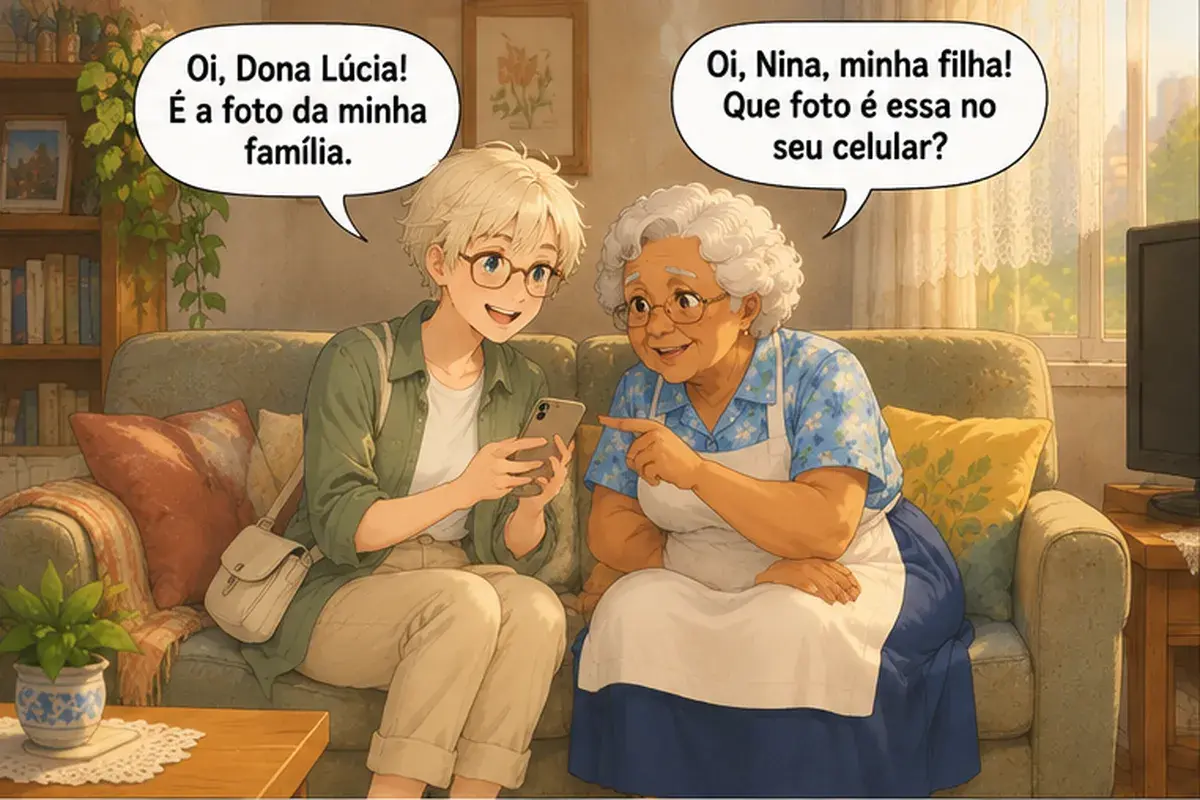
- Dona Lúcia
Oi, Nina, minha filha! Que foto é essa no seu celular?
Hi, Nina, dear! What photo is that on your phone?
- Nina
Oi, Dona Lúcia! É a foto da minha família.
Hi, Dona Lúcia! It's a photo of my family.
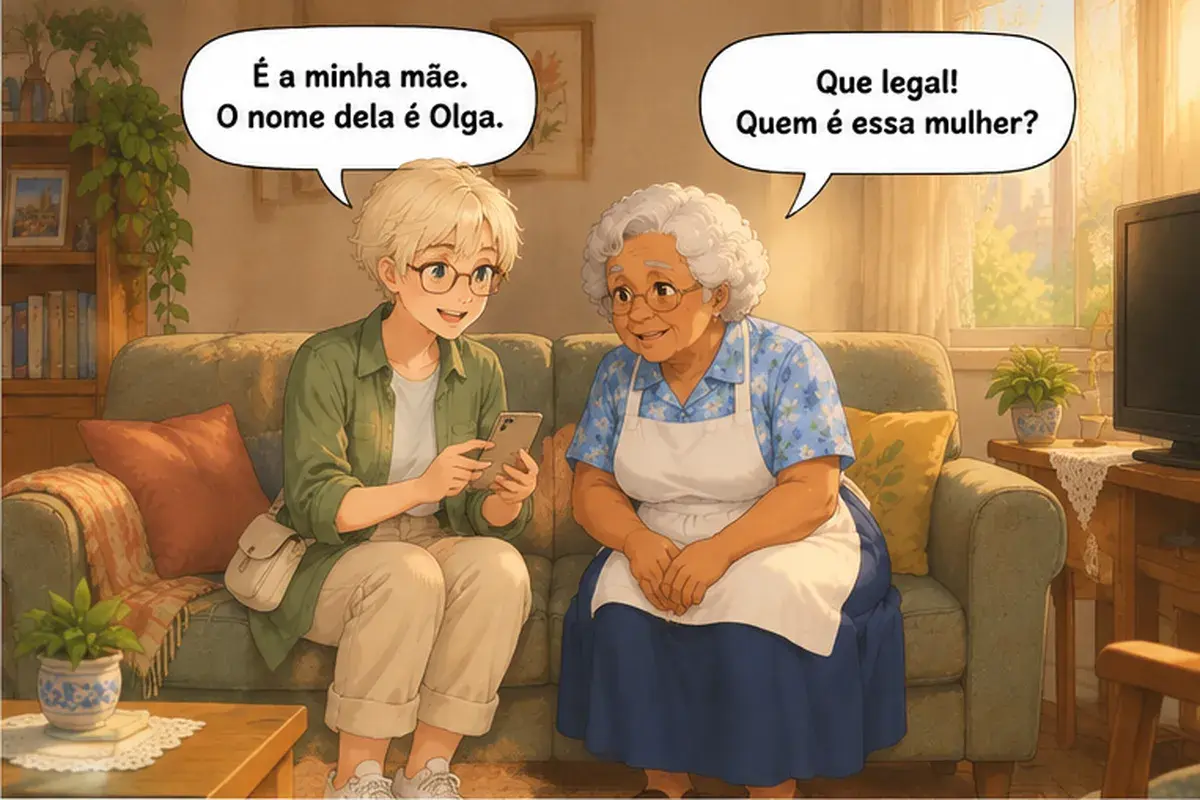
- Dona Lúcia
Que legal! Quem é essa mulher?
How nice! Who's this woman?
- Nina
É a minha mãe. O nome dela é Olga.
That's my mother. Her name is Olga.
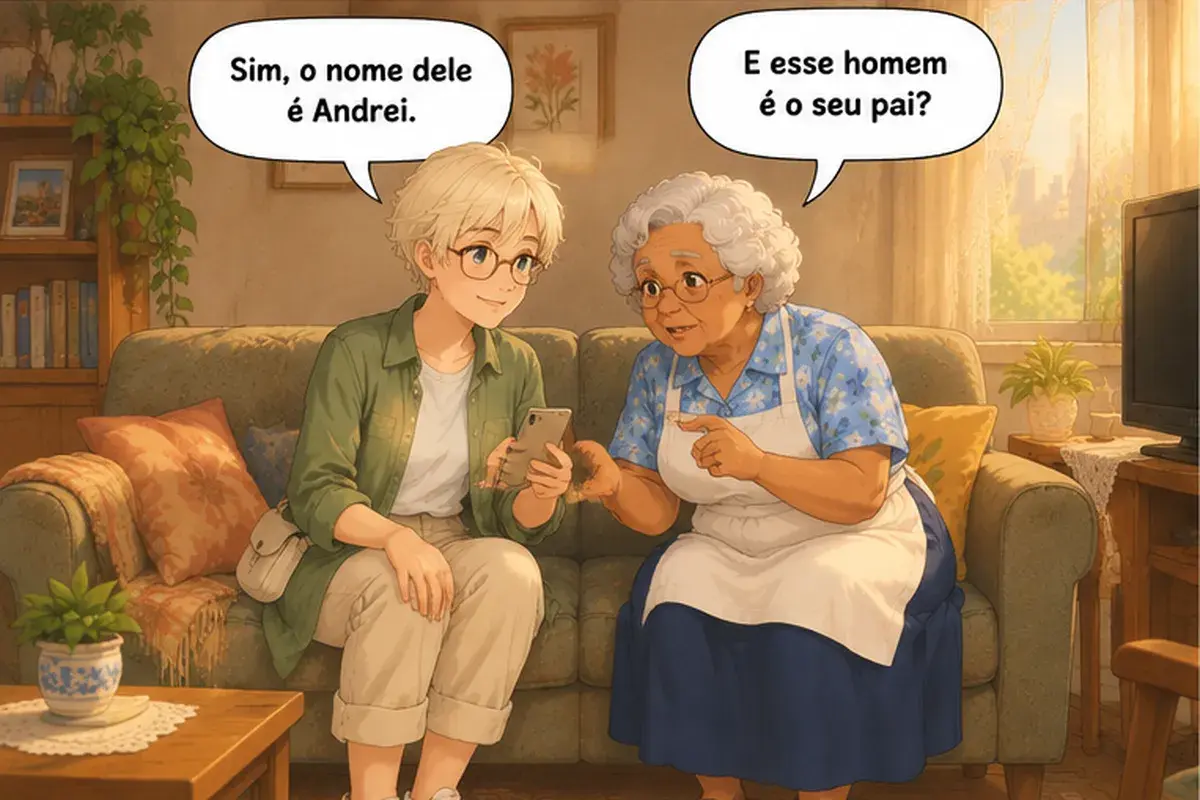
- Dona Lúcia
E esse homem é o seu pai?
And is this man your father?
- Nina
Sim, o nome dele é Andrei.
Yes, his name is Andrei.
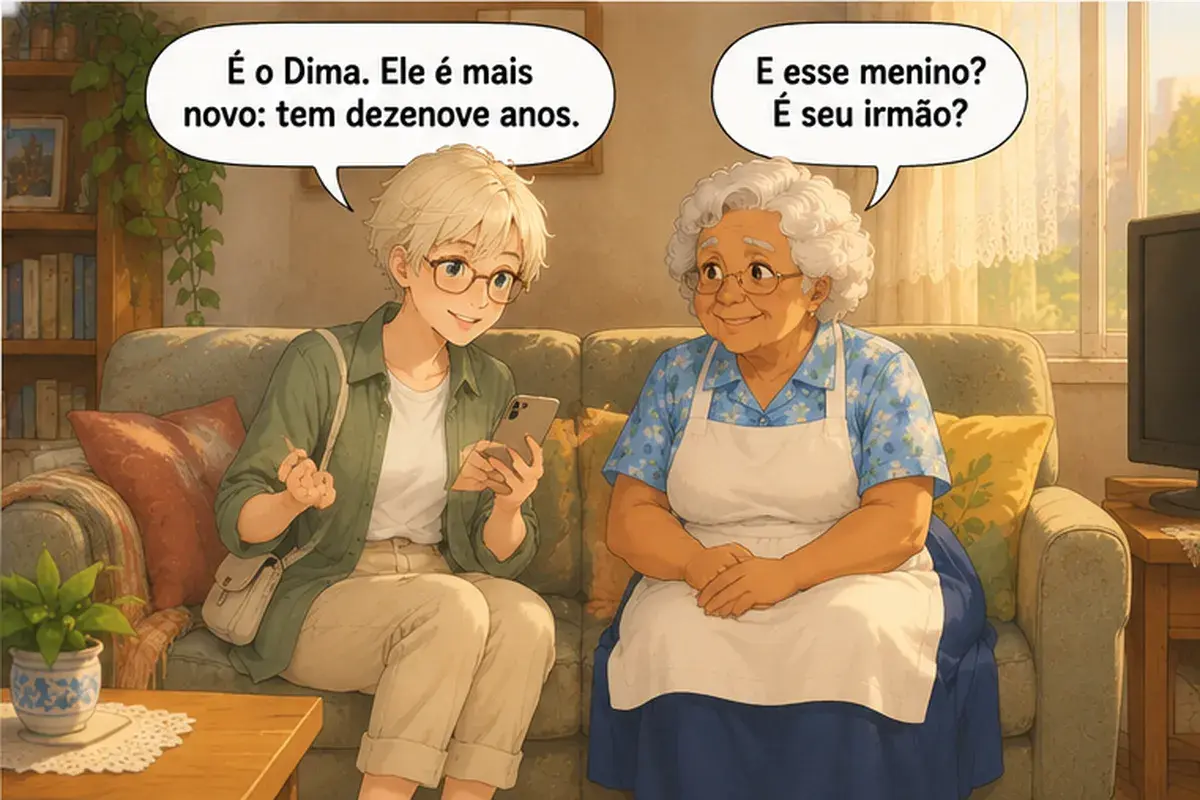
- Dona Lúcia
E esse menino? É seu irmão?
And this boy? Is he your brother?
- Nina
É o Dima. Ele é mais novo: tem dezenove anos.
That's Dima. He's younger: he's nineteen.
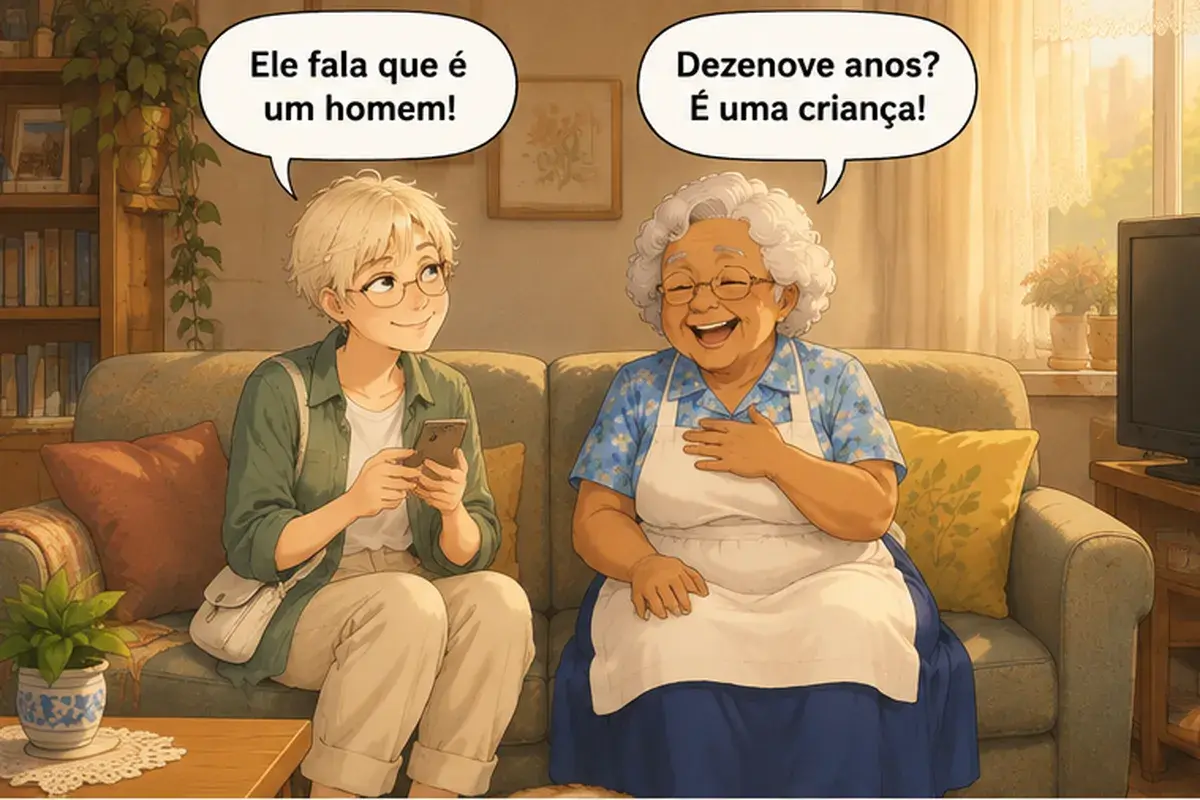
- Dona Lúcia
Dezenove anos? É uma criança!
Nineteen years old? He's a child!
- Nina
Ele fala que é um homem!
He says he's a man!
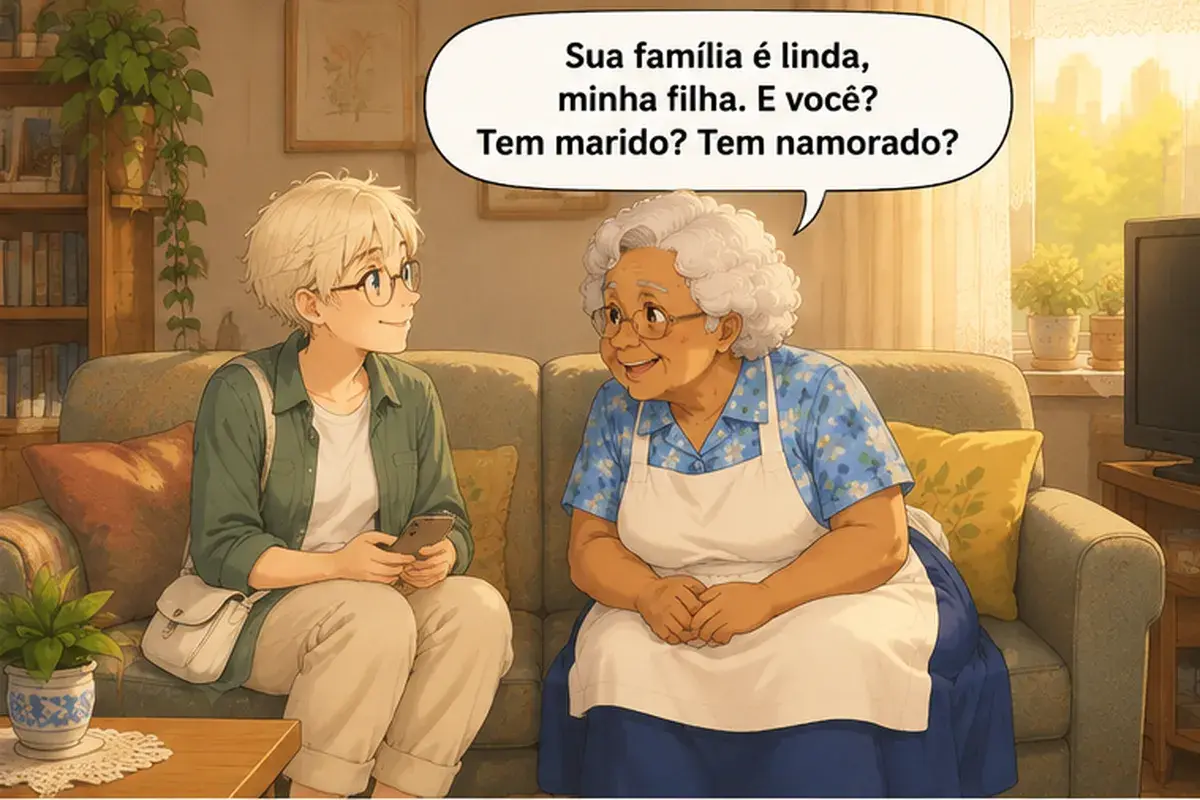
- Dona Lúcia
Sua família é linda, minha filha. E você? Tem marido? Tem namorado?
Your family is lovely, dear. And you? Do you have a husband? A boyfriend?
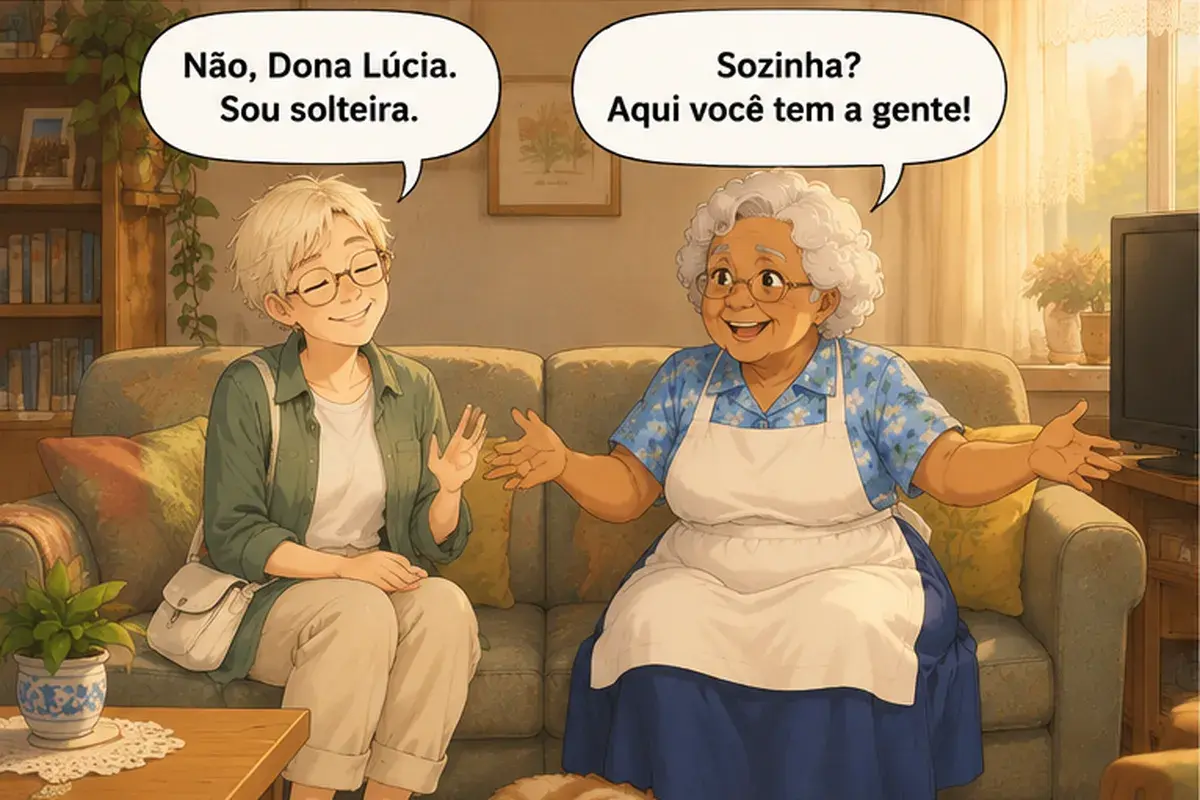
- Nina
Não, Dona Lúcia. Sou solteira.
No, Dona Lúcia. I'm single (woman speaking).
- Dona Lúcia
Sozinha? Aqui você tem a gente!
Alone? Here you've got us! (to a woman)
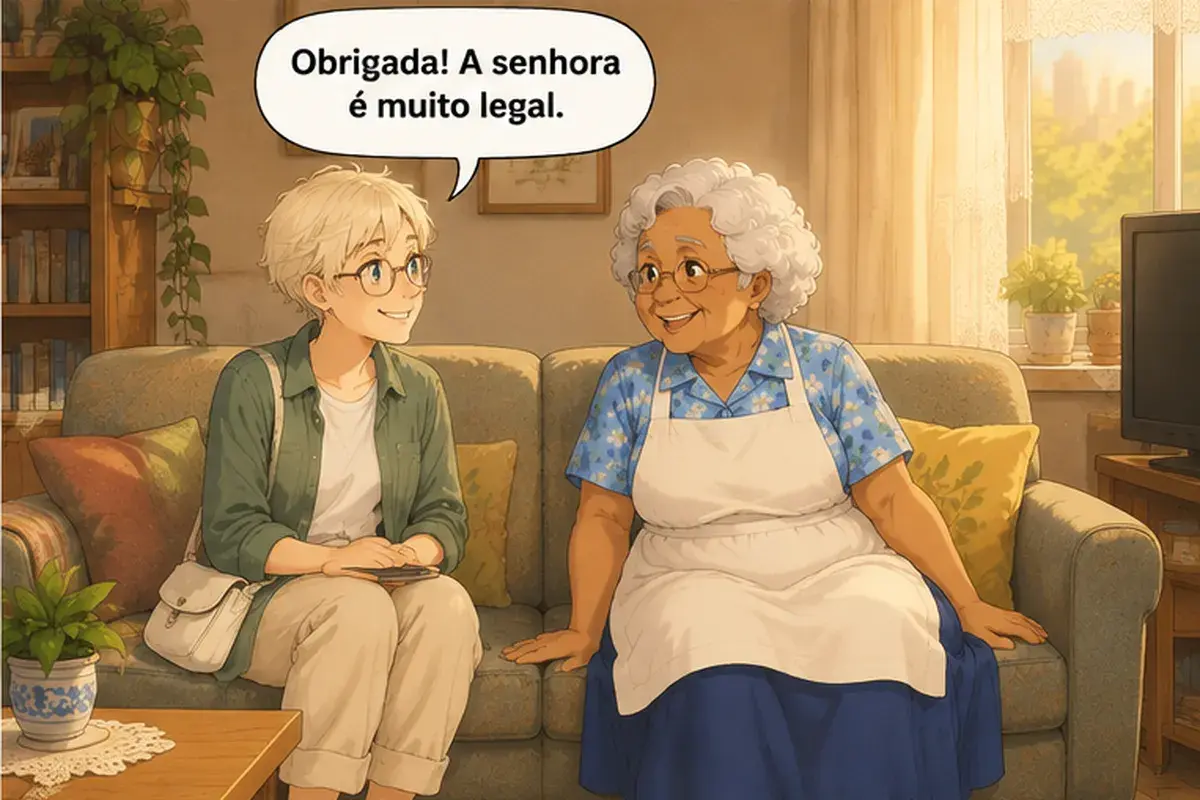
- Nina
Obrigada! A senhora é muito legal.
Thank you! You're very nice (formal).
Grammar for this text
- Tem marido? Tem namorado? — a question without você: the subject is often dropped. tem is the você / ele / ela form of ter (to have), so here it's "do you have". In aqui você tem a gente it's the same tem about people: a gente means "we, us" (unit 1), so it's "here you have us" — "you're not alone".
- o nome dele é Andrei and o nome dela é Olga — "his name" and "her name". dele = de + ele, dela = de + ela. Compare é seu irmão?: here seu means "your", because Dona Lúcia is talking to Nina.
- ele é mais novo — literally "he's more young", that is, "he's younger". "Older" is mais velho.
- é uma criança! — criança is feminine even about a boy, so it's uma. In ele fala que é um homem, the word que links the two parts: "he says (that) he's a man".
- sou solteira — a woman is speaking, so it's solteira; a man would say solteiro. sozinha is feminine too: Dona Lúcia is talking to a woman.
- minha filha — literally "my daughter": a warm way an older person talks to a young woman, like "dear" or "honey". a senhora é muito legal — a senhora is the respectful "you" for an older woman; the verb is in the ele / ela form (é).
Words and grammar of the unit: Talk about your family.
Learn the words from the texts with flashcards
In the app, you can tap any word in a text to see its translation, forms and examples, and new words stick with flashcards. 15 minutes a day.
Start for freeEverything is open for free. No card needed to sign up.