
Portuguese story with translation · A1 · 10 lines
A família dela é grande Her family is big
Comic · 9 panels
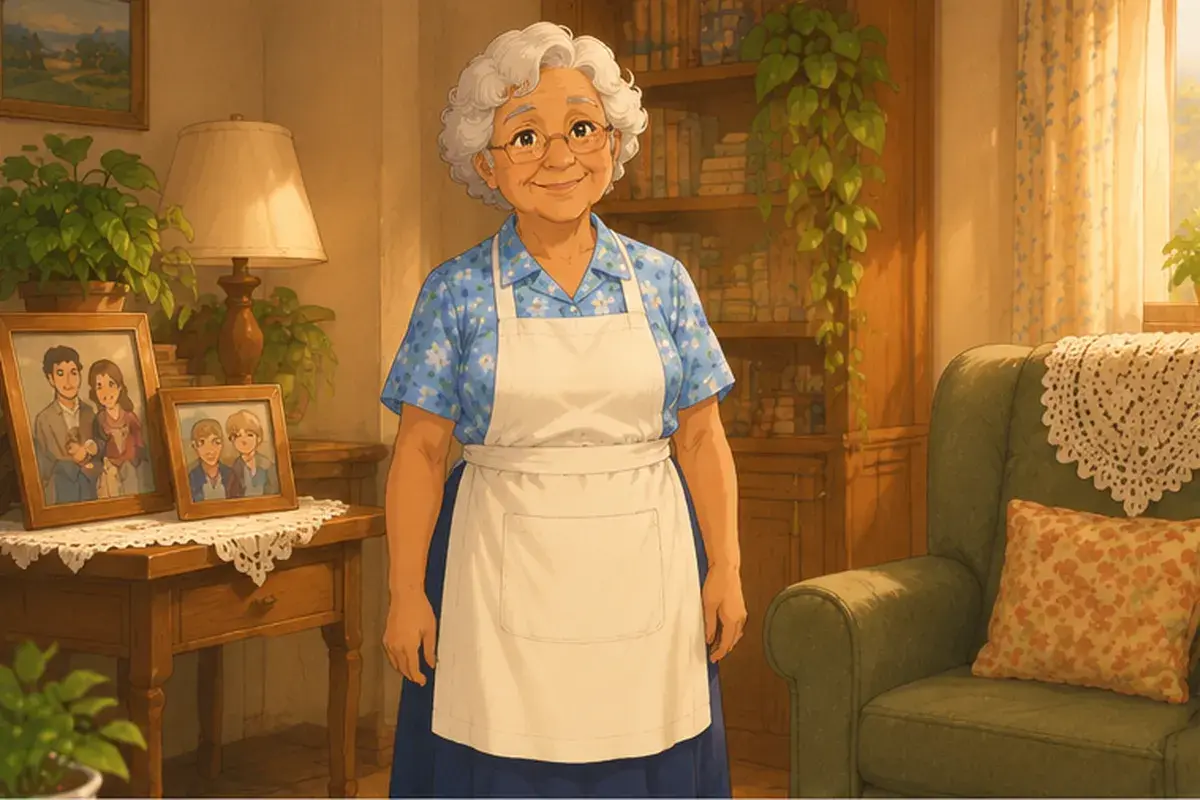
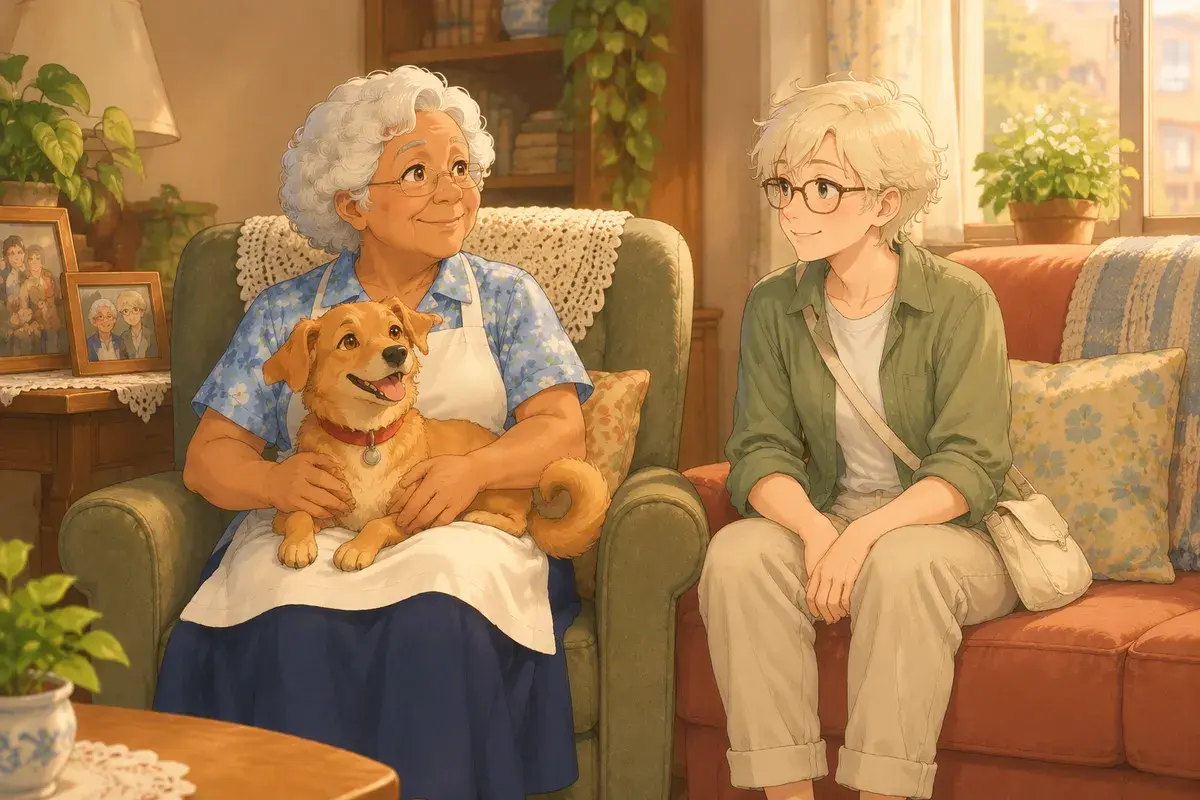
Dona Lúcia é uma pessoa muito legal.
Dona Lúcia is a very nice person.
Ela tem sessenta e oito anos e é professora aposentada.
She's sixty-eight and she's a retired teacher.
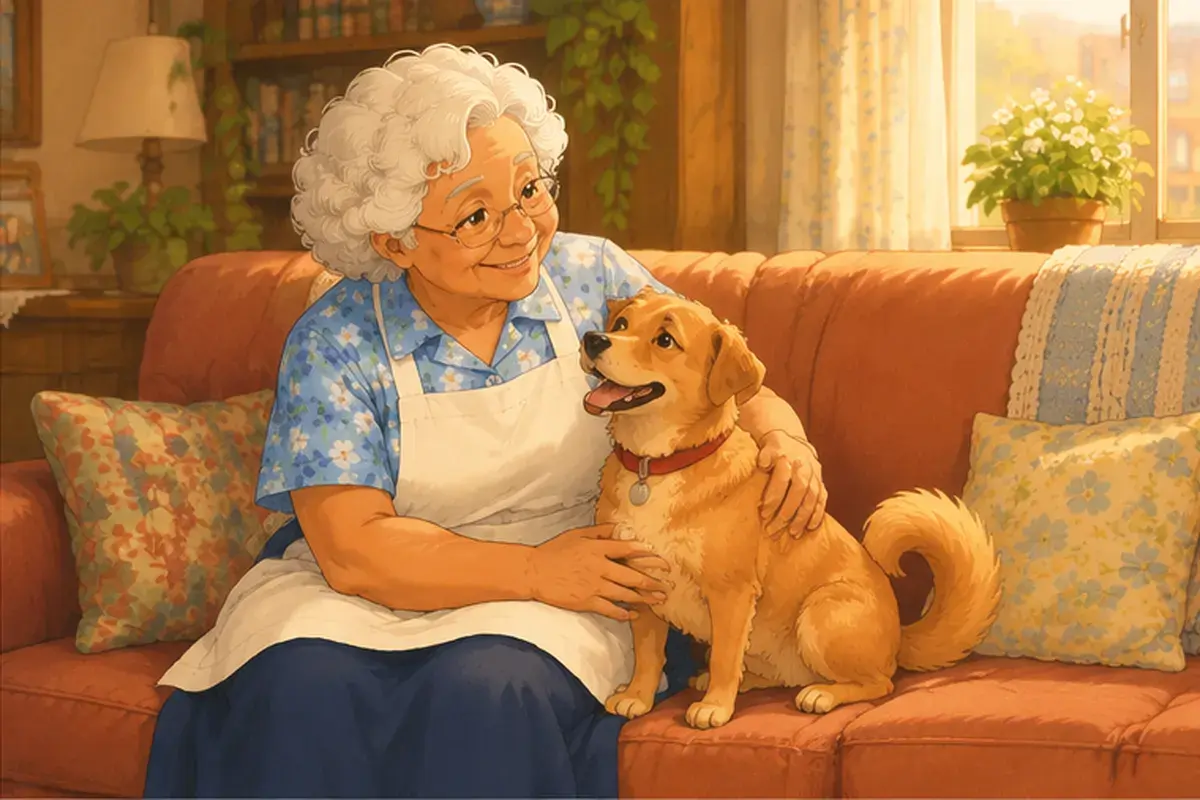
Ela não tem marido. Ela mora sozinha com a Pipoca.
She doesn't have a husband. She lives alone with Pipoca.
Mas a família dela é grande: ela tem um filho, uma filha e cinco netos.
But her family is big: she has a son, a daughter and five grandchildren.
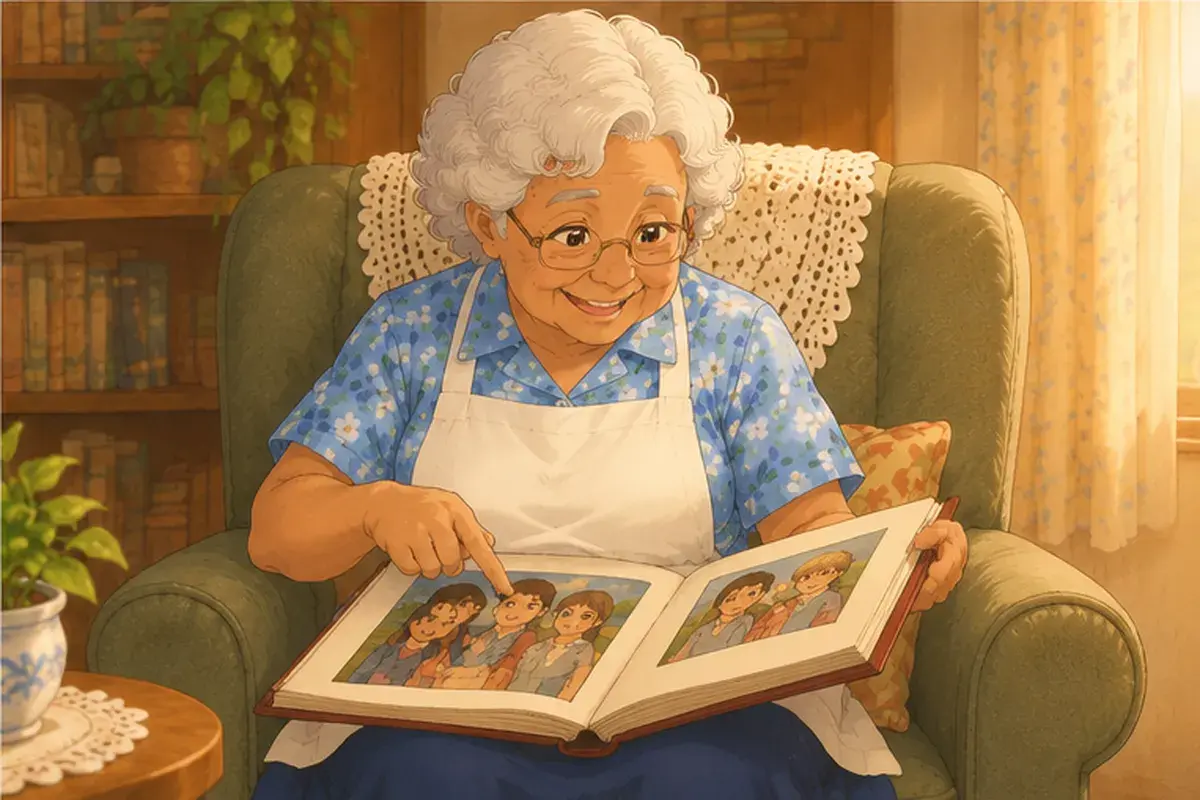
Os dois filhos são casados. Dos netos, um é bebê, dois são crianças e dois são jovens.
Both children are married. Of the grandchildren, one is a baby, two are children and two are young people.
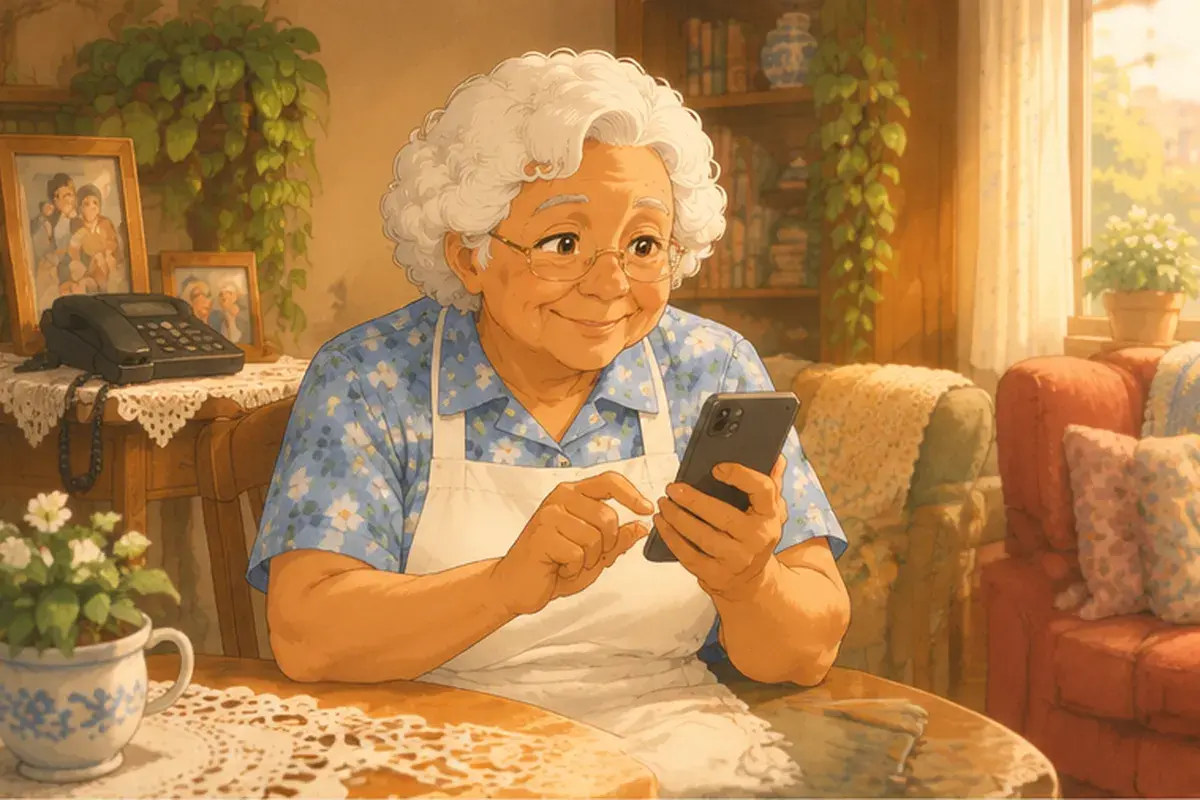
Os filhos ligam e os netos mandam mensagem.
The children call and the grandchildren send messages.
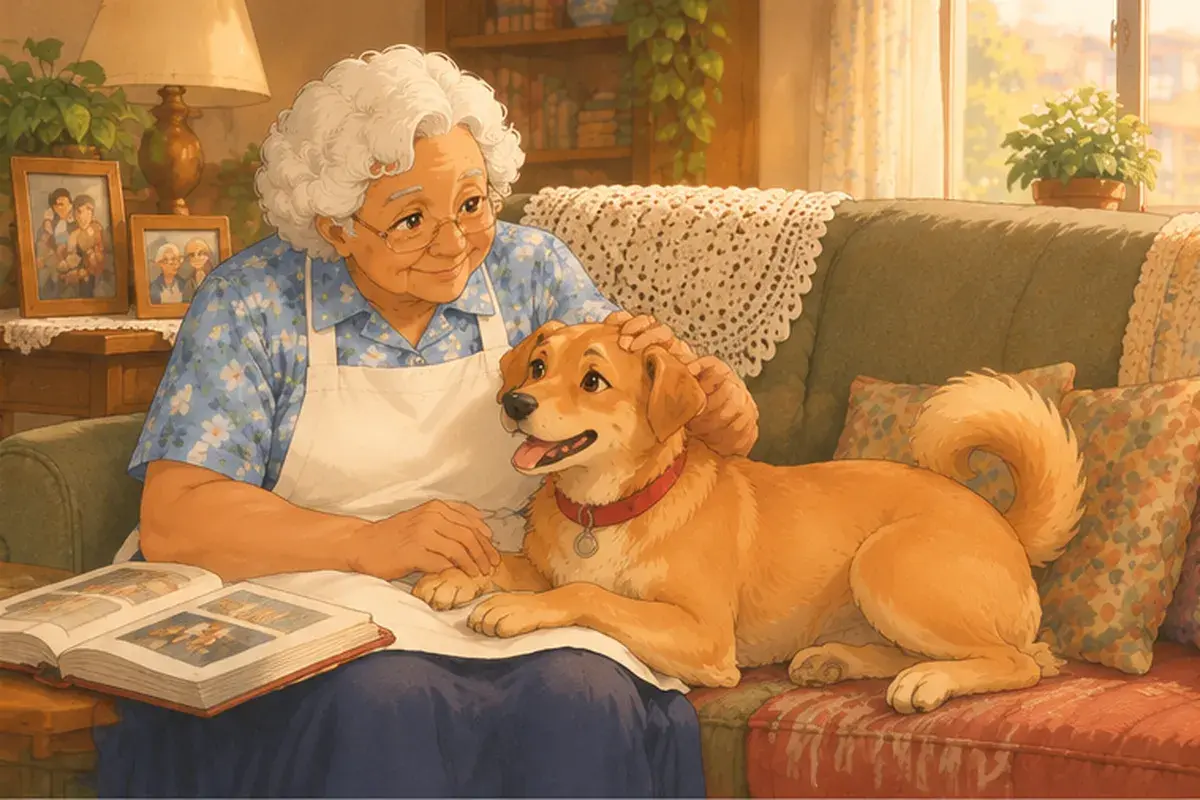
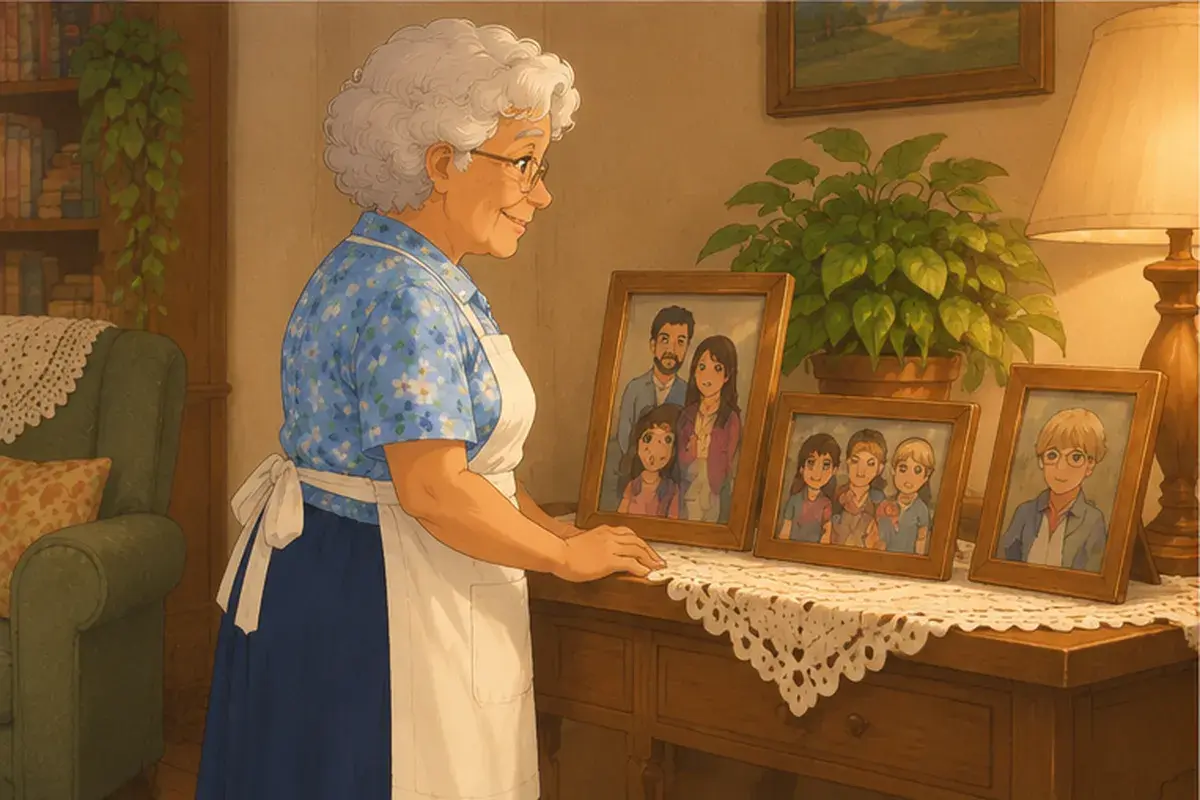
Em casa, Dona Lúcia olha as fotos e fala com a Pipoca.
At home, Dona Lúcia looks at the photos and talks to Pipoca.
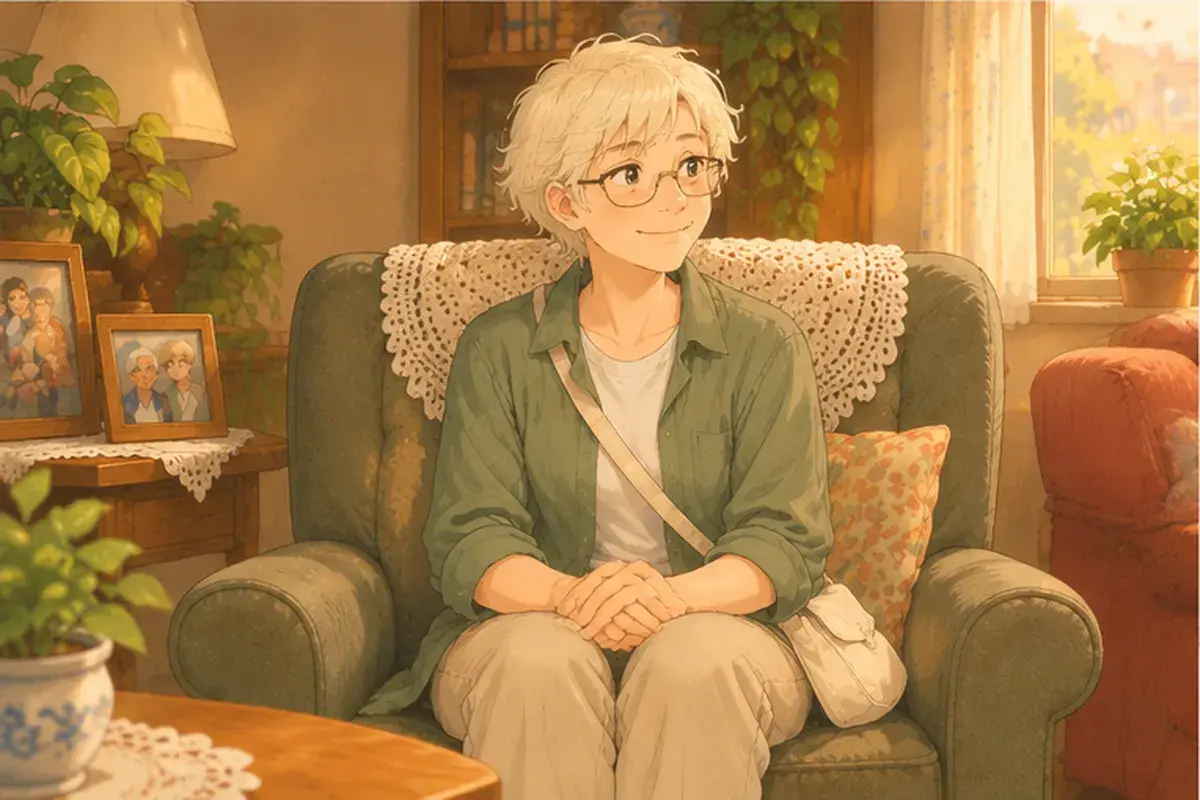
E a minha família? É pequena.
And my family? It's small.
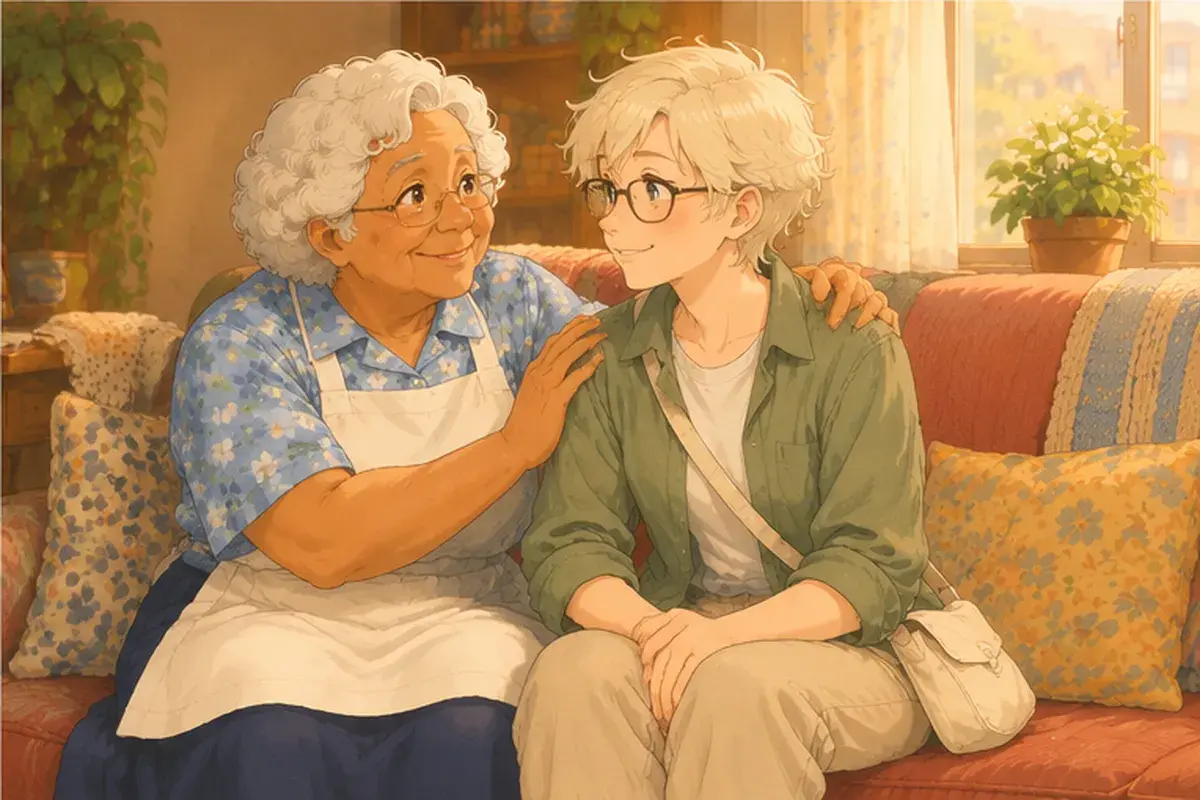
Mas Dona Lúcia fala: "Aqui a nossa família é grande, Nina. Você também é minha neta!"
But Dona Lúcia says: "Here our family is big, Nina. You're my granddaughter too!"
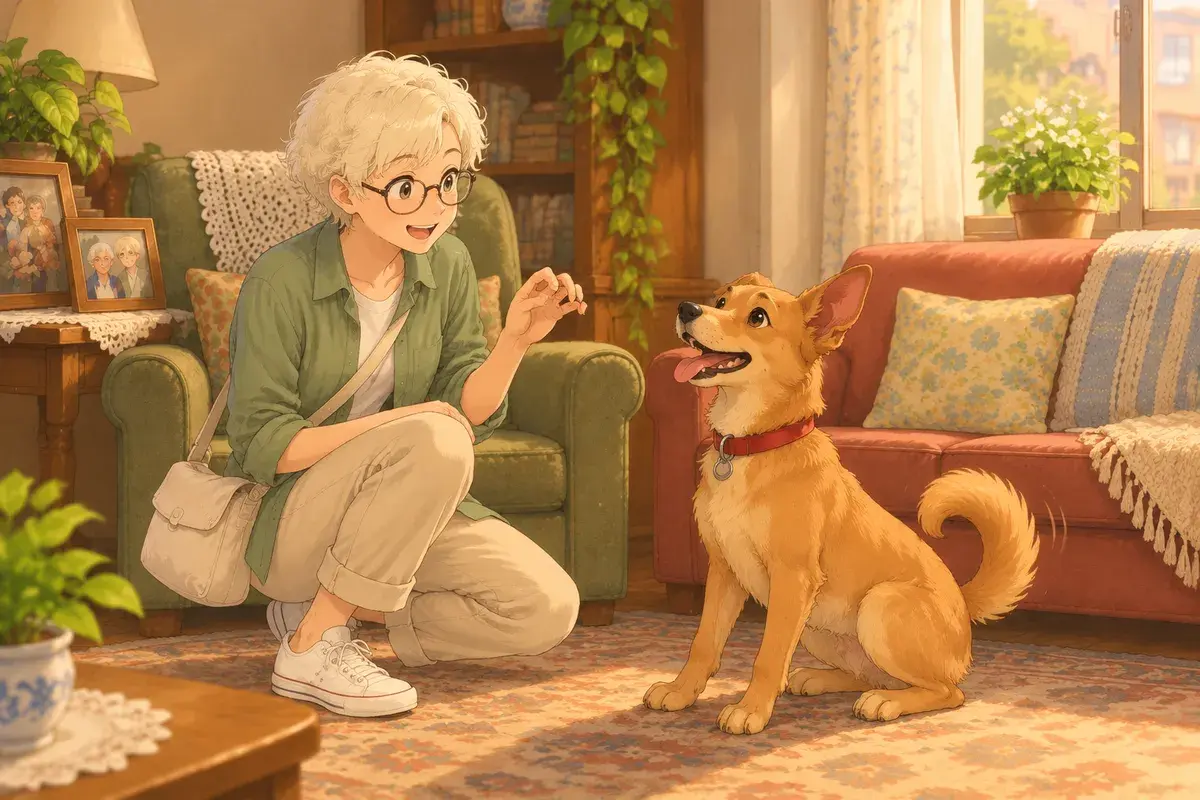
Então a Pipoca é minha prima!
So Pipoca is my cousin!
Grammar for this text
- a família dela é grande — dela means "her" (Dona Lúcia's) and comes after the noun. grande has one form for both genders: uma família grande, um cachorro grande.
- dos netos, um é bebê — dos = de + os: "of the grandchildren". neto — grandson, neta — granddaughter. bebê is masculine even about a girl, and criança is feminine even about a boy (dois são crianças; the plural is crianças).
- os filhos ligam e os netos mandam mensagem — ligam and mandam are "they" forms: ligar — to call, mandar — to send. The subject is plural, so the verb is plural too.
- em casa, Dona Lúcia olha as fotos — em casa means "at home", with no article. Here olha is the plain "she looks".
- aqui a nossa família é grande — nossa (our) is feminine to match família; with a masculine word it would be nosso. Dona Lúcia says "our" because she counts Nina in the family.
- você também é minha neta — neta is feminine because it's about Nina.
- então a Pipoca é minha prima! — então means "so, then"; prima is a female cousin (a male one is primo). The joke: if Nina is a granddaughter, then the dog is family too.
Words and grammar of the unit: Talk about your family.
Learn the words from the texts with flashcards
In the app, you can tap any word in a text to see its translation, forms and examples, and new words stick with flashcards. 15 minutes a day.
Start for freeEverything is open for free. No card needed to sign up.