

Portuguese dialogue with translation · A1 · 14 lines
Qual é a senha do wi-fi? What's the Wi-Fi password?
Comic · 11 panels
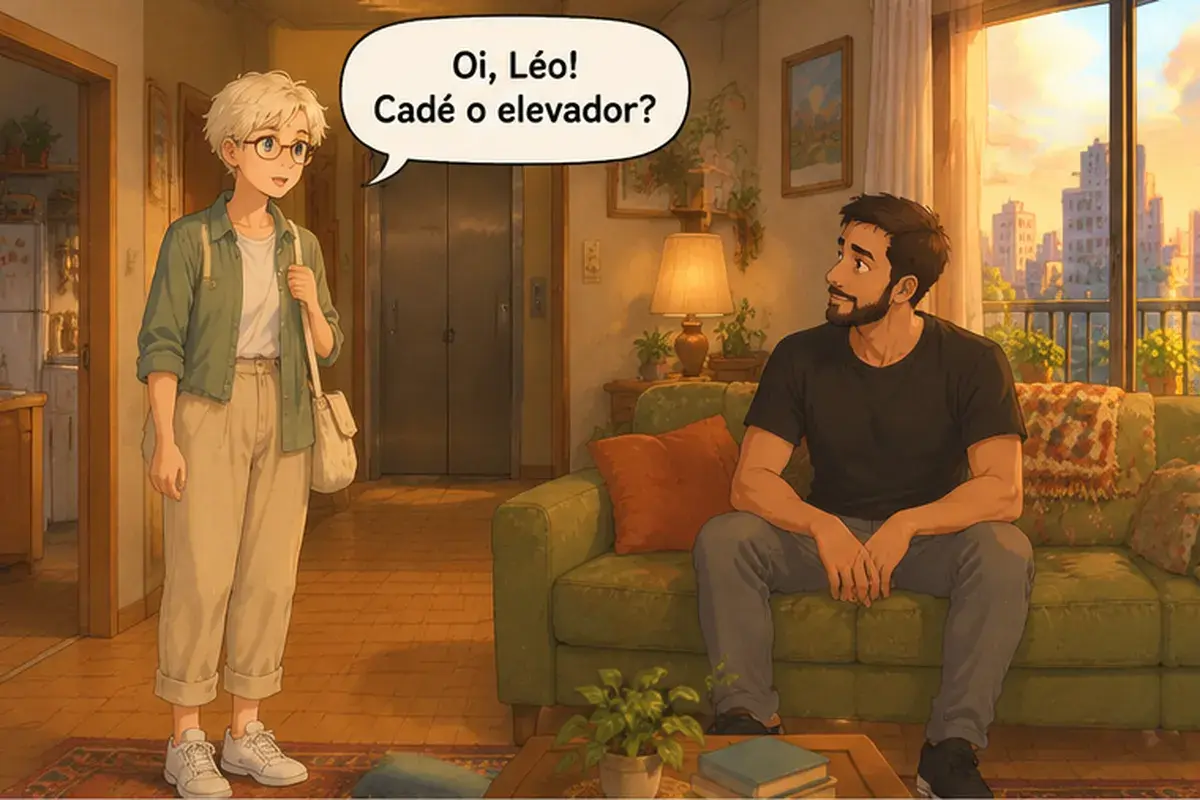
- Nina
Oi, Léo! Cadê o elevador?
Hi, Léo! Where's the elevator?
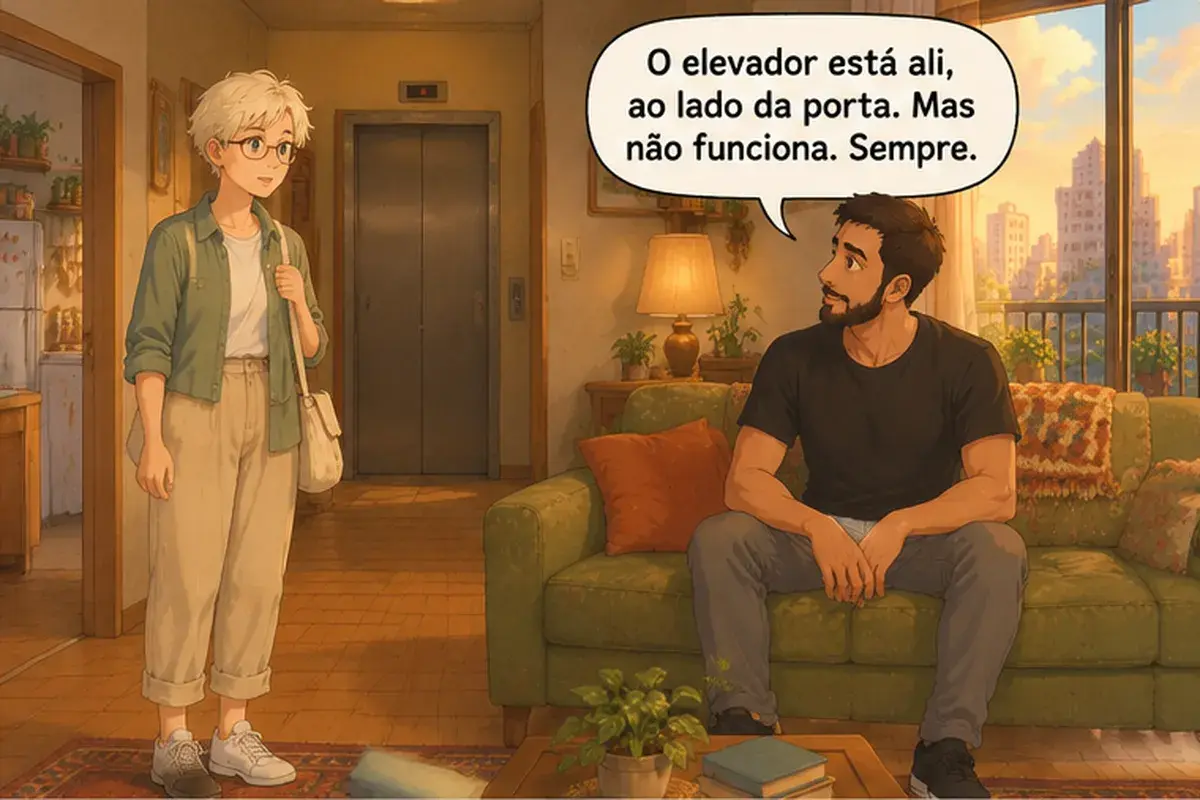
- Léo
O elevador está ali, ao lado da porta. Mas não funciona. Sempre.
The elevator is over there, next to the door. But it doesn't work. Always.
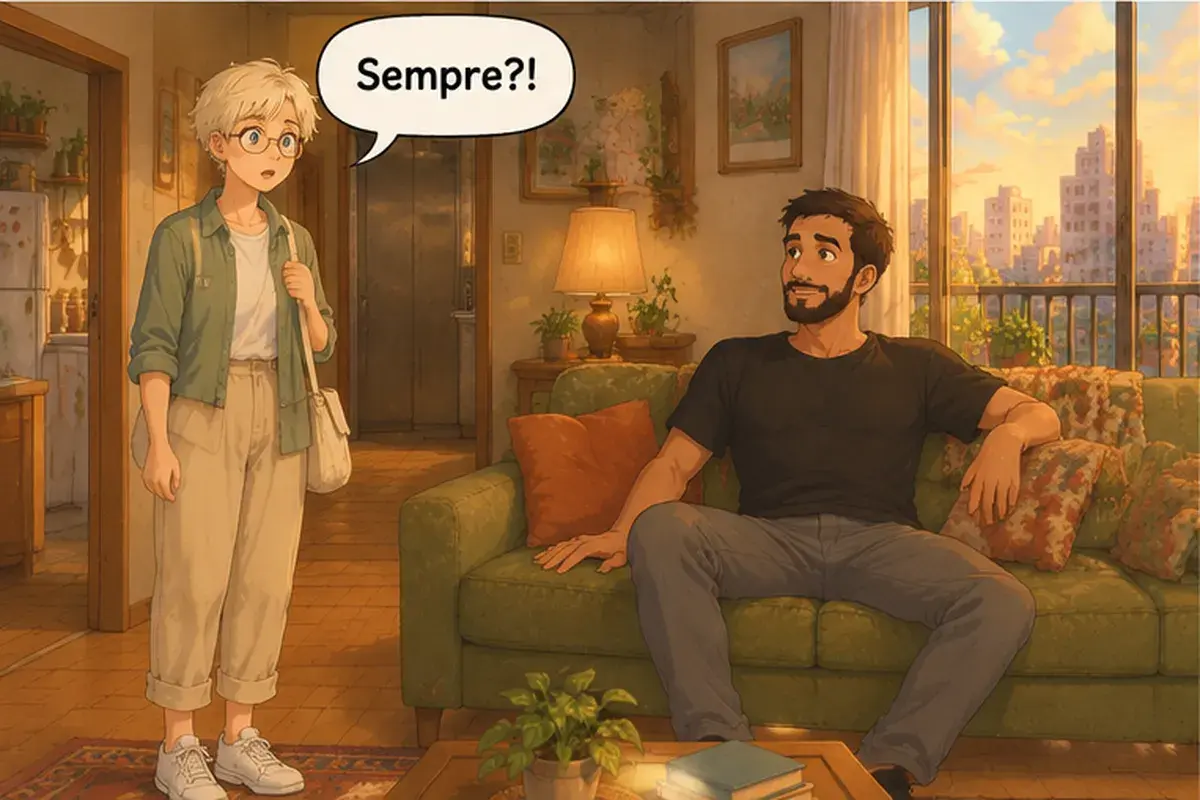
- Nina
Sempre?!
Always?!
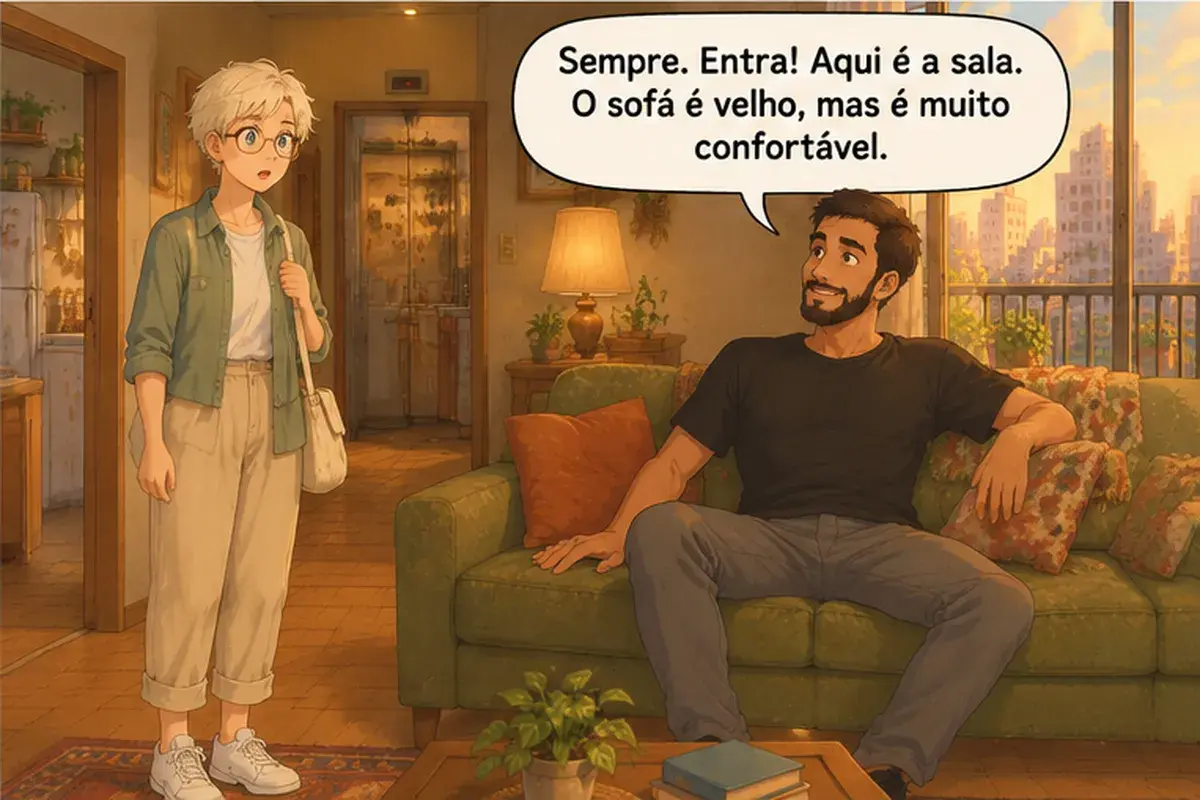
- Léo
Sempre. Entra! Aqui é a sala. O sofá é velho, mas é muito confortável.
Always. Come in! This is the living room. The couch is old, but it's very comfortable.
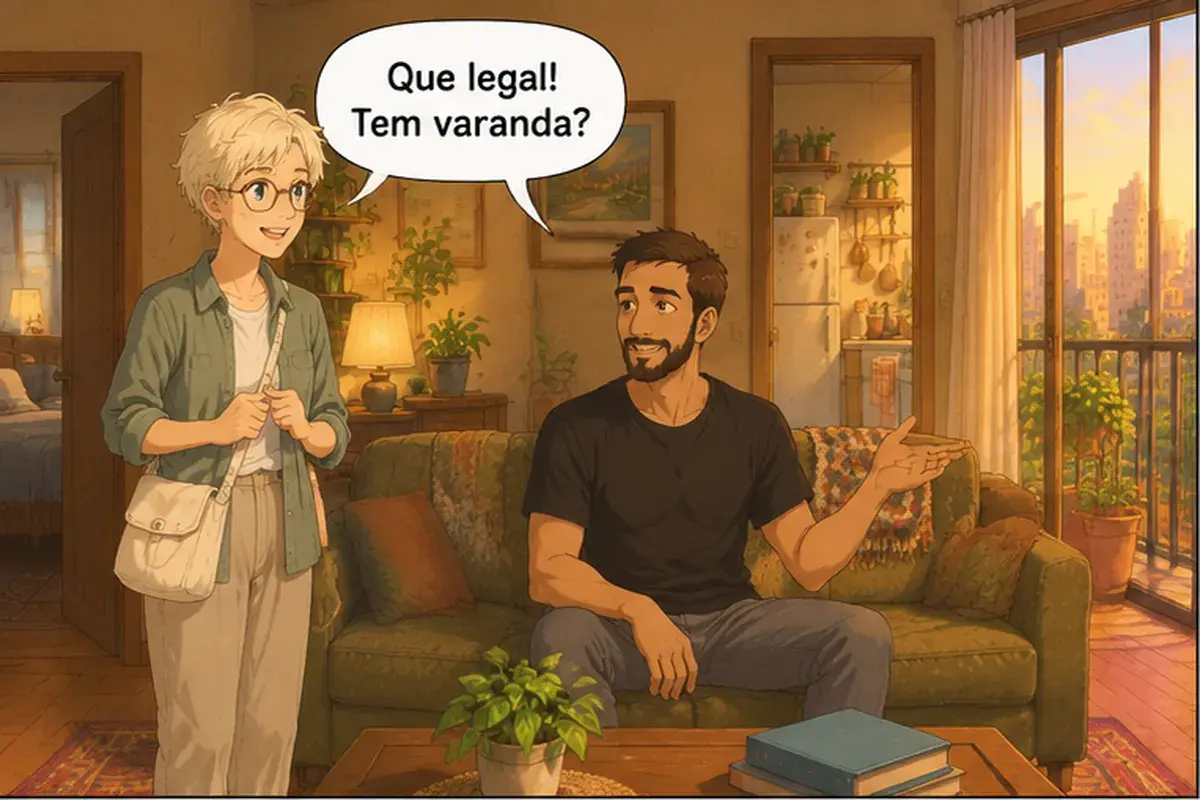
- Nina
Que legal! Tem varanda?
How nice! Is there a balcony?
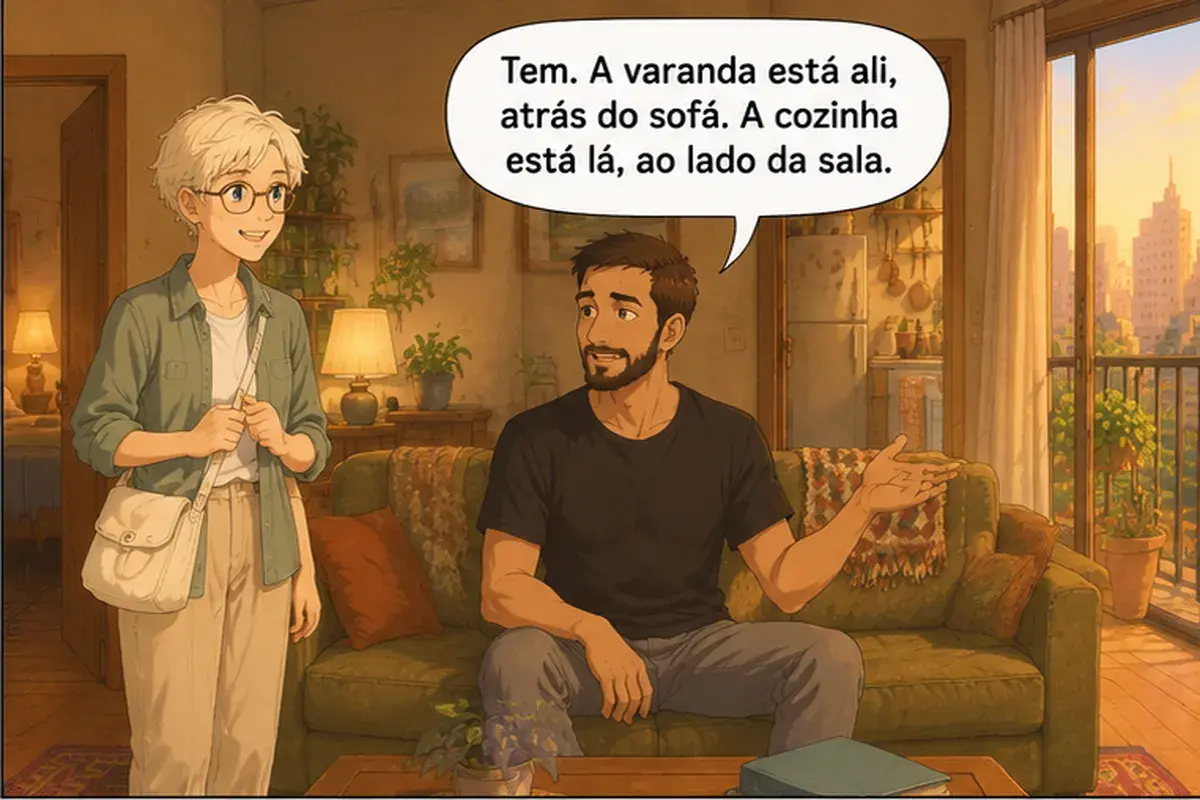
- Léo
Tem. A varanda está ali, atrás do sofá. A cozinha está lá, ao lado da sala.
There is. The balcony is over there, behind the couch. The kitchen is there, next to the living room.
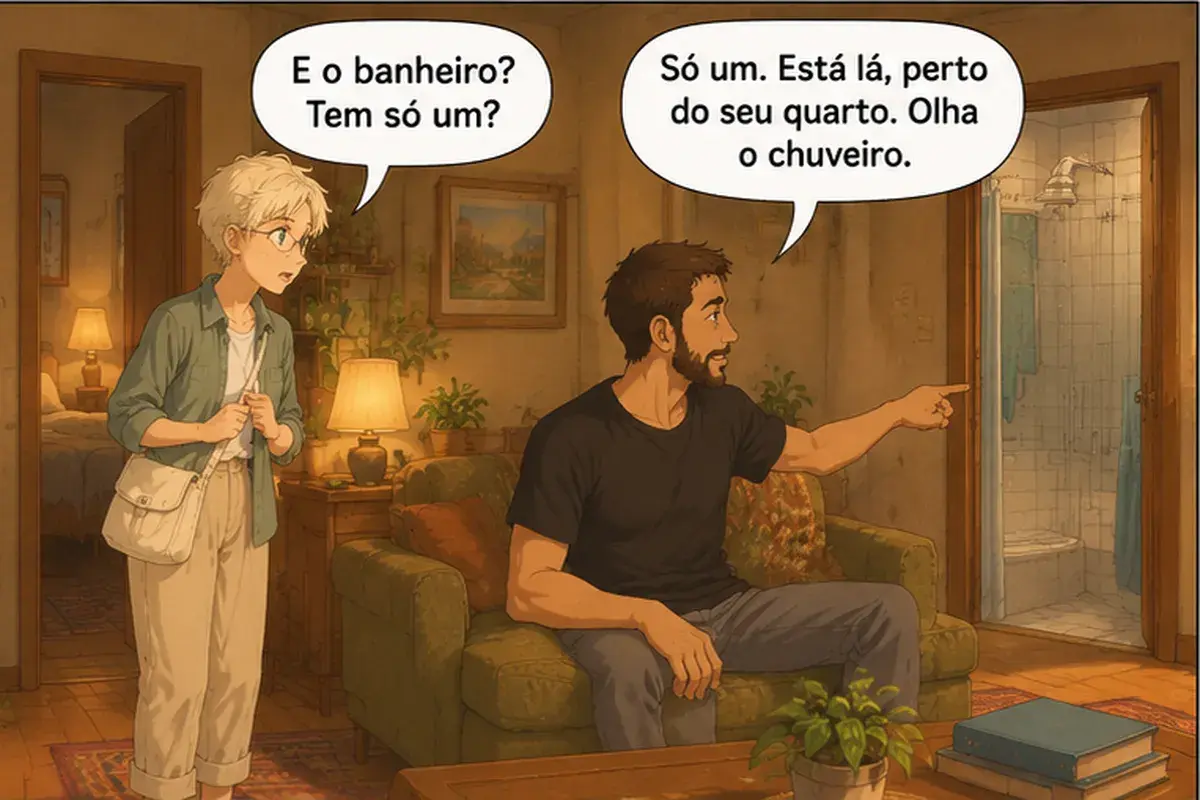
- Nina
E o banheiro? Tem só um?
And the bathroom? Is there only one?
- Léo
Só um. Está lá, perto do seu quarto. Olha o chuveiro.
Just one. It's there, near your room. Look at the shower.
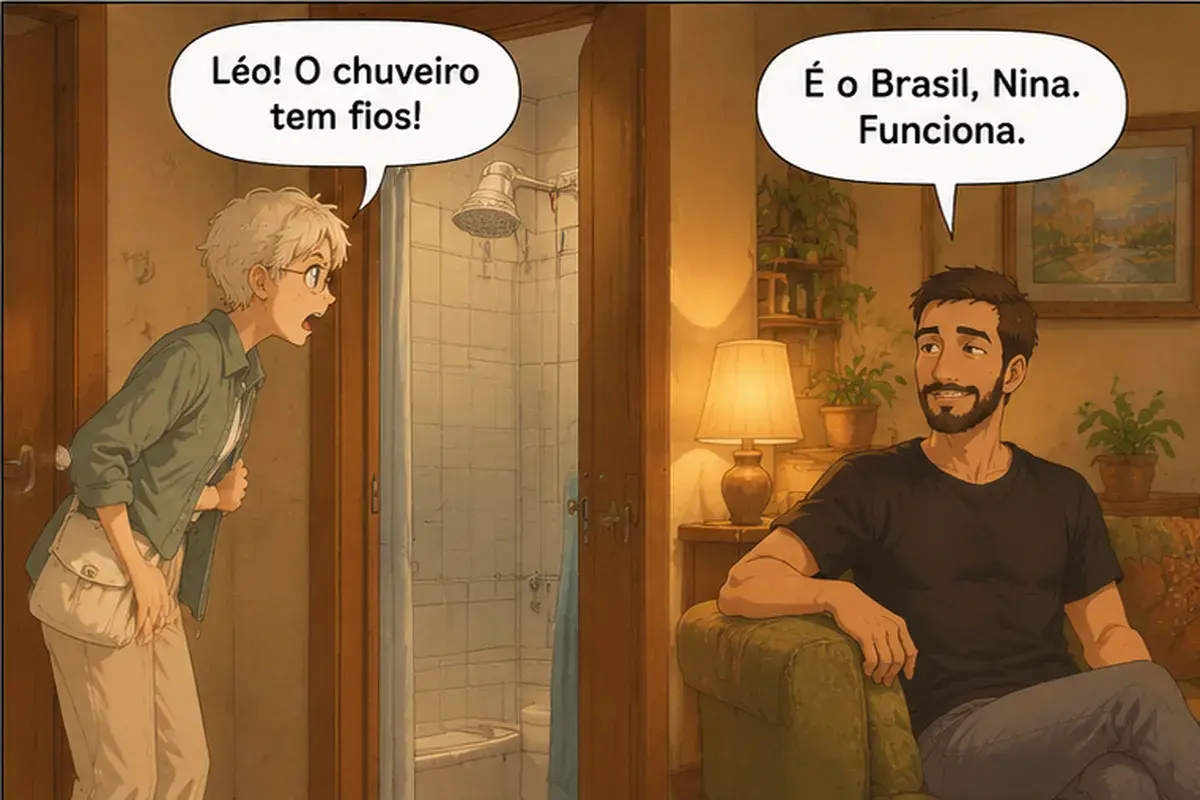
- Nina
Léo! O chuveiro tem fios!
Léo! The shower has wires!
- Léo
É o Brasil, Nina. Funciona.
It's Brazil, Nina. It works.
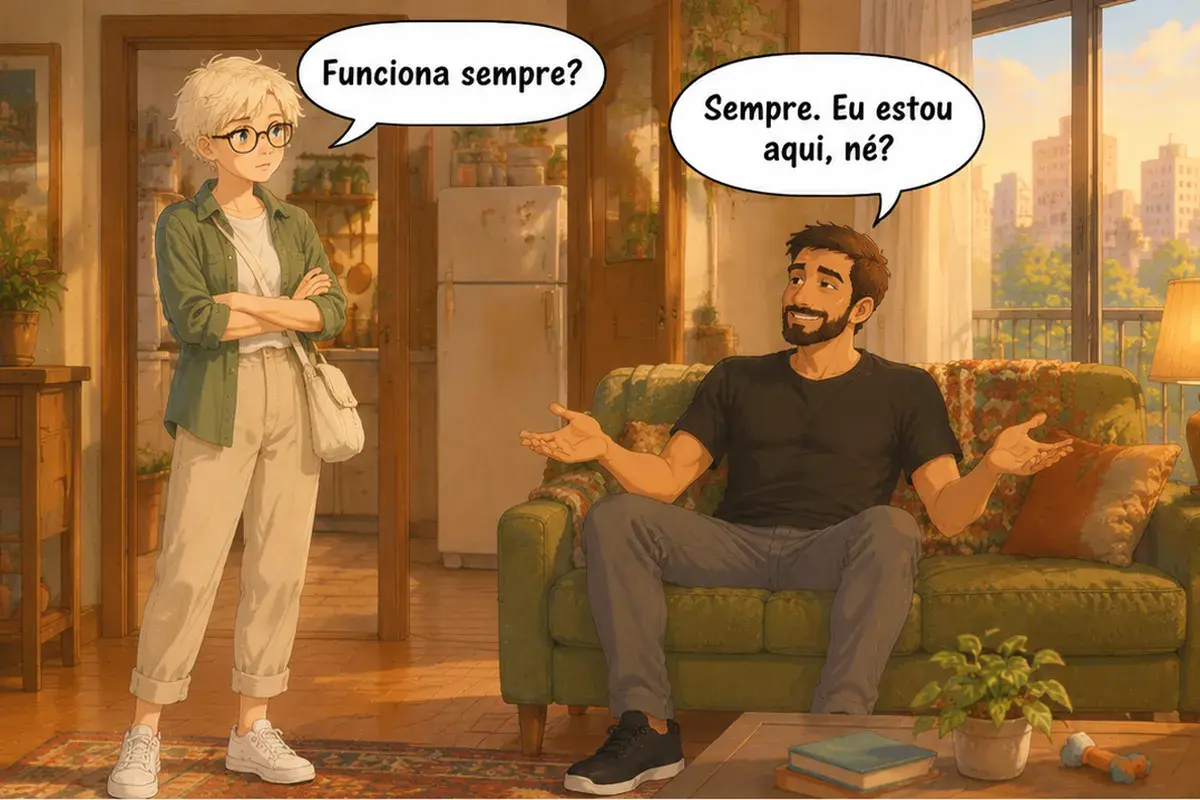
- Nina
Funciona sempre?
Does it always work?
- Léo
Sempre. Eu estou aqui, né?
Always. I'm here, aren't I?
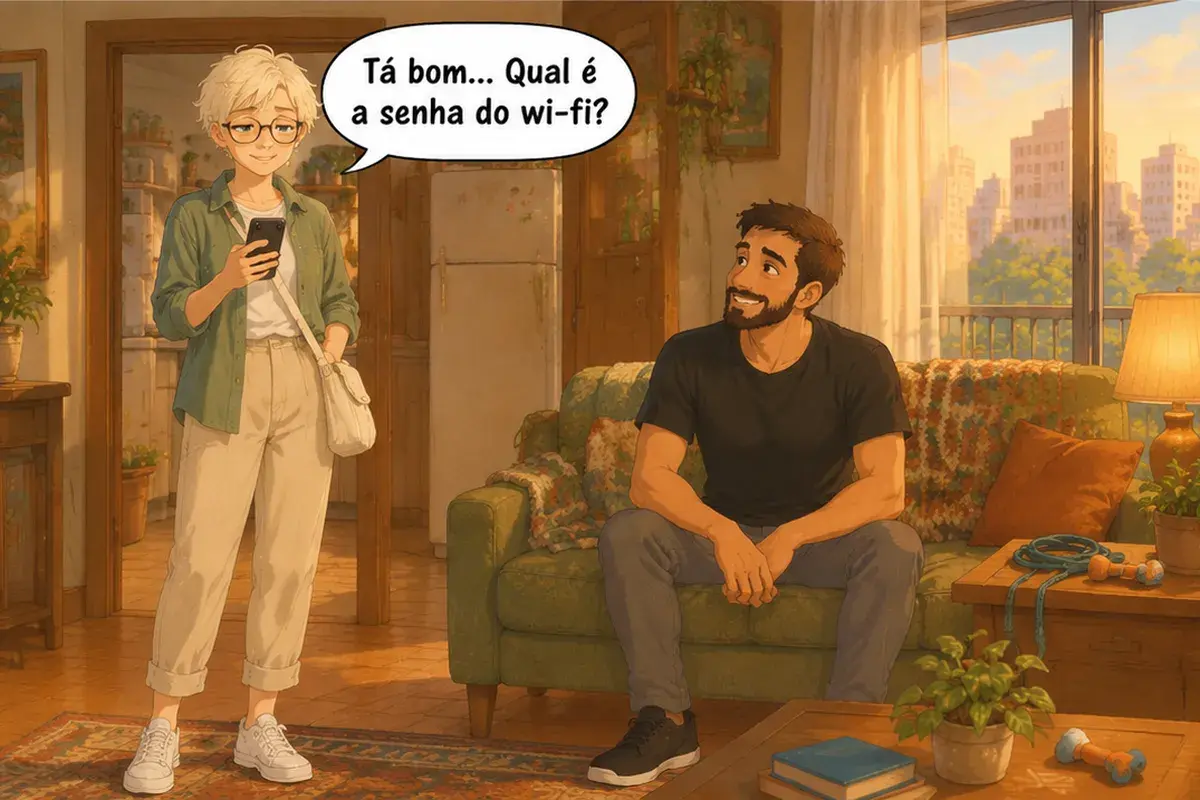
- Nina
Tá bom... Qual é a senha do wi-fi?
OK... What's the Wi-Fi password?
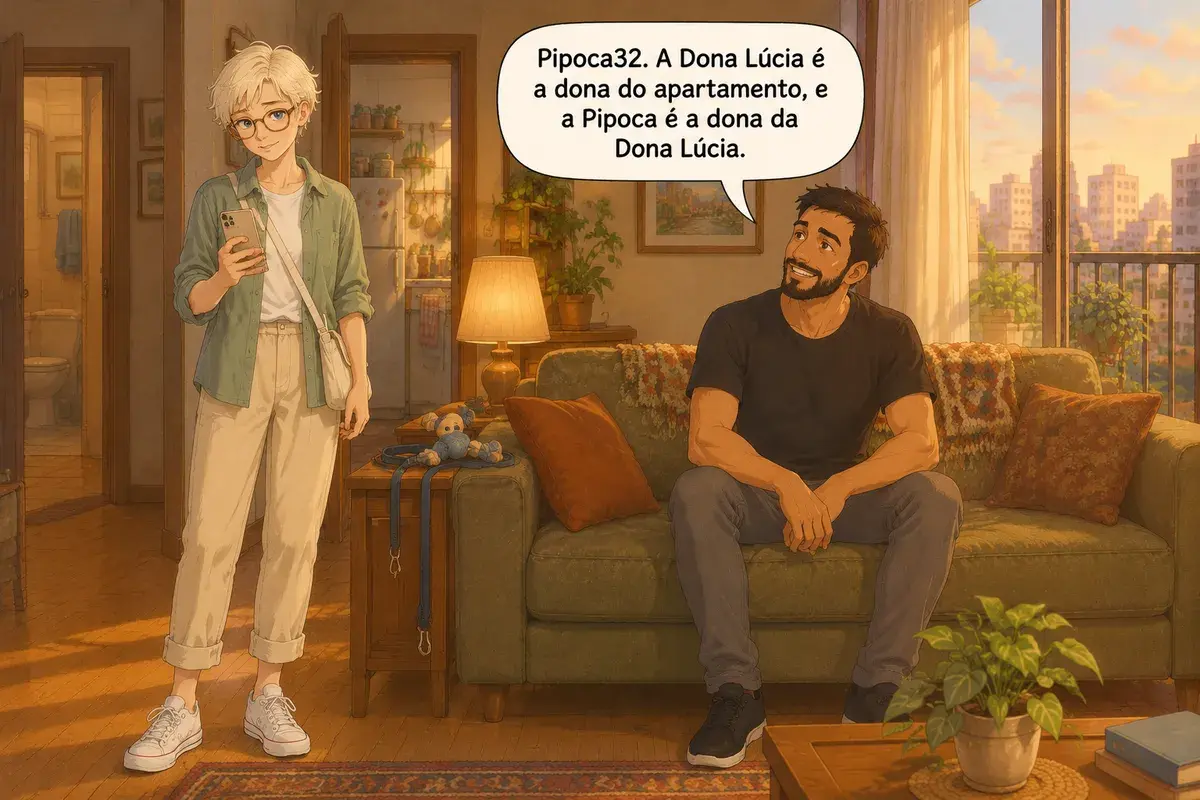
- Léo
Pipoca32. A Dona Lúcia é a dona do apartamento, e a Pipoca é a dona da Dona Lúcia.
Pipoca32. Dona Lúcia is the owner of the apartment, and Pipoca is the owner of Dona Lúcia.
Grammar for this text
- Cadê o elevador? — cadê is casual "where's...?". The thing comes right after it, no verb: people say it when they're looking for something.
- O elevador está ali, A varanda está ali — está is the você / ele / ela form of estar (to be). For where something is, use estar; é (from ser) is for what something is: Aqui é a sala — this is the living room. Eu estou aqui — estou is the eu form of the same estar.
- Tem varanda? — tem is the você / ele / ela form of ter (to have), but here it means "is there...?": no subject and no article.
- atrás do sofá, perto do seu quarto — after atrás and perto there's always de, and with o it joins into do (de + o). ao lado da sala, ao lado da porta — ao lado de (next to) + a gives da.
- Funciona sempre? — funciona is the ele / ela form of funcionar (to work, about things). Léo's joke: the shower with wires "always works" — after all, he's still alive: Eu estou aqui, né? — "I'm here, aren't I?"
- a dona da Dona Lúcia — the first dona means "owner", the second is the respectful title before a name; da = de + a: "Dona Lúcia's owner". The joke: the password Pipoca32 is the dog's name plus the apartment number; Dona Lúcia owns the apartment, but the dog is the boss at home.
- Entra!, Olha o chuveiro — these are the você forms of entrar and olhar; in speech they work as "come in!" and "look!". Commands come in A2.
- Tá bom — tá is short for está, only with friends; né — "right?", also casual.
Words and grammar of the unit: Show your home and find things.
Learn the words from the texts with flashcards
In the app, you can tap any word in a text to see its translation, forms and examples, and new words stick with flashcards. 15 minutes a day.
Start for freeEverything is open for free. No card needed to sign up.