

Portuguese story with translation · A1 · 10 lines
Cadê a minha chave? Where's my key?
Comic · 8 panels

Cadê a minha chave? Eu moro aqui, mas a minha chave não.
Where's my key? I live here, but my key doesn't.
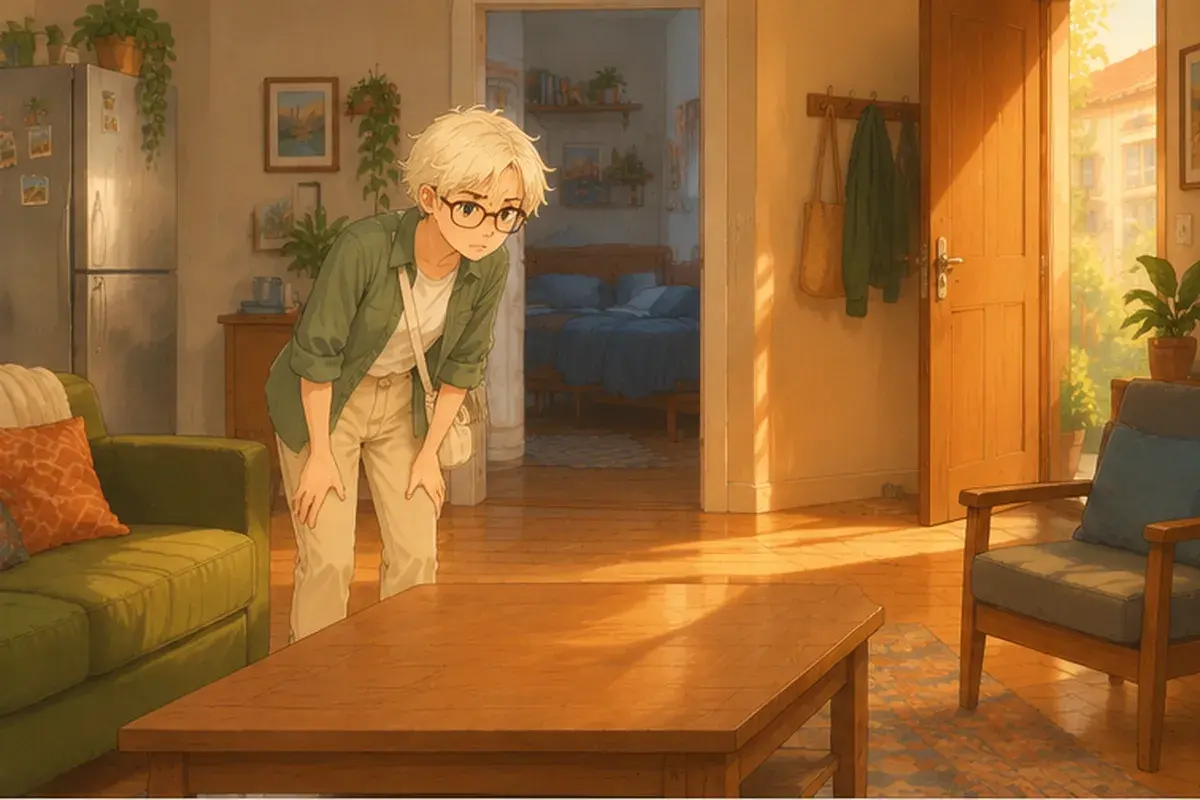
Eu olho em cima da mesa. Ela não está lá.
I look on top of the table. It's not there.
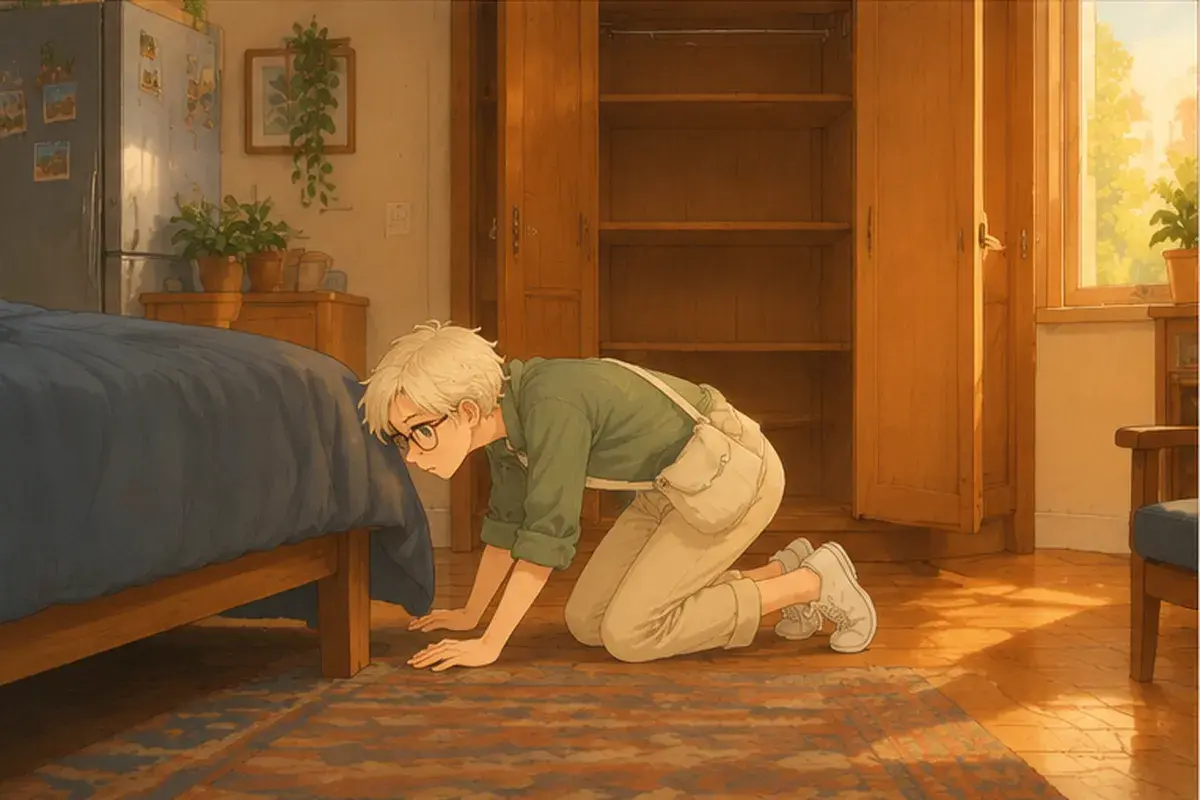
Eu olho embaixo da cama e dentro do armário. A chave também não está lá.
I look under the bed and inside the closet. The key isn't there either.

Eu olho perto da janela, atrás do sofá e entre as cadeiras.
I look near the window, behind the couch and between the chairs.

Eu olho dentro da geladeira. Sim, dentro da geladeira!
I look inside the fridge. Yes, inside the fridge!

Eu mando uma mensagem no grupo: "Pessoal, cadê a minha chave?"
I send a message to the group chat: "Guys, where's my key?"
A Bia manda: "Tô fora de casa, Nina!"
Bia texts: "I'm out of the house, Nina!"

O Léo está no quarto dele, mas manda uma mensagem: "A Pipoca está em frente da porta, com a sua chave!"
Léo is in his room, but he sends a message: "Pipoca is in front of the door, with your key!"

A Pipoca? Ela está sempre em frente da porta, mas hoje ela tem a minha chave.
Pipoca? She's always in front of the door, but today she has my key.
Eu moro aqui, mas a minha chave mora com a Pipoca.
I live here, but my key lives with Pipoca.
Grammar for this text
- Cadê a minha chave? — cadê is casual "where's...?", no verb needed. Eu moro aqui, mas a minha chave não — after não there's no verb: "but my key doesn't". moro isn't repeated, just like in English.
- em cima da mesa, embaixo da cama, dentro do armário, atrás do sofá, dentro da geladeira — all these place words take de, and it joins with the article: da = de + a, do = de + o. entre as cadeiras — entre (between) takes no de.
- no grupo, no quarto dele — no = em + o: "in the group chat", "in his room". dele = de + ele, literally "the room of him": this is how you say "his room".
- Tô fora de casa — tô is casual estou (I am); friends write it like that. fora de casa — "out of the house, not at home". O Léo está no quarto dele, mas manda uma mensagem — the joke: Léo is in the next room, but he texts instead of calling out: a lazy homebody.
- com a sua chave, ela tem a minha chave — sua is "your", minha is "my": both are feminine, because chave is feminine. tem here is "she has" (ter, to have, unit 2).
- em frente da porta — em frente de (in front of) + a gives da. here sempre comes after the verb: "she's always in front of the door" (before the verb is fine too: sempre está).
Words and grammar of the unit: Show your home and find things.
Learn the words from the texts with flashcards
In the app, you can tap any word in a text to see its translation, forms and examples, and new words stick with flashcards. 15 minutes a day.
Start for freeEverything is open for free. No card needed to sign up.