

Chinese dialogue with translation · B1 · 17 lines
我做饭做了三个小时 I've been cooking for three hours
Comic · 17 panels
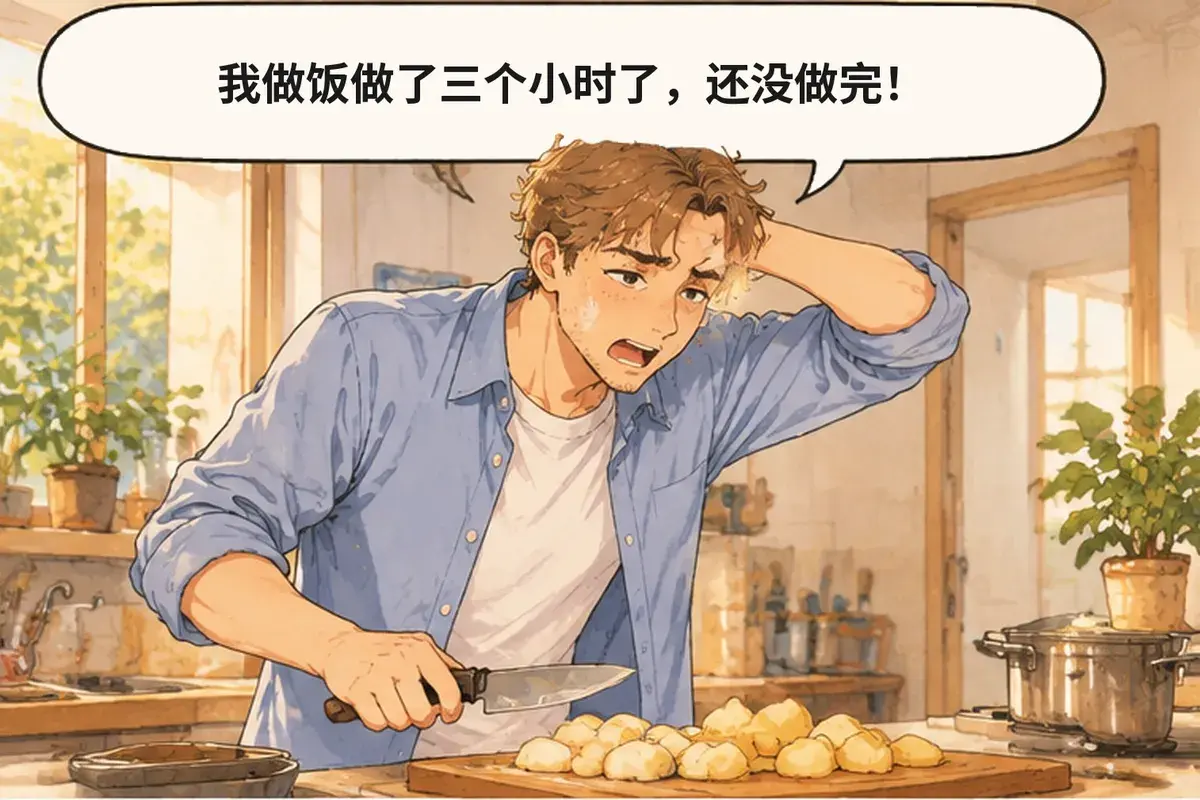
- 伊利亚
我做饭做了三个小时了,还没做完!
I've been cooking for three hours and I'm still not done!

- 晓雨
三个小时?你做的是什么?
Three hours? What are you making?
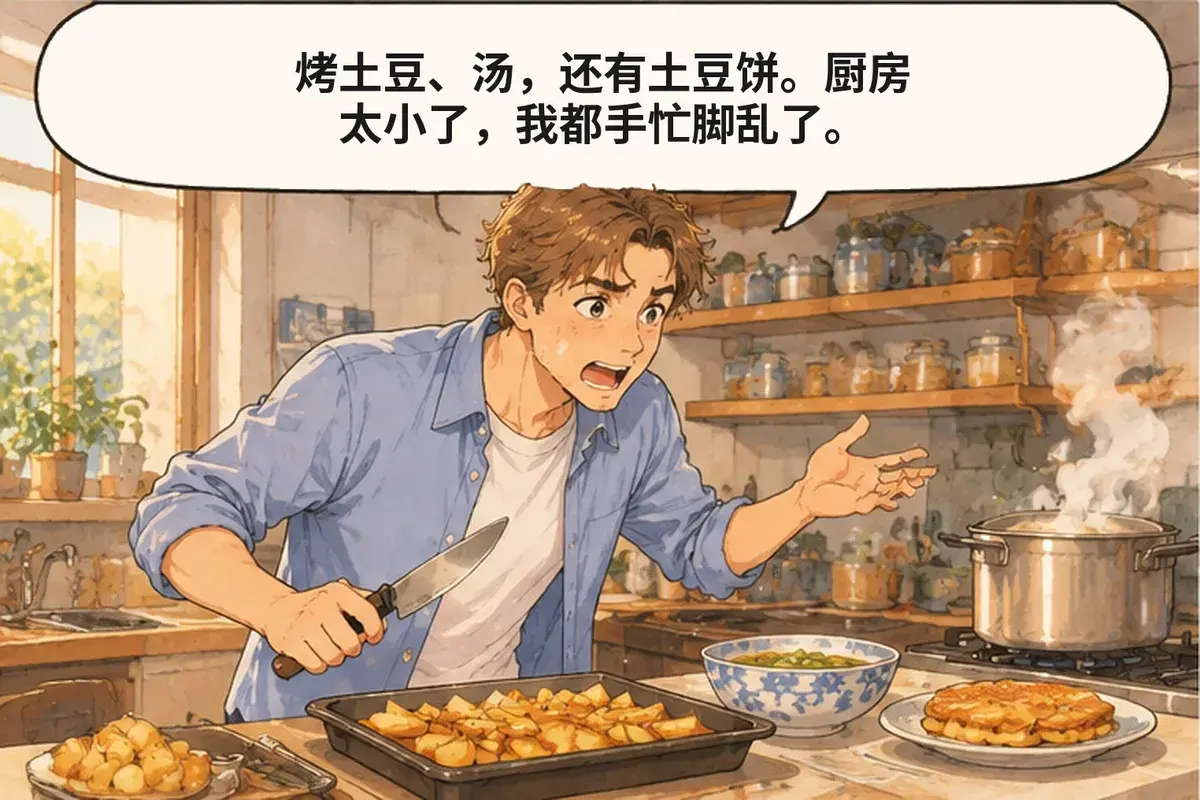
- 伊利亚
烤土豆、汤,还有土豆饼。厨房太小了,我都手忙脚乱了。
Baked potatoes, soup, and potato pancakes too. The kitchen is too small, I'm totally overwhelmed.
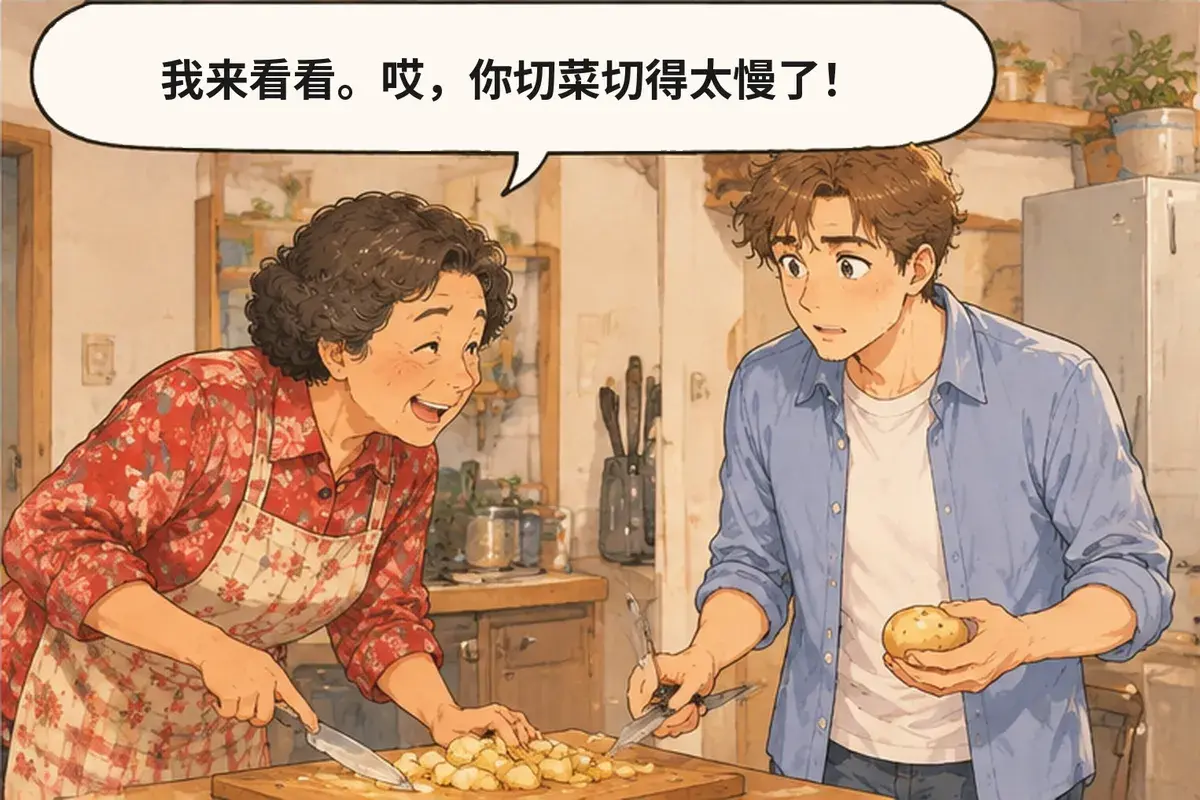
- 王阿姨
我来看看。哎,你切菜切得太慢了!
Let me take a look. Oh, you cut vegetables way too slowly!
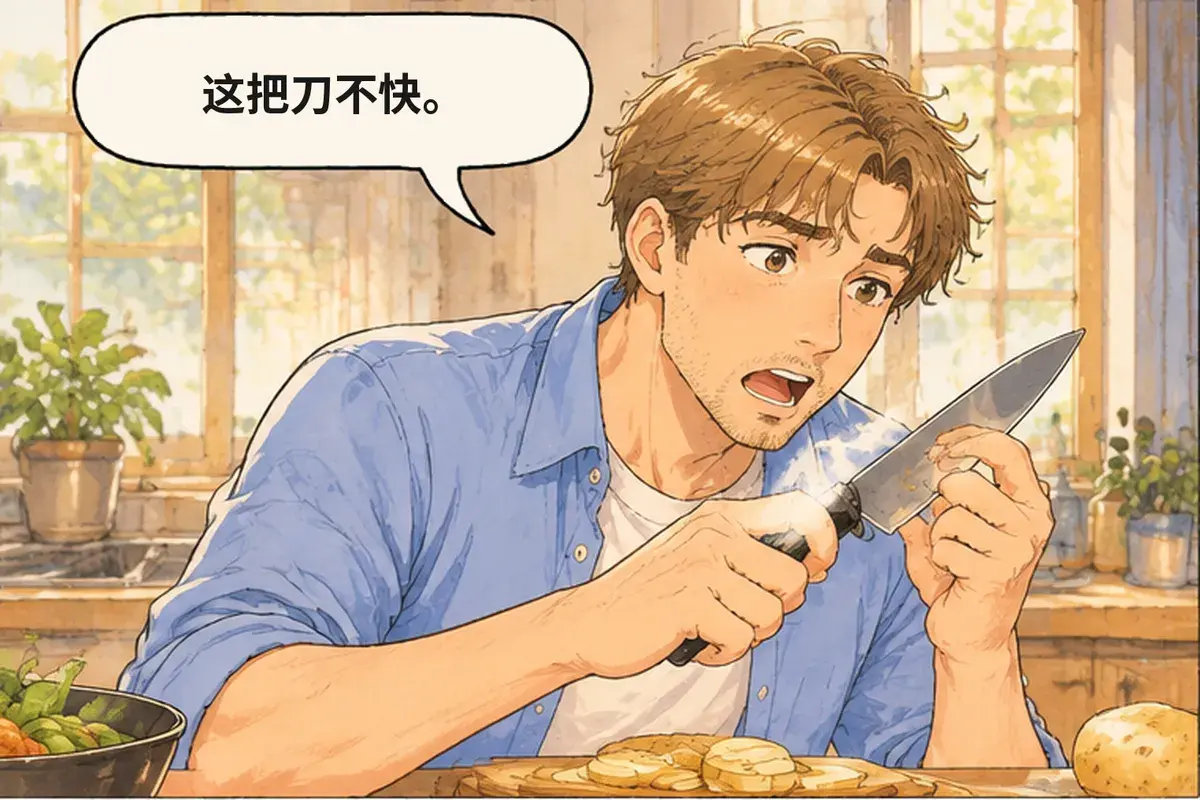
- 伊利亚
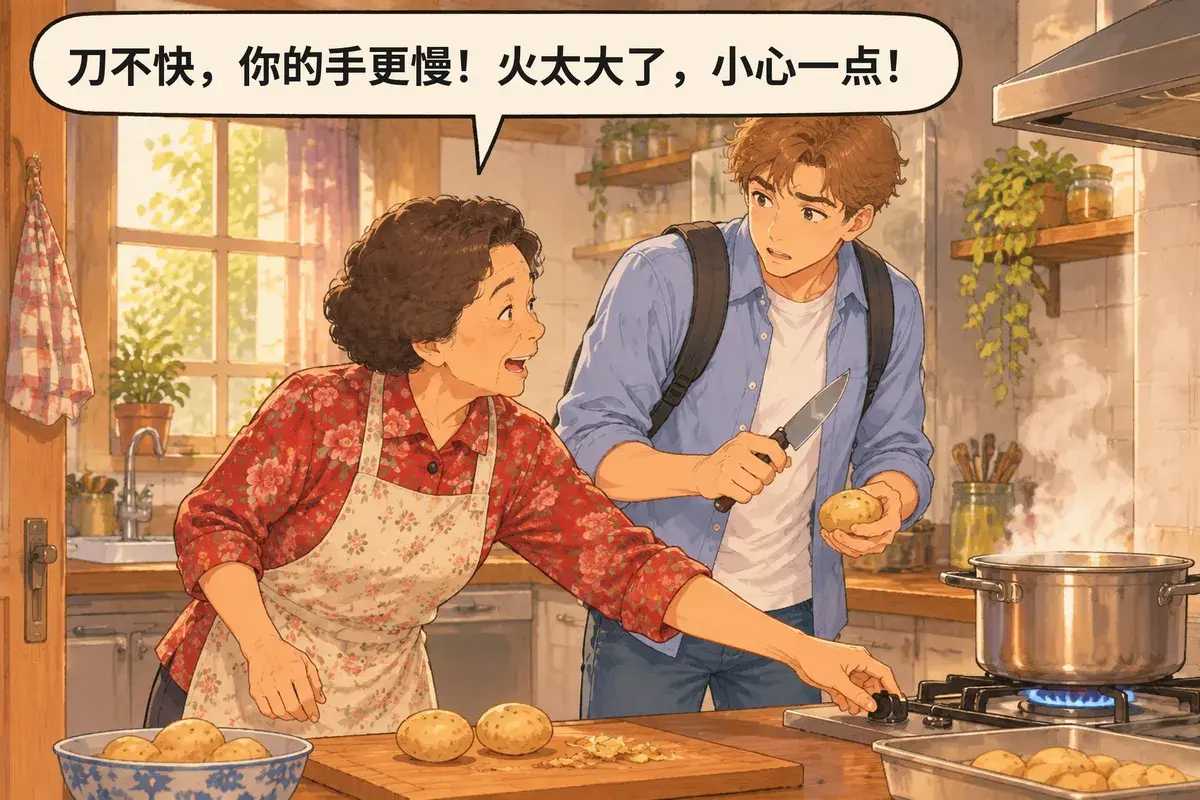
这把刀不快。
This knife isn't sharp.
- 王阿姨
刀不快,你的手更慢!火太大了,小心一点!
The knife isn't sharp, and your hands are even slower! The heat is too high, be careful!
- 伊利亚
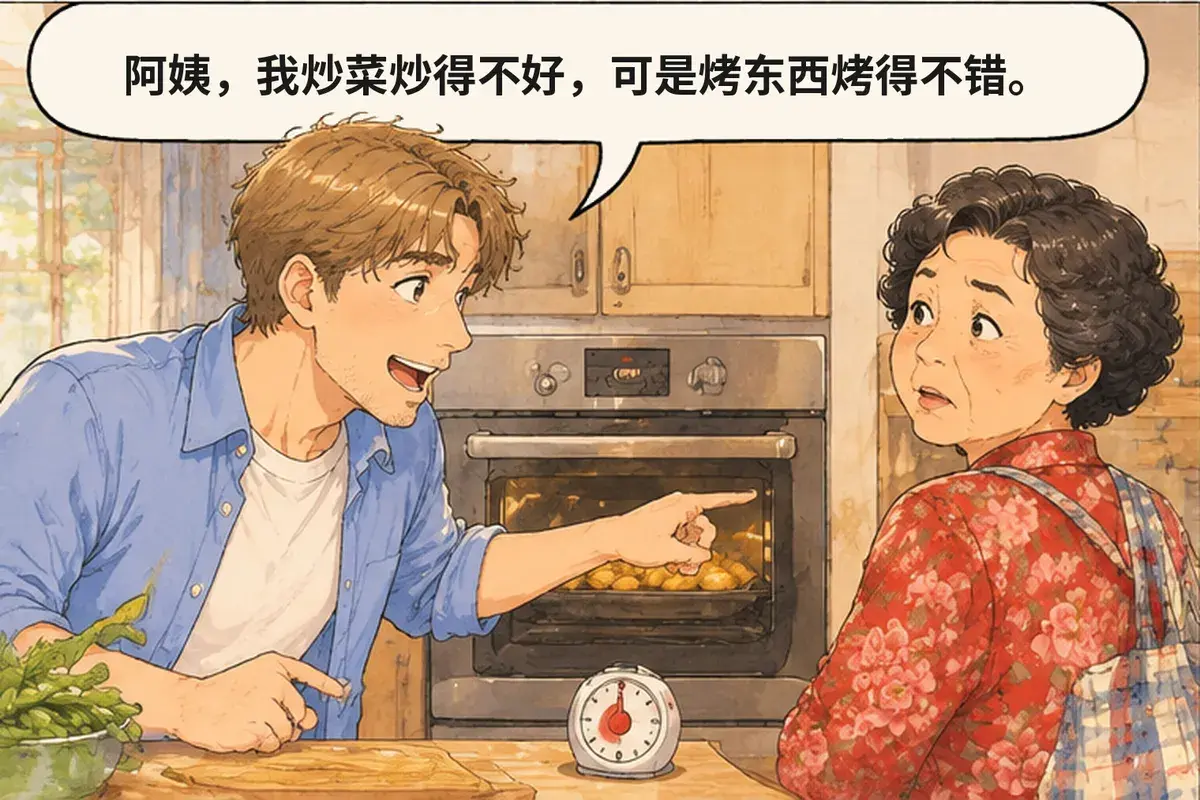
阿姨,我炒菜炒得不好,可是烤东西烤得不错。
Auntie, I'm not good at stir-frying, but I'm pretty good at baking.

- 晓雨
王阿姨做得比你快多了。你在她面前做饭,不怕吗?
Auntie Wang cooks much faster than you. Aren't you scared to cook in front of her?

- 伊利亚
我就想请大家吃一顿好的嘛。
I just want to treat everyone to a good meal!
- 王阿姨
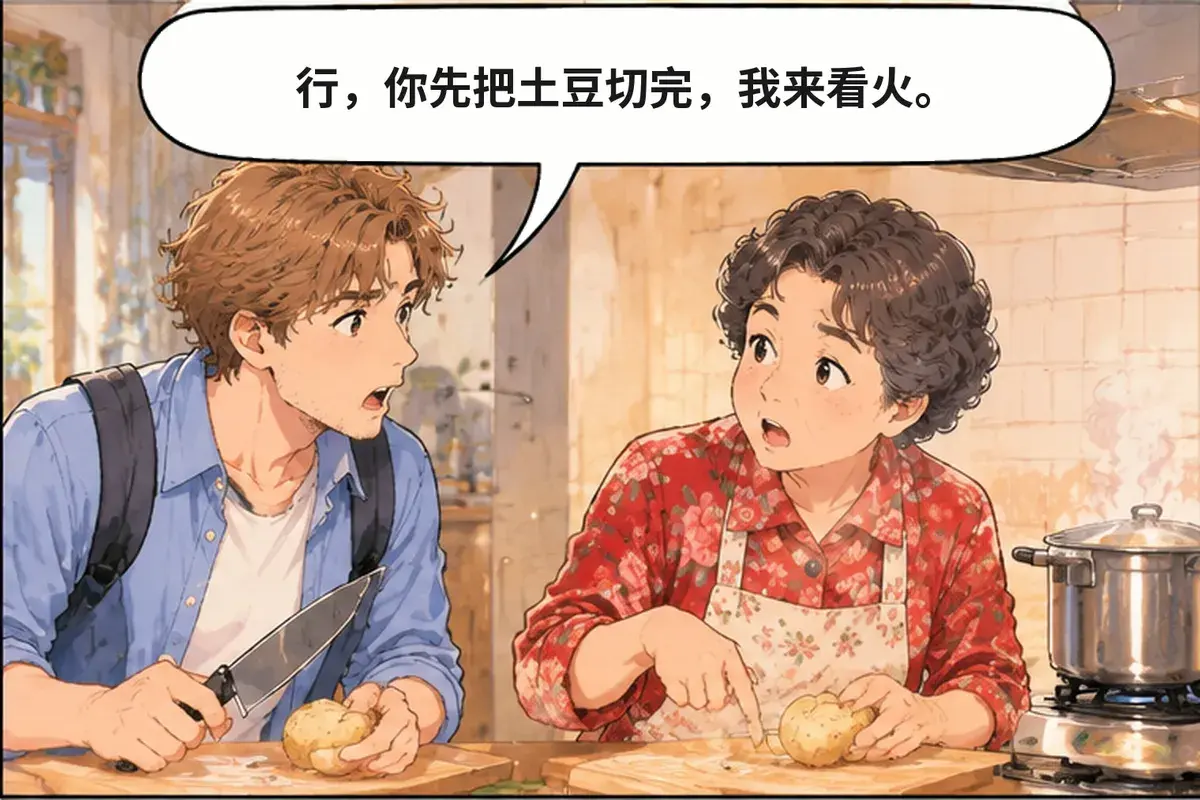
行,你先把土豆切完,我来看火。
OK, finish cutting the potatoes first, and I'll watch the heat.

- 伊利亚
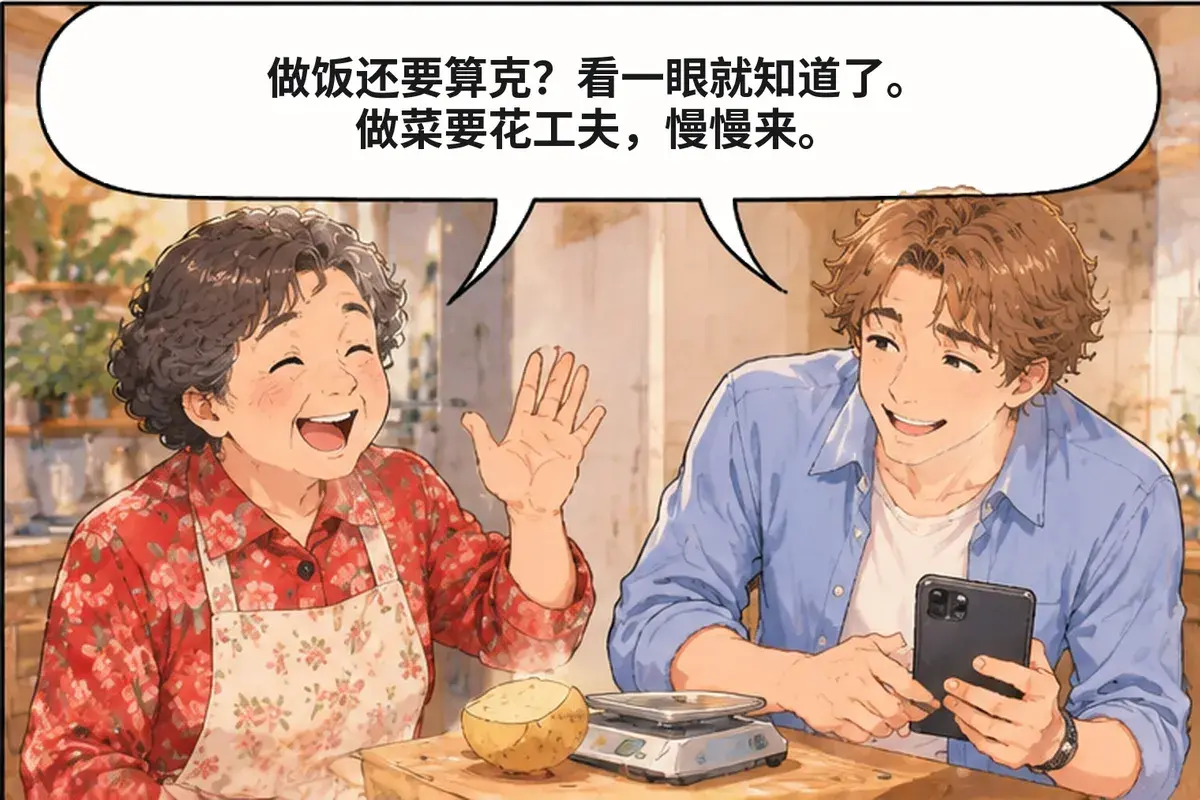
手机上写着:土豆五百克,鸡蛋两个……
My phone says: potatoes, five hundred grams, eggs, two...
- 王阿姨
做饭还要算克?看一眼就知道了。做菜要花工夫,慢慢来。
You have to count grams to cook? One look and you know. Cooking takes time, take it slow.
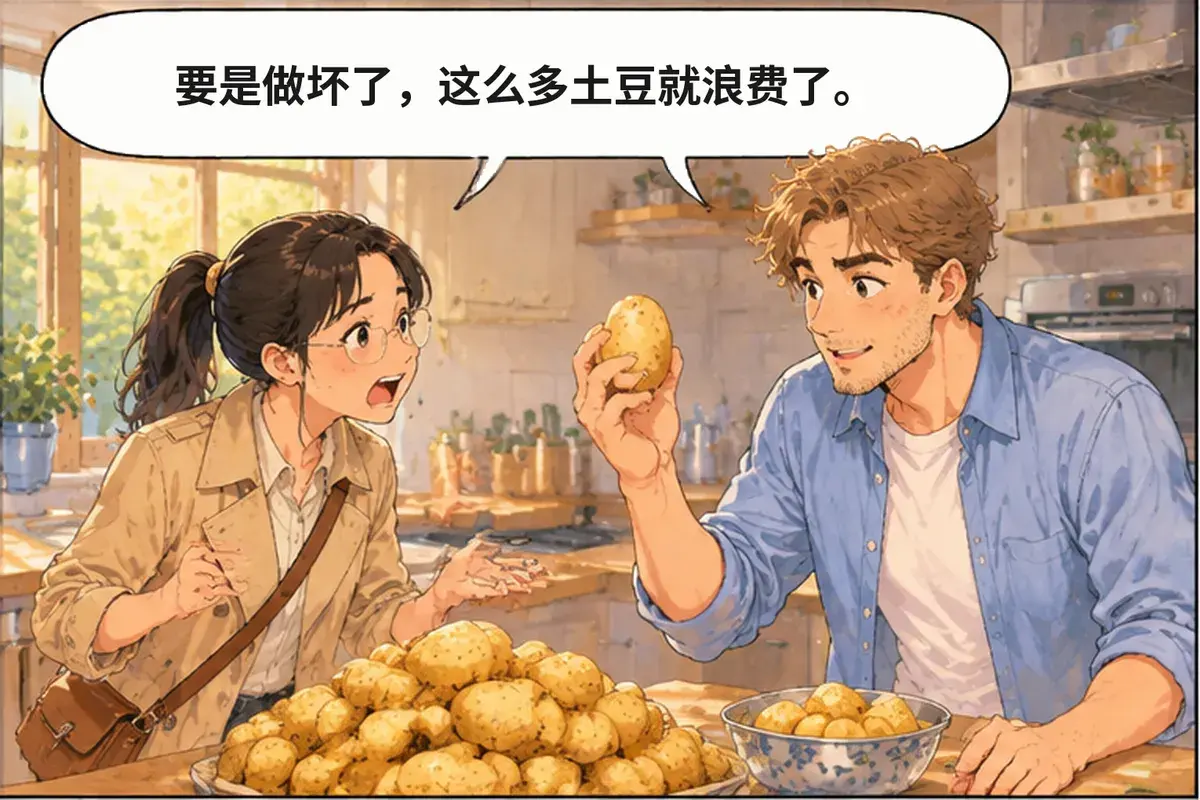
- 晓雨
要是做坏了,这么多土豆就浪费了。
If you ruin it, all these potatoes will go to waste.
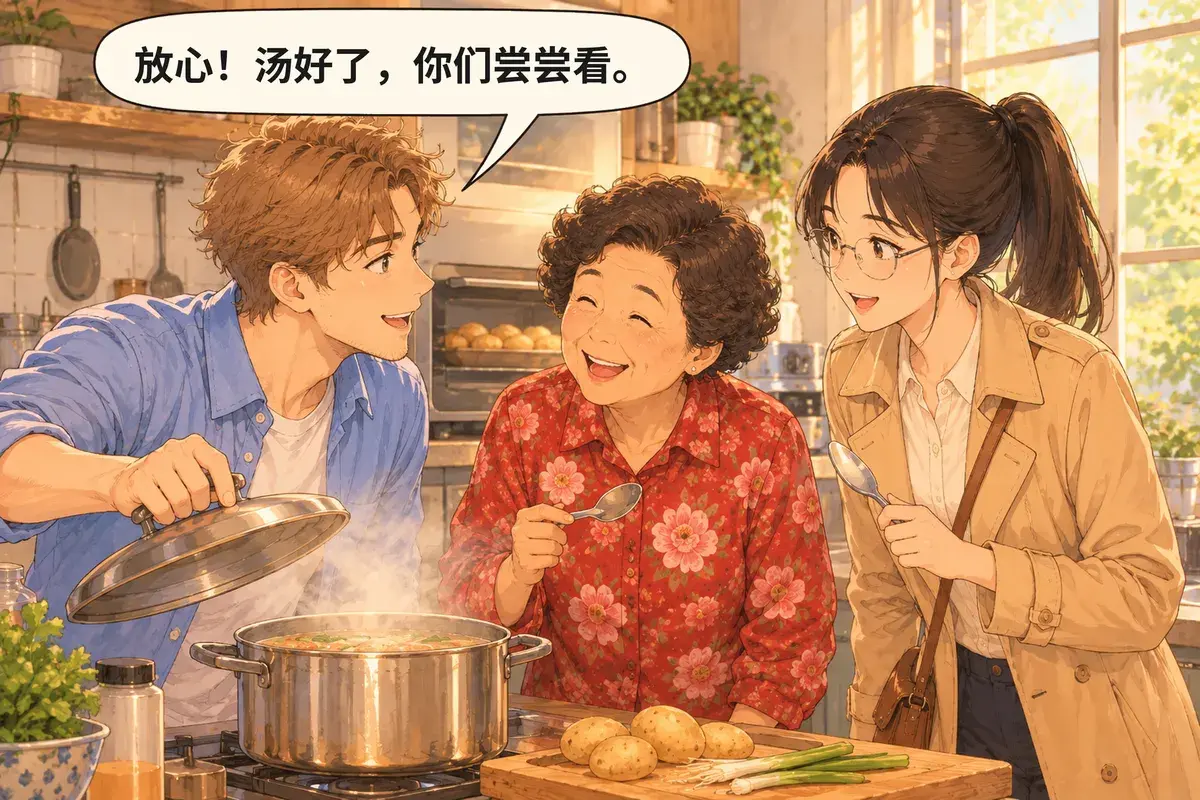
- 伊利亚
放心!汤好了,你们尝尝看。
Don't worry! The soup is ready, give it a try. (to several people)
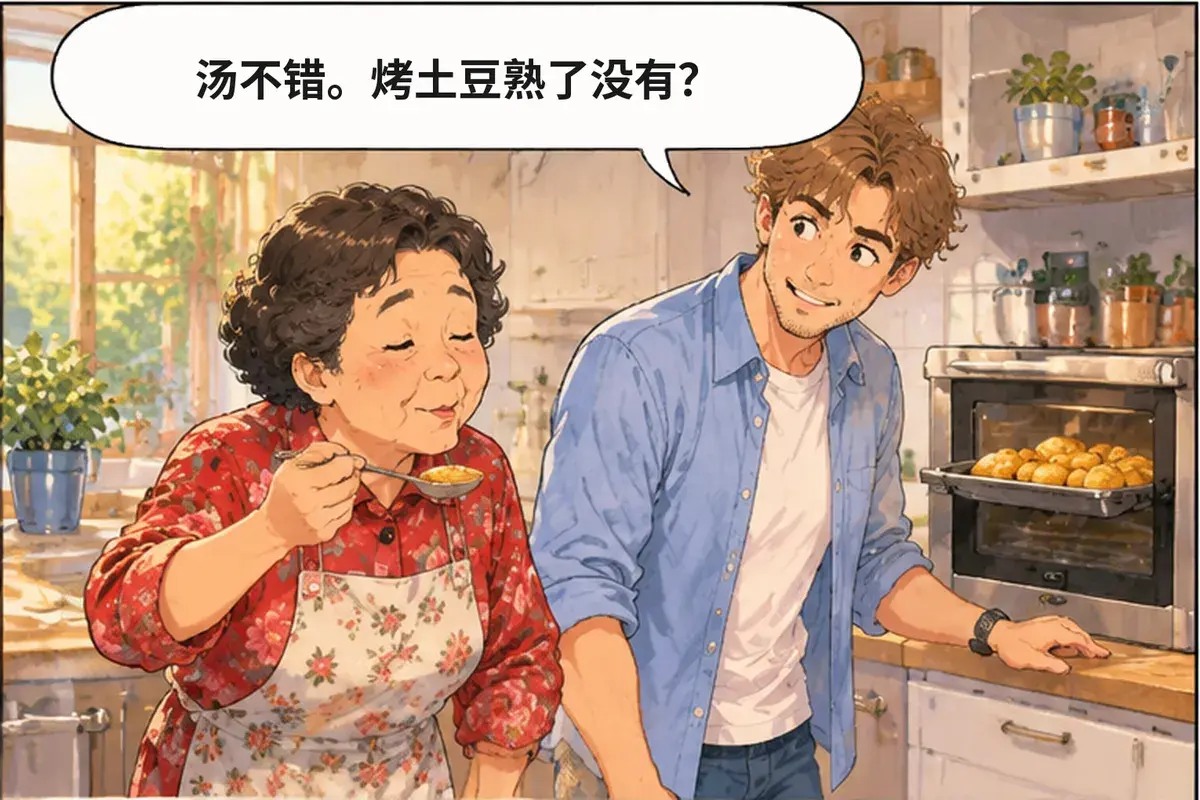
- 王阿姨
汤不错。烤土豆熟了没有?
The soup is good. Are the baked potatoes done yet?
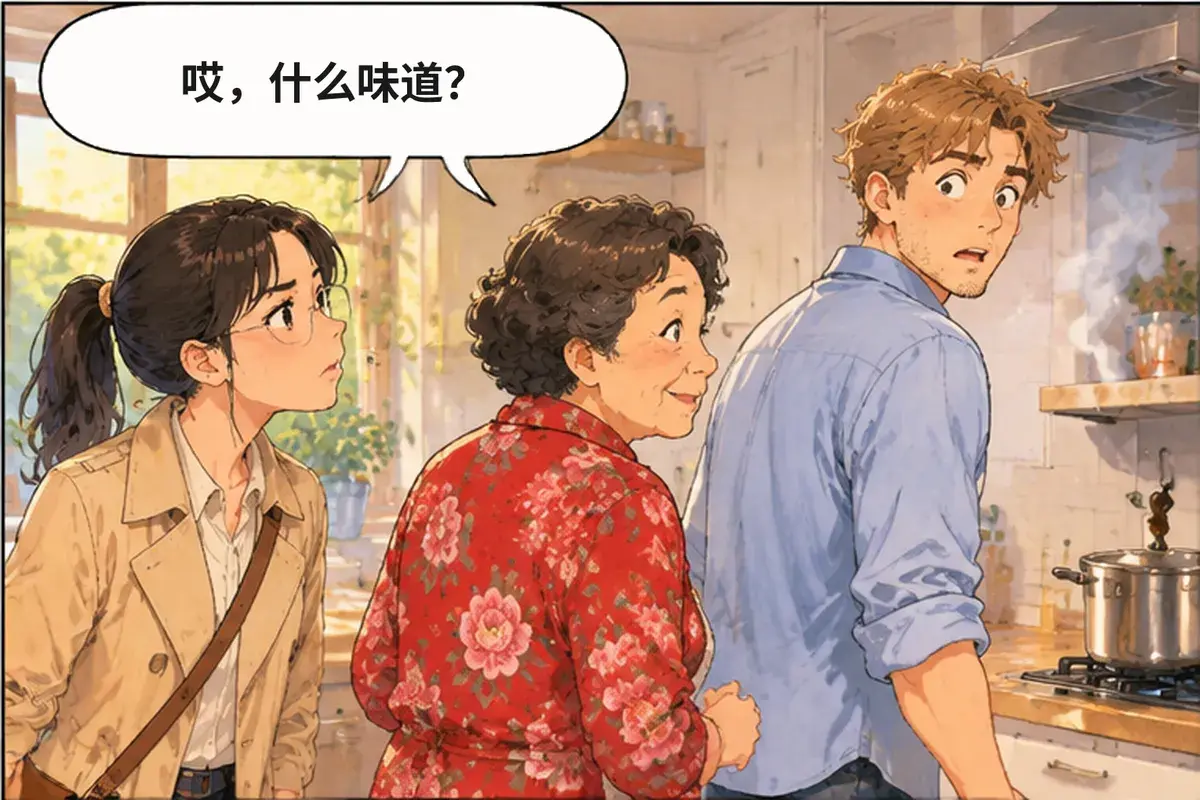
- 晓雨
哎,什么味道?
Hey, what's that smell?

- 伊利亚
啊!土豆被我烤糊了!没事,没事,这是我们那里的做法!
Ah! I burned the potatoes! It's fine, it's fine, that's how we make it back home!
Grammar for this text
- 我 做 饭 做 了 三 个 小时 了 — the verb
做is repeated: first with its object饭, then again with了and the length of time. The last了means "three hours so far, and still cooking". - 你 切 菜 切 得 太 慢 了 — the same double verb, but after
得comes a judgment. The time and the judgment attach to the verb, not to菜, so the verb is said twice. - 王 阿姨 做 得 比 你 快 多 了 — comparing two people:
比 你comes before the adjective, and多 了means "much". - 这 把 刀 不 快 — for a knife,
快means "sharp", so不 快is "dull". Auntie Wang answers with a pun: 刀 不 快, 你 的 手 更 慢 — "the knife isn't fast (it's dull), and your hands are even slower". - 我 都 手忙脚乱 了 —
手忙脚乱(shǒumáng-jiǎoluàn) is a casual idiom: "hands busy, feet tangled", meaning "I'm overwhelmed".都 … 了means "already completely". - 做 饭 还 要 算 克? — Ilya cooks by a recipe in grams, Auntie Wang by eye. Grams are used in recipes and on packaging; at the market weight is counted in
斤(jīn), half a kilo. - 尝尝 看 (chángchang kàn) — "give it a try": the doubled verb softens the request, and
看means "see how it tastes". - 熟 了 没有? — "is it done or not?": for food,
熟means "cooked through". - 土豆 被 我 烤 糊 了 —
被with the doer我: "the potatoes got burned by me", used for something unpleasant. After the verb comes糊 了: baked until burnt.
Words and grammar of the unit: Compare in detail.
Learn the words from the texts with flashcards
In the app, you can tap any word in a text to see its translation, forms and examples, and new words stick with flashcards. 15 minutes a day.
Start for freeEverything is open for free. No card needed to sign up.