
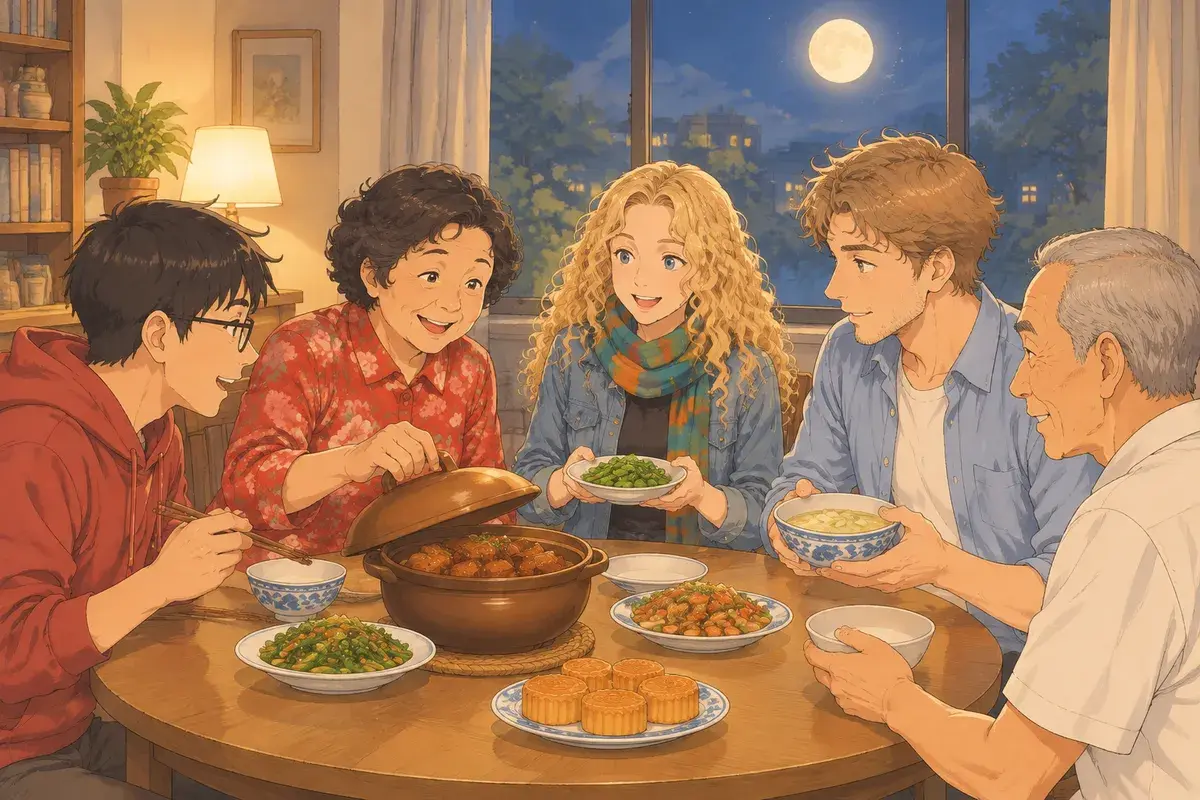
Chinese dialogue with translation · B1 · 14 lines
王阿姨做得比我好吃 Auntie Wang's cooking tastes better than mine
Comic · 14 panels
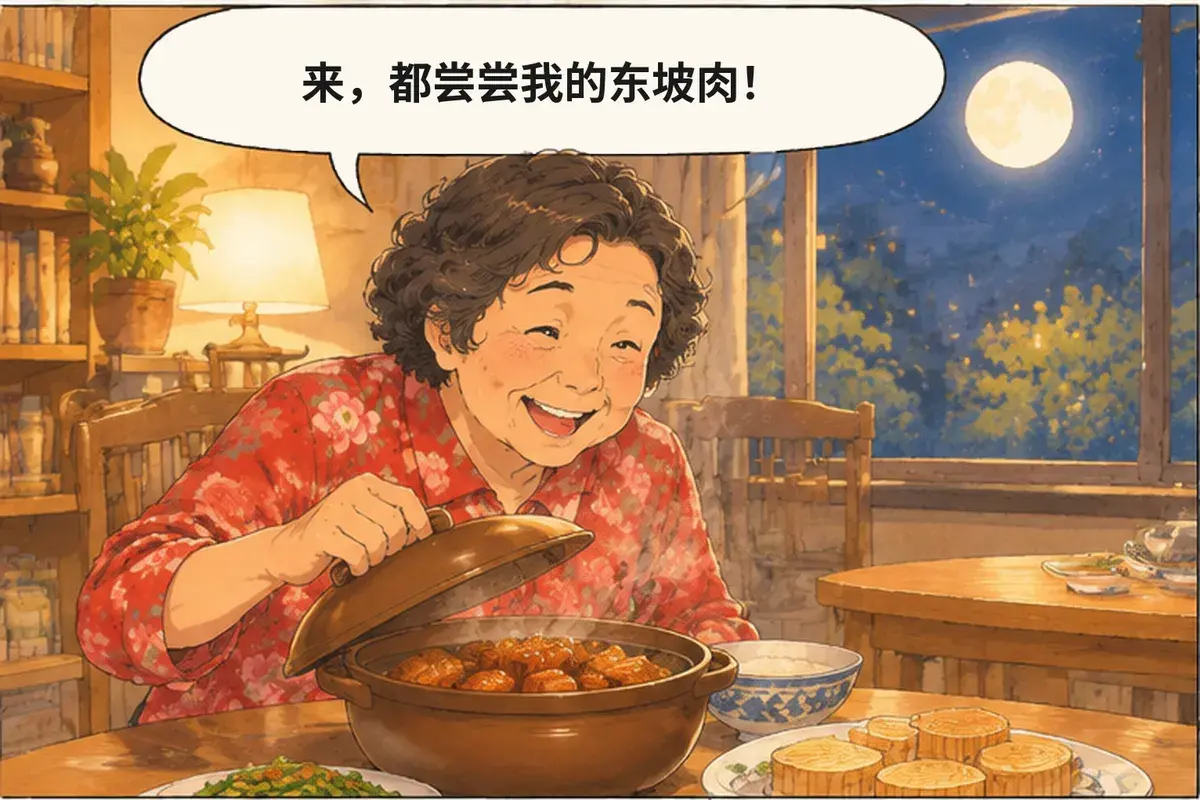
- 王阿姨
来,都尝尝我的东坡肉!
Come on, everyone try my Dongpo pork!
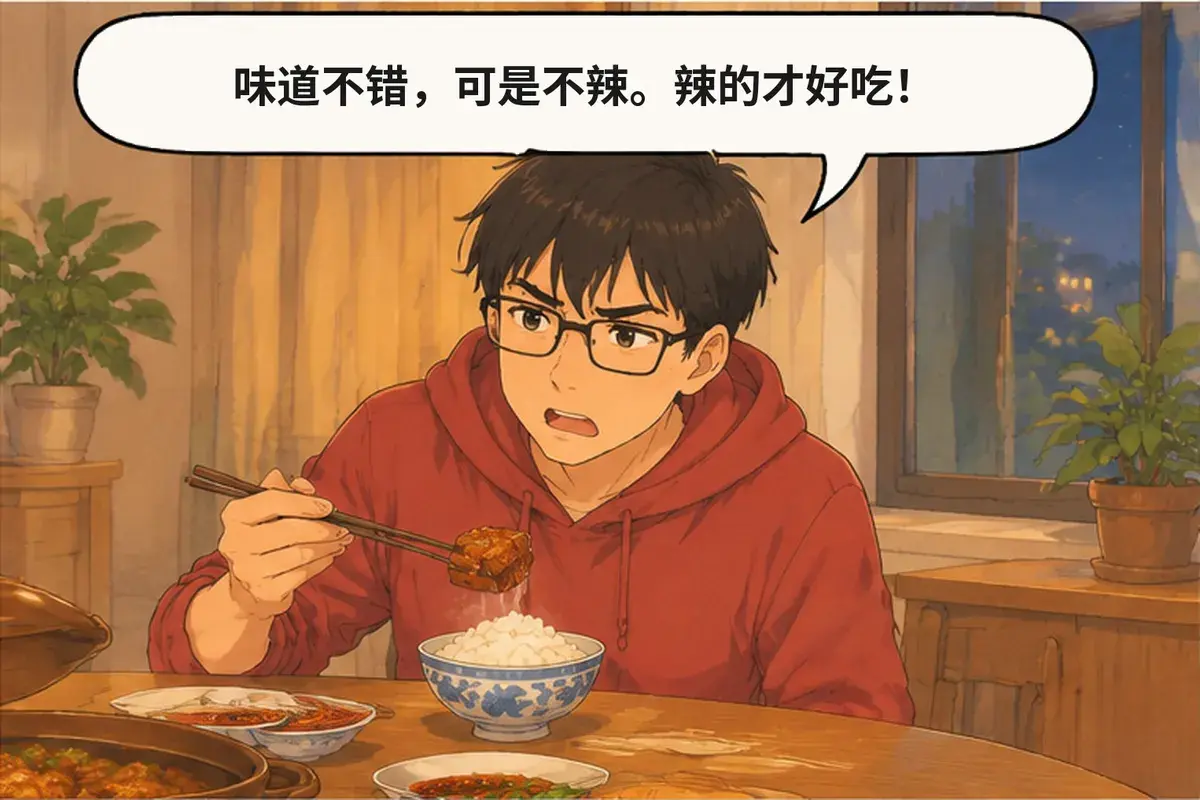
- 张磊
味道不错,可是不辣。辣的才好吃!
It tastes good, but it's not spicy. Spicy food is the only good food!
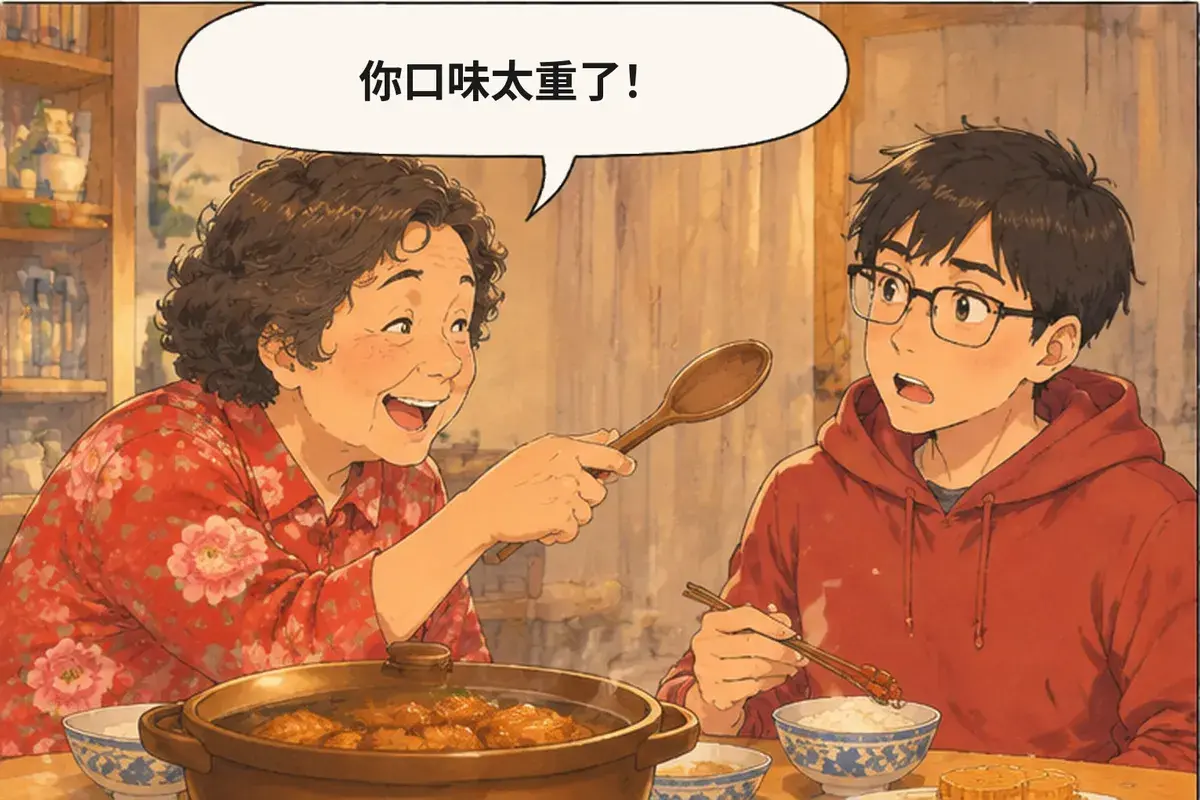
- 王阿姨
你口味太重了!
You like your food way too strong!
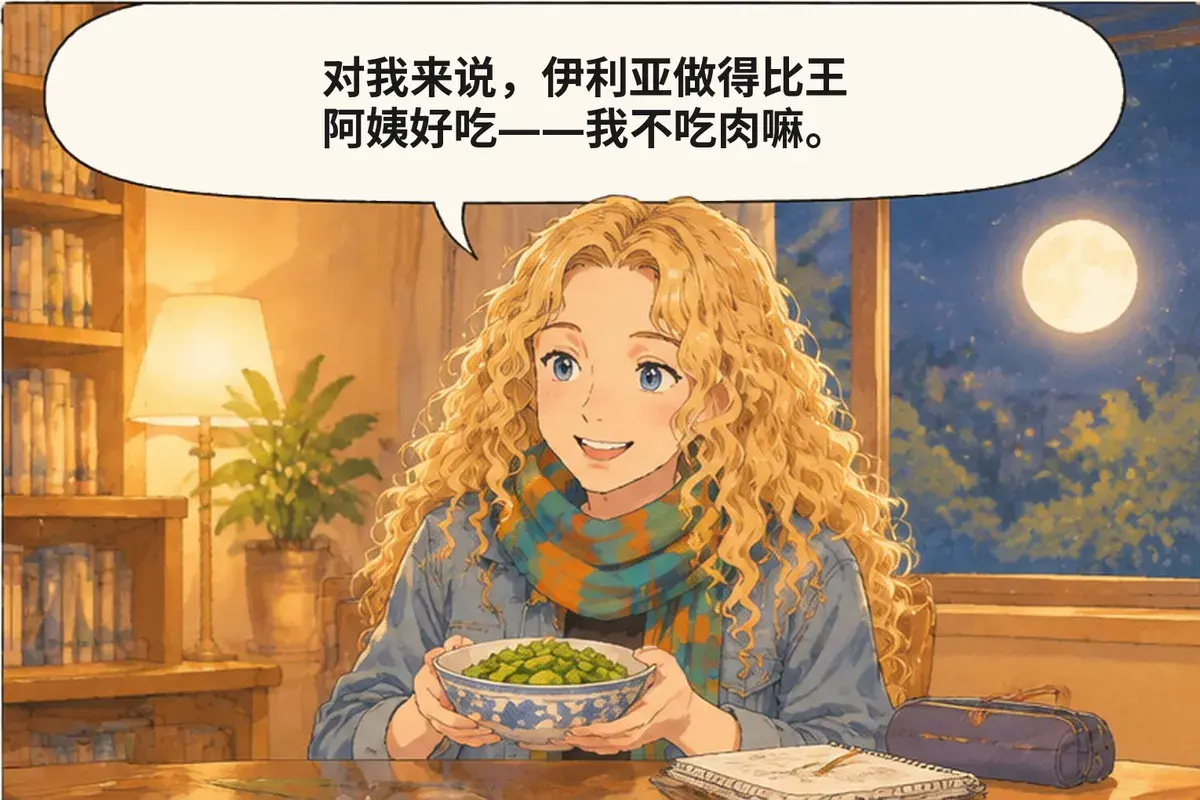
- 萨拉
对我来说,伊利亚做得比王阿姨好吃——我不吃肉嘛。
For me, Ilya's cooking is better than Auntie Wang's — I don't eat meat.
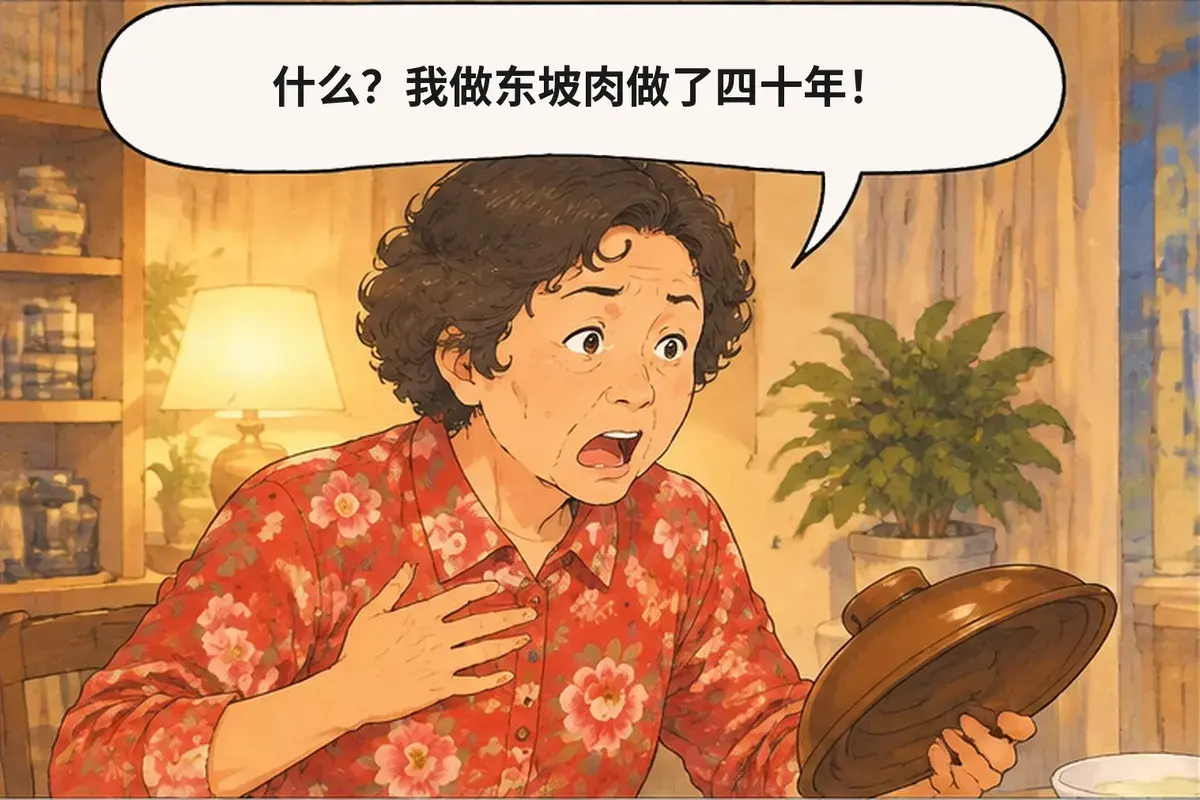
- 王阿姨
什么?我做东坡肉做了四十年!
What? I've been making Dongpo pork for forty years!
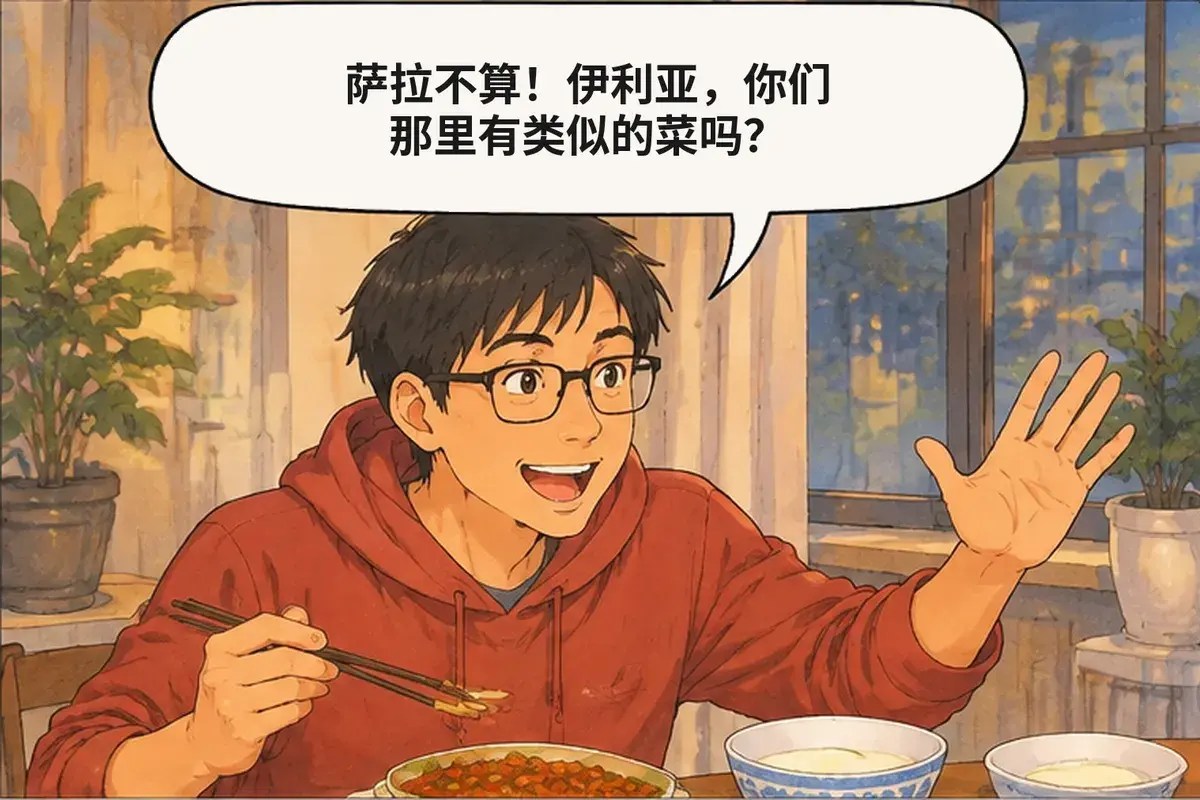
- 张磊
萨拉不算!伊利亚,你们那里有类似的菜吗?
Sara doesn't count! Ilya, do you guys have a similar dish back where you're from?

- 伊利亚
没有。我们那里常见的是这个白菜汤。看起来一般般,和东坡肉相比,只能算家常便饭。
No. What's common where we're from is this cabbage soup. It looks so-so, and compared with Dongpo pork, it's only everyday home cooking.
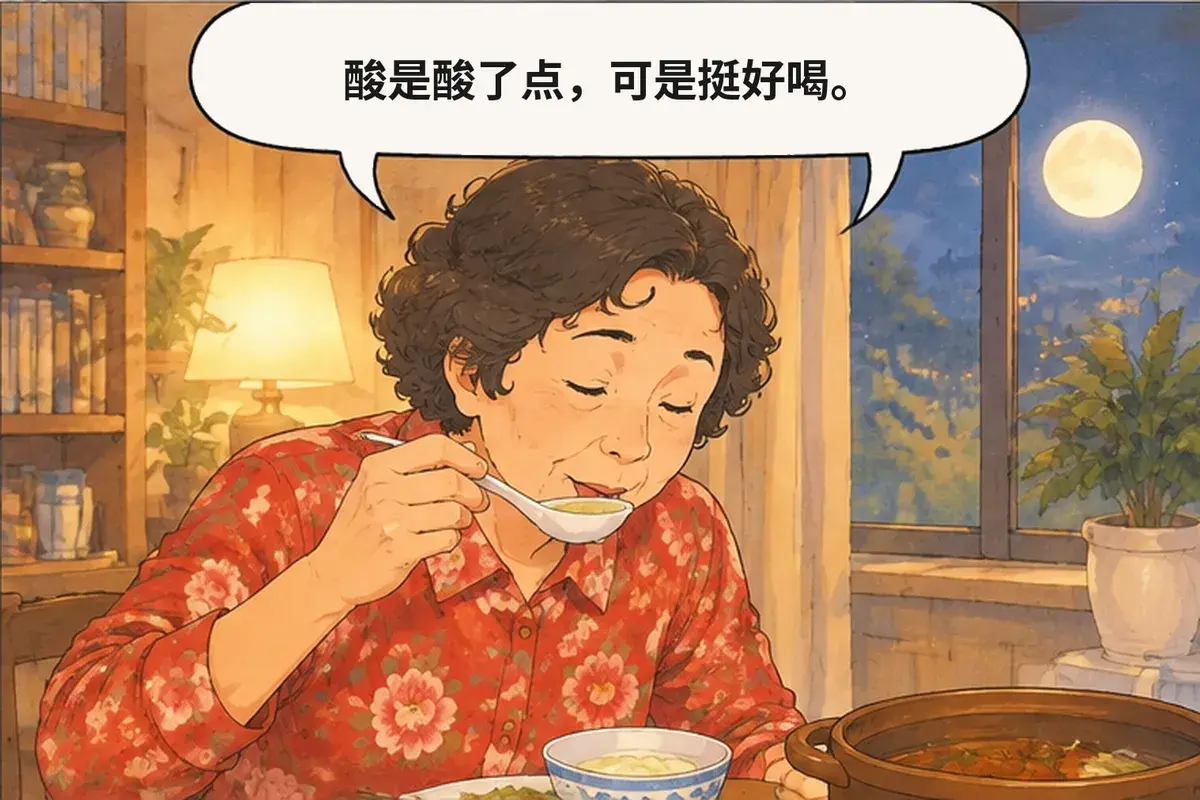
- 王阿姨
酸是酸了点,可是挺好喝。
It's a bit sour, sure, but it's pretty good.
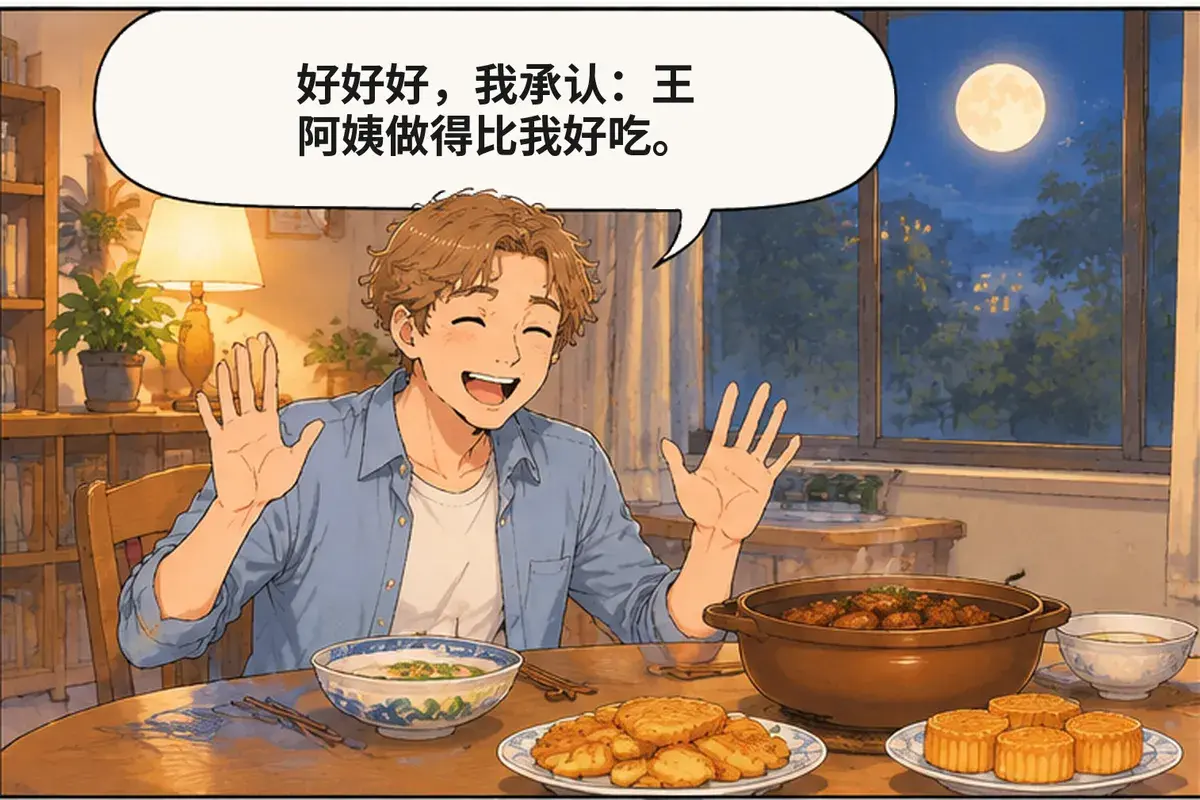
- 伊利亚
好好好,我承认:王阿姨做得比我好吃。
OK, OK, OK, I admit it: Auntie Wang's cooking is better than mine.
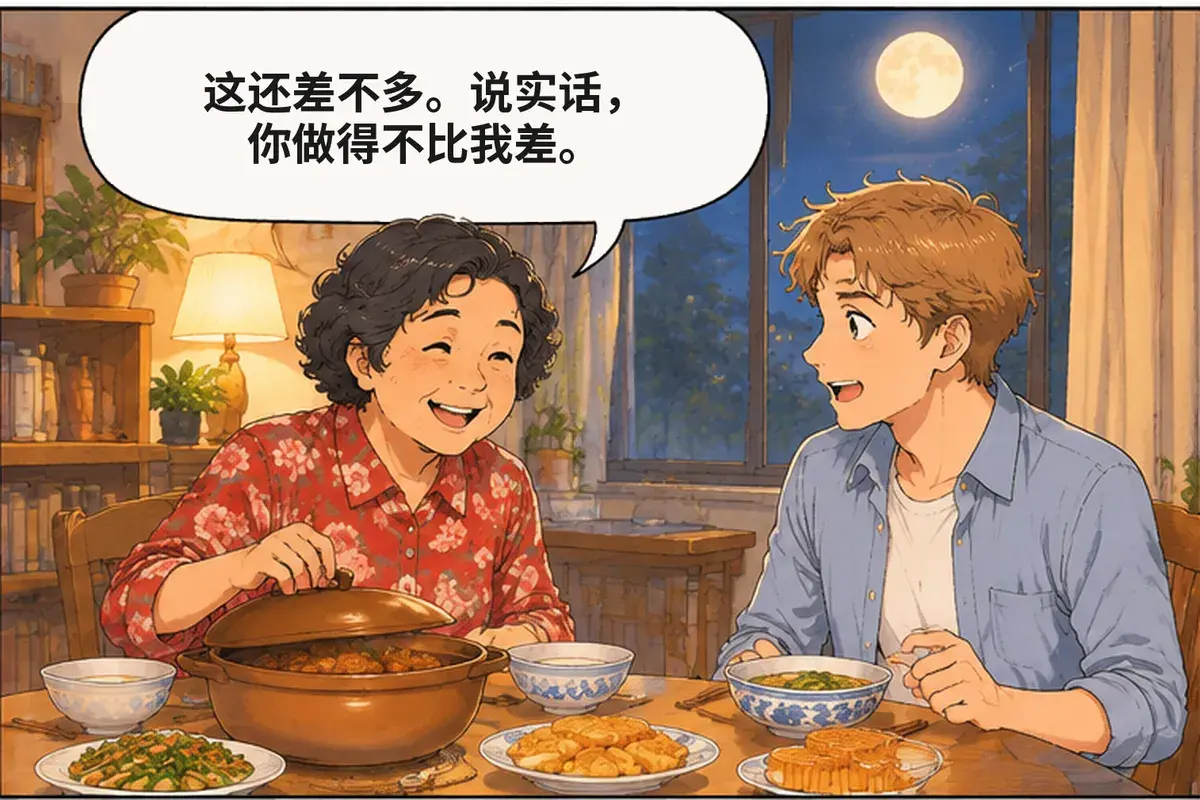
- 王阿姨
这还差不多。说实话,你做得不比我差。
That's more like it. Honestly, you cook no worse than I do.
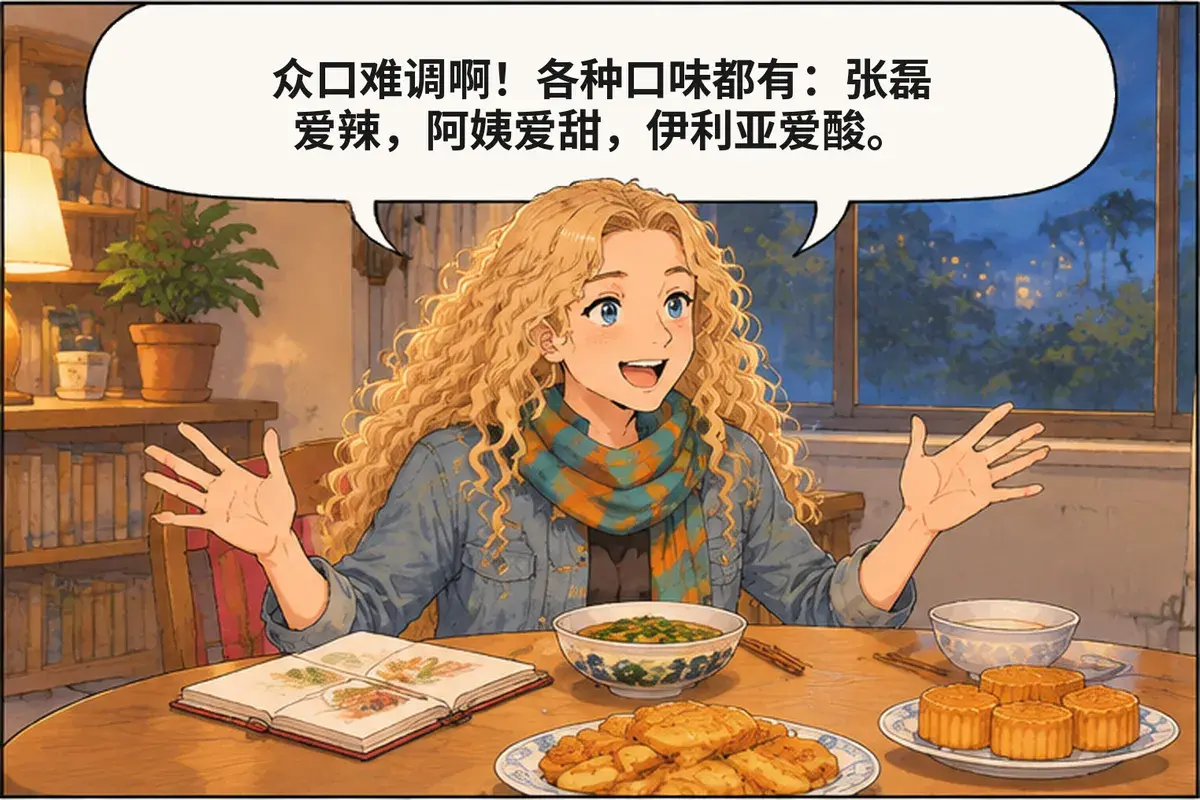
- 萨拉
众口难调啊!各种口味都有:张磊爱辣,阿姨爱甜,伊利亚爱酸。
You can't please everyone! There are all kinds of tastes: Zhang Lei loves spicy, Auntie loves sweet, Ilya loves sour.
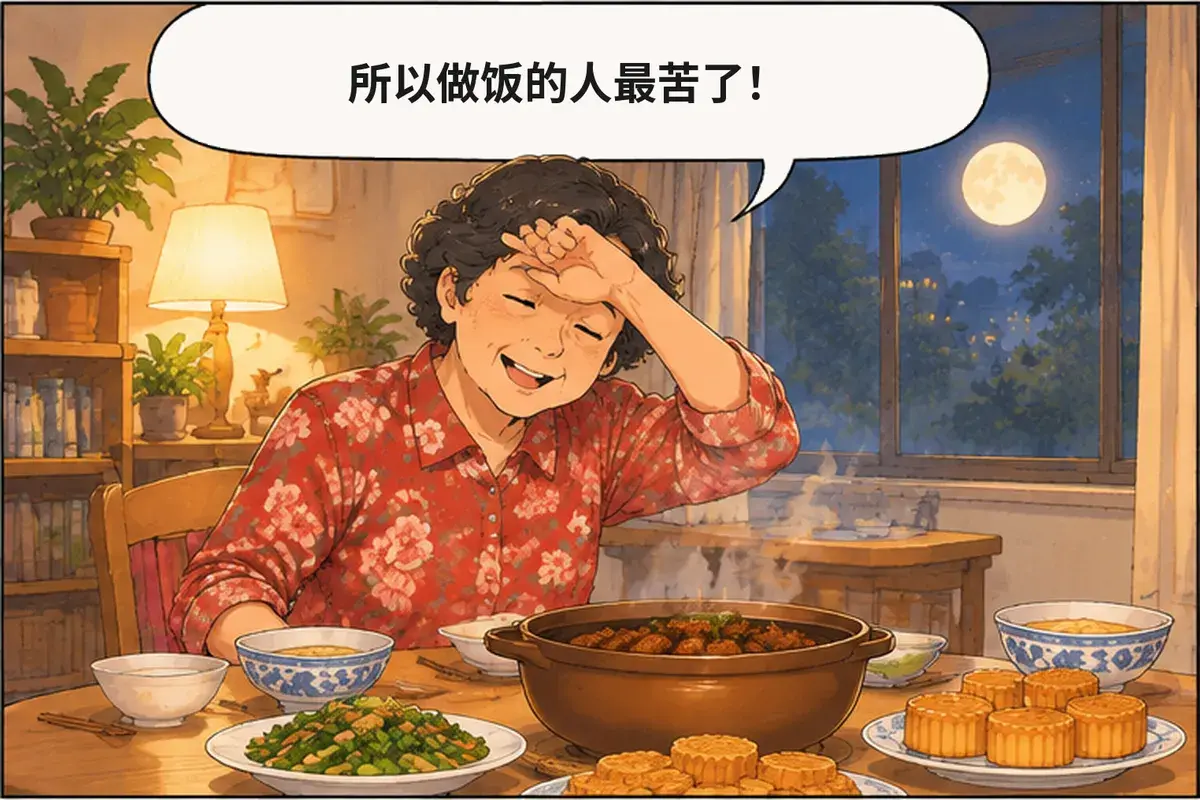
- 王阿姨
所以做饭的人最苦了!
That's why the one who cooks has it hardest!
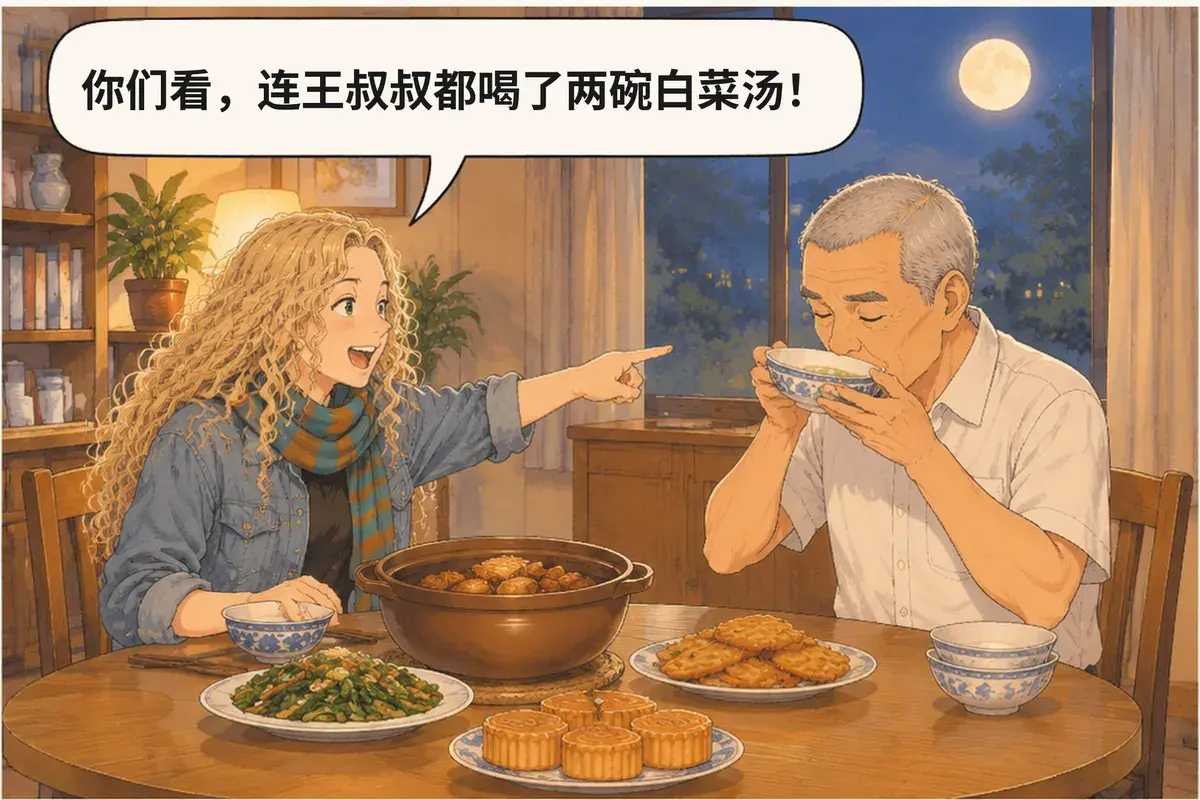
- 萨拉
你们看,连王叔叔都喝了两碗白菜汤!
Look, everyone, even Uncle Wang had two bowls of cabbage soup!
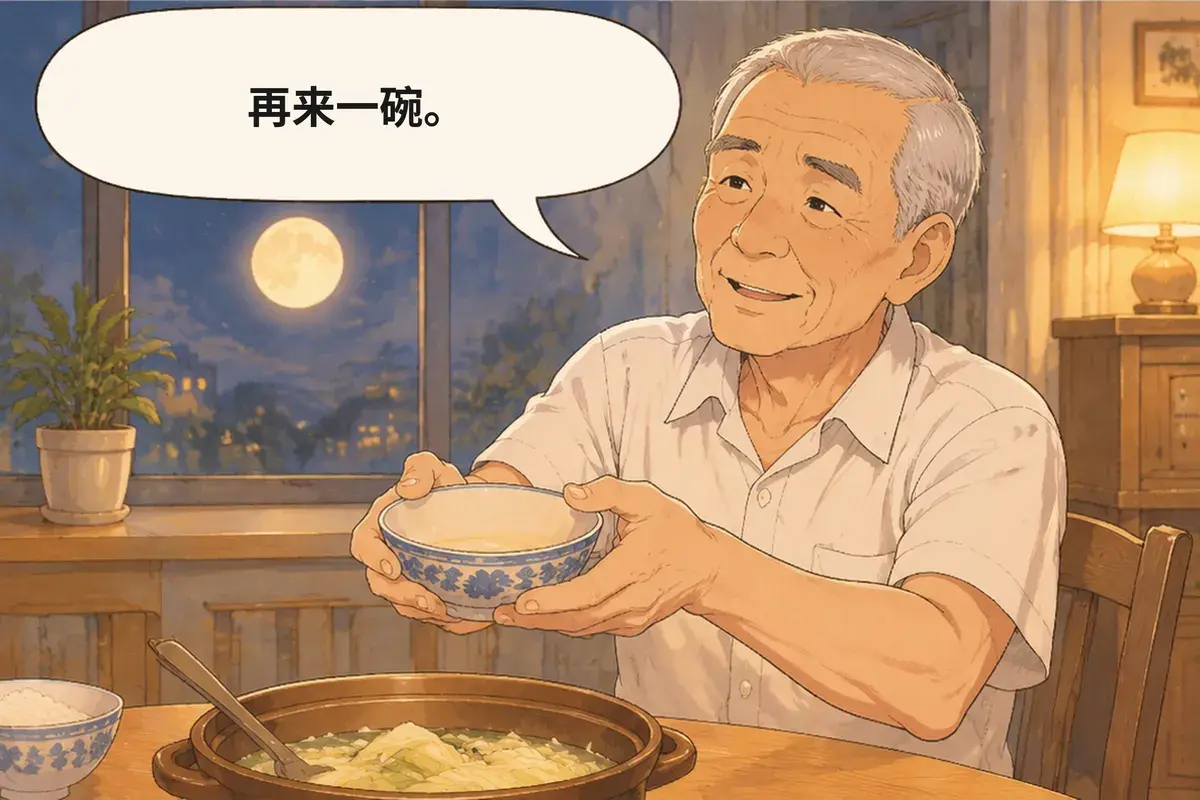
- 王叔叔
再来一碗。
Another bowl.
Grammar for this text
- 王 阿姨 做 得 比 我 好吃 — the key sentence of the unit:
做 得is "cooks (to such a degree)",比 我is "than me", and好吃is the degree itself. Sara turns it into a joke: 伊利亚 做 得 比 王 阿姨 好吃 — she doesn't eat meat, so she never got any Dongpo pork. - 王 阿姨 比 我 做 得 好吃 — the same meaning, with
比 我placed before the verb. - 我 做 东坡肉 做 了 四十 年 — the repeated verb: "I've been making Dongpo pork for forty years".
- 你 做 得 不 比 我 差 —
不 比means "you're no worse than me". It's a gentle pushback, not "worse than me". - 这 还 差不多 — "that's more like it": said when the other person finally says the right thing.
- 酸 是 酸 了 点, 可是 挺 好喝 — the pattern
X 是 X, 可是 …: "sour, sure, but…". First you concede, then you praise. - 萨拉 不 算 — here
算means "to count": "Sara doesn't count". 只能 算 家常便饭 — "can only be counted as everyday home cooking". 和 东坡肉 相比 — the frame和 … 相比: "compared with Dongpo pork". - 一般般 — casual "so-so". 家常便饭 — "everyday home cooking", and also "an everyday thing". 众口难调 — literally "many mouths, hard to please": you can't please everyone.
- 连 王 叔叔 都 喝 了 两 碗 白菜 汤 —
连 … 都means "even": even quiet Uncle Wang. 再 来 一 碗 — his only line all evening, and the best praise a cook can get.碗is a bowl: soup in China is eaten from bowls.
Words and grammar of the unit: Compare in detail.
Learn the words from the texts with flashcards
In the app, you can tap any word in a text to see its translation, forms and examples, and new words stick with flashcards. 15 minutes a day.
Start for freeEverything is open for free. No card needed to sign up.