

Chinese dialogue with translation · B1 · 16 lines
太口语了 Too colloquial
Comic · 11 panels
- 伊利亚
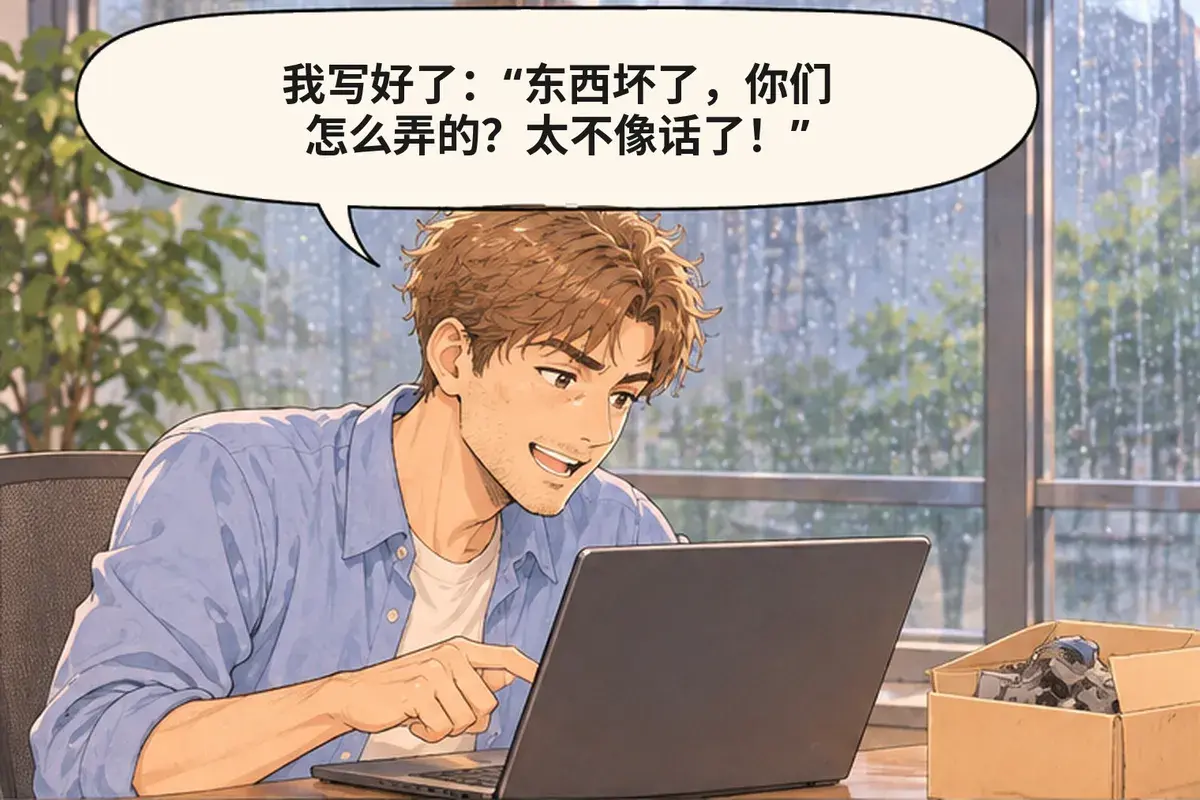
我写好了:“东西坏了,你们怎么弄的?太不像话了!”
I wrote it: "The stuff is broken, how did you let this happen? This is outrageous!" (to several people)

- 晓雨
太口语了!要写:“产品在运输中被损坏。”
Too colloquial! You should write: "The products were damaged in transit."

- 伊利亚
为什么不写是谁弄的?
Why not write who did it?
- 晓雨
因为我们还不知道是谁的责任,这样写最好。
Because we don't know yet whose responsibility it is, so it's best to write it this way.

- 伊利亚
明白了。这封邮件的标题呢?
Got it. What about this email's subject line?
- 晓雨
标题要短:“零件损坏”,一看就明白。
The subject line should be short: "Damaged parts." You get it at a glance.
- 伊利亚
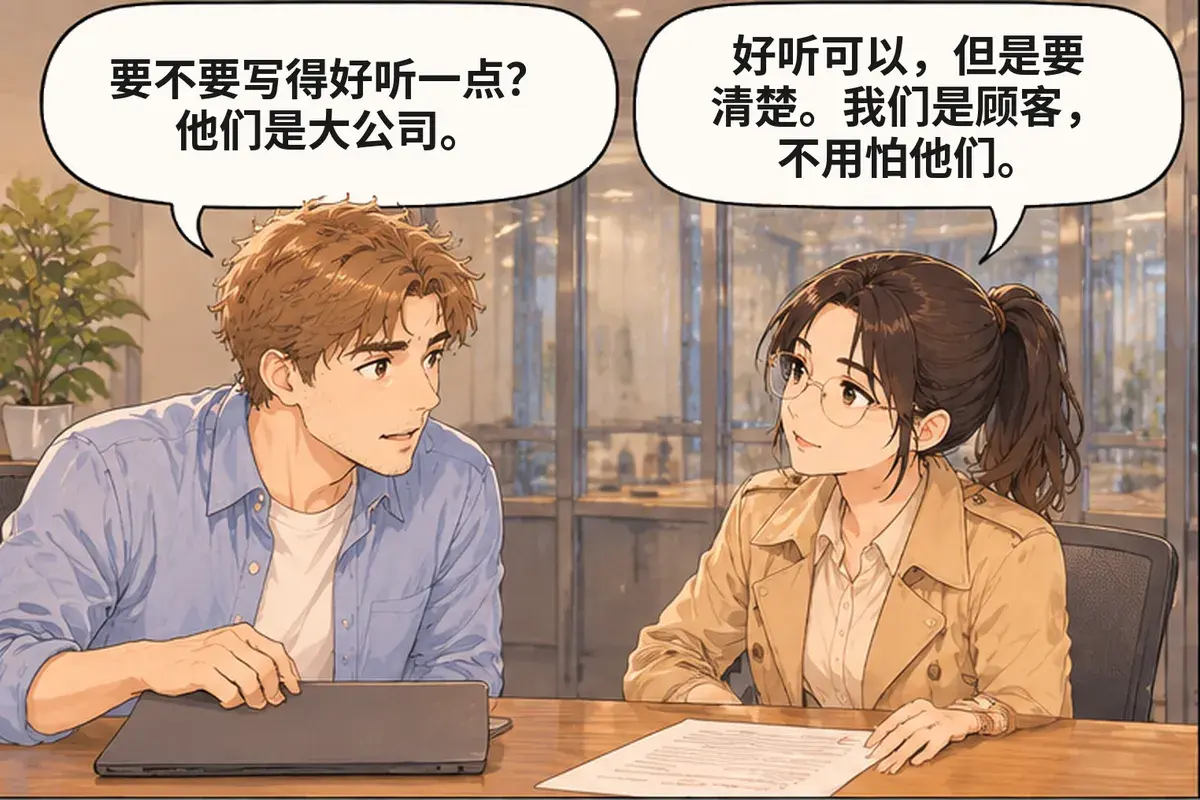
要不要写得好听一点?他们是大公司。
Should I make it sound nicer? They're a big company.
- 晓雨
好听可以,但是要清楚。我们是顾客,不用怕他们。
Nicer is fine, but it has to be clear. We're the customers, so we don't need to be afraid of them.
- 伊利亚
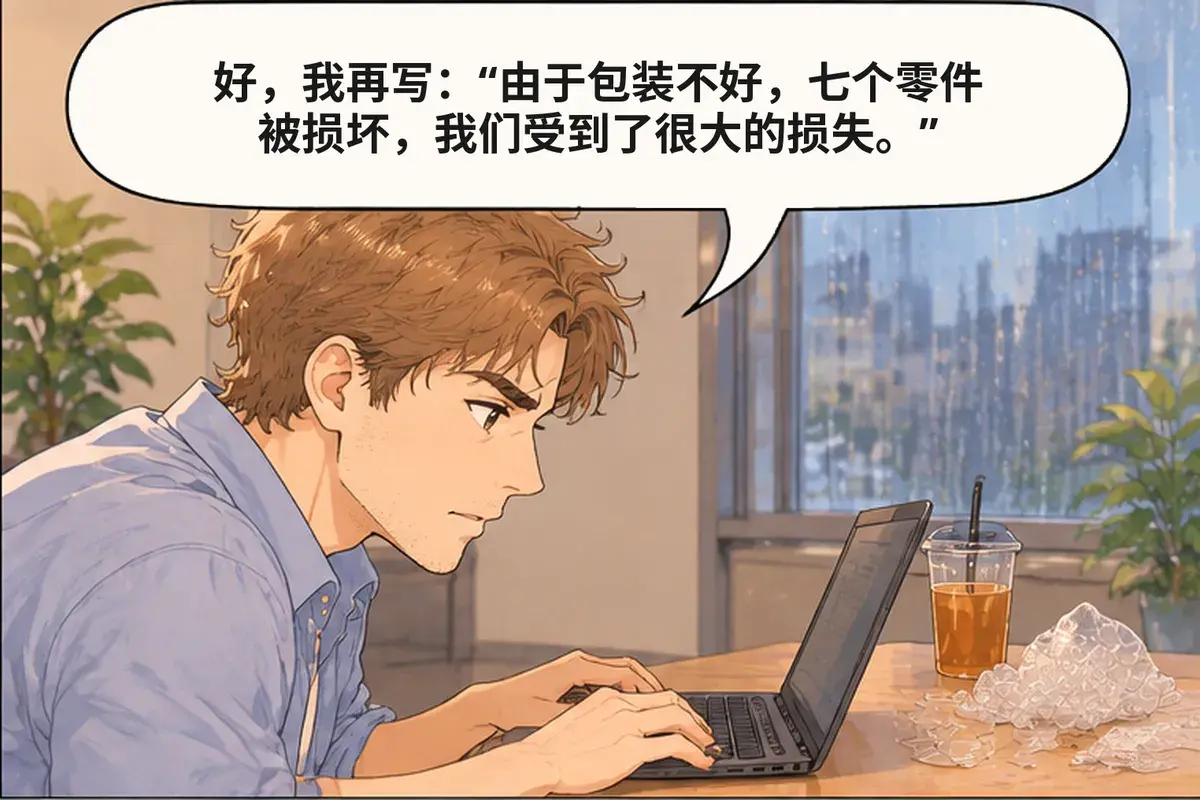
好,我再写:“由于包装不好,七个零件被损坏,我们受到了很大的损失。”
OK, I'll keep writing: "Because of poor packaging, seven parts were damaged, and we suffered a heavy loss."
- 晓雨
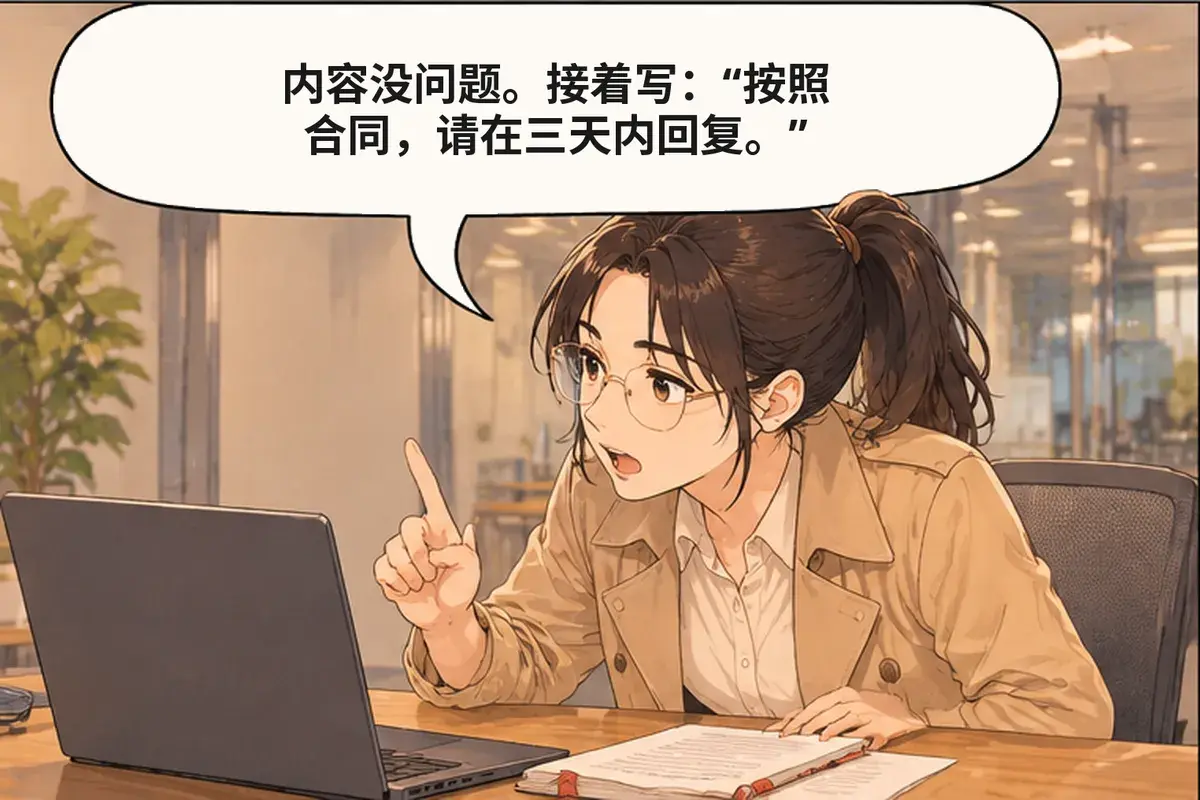
内容没问题。接着写:“按照合同,请在三天内回复。”
The content is fine. Keep going: "In accordance with the contract, please reply within three days."
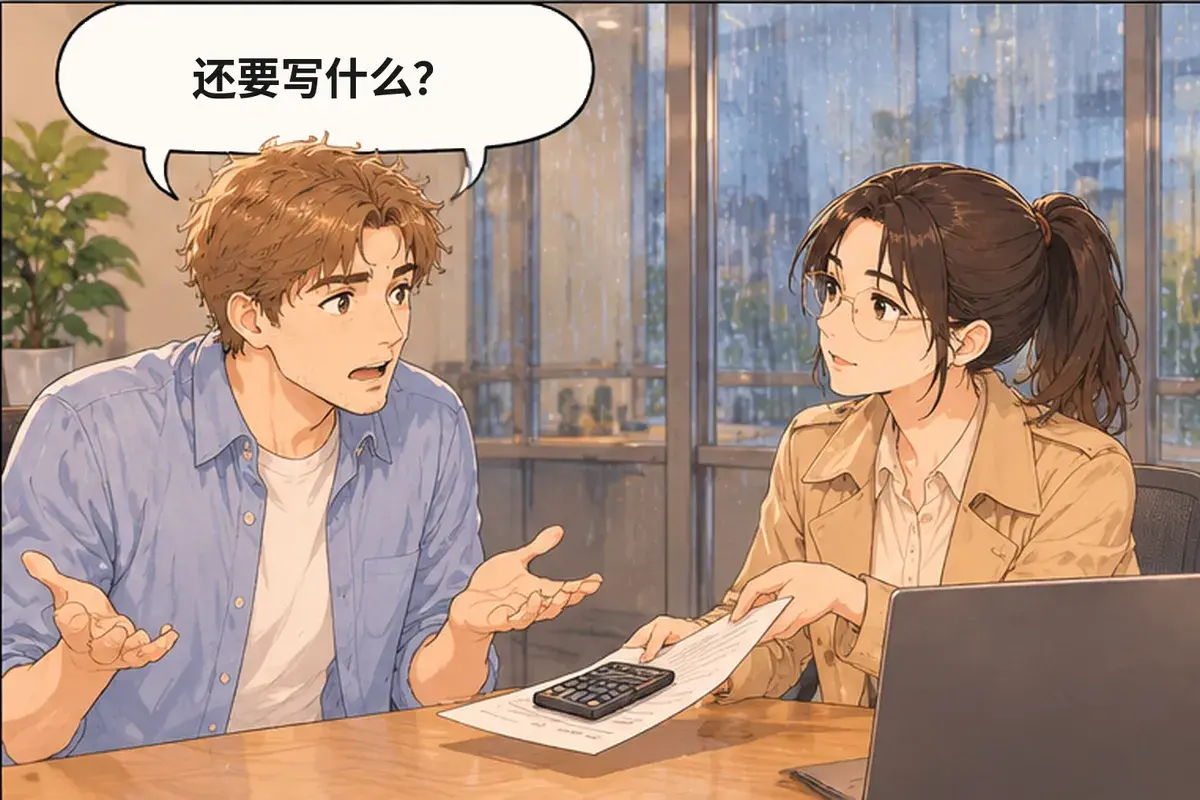
- 伊利亚
还要写什么?
What else should I write?
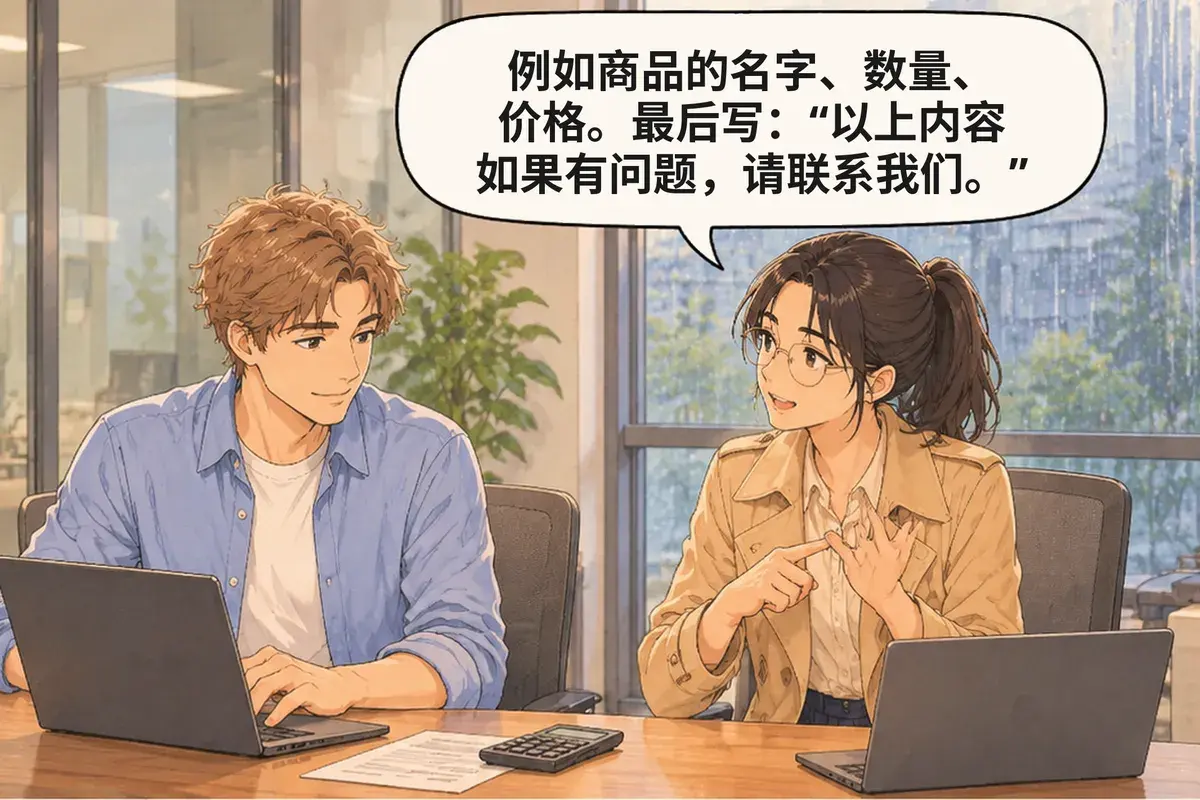
- 晓雨
例如商品的名字、数量、价格。最后写:“以上内容如果有问题,请联系我们。”
For example, the product's name, the quantity, the price. Finally: "If there are any problems with the above, please contact us."
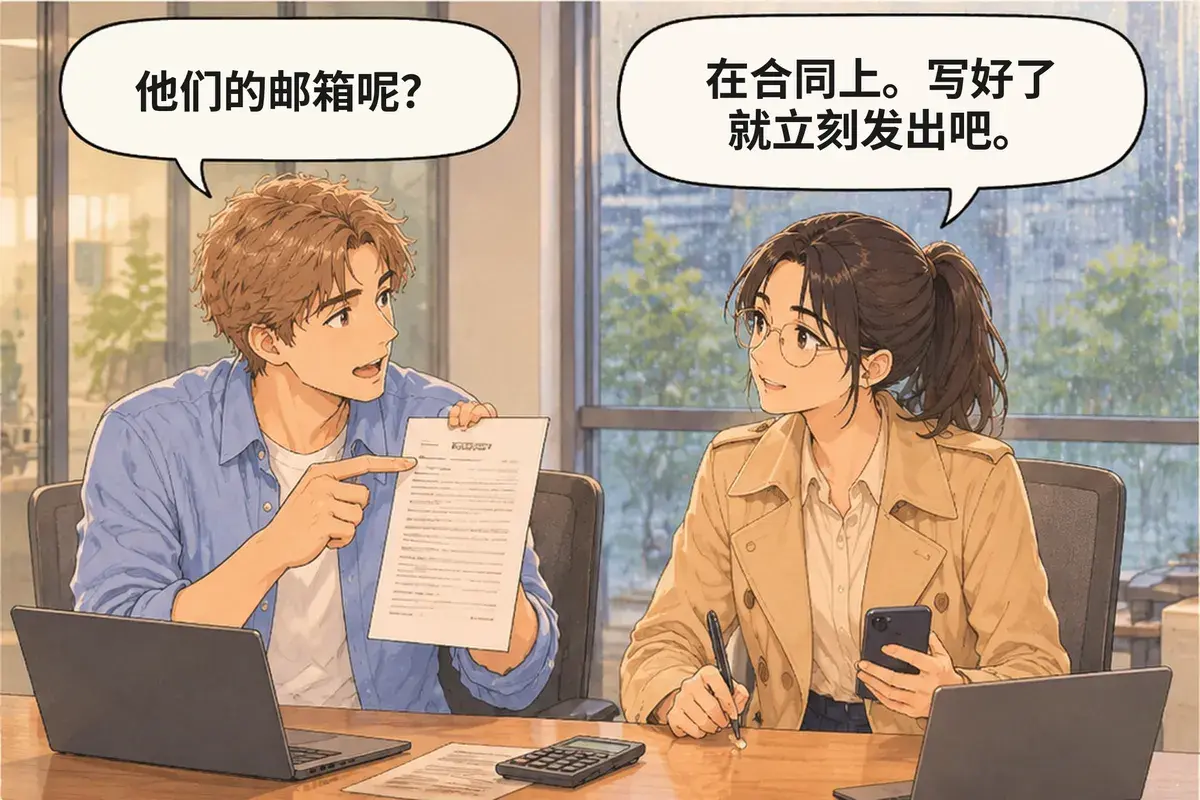
- 伊利亚
他们的邮箱呢?
What's their email address?
- 晓雨
在合同上。写好了就立刻发出吧。
It's in the contract. Once you've finished writing, send it right away.

- 伊利亚
等一下,我先读一遍……这是我写的?
Wait a moment, let me read it through once first... Did I write this?
- 晓雨
是你写的,写得真不错!
You did, and you wrote it really well!
Grammar for this text
- “产品 在 运输 中 被 损坏。” — the written
被without the doer: the email doesn't blame anyone, it just reports. That's why Xiaoyu doesn't write who is at fault.在 运输 中means "in the course of transport":中(zhōng) after an action means "in the process of", a written-style replacement for的 时候. - 太 口语 了! —
口语(kǒuyǔ) means "spoken style"; here it works like an adjective: "too colloquial." Ilya's draft (东西,怎么 弄 的,不像话) is fine for a friend, but not for an email to a company. - 由于 包装 不 好, —
由于(unit 16) is the business "because of"; to a friend you'd say因为. 我们 受到 了 很 大 的 损失 means "we suffered a heavy loss":受到means "to receive, to be subjected to", most often for something unpleasant. - 按照 合同, 请 在 三 天 内 回复。 —
按照(unit 3) means "in accordance with";三 天 内means "within three days".请makes the demand polite. - 以上 内容 如果 有 问题, —
以上means "the above": the usual ending of a business email. - 标题 要 短: — a subject line is very short and has no
被:零件 损坏. - 这 是 我 写 的? — Ilya can't believe he wrote something so businesslike.
Words and grammar of the unit: Make a complaint about damaged goods.
Learn the words from the texts with flashcards
In the app, you can tap any word in a text to see its translation, forms and examples, and new words stick with flashcards. 15 minutes a day.
Start for freeEverything is open for free. No card needed to sign up.