

Chinese dialogue with translation · A2 · 15 lines
修得好吗? Can you fix it?
Comic · 15 panels

- 伊利亚
师傅,您好!我的手机坏了。
Hello, sir! My phone is broken. (polite)
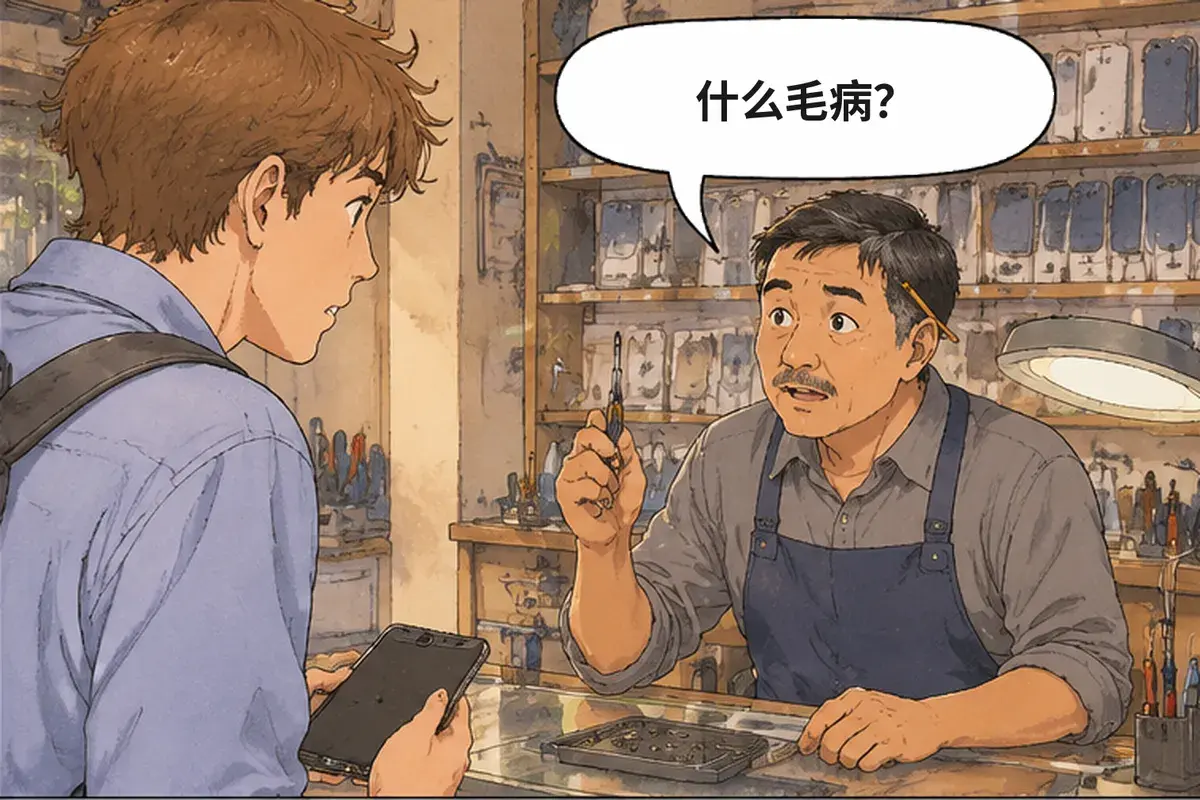
- 师傅
什么毛病?
What's wrong with it?
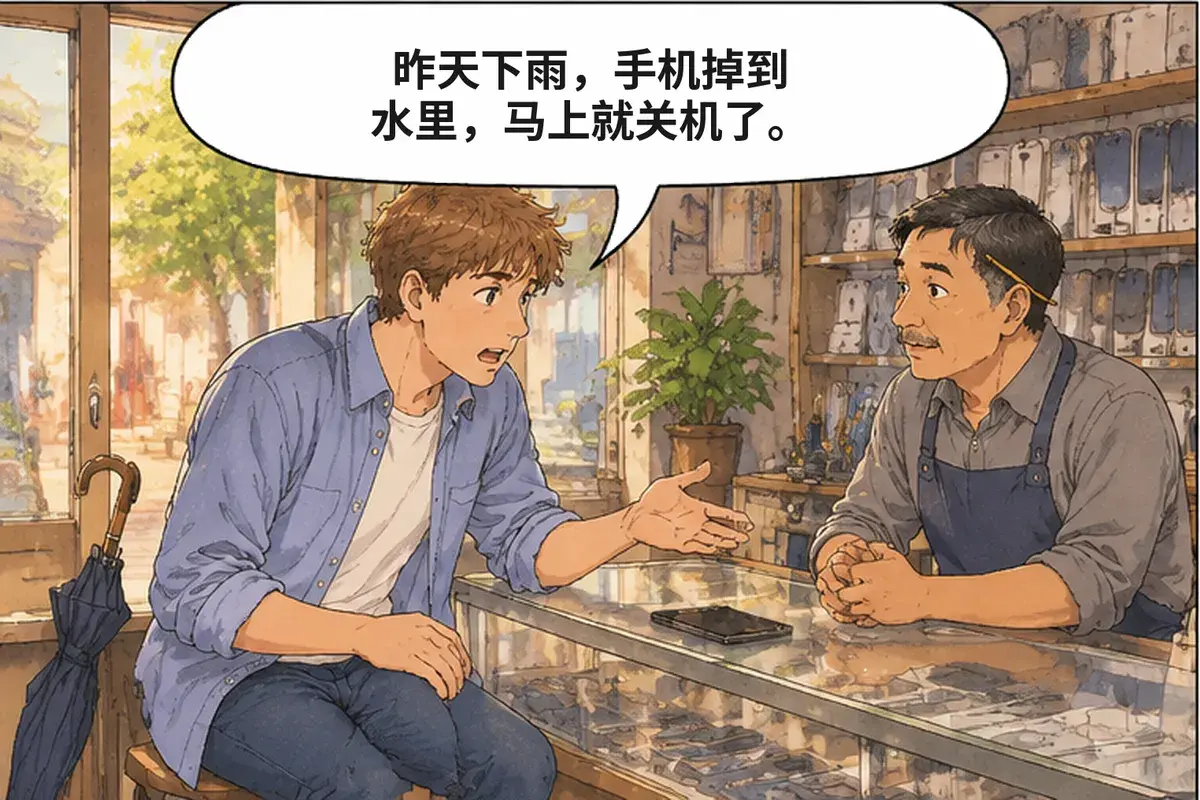
- 伊利亚
昨天下雨,手机掉到水里,马上就关机了。
It was raining yesterday, my phone fell into the water and turned off right away.
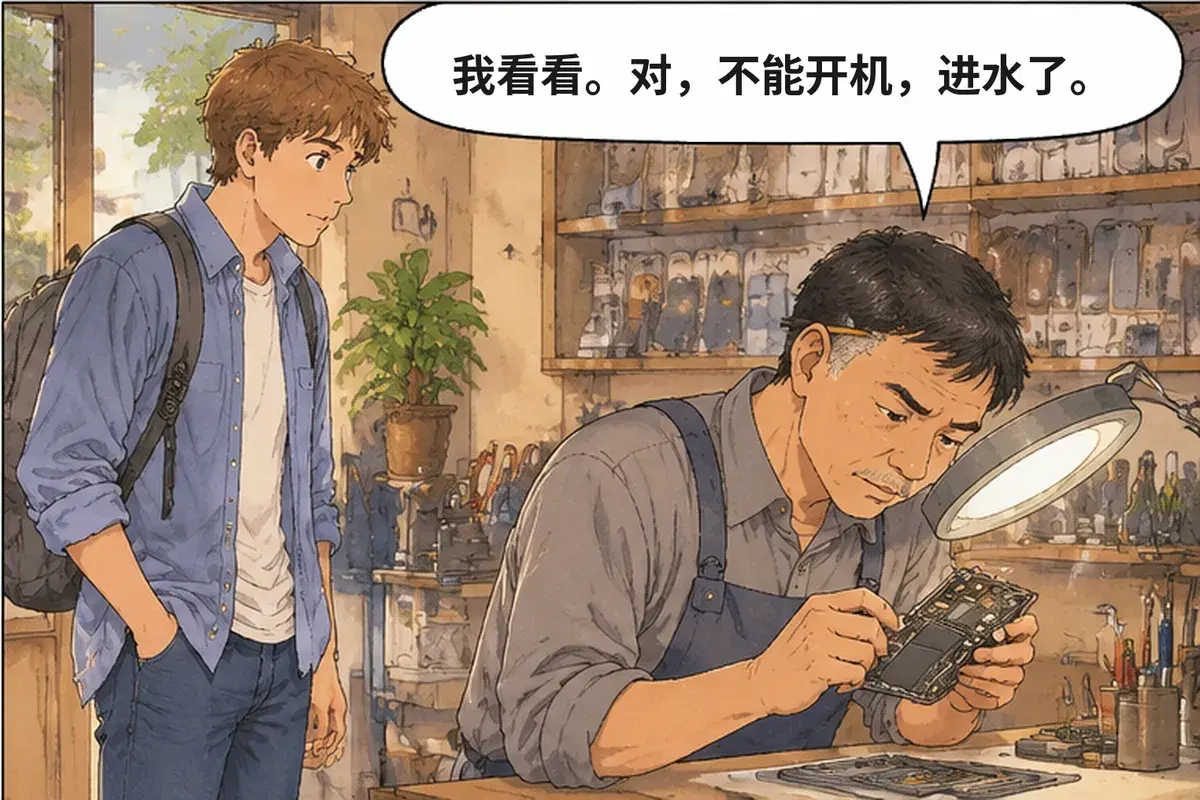
- 师傅
我看看。对,不能开机,进水了。
Let me take a look. Yes, it won't turn on — water got in.
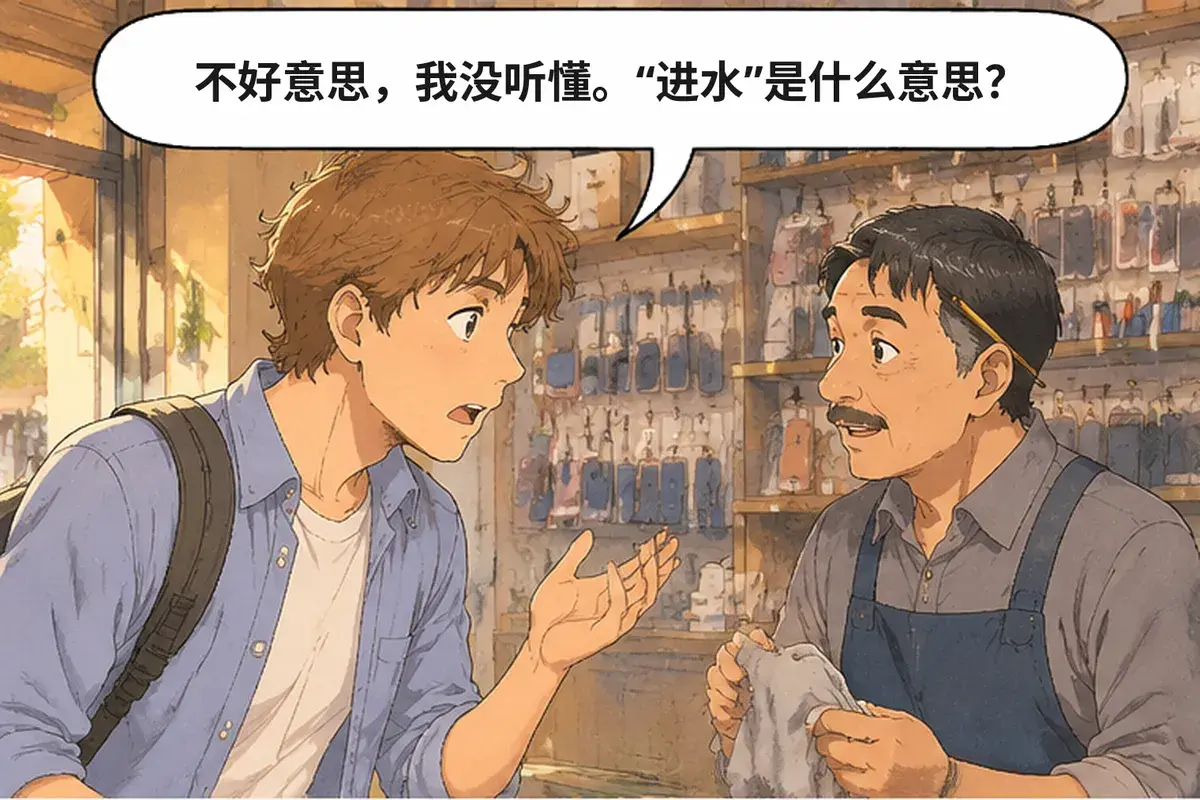
- 伊利亚
不好意思,我没听懂。“进水”是什么意思?
Sorry, I didn't understand. What does "jìn shuǐ" mean?

- 师傅
水进去了,手机里边有水。
Water went in, there's water inside the phone.

- 伊利亚
哦,明白了。修得好吗?
Oh, I see. Can you fix it?
- 师傅
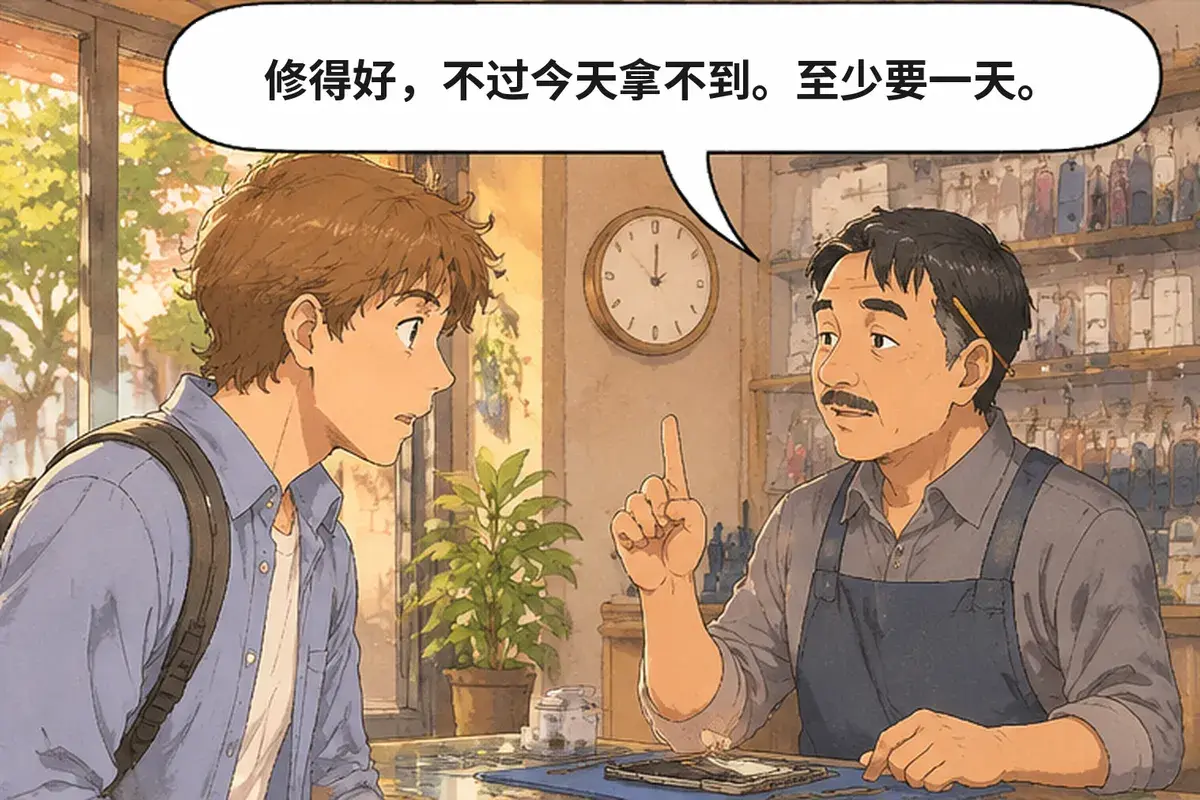
修得好,不过今天拿不到。至少要一天。
I can fix it, but you can't pick it up today. It'll take at least a day.

- 伊利亚
一天?我很急!明天上午呢?
A day? I'm in a hurry! What about tomorrow morning?

- 师傅
上午修不好,明天下午来拿吧。你的尾号是多少?
I can't fix it in the morning, come and pick it up tomorrow afternoon. What are the last digits of your phone number?
- 伊利亚
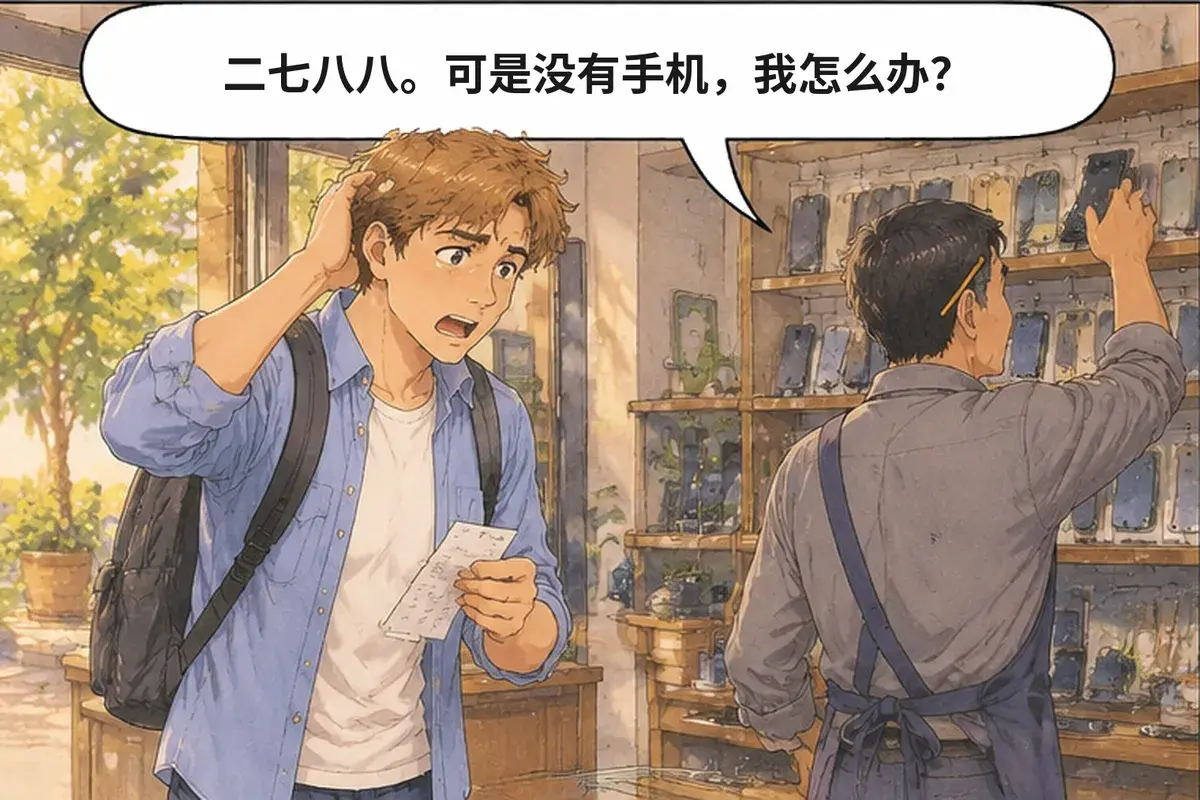
二七八八。可是没有手机,我怎么办?
Two seven eight eight. But what do I do without a phone?
- 师傅
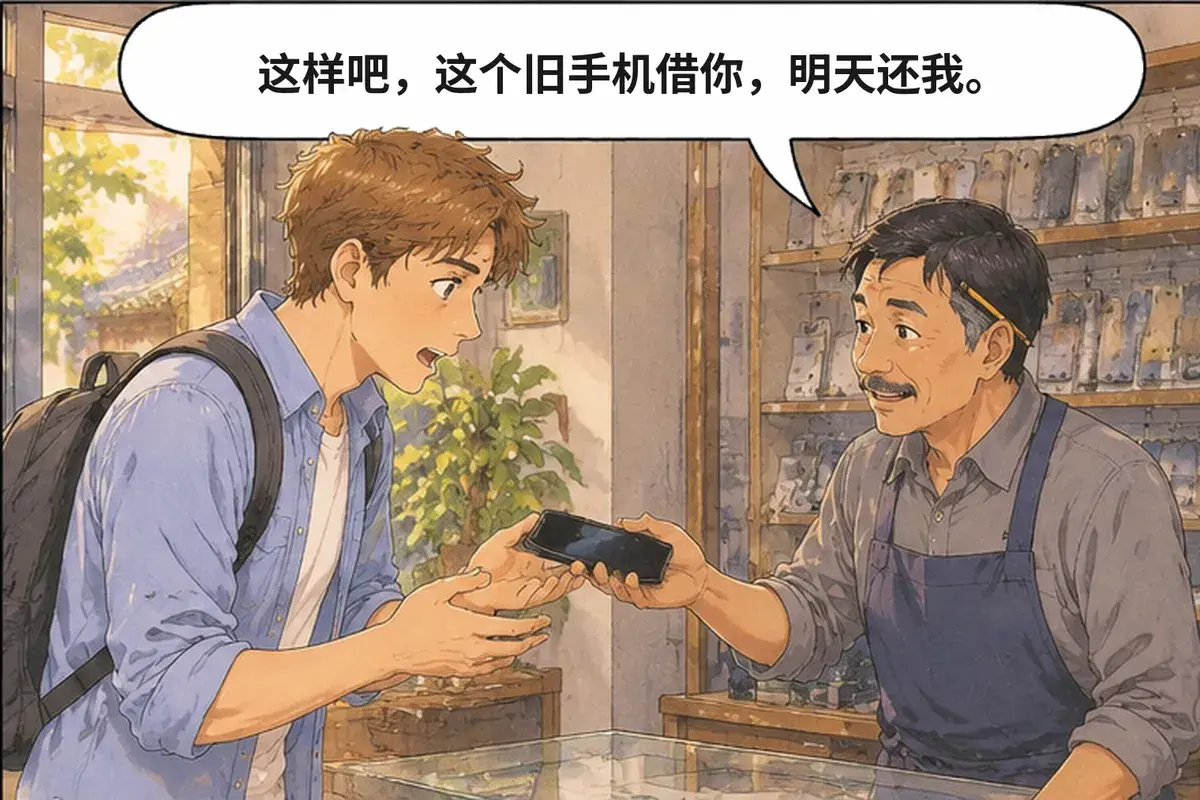
这样吧,这个旧手机借你,明天还我。
Let's do this: I'll lend you this old phone, and you give it back to me tomorrow.
- 伊利亚
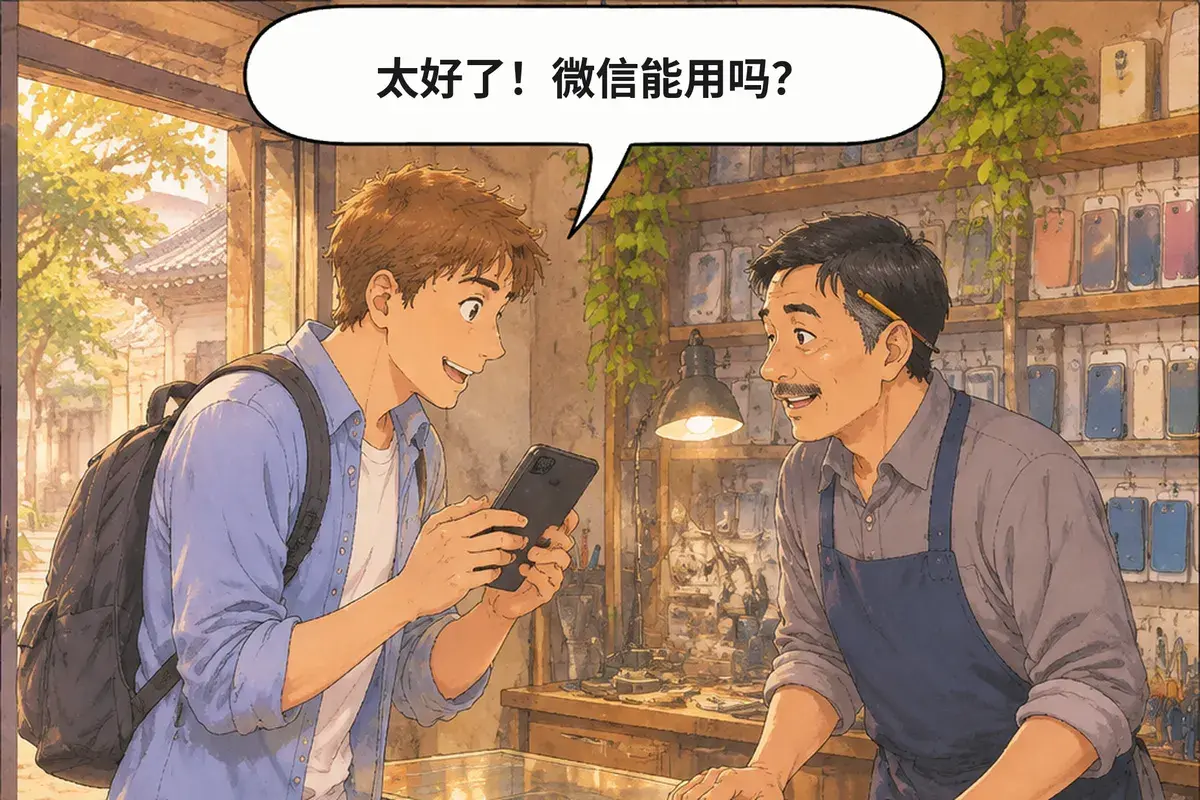
太好了!微信能用吗?
Great! Can I use WeChat on it?

- 师傅
微信用不了,太旧了。打电话、发短信都可以。
You can't use WeChat, it's too old. You can make calls and send text messages.

- 伊利亚
好的,谢谢师傅!明天见!
OK, thanks, sir! See you tomorrow!
Grammar for this text
修得好 吗? — "can you fix it?": 得 ("can") was put into the word 修好 "to fix". The repairman's answer — 修得好, 不过 今天 拿不到。 — "I can fix it, but you can't pick it up today": 拿到 "to pick up" has 不 ("can't") inside. This is the main grammar of the unit.
上午 修不好 — here 修不好 means "I can't have it fixed in the morning": the form with 不 can also say that there isn't enough time.
微信 用不了 — "you can't use WeChat": 不了 (bùliǎo) after a verb means "just can't". The phone is too old, and the apps don't run on it. Ilya asked 能 用 吗?, and the repairman answered with the form with 不 — that's how people say it.
进 水 了。 — literally "water got in": that's how repairmen talk about a phone that has been in water. Ilya asks again — “进 水” 是 什么 意思? — and the repairman explains in simpler words. You can ask this way about any word you don't know.
什么 毛病? — a colloquial "what's wrong with it?".
这样 吧, 这 个 旧 手机 借 你, 明天 还 我。 — 这样 吧 — "let's do this": that's how you suggest a way out. The thing comes first, then what happens to it: "this old phone — I'm lending it to you". 还 is read huán here — "to give back", not hái "still".
你 的 尾号 是 多少? — the last four digits of your phone number: in China they're used to find your order in a taxi, a delivery or a repair shop (A1, unit 11). The digits are said one by one: 二 七 八 八.
Ilya says 师傅 and 您 to the repairman: that's the polite way to talk to a repairman, a driver or a worker.
Words and grammar of the unit: Take your phone in for repair.
Learn the words from the texts with flashcards
In the app, you can tap any word in a text to see its translation, forms and examples, and new words stick with flashcards. 15 minutes a day.
Start for freeEverything is open for free. No card needed to sign up.