

Chinese dialogue with translation · A2 · 15 lines
是你送的吧? It was you who sent them, right?
Comic · 14 panels
- 伊利亚
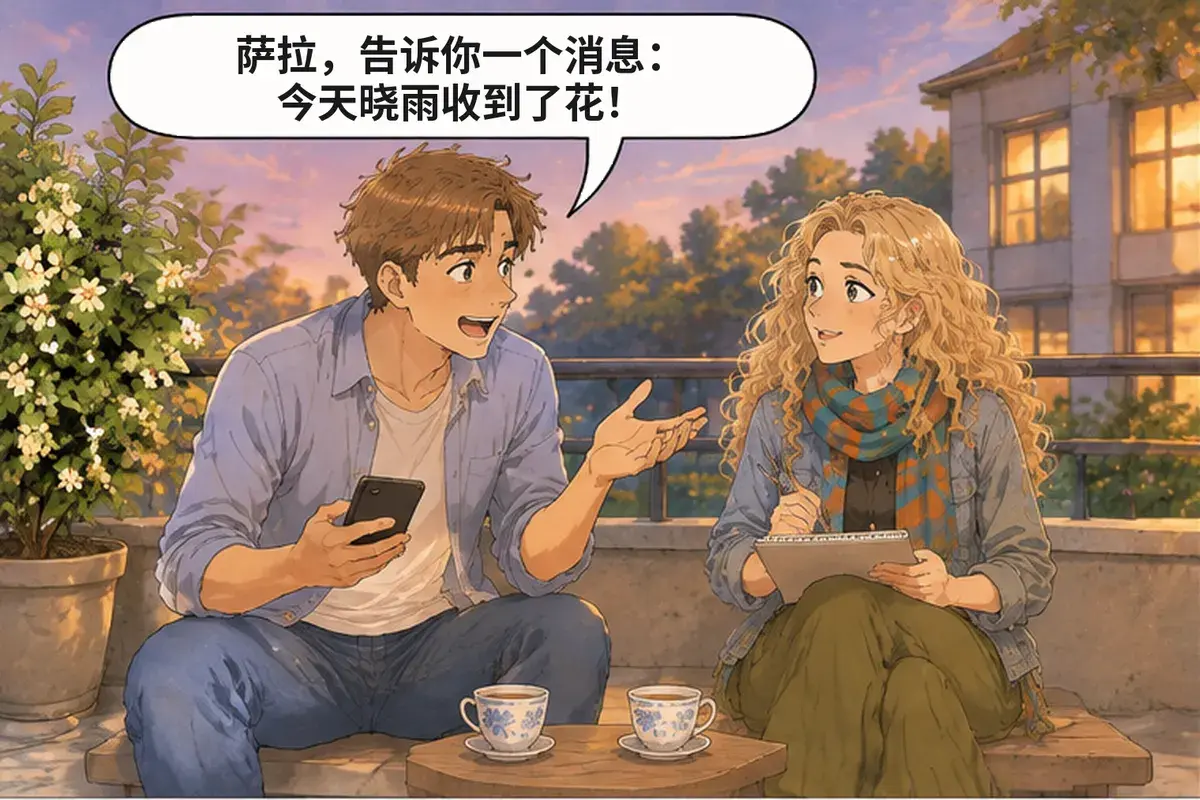
萨拉,告诉你一个消息:今天晓雨收到了花!
Sara, I've got news: Xiaoyu got flowers today!

- 萨拉
今天是七夕啊!花漂亮吗?
Oh, it's Qixi today! Are the flowers beautiful?
- 伊利亚
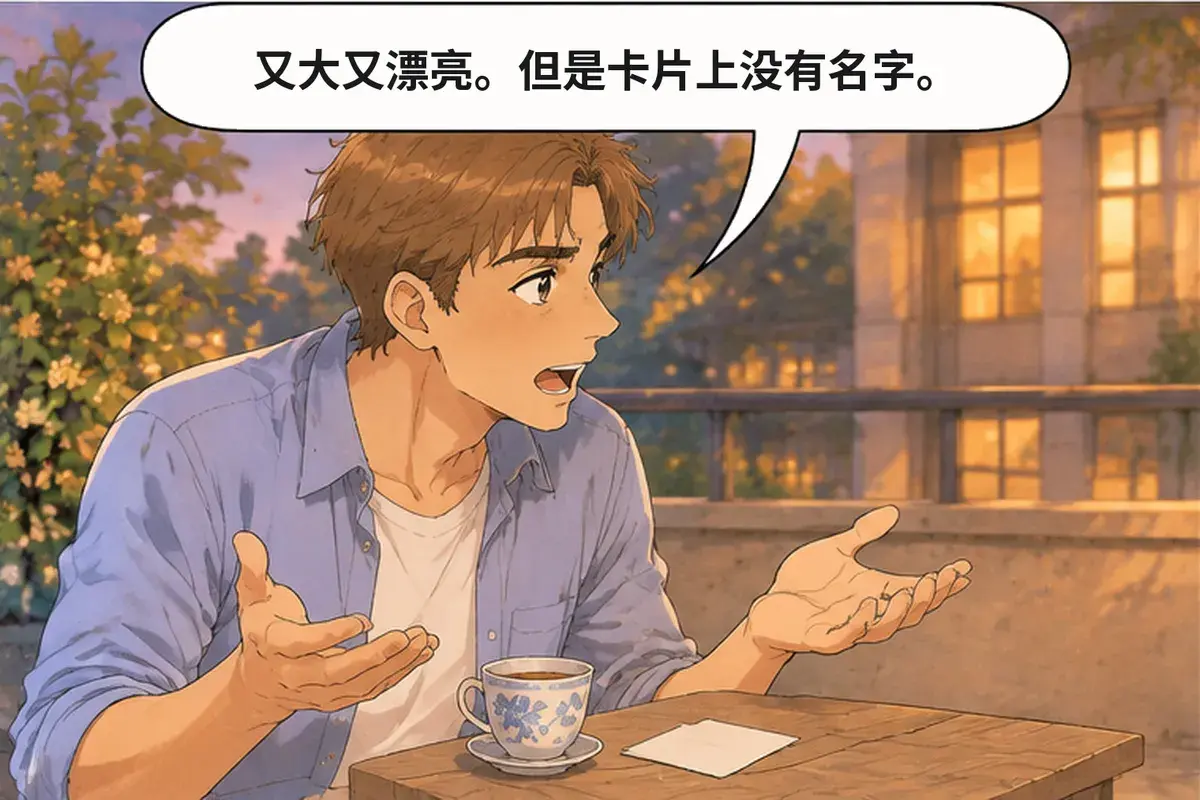
又大又漂亮。但是卡片上没有名字。
Both big and beautiful. But there's no name on the card.
- 萨拉
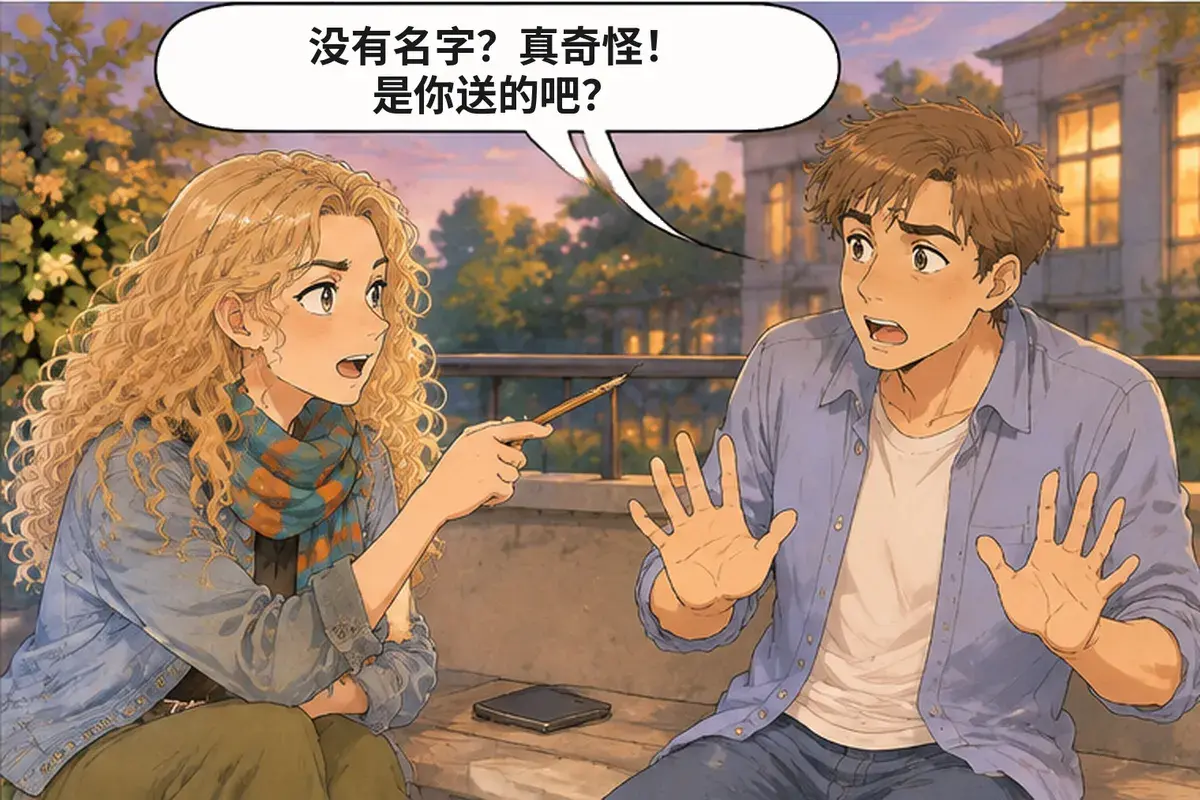
没有名字?真奇怪!是你送的吧?
No name? That's so weird! It was you who sent them, right?

- 伊利亚
不是我!周经理认为是客户。
It wasn't me! Manager Zhou thinks it was a client.
- 萨拉
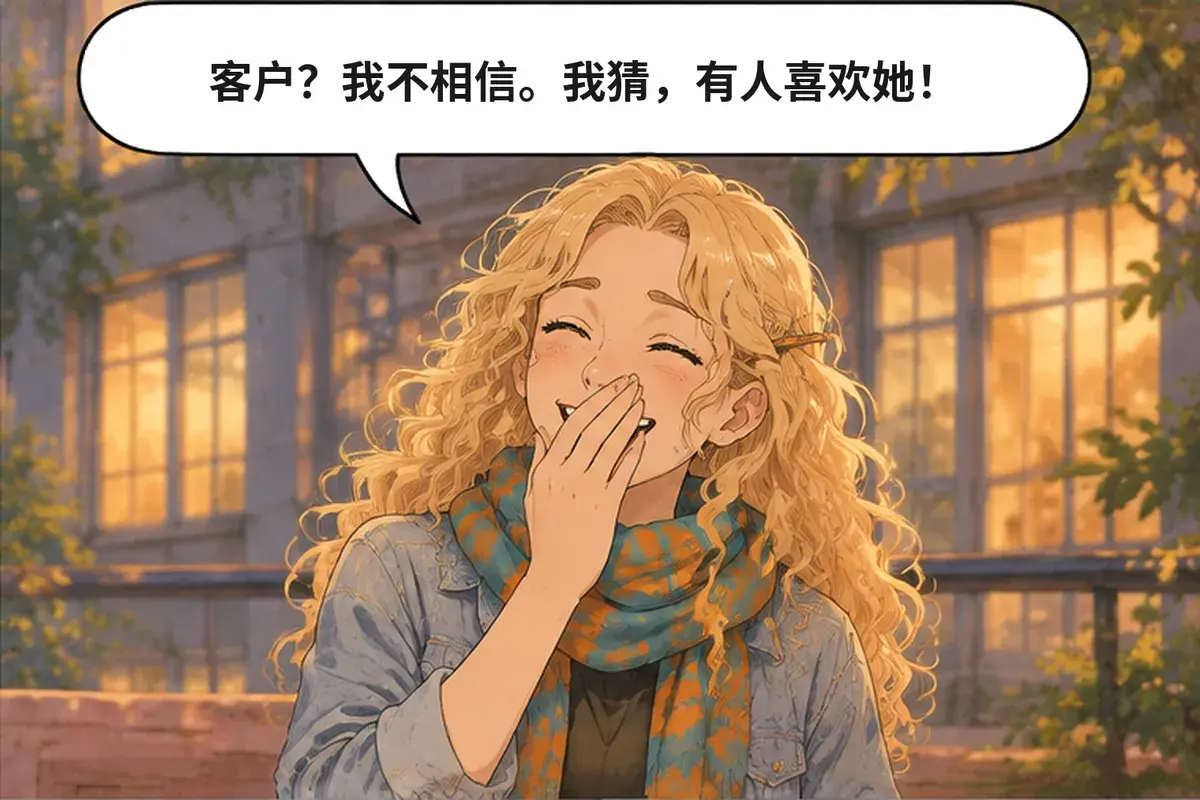
客户?我不相信。我猜,有人喜欢她!
A client? I don't believe it. I guess someone likes her!

- 伊利亚
也许是她的高中同学……
Maybe it's her high school classmate…
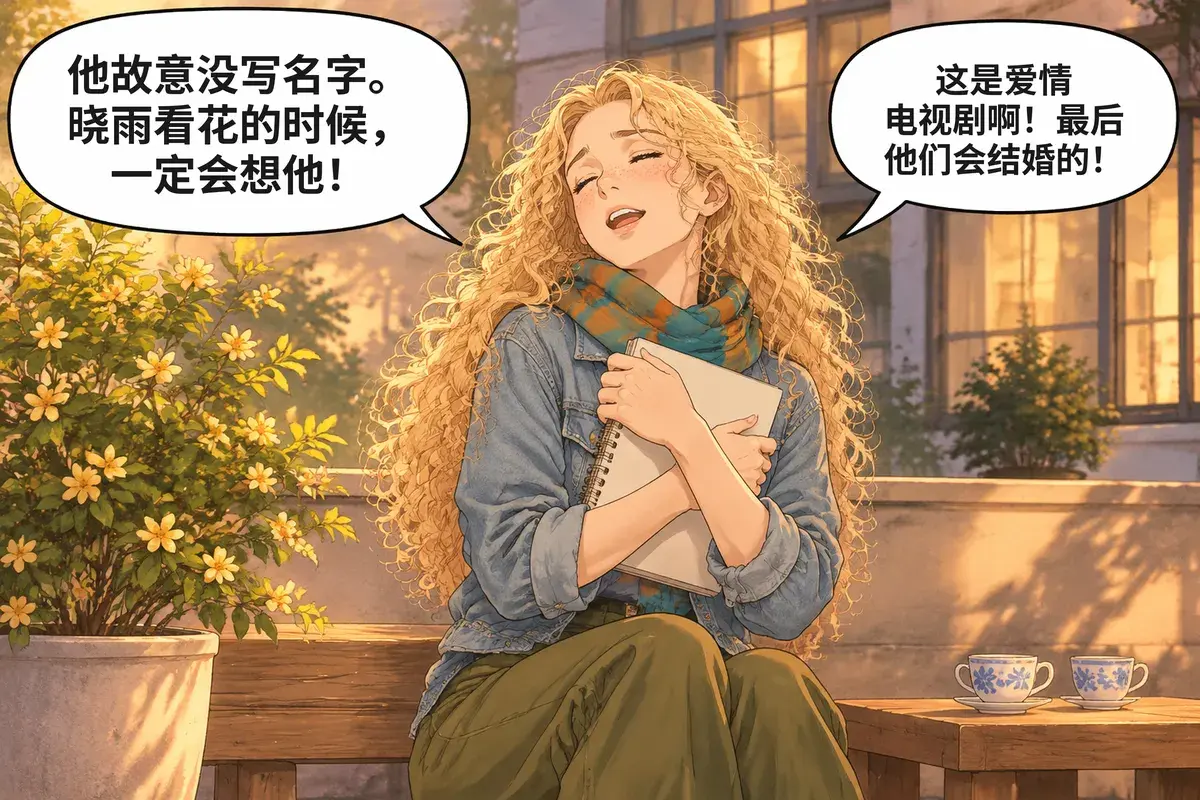
- 萨拉
他故意没写名字。晓雨看花的时候,一定会想他!
He didn't write his name on purpose. When Xiaoyu looks at the flowers, she'll definitely think of him!
- 萨拉
这是爱情电视剧啊!最后他们会结婚的!
This is a romance TV series! In the end they'll get married!

- 伊利亚
萨拉,这不是电视剧。
Sara, this isn't a TV series.
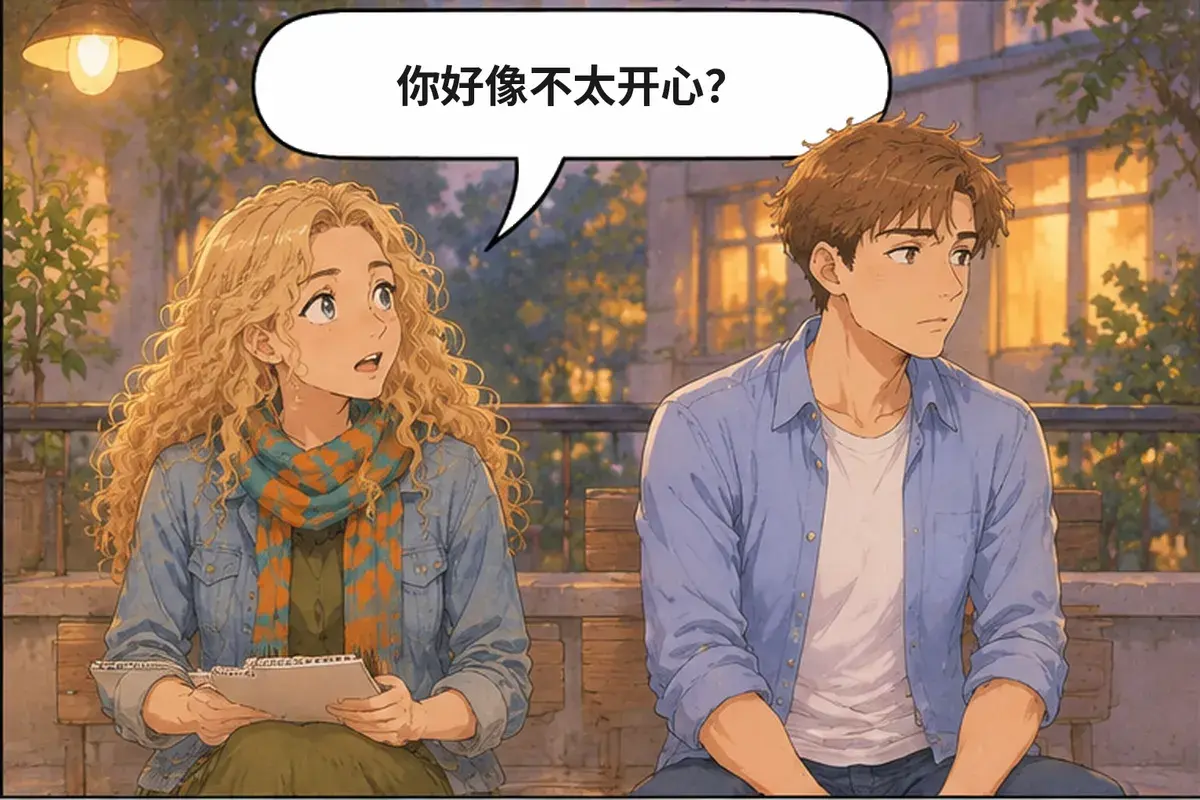
- 萨拉
你好像不太开心?
You don't seem very happy?

- 伊利亚
没有啊,我心情很好。
No, I'm in a good mood.

- 萨拉
那你干吗写这么多晓雨的事?
Then how come you're writing so much about Xiaoyu?
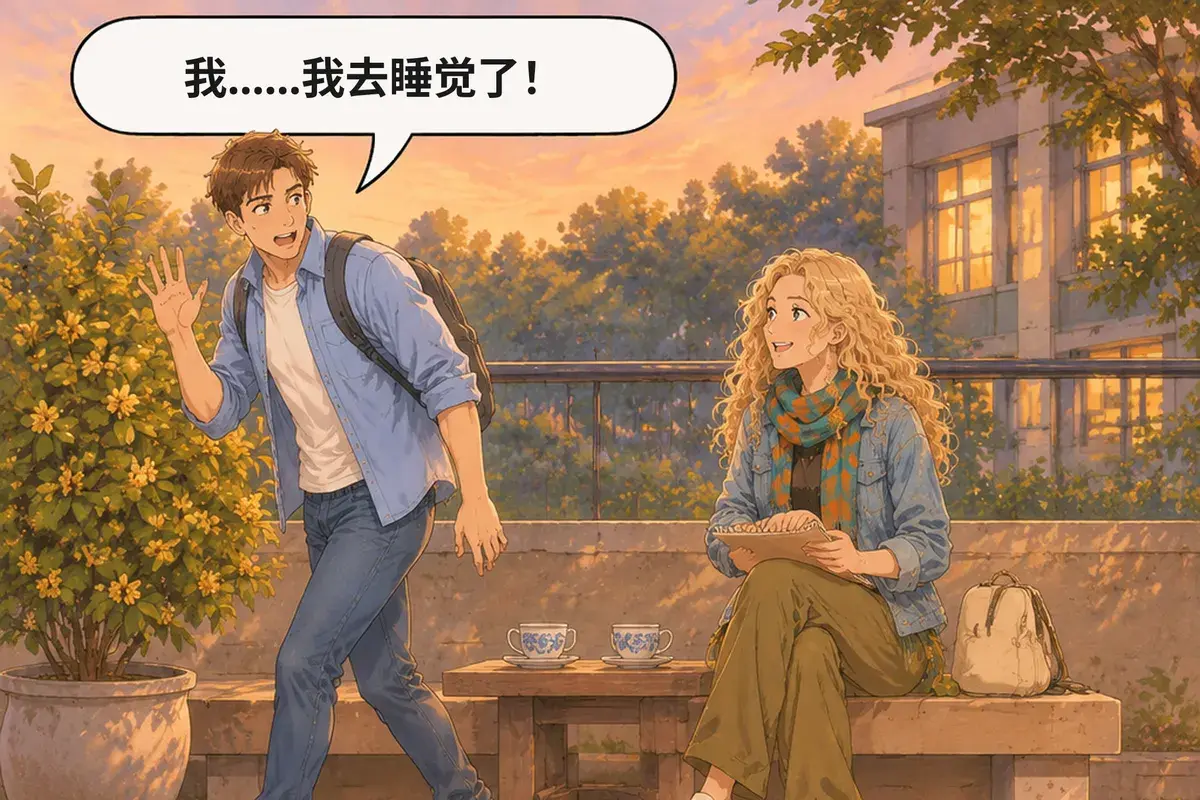
- 伊利亚
我……我去睡觉了!
I… I'm going to bed now!
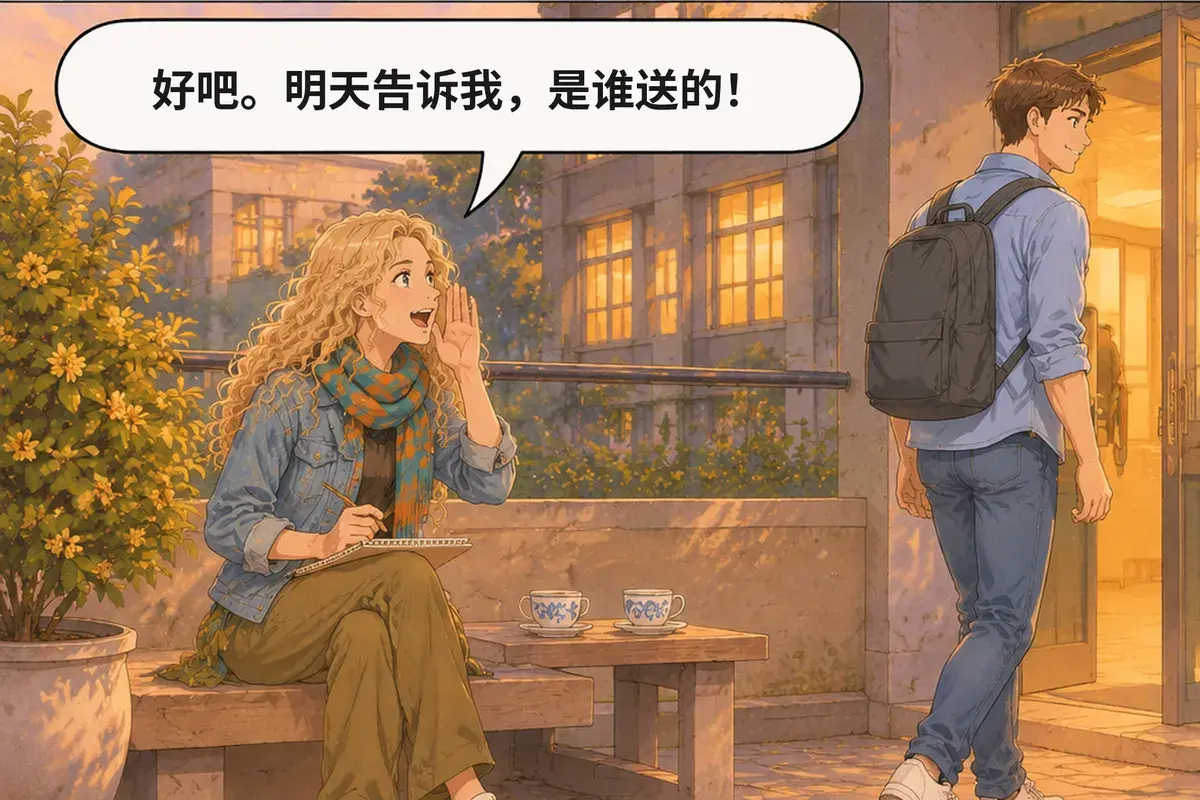
- 萨拉
好吧。明天告诉我,是谁送的!
OK. Tell me tomorrow who sent them!
Grammar for this text
你 好像 不 太 开心? — 好像 (hǎoxiàng) is "it seems, it looks like": Sara judges by what Ilya writes. 不 太 is "not very". 开心 is a colloquial "happy, cheerful" about how you feel right now; in wishes it's 快乐.
晓雨 看 花 的 时候, 一定 会 想 他! — … 的 时候 after a whole phrase: "when Xiaoyu looks at the flowers". 一定 会 is "will definitely": 会 here is a prediction, not "can". 想 他 is "to think of him".
是 你 送 的 吧? — 是 … 的: who did it (unit 3). 吧 in a question is "…, right?": Sara is almost sure.
周 经理 认为 是 客户。 — 认为 is "to think" as an opinion or a conclusion. For "I feel, it seems to me" everyday talk more often uses 觉得.
我 猜, 有人 喜欢 她! — 猜 (cāi) is "to guess"; 我 猜 is "I guess, my guess is". 有人 is "someone", literally "there is a person"; it goes at the start, in the place of the one who does the action.
他 故意 没 写 名字。 — 故意 (gùyì) "on purpose" goes before 没 写: "didn't write it on purpose" (about something done — 没).
那 你 干吗 写 这么 多 晓雨 的 事? — 干吗 (gànmá) is a colloquial "why, how come"; people say it only with friends. 这么 多 is "so much".
我…… 我 去 睡觉 了! — 了 at the end: "that's it, I'm going to bed" — the situation has changed (A1, unit 14). Ilya is just running away from the question.
告诉 你 一 个 消息 — "I've got news for you": 告诉 + whom + what. 消息 (xiāoxi) means "news".
真 奇怪! — 奇怪 (qíguài) means "strange": flowers with no name are strange.
最后 他们 会 结婚 的! — 结婚 (jiéhūn) means "to get married"; 会 … 的 — "it will surely happen", Sara is sure.
Words and grammar of the unit: Guess who sent the flowers.
Learn the words from the texts with flashcards
In the app, you can tap any word in a text to see its translation, forms and examples, and new words stick with flashcards. 15 minutes a day.
Start for freeEverything is open for free. No card needed to sign up.