

Chinese dialogue with translation · A2 · 15 lines
声调说得不对! You said the tone wrong!
Comic · 15 panels
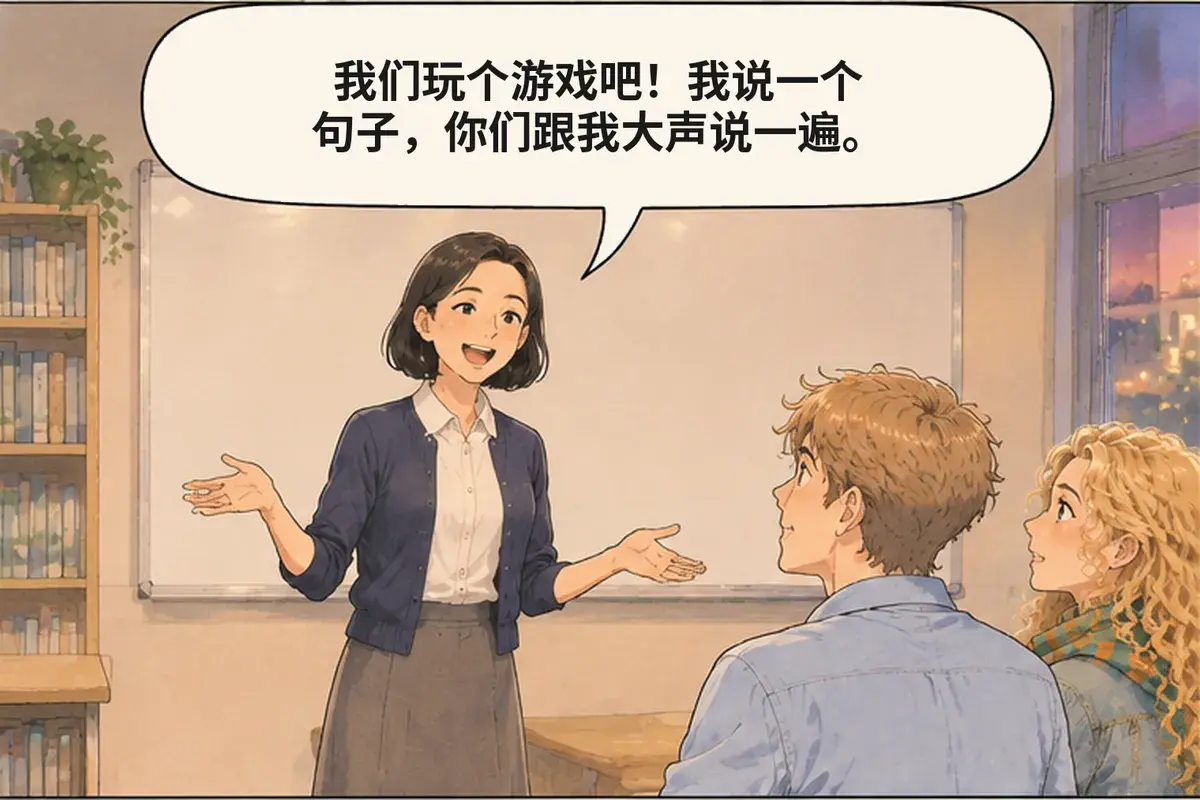
- 陈老师
我们玩个游戏吧!我说一个句子,你们跟我大声说一遍。
Let's play a game! I'll say a sentence, and you say it once after me, loudly. (to several people)
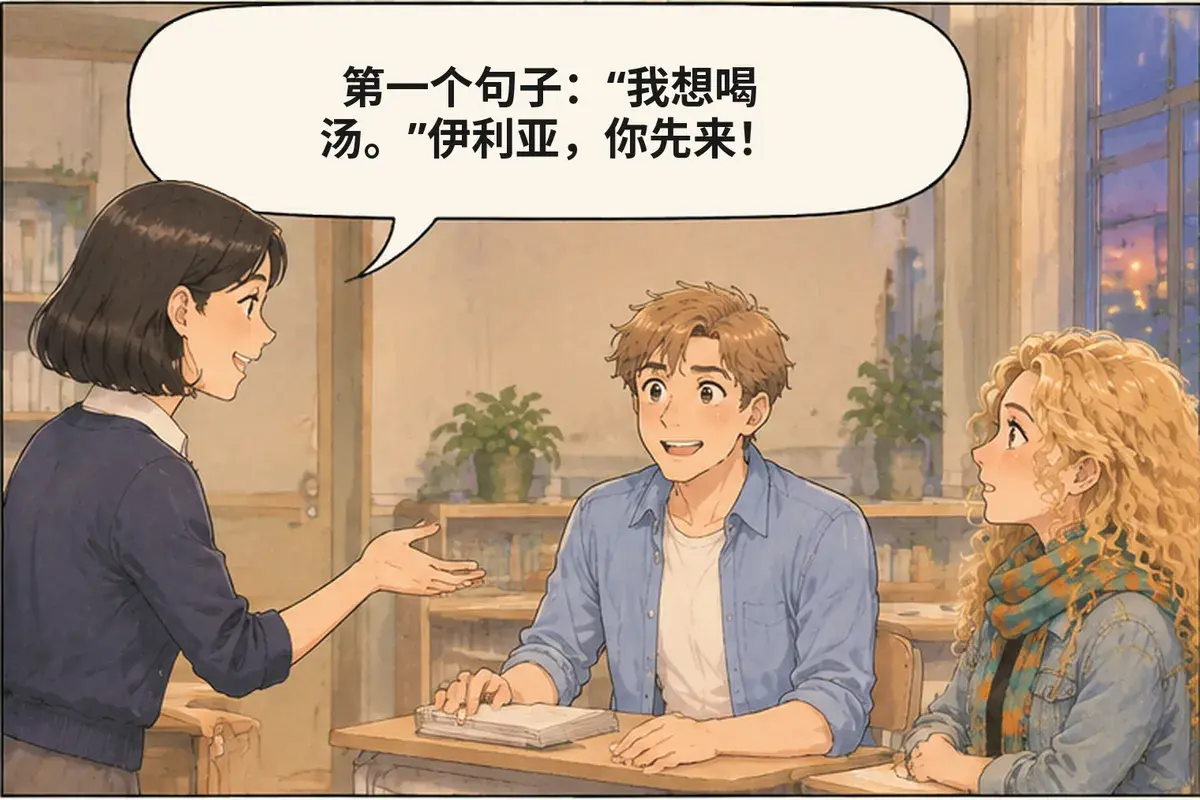
- 陈老师
第一个句子:“我想喝汤。”伊利亚,你先来!
The first sentence: "I want to drink soup." Ilya, you go first!
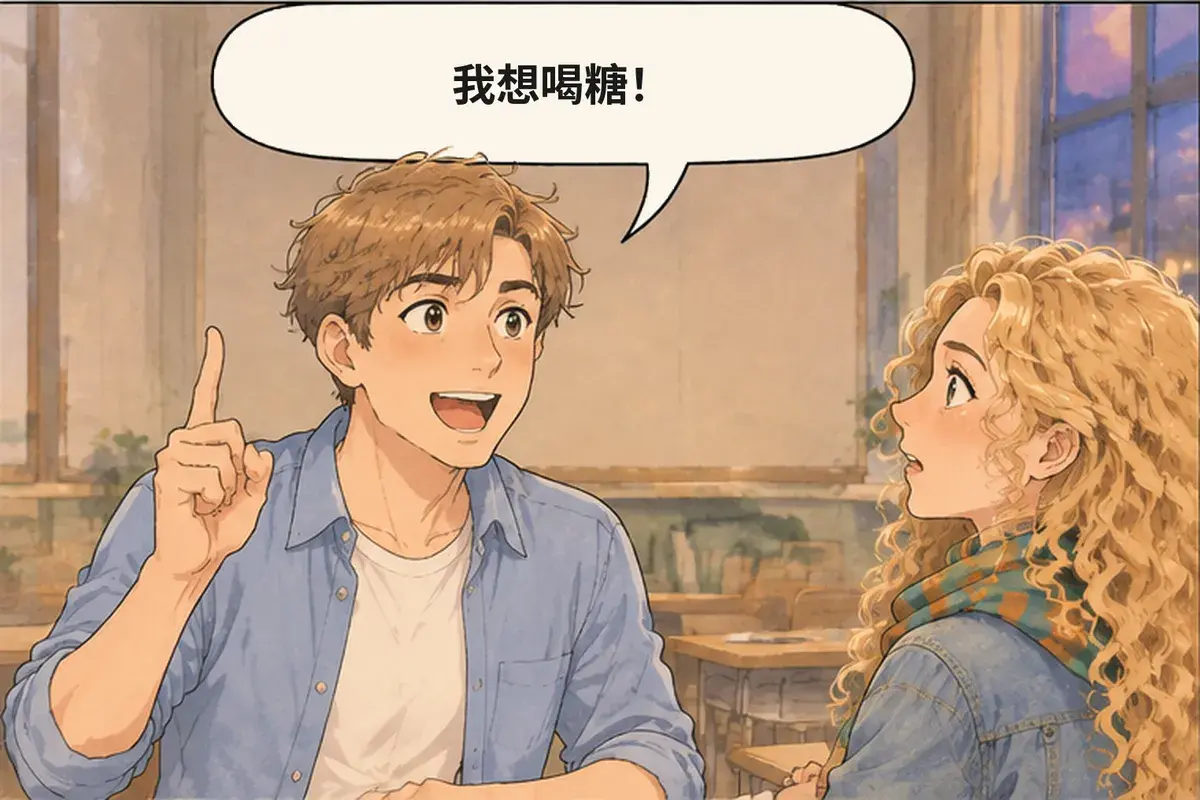
- 伊利亚
我想喝糖!
I want to drink sugar!
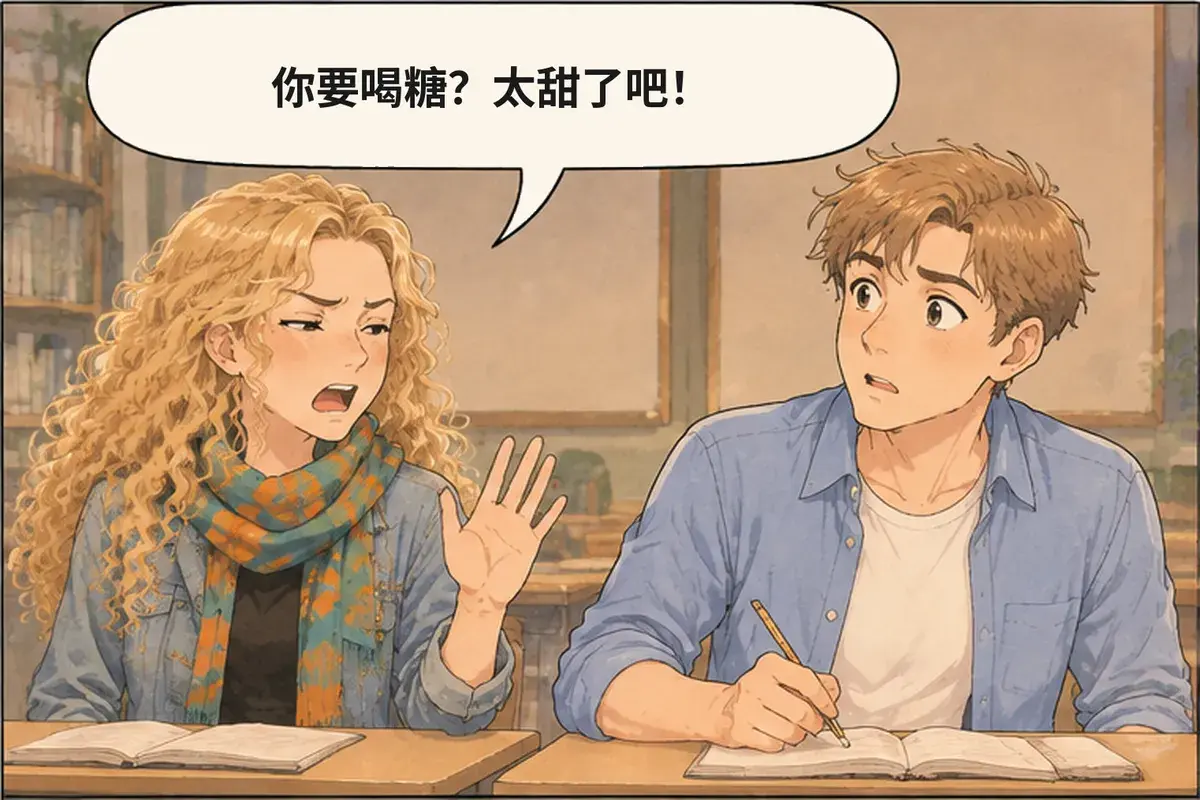
- 萨拉
你要喝糖?太甜了吧!
You want to drink sugar? That's way too sweet!
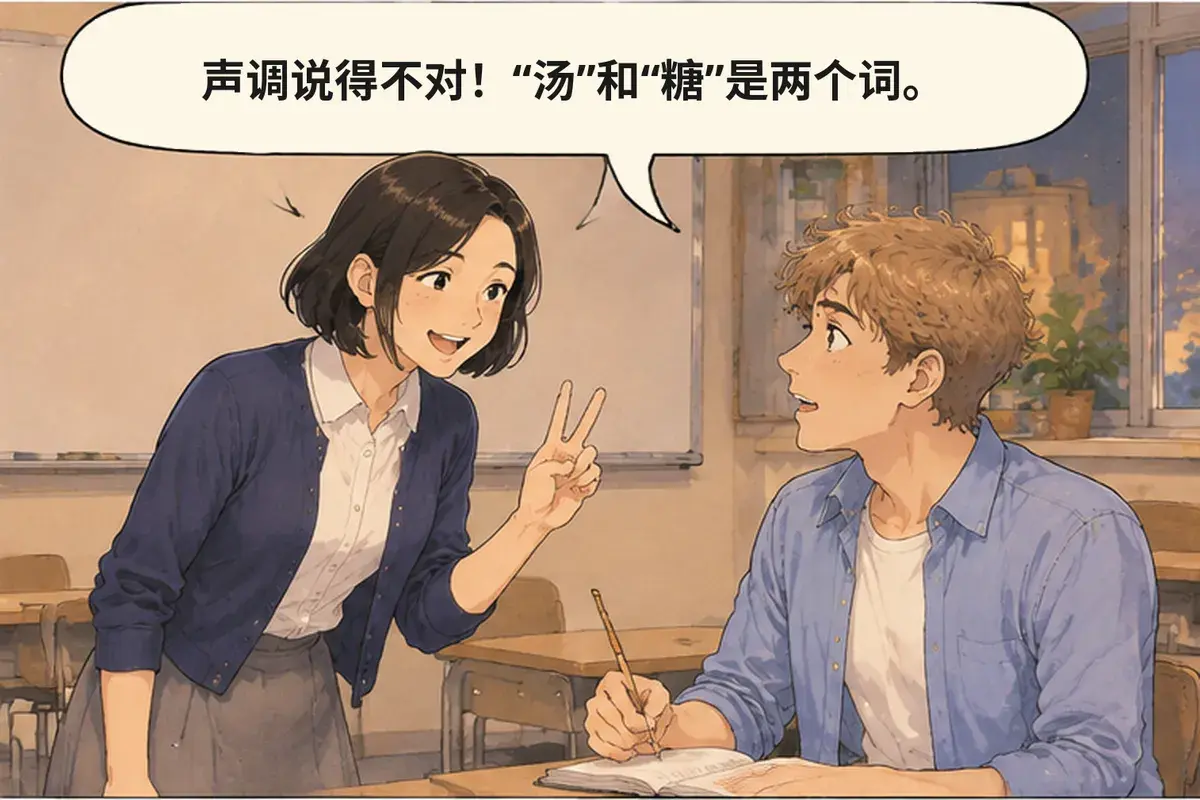
- 陈老师
声调说得不对!“汤”和“糖”是两个词。
You said the tone wrong! "Soup" and "sugar" are two words.
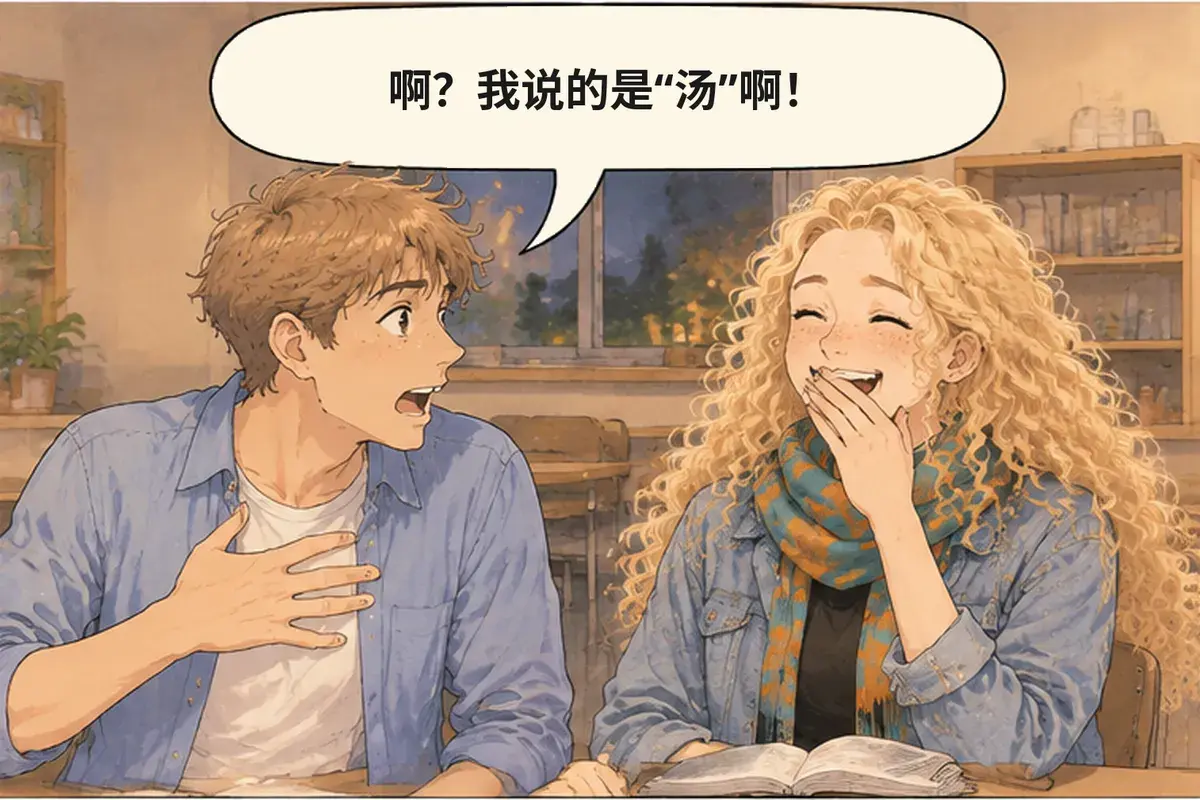
- 伊利亚
啊?我说的是“汤”啊!
Huh? What I said was "soup"!
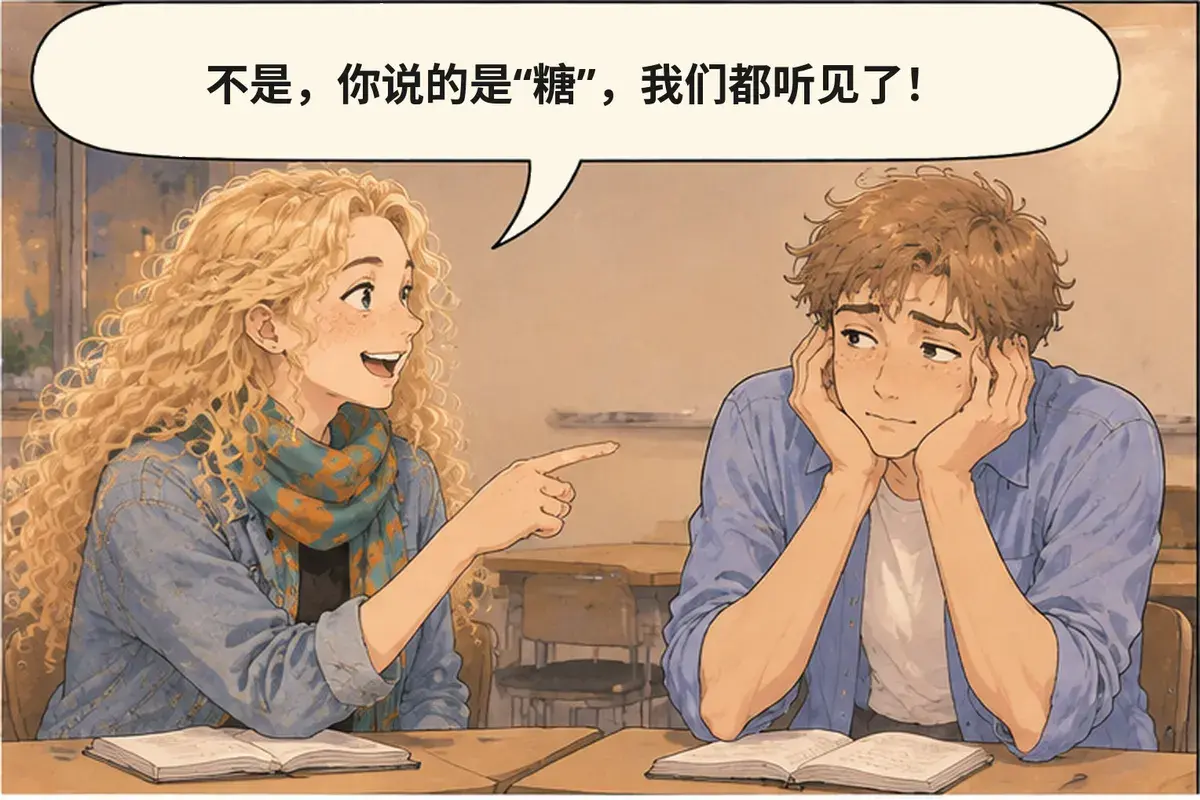
- 萨拉
不是,你说的是“糖”,我们都听见了!
No, what you said was "sugar", we all heard it!
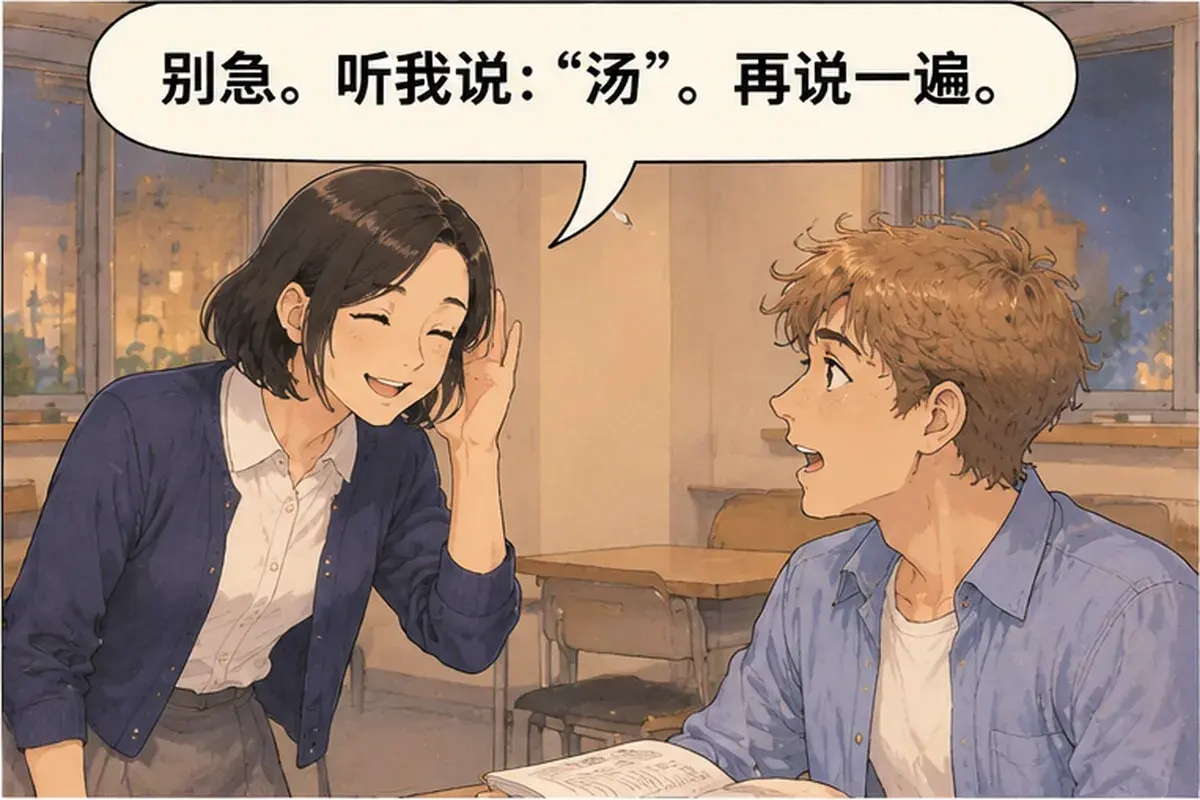
- 陈老师
别急。听我说:“汤”。再说一遍。
Take it easy. Listen to me: "soup". Say it again.
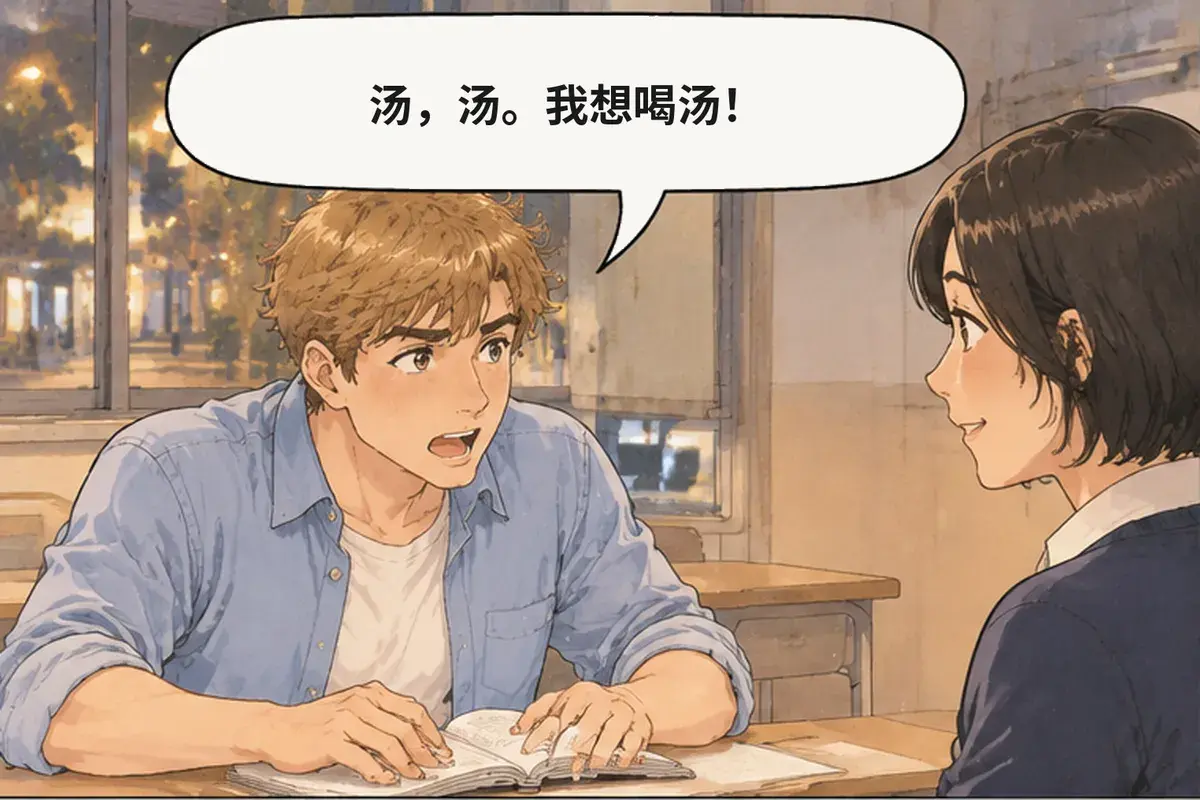
- 伊利亚
汤,汤。我想喝汤!
Soup, soup. I want to drink soup!
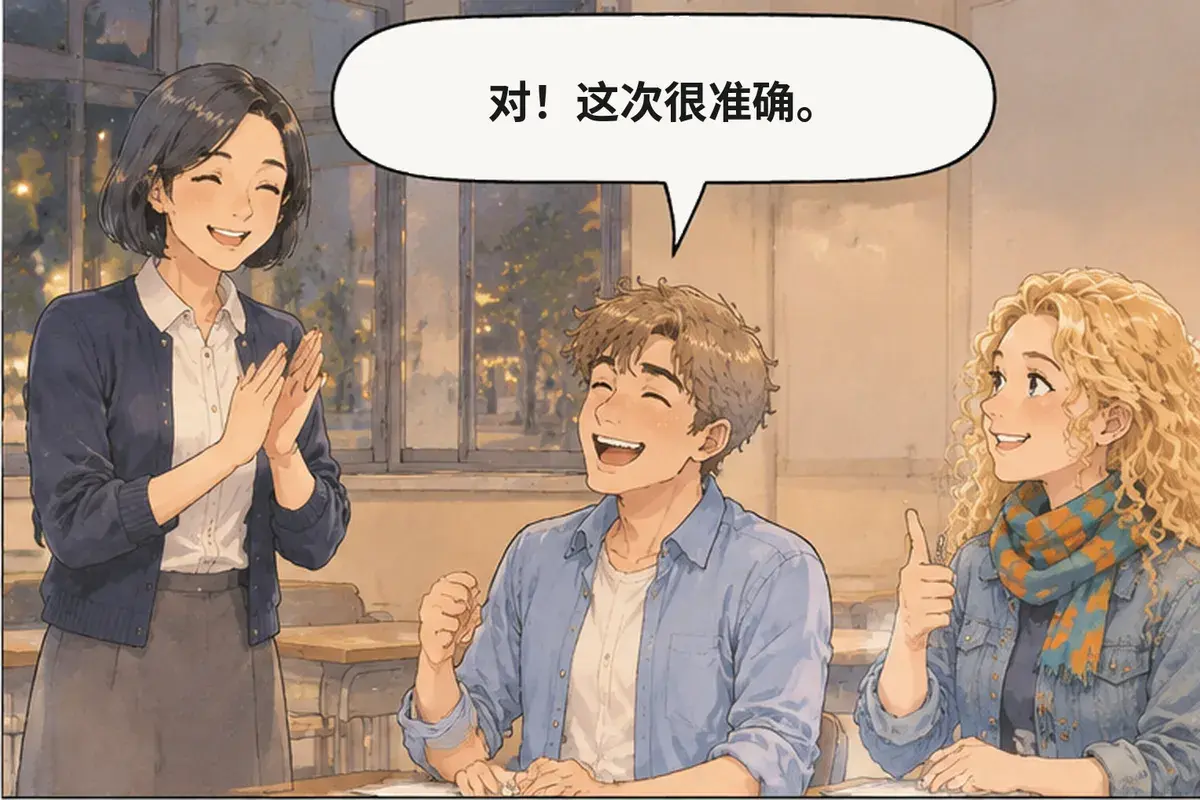
- 陈老师
对!这次很准确。
Right! This time it's very accurate.
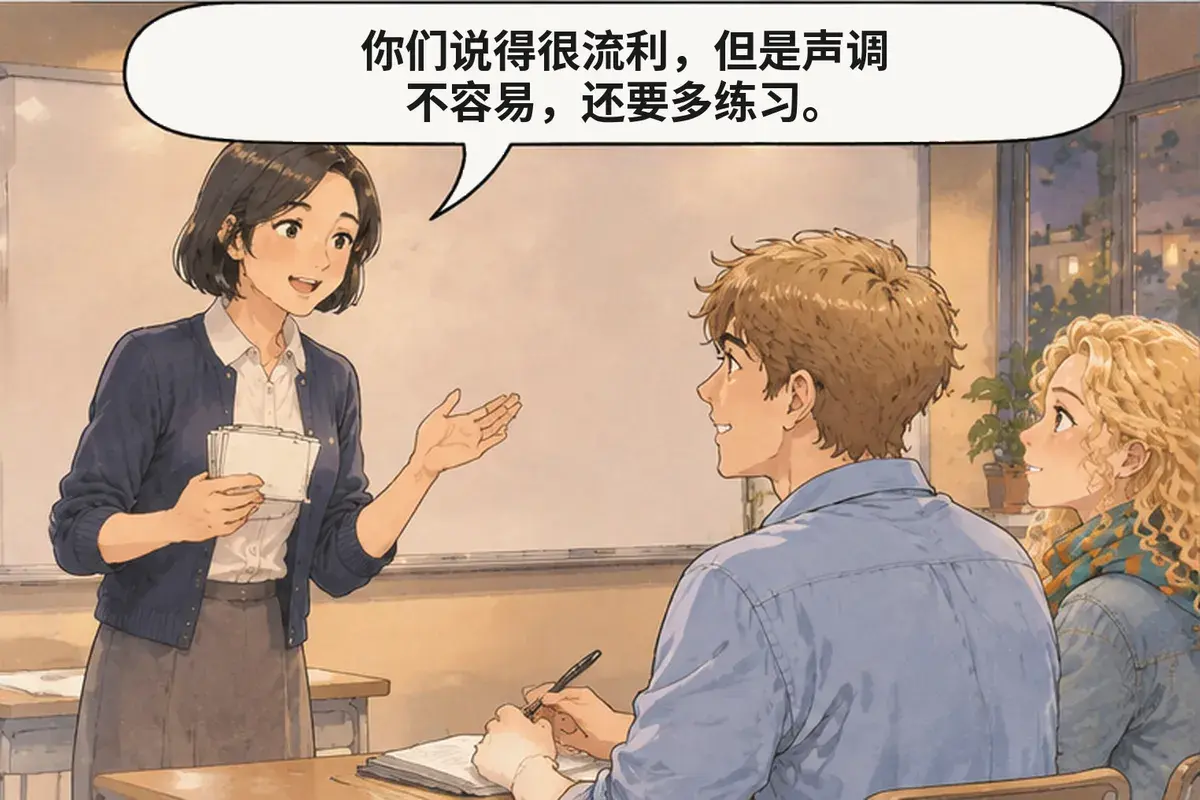
- 陈老师
你们说得很流利,但是声调不容易,还要多练习。
You speak fluently, but tones aren't easy. You still need lots of practice.
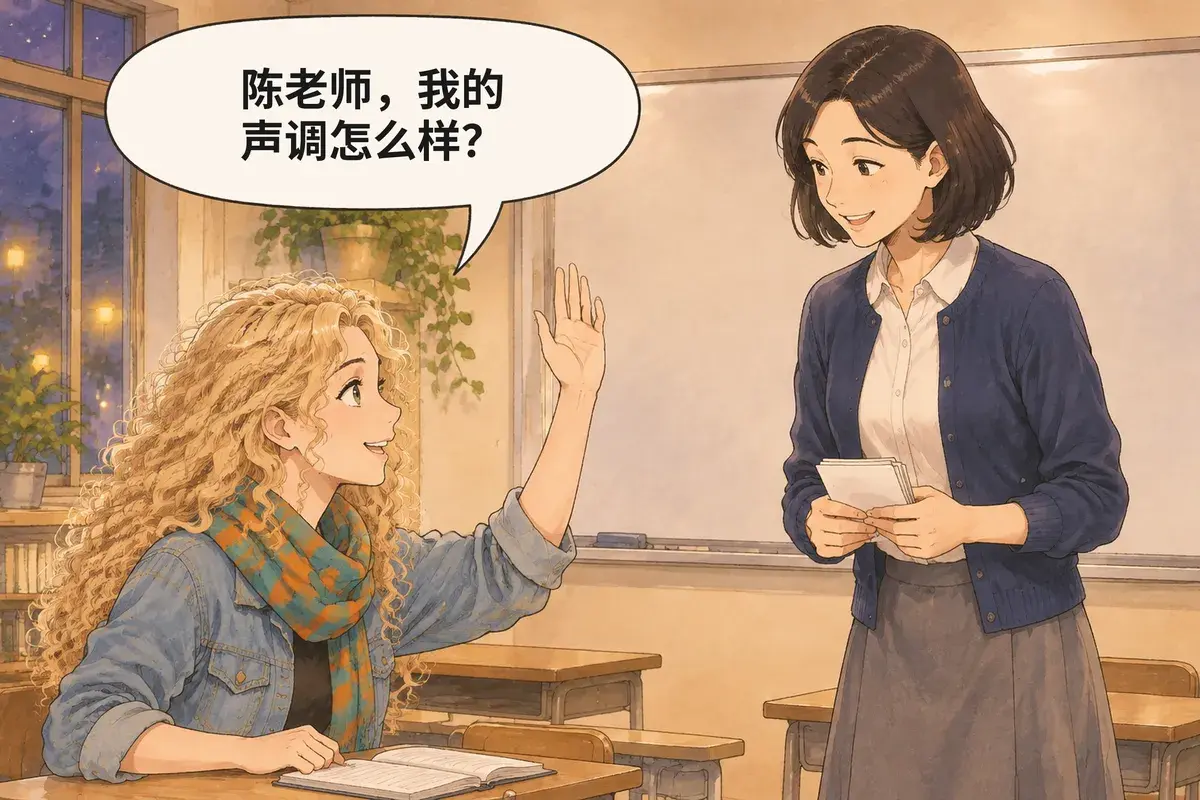
- 萨拉
陈老师,我的声调怎么样?
Teacher Chen, how are my tones?
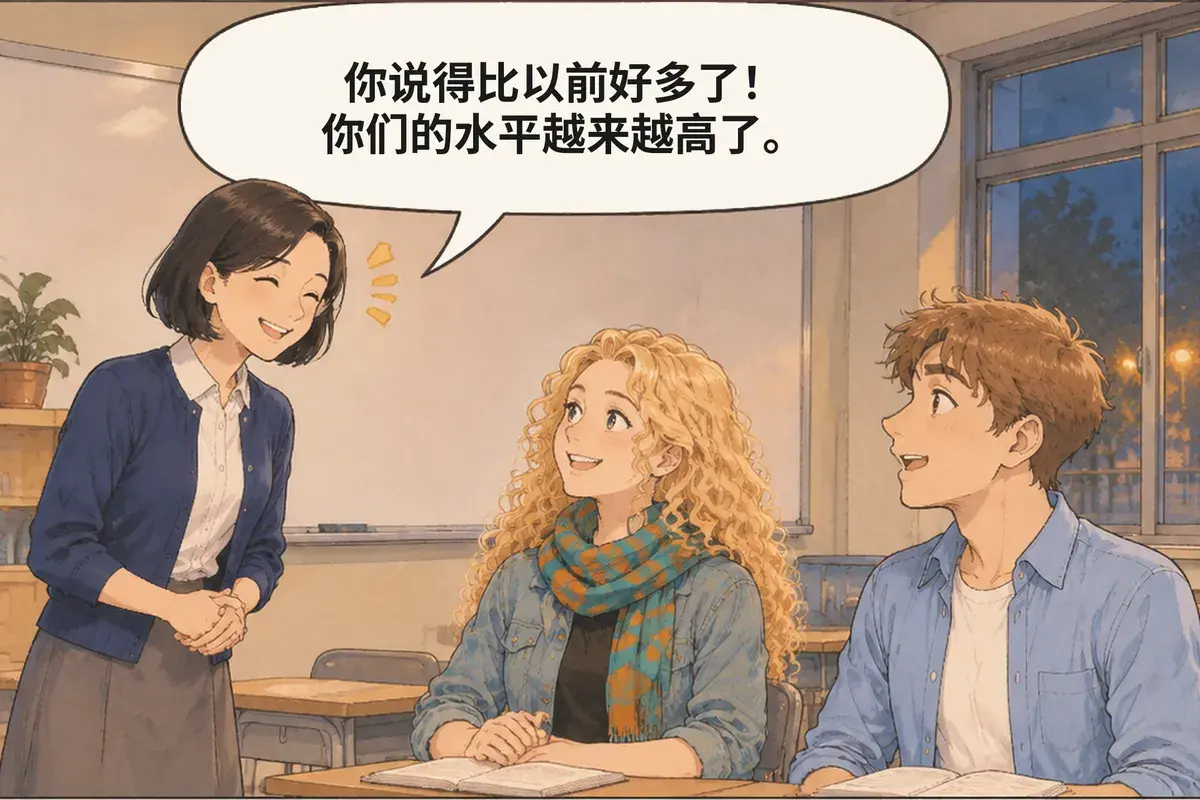
- 陈老师
你说得比以前好多了!你们的水平越来越高了。
You speak much better than before! Your level is getting higher and higher. (to several people)
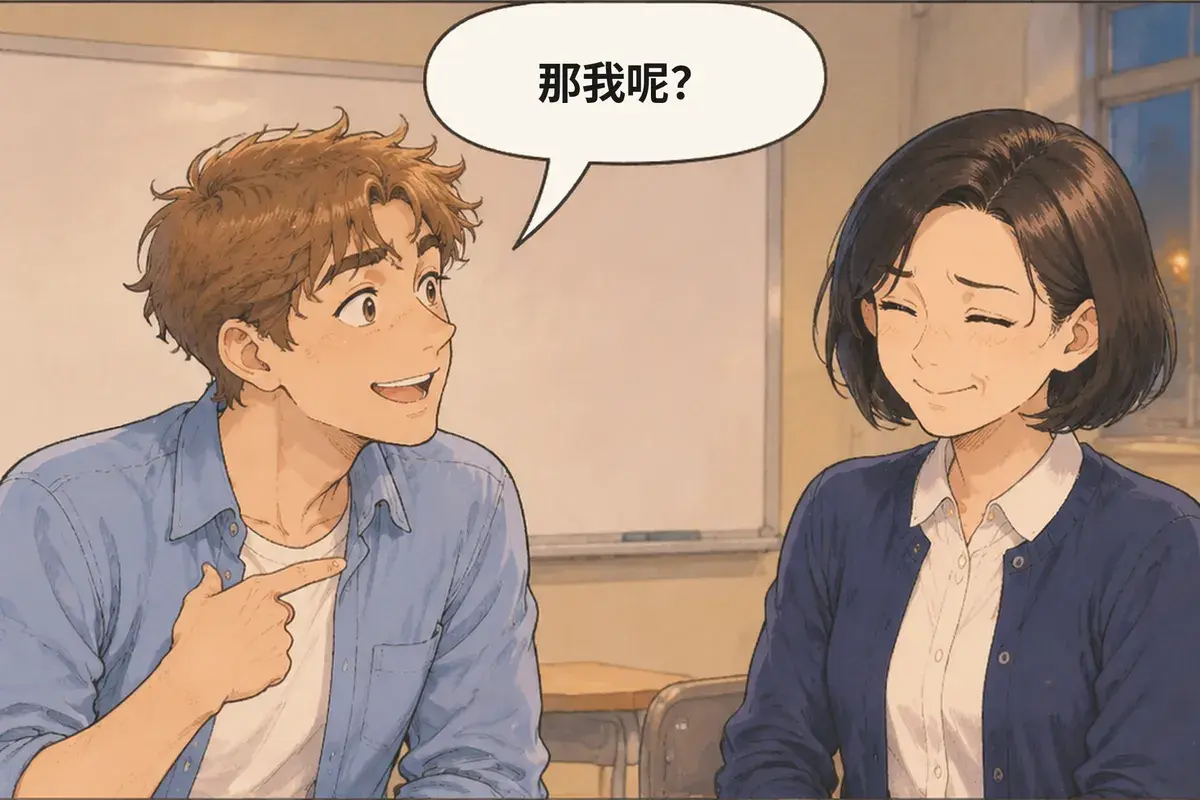
- 伊利亚
那我呢?
And what about me?
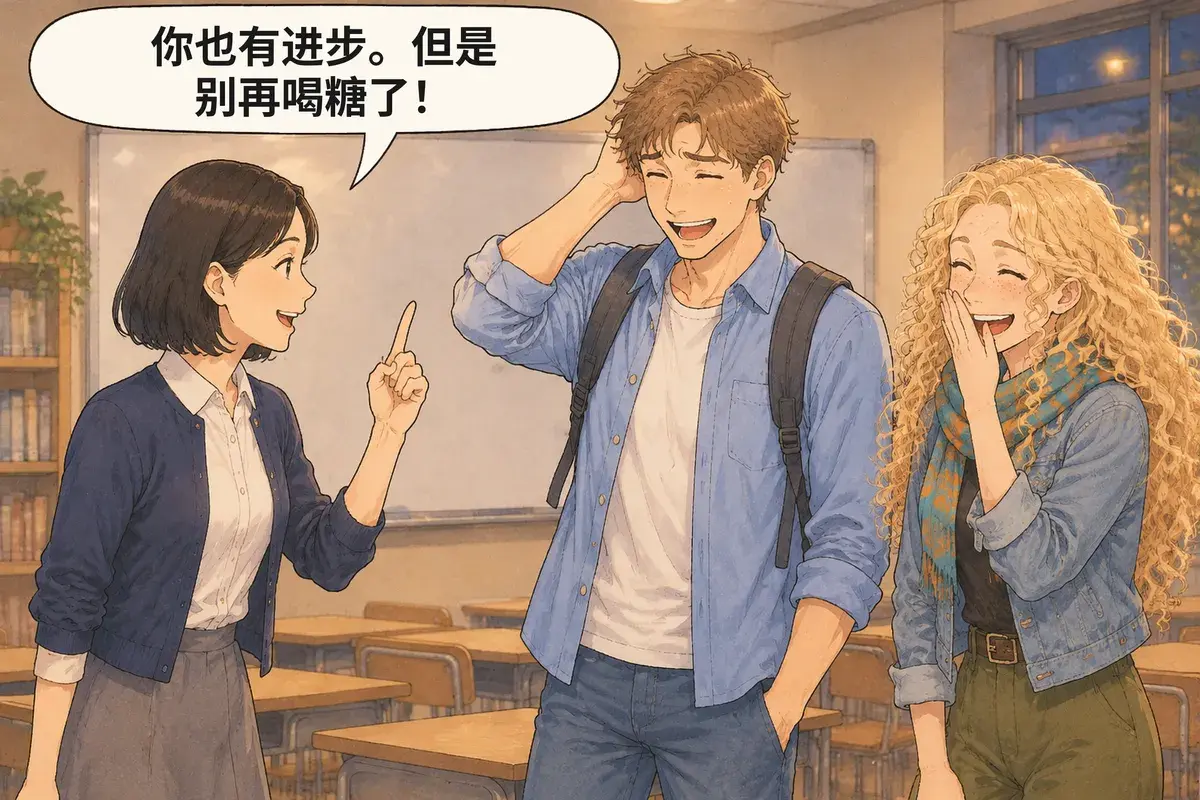
- 陈老师
你也有进步。但是别再喝糖了!
You've made progress too. But don't drink sugar anymore!
Grammar for this text
声调 说 得 不对! — the negative goes after 得: 说 得 不对 — "said it wrong", not ✗ 不 说 得 对. The object 声调 is moved to the front, like 饺子 in the first text.
我 想 喝 糖! — Ilya said táng "sugar" again instead of tāng "soup". It came out as "I want to drink sugar", hence Sara's joke: 太 甜 了 吧! — "that's way too sweet!"; 吧 here means "surely".
我 说 的 是 “汤” 啊! — 我 说 的 means "what I said": 的 without a noun (unit 15). 啊 at the end sounds hurt: "but I did say it!".
大声 说 一 遍 — 遍 means "one time, from start to finish" (unit 2): repeat the whole sentence. 大声 goes before the verb and tells how to say it.
这 次 很 准确。 — 这 次 means "this time".
声调 不 容易 — 容易 (róngyì) means "easy"; 不 容易 is "not easy". The teacher praises the students and cheers them on: tones are hard for everyone.
你 说 得 比 以前 好 多 了! — "much better than before": 好 多 了 (unit 15) also comes after 得.
你们 的 水平 越来越 高 了。 — a level is "high", 高, not 大 "big".
别 再 喝 糖 了! — 别 再 … 了 means "don't … anymore": the teacher is joking.
Words and grammar of the unit: Praise friends at a party.
Learn the words from the texts with flashcards
In the app, you can tap any word in a text to see its translation, forms and examples, and new words stick with flashcards. 15 minutes a day.
Start for freeEverything is open for free. No card needed to sign up.