

Chinese dialogue with translation · A2 · 16 lines
你饺子包得真快! You make dumplings really fast!
Comic · 16 panels
- 陈老师
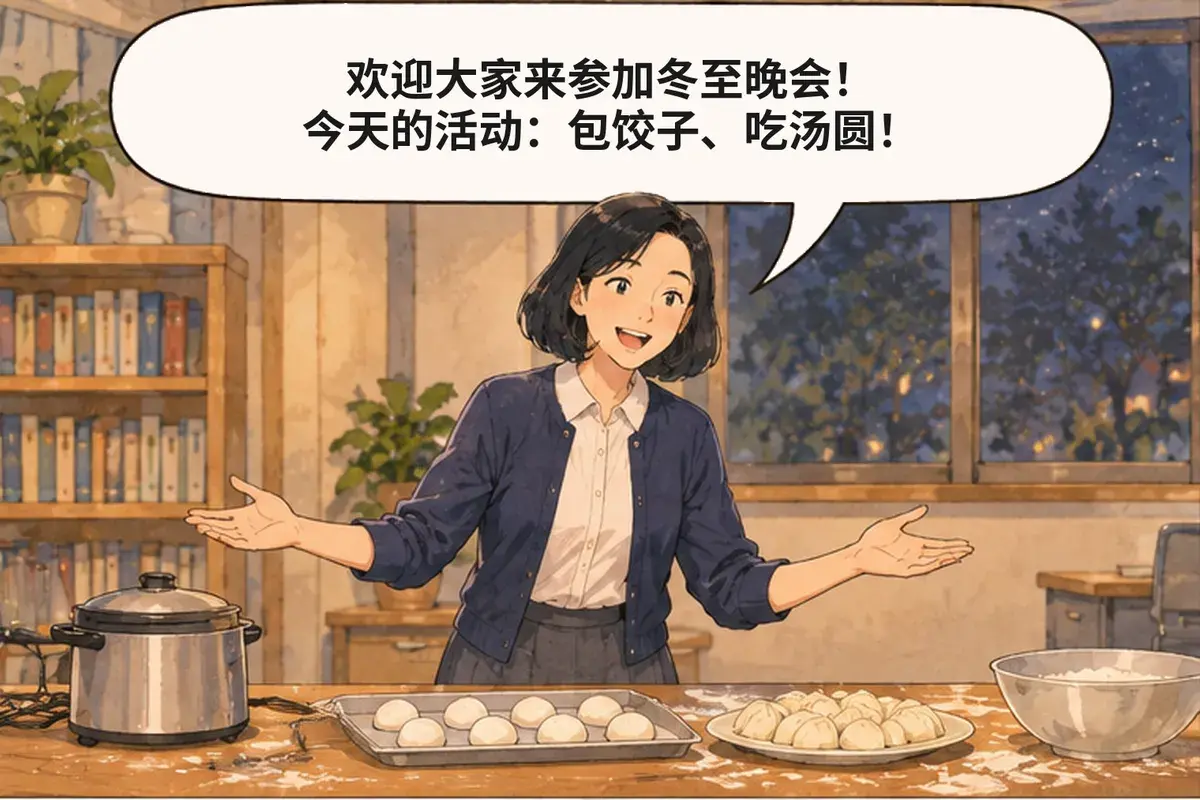
欢迎大家来参加冬至晚会!今天的活动:包饺子、吃汤圆!
Welcome, everyone, to the winter solstice party! Today's activities: making dumplings and eating tangyuan!
- 萨拉
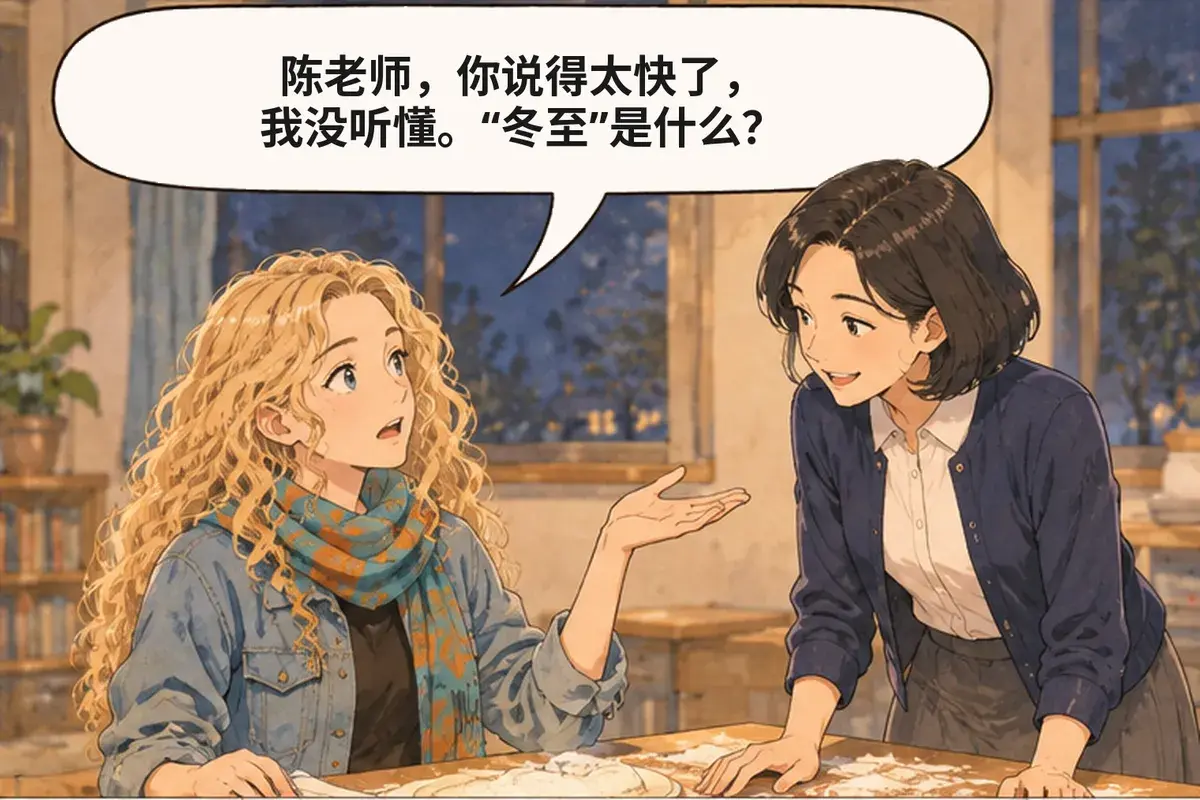
陈老师,你说得太快了,我没听懂。“冬至”是什么?
Teacher Chen, you're speaking too fast, I didn't understand. What's "winter solstice"?

- 陈老师
冬至这天,白天最短,天黑得最早。
On the winter solstice, the day is the shortest, and it gets dark the earliest.

- 萨拉
哦,明白了。那为什么吃饺子和汤圆?
Oh, I see. Then why do people eat dumplings and tangyuan?
- 陈老师
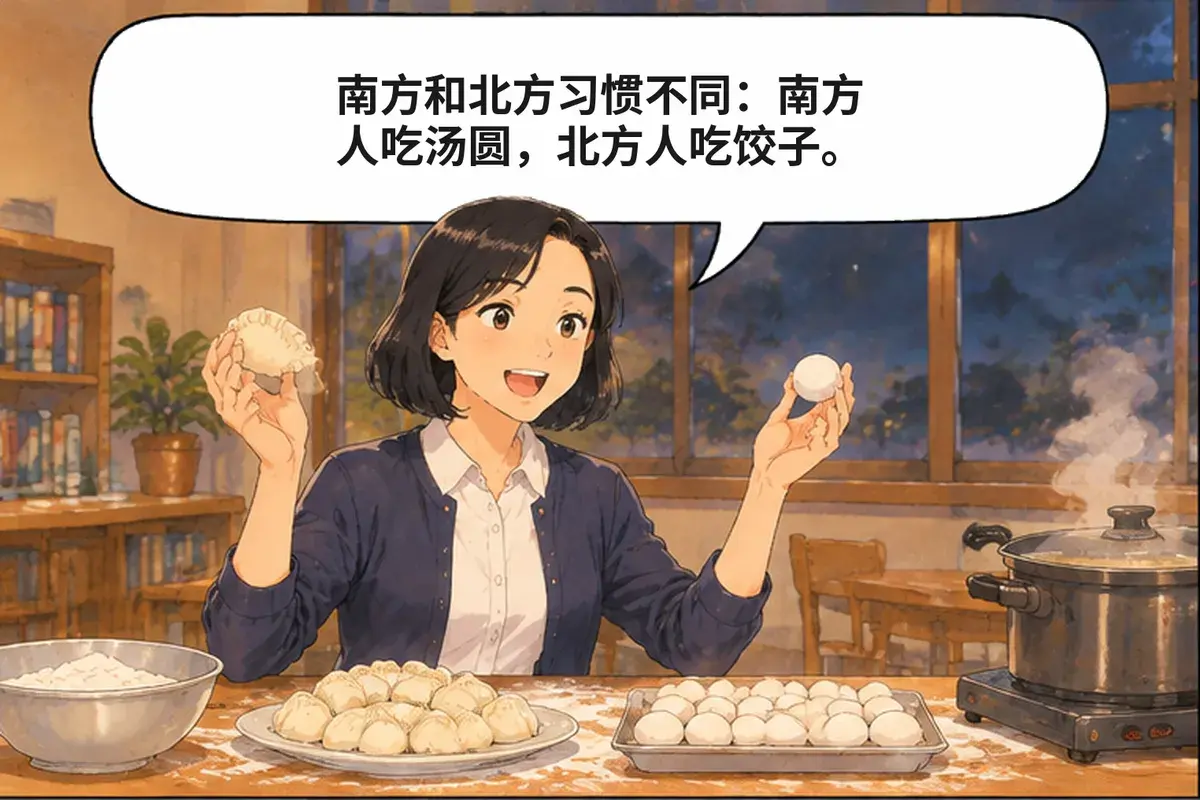
南方和北方习惯不同:南方人吃汤圆,北方人吃饺子。
The South and the North have different customs: southerners eat tangyuan, northerners eat dumplings.
- 萨拉
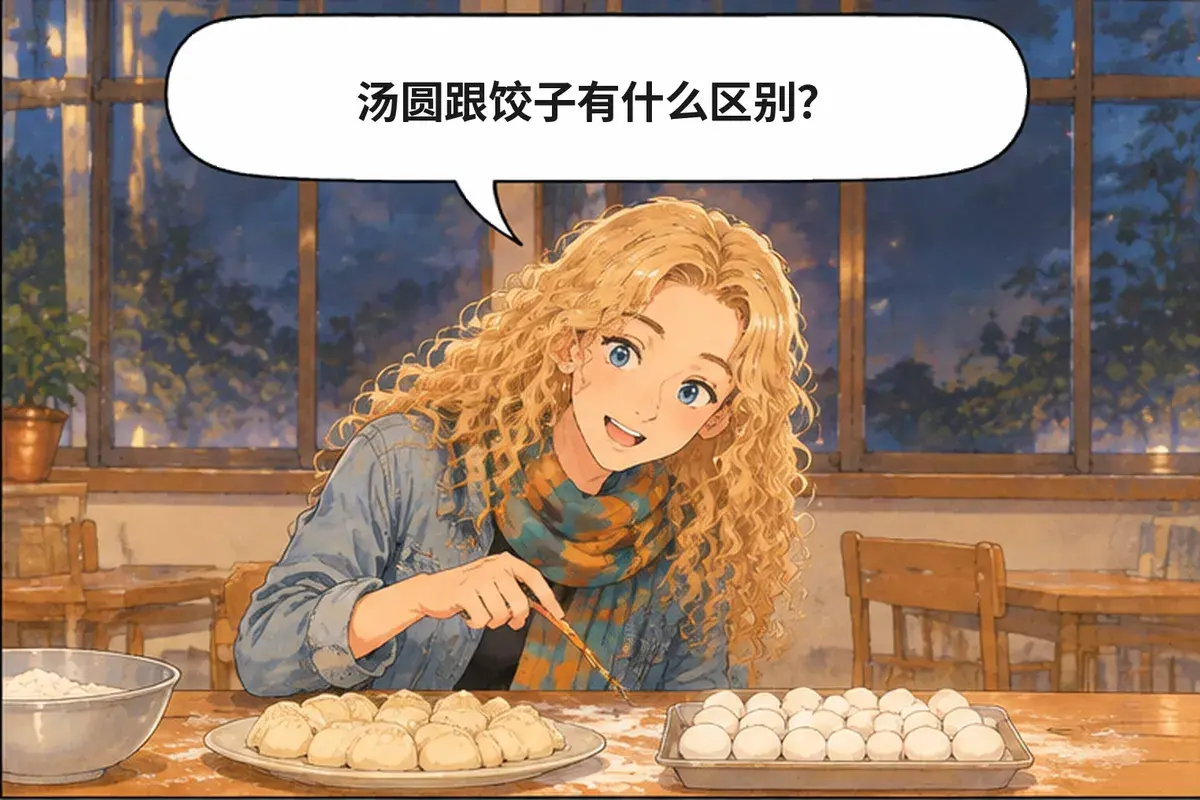
汤圆跟饺子有什么区别?
What's the difference between tangyuan and dumplings?
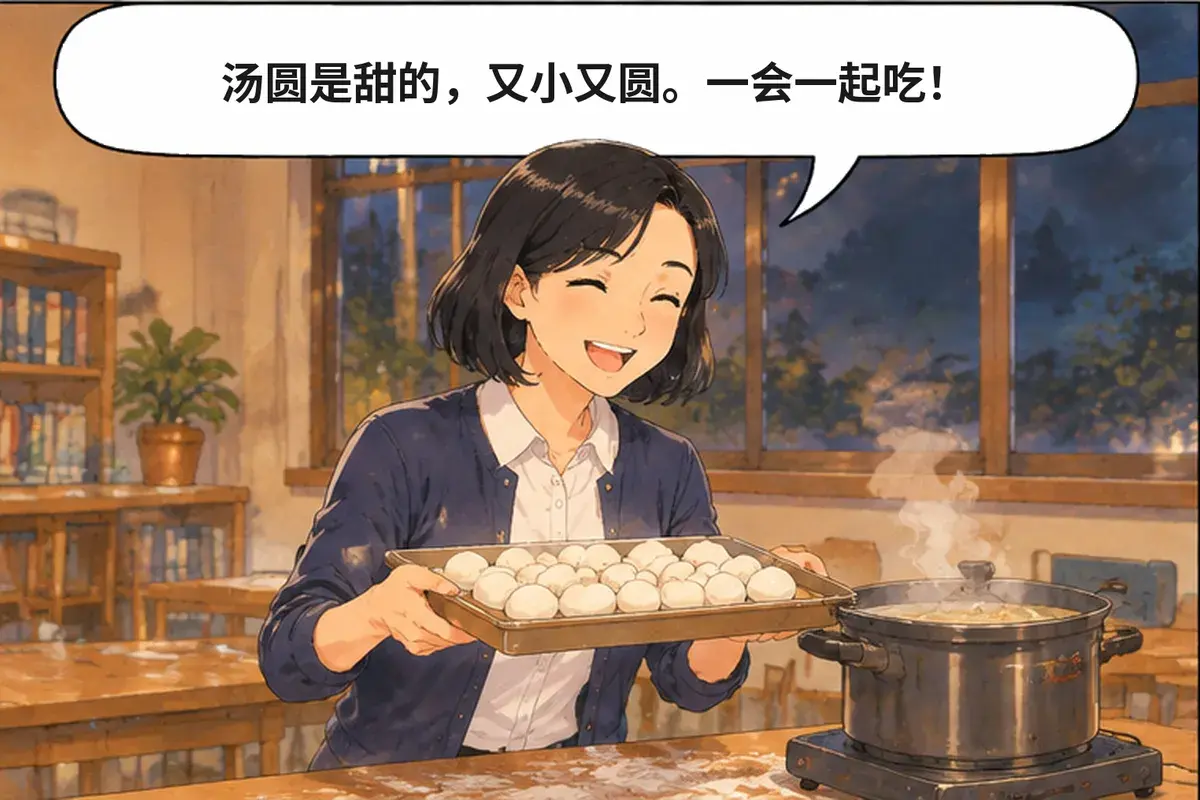
- 陈老师
汤圆是甜的,又小又圆。一会一起吃!
Tangyuan are sweet, and they're both small and round. We'll eat them together in a bit!
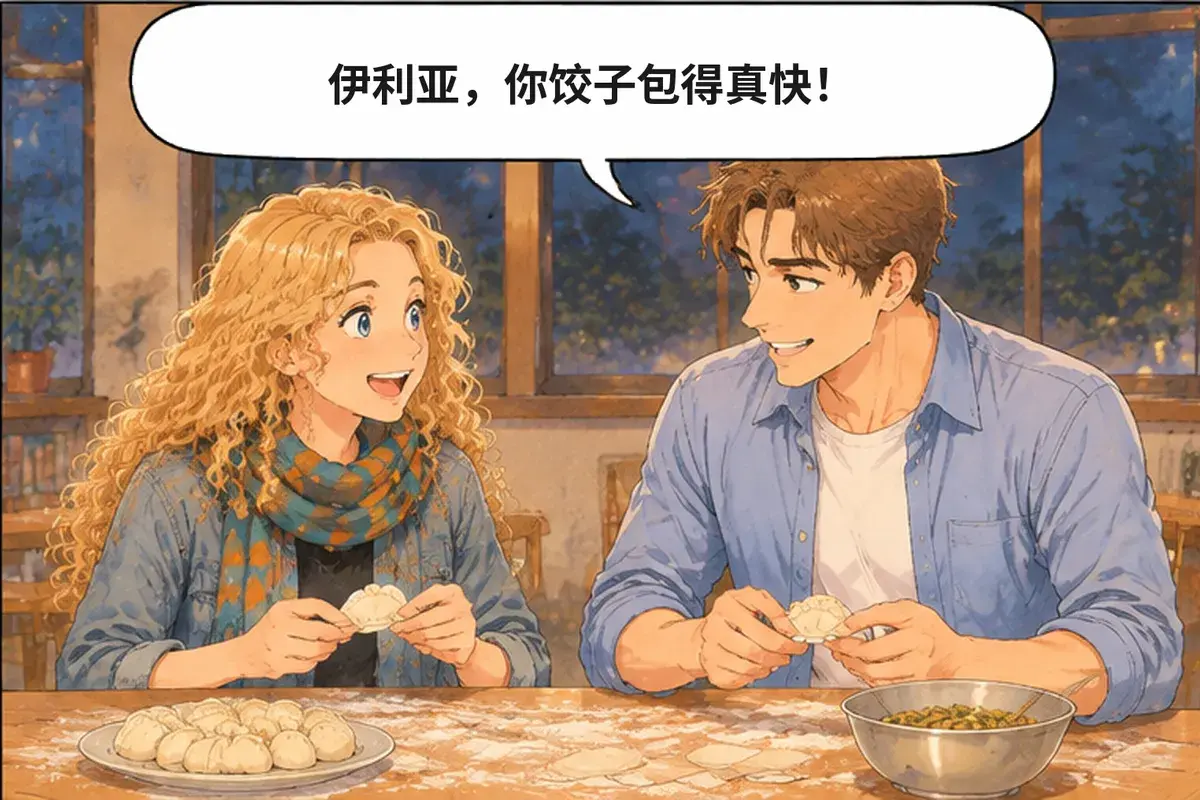
- 萨拉
伊利亚,你饺子包得真快!
Ilya, you make dumplings really fast!
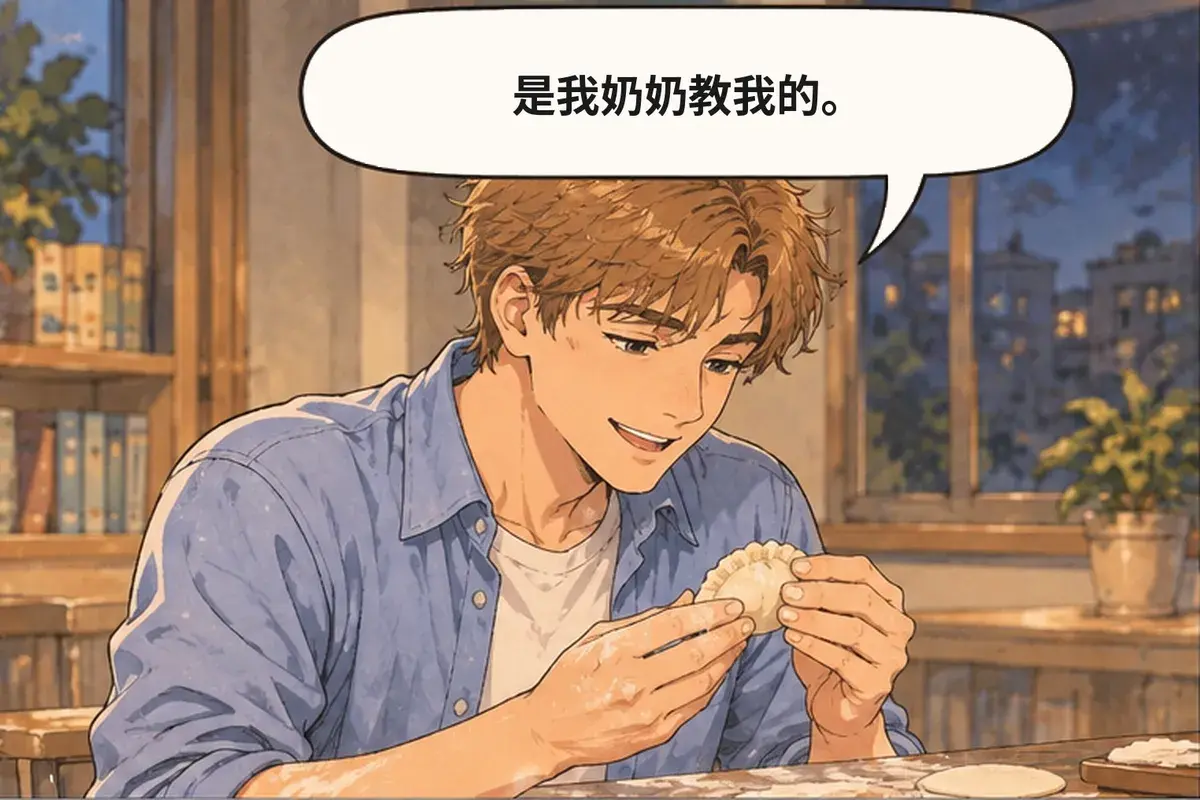
- 伊利亚
是我奶奶教我的。
It was my grandma who taught me.
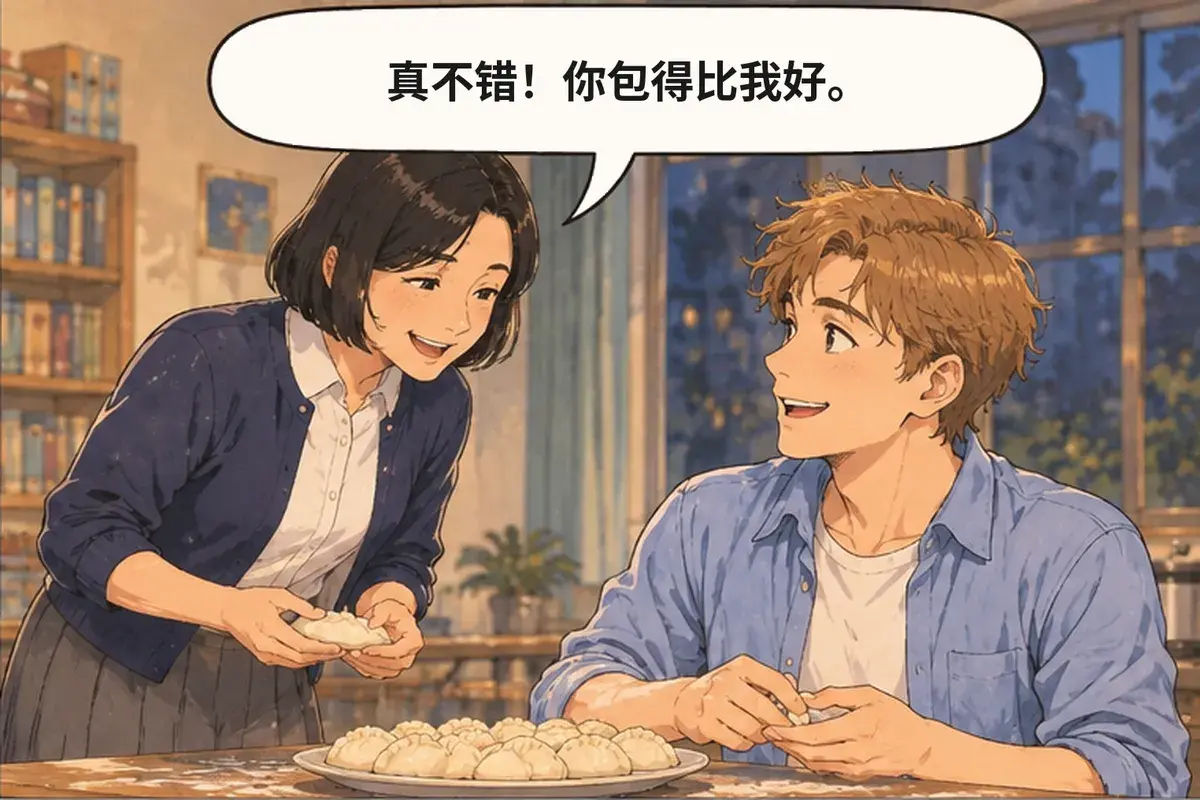
- 陈老师
真不错!你包得比我好。
Really good! You make them better than I do.
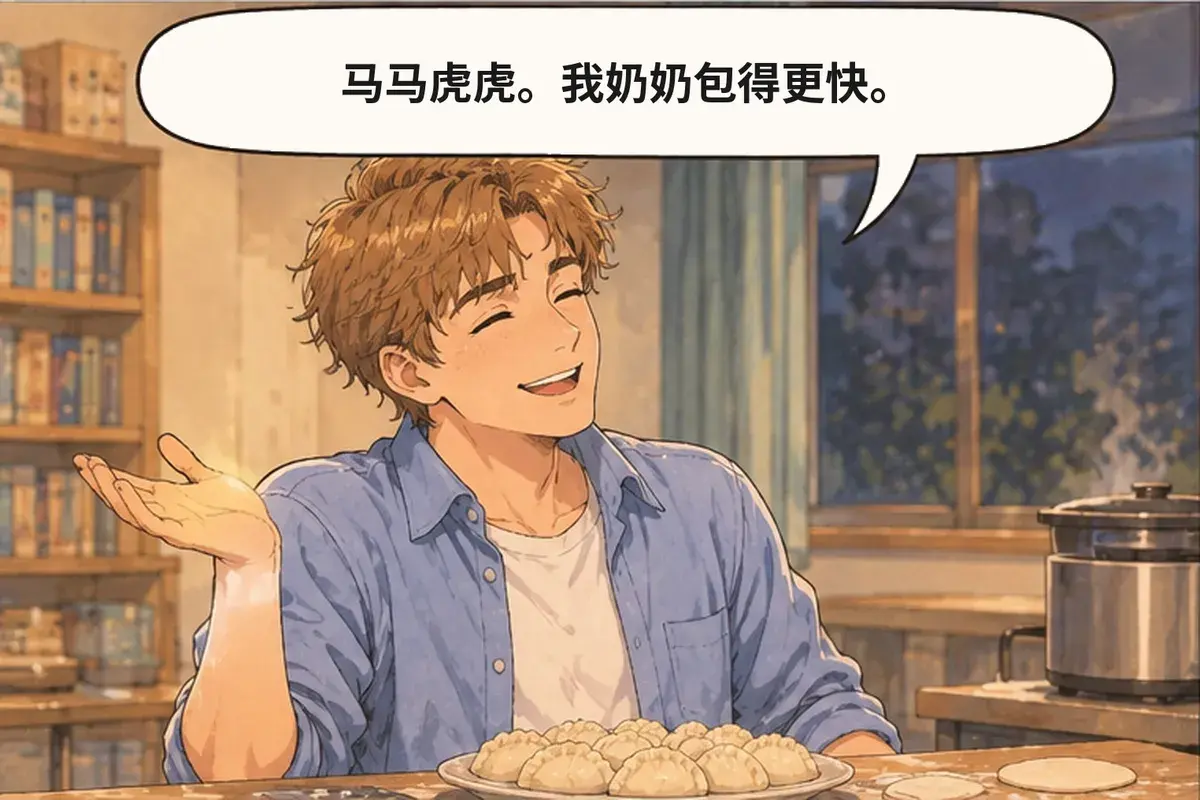
- 伊利亚
马马虎虎。我奶奶包得更快。
So-so. My grandma makes them even faster.
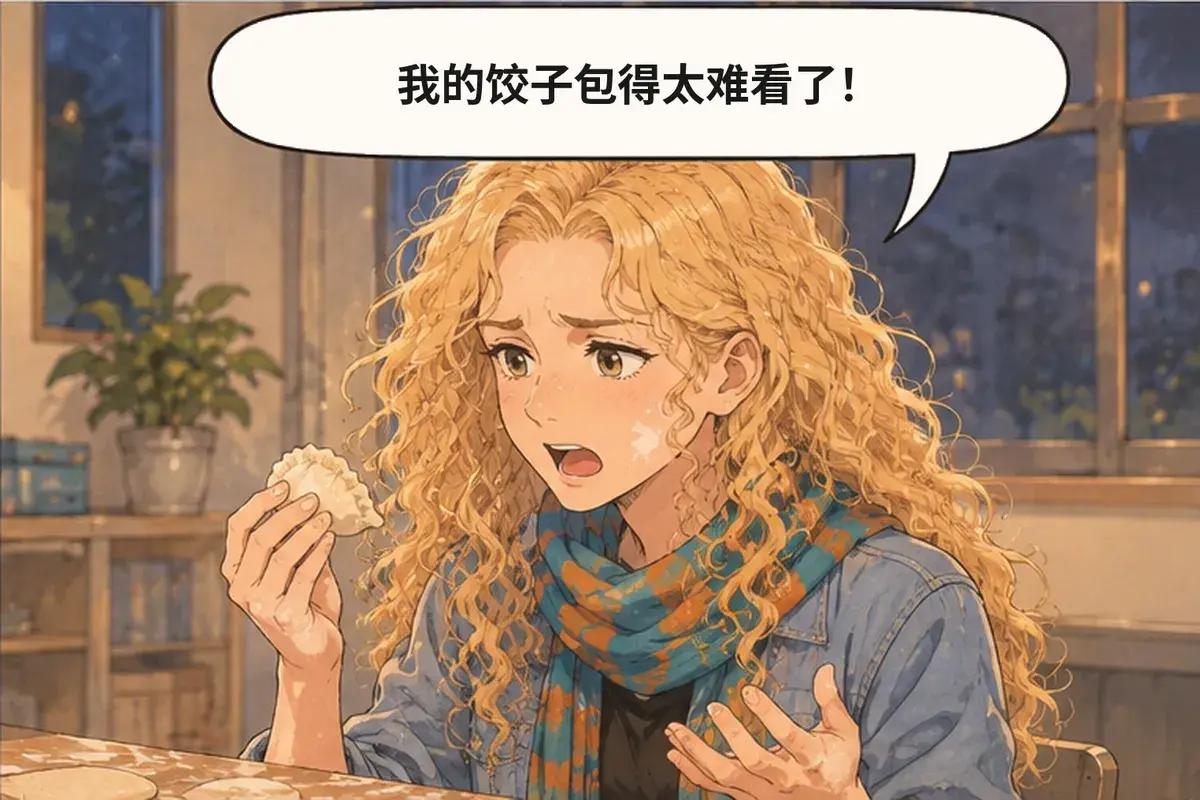
- 萨拉
我的饺子包得太难看了!
My dumplings came out so ugly!
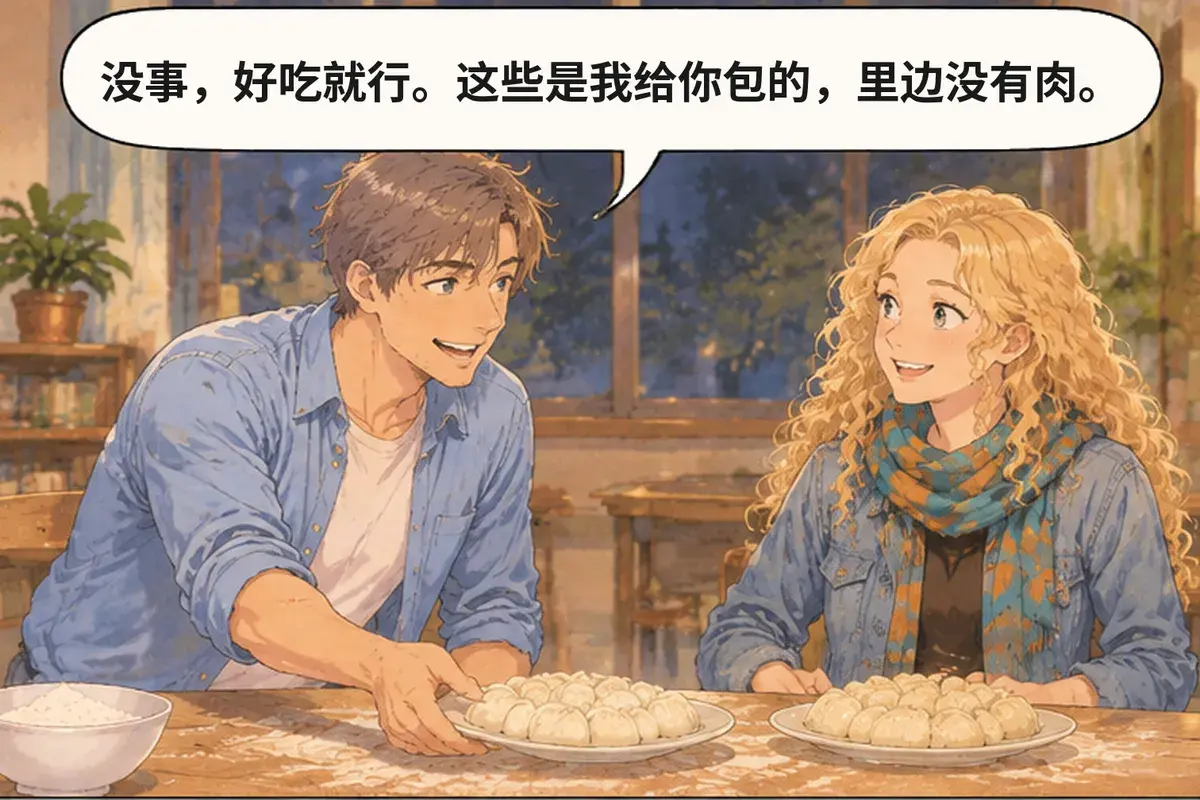
- 伊利亚
没事,好吃就行。这些是我给你包的,里边没有肉。
It's fine, as long as they taste good. I made these for you, there's no meat inside.
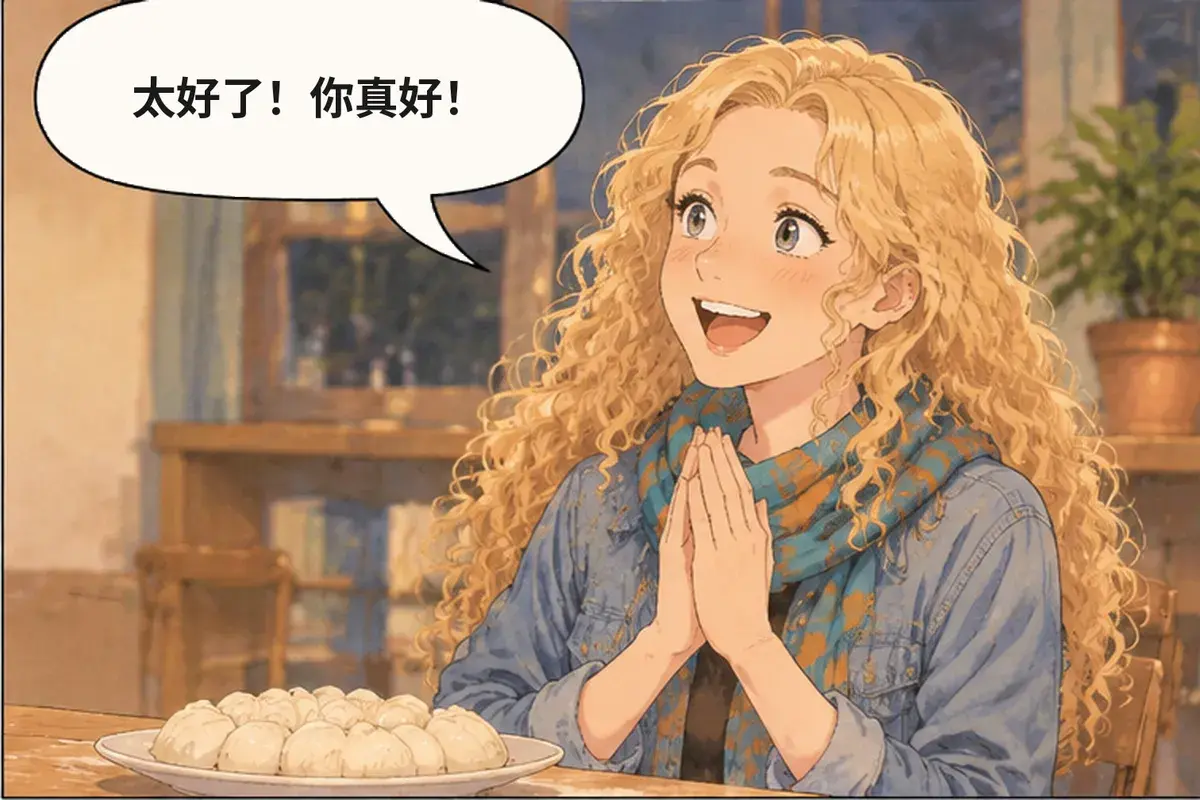
- 萨拉
太好了!你真好!
Great! You're really kind!
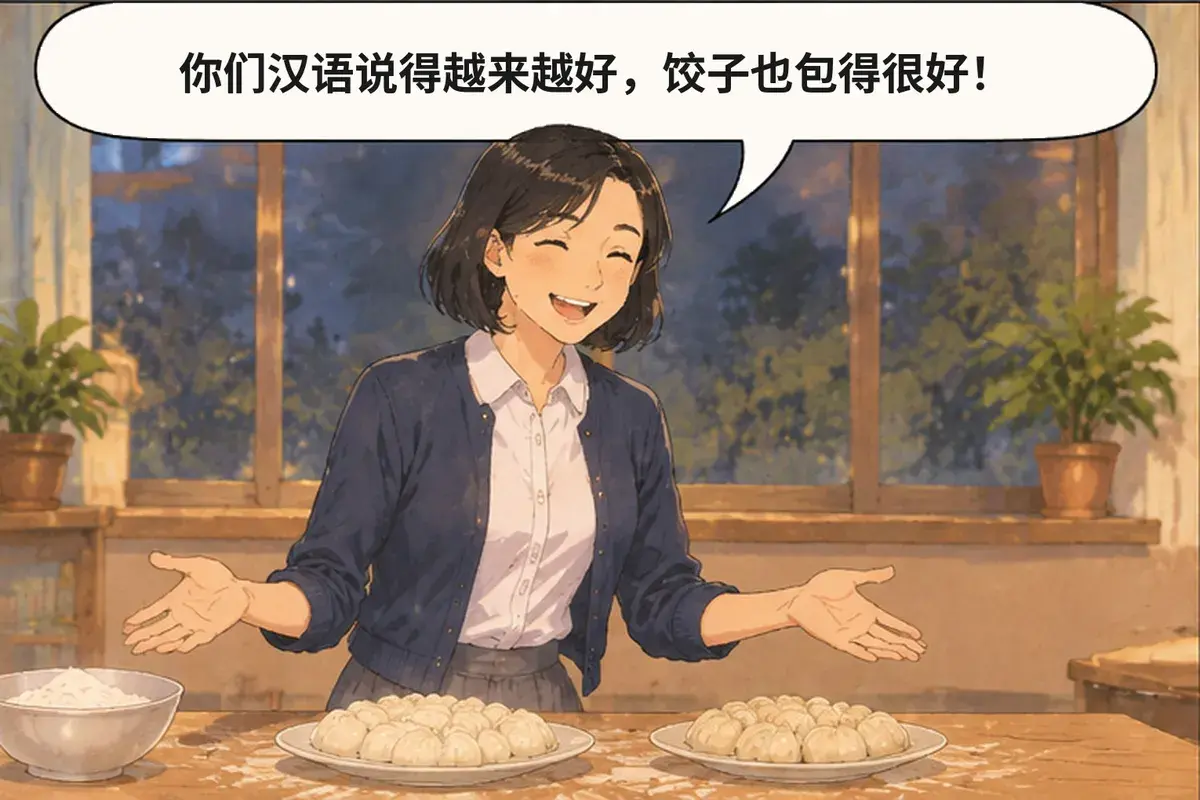
- 陈老师
你们汉语说得越来越好,饺子也包得很好!
You speak Chinese better and better, and you make dumplings well too! (to several people)

- 伊利亚
谢谢陈老师!汤圆好了吗?我饿了。
Thank you, Teacher Chen! Are the tangyuan ready? I'm hungry.
Grammar for this text
伊利亚, 你 饺子 包 得 真 快! — the main pattern of the unit: verb + 得 + how well, "you make them fast". The object 饺子 comes before the verb: after 包 得 comes only the judgment. 包 here means "to wrap, to make (dumplings)", not "bag".
你 说 得 太 快 了, 我 没 听懂。 — the same rule: "you speak too fast". Sara says 你 to her teacher: that's usual in this class, no 您 needed.
天 黑 得 最 早 — 天 黑 means "it gets dark"; 天 here is "sky". 白天 is the daytime, the light part of the day.
是 我 奶奶 教 我 的。 — 是 … 的 (unit 3) points out who taught him.
你 包 得 比 我 好。 — a comparison also comes after 得: "you make them better than I do".
马马虎虎。 — "so-so", literally "horse-horse, tiger-tiger". Praising yourself isn't the custom: people in China answer a compliment by modestly disagreeing.
这些 是 我 给 你 包 的 — "I made these for you": 的 without a noun (unit 15), and 给 你 here means "for you". Sara doesn't eat meat, so the filling is vegetables.
好吃 就 行 — "as long as they taste good".
In 2026 the winter solstice (冬至) falls on December 22. In the South of China people eat sweet rice balls, 汤圆, on this day, and in the North they eat dumplings. People argue about which is right, just as they do about zongzi at the Dragon Boat Festival.
Words and grammar of the unit: Praise friends at a party.
Learn the words from the texts with flashcards
In the app, you can tap any word in a text to see its translation, forms and examples, and new words stick with flashcards. 15 minutes a day.
Start for freeEverything is open for free. No card needed to sign up.