

Chinese dialogue with translation · A2 · 10 lines
别再吃方便面了! Don't eat instant noodles anymore!
Comic · 10 panels

- 王阿姨
大家早!台风果然往北走了,天晴了!
Good morning, everyone! Sure enough, the typhoon has moved north, and it's cleared up!

- 伊利亚
太阳也出来了!天空真干净,今天是个大晴天!
And the sun's come out too! The sky is so clean — it's a beautiful sunny day!

- 王阿姨
小伊,昨天晚上停电了,你没事吧?
Xiao Yi, the power went out last night — you're OK, right?

- 伊利亚
没事!张磊来我家了,我们一起看了电影。
I'm fine! Zhang Lei came over to my place, and we watched a movie together.
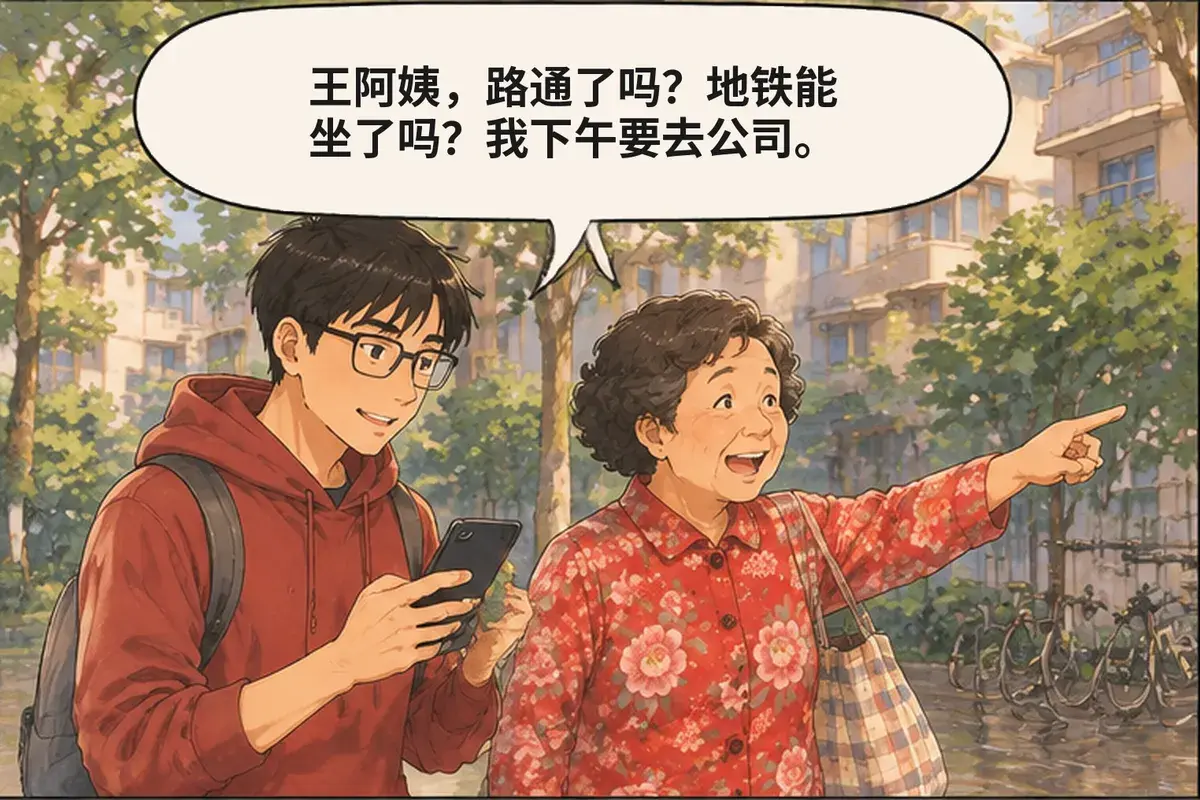
- 张磊
王阿姨,路通了吗?地铁能坐了吗?我下午要去公司。
Auntie Wang, are the roads open again? Can we take the subway now? I need to go to the office this afternoon.
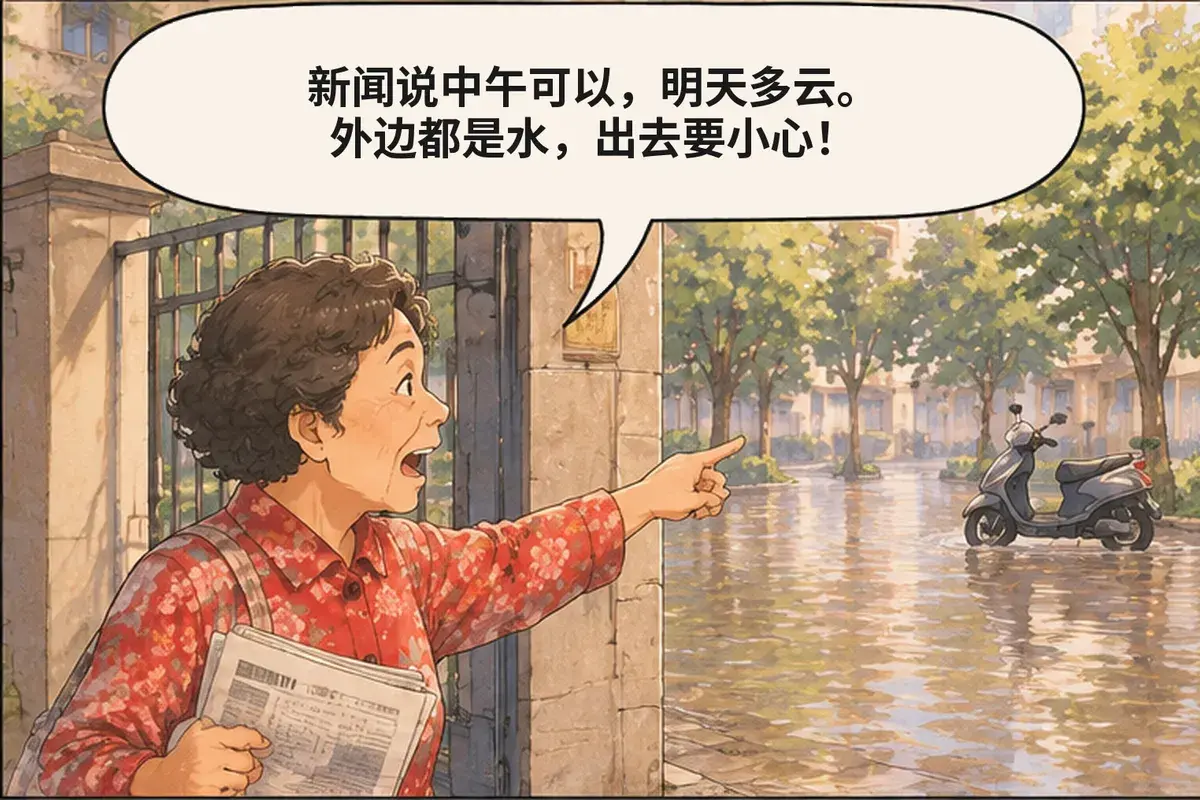
- 王阿姨
新闻说中午可以,明天多云。外边都是水,出去要小心!
The news says it'll be OK at noon, and tomorrow will be partly cloudy. There's water everywhere outside — be careful when you go out!

- 伊利亚
好的。王阿姨,你家怎么样?
OK. Auntie Wang, how's your place?

- 王阿姨
很好!风没吹进来。中午你们两个来我家吃饭!
Very good! The wind didn't blow in. Come to my place for lunch at noon, you two!

- 王阿姨
菜我都准备好了,别再吃方便面了!
I've got all the food ready — don't eat instant noodles anymore!

- 张磊
太好了!谢谢王阿姨!
Great! Thank you, Auntie Wang!
Grammar for this text
别 再 吃 方便面 了! — 别 再 … 了 means "don't … anymore", "stop …": 别 "don't" + 再 "again" + 了 at the end.
台风 果然 往 北 走 了, 天 晴 了! — 走 了 means "has left": people talk about a typhoon as if it were a guest. 天 here means "sky, weather", and 晴 means "clear": 天 晴 了 means "it's cleared up". Both 了 mean "now it's like this". 果然 means "sure enough, as expected": people say it when something said earlier comes true (Auntie Wang listens to the news, and the news said the typhoon would move north). 往 北 means "north, toward the north": 往 "toward" + 北 "north".
天空 真 干净, 今天 是 个 大 晴天! — 天空 means "sky", a word for descriptions. After a typhoon the sky really is clean. 晴天 means "a sunny day, clear weather"; 大 晴天 means "a really sunny day, not a cloud in the sky". 是 个 means "it's a …": in speech the 一 before 个 is often dropped.
昨天 晚上 停电 了 — 停电 means "the power went out": 停 "to stop" + 电 "electricity". During a typhoon the power often goes out.
你 没事 吧? — 吧 in a question means "…, right?": Auntie Wang hopes everything is fine.
路 通 了 吗? — 通 means "open, passable": 路 通 了 means "the road is open again, cars can get through". After a typhoon the roads are under water, and they get closed.
地铁 能 坐 了 吗? — "can we take the subway now?": 能 … 了 means "can … now".
外边 都 是 水 — 都 是 means "everywhere, nothing but": "there's water everywhere outside".
菜 我 都 准备好 了 — the thing that's ready comes first; 都 means "all".
风 没 吹 进来 — 吹 "to blow" + 进来 "in, in here": "the wind didn't blow in".
你们 两 个 — "you two": Auntie Wang invites both Ilya and Zhang Lei to lunch.
明天 多云 — 多云 (duōyún) means "partly cloudy": a forecast word. A fully covered sky is 阴天.
Words and grammar of the unit: Get ready for a typhoon.
Learn the words from the texts with flashcards
In the app, you can tap any word in a text to see its translation, forms and examples, and new words stick with flashcards. 15 minutes a day.
Start for freeEverything is open for free. No card needed to sign up.