

Chinese dialogue with translation · A2 · 14 lines
你去派出所登记了吗? Did you go to the police station to register?
Comic · 14 panels

- 萨拉
伊利亚!好久不见!快进来。
Ilya! Long time no see! Come in, quick.

- 伊利亚
是啊!你的新房子真不错!
Yeah! Your new apartment is really nice!

- 萨拉
我刚搬家。这里离学校很近,房租也不贵。
I just moved. This place is close to school, and the rent isn't expensive either.

- 伊利亚
啊,这是你的猫吗?
Oh, is this your cat?

- 萨拉
对!房东让我养猫。你看,它很可爱吧?
Yes! The landlady lets me keep a cat. Look, it's cute, isn't it?

- 伊利亚
很可爱!对了,你去派出所登记了吗?
Very cute! Oh, by the way, did you go to the police station to register?
- 萨拉
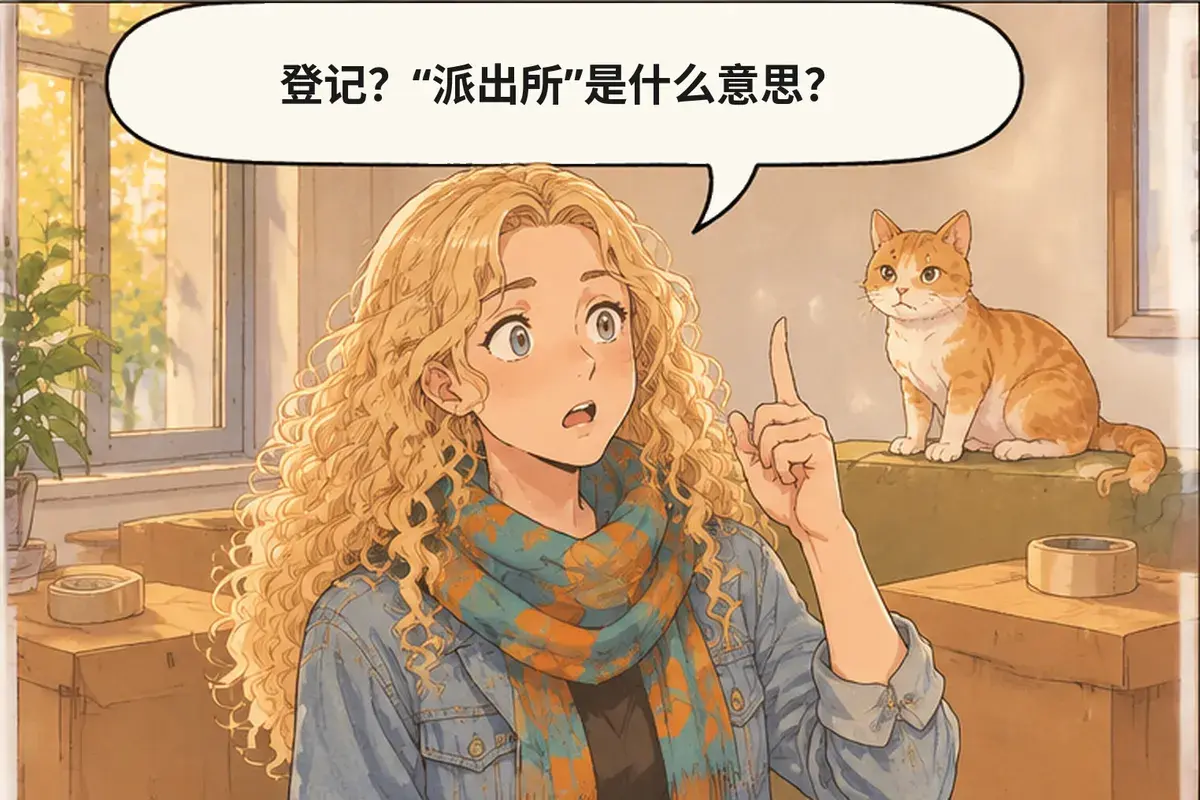
登记?“派出所”是什么意思?
Register? What does "pàichūsuǒ" mean?

- 伊利亚
警察!外国人租房子以后,必须去派出所登记。
The police! After foreigners rent an apartment, they must go to the police station to register.

- 萨拉
啊?别人都没告诉我!我应该什么时候去?
What? Nobody else told me! When should I go?

- 伊利亚
搬家以后马上就得去。
You have to go right after you move.
- 萨拉
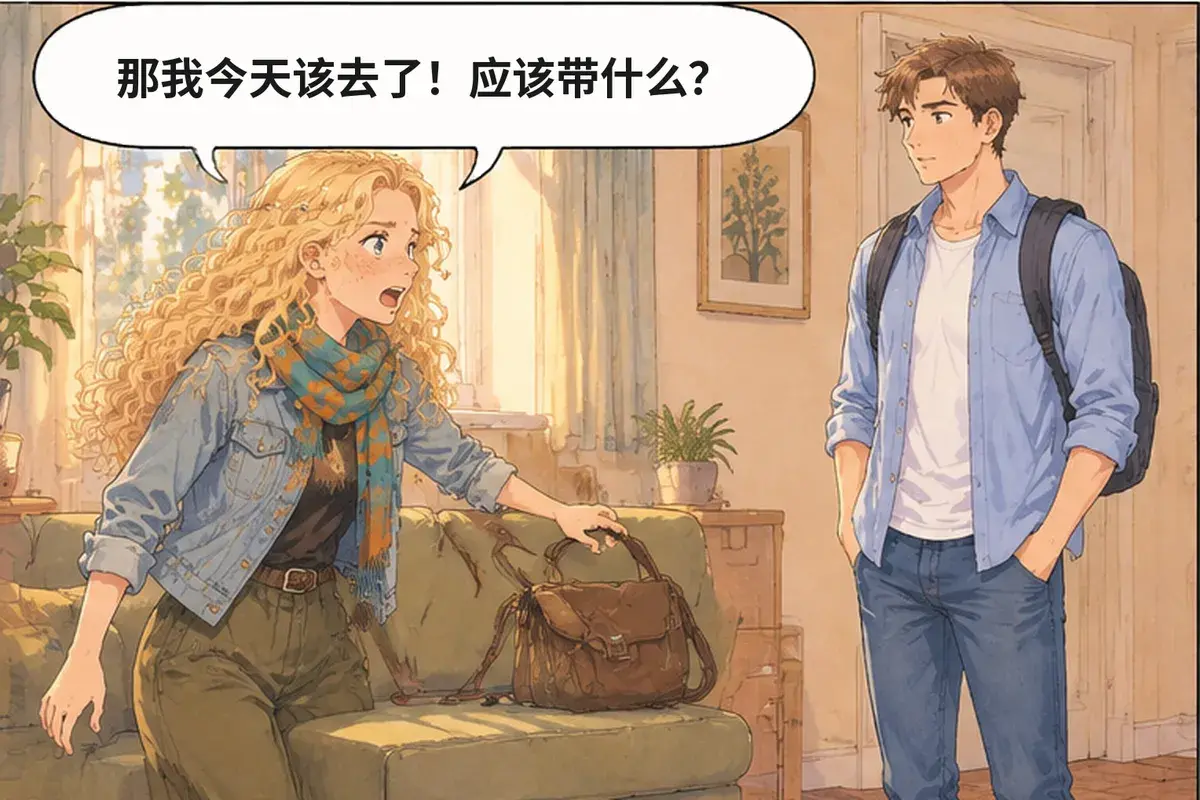
那我今天该去了!应该带什么?
Then it's time for me to go today! What should I bring?

- 伊利亚
护照、签证、合同,还得有房东的电话。
Your passport, visa and contract, and you also have to have the landlady's phone number.

- 萨拉
合同……我不知道放在哪里了。
The contract… I don't know where I put it.

- 伊利亚
没事,你先找,我等你。
It's OK, look for it first, I'll wait for you.
Grammar for this text
搬家 以后 马上 就 得 去。 — 得 is read děi here: the casual "have to". It's written like the particle 得 (de), but it's a different word. 搬家 以后 means "after moving": 以后 goes after the event. The rule is real: a foreigner registers at the local police station within 24 hours of moving in.
外国 人 租 房子 以后, 必须 去 派出所 登记。 — 必须 (bìxū) is the strictest "must": people say it about laws and rules. 外国 人 is two words, like 中国 人.
我 应该 什么 时候 去? — 应该 means "should, that's the right thing to do".
那 我 今天 该 去 了! — 该 … 了 means "it's time to": "so it's time for me to go today".
房东 让 我 养 猫。 — 让 here means "to let": "the landlady lets me keep a cat". In general, A 让 B + action means "A tells B to do something" or "A lets B do it"; the details come at B1.
它 很 可爱 吧? — 它 (tā) means "it"; people use it for animals. It sounds like 他 and 她.
好久不见! — a set phrase, "long time no see": 好久 "a very long time" + 不 见 "not see". It's said hǎojiǔ bú jiàn.
别人 都 没 告诉 我! — 别人 means "other people"; 都 没 means "none of them did": "nobody told me".
我 不 知道 放 在 哪里 了。 — "I don't know where I put it": 了 at the end shows it has already happened.
Words and grammar of the unit: Register after moving.
Learn the words from the texts with flashcards
In the app, you can tap any word in a text to see its translation, forms and examples, and new words stick with flashcards. 15 minutes a day.
Start for freeEverything is open for free. No card needed to sign up.