

Chinese dialogue with translation · A2 · 15 lines
请先填这张表 Please fill out this form first
Comic · 15 panels

- 萨拉
您好!我搬家了,想登记一下。
Hello! I've moved, and I'd like to register. (polite)

- 警察
好的。您是留学生吧?证件都带了吗?
OK. You're an international student, right? Did you bring all your documents? (polite)

- 萨拉
对,我是留学生。不好意思,“证件”是什么意思?
Yes, I'm an international student. Sorry, what does "zhèngjiàn" mean?
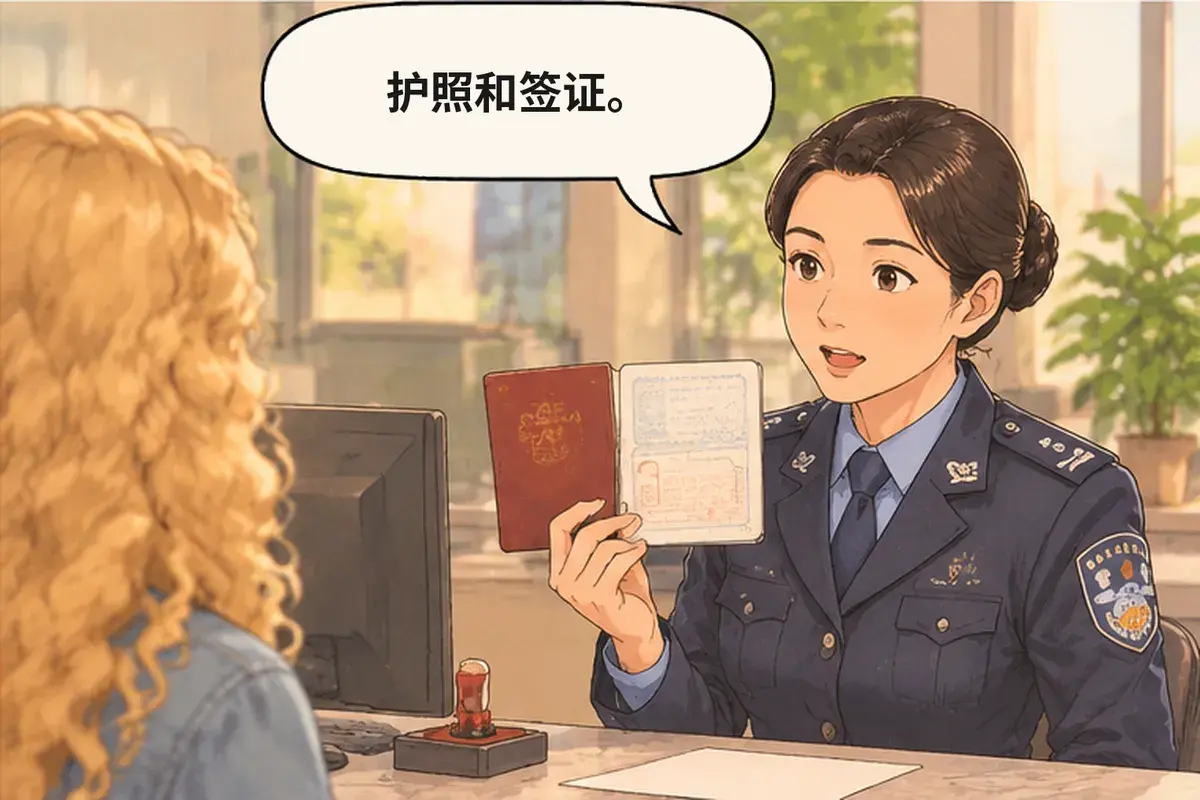
- 警察
护照和签证。
Your passport and visa.

- 萨拉
哦!带了,给您。
Oh! I brought them, here you are. (polite)
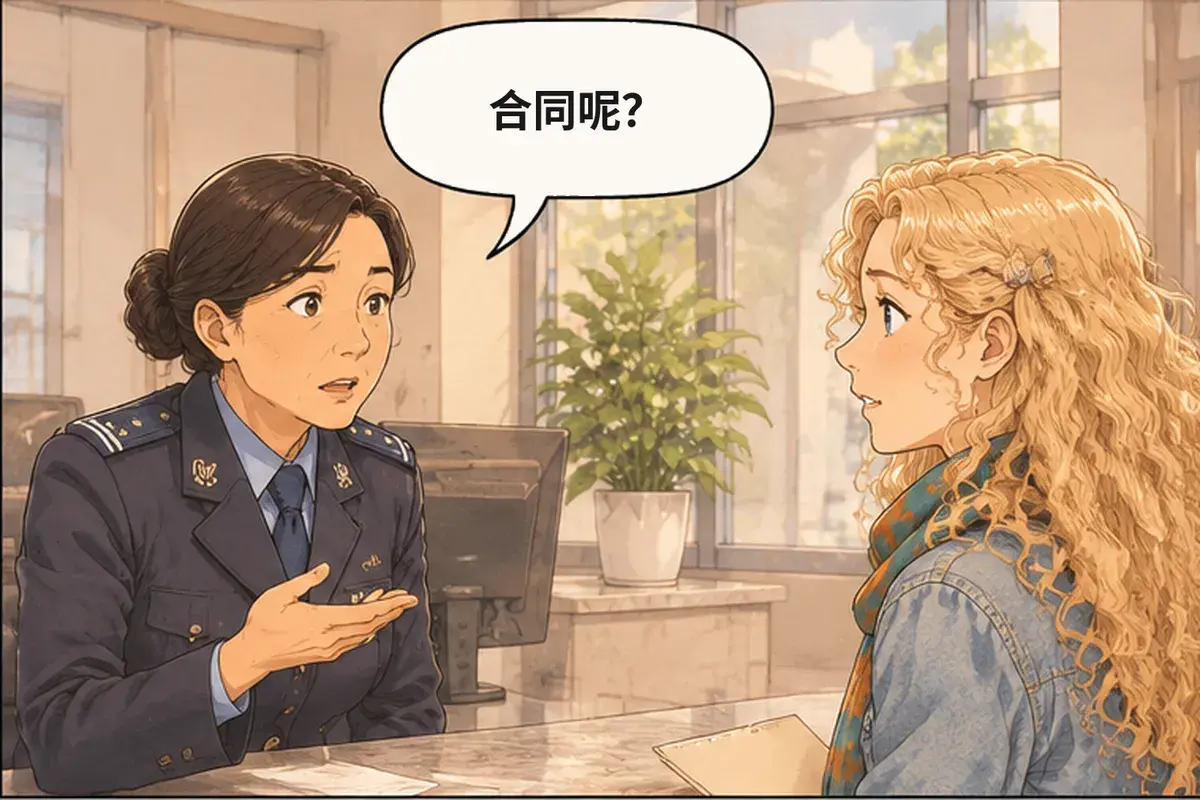
- 警察
合同呢?
And the contract?

- 萨拉
合同我没找到……但是手机里有照片,可以吗?
The contract, I didn't find it… But there's a photo on my phone. Is that OK?

- 警察
可以。请先填这张表。地址必须用中文写。
That's fine. Please fill out this form first. The address must be written in Chinese.

- 萨拉
用中文?伊利亚,我该怎么写?
In Chinese? Ilya, how should I write it?

- 伊利亚
别急。先写杭州,然后写路、小区、楼、单元、室。
Don't worry. First write Hangzhou, then the street, the residential compound, the building, the entrance and the apartment.

- 萨拉
字太多了!房东的电话也得写吗?
Too many characters! Do I have to write the landlady's phone number too?

- 警察
对,写在这里。您的电话也要留下。
Yes, write it here. You need to leave your phone number too. (polite)

- 萨拉
好了!您看看,这样行吗?
Done! Take a look, is this OK? (polite)

- 警察
行。以后搬家,也必须马上来登记,别忘了。
OK. In the future, when you move, you must also come and register right away. Don't forget.

- 萨拉
知道了!谢谢您!
Got it! Thank you! (polite)
Grammar for this text
请 先 填 这 张 表。 — 填 (tián) means "to fill out", 表 means "form". The measure word is 张, like for a ticket: it's used for sheets of paper. 先 means "first" (A1, unit 17).
地址 必须 用 中文 写。 — 必须: no choice, it's a rule. 用 中文 ("with Chinese", what you write with) goes before the verb 写.
证件 都 带 了 吗? — 证件 is a general word for documents: passport, visa, ID card. Sara didn't understand and asked, so the officer just named the documents.
您 是 留学生 吧? — 留学生 means an international student. 吧 means "…, right?": the officer is guessing. He speaks to Sara with the polite 您.
先 写 杭州, 然后 写 路、 小区、 楼、 单元、 室。 — a Chinese address goes from big to small: city, street, residential compound, building, entrance (单元), apartment (室). An American address goes the other way. 先 … 然后 … means "first …, then …" (unit 2).
我 该 怎么 写? — 该 without 了 means "how should I".
房东 的 电话 也 得 写 吗? — 得 (děi) means "have to", in casual speech.
您 的 电话 也 要 留下。 — 留下 — "to leave" (with someone): 留下 电话 — "to leave your phone number". 电话 here means "phone number".
以后 搬家, 也 必须 马上 来 登记 — 以后 at the start means "from now on, in the future". After an event (text 1), 以后 means "after": the position decides the meaning.
合同 我 没 找到…… — the contract comes first: "the contract, I didn't find it". This is how Chinese shows what you're talking about.
Words and grammar of the unit: Register after moving.
Learn the words from the texts with flashcards
In the app, you can tap any word in a text to see its translation, forms and examples, and new words stick with flashcards. 15 minutes a day.
Start for freeEverything is open for free. No card needed to sign up.