

Chinese dialogue with translation · A1 · 14 lines
我只看见了人 I only saw people
Comic · 13 panels

- 伊利亚
五一那天,我和萨拉去了西湖。
On May Day, Sara and I went to West Lake.
- 伊利亚
朋友说西湖很好看。
My friends said West Lake is beautiful.

- 伊利亚
但是那天我没看见湖,我只看见了人!
But that day I didn't see the lake, I only saw people!

- 伊利亚
很多中国人想跟外国人拍照片:德国人、俄罗斯人、我……
Lots of Chinese people wanted to take photos with foreigners: Germans, Russians, me…

- 伊利亚
他们问:“可以一起拍照片吗?”我说:“可以啊!”
They asked, "Can we take a photo together?" I said, "Sure!"

- 伊利亚
我跟一百个人拍了照片!
I took photos with a hundred people!

- 伊利亚
下午萨拉去了洗手间。男洗手间人不多,女洗手间人很多。
In the afternoon Sara went to the restroom. There weren't many people in the men's room, but there were a lot in the women's room.
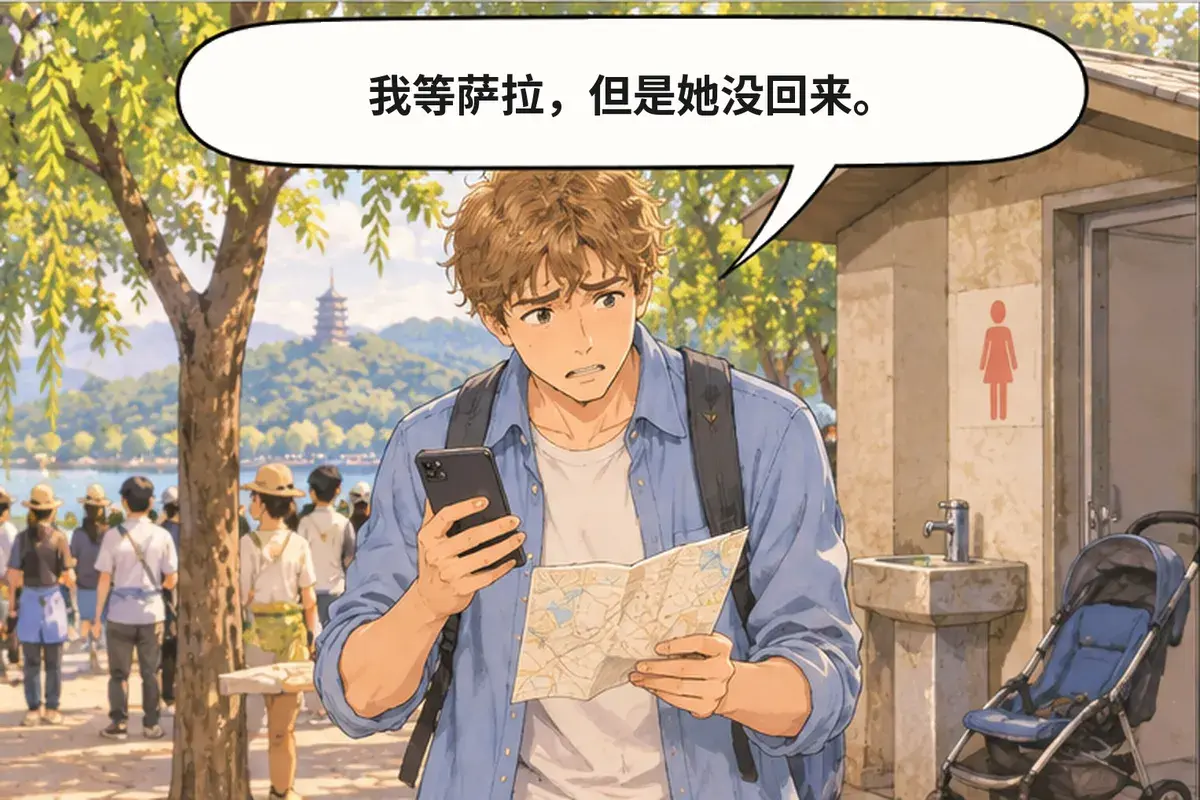
- 伊利亚
我等萨拉,但是她没回来。
I waited for Sara, but she didn't come back.

- 伊利亚
我去找她,没找到。
I went to look for her and didn't find her.

- 伊利亚
我给她打电话,她说:“我在洗手间门口啊!”
I called her, and she said, "I'm at the restroom entrance!"

- 伊利亚
她在别的洗手间!
She was at a different restroom!

- 伊利亚
最后我找到了她。萨拉说:“太累了,我们回去吧。”
In the end I found her. Sara said, "I'm so tired, let's go back."

- 伊利亚
晚上我们吃了晚饭,坐地铁回家。
In the evening we had dinner and took the subway home.

- 伊利亚
回到家,我很累,但是五一很好玩!
When I got home, I was really tired, but May Day was a lot of fun!
Grammar for this text
我 只 看见 了 人! — 只 "only" goes before the verb, not before the word 人, the way English can say "only people". 看见 is "to see": 看 is to look, 看见 is when your eyes catch something. Next to it is 我 没 看见 湖: "didn't see" is 没 without 了. 湖 (hú) is "lake"; 西湖 is its name, "West Lake".
朋友 说 西湖 很 好看。 — Ilya is talking about the past, but there's no 了 here: retelling someone's words and describing things don't need it. You use 了 when you report a finished action: 我 跟 一百 个 人 拍 了 照片!
德国 人、 俄罗斯 人、 我…… — 、 is the comma used in lists. There are many foreigners at the lake, and Chinese people want a photo with each one.
我 去 找 她, 没 找到。 — 找 "to look for" and 找到 "to find": he looked, yes; found, no.
我 给 她 打 电话 — 给 here isn't "to give" but "to whom": 给 + a person before the verb, "to call her".
她 没 回来 and 我们 回去 吧 — 回来 is "to come back here" (to Ilya), 回去 is "to go back there", to where you came from; 回家 is "home".
男 洗手间 人 不 多, 女 洗手间 人 很 多 — this is how restrooms are labeled: 男 is men's, 女 is women's. It's worth learning to recognize these two characters at a glance.
回到 家, 我 很 累 — 回到 (huídào) is "to get back to": a place always follows it — 回到 家. Without a place, say 回来 or 回去, and for "home" plain 回家 works too.
五一 很 好玩 — 好玩 "fun" is said about a trip, a place, a game.
Words and grammar of the unit: Talk about your holiday.
Learn the words from the texts with flashcards
In the app, you can tap any word in a text to see its translation, forms and examples, and new words stick with flashcards. 15 minutes a day.
Start for freeEverything is open for free. No card needed to sign up.