

Chinese dialogue with translation · A1 · 14 lines
便宜一点吧! Come on, make it a little cheaper!
Comic · 10 panels
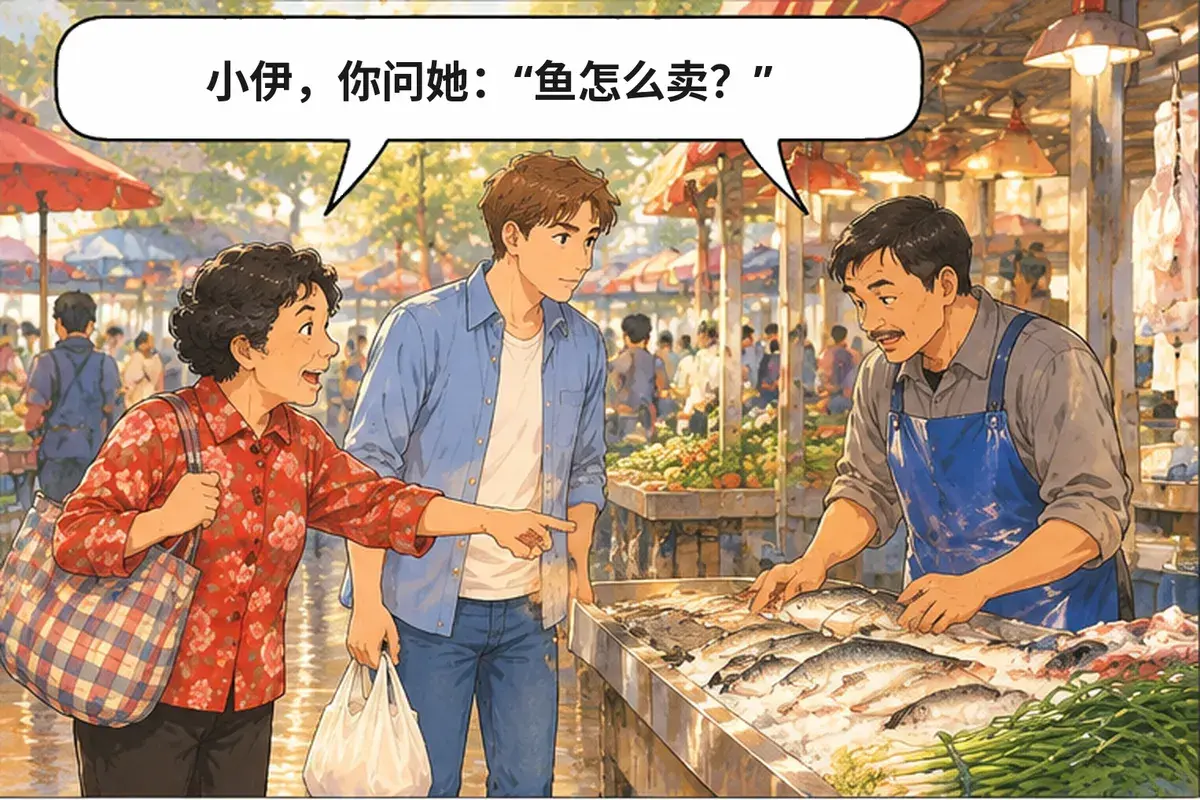
- 王阿姨
小伊,你问她:“鱼怎么卖?”
Xiao Yi, ask her: "How much is the fish?"
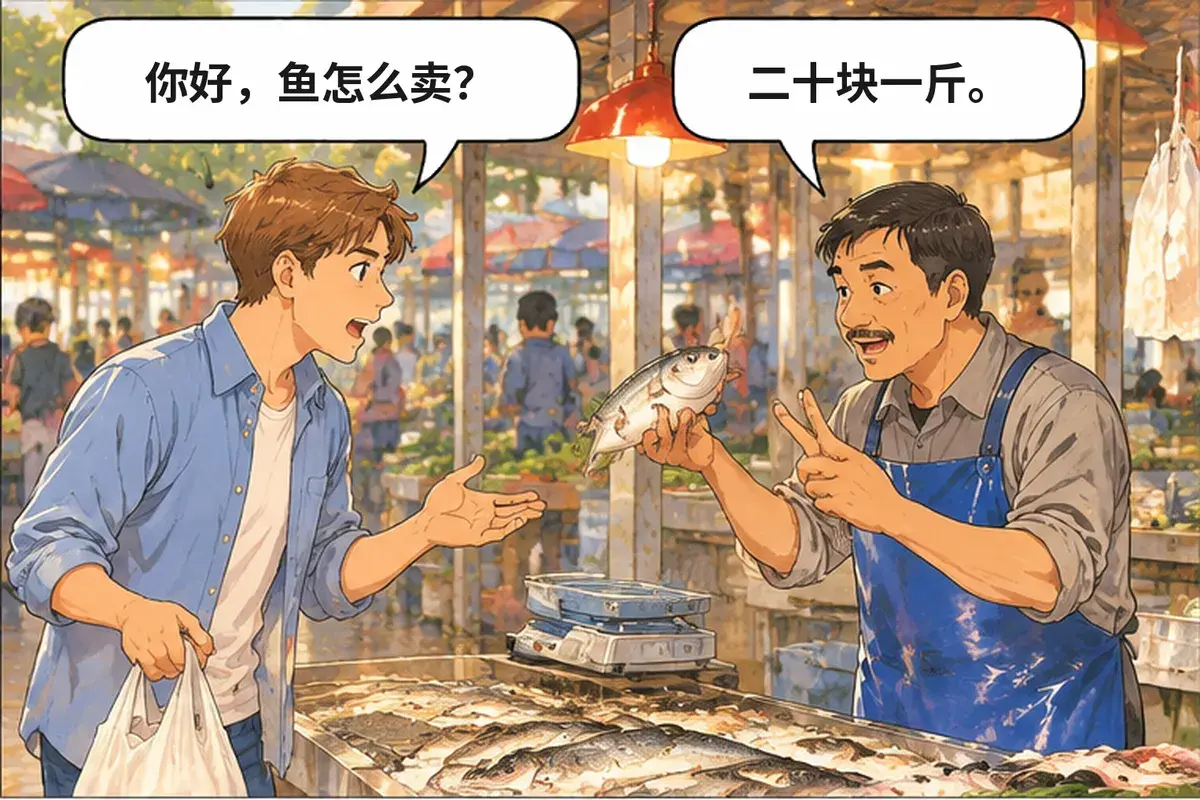
- 伊利亚
你好,鱼怎么卖?
Hi, how much is the fish?
- 店员
二十块一斤。
Twenty yuan a jin.
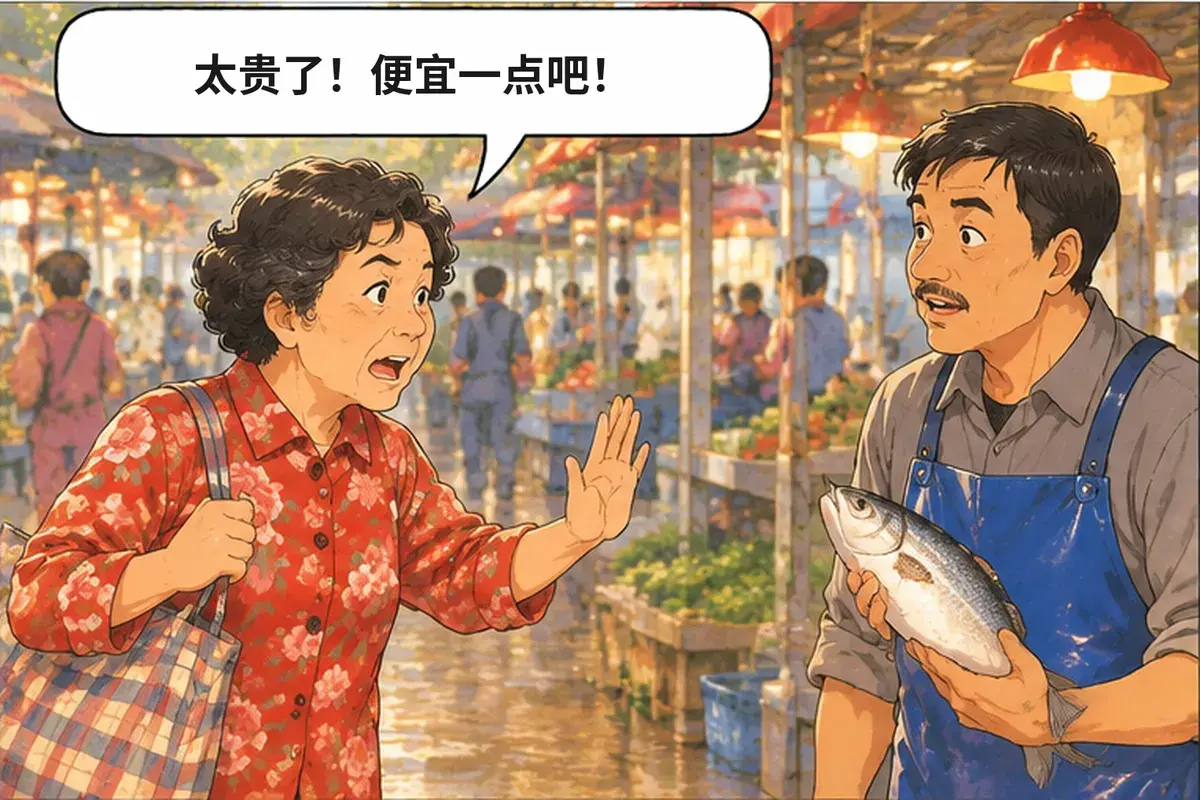
- 王阿姨
太贵了!便宜一点吧!
That's too expensive! Come on, make it a little cheaper!
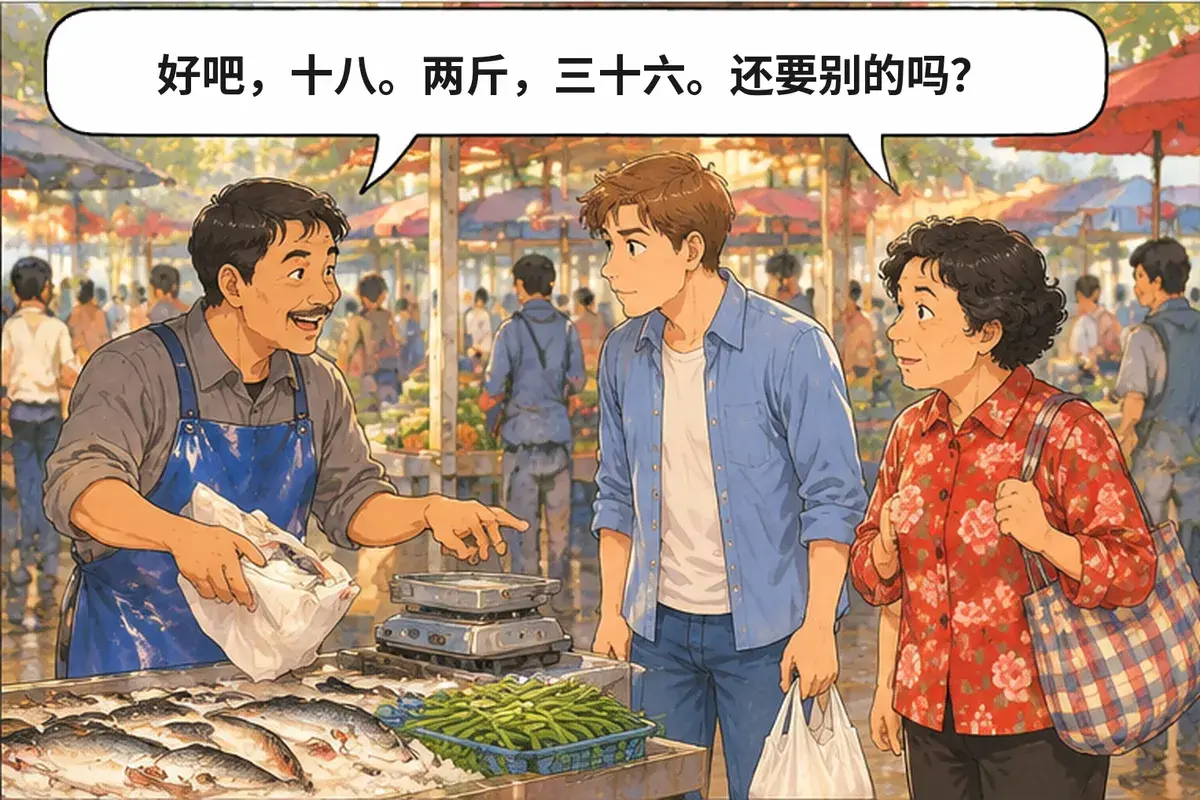
- 店员
好吧,十八。两斤,三十六。还要别的吗?
All right then, eighteen. Two jin, thirty-six. Anything else?
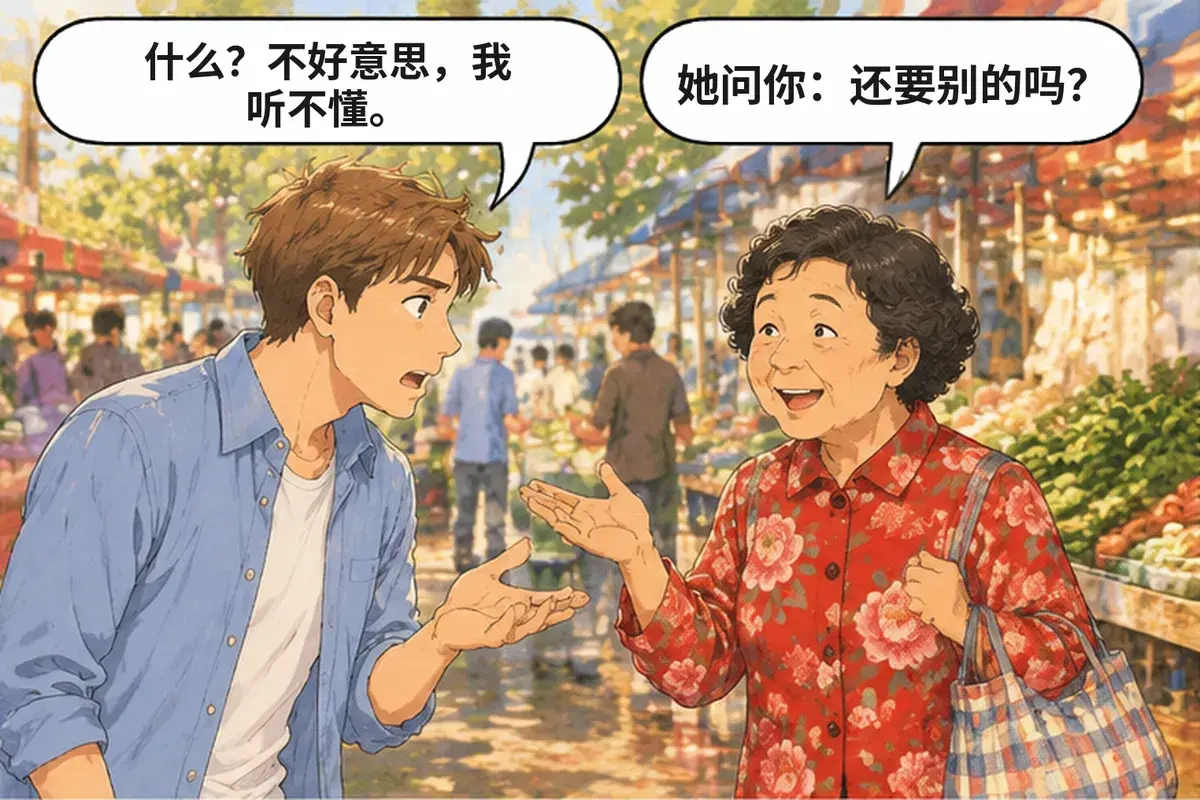
- 伊利亚
什么?不好意思,我听不懂。
What? Sorry, I don't understand.
- 王阿姨
她问你:还要别的吗?
She's asking you: anything else?

- 伊利亚
啊,要!十个鸡蛋、一瓶牛奶、两个面包。
Oh, I do! Ten eggs, a bottle of milk, two loaves of bread.
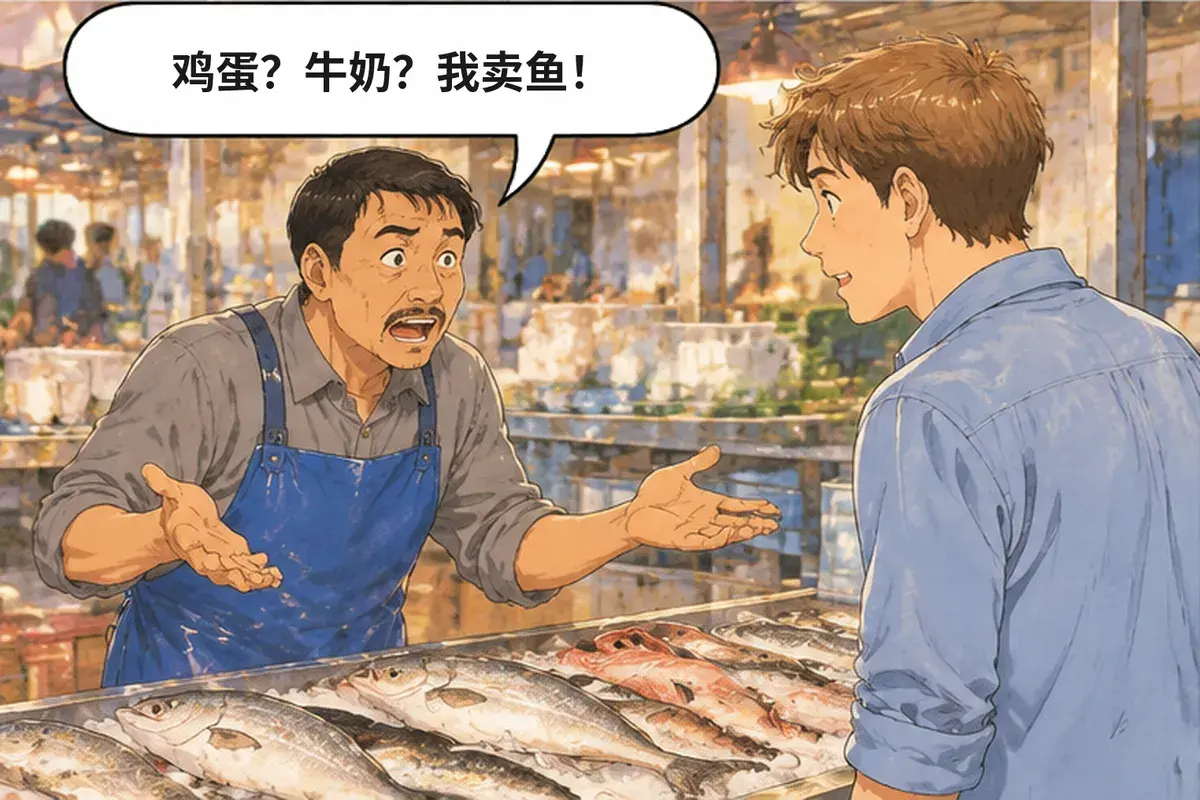
- 店员
鸡蛋?牛奶?我卖鱼!
Eggs? Milk? I sell fish!

- 王阿姨
鸡蛋在那里买,牛奶和面包在超市买。
You buy eggs over there, and milk and bread at the supermarket.

- 伊利亚
在超市也可以说“便宜一点”吗?
Can you say "a little cheaper" at the supermarket too?
- 王阿姨
不行!超市没有“便宜一点”!
No way! There's no "a little cheaper" at the supermarket!
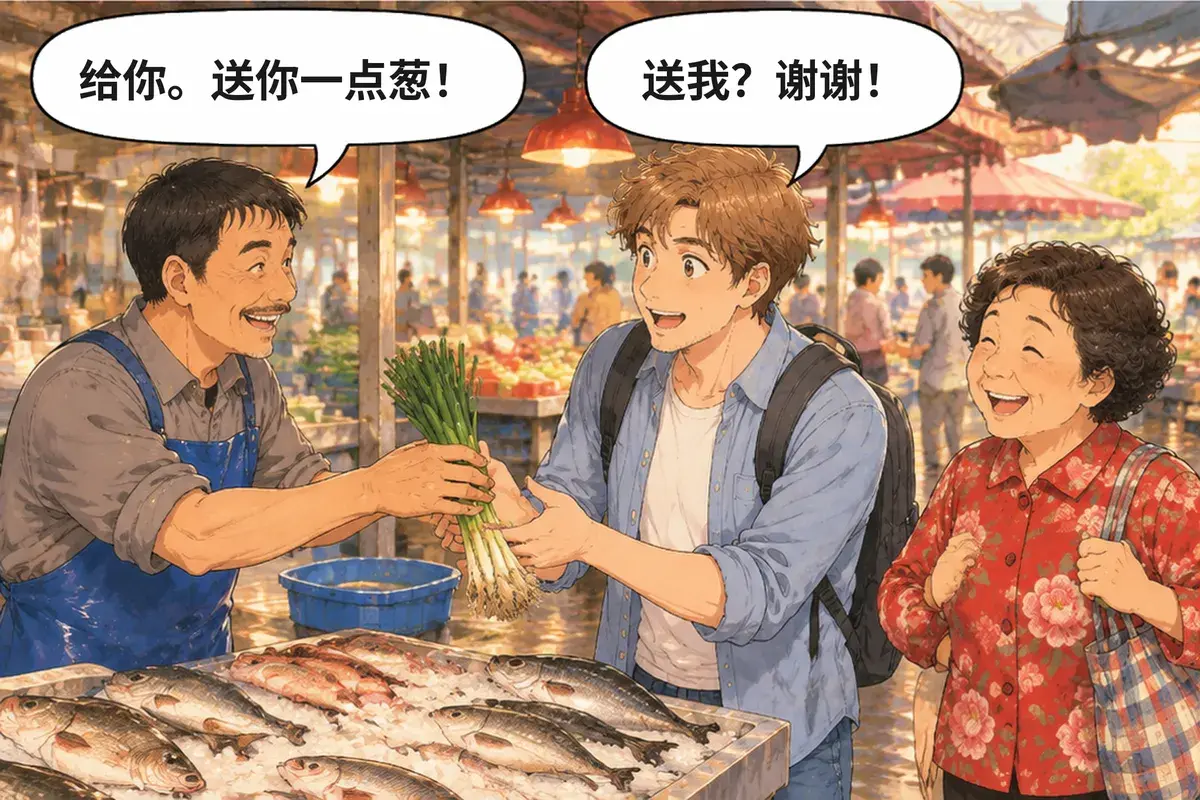
- 店员
给你。送你一点葱!
Here you go. I'll throw in some green onions for you!
- 伊利亚
送我?谢谢!
A gift for me? Thanks!
Grammar for this text
鱼 怎么 卖? — literally "how do you sell the fish?", that is, "how much is the fish?". This is how you ask the price at a market. The answer is the price per unit: 二十 块 一 斤 — "twenty yuan a jin", with no word for "a" or "per". 斤 (jīn) is a Chinese unit of weight, 500 grams: at a market prices are given per 斤.
便宜 一点 吧! — "come on, make it a little cheaper!": 便宜 一点 is "a little cheaper", and 吧 makes the request soft. People bargain at markets and street stalls, but not in stores. Hence Auntie Wang's joke: 超市 没有 “便宜 一点”! — "there's no 'a little cheaper' at the supermarket!".
好 吧,十 八。两 斤,三十 六。 — 好 吧 is "oh, all right", agreeing without joy. The seller has weighed the fish: two jin is 两 斤, not 二 斤. The word 块 in a price is often dropped when it's clear anyway.
还 要 别的 吗? — "anything else?": 还 is "else, also", 别的 is "other". Almost every seller asks this, but Ilya doesn't recognize the phrase by ear yet.
十 个 鸡蛋、一 瓶 牛奶、两 个 面包 — between a number and a thing there's always a measure word: eggs and bread are counted with 个, milk with 瓶 "bottle".
鸡蛋 在 那里 买 — "you buy eggs over there": the place with 在 comes before the verb (unit 4). Who buys isn't said; Chinese doesn't need it, English adds "you".
送 你 一点 葱! — 送 is "to give as a gift". Sellers at markets often add a little green onion for free. 给 你 is "here you go": people say it when handing over a purchase.
小伊 (Xiao Yi) — Auntie Wang's affectionate name for Ilya.
Words and grammar of the unit: Bargain at the market.
Learn the words from the texts with flashcards
In the app, you can tap any word in a text to see its translation, forms and examples, and new words stick with flashcards. 15 minutes a day.
Start for freeEverything is open for free. No card needed to sign up.